Brooklyn Bridge Park: Waterfront, Views, and More Than You Expect
Stretching 1.3 miles along Brooklyn's East River shoreline, Brooklyn Bridge Park is an 85-acre public waterfront space that trades industrial piers for lawns, kayaking, playgrounds, and some of the most direct views of the Manhattan skyline and Brooklyn Bridge anywhere in the city. Entry is free, and the park runs from Washington Street all the way to Atlantic Avenue.
Quick Facts
- Location
- 334 Furman St, Brooklyn, NY 11201 (DUMBO / Brooklyn Heights waterfront)
- Getting There
- High St station (A/C, ~7-min walk) or Clark St station (2/3, ~8-min walk); NYC Ferry stops at Pier 1 and Pier 6
- Time Needed
- 1.5 to 3 hours depending on how many piers you explore
- Cost
- Free entry; individual activities (kayaking, carousel rides) may carry separate fees
- Best for
- Skyline photography, families with children, waterfront walks, picnics, weekend afternoons
- Official website
- brooklynbridgepark.org
What Brooklyn Bridge Park Actually Is
Brooklyn Bridge Park is an 85-acre public waterfront park running 1.3 miles along Brooklyn's East River shore, occupying land that was once a working industrial port. The park stretches from Washington Street in DUMBO south to Atlantic Avenue near Brooklyn Heights, and it sits directly across the water from Lower Manhattan. What you see today is the result of a phased redevelopment process that began in earnest in 2008 and reached completion with the dedication of Emily Roebling Plaza in December 2021.
The design, led by landscape architecture firm Michael Van Valkenburgh Associates, transformed deteriorating cargo piers into a series of distinct recreational spaces. Each pier has its own character: sports courts and a roller rink on Pier 2, a restored historic carousel near Pier 1, beach volleyball and picnic lawns elsewhere. The result feels less like a single park and more like a connected string of neighborhoods, each worth its own few minutes of attention.
💡 Local tip
The park is open daily from 6:00 AM to 1:00 AM. Individual areas like Pier 2 have their own seasonal hours (approximately 8:00 AM to 11:00 PM). Playgrounds are open from sunrise to sunset. Confirm current pier hours at brooklynbridgepark.org before visiting.
The View: Why It Holds Up
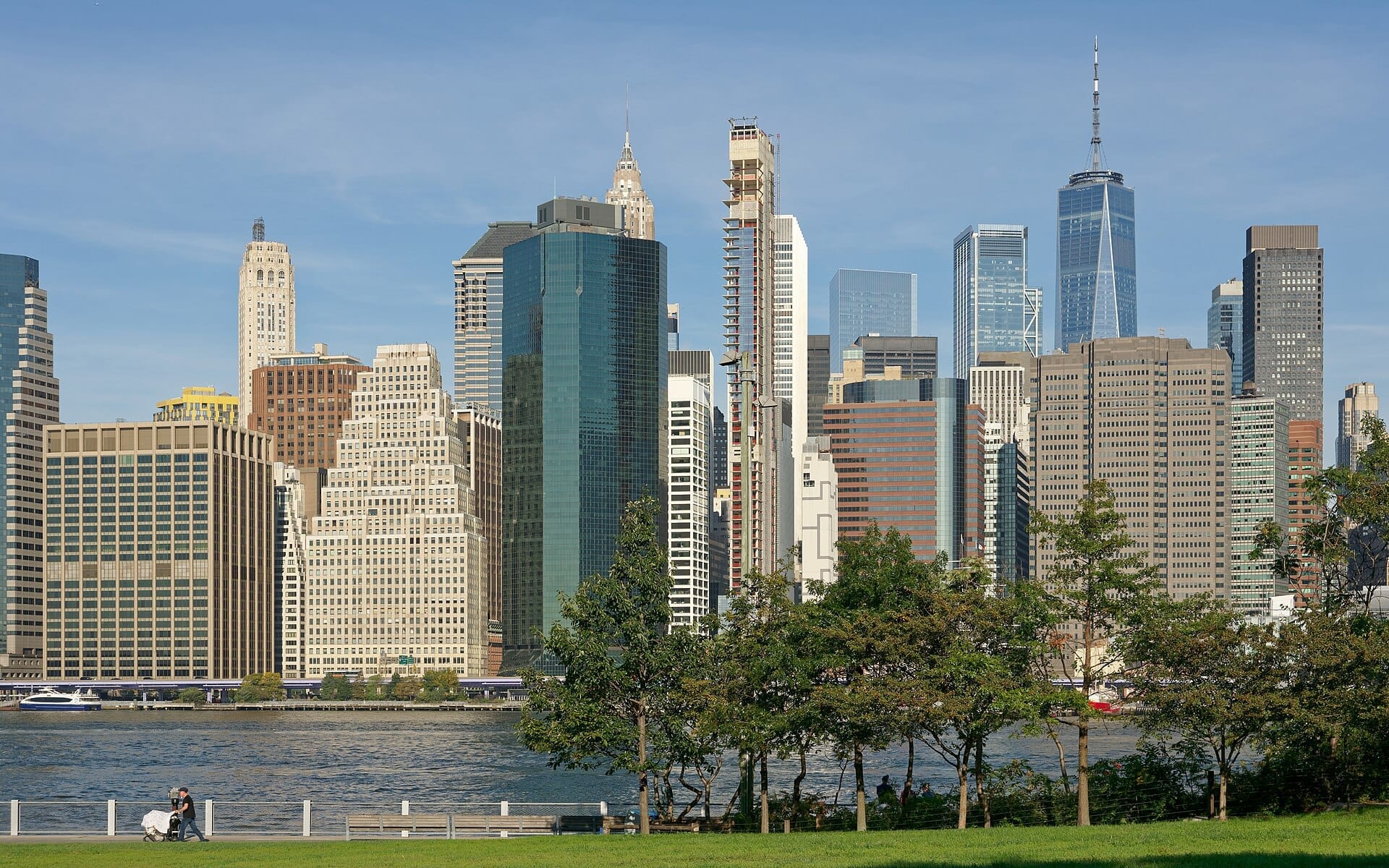
The Brooklyn Bridge itself is visible from multiple points along the park, but the perspective from Pier 1 and the area near Emily Roebling Plaza is the one most photographers aim for. From here, the bridge's gothic granite towers frame the Lower Manhattan skyline behind them, and the water in the foreground keeps the composition clean. It is a genuinely strong view that does not require any special access or ticket.
The view changes meaningfully depending on time of day. At dawn, the light catches the Manhattan towers from the east, and the park is almost empty. The water surface is usually calm at that hour, and the low-angle light makes the bridge cables stand out sharply. By midday the light flattens and crowds increase. Late afternoon, particularly in autumn and spring when the sun sets further south, produces warm tones on the limestone facades across the river. Sunset from Pier 1 draws a crowd every evening, with people gathering on the lawn and the promenade edge. For context on the best seasons to experience this, this guide to the best views in New York City covers the full range of vantage points across all five boroughs.
On clear winter days the air is sharp enough that the city skyline looks almost three-dimensional. The tradeoff is cold wind off the water, which can be brutal between December and February. Dress in more layers than you think you need.
Tickets & tours
Hand-picked options from our booking partner. Prices are indicative; availability and final rates are confirmed when you complete your booking.
Statue of Liberty, Ellis Island, and Brooklyn Bridge Happy Hour Cruise
From 49 €Instant confirmationFree cancellationNew York Brooklyn Bridge and DUMBO food-tasting guided tour
From 89 €Instant confirmationFree cancellationBrooklyn Bridge and DUMBO neighborhood walking tour
From 42 €Instant confirmationFree cancellationBrooklyn Smith and Court Streets culinary experience
From 76 €Instant confirmationFree cancellation
Moving Through the Park: Pier by Pier
The piers are numbered roughly north to south, and walking the full length of the park from Pier 1 to Pier 6 takes about 30 to 40 minutes at a relaxed pace, not counting stops. Most visitors enter from the DUMBO side near Pier 1, since it is closest to the subway and to Jane's Carousel.
Jane's Carousel, a restored 1922 antique carousel housed in a Pritzker Prize-winning glass pavilion designed by Jean Nouvel, sits in the Empire Fulton Ferry section near the Brooklyn Bridge anchorage. It is one of the most architecturally interesting small structures in Brooklyn, and even if you skip the ride itself, the pavilion is worth a look from the outside for how it handles the industrial surroundings.
Pier 2 handles active recreation: basketball and handball courts, shuffleboard, a roller rink, and a fitness area with outdoor exercise equipment. On weekends this pier gets genuinely busy with locals using the courts, and the energy is different from the contemplative mood further south. Pier 5 has a picnic peninsula with sweeping views and is popular with families bringing food. Pier 6 is the southernmost major pier and has beach volleyball, sandplay areas for children, multiple seasonal food and drink concessions, and the NYC Ferry stop if you are heading back to Manhattan by water.
Getting There and Getting Around
Subway access is straightforward from two directions. The A and C trains stop at High Street station, which is about a 7-minute walk to the park entrance near Pier 1. The 2 and 3 trains stop at Clark Street in Brooklyn Heights, about 8 minutes on foot to the park's middle section. Neither walk is particularly complicated, but the Clark Street exit involves a long elevator or stairs underground before you surface.
The NYC Ferry is a legitimate option worth considering, especially if you are already on or near the East River. It stops at Pier 1 and Pier 6, meaning you can enter at one end and exit at the other after walking the full park. Ferry fares are set by NYC Ferry and subject to change, so check current pricing before you go. For a broader overview of navigating the city by transit, the getting around New York City guide covers subway, ferry, and other options in practical detail.
The park's internal paths are paved or packed gravel for the most part, making wheelchair and stroller access feasible across the majority of the site. Some lawn areas and gravel sections near the water edges are less smooth. The Brooklyn Bridge Park Conservancy website maintains specific accessibility information by pier.
The Neighborhood Around the Park
Brooklyn Bridge Park sits at the edge of two distinct neighborhoods that reward time beyond the park itself. DUMBO, which stands for Down Under the Manhattan Bridge Overpass, is immediately to the north and is now dense with galleries, restaurants, and design-oriented shops. The cobblestone streets under the Manhattan and Brooklyn bridges have become one of the most photographed urban intersections in New York, largely because of the framed bridge views they create. DUMBO and Brooklyn Heights together offer a walkable half-day itinerary that pairs naturally with time in the park.
To the south, Brooklyn Heights is a residential neighborhood of 19th-century brownstones and one of the most architecturally intact streetscapes in the city. The Brooklyn Heights Promenade runs along the top of the bluff above the park and offers a slightly elevated view of the same skyline, with more shade and seating. It connects back to the park via stairs and is a natural extension of any visit.
When the Park Works Best and When It Does Not
Weekend afternoons between late May and early October are the park's peak hours. The lawn areas near Pier 1 and Pier 5 fill with picnickers, the ferry runs frequently, and the carousel has wait times. If you are looking for a peaceful, photography-focused visit, early weekday mornings in spring or fall are considerably better. The light is good, the crowds are minimal, and the park feels like it actually belongs to the city rather than to the tourism economy.
Summer heat can make the open waterfront sections uncomfortable between about 11:00 AM and 3:00 PM on humid days. There is limited shade across most of the piers, and the dark asphalt paths radiate heat. Bring water. Wind off the water can compensate somewhat, but in a July heatwave the park is more enjoyable in the early evening when temperatures drop slightly and the skyline begins to catch the sunset light.
Rain affects the experience more here than in a park with tree cover, since the piers are largely exposed. A light drizzle can actually clear the crowds and keep the light dramatic, particularly for photography, but a proper rainstorm leaves little shelter. For seasonal planning context, this overview of the best time to visit New York City lays out what to expect across all four seasons.
⚠️ What to skip
The park has limited food vendors depending on season, and nearby grocery options in DUMBO and Brooklyn Heights are limited immediately beside the park and often require walking several blocks into the neighborhoods. If you are planning a picnic, which is the most common way locals use the park, bring food and drinks with you rather than counting on finding something nearby.
Is Brooklyn Bridge Park Worth It?
For first-time visitors to New York, the park offers one of the few places where you can stand still, look across open water at the Manhattan skyline, and actually process the scale of what you are seeing. That perspective is harder to get from within Manhattan itself. The fact that entry is free and the walk from the subway is straightforward makes it a low-risk addition to any itinerary.
For repeat visitors, the park is more interesting for its immediate neighborhood connections than for the park itself. Combining it with a walk across the Brooklyn Bridge, a wander through DUMBO, and a stop at the Brooklyn Heights Promenade produces one of the better half-days in Brooklyn without spending much money.
People with no interest in outdoor walking, families dealing with very young children in strollers on a hot summer day, or anyone primarily interested in museums or indoor experiences may find this a lower priority. The park is genuine public green space, not a curated attraction. For a broader picture of what the borough offers beyond the waterfront, the Brooklyn travel guide covers neighborhoods, food, and cultural draws across the full borough.
Insider Tips
- The single best photography spot in the park is the stretch of promenade just south of Pier 1, near the Emily Roebling Plaza. Arrive at sunrise on a weekday, face northwest, and you have the Brooklyn Bridge, the Manhattan Bridge behind it, and the skyline stacked in the same frame with almost no one in the shot.
- Pier 6 is significantly less crowded than Pier 1 and has some of the park's best water access and views south toward the Statue of Liberty and Governors Island. Most visitors never make it this far, which means it rewards the extra 15-minute walk.
- The NYC Ferry connection between Pier 1 and Pier 6 means you can walk the park in one direction and take the ferry back to your starting point, or continue to other ferry stops along the East River, without retracing your steps.
- Jane's Carousel operates seasonally and charges a small fee. Check hours at brooklynbridgepark.org before visiting with children, particularly in early spring or late fall when it may be closed or have reduced hours.
- The lawns are not formal reserved spaces. Locals arrive early on warm weekend afternoons to claim spots. If you want a prime lawn position on a Saturday in July, arrive before noon.
Who Is Brooklyn Bridge Park For?
- Skyline and bridge photographers looking for the classic Brooklyn-to-Manhattan frame
- Families with children who want open space, playgrounds, and waterfront air without admission fees
- Travelers combining a Brooklyn Bridge walk with time on the Brooklyn side of the water
- Anyone building a DUMBO and Brooklyn Heights walking itinerary
- People who want a genuine local park experience rather than a ticketed tourist attraction
Nearby Attractions
Other things to see while in DUMBO & Brooklyn Heights:
- Brooklyn Bridge
The Brooklyn Bridge spans the East River between Lower Manhattan and Brooklyn Heights, and crossing it on foot is one of the most rewarding walks in New York City. Open at all hours to pedestrians, completely free, and loaded with 140 years of engineering history, it rewards visitors who time their visit well and know where to stand.
- Brooklyn Flea
Brooklyn Flea is New York City's most well-known weekend flea market, operating every Saturday and Sunday under the DUMBO Archway at 80 Pearl Street. Free to enter and operating seasonally from April through December, it draws a mix of serious vintage hunters, casual browsers, and food lovers into one of Brooklyn's most photogenic neighborhoods.
- Brooklyn Heights Promenade
The Brooklyn Heights Promenade is a free, third-of-a-mile walkway perched above the Brooklyn-Queens Expressway, offering one of the most photographed views of the Manhattan skyline, Brooklyn Bridge, and New York Harbor. Open daily at no cost, it suits everyone from early-morning joggers to sunset photographers.
- Jane's Carousel
Jane's Carousel is a fully restored 1922 merry-go-round housed in a striking glass pavilion designed by architect Jean Nouvel, set directly on the East River between the Brooklyn and Manhattan Bridges. At $4 a ride, it offers one of the most atmospheric and affordable experiences in Brooklyn Bridge Park, combining genuine historic craftsmanship with an almost unreasonably good view of the Manhattan skyline.