Brooklyn Bridge: What to Know Before You Walk Across
The Brooklyn Bridge spans the East River between Lower Manhattan and Brooklyn Heights, and crossing it on foot is one of the most rewarding walks in New York City. Open at all hours to pedestrians, completely free, and loaded with 140 years of engineering history, it rewards visitors who time their visit well and know where to stand.
Quick Facts
- Location
- Connecting Lower Manhattan to Brooklyn Heights, over the East River
- Getting There
- Manhattan side: 4/5/6 to Brooklyn Bridge–City Hall, or J/Z to Chambers St. Brooklyn side: A/C to High St, or F to York St
- Time Needed
- 30–45 minutes for the crossing; 1.5–2 hours with DUMBO exploration
- Cost
- Free for pedestrians and cyclists
- Best for
- Architecture lovers, photographers, first-time NYC visitors, early risers
- Official website
- www.nyc.gov/html/dot/html/infrastructure/brooklyn-bridge.shtml
What the Brooklyn Bridge Actually Is
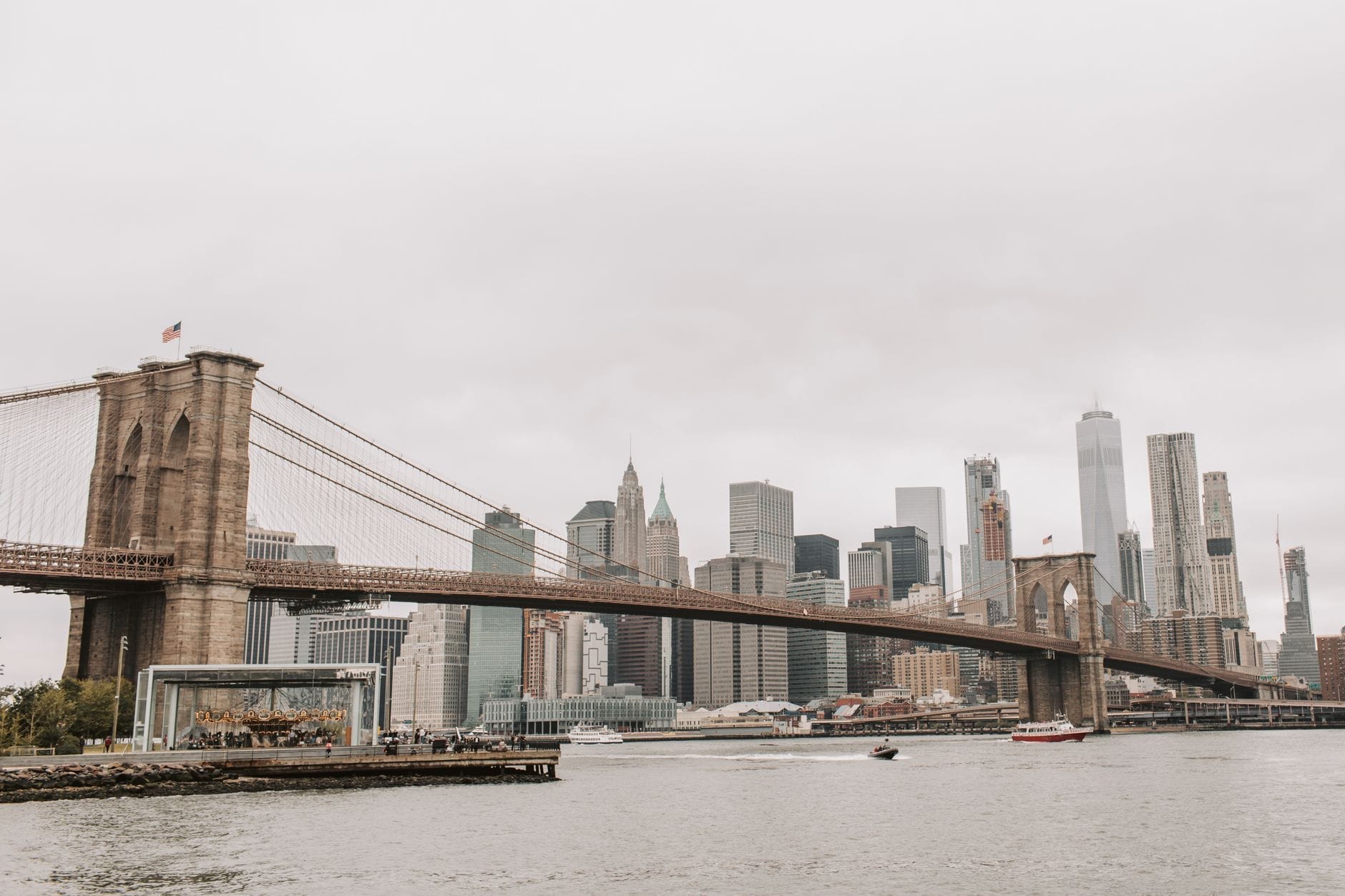
The Brooklyn Bridge is a hybrid cable-stayed suspension bridge that carries both vehicle traffic and a separated upper-level promenade for pedestrians and cyclists. It stretches 6,016 feet (roughly 1.83 km including approaches) in total, with a main span of 1,595 feet over the East River. When it opened on May 24, 1883, that main span was the longest suspension bridge span in the world. It was also the first bridge anywhere to use steel wire for its cables, a structural innovation that changed bridge engineering permanently.
Construction began in 1869 under the direction of engineer John A. Roebling, who died from a tetanus infection acquired on-site just weeks into the project. His son Washington Roebling took over and supervised much of the construction from his apartment window in Brooklyn Heights after being incapacitated by decompression sickness. Washington's wife, Emily Warren Roebling, became the primary liaison between him and the construction crews, effectively managing the project's completion. The bridge that opens to you today carries all of that history in its stone towers and steel wire.
The two Gothic-arched granite towers rise about 276 feet above the water and remain a defining feature of the Lower Manhattan and Brooklyn Heights skylines. The bridge was designated a National Historic Landmark in 1964 and listed on the National Register of Historic Places in 1966.
The Walk: What to Expect on the Promenade
The pedestrian promenade runs along the center of the bridge, elevated above the vehicle lanes on either side. Cyclists share the same path but use a marked lane; the division is a painted line, not a barrier, so stay alert and keep to the pedestrian side. The wooden-plank walkway has a slight upward slope as you approach the center from either end, and the towers force a brief narrowing that creates a natural gathering point where most people stop to photograph.
⚠️ What to skip
Cyclists move fast on the bridge, often faster than first-time visitors expect. Stay within the pedestrian lane, marked on your right side when walking from Manhattan to Brooklyn. Stopping abruptly in the bike lane causes collisions.
From the center of the promenade, the views open in all four directions. To the south you see New York Harbor, the Statue of Liberty on a clear day, and Governors Island. To the north, the Manhattan Bridge sits close enough that you can study its very different structural approach. Directly below, the traffic lanes feel surprisingly remote. The East River moves quickly, and on cooler mornings a faint salt-and-river smell rises from the water.
The full crossing typically takes about 30 to 45 minutes at a comfortable walking pace, slightly longer if you stop at the towers or the midpoint overlooks. The diagonal steel cables create a web-like visual canopy as you walk, and looking back toward the Manhattan skyline from the Brooklyn tower is one of the great urban perspectives in the city.
Tickets & tours
Hand-picked options from our booking partner. Prices are indicative; availability and final rates are confirmed when you complete your booking.
Statue of Liberty, Ellis Island, and Brooklyn Bridge Happy Hour Cruise
From 49 €Instant confirmationFree cancellationNew York Brooklyn Bridge and DUMBO food-tasting guided tour
From 89 €Instant confirmationFree cancellationBrooklyn Bridge and DUMBO neighborhood walking tour
From 42 €Instant confirmationFree cancellationBrooklyn Smith and Court Streets culinary experience
From 76 €Instant confirmationFree cancellation
Best Time to Cross: How the Experience Shifts by Hour
Early morning, roughly 6:30 to 8:30 a.m., is when the bridge is closest to quiet. Joggers and cyclists are out, but tourist crowds are thin. The low-angle light hits the Manhattan skyline at a useful angle for photographers, and the towers cast long shadows across the promenade boards. Temperatures at this hour are significantly cooler in summer, which matters on a bridge with no shade.
Midday from 10 a.m. to 3 p.m. is peak tourist time, and the promenade fills enough that stopping for photos requires patience. Tour groups tend to cluster near the first tower on the Manhattan side. The bridge is still completely walkable during peak hours, but the experience is more urban and social than solitary.
Sunset crossings from Brooklyn to Manhattan are particularly effective because you walk toward the Manhattan skyline as it catches the last direct light. The sky behind the towers often turns deep orange in clear weather. This is also the most crowded time of day, so arrive on the Brooklyn side by 6 p.m. if you want space at the railing. After dark, the bridge stays open and the lit towers against the night sky attract photographers, though the promenade surface can be hard to read in low light, so watch your step.
💡 Local tip
For the clearest skyline shots, walk from Manhattan to Brooklyn in the morning (you face south and east, away from direct sun) and from Brooklyn to Manhattan in the late afternoon (you walk toward the lit Manhattan skyline). Reversing this produces washed-out or backlit photos.
Getting There: Manhattan and Brooklyn Access Points
From the Manhattan side, the most straightforward subway access is the 4, 5, or 6 train to Brooklyn Bridge-City Hall station, or the J or Z to Chambers Street. From City Hall Park, walk east along Frankfort Street or the park's edge and follow signs to the bridge pedestrian entrance. The ramp begins at street level near the base of the Manhattan tower.
From the Brooklyn side, the A or C train to High Street-Brooklyn Bridge drops you about a five-minute walk from the Cadman Plaza East entrance at Washington Street and Prospect Street. The F train to York Street puts you slightly south, closer to the DUMBO neighborhood. The Brooklyn pedestrian entrances involve a staircase near the intersection of Washington Street and Prospect Street by Cadman Plaza East, or access from the Tillary Street and Boerum Place intersection.
ℹ️ Good to know
Accessibility note: The bridge promenade has stair access on the Brooklyn side at the main Cadman Plaza entrance. Visitors using wheelchairs or mobility devices should check current NYC DOT information for accessible approach routes before visiting, as a single step-free route for the full crossing is not clearly documented in official materials.
Most visitors combine the crossing with a walk through DUMBO and Brooklyn Heights, which puts the bridge into its wider neighborhood context. The DUMBO waterfront, including Brooklyn Bridge Park, begins immediately below the Brooklyn end of the bridge.
Photography on the Bridge: Where to Stand
The most replicated shot is taken from the center of the promenade, looking toward Manhattan through the framing cables and arches. It works well but it is also what every other visitor photographs. A less obvious option: stand just past the Brooklyn tower on the promenade and look back at the tower with the Manhattan skyline behind it. The perspective is tighter and the cables form a more defined geometric pattern.
From ground level in DUMBO, the Washington Street view between the Manhattan and Brooklyn Bridge towers has become one of New York's most photographed urban compositions. It is best in late afternoon when the Manhattan Bridge fills the frame and the Brooklyn Bridge appears in the middle distance. This is a sidewalk, not the bridge itself, but it is directly adjacent to the Brooklyn pedestrian entrance.
For aerial or wide-angle context shots, the Brooklyn Heights Promenade offers a full southern view of the bridge against the Manhattan skyline without any promenade crowds in frame.
Weather, Seasons, and When the Bridge Disappoints
The bridge is exposed in every direction. In summer, midday heat on the wooden promenade can be significant, with no shade between the towers. Bring water if you are crossing between 11 a.m. and 3 p.m. from June through August. Winter crossings are manageable in cold-weather gear, and the bridge is less crowded from December through February, but wind across the span is sharp and consistent. Check the forecast before a winter visit.
Spring and autumn offer the most comfortable conditions. April through June and September through October tend to have mild temperatures and reasonable humidity. For broader seasonal context, the best time to visit New York City guide covers the trade-offs across the full year.
Heavy rain makes the wooden promenade slippery, and the bridge stays open regardless, so use caution. Fog can reduce visibility of the skyline to near zero, which is either atmospheric or frustrating depending on expectations. The bridge rarely closes for weather under normal circumstances, though exceptional storms or safety concerns can prompt temporary closures.
Honest Assessment: Is It Worth Your Time?
For a first visit to New York City, yes, crossing the Brooklyn Bridge is worth doing. It is free, historically significant, and the views from the promenade are genuinely good. It also connects two interesting neighborhoods and gives you a physical sense of the city's scale that no observation deck provides.
For repeat visitors, the bridge can feel like an obligation rather than a discovery, particularly at peak hours when the promenade is crowded enough to make it feel like a moving queue. If you have already crossed it, consider whether you actually want to do it again or whether you are doing it out of habit. The Brooklyn Heights Promenade and Brooklyn Bridge Park offer views of the bridge itself without the foot traffic.
The surrounding area rewards time. DUMBO's cobblestone blocks, Jane's Carousel in its waterfront pavilion, and the lawns of Brooklyn Bridge Park make the neighborhood worth at least a half-day. The bridge is a starting point, not the whole story.
Insider Tips
- Start from the Manhattan side on weekday mornings and you will have the promenade nearly to yourself for the first 20 minutes of the walk. Tour groups from midtown typically arrive after 9:30 a.m.
- The padlocks affixed to the bridge cables were officially removed by the city and their re-attachment is discouraged. Do not bring a lock expecting to find attachment points.
- If you plan to eat in DUMBO after crossing, Time Out Market on Water Street handles large groups efficiently and has outdoor seating with partial bridge views. Arrive before noon or after 2 p.m. to avoid peak lunch lines.
- The view from the Brooklyn tower is noticeably better than from the Manhattan tower because you are looking at the full Manhattan skyline rather than back into the financial district's denser blocks. Push through the first arch before stopping to photograph.
- For a less-photographed but technically superior city view, walk south along the Brooklyn Bridge Park waterfront after crossing. The bridge appears in full profile against the Manhattan skyline with no promenade crowds obscuring the frame.
Who Is Brooklyn Bridge For?
- First-time New York City visitors who want to understand the city's scale and geography
- Architecture and engineering enthusiasts drawn to 19th-century infrastructure
- Photographers working in early morning or late afternoon light
- Travelers combining a Brooklyn exploration day starting or ending in DUMBO
- Budget travelers looking for a high-quality experience with no entry cost
Nearby Attractions
Other things to see while in DUMBO & Brooklyn Heights:
- Brooklyn Bridge Park
Stretching 1.3 miles along Brooklyn's East River shoreline, Brooklyn Bridge Park is an 85-acre public waterfront space that trades industrial piers for lawns, kayaking, playgrounds, and some of the most direct views of the Manhattan skyline and Brooklyn Bridge anywhere in the city. Entry is free, and the park runs from Washington Street all the way to Atlantic Avenue.
- Brooklyn Flea
Brooklyn Flea is New York City's most well-known weekend flea market, operating every Saturday and Sunday under the DUMBO Archway at 80 Pearl Street. Free to enter and operating seasonally from April through December, it draws a mix of serious vintage hunters, casual browsers, and food lovers into one of Brooklyn's most photogenic neighborhoods.
- Brooklyn Heights Promenade
The Brooklyn Heights Promenade is a free, third-of-a-mile walkway perched above the Brooklyn-Queens Expressway, offering one of the most photographed views of the Manhattan skyline, Brooklyn Bridge, and New York Harbor. Open daily at no cost, it suits everyone from early-morning joggers to sunset photographers.
- Jane's Carousel
Jane's Carousel is a fully restored 1922 merry-go-round housed in a striking glass pavilion designed by architect Jean Nouvel, set directly on the East River between the Brooklyn and Manhattan Bridges. At $4 a ride, it offers one of the most atmospheric and affordable experiences in Brooklyn Bridge Park, combining genuine historic craftsmanship with an almost unreasonably good view of the Manhattan skyline.