Tenement Museum: Where New York's Immigrant Past Comes Alive
The Tenement Museum on Orchard Street preserves two 19th-century apartment buildings that once housed an estimated 15,000 people from over 20 nations between 1863 and 2000. Through immersive guided tours, visitors encounter reconstructed apartments and the deeply personal stories of the families who lived in them. It is one of the most emotionally affecting history museums in the United States.
Quick Facts
- Location
- 103 Orchard Street, Lower East Side, Manhattan, NY 10002
- Getting There
- Delancey St/Essex St (F, M, J, Z); Grand St (B, D). Wheelchair-accessible entrance at 81 Delancey Street.
- Time Needed
- 1.5 to 2.5 hours per tour; allow more if combining multiple tours
- Cost
- Paid tours required; prices vary by program. Check tenement.org for current rates. Advance booking strongly advised.
- Best for
- History lovers, families tracing immigrant roots, first-time NYC visitors who want depth over spectacle
- Official website
- www.tenement.org
What the Tenement Museum Actually Is
The Tenement Museum is not a conventional exhibition space with display cases and information panels. It is a preserved historic building, 97 Orchard Street, erected in 1865, whose cramped apartments have been painstakingly restored to reflect specific periods and specific families who lived there. The museum also uses the adjacent building at 103 Orchard Street as its visitor center.
Founded by Ruth Abram and Anita Jacobson, the museum's central mission is to use the stories of immigrants to the Lower East Side as a lens on American history more broadly. Between 1863 and 1935, an estimated 15,000 people passed through the tenements on Orchard Street. The museum has identified many of them by name through census records, ship manifests, and city directories, and it brings individual families to life through reconstructed apartments and guided interpretation.
💡 Local tip
All visits to the historic buildings require a guided tour. You cannot walk through independently. Book tickets in advance at tenement.org, especially on weekends and during summer, when popular tours sell out days ahead.
The Building Itself: Architecture as Evidence
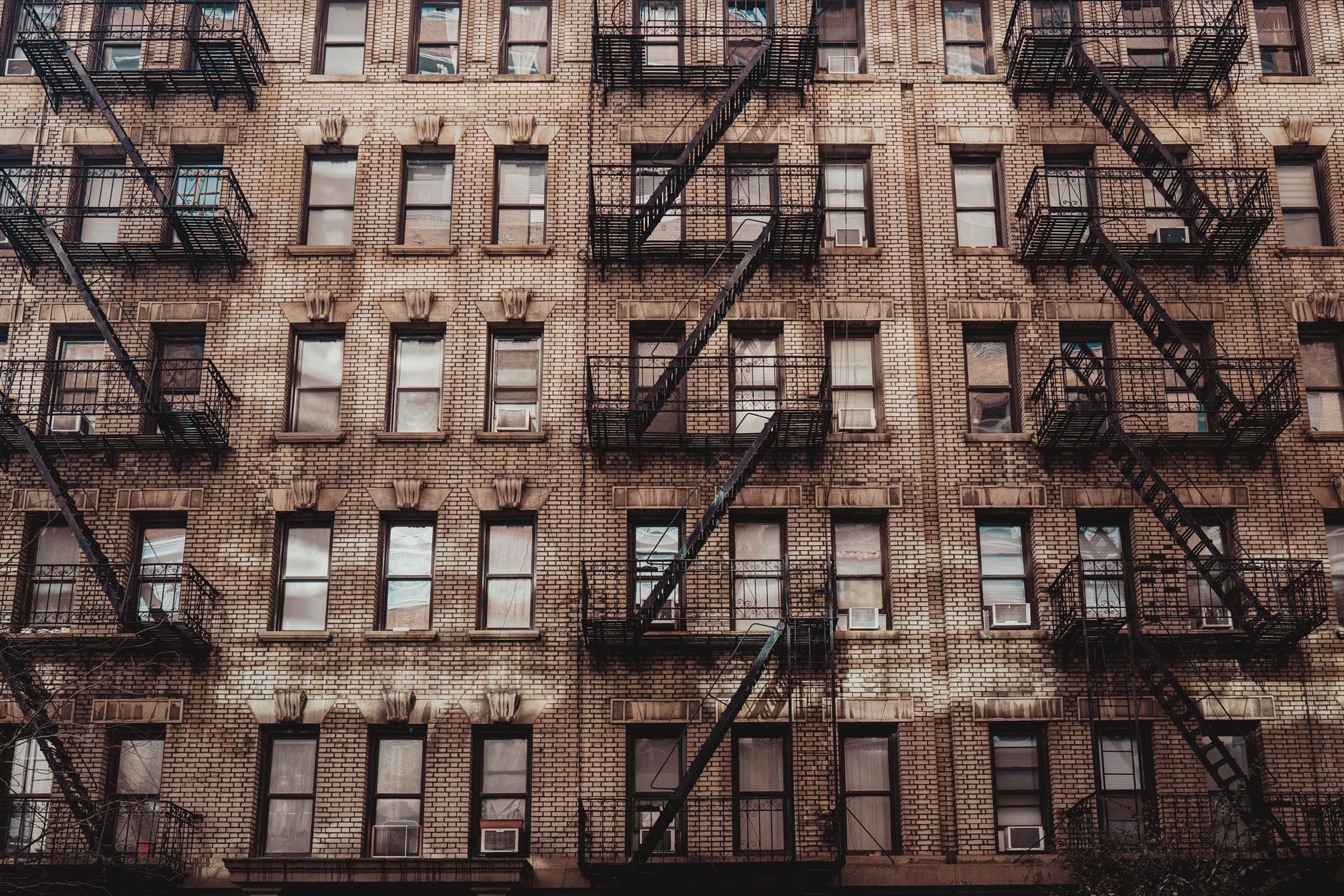
From the outside, 97 Orchard Street looks understated to the point of invisibility. It is a five-story building, narrow-fronted, pressed tight against its neighbors on a block that still carries the texture of old immigrant New York. The building was designed to house as many families as possible at minimal cost. Each floor contained four apartments; each apartment typically had two to three small rooms, with the back room receiving no natural light at all.
The architecture reflects what reformers of the era called the 'dumbbell tenement' problem, though 97 Orchard predates the 1879 regulations that mandated the narrow airshaft design. Inside the building, the ceilings are low, the staircase is steep and narrow, and the smell of old wood and plaster is immediately noticeable. These physical details are not incidental. They are central to what the museum is trying to communicate: that life in these rooms was physically hard in ways that are difficult to fully imagine from the outside.
The Lower East Side context matters here. This neighborhood was, for decades, one of the densest and most ethnically concentrated immigrant quarters in the United States. Walking from the museum to nearby streets still gives a partial sense of that layered history. For a broader understanding of the area, the Lower East Side neighborhood guide provides useful context on what else survives from that period.
Tickets & tours
Hand-picked options from our booking partner. Prices are indicative; availability and final rates are confirmed when you complete your booking.
Statue of Liberty, Ellis Island, and Brooklyn Bridge Happy Hour Cruise
From 49 €Instant confirmationFree cancellationSpirit of New York Dinner Cruise
From 161 €Instant confirmationFree cancellationNew York City Highlights bike tour
From 70 €Instant confirmationFree cancellationNew York Statue of Liberty and Ellis Island tour by ferry
From 55 €Instant confirmation
The Tours: What You Actually Experience
The museum offers several distinct tours, each focused on different apartments, different time periods, and different family stories. Some center on German Jewish immigrants in the 1870s, others on Irish families in the 1860s, Sephardic Jewish families in the early 20th century, or Italian and Chinese immigrant experiences. The specific roster of available tours changes over time, so checking the current offerings on the official site before booking is essential.
Groups are kept small, typically no more than fifteen people, and tours last 60 to 90 minutes. A guide leads the group up the original staircase and into reconstructed apartments where the furniture, cookware, textiles, and personal items have been sourced or reproduced to match specific decades. In some rooms, original wallpaper layers have been carefully preserved and exposed. Lighting is deliberately kept period-appropriate in certain spaces, which means some rooms are quite dim.
The quality of the experience depends significantly on the guide. The best tours create a genuine sense of intimacy with the families being discussed. Children's clothing, a partially set table, a religious calendar on the wall: small details accumulate into something that is harder to shake than most museum visits. Visitors who have family histories connected to Eastern European, Irish, Italian, or Chinese immigration to the United States often describe an unexpectedly emotional response.
ℹ️ Good to know
The museum also offers walking tours of the surrounding Lower East Side streets, which pair well with the building tours and extend the experience beyond the tenement itself. These are ticketed separately.
Timing Your Visit: Mornings, Weekdays, and What to Expect
The museum's reported general hours run Sunday through Thursday from 10:00 to 17:30 and Friday through Saturday from 10:00 to 18:00, though these should be confirmed directly with the museum before visiting as they are subject to change. Because all visits are tour-based and group sizes are capped, the experience does not meaningfully vary by time of day the way an open-access gallery might. What does vary is availability: weekend afternoon slots fill earliest.
A weekday morning visit is the most reliable way to secure your preferred tour. The neighborhood itself is quieter on weekday mornings, which makes the walk from the subway feel more grounded and less hurried. Orchard Street on a Saturday afternoon, by contrast, draws significant foot traffic, and arriving in that context can feel jarring before stepping into a space that asks for quiet attention.
Weather does not directly affect the indoor tours, but the building has no air conditioning. Summer visits to the upper floors can be noticeably warm. Dress in light, breathable layers if visiting between June and August.
Getting There and Practical Notes
The most straightforward subway approach is the F, M, J, or Z train to Delancey St/Essex St. From there, walk two blocks on Delancey Street to Orchard Street, then turn left. The visitor center at 103 Orchard Street is on the corner of Orchard and Delancey. Alternatively, the B or D to Grand Street works well: exit at Grand Street and Chrystie Street, walk east four blocks on Grand, then left (north) on Orchard for two blocks.
The M15 local bus stops at Allen/Delancey in both directions, and the M14A Select Bus Service stops at Delancey/Essex. There is no onsite parking and street parking in this area is limited and metered.
For visitors with mobility requirements: the historic building at 97 Orchard Street presents genuine accessibility challenges due to its age, narrow staircase, and original floor layout. The museum offers accessible programs and services, and a wheelchair-accessible entrance is available at 81 Delancey Street on the Delancey side of the building. Contacting Visitor Services in advance is strongly recommended for anyone with specific accessibility needs, so staff can advise which tours and spaces are accessible.
Is the Tenement Museum Worth Your Time?
For travelers who want to understand New York rather than simply see it, the Tenement Museum earns its time reliably. The ratio of genuine insight to tourism noise is unusually high. There are no gift-shop shortcuts to the experience here: the tours require attention, and they reward it.
That said, this museum will not suit every traveler. Visitors looking for a fast-moving, visually spectacular attraction should spend their time elsewhere. The building is dark, the rooms are small, and the emotional register is serious. If you are traveling with young children under around eight years old, the confined spaces and the pace of guided interpretation may not hold their attention. Families with older children, particularly those who have discussed immigration history at school, tend to find the experience more engaging. For a broader sense of what NYC offers across different ages and interests, the New York City with kids guide can help you balance the itinerary.
The Tenement Museum also fits naturally into a day that explores the cultural and historical layers of Lower Manhattan. Combining it with a visit to the National Museum of the American Indian or a walk across the Brooklyn Bridge creates a genuinely layered portrait of the city's history. For those whose interest in the immigrant experience extends further, Ellis Island is the natural companion visit, showing the point of arrival that preceded the tenement experience for millions of families.
Insider Tips
- If you are trying to decide between tours, the apartment-based building tours consistently receive stronger feedback than the walking tours for first-time visitors. Save the walking tour for a return trip or combine them in one longer day.
- The museum's shop at 103 Orchard Street carries an unusually good selection of books on immigrant history, urban social history, and Lower East Side culture. Worth browsing even if you are not buying.
- Some tours sell out a week or more in advance during peak summer weekends and around school holiday periods. Check availability as early as possible and book the moment you know your travel dates.
- The neighborhood around the museum still has several old-school Jewish delis, appetizing shops, and Eastern European food businesses nearby. Arriving hungry and eating on the block before or after the tour adds another sensory dimension to the visit.
- If you have specific family heritage connected to any of the immigrant communities the museum interprets, note it when contacting Visitor Services. Staff can sometimes point you toward the tour most relevant to your background.
Who Is Tenement Museum For?
- Travelers with family roots in Eastern European, Irish, Italian, or Chinese immigration to the US
- History enthusiasts who prefer narrative-driven, small-group experiences over large open exhibitions
- First-time NYC visitors who want to understand the city's social foundations beyond the skyline
- Teachers, students, and educators exploring urban immigration history
- Couples or solo travelers who want a quieter, more contemplative counterpoint to high-energy Manhattan attractions
Nearby Attractions
Other things to see while in Lower East Side:
- New Museum
Perched on the Bowery in the Lower East Side, the New Museum of Contemporary Art is the only dedicated contemporary art museum in Manhattan, focused on living artists and new ideas. Its stacked, asymmetric building is striking before you even walk through the door.