New Museum: New York's Home for Contemporary Art
Perched on the Bowery in the Lower East Side, the New Museum of Contemporary Art is the only dedicated contemporary art museum in Manhattan, focused on living artists and new ideas. Its stacked, asymmetric building is striking before you even walk through the door.
Quick Facts
- Location
- 235 Bowery, Lower East Side, New York, NY 10002
- Getting There
- 2nd Ave (F/M) or Bowery (J/Z) subway stations, both within a short walk
- Time Needed
- 1.5 to 3 hours depending on current exhibitions
- Cost
- Check newmuseum.org for current admission pricing; free admission offered on select dates
- Best for
- Contemporary art enthusiasts, architecture fans, repeat NYC visitors ready to go beyond the major institutions
- Official website
- www.newmuseum.org
What the New Museum Actually Is
The New Museum of Contemporary Art, founded in 1977 by curator Marcia Tucker after she left the Whitney Museum, was conceived as a deliberate counterweight to the established art world. Tucker wanted a space where artists who had no institutional support could be seen. Nearly five decades later, the museum has grown from a modest SoHo storefront operation into a major Lower East Side institution, but its founding DNA has largely held: this is a place where contemporary art is shown in its rawest, most contested forms, not after history has polished it clean.
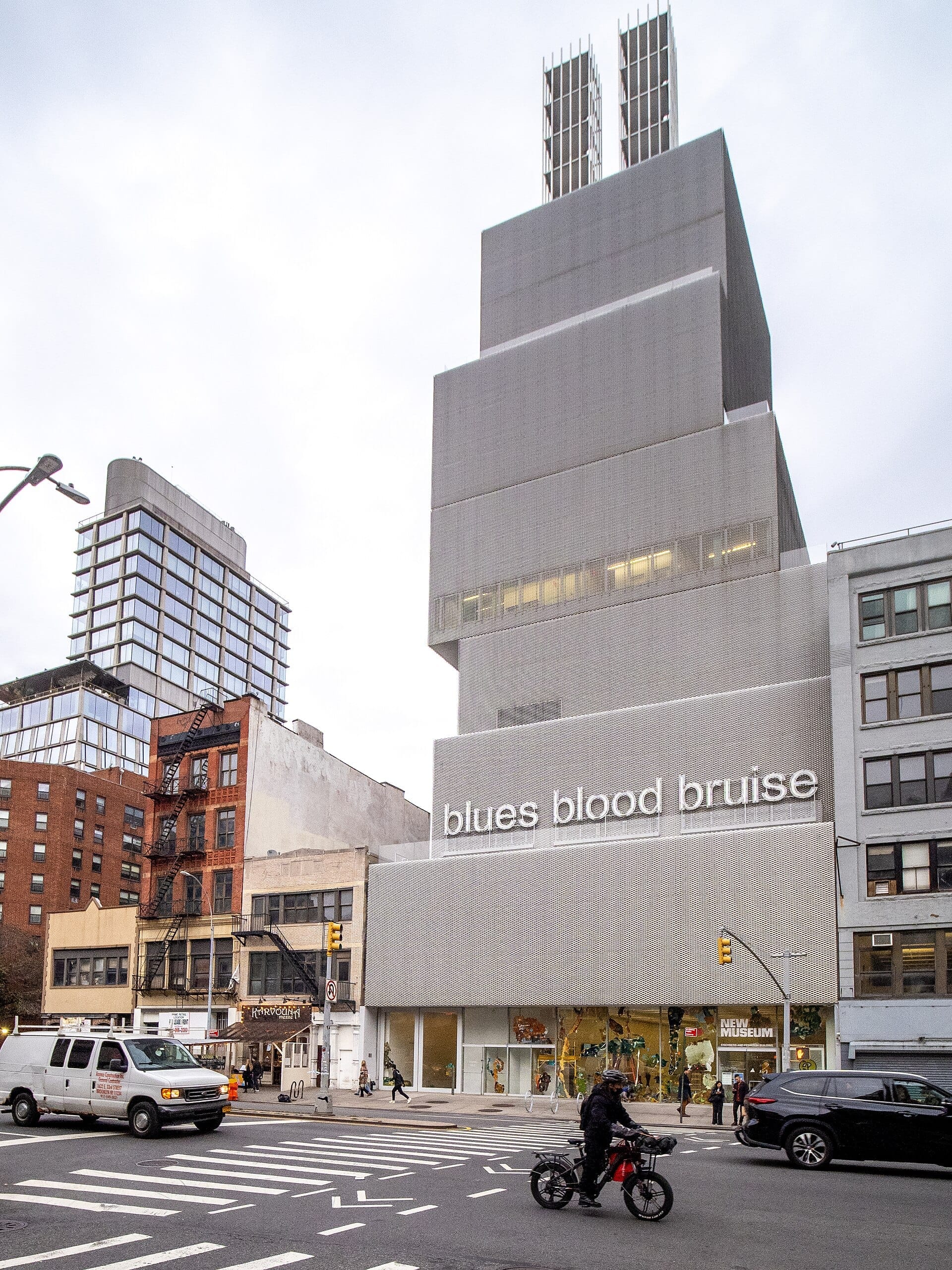
The current flagship building at 235 Bowery opened in December 2007, designed by the Tokyo-based firm SANAA (Kazuyo Sejima and Ryue Nishizawa). It arrived on a stretch of the Bowery that at the time still felt unfinished, gritty, and transitional, which suited the museum's identity precisely. The neighborhood has changed considerably since, but the building remains one of the most photographed pieces of architecture on the Lower East Side.
If you're building an itinerary around serious art in New York, the New Museum occupies a distinct niche that none of the major encyclopedic institutions fill. The Metropolitan Museum of Art shows you centuries; the New Museum shows you what artists are doing right now, often before critics have decided what to make of it.
The Architecture: Stacked Boxes on the Bowery
Before you even purchase a ticket, the New Museum gives you something to consider. SANAA's design consists of eight aluminum mesh-wrapped rectangular volumes stacked on top of each other, each shifted slightly off-center from the one below. The effect from the street is somewhere between a pile of misaligned shipping containers and a deliberately unstable sculpture. The surface material, an expanded aluminum mesh, gives the building a matte, slightly reflective skin that shifts in appearance depending on the angle of light.
In the morning, when the Bowery catches eastern light, the facade has a soft luminosity. By midday, the aluminum reads flat and industrial. At dusk, particularly in late autumn when the light drops early, the building takes on a warm gray tone that makes it read almost as a shadow against the sky. This is not an accident. SANAA designed the building to be experienced as something that changes rather than something that sits static, which is an appropriate envelope for a museum that prides itself on change.
💡 Local tip
The best exterior photograph of the building is taken from the west side of the Bowery, looking north or northeast, in the late afternoon. This angle catches the offset volumes in profile and avoids the scaffolding that frequently appears on adjacent buildings.
Tickets & tours
Hand-picked options from our booking partner. Prices are indicative; availability and final rates are confirmed when you complete your booking.
Statue of Liberty, Ellis Island, and Brooklyn Bridge Happy Hour Cruise
From 49 €Instant confirmationFree cancellationSpirit of New York Dinner Cruise
From 161 €Instant confirmationFree cancellationNew York City Highlights bike tour
From 70 €Instant confirmationFree cancellationNew York Statue of Liberty and Ellis Island tour by ferry
From 55 €Instant confirmation
Inside: How the Galleries Are Organized
The interior is deliberately spare. Walls are white, ceilings are high, and the circulation between floors involves a straightforward elevator and stair configuration. There is nothing about the interior design that competes with the art, which is the point. Each shifted floor volume creates gallery spaces of slightly different proportions, which means curators have to make specific choices about what goes where. Large-scale installations tend to land on the lower floors; more intimate works occupy the upper levels.
The New Museum operates on a rolling exhibition model, meaning it does not maintain a permanent collection on continuous display. Every visit is shaped by what is currently showing. This is either the museum's greatest strength or a mild frustration, depending on your expectations. Come with curiosity about whoever the current featured artist is, rather than a checklist of canonical works you want to see. The museum's website lists current and upcoming exhibitions well in advance.
The Sky Room on an upper floor, a glass-walled space with views across the Lower East Side and parts of the Midtown skyline, is worth the ascent regardless of the exhibition. It functions as a lounge and event space, and on clear days you can see the upper floors of the Empire State Building to the north. It is quieter than the main gallery floors and a good place to spend a few minutes before or after engaging with challenging work.
ℹ️ Good to know
The New Museum does not maintain a permanent collection open to the public. All exhibitions rotate. Verify what is showing at newmuseum.org before you go, especially if you are visiting for a specific artist or show.
Crowd Patterns and Best Times to Visit
Weekend afternoons draw the largest crowds, particularly during high-profile exhibition openings in September, October, and the spring art season from March through May. On Saturday afternoons in peak seasons, the lobby can feel genuinely congested. Weekday mornings, particularly Tuesday through Thursday before noon, offer a notably different experience: quieter galleries, more space to sit in front of large-scale works, and staff who have more bandwidth to answer questions.
The museum is typically closed on Mondays; confirm current hours before visiting. Thursday evening hours (check the current schedule on the official website) sometimes include programming, talks, or lower admission pricing, which attracts a younger, more local crowd rather than tourists. If you want to experience the museum the way downtown New Yorkers do, Thursday evenings are your window.
For visitors who want to pair the New Museum with other neighborhood experiences, the Lower East Side rewards a few hours of walking. The Tenement Museum is nearby and provides a sharply different historical perspective on the same streets. The contrast between those two institutions in a single afternoon is one of the more instructive experiences available in this part of Manhattan.
What the Museum Does Best (and Where It Strains)
The New Museum is at its strongest when it commits to a single artist's vision across multiple floors. Survey exhibitions of mid-career or late-career artists who have never received major institutional attention can feel revelatory here. The building's scale is intimate enough that you feel immersed rather than overwhelmed, and the curation tends to resist the encyclopedic impulse that makes some retrospectives feel like illustrated timelines.
Group thematic shows are more variable. The museum has a track record of ambitious group exhibitions organized around critical or political ideas, and these range from genuinely thought-provoking to somewhat didactic. If the wall text is longer than the artworks, that is usually a sign the curatorial argument is doing more work than the art itself.
The gift shop is small but well-curated, with artist monographs, exhibition catalogs, and design objects that are harder to find at larger museum shops. It is worth a browse even if you are not buying.
⚠️ What to skip
The New Museum can disappoint visitors expecting a permanent collection with famous works. If you are visiting New York primarily to see iconic pieces by Picasso, Warhol, or Monet, this is not the right destination. It is a museum for the present tense, not the historical canon.
Getting There and Practical Notes
The museum sits at 235 Bowery, at the corner of Prince Street, in the Lower East Side. The closest subway options are the 2nd Avenue station on the F and M lines (walk south on 2nd Avenue and cross to the Bowery) and the Bowery station on the J and Z lines (a short walk north). Both put you at the front door in under ten minutes on foot. The walk from either station takes you through streets that feel authentically of the neighborhood, past small galleries, restaurants, and the surviving traces of what the Bowery was before gentrification restructured it.
For broader context on navigating the city's transit system, the guide to getting around New York City covers subway lines, fares, and tips for avoiding the worst of rush-hour congestion.
Admission pricing changes periodically; confirm current rates at newmuseum.org before visiting. The museum has historically offered free admission on certain Thursday evenings and designated free days, which are announced on the website. Photography policies vary by exhibition; check on arrival whether the current show permits personal photography.
The Lower East Side neighborhood itself is one of the more interesting in Manhattan for a full day out. The Lower East Side has independent restaurants, vintage shops, and a density of small galleries that make it worth arriving early and exploring before or after the museum.
Insider Tips
- The Sky Room on the top floor offers some of the best unobstructed views of the Lower East Side and uptown skyline in the neighborhood. Take the elevator all the way up even if the space is not part of the main exhibition.
- Thursday evenings often include programming and may offer reduced admission. The audience skews local and younger, and the atmosphere is noticeably different from weekend tourist hours. Check the events calendar on newmuseum.org for current schedules.
- The building's exterior looks dramatically different depending on the direction and quality of light. If you want to photograph the architecture, early morning or late afternoon yields more interesting results than midday flat light.
- The museum store carries exhibition catalogs and artist monographs that are often unavailable elsewhere. If you are interested in a particular show, the publication is frequently more durable than the visit itself.
- Arrive at opening time on a weekday if you want the galleries largely to yourself. The first hour after opening on a Tuesday or Wednesday morning is the quietest window the museum offers, and large installations are far easier to absorb without other visitors in your sightline.
Who Is New Museum For?
- Contemporary art enthusiasts who follow living artists and want institutional context for emerging and mid-career work
- Architecture fans interested in SANAA's approach to adaptive urban building design
- Repeat New York visitors who have already covered the major encyclopedic museums and want something more current
- Travelers exploring the Lower East Side who want to anchor a neighborhood walk around a serious cultural destination
- Anyone interested in how museums can function as advocates for artists rather than custodians of established collections
Nearby Attractions
Other things to see while in Lower East Side:
- Tenement Museum
The Tenement Museum on Orchard Street preserves two 19th-century apartment buildings that once housed an estimated 15,000 people from over 20 nations between 1863 and 2000. Through immersive guided tours, visitors encounter reconstructed apartments and the deeply personal stories of the families who lived in them. It is one of the most emotionally affecting history museums in the United States.