The Metropolitan Museum of Art: What to Know Before You Go
The Metropolitan Museum of Art is the largest art museum in the Americas, with a collection spanning over 5,000 years and nearly two million works. Located along Museum Mile on the eastern edge of Central Park, it rewards multiple visits and demands a plan for just one.
Quick Facts
- Location
- 1000 Fifth Avenue, Upper East Side, Manhattan
- Getting There
- Subway 4, 5, 6 to 86th St, then walk west. Bus M1/M2/M3/M4 or crosstown M79/M86
- Time Needed
- 2–5 hours minimum; full-day visits are common
- Cost
- Adults $30, Seniors $22, Students $17, Under 12 free. NY State residents & tri-state students: pay-what-you-wish with valid ID
- Best for
- Art lovers, history buffs, architecture admirers, curious families
- Official website
- www.metmuseum.org
What The Met Actually Is
The Metropolitan Museum of Art is not simply a large museum. It is, by floor area, the fourth-largest museum in the world and the largest art museum in the Americas. Its collection runs to approximately 1.5 to 2 million works covering more than 5,000 years of human civilization, from ancient Egyptian artifacts and Greek antiquities to twentieth-century paintings and contemporary design objects. On any given day, only a fraction of that collection is on view, and the permanent galleries alone could occupy a week of serious looking.
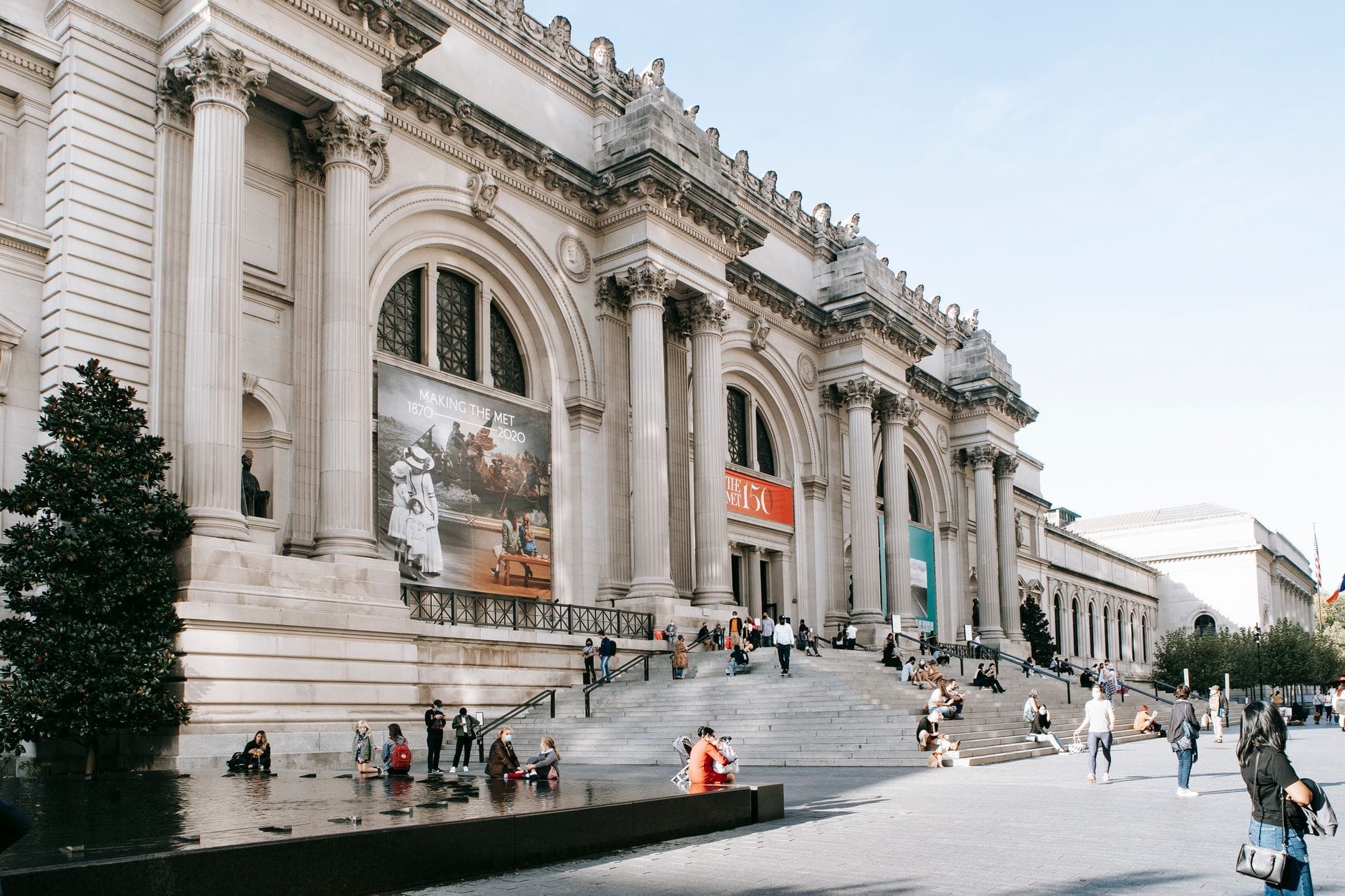
The museum was incorporated on April 13, 1870, and first opened to the public in 1872. The current Fifth Avenue building, on the eastern edge of Central Park, opened in 1880. Since then it has expanded through a long series of additions, with wings and galleries accumulating over more than a century. The result is an architectural patchwork: grand Beaux-Arts facades on Fifth Avenue give way to glass-roofed atriums, brick Victorian galleries, and modernist spaces tucked behind the original stone.
💡 Local tip
Download the Met's free app before you arrive. It includes an interactive floor map, audio guides for major collections, and the ability to save works to a personal list. The building is genuinely large enough to get disoriented in without it.
How the Experience Changes by Time of Day
Arriving at 10:00 on a weekend morning means joining a crowd that forms before the doors open. The Great Hall fills quickly with organized school groups, tour parties, and visitors checking timed entry tickets. The noise level in the first hour is considerable: echoing voices, the shuffle of audio guide handsets, the particular sound of hundreds of coat-check transactions happening simultaneously.
By midday, the most popular rooms, particularly the Egyptian Wing with the Temple of Dendur, the European Paintings galleries, and the American Wing atrium, tend to reach peak congestion. The Temple of Dendur sits inside a glass-enclosed room flooded with natural light, which makes for extraordinary photographs but also means the space feels genuinely full by 11:30 on busy days.
Friday and Saturday evenings, when the museum stays open until 9 pm, offer a noticeably different atmosphere. The crowd thins after 17:00, the Great Hall echoes rather than buzzes, and the galleries hosting less-trafficked collections, such as the Arms and Armor Hall or the Robert Lehman Wing, can feel almost private. If your visit falls on a Friday or Saturday, consider timing your arrival for around 16:30.
Wednesday is the one day The Met is fully closed. Plan around this. Many visitors arriving in the city midweek are caught off-guard.
⚠️ What to skip
The Met is closed every Wednesday, as well as Thanksgiving Day, December 25, January 1, and the first Monday in May (for the annual Gala). Always check the official calendar before visiting.
Tickets & tours
Hand-picked options from our booking partner. Prices are indicative; availability and final rates are confirmed when you complete your booking.
Private Metropolitan Museum of Art skip-the-line guided tour
From 131 €Instant confirmationFree cancellationSemi-private Metropolitan Museum of Art Skip-the-Line guided tour
From 90 €Instant confirmationFree cancellationMet Museum of Art and Manhattan Walking Tour
From 61 €Instant confirmationFree cancellationMetropolitan Museum Guided Tour with Skip-the-Line Ticket
From 66 €Instant confirmationFree cancellation
Navigating the Collection: Where to Start
The sheer scale of the Met creates a practical problem most guidebooks understate: choice paralysis. The museum spans 17 curatorial departments and dozens of named wings and galleries across multiple floors. First-time visitors who try to cover everything leave exhausted and retain almost nothing. A better approach is to choose two or three departments and commit to them properly.
The Egyptian Art collection on the ground floor, north of the Great Hall, is consistently among the most impressive of its kind outside Cairo. The Temple of Dendur, an actual ancient Egyptian temple relocated to New York in the 1960s as a gift from Egypt, sits in its own dedicated gallery with original hieroglyphic carvings still visible on the sandstone walls. The light in this room shifts throughout the day as sunlight moves across the glass ceiling.
The European Paintings galleries on the second floor contain works by Vermeer, Rembrandt, El Greco, Velázquez, and a substantial Impressionist and Post-Impressionist section including significant holdings of Monet, Cézanne, and Van Gogh. These rooms are rarely quiet, but the density of major works per square foot is remarkable. The Arms and Armor Hall, by contrast, is consistently less crowded despite its theatrical presentation of medieval European and Japanese weaponry and full equestrian armor displays.
For visitors with a particular interest in American art and architecture, the American Wing occupies a large portion of the northwestern corner of the building across multiple floors. The glass-roofed Charles Engelhard Court on the ground floor contains full-scale period interiors, including an original facade from a demolished Manhattan bank building, transplanted intact into the museum.
The Building Itself
The Fifth Avenue facade, designed in the Beaux-Arts style by Richard Morris Hunt and completed in the 1890s and early 1900s, is one of the most photographed institutional facades in New York. The broad stone steps leading up to the main entrance serve as an informal gathering space throughout the day: visitors eat lunch on the steps, school groups collect themselves before entering, and tourists take photos with the banners advertising current exhibitions.
Inside the Great Hall, the domed ceiling and marble floors create an immediate sense of scale. It is worth pausing here rather than rushing toward the galleries. The information desks are staffed with knowledgeable personnel who can provide gallery maps and point you toward the specific sections you want. The acoustics are unusual: conversations carry in unexpected directions.
The Met sits along what is informally called Museum Mile, the stretch of Fifth Avenue bordering Central Park that also contains the Guggenheim, the Cooper Hewitt Design Museum, and several other significant institutions. After visiting The Met, a walk south along the park edge or through the park itself is a natural continuation of the day.
Practical Details for Getting There and Getting In
The most straightforward subway route is the 4, 5, or 6 train to 86th Street station on the Lexington Avenue line, followed by a roughly ten-minute walk west along 86th Street to Fifth Avenue. The museum entrance sits at 82nd Street and Fifth Avenue, so you will approach from the north and walk down a short block. Bus routes M1, M2, M3, and M4 run along Fifth and Madison Avenues and stop near the museum; the M79 and M86 crosstown buses are useful if you are coming from the West Side or from points along Central Park West.
Tickets can be purchased online in advance or at the door. Booking online is advisable during peak months (summer and major holiday weekends) to avoid queuing. New York State residents and students from New York, New Jersey, and Connecticut are eligible for pay-what-you-wish admission at ticket counters, with valid proof of residency or enrollment required. This policy applies to counter purchases only, not online ticketing.
The wheelchair and stroller-accessible entrance is located near 81st Street and Fifth Avenue, The museum is committed to full accessibility and provides wheelchairs, audio guides, and assistive listening devices; details are listed on their accessibility page at metmuseum.org.
ℹ️ Good to know
Large bags and backpacks must be checked at the coat check. The check is free. Umbrellas must also be checked or collapsed inside the building. Strollers are permitted.
Photography, Eating, and What to Bring
Photography for personal use is permitted throughout the permanent collection galleries, without flash. Tripods and monopods are not allowed. The Temple of Dendur room, the arms and armor displays, and several period rooms offer genuinely dramatic compositions, particularly in the late afternoon when the light angles change inside the glass-roofed spaces. In temporary exhibition galleries, photography restrictions vary and are posted at each entrance.
The museum has multiple dining options inside: the main restaurant on the ground floor, a more casual cafeteria-style option on the lower level, and the Roof Garden Cafe and Martini Bar, open seasonally and offering views toward Central Park and the Manhattan skyline. The Roof Garden is open from late spring through early fall and is worth factoring into a Friday or Saturday evening visit when the light over the park is at its best.
Comfortable footwear is not optional. The museum covers about 2.2 million square feet of floor space. Even a focused two-department visit involves a substantial amount of walking on hard floors. Wear shoes you can stand in for three or four hours without issue.
Who Should Reconsider
The Met is not an attraction that suits everyone equally. Visitors looking for a quick one-hour stop will find the experience frustrating rather than satisfying: the building requires orientation, the collection requires choices, and the most popular rooms require patience with crowds. If you are traveling with very young children who are not yet engaged by looking at objects quietly, the scale and crowd density can be genuinely difficult to manage, though the museum does provide family guides and activity materials designed for younger visitors.
If your time in New York is limited to one or two days and art museums are not a personal priority, other experiences in the city may return more per hour of your visit. The Met rewards prior interest and sustained attention. Without those, it can feel like a very expensive, very large hallway.
Insider Tips
- The medieval art galleries in the back of the first floor, beyond the Greek and Roman wing, are often quiet and overlooked. The stained glass and tapestry collections here are extraordinary and rarely crowded even on peak days.
- The Roof Garden Cafe opens for the season in late spring and closes in early fall. On Friday evenings, it functions more like a rooftop bar than a museum amenity. The view toward the park at dusk is one of the better free-ish views on the Upper East Side.
- New York State residents pay what they wish, but only at the counter. If you qualify, do not buy online in advance, as the discounted rate is not available through the ticketing website.
- The museum's audio guide app includes content beyond the standard highlights tour. There are specialized tours for specific collections, including one focused solely on the Temple of Dendur and one on the Arms and Armor Hall, which most visitors skip entirely.
- Coat check closes before the museum does. If you have items checked, retrieve them at least 45 minutes before closing to avoid the end-of-day rush.
Who Is The Metropolitan Museum of Art For?
- Art and history enthusiasts who can spend a half-day or more with a defined focus
- Architecture lovers interested in Beaux-Arts design and the layered evolution of a major civic institution
- Visitors with an interest in ancient civilizations, especially Egyptian and Greek antiquity
- Travelers on return visits to New York who want to go deeper into the city's cultural institutions
- Couples or solo travelers who want an unhurried Friday or Saturday evening with dinner options nearby
Nearby Attractions
Other things to see while in Upper East Side:
- Cooper Hewitt Smithsonian Design Museum
Housed inside the landmark Andrew Carnegie Mansion on Fifth Avenue, Cooper Hewitt, Smithsonian Design Museum is the only museum in the United States dedicated entirely to design. From its interactive pen technology to its walled garden, it rewards curiosity at a pace most major NYC museums cannot match.
- The Frick collection
The Frick Collection occupies a landmark Fifth Avenue mansion on the Upper East Side, housing one of the most concentrated displays of Old Master paintings and European decorative arts in the United States. With intimate galleries, a price-scaled admission structure, and a pay-what-you-wish Wednesday afternoon window, it rewards careful visitors far more than many larger institutions.
- Solomon R. Guggenheim Museum
The Solomon R. Guggenheim Museum is one of the world's most recognizable buildings and one of New York City's great cultural institutions. Frank Lloyd Wright's continuous spiral rotunda, completed in 1959, is as much the attraction as the art inside. This guide covers what to expect, when to go, and how to make the most of your visit.
- The Jewish Museum
Founded in 1904 and housed in a French Gothic mansion on Fifth Avenue, The Jewish Museum is the first institution of its kind in the United States. With rotating exhibitions, a permanent collection spanning 4,000 years, and free admission every Saturday, it rewards visitors who come curious and leave with more questions than they arrived with.