The Jewish Museum: Art, History, and Culture on Museum Mile
Founded in 1904 and housed in a French Gothic mansion on Fifth Avenue, The Jewish Museum is the first institution of its kind in the United States. With rotating exhibitions, a permanent collection spanning 4,000 years, and free admission every Saturday, it rewards visitors who come curious and leave with more questions than they arrived with.
Quick Facts
- Location
- 1109 Fifth Ave at 92nd St, Upper East Side, Manhattan
- Getting There
- Subway 4/5/6 to 86th St or 96th St, then a short walk along Fifth Avenue
- Time Needed
- 2 to 3 hours for a thorough visit; 90 minutes if focused
- Cost
- Adults $22, seniors $12, students $8, under 18 free, Saturdays free for all
- Best for
- History enthusiasts, art lovers, families, and anyone interested in Jewish culture and identity
- Official website
- thejewishmuseum.org
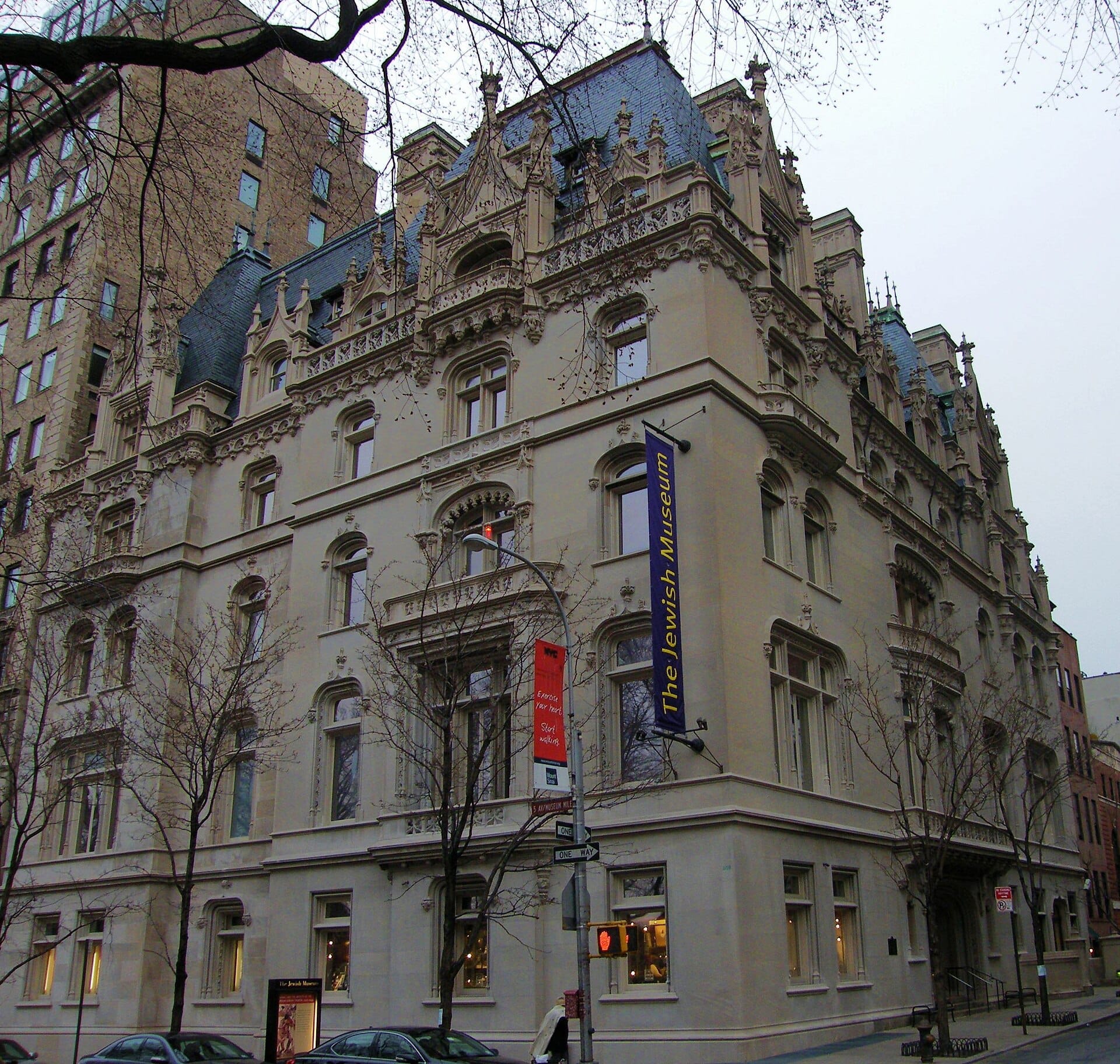
What The Jewish Museum Actually Is
The Jewish Museum sits at 1109 Fifth Avenue, at the corner of 92nd Street, in the stretch of upper Manhattan known as Museum Mile. Founded in 1904, it is the first museum of its kind in the United States, and its collection spans roughly 4,000 years of Jewish art, history, and culture. That breadth is both its strength and its challenge: the museum navigates a civilization that crosses continents, centuries, and contradictions, and it does so with genuine curatorial ambition rather than reverence alone.
The building itself announces the institution before you step inside. The museum occupies the former Warburg Mansion, a five-story French Gothic chateau completed in 1908 for financier Felix Warburg and his family. The mansion was donated to the Jewish Theological Seminary in 1944, and the museum expanded with a compatible addition in 1993 that preserved the original facade's limestone detailing and turrets. On a gray morning, the building reads almost ecclesiastical against the bare trees of Central Park; on a bright afternoon, the pale stone reflects warm light and looks almost domestic. Either way, it stands apart from the glass towers pressing in from both sides of Fifth Avenue.
💡 Local tip
Admission is free every Saturday. If budget is a concern, this is the obvious day to go. Arrive before noon to avoid the mid-day crowd that builds around 1 pm.
The Collection and What to Prioritize
The permanent collection runs to approximately 30,000 objects: ceremonial art, coins, textiles, manuscripts, photography, film, and contemporary works. The range from a Roman-era oil lamp to a neon installation can feel disorienting at first, but the museum uses thematic framing rather than strict chronology, which helps. Galleries are organized around questions of identity, memory, and belonging rather than dynasties or geography, and that choice shapes how you move through the space.
Two floors are typically dedicated to the permanent collection, and rotating exhibitions occupy additional gallery space, often on the upper levels. The temporary shows are consistently strong: the museum has a track record of commissioning challenging work from contemporary artists alongside historical survey exhibitions. Check the website before your visit, because a major temporary exhibition changes the calculus of how long you need and which galleries to prioritize.
If time is limited, the ceremonial objects on the lower permanent collection floors reward close attention: Torah ark curtains with embroidered silk that took years to produce, silver finials worn smooth at the tips from generations of handling, and Hanukkah lamps from Italy, Germany, and North Africa that differ completely in form despite serving the same function. These objects carry their history in their surfaces in a way that photographs cannot replicate.
Tickets & tours
Hand-picked options from our booking partner. Prices are indicative; availability and final rates are confirmed when you complete your booking.
911 Memorial Museum and Lady Liberty Cruise of NYC
From 69 €Instant confirmationFree cancellationNYC 9-11 Memorial and financial district guided walking tour
From 18 €Instant confirmationFree cancellationBest of NYC eBike Tour
From 88 €Instant confirmationFree cancellationNYC: Official Grand Central Terminal Tour
From 30 €Instant confirmationFree cancellation
How the Experience Changes by Time of Day
Thursday evening, when the museum stays open until 8 pm, is genuinely different from any other time. The galleries thin out noticeably after 5:30 pm, lighting feels more focused, and you can stand in front of a large-format photograph or a complex installation for five or ten minutes without anyone waiting behind you. The museum's cafe is typically still open for part of the evening, and the quieter pace makes the Thursday extended hours one of the better-value windows of the week.
Sunday mornings between 11 am and 12:30 pm attract a mix of local families and dedicated visitors who arrive early. The building is never genuinely crowded in the way that the Metropolitan Museum of Art can be on a summer Saturday, but the upper-floor galleries do fill during peak tourist season, particularly July through August. Spring and autumn remain the most comfortable visiting seasons, both for the weather and for more manageable gallery density.
ℹ️ Good to know
The museum is closed Wednesday and Thursday. Plan accordingly if you are building a multi-stop Museum Mile day: many nearby institutions have different closure days.
Getting There and the Museum Mile Context
The museum sits squarely on Museum Mile, the section of Fifth Avenue running from 82nd to 105th Streets that contains nine cultural institutions. If you are combining visits, the Metropolitan Museum of Art is about ten blocks south at 82nd Street, and the Guggenheim Museum is at 89th Street. This makes a logical three-institution day if you are disciplined about time, though doing all three properly in a single day is ambitious.
The nearest subway stations are the 4, 5, and 6 trains at 86th Street and 96th Street, both within comfortable walking distance along Fifth Avenue. The walk along the park side of the avenue is pleasant in good weather, with Central Park directly across the street. Bus routes M1, M2, M3, and M4 all run along Madison Avenue northbound and Fifth Avenue southbound and stop close to the museum entrance, which is useful in rain or cold.
The Upper East Side is generally easy to navigate on foot, and the stretch between 86th and 96th Streets along Fifth Avenue is low-traffic and straightforward. Wear comfortable shoes if you plan to walk between multiple Museum Mile institutions, since the pavement on Fifth Avenue is unforgiving after two or three hours.
Practical Details Worth Knowing
Opening hours are Friday, Saturday, Sunday, Monday, and Tuesday from 11 am to 6 pm, with Thursday extended to 8 pm. The museum is closed on Wednesday and Thursday during the day. Admission is $22 for adults, $12 for seniors 65 and older, $8 for students with valid ID, and free for children 18 and under. All visitors receive free admission on Saturdays and on select Jewish holidays, though the museum also notes closure exceptions on certain holidays, so checking the official calendar before visiting is worth the 30 seconds it takes.
The museum maintains a strong accessibility commitment. Visitors who are blind or have low vision, Deaf visitors, and visitors with memory-related conditions can access dedicated programs. Visitors with disabilities and one accompanying caregiver receive free admission. Coat check is available, which matters in winter when large bags or coats can make navigating tighter gallery spaces awkward.
If you are planning a broader Upper East Side day, the Neue Galerie at 86th Street and the Cooper Hewitt Design Museum at 91st Street are within a short walk. Both have their own admission requirements, so plan your budget accordingly. For a wider look at how these institutions fit together, the best museums in New York City guide covers the full landscape.
Photography and What to Expect Visually
Photography is generally permitted in the permanent collection galleries without flash. Temporary exhibition policies vary, and signage at the gallery entrance will indicate restrictions. The ceremonial objects are often displayed in low-light conditions to protect textiles and organic materials, which means phone cameras can struggle, though the compositions reward the attempt. The building's interior staircase and the restored architectural details of the original mansion are worth photographing even if the galleries themselves limit options.
Natural light in the ground-floor lobby area is good in the morning on clear days, when it comes through the front windows at a low angle. If you are visiting primarily to see the architecture, a midday arrival on a sunny day gives the exterior facade its best light from across Fifth Avenue.
Who This Museum Is Not For
Visitors looking for a spectacle-first experience or a quick landmark photo stop may find The Jewish Museum underwhelming. The building is impressive, but this is a museum built around objects that reward slow looking and reading. If you are not prepared to spend time with wall text and display cases, the experience will feel thin. It is also not oriented primarily toward children in the way that, say, the American Museum of Natural History is: younger children may find the galleries difficult to navigate with sustained interest unless they come with specific preparation or join a family program.
The museum does not try to be all things to all visitors, which is part of what makes it worth taking seriously. It has a point of view, and it commits to it.
Insider Tips
- Thursday evening after 5:30 pm is the best time for undisturbed gallery time. The extended hours until 8 pm attract far fewer visitors than weekend afternoons, and the lighting in the permanent collection feels more deliberate in the lower light of a winter evening.
- Free Saturday admission does not require any advance booking or registration. Simply show up. The museum does not publicize this aggressively, so many tourists pay full price when they could visit for free by shifting their day by 24 hours.
- The museum cafe, Russ and Daughters at the Jewish Museum, is a collaboration with the legendary Lower East Side appetizing institution. Even if you are not hungry, the connection between the two is culturally significant and the smoked fish and bagel offerings are worth factoring into your visit schedule.
- Check the temporary exhibition schedule before committing to a date. The museum's rotating shows sometimes have specific ticketing or timed-entry requirements layered on top of general admission, which can affect wait times and planning.
- The ground-floor museum shop is one of the better-curated retail spaces on Museum Mile, with books, design objects, and jewelry that reflect the collection without being generic souvenir merchandise. It is accessible without paying admission if you just want to browse.
Who Is The Jewish Museum For?
- Travelers with a serious interest in Jewish history, art, or culture who want depth rather than surface coverage
- Museum-goers building a full Museum Mile day and looking for a smaller, less overwhelming counterpart to the Met
- Budget-conscious visitors who can schedule a Saturday visit to take advantage of free admission
- Architecture enthusiasts interested in Gilded Age mansions and the French Gothic revival style
- Visitors who appreciate strong curatorial arguments in temporary exhibitions rather than purely encyclopedic displays
Nearby Attractions
Other things to see while in Upper East Side:
- Cooper Hewitt Smithsonian Design Museum
Housed inside the landmark Andrew Carnegie Mansion on Fifth Avenue, Cooper Hewitt, Smithsonian Design Museum is the only museum in the United States dedicated entirely to design. From its interactive pen technology to its walled garden, it rewards curiosity at a pace most major NYC museums cannot match.
- The Frick collection
The Frick Collection occupies a landmark Fifth Avenue mansion on the Upper East Side, housing one of the most concentrated displays of Old Master paintings and European decorative arts in the United States. With intimate galleries, a price-scaled admission structure, and a pay-what-you-wish Wednesday afternoon window, it rewards careful visitors far more than many larger institutions.
- Solomon R. Guggenheim Museum
The Solomon R. Guggenheim Museum is one of the world's most recognizable buildings and one of New York City's great cultural institutions. Frank Lloyd Wright's continuous spiral rotunda, completed in 1959, is as much the attraction as the art inside. This guide covers what to expect, when to go, and how to make the most of your visit.
- The Metropolitan Museum of Art
The Metropolitan Museum of Art is the largest art museum in the Americas, with a collection spanning over 5,000 years and nearly two million works. Located along Museum Mile on the eastern edge of Central Park, it rewards multiple visits and demands a plan for just one.