Solomon R. Guggenheim Museum: Art, Architecture, and the Spiral That Changed Everything
The Solomon R. Guggenheim Museum is one of the world's most recognizable buildings and one of New York City's great cultural institutions. Frank Lloyd Wright's continuous spiral rotunda, completed in 1959, is as much the attraction as the art inside. This guide covers what to expect, when to go, and how to make the most of your visit.
Quick Facts
- Location
- 1071 Fifth Avenue at 89th Street, Upper East Side, Manhattan
- Getting There
- Subway: 4/5/6 to 86th St; Bus: M1, M2, M3, M4 along Fifth Ave
- Time Needed
- 2 to 3 hours for a thorough visit; 90 minutes if focused
- Cost
- Paid admission; concessions for seniors, students, and children. Check guggenheim.org for current prices and any pay-what-you-wish times.
- Best for
- Architecture enthusiasts, modern art lovers, first-time NYC visitors
- Official website
- www.guggenheim.org
What the Guggenheim Actually Is
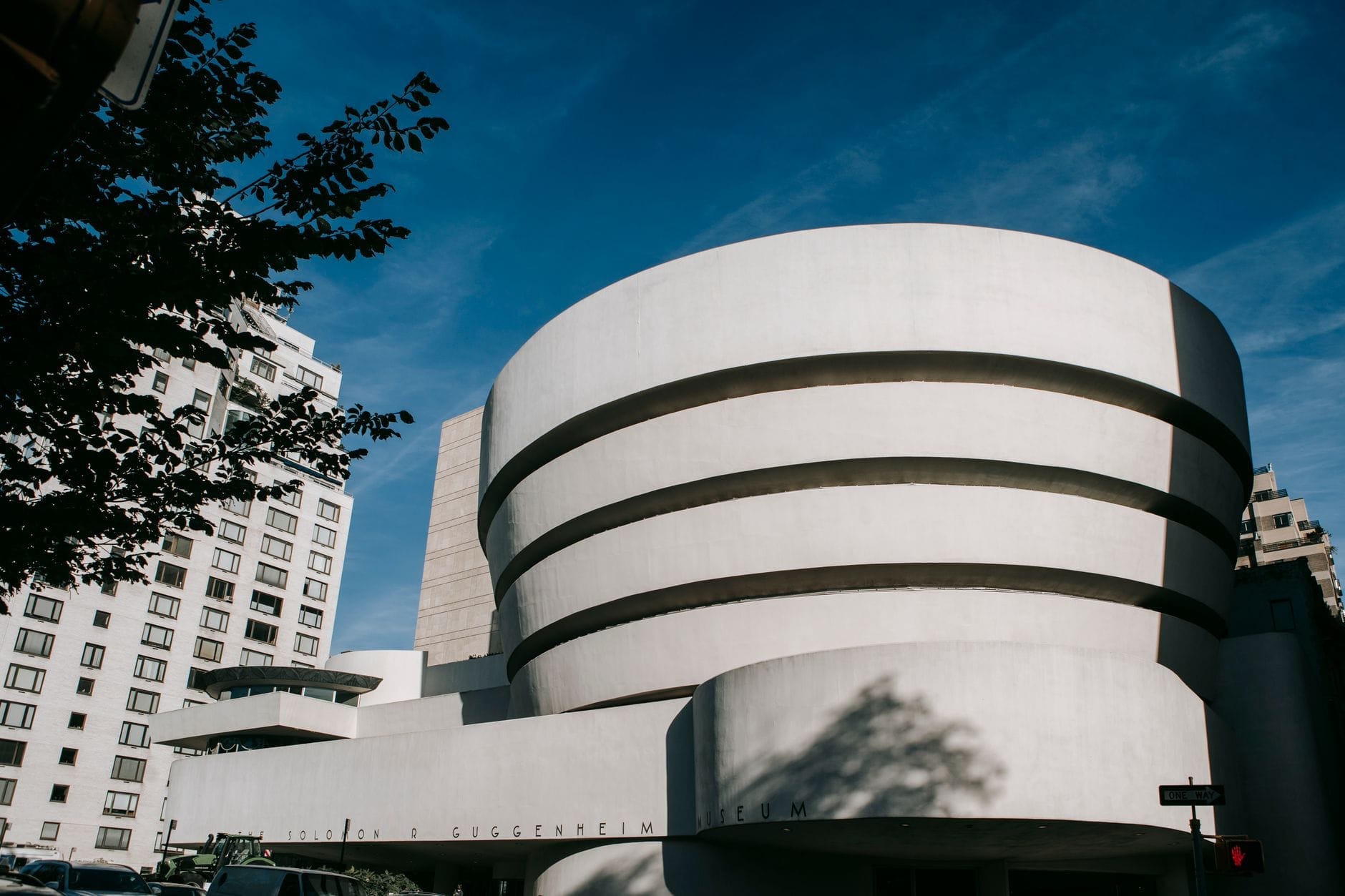
The Solomon R. Guggenheim Museum sits at 1071 Fifth Avenue on Manhattan's Upper East Side, its creamy white concrete form pressing out toward the sidewalk like an inverted ziggurat. On a street lined with conventional facades and apartment buildings, it looks like something that landed from a different century. Which, in a sense, it did.
Frank Lloyd Wright designed the building over roughly 16 years. The museum opened on October 21, 1959, six months after Wright's death, making it a kind of architectural farewell. The institution itself predates the building: it was established in 1939 as the Museum of Non-Objective Painting by the Solomon R. Guggenheim Foundation’s first director, Hilla Rebay, before eventually moving into its permanent home. Today the building is a National Historic Landmark, listed on the National Register of Historic Places, and part of a group of Frank Lloyd Wright works inscribed as a UNESCO World Heritage Site.
For travelers already exploring the Upper East Side, the Guggenheim anchors the northern end of what locals call Museum Mile, a stretch of Fifth Avenue between 82nd and 105th Streets that contains more cultural institutions per block than almost anywhere in the country.
💡 Local tip
Book tickets online in advance. The Guggenheim frequently sells out on weekends, particularly during major temporary exhibitions. Walk-in availability is not guaranteed.
The Architecture: The Building Is the Point
Before you look at a single painting, the building itself demands attention. From the outside, the spiral form is best appreciated from across Fifth Avenue, where you can see the full geometry without craning. The overhanging floors create deep horizontal shadows that shift throughout the day as the light changes. On a bright morning, the white exterior almost glows. On overcast days, it looks more monumental and imposing.
Inside, the central atrium is a genuine surprise even if you've seen photographs. The scale only registers in person: the rotunda opens to a skylit dome roughly 28 meters (about 92 feet) overhead, and the continuous spiral ramp rises around the interior perimeter. The air inside feels lighter than street level, and the ambient hum of the city disappears the moment the entrance doors close. Sound moves strangely in the rotunda; conversations from the upper ramp drift down in fragments.
Wright's intention was for visitors to take an elevator to the top and descend the ramp, encountering art on a gentle slope rather than in sequential flat rooms. Most visitors today follow that same logic, though you're free to move in either direction. The ramp is gradual enough that the incline rarely registers consciously, but if you have mobility concerns, elevators serve every level and the slope is worth flagging in advance.
ℹ️ Good to know
The Guggenheim is fully accessible. Elevators reach all gallery levels, accessible restrooms are available throughout the building, and the museum offers programs for visitors who are deaf or hard of hearing, blind or have low vision, or have cognitive disabilities. Check the accessibility section at guggenheim.org before visiting.
Tickets & tours
Hand-picked options from our booking partner. Prices are indicative; availability and final rates are confirmed when you complete your booking.
Guggenheim Museum and Carnegie Hill tickets and audio tour
From 44 €Instant confirmationThe Guggenheim Museum and Manhattan Walking Tour
From 61 €Instant confirmationFree cancellationStatue of Liberty, Ellis Island, and Brooklyn Bridge Happy Hour Cruise
From 49 €Instant confirmationFree cancellationSpirit of New York Dinner Cruise
From 161 €Instant confirmationFree cancellation
The Collection: What You'll Actually See
The permanent collection focuses on modern and contemporary art, with particular depth in late 19th and early 20th century European work. There are strong holdings of Kandinsky, Klee, Picasso, and Chagall, alongside Impressionist and Post-Impressionist pieces that trace the arc of modernism from its European roots. Solomon Guggenheim was an early and serious collector of abstract painting, and that founding commitment to non-objective art still shapes the collection's character.
What changes with each visit, and what drives repeat attendance, are the temporary exhibitions. These occupy major sections of the ramp and sometimes the entire building, and the Guggenheim consistently mounts large-scale thematic or retrospective shows that require dedicated attention. Check the exhibition calendar before booking: a visit timed to a major retrospective is a significantly different experience from a visit during a quieter rotation of permanent work.
If the Guggenheim's holdings leave you wanting more depth in modern and contemporary art, the Museum of Modern Art in Midtown offers one of the world's premier collections of 20th century work, with particular strength in painting, sculpture, film, and design.
Timing Your Visit: How the Experience Changes by Hour
The Guggenheim is at its most crowded mid-morning on weekends, roughly between 11am and 2pm. The rotunda fills with tour groups, the audio guide traffic thickens on the ramp, and the cafe sees long queues. If you visit on a weekday, particularly Tuesday through Thursday, the same spaces feel genuinely spacious.
Late afternoon visits on weekdays are worth considering specifically for the light. The domed skylight over the rotunda admits natural daylight, and in the two hours before closing, the quality of that light shifts to a lower, warmer angle that changes how the rotunda feels. The crowds also thin. This is the window where the building reveals itself most clearly, when you can stand at the base of the ramp and look up at the spiral without a hundred people in the frame.
The Guggenheim occasionally offers extended evening hours or special programming. Check the official calendar at guggenheim.org and also review the best museums in New York City guide for broader context on planning a museum-heavy itinerary.
Getting There and the Surrounding Area
The most direct subway route is the 4, 5, or 6 train to 86th Street, followed by a roughly five- to six-block walk north along Fifth Avenue. The walk takes you past the Metropolitan Museum of Art, which occupies several blocks between 80th and 84th Streets, making it easy to combine both institutions in a single day if the schedule allows.
The M1, M2, M3, and M4 buses all run along Fifth Avenue and stop closer to the museum entrance, which is useful if you're coming from further uptown or from the Upper West Side via crosstown bus. Taxis and ride-hailing apps are reliable in this area, though Fifth Avenue traffic can be slow during midday hours.
The museum sits directly across Fifth Avenue from Central Park, and that proximity is worth building into your visit. A walk through the park before or after — even just down to the 86th Street transverse — gives you a useful decompression that the dense art-and-architecture experience benefits from.
Photography and Practical Notes
Personal photography for non-commercial use is generally permitted in the galleries, though individual exhibitions sometimes restrict photography based on loan agreements. Check current rules on the day. The interior of the rotunda is the signature shot: from the ground floor looking up at the spiral, or from the upper ramp looking down into the atrium below. Both angles require patience and a willingness to wait for breaks in foot traffic.
The exterior is best photographed in the morning when Fifth Avenue traffic is lighter and the building catches direct light from the east. A wide lens helps from street level; from across the street in Central Park there's more room to capture the full facade.
The museum cafe is located on the ground floor and serves light meals and drinks. Quality is reasonable for a museum cafe, though options are limited. There are significantly better dining choices within a few blocks along the Upper East Side for anyone planning a longer half-day in the area.
⚠️ What to skip
The Guggenheim closes on certain holidays and may close early or fully during private events and installation changeovers. Always verify current hours at guggenheim.org before making the trip, especially around major holidays.
Who Should Think Twice
Visitors primarily interested in Old Masters, Classical, or pre-modern art will likely find the permanent collection less satisfying than they expect. The Guggenheim's strength is modernism and beyond; for depth in earlier work, the Metropolitan Museum of Art is the more logical choice given its proximity. Similarly, anyone expecting a conventional white-cube gallery experience will find the spiral ramp format disorienting at first — art is presented on angled walls at a slight slope, which suits some works and feels odd with others. This is not a flaw but a feature of the architectural context, and it's worth knowing before you arrive.
Visitors with severe mobility limitations should note that while the building is technically accessible via elevator, the ramp experience is the primary intended route through the galleries, and some of the spatial drama is reduced when moving between floors by lift rather than on foot.
Insider Tips
- The ground floor rotunda is free to enter briefly without a ticket, allowing you to glimpse the interior before committing to admission. This is useful if you're undecided on whether to visit that day.
- Guggenheim members enter without advance ticket reservations on most days and can skip the general admission queue. If you plan to visit multiple times in a year or are pairing this with other NYC museum visits, a membership often pays for itself quickly.
- For the clearest view up the rotunda spiral, walk to the very center of the ground floor and look straight up. The further from the center you stand, the more the geometry flattens. This is also the most dramatic photograph of the building's interior.
- The museum store near the entrance carries design-forward art books, prints, and objects that go well beyond typical museum shop fare. It's worth browsing even if you're not a habitual art book buyer.
- Combine a Guggenheim visit with the stretch of Fifth Avenue between 82nd and 89th Streets for back-to-back architecture: the Metropolitan Museum of Art's Beaux-Arts facade and the Guggenheim's modernist contrast make for a useful, walkable comparison in how institutions frame culture through buildings.
Who Is Solomon R. Guggenheim Museum For?
- Architecture enthusiasts who want to experience Frank Lloyd Wright's only major New York building in person
- Modern and contemporary art collectors and students with interest in the European modernist canon
- First-time NYC visitors building a Museum Mile day alongside the Met
- Travelers visiting during a major temporary exhibition, when the Guggenheim often presents some of its most ambitious programming
- Photographers looking for one of the most distinctive interior spaces in any city museum worldwide
Nearby Attractions
Other things to see while in Upper East Side:
- Cooper Hewitt Smithsonian Design Museum
Housed inside the landmark Andrew Carnegie Mansion on Fifth Avenue, Cooper Hewitt, Smithsonian Design Museum is the only museum in the United States dedicated entirely to design. From its interactive pen technology to its walled garden, it rewards curiosity at a pace most major NYC museums cannot match.
- The Frick collection
The Frick Collection occupies a landmark Fifth Avenue mansion on the Upper East Side, housing one of the most concentrated displays of Old Master paintings and European decorative arts in the United States. With intimate galleries, a price-scaled admission structure, and a pay-what-you-wish Wednesday afternoon window, it rewards careful visitors far more than many larger institutions.
- The Jewish Museum
Founded in 1904 and housed in a French Gothic mansion on Fifth Avenue, The Jewish Museum is the first institution of its kind in the United States. With rotating exhibitions, a permanent collection spanning 4,000 years, and free admission every Saturday, it rewards visitors who come curious and leave with more questions than they arrived with.
- The Metropolitan Museum of Art
The Metropolitan Museum of Art is the largest art museum in the Americas, with a collection spanning over 5,000 years and nearly two million works. Located along Museum Mile on the eastern edge of Central Park, it rewards multiple visits and demands a plan for just one.