The Frick Collection: Great Art in a Gilded Age Mansion
The Frick Collection occupies a landmark Fifth Avenue mansion on the Upper East Side, housing one of the most concentrated displays of Old Master paintings and European decorative arts in the United States. With intimate galleries, a price-scaled admission structure, and a pay-what-you-wish Wednesday afternoon window, it rewards careful visitors far more than many larger institutions.
Quick Facts
- Location
- 1 East 70th Street, Upper East Side, Manhattan
- Getting There
- 6 train to 68th St/Lexington Ave; Q to 72nd St/2nd Ave; N/R/W to 59th St/Lexington Ave; buses M1, M2, M3, M4, M72
- Time Needed
- 1.5 to 3 hours
- Cost
- Adults $30 / Seniors & visitors with disabilities $22 / Students $17 / Ages 10–18 free. Pay-what-you-wish Wed 1:30–5:30 p.m.
- Best for
- Art lovers, architecture enthusiasts, quiet museum-goers, couples
- Official website
- www.frick.org
What the Frick Collection Actually Is
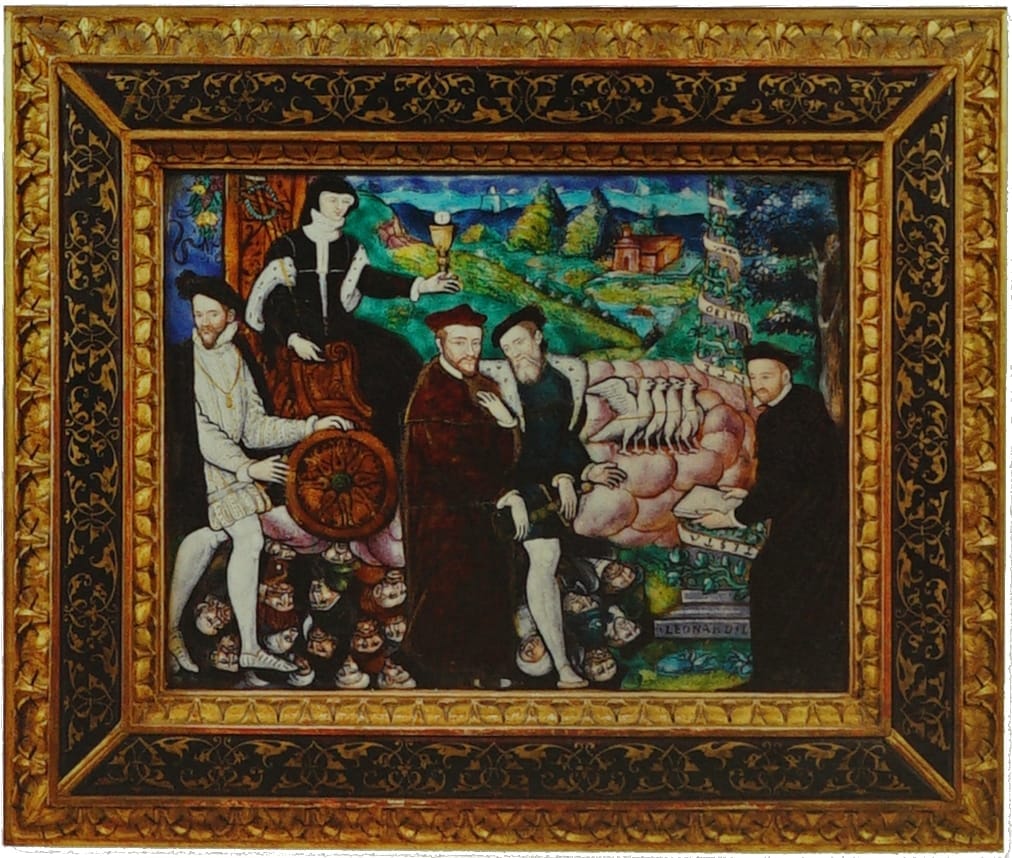
The Frick Collection is a fine art museum housed in the former private residence of industrialist Henry Clay Frick, built between 1912 and 1914 on Fifth Avenue facing Central Park. It has been open to the public since 1935 and, following a significant renovation, reopened in its revitalized Fifth Avenue home on April 17, 2025. The collection comprises roughly 1,500 works spanning the 13th to 19th centuries, including paintings by Vermeer, Rembrandt, Velázquez, El Greco, Goya, Turner, and Whistler, alongside French furniture, Limoges enamels, and Chinese porcelain.
The scale is deliberately human. Unlike encyclopedic institutions designed to overwhelm, the Frick fits its holdings into a series of interconnected period rooms, each furnished as Henry Frick intended them to be seen, with paintings hung at eye level against silk walls rather than stacked on white gallery partitions. That philosophy has not changed since 1935, and it remains the museum's defining quality.
ℹ️ Good to know
The museum is closed on Tuesdays. Hours for all other days are 10:30 a.m. to 5:30 p.m., with advance timed tickets required for entry except for members. Wednesday afternoons from 1:30 p.m. to 5:30 p.m. are pay-what-you-wish, making that window the most crowded of the week.
The Building and Its Context
The mansion was designed by Thomas Hastings of Carrère and Hastings, the same firm responsible for the New York Public Library on Fifth Avenue. It is a restrained Beaux-Arts structure, broader than it is tall, sitting behind a low wall that separates it from the sidewalk without entirely closing it off. From East 70th Street, the limestone facade reads as understated relative to its neighbors, which makes the interior all the more unexpected.
The Upper East Side block between 69th and 70th Streets along Fifth Avenue is sometimes called Museum Mile's quieter southern end. The Metropolitan Museum of Art sits about six blocks north and draws crowds an order of magnitude larger, which helps explain why the Frick feels genuinely calm by comparison even when it is technically at capacity. The neighborhood around it, detailed in our Upper East Side neighborhood guide, is residential and relatively quiet on weekday mornings.
The recent renovation, completed for the April 2025 reopening, introduced new public spaces and improved visitor circulation without altering the historic rooms. The most visible addition is expanded space on the building's interior, offering better flow between galleries that previously forced backtracking. The original garden court, a glassed interior courtyard with a central fountain, remains the emotional center of the visit and one of the genuinely memorable spaces in New York City's museum landscape.
Tickets & tours
Hand-picked options from our booking partner. Prices are indicative; availability and final rates are confirmed when you complete your booking.
Statue of Liberty, Ellis Island, and Brooklyn Bridge Happy Hour Cruise
From 49 €Instant confirmationFree cancellationSpirit of New York Dinner Cruise
From 161 €Instant confirmationFree cancellationNew York City Highlights bike tour
From 70 €Instant confirmationFree cancellationNew York Statue of Liberty and Ellis Island tour by ferry
From 55 €Instant confirmation
What You Will See Inside
The Fragonard Room is perhaps the most photographed interior, hung with a complete cycle of large-scale decorative panels by Jean-Honoré Fragonard titled 'The Progress of Love,' commissioned in 1771 and later rejected by their original patron. The panels have been in the room since 1915 and were designed to hang floor-to-ceiling; the effect is enveloping in a way that reproductions do not prepare you for.
The West Gallery, a long room with a barrel-vaulted skylight, contains the highest concentration of major works: three Rembrandts, a Velázquez portrait of Philip IV of Spain, El Greco's 'Saint Jerome,' and Turner's 'Fishing Boats Entering Calais Harbor.' The natural light from the skylight varies considerably depending on weather and time of day. On overcast mornings the room has a gray, muted quality that suits the Dutch masters particularly well. On bright afternoons in summer, the light can become quite warm and reflective.
Vermeer's three paintings in the collection, 'Officer and Laughing Girl,' 'Girl Interrupted at Her Music,' and 'Mistress and Maid,' are distributed across different rooms rather than grouped together. This is deliberate. They are meant to be encountered as part of a domestic setting, not as highlights in a chronological survey. Spending ten minutes with each, rather than moving quickly between them, is how the Frick rewards patience.
💡 Local tip
Audio guides are available and cover most major works. The commentary is substantive rather than superficial, and using it in the West Gallery specifically adds considerable context to paintings that can otherwise seem dense or unfamiliar.
How the Experience Changes by Time and Day
Opening time on a weekday morning, between 10:30 and 11:30 a.m., is consistently the quietest window. The garden court in particular, where benches ring the central fountain and filtered light comes through the glass ceiling overhead, can feel almost entirely private during the first hour. The sound of the fountain is audible throughout, which gives the space a quality closer to a private house than a public institution.
Wednesday afternoons during the pay-what-you-wish period draw a noticeably different crowd: students, younger visitors, and locals who use the museum regularly. The galleries become more animated and occasionally noisier, but not unpleasantly so. If you are sensitive to crowd density in small rooms, Thursday or Friday mornings are preferable. Saturday mornings tend to fill up by 11:30 a.m. and remain moderately busy through closing.
The museum does not have a rooftop, outdoor terrace, or café seating that responds to weather the way some institutions do, so rain or cold does not improve or worsen the internal experience. What weather does affect is how crowded the surrounding neighborhood is: on clear weekend afternoons, foot traffic from Central Park increases the number of walk-in visitors, and lines at the admissions desk can form.
Practical Details for Your Visit
Tickets can be purchased online in advance, which is advisable on weekends and during school holidays to avoid queuing at the desk. The museum's address is 1 East 70th Street. The 6 train to 68th Street and Lexington Avenue is the most straightforward subway option, leaving roughly a five- to ten-minute walk west along 68th or 70th Street to the entrance. The Q train to 72nd Street on Second Avenue is slightly longer but useful if you are coming from the east side of Midtown or from Brooklyn.
The Frick sits within a dense cluster of Upper East Side cultural institutions. If you are planning a full day in the area, the Neue Galerie is a short walk north at 86th Street, and the Jewish Museum is nearby as well. For a broader look at the neighborhood's art options, our guide to New York City's best museums puts the Frick in useful context.
Accessibility: visitors with disabilities pay $22 for admission. An Access-A-Ride stop is located at the south corner of East 70th Street and Fifth Avenue, directly across from the main entrance. The building, following its 2025 renovation, has improved internal accessibility, though visitors with specific mobility requirements should check current details with the museum directly before visiting.
Photography for personal, non-commercial use is permitted in most galleries. Flash and tripods are not allowed. The lighting in the West Gallery, drawing-room interiors, and the garden court makes handheld photography straightforward in decent light conditions.
Is the Frick Worth Your Time?
At $30 for adult admission, the Frick is not inexpensive by the standards of New York's free and pay-what-you-wish institutions. But the comparison to free options misses the point. The Frick offers something that is genuinely rare in a city of this scale: quiet, concentrated, unhurried access to works of verifiable greatness in rooms that were designed to hold them. That combination is not available at higher volume.
The museum is not ideal for visitors who want a broad survey of art history, interactive programming, or a child-friendly environment. Children under 10 are not admitted. If you are traveling with young children or looking for a more interactive experience, the Metropolitan Museum of Art is better suited to mixed-age groups. The Frick is also a relatively poor fit for visitors who prefer to move quickly through a lot of rooms; with roughly 16 primary galleries, it runs short by the standards of major encyclopedic museums, and visitors expecting scale may feel the admission cost is hard to justify.
For the right visitor, and the right visitor here means someone who finds looking carefully at a single Vermeer for ten minutes more satisfying than walking past thirty paintings in the same time, the Frick Collection is among the most rewarding museum hours available in New York City.
Insider Tips
- Wednesday pay-what-you-wish admission runs from 1:30 p.m. to 5:30 p.m. only. Arriving close to 1:30 p.m. means you queue before the period opens; arriving at 2:00 p.m. is often faster once the initial rush has cleared.
- The garden court benches fill up quickly on busy days. If you want to sit there quietly, go directly to it when you arrive and spend time in the galleries afterward rather than saving it for a rest at the end.
- The Fragonard Room panels were rejected by Louis XV's mistress Madame du Barry before Frick acquired them. Knowing that context while standing in front of them adds something that the audio guide does not always make prominent.
- The West Gallery skylight means afternoon light in that room is warmer and more golden in summer, while overcast mornings produce a cooler, more neutral light that suits the Dutch paintings particularly well. If you care about how paintings look under natural light, plan accordingly.
- Online advance tickets have the same price as walk-up tickets but save you the admissions queue on busy weekends. Booking for a Saturday morning slot is worth the two minutes it takes.
Who Is The Frick collection For?
- Art lovers who want depth over breadth and are comfortable spending real time with individual works
- Couples looking for a quiet, unhurried cultural afternoon on the Upper East Side
- Architecture and design enthusiasts interested in Gilded Age domestic interiors and Beaux-Arts building craft
- Visitors already familiar with the Met who want a contrasting experience at a smaller, more intimate scale
- Students with valid ID who can access the museum at a significantly reduced admission price of $17
Nearby Attractions
Other things to see while in Upper East Side:
- Cooper Hewitt Smithsonian Design Museum
Housed inside the landmark Andrew Carnegie Mansion on Fifth Avenue, Cooper Hewitt, Smithsonian Design Museum is the only museum in the United States dedicated entirely to design. From its interactive pen technology to its walled garden, it rewards curiosity at a pace most major NYC museums cannot match.
- Solomon R. Guggenheim Museum
The Solomon R. Guggenheim Museum is one of the world's most recognizable buildings and one of New York City's great cultural institutions. Frank Lloyd Wright's continuous spiral rotunda, completed in 1959, is as much the attraction as the art inside. This guide covers what to expect, when to go, and how to make the most of your visit.
- The Jewish Museum
Founded in 1904 and housed in a French Gothic mansion on Fifth Avenue, The Jewish Museum is the first institution of its kind in the United States. With rotating exhibitions, a permanent collection spanning 4,000 years, and free admission every Saturday, it rewards visitors who come curious and leave with more questions than they arrived with.
- The Metropolitan Museum of Art
The Metropolitan Museum of Art is the largest art museum in the Americas, with a collection spanning over 5,000 years and nearly two million works. Located along Museum Mile on the eastern edge of Central Park, it rewards multiple visits and demands a plan for just one.