Times Square: The Crossroads of the World, Honestly Assessed
Times Square sits at the intersection of Broadway, Seventh Avenue, and West 42nd Street in Midtown Manhattan, forming one of the most recognizable public spaces on the planet. Free to enter at any hour, it rewards visitors who understand what they're actually looking at, and when to show up.
Quick Facts
- Location
- Broadway & 7th Ave at W 42nd St, Midtown Manhattan, NY 10036
- Getting There
- Times Sq–42 St station (N, Q, R, W, 1, 2, 3, 7, S/42 St Shuttle). S Shuttle from Grand Central is the fastest single-stop connection.
- Time Needed
- 30–90 minutes for the square itself; longer if combining with Broadway or nearby attractions
- Cost
- Free to enter. Individual attractions, shows, and experiences have separate fees.
- Best for
- First-time visitors, evening energy, architecture enthusiasts, New Year's Eve
- Official website
- www.timessquarenyc.org
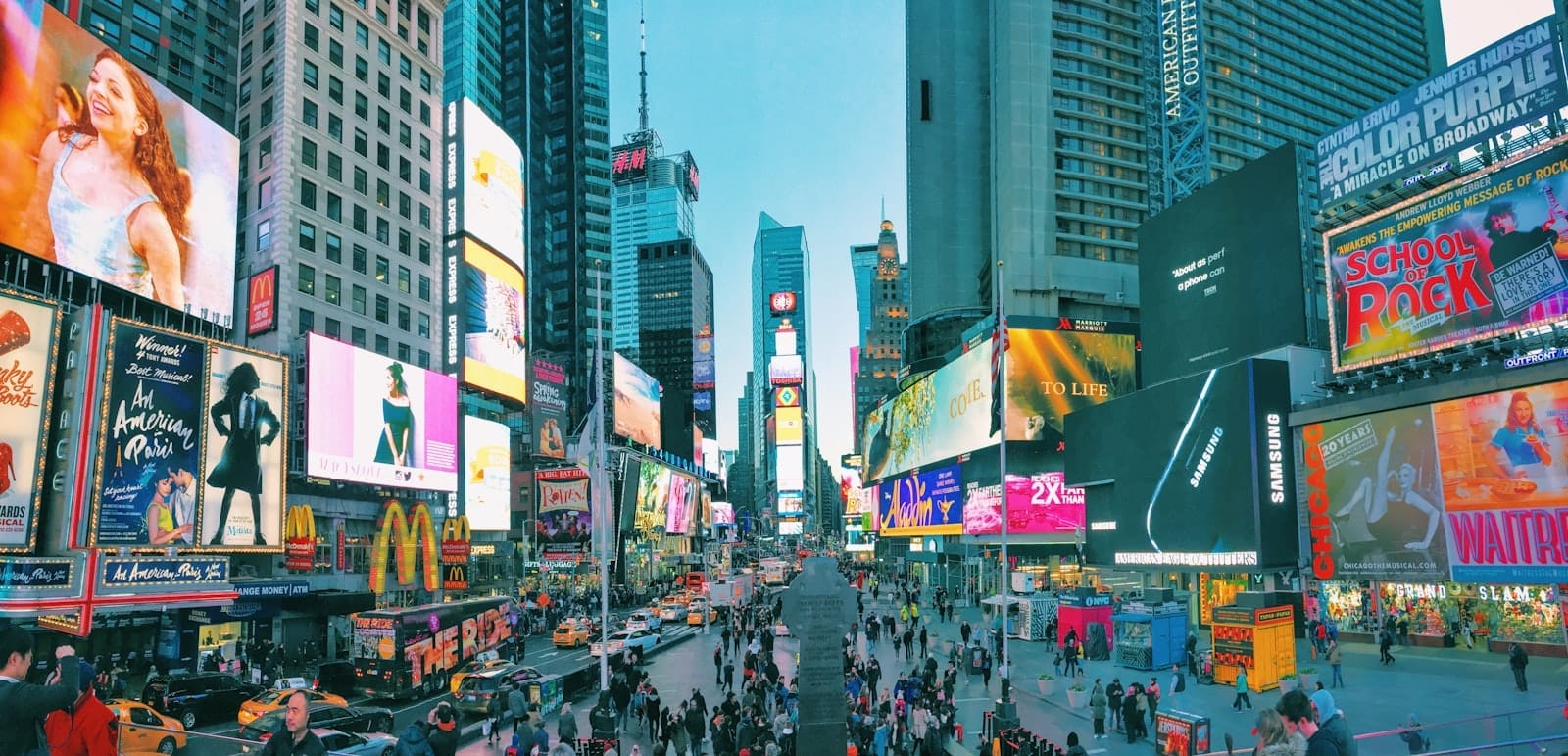
What Times Square Actually Is
Times Square is not a square in any geometric sense. It is a bowtie-shaped commercial district in Midtown Manhattan, formed where Broadway cuts diagonally across the north-south grid of Seventh Avenue, creating two elongated triangular plazas between West 42nd and West 47th Streets. The result is a set of pedestrian islands hemmed in by some of the densest advertising real estate in the world, with LED billboards stacked ten stories high on nearly every facade.
The area functions as the heart of New York's Theatre District, which stretches roughly from Sixth to Eighth Avenues and 40th to 53rd Streets. That context matters: Times Square is not just a spectacle, it is the organizational center of Broadway, the commercial engine of Midtown, and a transit hub connecting multiple subway services (N, Q, R, W, 1, 2, 3, 7, and the 42 St Shuttle) at one of the busiest stations in the city.
ℹ️ Good to know
The square is publicly accessible 24 hours a day, every day of the year. There is no ticket, no gate, and no queue to enter the space itself. The crowds, however, are a different matter.
A Sense of the Place: Sights, Sounds, and Scale
Standing on the pedestrian plaza near 45th Street, the first thing most visitors notice is not the billboards but the noise. The sound here is layered: the rumble of subway ventilation grates underfoot, the low drone of delivery trucks idling on cross streets, the percussion of a drummer performing for tips near the TKTS steps, and the constant shuffle of foot traffic that, at peak hours, feels less like walking and more like being carried by a slow current.
The LED screens are genuinely impressive in their density and scale. Some span multiple floors of a building's facade; others are tucked into the geometry of a corner or wrapped around a curved surface. The light they cast is strong enough to read by, and at night it creates a diffuse glow that washes out shadows entirely. The sensory overload is real, and some visitors find they need to step off the main plaza after ten minutes to decompress on a quieter side street.
The street-level experience includes costumed performers, primarily cartoon characters and superheroes, who position themselves on the plazas and expect tips for photographs. Be clear about this if you are traveling with children. These performers are self-employed; accepting a photo implies payment. The practice is legal and regulated, but it catches many first-timers off guard.
Tickets & tours
Hand-picked options from our booking partner. Prices are indicative; availability and final rates are confirmed when you complete your booking.
Broadway & Times Square guided walking tour
From 33 €Instant confirmationFree cancellationMidtown Manhattan self-guided walking tour
From 13 €Instant confirmationFree cancellationTimes Square walking tour with doughnut shop visits
From 0 €Instant confirmationFree cancellationMadame Tussauds New York Ticket with 7D Experience
From 47 €Instant confirmationFree cancellation
How the Square Changes by Time of Day
Times Square operates on a completely different rhythm depending on the hour. In the early morning, around 7 to 9 am, the plazas are occupied mostly by commuters cutting through to the subway, delivery workers, and the occasional tourist who arrived early by design. The billboards are already running at full brightness, but without the crowds they feel almost surreal against the gray morning sky. This is the most comfortable window for photographers: wide sightlines, no one blocking your frame, and cool air.
By midday, particularly on weekends from spring through fall, the square reaches its most congested state. The plazas fill with tour groups, street performers, and foot traffic from shoppers and theatergoers. Moving efficiently through the area requires patience, and the red TKTS booth steps, which serve as a natural grandstand, are usually packed. If crowds frustrate you, midday in high season is simply the wrong time to be here.
Evening, from roughly 8 to 11 pm, is when Times Square reaches its visual peak. The billboards and theater marquee lights compete for attention, the energy of post-show theater crowds adds momentum, and the combination of neon, LED, and reflection off wet pavement (on rainy nights especially) produces the version of Times Square that matches the mental image most visitors carry with them. This is the window most worth prioritizing.
💡 Local tip
For photography, arrive between 8:30 and 9:30 pm on a weeknight. The light is at its most theatrical, the crowds are slightly thinner than on weekends, and the angle from the TKTS steps looking north toward 47th Street captures the full depth of the billboard corridor.
History: From Longacre Square to the Crossroads of the World
The district was originally called Longacre Square, named after London's carriage-building neighborhood, because the area was lined with stables and carriage workshops in the late 19th century. The transformation began in 1904, when The New York Times moved its headquarters to a newly constructed tower at the southern tip of the district, on what is now One Times Square. The newspaper negotiated with the city to rename the square in its honor and celebrated the move with a fireworks display on New Year's Eve 1904. The tradition shifted to a ball drop in 1907, and the event has continued, with interruptions only during World War II blackouts, every year since.
The square's identity as an entertainment and theater hub developed through the early 20th century, when the concentration of theaters, hotels, and restaurants drew both high society and the broader public. Its reputation declined significantly through the 1970s and early 1980s, when the area was associated with crime, street prostitution, and urban neglect. The turnaround, driven by a combination of city investment, business improvement district management by the Times Square Alliance, and broader shifts in Midtown's economy, produced the heavily commercialized but safe district that exists today. For a broader understanding of how New York's neighborhoods each carry layered histories, the NYC neighborhoods guide provides useful context.
One Times Square itself is worth a closer look. The original Times Tower, now completely sheathed in billboards, is structurally a near-empty building whose primary economic function is as advertising surface. The Midnight Moment program, organized by the Times Square Arts office, transforms the digital billboards into a coordinated art display each night from 11:57 pm to midnight, running a rotating series of commissioned works by contemporary artists. It is easy to miss if you do not know to look for it.
The TKTS Booth and Broadway Access
One of the most practical reasons to visit Times Square, beyond the spectacle itself, is the TKTS booth at the north end of Father Duffy Square, near 47th Street. Operated by the Theatre Development Fund, the booth sells same-day discount tickets to Broadway and off-Broadway shows, typically at 20 to 50 percent below full price. The red glass staircase structure that houses the booth also serves as an elevated viewing platform and is one of the better spots in the square to get a clean sightline without being jostled. Lines form before the booth opens and can be long on weekend evenings, so arriving early or using the TKTS app to check availability in advance helps. For a deeper orientation to Broadway shows, schedules, and how to buy tickets, the Broadway guide covers the full picture.
Getting There and Getting Around
The Times Sq–42 St station is one of the largest subway complexes in the New York City Subway system, served by the N, Q, R, W, 1, 2, 3, 7, and S lines. It connects via underground passageways to the Port Authority Bus Terminal and to the 42 St–Bryant Park station, making it a major transfer hub. If you are coming from Grand Central Terminal, the S shuttle (the 42nd Street Shuttle) delivers you directly to Times Square in a single stop, roughly two minutes of ride time.
Walking is practical from many Midtown points: Rockefeller Center is about a 10-minute walk north, while Bryant Park is roughly five minutes east on 42nd Street. Taxis and ride-hailing services drop off on the avenues, but the density of pedestrian traffic means walking almost always beats sitting in a car in the immediate area.
⚠️ What to skip
Avoid taking a cab or rideshare from Times Square outward during the post-theater rush (10–11 pm on weekdays, 10:30–midnight on weekends). The block-by-block gridlock can make a six-block trip take 25 minutes. Walk to a less-congested side street first, or use the subway.
Practical Notes: What to Wear, Bring, and Watch For
Comfortable shoes matter more here than almost anywhere else in New York. The pavement is hard, the plazas are entirely concrete, and most visits involve more standing and slow shuffling than actual walking. In summer, the canyon of glass and steel traps heat noticeably, and the lack of shade on the main plazas makes midday visits uncomfortable. Bring water. In winter, the same canyon effect amplifies wind, and the pedestrian islands offer little protection.
Times Square sits at the center of Midtown and connects logically to a full day's itinerary. The first-time visitor guide to New York City covers how to structure your day to avoid backtracking across the borough.
Pickpocketing is not rampant, but the density of distracted tourists makes Times Square a natural location for it. Keep bags zipped and in front of you, especially on the crowded plazas. The area itself is well-lit and heavily policed at all hours; the broader safety concerns often associated with 1980s-era Times Square are not a current reality.
Who Should Reconsider
Visitors who are highly sensitive to sensory overload, including loud noise, bright flashing lights, and dense unmoving crowds, may find the experience genuinely unpleasant rather than exciting. Travelers who have already visited Times Square on a previous trip to New York often find that a second visit offers rapidly diminishing returns. The square is the same whether you spend 20 minutes or two hours, and the energy, while intense, is not the kind that rewards long contemplation. If your goal is understanding New York rather than confirming its iconography, the hours spent in Times Square might be more rewarding in a neighborhood with more texture.
Insider Tips
- The Midnight Moment program runs every night from 11:57 pm to midnight, when the Times Square digital billboards synchronize to display commissioned art. It takes less than three minutes, costs nothing, and most visitors walk right past it without realizing what they are seeing.
- For the least-crowded version of Times Square, arrive on a weekday morning between 7 and 9 am. The scale of the space is easier to absorb, and you can actually stand still and look up without being jostled.
- The TKTS app lets you browse available discounted Broadway tickets before you leave your hotel, which is worth doing if you want specific shows. The physical booth at Father Duffy Square is also quicker than it looks: the lines tend to move at a steady pace even when they are long.
- If you want a strong aerial view of the square rather than standing in it, the bar at the Renaissance New York Times Square Hotel has a high-floor vantage point looking down into the district. Some other rooftop venues in the immediate area offer similar perspectives; check current hours before visiting.
- The pedestrian plazas are furnished with moveable chairs and tables year-round. Sitting down mid-plaza and watching the foot traffic for 15 minutes gives a very different read on the place than walking through it, and the perspective from seated level looking up at the billboards is genuinely disorienting in an interesting way.
Who Is Times Square For?
- First-time visitors to New York City who want to see the iconic version of the city
- Evening visitors looking for kinetic energy and Broadway show access
- Architecture and urban design enthusiasts interested in how commercial signage reshapes a public space
- New Year's Eve revelers willing to arrive many hours early for ball drop viewing
- Theatergoers using the TKTS booth to secure same-day Broadway tickets at reduced prices
Nearby Attractions
Other things to see while in Midtown Manhattan:
- Broadway Theater District
The Broadway Theater District in Midtown Manhattan is the center of American live theater, home to 41 official Broadway houses spanning nearly a century of performance history. Whether you're booking months in advance or hunting same-day discount tickets, this guide covers everything from curtain times to architectural details.
- Bryant Park
Tucked behind the New York Public Library on Sixth Avenue, Bryant Park is an 8-acre public park that holds its own against the surrounding skyscrapers. Free to enter year-round, it shifts character dramatically by season, from a winter ice rink to a summer outdoor cinema — and remains one of the most functional and well-managed public spaces in New York City.
- Carnegie Hall
Carnegie Hall has anchored Midtown Manhattan's cultural life since 1891. With three auditoriums ranging from 268 to 2,790 seats, it hosts everything from orchestral premieres to intimate recitals. This guide covers the halls, the history, and exactly how to make the most of a visit.
- Chrysler Building
Completed in 1930 and briefly the tallest building on earth, the Chrysler Building remains the finest example of Art Deco architecture in New York City. Visitors generally can't go inside beyond the main lobby, but the experience of standing beneath its gleaming stainless steel crown is genuinely unforgettable.