Bryant Park: Midtown's Free Green Space That Actually Delivers
Tucked behind the New York Public Library on Sixth Avenue, Bryant Park is an 8-acre public park that holds its own against the surrounding skyscrapers. Free to enter year-round, it shifts character dramatically by season, from a winter ice rink to a summer outdoor cinema — and remains one of the most functional and well-managed public spaces in New York City.
Quick Facts
- Location
- Between 40th & 42nd Streets and Fifth & Sixth Avenues, Midtown Manhattan, NY 10018 — directly behind the NY Public Library
- Getting There
- B, D, F, M trains to 42nd St–Bryant Park; 7 train to 5th Avenue
- Time Needed
- 30 minutes to 2 hours depending on season and events
- Cost
- Free entry. Ice skate rental at Winter Village costs extra — check bryantpark.org for current rates
- Best for
- A midday break from Midtown, people-watching, seasonal events, free summer films
- Official website
- bryantpark.org
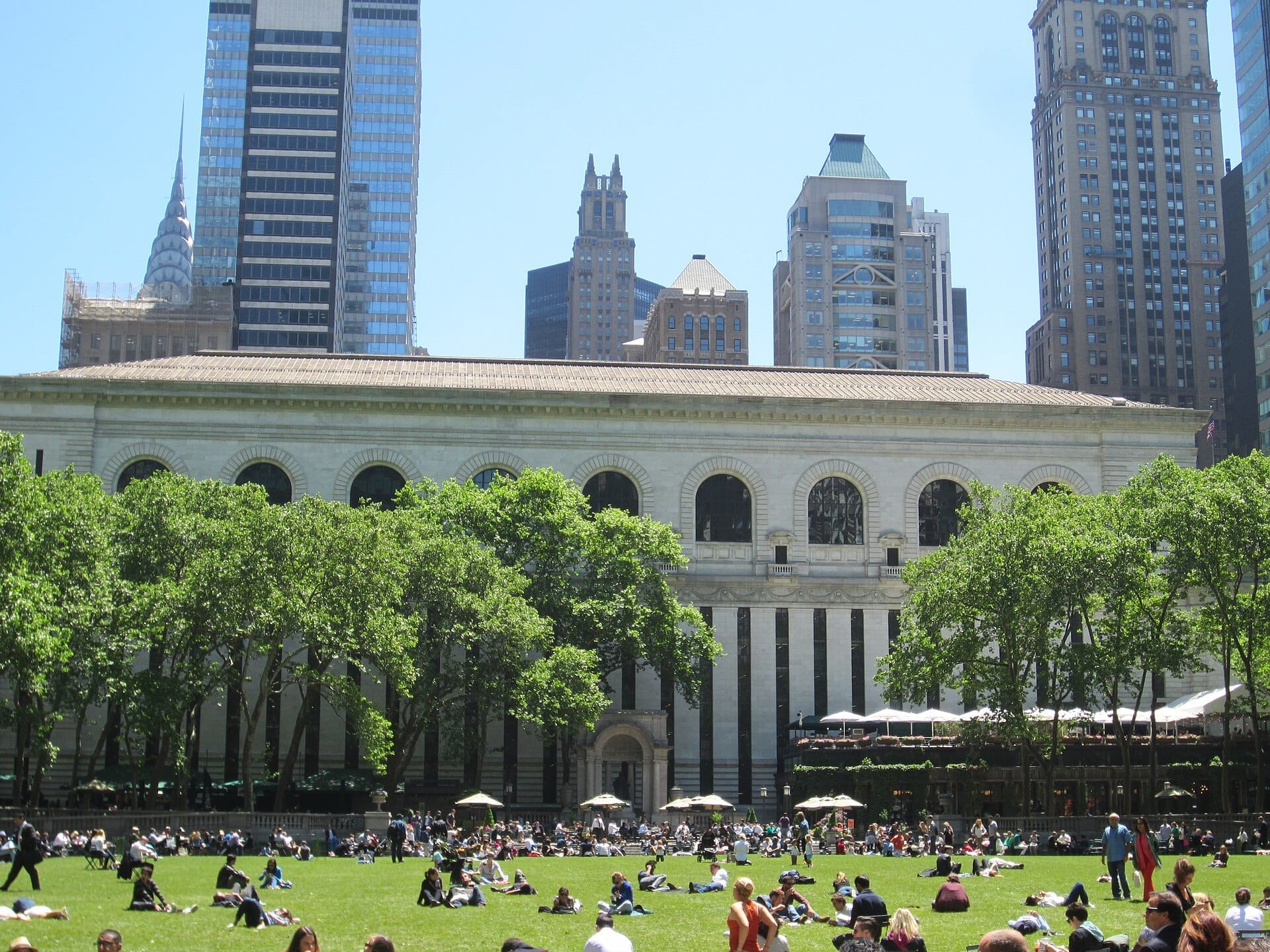
What Bryant Park Actually Is
Bryant Park is an 8-acre public park managed by the Bryant Park Corporation, sitting directly behind the New York Public Library's landmarked Stephen A. Schwarzman Building. It occupies the block between 40th and 42nd Streets and Fifth and Sixth Avenues — a genuinely central address in Midtown Manhattan. This is not a sprawling nature escape. It is a precisely managed urban park, more European plaza than wilderness, designed to be used intensively by office workers, tourists, and anyone needing thirty minutes away from concrete and noise.
The park is open daily year-round. Hours currently run from 7:00 to 23:00 daily, though these may vary slightly by season and for special events. On New Year's Eve, the park closes early, typically before 20:00. Entry to the park itself is free. That includes the lawn, the café terrace, reading room, and general use of the grounds — an unusual value proposition in one of the world's most expensive neighborhoods.
💡 Local tip
The park's restrooms — a landmarked comfort station near the 42nd Street side — are staffed, clean, and open daily from 7:00 to 23:00. They include automatic fixtures and a changing station. By Midtown standards, this is a meaningful amenity worth knowing before you arrive.
A Brief History That Actually Explains the Space
The site was designated public property in 1686 under New York Colonial Governor Thomas Dongan, making it one of the oldest publicly protected parcels in the city. For most of the 19th century it served various civic functions, and in 1884 the space was officially renamed Bryant Park in honor of William Cullen Bryant, the American poet and longtime editor of the New York Evening Post who died in 1878 and was a vocal advocate for public green space in the city.
By the 1970s and 1980s, the park had deteriorated into one of Midtown's most avoided corners — a textbook case of how poor design and under-management can hollow out even a well-located public space. The Bryant Park Corporation's restoration in the early 1990s redesigned the entrances, opened up sightlines, removed the dense perimeter hedges that had blocked views, and introduced active programming and maintenance funding. The turnaround is frequently cited in urban planning literature as a model for how private-public park management can work, and it is genuinely one of the more instructive before-and-after stories in New York City's physical history.
Tickets & tours
Hand-picked options from our booking partner. Prices are indicative; availability and final rates are confirmed when you complete your booking.
Statue of Liberty, Ellis Island, and Brooklyn Bridge Happy Hour Cruise
From 49 €Instant confirmationFree cancellationSpirit of New York Dinner Cruise
From 161 €Instant confirmationFree cancellationNew York City Highlights bike tour
From 70 €Instant confirmationFree cancellationNew York Statue of Liberty and Ellis Island tour by ferry
From 55 €Instant confirmation
What the Park Feels Like at Different Hours
Mornings, roughly 7:00 to 9:00, are the park's quietest window. The lawn chairs (available free on a first-come basis) are still mostly stacked, the café tables have few occupants, and the light falls low across the central lawn. Office workers cut through on their way to nearby buildings, and a handful of early risers read at the terrace tables. The hum of Sixth Avenue is audible but not oppressive.
The park shifts noticeably around midday. From roughly 11:30 to 13:30, it fills with office workers who treat the lawn and café as an outdoor lunch room. The green chairs scatter across the grass quickly. There is real energy here — multiple conversations happening at adjacent tables, the smell of coffee from the Bryant Park Grill and the kiosk carts, the low overhead of Midtown towers framing the lawn on all sides. It is crowded, but organized. The Corporation's active management keeps the grounds clean even under this kind of daily load.
Late afternoon into early evening, especially in warmer months, brings a different crowd. The office workers leave and tourists, couples, and people reading or waiting replace them. The light between the library facade and the surrounding buildings turns warm. It is probably the most photogenic hour in the park.
ℹ️ Good to know
The moveable green chairs throughout the park are genuinely free to use and rearrange. No reservation, no purchase required. Grab one, pull it into the sun or shade, and stay as long as you like — this is one of the few spots in Midtown where that is actually true.
Seasonal Programming: How the Park Changes All Year
Bryant Park's programming calendar is what separates it from a simple lawn. In summer, the park hosts free Monday evening film screenings on the central lawn — a long-running series where viewers arrive early (sometimes hours in advance on popular nights) with blankets and food. In winter, the central lawn is converted into the Winter Village, which includes a free-admission ice skating rink. Skate rental is a paid service; check the official site for current rates, as these change seasonally. The Winter Village also includes a market of small vendors and pop-up shops that runs through the holiday period.
Spring and autumn tend to be the most straightforward and comfortable times to visit, with moderate temperatures and fewer seasonal crowds. If you are building a Midtown day and want context for the surrounding area, Bryant Park pairs naturally with the New York Public Library directly to the east and is a short walk from Rockefeller Center. For a broader look at how to structure time in the neighborhood, the first-time visitor guide to New York City covers Midtown's core efficiently.
The Physical Layout: What You Actually See
The park's centerpiece is a rectangular lawn, roughly 300 feet by 215 feet, bordered by gravel paths lined with London plane trees. These trees, which reach significant canopy height, give the space a cathedral-like filtered light quality on bright days. The lawn sits slightly elevated from street level, adding to the sense of separation from the surrounding Midtown grid.
The western edge along Sixth Avenue hosts a food kiosk strip. The Bryant Park Grill and Café occupies the southern terrace and operates year-round with outdoor and indoor seating. Prices reflect the location — expect Midtown café pricing, not a bargain. Several smaller kiosk-style vendors operate around the perimeter, particularly in warmer months, offering coffee, snacks, and light food at more varied price points.
The library facade along the eastern edge is visually striking and worth pausing to look at properly. If you have time, the library interior is free to enter and regularly has exhibitions. For travelers interested in the broader architecture of Midtown, the park's position among early 20th-century Beaux-Arts structures and modern towers makes it a useful anchor point. The New York City architecture guide covers this area in detail.
Practical Information for Your Visit
Getting to Bryant Park by subway is straightforward. The B, D, F, and M trains stop directly at 42nd Street–Bryant Park station, which deposits you at the park's northern or western entrances. The 7 train to 5th Avenue exits just east of the library, approaching from the other side. Walking from Times Square takes about 10 minutes. The park is accessible at street level from multiple points on all four sides, with no steps required at the main entrances.
Weather affects the experience more than the park's managers would probably like to admit. The central lawn is exposed, and on hot humid summer days the shade under the plane trees fills up quickly. In winter, the ice rink is a genuine draw and the park maintains a festive atmosphere, but dress accordingly — wind off Sixth Avenue can make the open lawn feel colder than a thermometer suggests. For detailed seasonal guidance, the New York City weather guide breaks down what to expect month by month.
Photography is best in the morning or late afternoon when the surrounding buildings are not casting the lawn into full shadow. The view from the western café terrace looking east toward the library — with the plane tree canopy in the foreground — photographs cleanly and avoids the busier street scenes. Avoid midday if you want the lawn without crowds.
⚠️ What to skip
On summer film nights, the central lawn can fill to capacity hours before the screening starts. If you plan to attend, arrive by late afternoon and bring something to sit on. The event is free, but the experience depends heavily on how early you stake out space.
Who Should Probably Skip It
Travelers who want a quiet, nature-immersive park experience will find Bryant Park underwhelming. It is an urban plaza with grass, not a place for solitude. The surrounding towers are visible from everywhere, and Sixth Avenue traffic is audible throughout. For that kind of experience in Manhattan, Central Park is a fundamentally different environment and worth the additional travel time.
Visitors on very tight schedules who are already covering major Midtown landmarks may find Bryant Park is a lower priority if they have not built in time. It is not a destination attraction in the same sense as an observatory or museum. What it offers is quality of time rather than a specific experience — a park where you can actually sit, read, eat, and feel the city at a manageable pace.
Insider Tips
- The reading room on the library terrace side sometimes has free Wi-Fi and a small selection of books and magazines available for use in the park. It is a genuinely quiet spot on busy days and not widely advertised.
- During the Winter Village season, weekday mornings are significantly less crowded at the ice rink than weekends and evenings. If skating is your goal, Thursday or Friday morning gives you substantially more room on the ice.
- The moveable green chairs can be repositioned anywhere on the lawn. There is no assigned seating and no time limit. Many regulars arrange small clusters away from the main paths for a more private feel.
- Bryant Park's Monday evening film series is free but requires no ticket — just show up. The films are typically classic or culturally notable titles projected on a large lawn screen. Check the official site for the current season's schedule before you go.
- The southern café terrace (Bryant Park Grill) has some of the best elevated views of the park and the library facade, but the smaller kiosks on the perimeter offer lower-priced coffee and snacks if you prefer not to sit down for a full café experience.
Who Is Bryant Park For?
- First-time visitors to New York City who want a central, low-pressure introduction to Midtown at ground level
- Travelers building a walking day through Midtown who need a genuine rest stop with seating and food options
- Families visiting in winter who want a free ice skating experience without navigating larger crowds elsewhere
- Anyone attending the free summer film series and looking for an accessible outdoor evening event
- Architecture and history enthusiasts who want a close look at the library's Beaux-Arts facade in a calm setting
Nearby Attractions
Other things to see while in Midtown Manhattan:
- Broadway Theater District
The Broadway Theater District in Midtown Manhattan is the center of American live theater, home to 41 official Broadway houses spanning nearly a century of performance history. Whether you're booking months in advance or hunting same-day discount tickets, this guide covers everything from curtain times to architectural details.
- Carnegie Hall
Carnegie Hall has anchored Midtown Manhattan's cultural life since 1891. With three auditoriums ranging from 268 to 2,790 seats, it hosts everything from orchestral premieres to intimate recitals. This guide covers the halls, the history, and exactly how to make the most of a visit.
- Chrysler Building
Completed in 1930 and briefly the tallest building on earth, the Chrysler Building remains the finest example of Art Deco architecture in New York City. Visitors generally can't go inside beyond the main lobby, but the experience of standing beneath its gleaming stainless steel crown is genuinely unforgettable.
- Empire State Building
The Empire State Building rises 1,454 feet above Midtown Manhattan and remains the most recognizable skyscraper in New York City. Its two observatories offer sweeping views across Manhattan, Brooklyn, Queens, and The Bronx, and the Art Deco lobby alone is worth a stop even if you never ride an elevator. Here is everything you need to know before you go.