Empire State Building: What to Expect at NYC's Most Famous Skyscraper
The Empire State Building rises 1,454 feet above Midtown Manhattan and remains the most recognizable skyscraper in New York City. Its two observatories offer sweeping views across Manhattan, Brooklyn, Queens, and The Bronx, and the Art Deco lobby alone is worth a stop even if you never ride an elevator. Here is everything you need to know before you go.
Quick Facts
- Location
- 350 Fifth Avenue (observatory entrance: 20 W 34th St), Midtown Manhattan
- Getting There
- Subway B, D, F, M, N, Q, R, W to 34th St–Herald Sq; 1, 2, 3 to 34th St–Penn Station
- Time Needed
- 1.5 to 3 hours depending on ticket tier and wait times
- Cost
- Tickets from approx. $44 USD; 86th + 102nd floor combo costs more. Verify at esbnyc.com
- Best for
- First-time visitors, architecture lovers, couples at sunset, families with older kids
- Official website
- www.esbnyc.com
Why the Empire State Building Still Matters
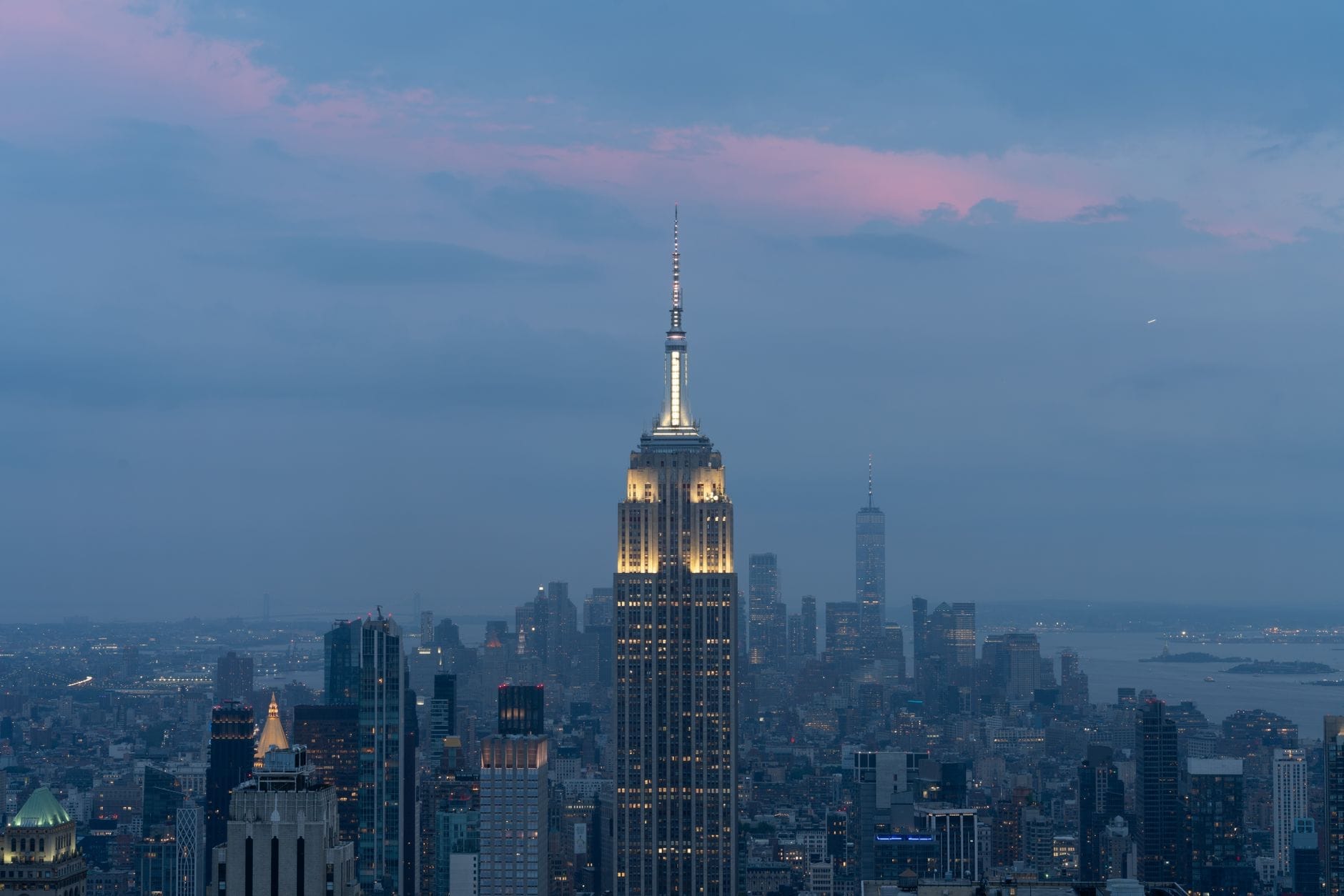
The Empire State Building opened on May 1, 1931, after a construction sprint of just 410 days. It is a 102-story Art Deco skyscraper standing 1,454 feet tall including its broadcast antenna, with a roof height of 1,250 feet. For 40 years, from 1931 to 1971, it was the tallest building in the world. That title is long gone, but the building's cultural weight has never faded.
What sets it apart from newer observatories in the city is precisely its age and its history. This is the building that King Kong climbed. It is the building Cary Grant waited at in An Affair to Remember. It is the building lit in red and blue on the Fourth of July, purple for Pride, and gold for the Emmys. Newer observation decks offer sharper glass or more theatrical staging, but none carry this particular density of association.
If you are weighing it against other elevated viewpoints in the city, consider that the Empire State Building appears in the skyline view from competing decks, which means you cannot see it from its own observation floor. Travelers who want the building in their skyline photograph often visit Top of the Rock at Rockefeller Center for that reason. Both experiences are different enough to justify doing both, but if you only have time for one, your priorities should determine the choice.
The Building Before You Get to the Top
The observatory entrance is at 20 West 34th Street, not the main Fifth Avenue address. Once inside, the ground-floor lobby is one of the finest Art Deco interiors in New York. The ceiling murals, the geometric brass detailing, and the original terrazzo floors date from 1931 and have been carefully preserved. Many visitors walk straight to the elevator queue without pausing here, which is a mistake. Spend ten minutes looking up.
The building also houses a multi-level visitor experience before you reach the elevator bays, including exhibits on the building's construction, its architectural design, and its place in popular culture. The construction story is genuinely remarkable: the building rose at an average rate of more than four floors per week, with a workforce of up to 3,400 people on-site in a single day. The exhibits communicate this scale in a way that gives the observation experience more depth.
💡 Local tip
Buy tickets in advance at esbnyc.com. Walk-up pricing is higher, and without a timed-entry ticket you may wait significantly longer in the lobby queue, especially on weekends and during summer.
Tickets & tours
Hand-picked options from our booking partner. Prices are indicative; availability and final rates are confirmed when you complete your booking.
Tickets to the Empire State Building Observatory at Sunrise
From 126 €Instant confirmationFree cancellationEmpire State Building Guided Tour with Observation Deck Access
From 127 €Instant confirmationFree cancellationTickets to the Empire State Building Observatory
From 0 €Instant confirmationFree cancellationNew York CityPASS – five top attractions
From 140 €Instant confirmationFree cancellation
The 86th Floor: The Classic Observatory
The 86th floor open-air observatory is what most people picture when they think of this building. It sits at 1,050 feet and wraps around all four sides of the building with an outdoor promenade and waist-high railings. The wind up here is persistent and often strong, even on calm days at street level. In winter, temperatures can drop 10 to 15 degrees Fahrenheit compared to the street. Bring a layer you did not plan to use.
The view from the 86th floor is genuinely panoramic in all directions. To the north, the grid of Midtown gives way to Central Park, a precise green rectangle that reads differently from above than it ever does from street level. To the south, Lower Manhattan's newer towers cluster around One World Trade. To the west, the Hudson River and New Jersey. To the east, the grid stretches toward Queens and Brooklyn with the East River bridges visible on clear days.
The outdoor deck can feel crowded between 11am and 4pm, particularly in summer. If you want the railing to yourself, the window between 8am and 10am on weekday mornings is the most reliable. Late evening visits, after 9pm, thin out considerably and the city below transforms into a field of light that reads very differently from the daytime panorama.
⚠️ What to skip
On overcast or foggy days, cloud cover can sit below the 86th floor level, obscuring the view almost entirely. Check the forecast before you go. Low cloud is most common in late autumn and winter. A clear cold day in January often produces better visibility than a hazy July afternoon.
The 102nd Floor: Is the Upgrade Worth It?
The 102nd floor observatory sits at the very top of the building's main structure, roughly 150 feet above the 86th floor deck. It is an enclosed glass room, not an open-air space, with a capacity of a few dozen people at a time. The additional height does sharpen the perspective and the sense of being at the building's peak is real, but the view difference is less dramatic than the price difference suggests.
The 102nd floor is worth it for visitors who want an uncrowded, more intimate experience at the top. Because capacity is limited and the space feels genuinely small, it rarely has the packed-railing density of the floor below. For photographers with a specific purpose, the higher angle changes the geometry of surrounding buildings in ways that can matter. For most visitors, the 86th floor alone delivers the experience they came for.
How the Experience Changes by Time of Day
Morning visits, roughly 8am to 10am on weekdays, offer the shortest queues and the cleanest light for photography. The city below is active but not yet at full volume. You can hear the faint sound of traffic from 1,050 feet, a low continuous rumble that is surprisingly present on the open deck.
Midday is the most crowded window and also, in summer, the most likely to produce hazy conditions that flatten the view. The city smells different from up here in July, a faint warmth that carries up from the streets in ways that are hard to describe precisely but are immediately recognizable to anyone who has spent time on the deck in summer.
Sunset visits, roughly 30 to 60 minutes before and after sunset, are the most photogenic and the most popular. The light turns the buildings in Midtown a deep amber and the transition from golden hour to city lights is dramatic. Expect the deck to be at peak capacity during this window. If you want sunset light without the crowds, arrive 90 minutes before sunset and plan to stay through dusk.
Night visits, after 9pm, offer a transformed city. The observation deck is quieter, the air is cooler, and the illuminated grid below produces a visual clarity that overcast daytime visits cannot match. The building itself is lit each evening in colors that change to mark events, seasons, and occasions, though you cannot see the building's own lights from the observation floor.
Getting There and Practical Logistics
The building is located on Fifth Avenue between 33rd and 34th Streets in Midtown Manhattan. The closest subway stop for most visitors is 34th Street–Herald Square, served by the B, D, F, M, N, Q, R, and W trains. The 34th Street–Penn Station stop, served by the 1, 2, and 3 trains, is one block west and slightly further from the entrance but equally convenient.
The area around 34th Street is one of the most transit-connected parts of the city. If you are coming from Times Square, it is a walkable 10-minute distance south along Seventh Avenue or Broadway. From Penn Station, the walk is under five minutes.
Accessibility: the building's visitor facilities are equipped with elevators throughout the experience. For specific wheelchair access details, mobility aid policies, or sensory accommodation options, the official site at esbnyc.com publishes current information. The outdoor 86th floor deck has open railings and uneven metal flooring in sections, which is worth knowing in advance.
The Empire State Building is included in several New York City attraction passes that bundle multiple admissions. If you plan to visit several observatories or major sites in a short trip, check the NYC attraction pass guide to compare options before buying individual tickets.
Who Should Reconsider This Visit
Visitors who are primarily interested in seeing the Empire State Building as part of the Manhattan skyline will get a better result from a different observatory. From this building, you are inside the skyline rather than looking at it. The building also does not appear in its own views, which matters for photographers with specific shots in mind.
Travelers with a tight budget may find the ticket price difficult to justify, especially if they are already managing costs carefully. The free things to do in New York City guide covers several elevated viewpoints that cost nothing, including some that offer strong sightlines toward Midtown.
Visitors with a significant fear of heights should know that the 86th floor outdoor deck is fully exposed, with railings rather than glass barriers. The physical sensation at that height in strong wind is not subtle. The 102nd floor is enclosed and may feel less exposed, but reaching it requires first passing through the 86th floor experience.
Insider Tips
- The observatory entrance on West 34th Street opens earlier in the morning than many visitors expect. Arriving right at opening on a weekday means you can reach the 86th floor with almost no queue and the deck nearly to yourself.
- The building's exterior lighting changes color each evening based on the occasion. If you want to photograph the lit building from street level or from another vantage point, check the lighting schedule on the official site or social media before your visit, as the colors change without advance notice in most guidebooks.
- The 34th Street corridor between Fifth and Seventh Avenues has several fast-casual food options nearby if you want to eat before or after. The building's own food and beverage options inside are limited and priced at tourist-venue levels.
- Timed-entry tickets bought in advance let you skip the main ticketing queue but you will still pass through security and the lobby exhibit space. Budget an extra 20 to 30 minutes beyond your timed slot for the full flow from entrance to deck.
- On clear days, visibility from the 86th floor can reach several dozen miles according to the building's own published materials. The clearest conditions in New York City typically follow a cold front passage, particularly in autumn and early winter.
Who Is Empire State Building For?
- First-time visitors to New York City who want the definitive skyline orientation experience
- Architecture and design enthusiasts drawn to the Art Deco lobby and building history
- Couples seeking a sunset or evening visit with dramatic city light views
- Families with children old enough to appreciate scale and history (roughly 8 and up)
- Photography-focused travelers who want the open-air 86th floor deck rather than glass-enclosed alternatives
Nearby Attractions
Other things to see while in Midtown Manhattan:
- Broadway Theater District
The Broadway Theater District in Midtown Manhattan is the center of American live theater, home to 41 official Broadway houses spanning nearly a century of performance history. Whether you're booking months in advance or hunting same-day discount tickets, this guide covers everything from curtain times to architectural details.
- Bryant Park
Tucked behind the New York Public Library on Sixth Avenue, Bryant Park is an 8-acre public park that holds its own against the surrounding skyscrapers. Free to enter year-round, it shifts character dramatically by season, from a winter ice rink to a summer outdoor cinema — and remains one of the most functional and well-managed public spaces in New York City.
- Carnegie Hall
Carnegie Hall has anchored Midtown Manhattan's cultural life since 1891. With three auditoriums ranging from 268 to 2,790 seats, it hosts everything from orchestral premieres to intimate recitals. This guide covers the halls, the history, and exactly how to make the most of a visit.
- Chrysler Building
Completed in 1930 and briefly the tallest building on earth, the Chrysler Building remains the finest example of Art Deco architecture in New York City. Visitors generally can't go inside beyond the main lobby, but the experience of standing beneath its gleaming stainless steel crown is genuinely unforgettable.