Chrysler Building: New York's Most Beautiful Skyscraper
Completed in 1930 and briefly the tallest building on earth, the Chrysler Building remains the finest example of Art Deco architecture in New York City. Visitors generally can't go inside beyond the main lobby, but the experience of standing beneath its gleaming stainless steel crown is genuinely unforgettable.
Quick Facts
- Location
- 405 Lexington Avenue, Midtown Manhattan (between E 42nd & E 43rd Streets)
- Getting There
- Grand Central–42 St (4, 5, 6, 7, S lines) — one block west
- Time Needed
- 20–45 minutes (exterior viewing and photography)
- Cost
- Free — exterior viewing only; no public observatory and only limited lobby access currently available
- Best for
- Architecture lovers, photography, Art Deco history, Midtown walkers
- Official website
- chryslerbuilding1930.com
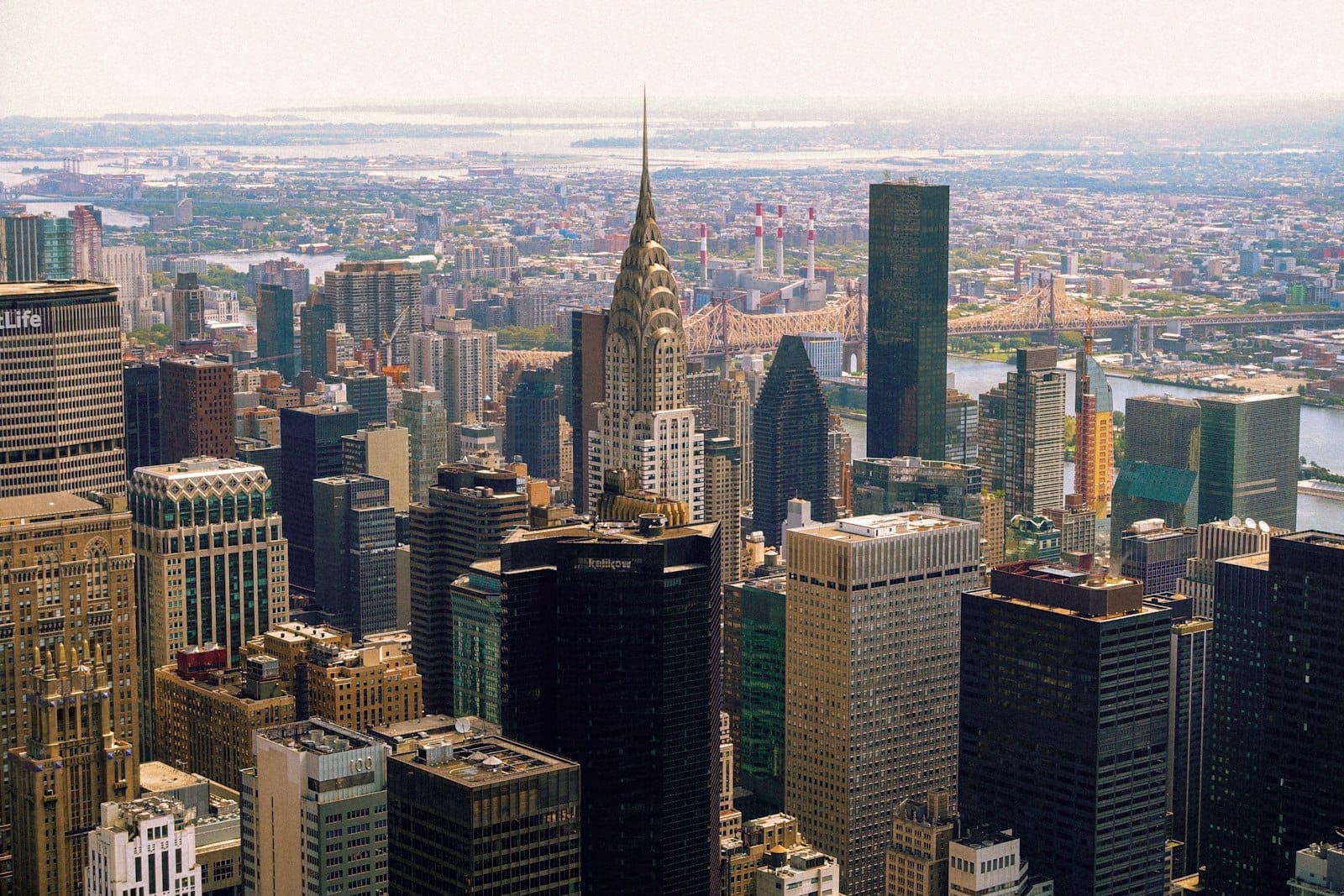
What the Chrysler Building Actually Is (and Isn't)
The Chrysler Building, completed on May 27, 1930, is a 1,046-foot (319-meter) Art Deco skyscraper at 405 Lexington Avenue in Midtown Manhattan. It held the title of tallest building in the world for approximately 11 months before the Empire State Building surpassed it. It remains, by most architectural accounts, the more beautiful of the two.
One critical fact to absorb before you go: this is a working office building with no public observation deck and only limited general public access to the lobby. The historic observatory closed decades ago. A planned sky deck was approved and announced with projected prices of around US$35–40, but as of now it has not opened due to legal disputes. What you are coming for is the exterior, and for that alone, the building absolutely delivers.
⚠️ What to skip
Do not make a special trip expecting to enter the Chrysler Building. Lobby access for casual visitors is limited and subject to building security policies. The experience here is architectural and visual, enjoyed from the street and surrounding sidewalks.
The Architecture: Why This Building Matters
Architect William Van Alen designed the Chrysler Building between 1928 and 1930 for automobile magnate Walter Chrysler, who wanted something that expressed ambition and modernity in equal measure. What Van Alen delivered was not just a tall building but a statement in stainless steel and brick that has never been bettered in its style.
The crown is the centerpiece: a series of radiating, sunburst arches clad in Nirosta steel, a chromium-nickel alloy that does not corrode or tarnish. From a distance those arches look like overlapping eagle wings, and in certain light conditions they seem almost to vibrate. At the corners of the 61st floor, eagle gargoyles jut outward, modeled on the hood ornaments of 1929 Chrysler automobiles. They are enormous and cartoonishly detailed up close, though most visitors see them only through a camera zoom.
The building holds a remarkable structural distinction: it is widely cited as the tallest brick building in the world with a steel framework. The facade above the lower floors uses a traditional brick skin rather than the glass curtain walls that would come to define later skyscrapers, which gives it a warmth and texture unusual at this scale. The lobby, which tenants and their guests still pass through daily, is lined with red Moroccan marble, amber onyx, and ceiling murals depicting transportation and industry, though public access to see them is now limited and subject to building security policies.
The Chrysler Building was designated a New York City landmark in 1978 and added to the National Register of Historic Places in 1976. Its influence on the broader story of New York's architectural history is hard to overstate. It arrived at the precise moment when Art Deco was crossing from European decorative arts into American urban construction, and it set a standard that proved impossible to repeat.
Tickets & tours
Hand-picked options from our booking partner. Prices are indicative; availability and final rates are confirmed when you complete your booking.
Tickets to the Empire State Building Observatory at Sunrise
From 126 €Instant confirmationFree cancellationEmpire State Building Guided Tour with Observation Deck Access
From 127 €Instant confirmationFree cancellationTickets to the Empire State Building Observatory
From 0 €Instant confirmationFree cancellationNew York CityPASS – five top attractions
From 140 €Instant confirmationFree cancellation
How the Building Changes Through the Day
At street level the Chrysler Building behaves like most Midtown skyscrapers: office workers move in and out, delivery vans idle on Lexington, and the base is partly obscured by neighboring buildings and street furniture. The magic is in looking up, and the quality of that experience shifts significantly depending on when you visit.
Early morning, roughly 7 to 9 AM, brings the cleanest light on the eastern and northern faces. The steel crown catches low sun and throws off a silver-white glow that photographers specifically schedule visits to capture. Foot traffic is relatively light before 9 AM, which means you can stand on the sidewalk at 42nd and Lexington without constantly moving aside for pedestrians.
Midday light flattens the crown somewhat and fills the surrounding sidewalks with lunchtime office crowds. It is not the worst time to come, but it is not the best. Late afternoon, around 4 to 5 PM in summer, delivers long shadows and warm amber light that gives the brick lower floors a glow, though the crown itself becomes harder to read against a bright western sky. Twilight and the first hour after dark are, by most accounts, the single best time to see the building. The crown is illuminated at night, and the stainless steel arches transform into something closer to silver light than metal. The surrounding city darkens while the crown remains bright, giving it a quality no daytime visit quite matches.
💡 Local tip
For photography, cross Lexington Avenue to the opposite sidewalk and look north from around East 40th Street for a compressed, unobstructed view of the full tower against the sky. A wide-angle lens or smartphone panorama mode works well here.
Getting There and the Surrounding Area
Grand Central Terminal sits one block west of the Chrysler Building on 42nd Street, making this one of the most transit-accessible points in New York City. The 4, 5, 6, 7, and S subway lines all stop at Grand Central–42 St station. The walk from the station exit on Lexington Avenue to the building's base takes about two minutes.
The Chrysler Building sits at the eastern end of one of Midtown's most productive walking corridors. From here you can walk west along 42nd Street to Grand Central Terminal (worth entering for its own architecture), and continue further west toward Bryant Park, Fifth Avenue, and the main branch of the New York Public Library. This stretch rewards walkers who pay attention to the buildings overhead rather than just the storefronts.
42nd Street at Lexington is noisy, as Midtown always is, with the particular combination of taxi horns, construction somewhere nearby, and the subway rumble beneath the grate. The smell of street food carts is reliable in warmer months, and the sidewalk surface on Lexington is often uneven around the building's entrance plaza. Wear shoes you can stand in for 20 to 30 minutes of walking and looking up.
The Race to the Top: A Brief History
The story of the Chrysler Building's construction includes one of the more dramatic moments in architectural history. Van Alen had been secretly assembling the building's decorative stainless steel spire inside the crown for months, unknown to the public and to the rival team building 40 Wall Street nearby, which believed it was constructing the world's tallest building. In October 1929, with 40 Wall Street nearing completion, the 185-foot spire was hoisted through the roof of the Chrysler Building and bolted into place in 90 minutes. The Chrysler Building surpassed its rival by more than 100 feet.
The triumph was short-lived. The Empire State Building, begun in 1930, overtook it the following year. But the competitive sprint between these towers produced architecture that neither purely commercial nor purely functional demands would have generated. The Chrysler Building's crown exists, in part, because Walter Chrysler and William Van Alen wanted to win.
If the view from the top is what you are after, the Summit One Vanderbilt observation experience is located just one block west on 42nd Street and offers some of the best elevated views in the city, including looking directly at the Chrysler Building's crown from approximately the same height.
What to Realistically Expect as a Visitor
Be direct with your expectations: the Chrysler Building is an exterior attraction. You will walk past it, stop, look up, take photographs, and move on. There is no ticket to buy, no queue to join, and no indoor element to the visit for general public visitors at this time. For some travelers that feels like too little to justify dedicated time. For others, particularly those interested in architecture or urban photography, the building is more than sufficient.
The building works best as part of a longer Midtown walk rather than as a standalone destination. A circuit that includes Grand Central Terminal, a walk up Park Avenue or down 42nd Street, and a stop at Bryant Park turns the Chrysler Building into one satisfying element of a two to three hour route rather than an isolated stop that might feel thin on its own.
Travelers with strong interest in New York's landmark skyline buildings should consider this stop alongside the Empire State Building to the west and Top of the Rock at Rockefeller Center, both of which offer full observation decks and interior experiences. The Chrysler Building's power is entirely visual and architectural, not experiential in the observatory or museum sense.
ℹ️ Good to know
A future public sky deck has been approved for the Chrysler Building but has not opened due to ongoing legal disputes. Check the official building website at chryslerbuilding1930.com for any updates before your visit.
Insider Tips
- The best unobstructed upward view of the full crown is from the north side of East 42nd Street, directly in front of the building. Standing on the south side of 42nd or across Lexington gives you more of the tower's full height.
- Visit between 30 minutes before and 60 minutes after sunset to catch the crown illumination against a still-blue sky. Full darkness makes it bright but removes the context of the surrounding skyline.
- The building appears in the background of the view from the Brooklyn Heights Promenade and from parts of the Queensboro Bridge approach. If you want the widest possible perspective on the Chrysler Building in its skyline context, those vantage points across the East River are more rewarding than standing directly below it.
- Morning light hits the Lexington Avenue facade most cleanly between 7 and 9 AM on clear days. The eagle gargoyles at the 61st floor corners are best photographed with a long lens or maximum zoom from the opposite side of Lexington, angled slightly upward.
- Grand Central Terminal's dining concourse is one block away and worth combining with this stop, particularly if you have been walking Midtown for an extended period. The main concourse ceiling alone justifies a few minutes inside.
Who Is Chrysler Building For?
- Architecture enthusiasts and Art Deco fans who can appreciate scale, detail, and historical context from the street
- Urban photographers looking for a Midtown building that rewards careful composition at multiple times of day
- First-time visitors on a Midtown walking route who want to check off an iconic landmark without spending time or money on a ticketed attraction
- Travelers combining this with Grand Central Terminal, Bryant Park, and the New York Public Library on a single east-to-west 42nd Street walk
- Anyone planning to visit Summit One Vanderbilt or Top of the Rock who wants to see the Chrysler Building from above as well as from street level
Nearby Attractions
Other things to see while in Midtown Manhattan:
- Broadway Theater District
The Broadway Theater District in Midtown Manhattan is the center of American live theater, home to 41 official Broadway houses spanning nearly a century of performance history. Whether you're booking months in advance or hunting same-day discount tickets, this guide covers everything from curtain times to architectural details.
- Bryant Park
Tucked behind the New York Public Library on Sixth Avenue, Bryant Park is an 8-acre public park that holds its own against the surrounding skyscrapers. Free to enter year-round, it shifts character dramatically by season, from a winter ice rink to a summer outdoor cinema — and remains one of the most functional and well-managed public spaces in New York City.
- Carnegie Hall
Carnegie Hall has anchored Midtown Manhattan's cultural life since 1891. With three auditoriums ranging from 268 to 2,790 seats, it hosts everything from orchestral premieres to intimate recitals. This guide covers the halls, the history, and exactly how to make the most of a visit.
- Empire State Building
The Empire State Building rises 1,454 feet above Midtown Manhattan and remains the most recognizable skyscraper in New York City. Its two observatories offer sweeping views across Manhattan, Brooklyn, Queens, and The Bronx, and the Art Deco lobby alone is worth a stop even if you never ride an elevator. Here is everything you need to know before you go.