SUMMIT One Vanderbilt: New York's Most Immersive Observatory Experience
Perched across four levels of One Vanderbilt tower at over 1,000 feet above Midtown Manhattan, SUMMIT One Vanderbilt combines a conventional observation deck with large-scale immersive art installations and two add-on experiences: glass sky boxes and an exterior glass elevator. It opened in October 2021 and has quickly become one of the most talked-about viewpoints in New York City.
Quick Facts
- Location
- 45 E 42nd St (entrance via Grand Central Terminal or Transit Hall), Midtown Manhattan
- Getting There
- Grand Central–42 St station (4, 5, 6, 7, S lines), approx. 2-minute walk
- Time Needed
- 1.5 to 3 hours depending on add-ons
- Cost
- Dynamic pricing (USD); check summitov.com for current rates. Ascent glass elevator costs extra.
- Best for
- Skyline photography, architecture enthusiasts, couples, first-time visitors to NYC
- Official website
- summitov.com
What SUMMIT One Vanderbilt Actually Is
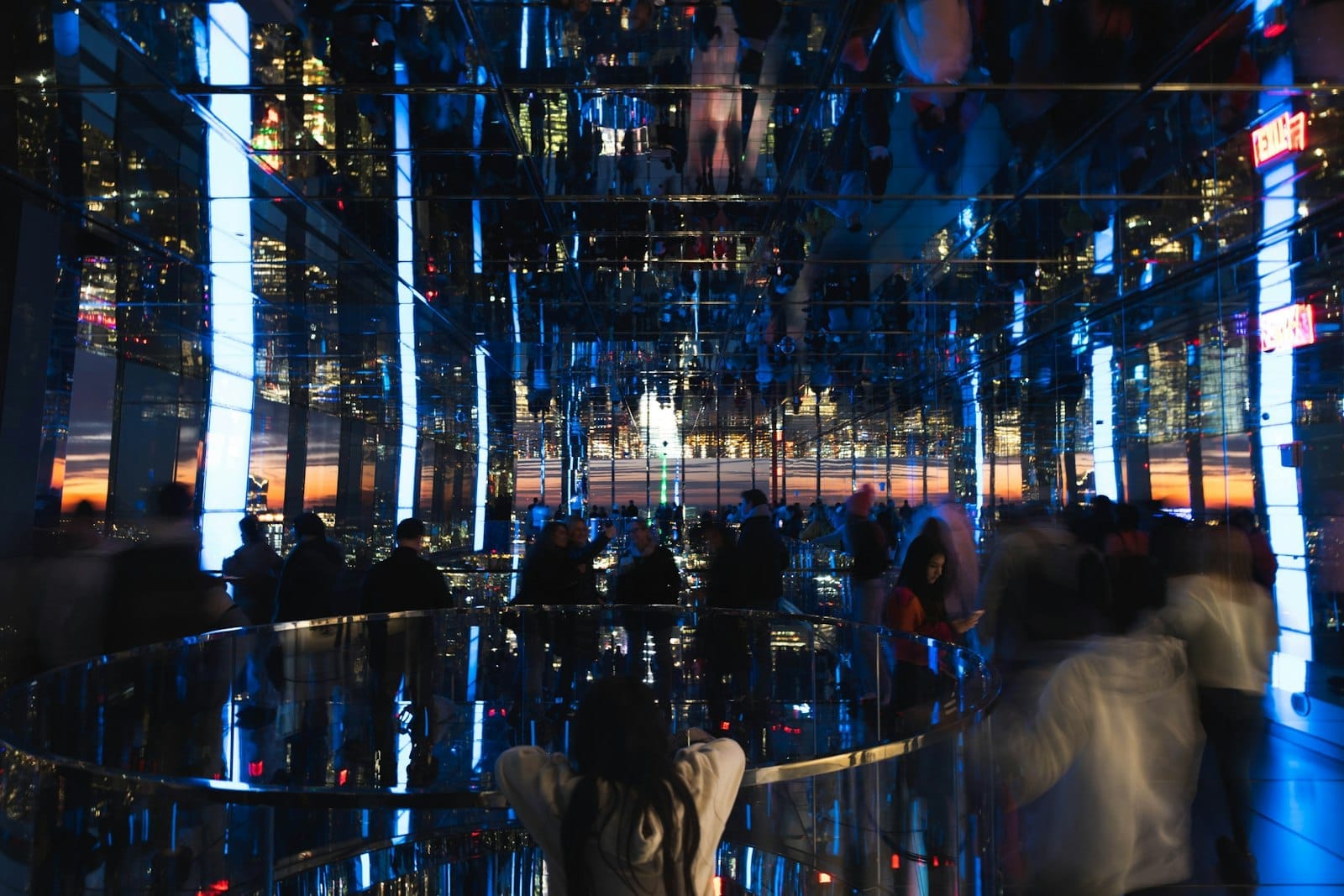
SUMMIT One Vanderbilt is not a traditional observation deck. Opened on October 21, 2021, it occupies approximately 71,938 square feet spread across multiple levels near the top of One Vanderbilt, a 62-story supertall skyscraper with a roof height of 1,301 feet. The experience combines city views with commissioned art installations, reflective mirror rooms, and theatrical lighting sequences — closer in spirit to an art-world immersive experience than to a conventional observation floor.
The building itself sits directly adjacent to Grand Central Terminal in the heart of Midtown Manhattan, and the design firm Snøhetta conceived the multi-level observatory complex as an integrated sequence of rooms rather than a single open platform. This matters practically: visitors move through enclosed, air-conditioned spaces where views arrive framed and curated, not in the open-air format of some competitors.
ℹ️ Good to know
SUMMIT uses dynamic (date-and-time-based) pricing, so the ticket you buy on a Tuesday morning will cost less than one on a Saturday evening. Book as far in advance as practical to lock in lower rates. Last entry is at 9:30 PM; the experience runs until 11:00 PM.
Two optional add-ons expand the experience significantly. "Levitation" places visitors in glass-floored sky boxes that project outward from the building at roughly 1,063 feet above Madison Avenue — the transparent floor sits between you and the street grid below. "Ascent" is a glass elevator that travels up the exterior of the tower to approximately 1,210 feet, making it one of the highest publicly accessible points in New York City. Both are sold separately from the base SUMMIT Experience ticket. If you are comparing observatories before visiting, our guide to the best views in New York City covers the full range of options across the skyline.
The Experience Floor by Floor
Arrival is through either the Transit Hall at the corner of Vanderbilt Avenue and 43rd Street, the street-level entrance at 45 East 42nd Street, or directly from the Main Concourse of Grand Central Terminal. The Grand Central entry is the most atmospheric: you emerge from one of the world's great train halls and step into a 21st-century tower with very little transition time, which underlines how dramatically the neighborhood has changed around the historic terminal.
The lower observatory levels are defined by mirror and glass installations that multiply the skyline into infinity. On a clear day the effect is genuinely disorienting: the grid of Midtown, the dark rectangle of Central Park to the north, and the dense cluster of Lower Manhattan to the south appear simultaneously in reflections that seem to extend the room indefinitely. At the same time, the spaces can feel crowded when capacity is high, and the art-meets-observatory format means some visitors spend the majority of their time photographing the installations rather than observing the city itself.
Higher levels offer more direct, less mediated views. The glass is cleaned frequently, but on overcast days the muted light reduces contrast in photographs significantly. On the upper floors you are high enough above the surrounding midtown towers to see clearly in all four cardinal directions: the Hudson River to the west, the East River and Queens to the east, the Catskill foothills on a clear day to the north, and the full arc of New York Harbor to the south.
Tickets & tours
Hand-picked options from our booking partner. Prices are indicative; availability and final rates are confirmed when you complete your booking.
SUMMIT One Vanderbilt premium experience
From 139 €Instant confirmationFree cancellationSummit One Vanderbilt Experience and Midtown Manhattan Guided Tour
From 63 €Instant confirmationFree cancellationSUMMIT One Vanderbilt tickets
From 40 €Instant confirmationFree cancellationNYC architecture tour with SUMMIT One Vanderbilt tickets
From 64 €Instant confirmationFree cancellation
How the Experience Changes by Time of Day
Morning visits (8:00 AM to roughly 11:00 AM) offer the smallest crowds and the most consistent natural light for photography. The city below is fully active by 9 AM, so you see traffic, pedestrian movement, and the full texture of Midtown in motion. The mirror rooms are less effective in strong direct sunlight, so some of the art installations read better at other times.
The hour or two before sunset is the most sought-after window, and for good reason. As the sun drops toward New Jersey, it illuminates the West Side and Hudson River with warm orange light while the East Side sits in cooler shadow. The contrast across the island is genuinely spectacular from this height. Expect the largest crowds during this period: weekend late-afternoon slots often sell out days in advance.
Night visits are underrated. After dark, the immersive lighting installations take on a different quality — the city below becomes a field of warm yellow and white points of light, and the mirror rooms shift from reflecting a skyline to reflecting an abstraction of a city. The overall atmosphere is more theatrical and less conventional than daytime. Last entry at 9:30 PM means a final-entry ticket still gives you a full experience before the 11:00 PM closing.
💡 Local tip
For sunset photography, book a ticket starting 60 to 90 minutes before the published sunset time for your visit date. The light is best in the 30 minutes after the sun has dropped to roughly 20 degrees above the horizon — not at the moment of actual sunset.
Architectural and Historical Context
One Vanderbilt opened on September 14, 2020, as part of a rezoning deal between SL Green Realty and New York City that required significant investment in Grand Central Terminal infrastructure improvements. The tower's height of 1,301 feet to roof (and 1,401 feet to spire) makes it one of the tallest buildings in the Western Hemisphere and the fourth-tallest building in New York City at the time of its completion. Its site directly west of Grand Central Terminal was deliberate: the tower was designed to be read as an extension of the terminal's civic ambition rather than a disruption of it, with a chamfered base and tapered profile that preserves sight lines from street level.
The SUMMIT experience itself was designed by Snøhetta, the Norwegian-American architecture and design firm known for projects like the Oslo Opera House and the 9/11 Memorial Museum Pavilion. Their approach treated the observatory as a cultural space rather than a commercial one: the commissioned art installations are permanent features of the design, not temporary additions. This distinguishes SUMMIT from most other New York observatories, which prioritize unobstructed glass and open platforms.
Understanding the neighborhood helps calibrate the visit. Midtown Manhattan is the densest concentration of tall buildings in the world outside a handful of Asian cities, and from SUMMIT's height you can read the layers of New York's architectural history simultaneously: the limestone and terracotta of the early 20th-century towers, the glass curtain walls of the postwar period, and the crystalline supertalls of the 21st century all visible within a few blocks of each other.
Practical Walkthrough: Getting There and Moving Through
The Grand Central–42 Street subway station is directly connected to the SUMMIT entrance and is served by the 4, 5, 6, 7, and S trains. This is one of the best-connected locations in the entire city, and arriving by subway is considerably faster and less expensive than rideshare during peak Midtown hours when surface traffic can be very slow.
Once inside, bag security screening takes a few minutes, similar to a museum entry. Timed-entry tickets are enforced, so arriving before your window opens means waiting in the lobby area. Arriving slightly late (within 15 to 20 minutes of your ticket window) generally still gains you entry, but verify with the venue before assuming flexibility.
Wear comfortable shoes; you will be on your feet for the duration and the floor textures vary. There is no outdoor exposure in the base SUMMIT Experience — the spaces are fully enclosed and climate-controlled — so weather does not directly affect the experience the way it would at an open-air deck. That said, heavy overcast or rain significantly reduces the visual range from the windows and changes the quality of the light in the installations. Fog can reduce visibility to a few city blocks. Check the forecast before booking if you are visiting primarily for the skyline views.
⚠️ What to skip
If clear skyline views are your main goal, check the weather forecast for the specific time of your visit. Low cloud ceilings can obscure everything below the observation level and above it simultaneously. SUMMIT's cancellation and rescheduling policy is worth reading before you book.
Accessibility: the complex uses elevators to reach all observatory levels and has been designed as a sequence of accessible interior spaces. For specific needs including mobility devices or service animals, the official site at summitov.com provides the most current guidance and a guest services contact.
Is SUMMIT One Vanderbilt Worth the Price?
The honest answer depends entirely on what you want from a high-altitude visit. If you want unobstructed, open-air panoramas and a conventional observation experience, Top of the Rock or the Empire State Building may suit you better at a lower base price. If you want something that combines architecture, light-based art, and skyline photography in a single visit, SUMMIT offers something meaningfully different.
The Ascent glass elevator add-on is worth the extra cost for anyone with a reasonable tolerance for heights who wants one of the highest publicly accessible views in New York. The glass-floor Levitation sky boxes are more about the visceral sensation of standing over open air than about photography, and reactions to them vary considerably between visitors.
Who might not enjoy this: visitors who find immersive-art formats frustrating or who dislike crowds moving through a prescribed sequence of rooms. The experience does not allow free movement between levels in the same way an open plaza observation deck would. If you have significant sensitivity to mirrored or optically complex environments, the lower installation floors can feel disorientating rather than beautiful. And visitors primarily interested in a quick 15-minute skyline check rather than a deliberate 90-minute experience will find the price hard to justify.
Combining SUMMIT with the Surrounding Area
The immediate neighborhood rewards time before or after your visit. Grand Central Terminal itself takes 20 to 30 minutes to explore properly: the Main Concourse, the lower dining concourse, and the celestial ceiling are all worth attention. The architecture of Midtown Manhattan is dense enough that a short walk east toward Fifth Avenue or south toward Bryant Park adds significant context to what you just saw from above.
If you are planning a broader itinerary, a three-day New York City itinerary can help you sequence SUMMIT alongside other Midtown landmarks without backtracking. The East 42nd Street corridor has a concentration of architectural landmarks within a few blocks that makes it one of the more rewarding short walks in the city.
Insider Tips
- Dynamic pricing means Tuesday and Wednesday morning slots are typically the cheapest available. If your schedule is flexible, check midweek morning times first before weekend rates.
- The Ascent glass elevator runs on a separate timed queue system on busy days. If you have booked it as an add-on, factor in an extra 20 to 40 minutes of waiting time beyond your base SUMMIT entry window.
- The mirror installation rooms on the lower observatory levels reflect most dramatically when the sky outside is overcast but bright — diffuse light without harsh shadows produces the most visually interesting results in the reflective spaces, even though it is less ideal for pure skyline photography.
- Arrive via the Grand Central Terminal Main Concourse entrance for the most atmospheric approach. Coming directly from the subway into the terminal and then straight up into one of the tallest buildings in the hemisphere makes the scale shift more viscerally felt.
- Weekday evening visits between 8:00 PM and 10:00 PM offer a good balance: crowds thin out compared to the sunset rush, the city lights are fully on, and the last-entry at 10:30 PM gives you a deadline that concentrates the experience without feeling rushed.
Who Is Summit One Vanderbilt For?
- First-time visitors to New York City who want a comprehensive skyline orientation
- Architecture and design enthusiasts interested in Snøhetta's spatial design approach
- Photographers pursuing both daytime skyline shots and night-time city-lights photography
- Couples looking for a memorable evening experience with a dramatic setting
- Visitors who have already done the Empire State Building or Top of the Rock and want something conceptually different
Nearby Attractions
Other things to see while in Midtown Manhattan:
- Broadway Theater District
The Broadway Theater District in Midtown Manhattan is the center of American live theater, home to 41 official Broadway houses spanning nearly a century of performance history. Whether you're booking months in advance or hunting same-day discount tickets, this guide covers everything from curtain times to architectural details.
- Bryant Park
Tucked behind the New York Public Library on Sixth Avenue, Bryant Park is an 8-acre public park that holds its own against the surrounding skyscrapers. Free to enter year-round, it shifts character dramatically by season, from a winter ice rink to a summer outdoor cinema — and remains one of the most functional and well-managed public spaces in New York City.
- Carnegie Hall
Carnegie Hall has anchored Midtown Manhattan's cultural life since 1891. With three auditoriums ranging from 268 to 2,790 seats, it hosts everything from orchestral premieres to intimate recitals. This guide covers the halls, the history, and exactly how to make the most of a visit.
- Chrysler Building
Completed in 1930 and briefly the tallest building on earth, the Chrysler Building remains the finest example of Art Deco architecture in New York City. Visitors generally can't go inside beyond the main lobby, but the experience of standing beneath its gleaming stainless steel crown is genuinely unforgettable.