New York City Nightlife Guide: Bars, Clubs, Jazz, and More
New York City night options span more than 25,000 establishments across five boroughs. This guide breaks down the best neighborhoods, what drinks cost, how late things run, and the practical details most guides skip.
Plan and book this trip
Tools from our partner Travelpayouts help you compare flights and hotels. If you book through them, we may earn a commission at no extra cost to you.
Flights
Hotels map
TL;DR
- NYC nightlife runs genuinely late: most clubs open around 11 pm and stay open until 3-4 am, and the subway runs 24 hours.
- Neighborhoods define the experience: Greenwich Village for jazz and comedy, Lower East Side for indie bars, Chelsea and Meatpacking for upscale clubs, Midtown for rooftop views.
- Cocktails run $12-15 at casual bars and $20-25 at rooftop or upscale venues; always budget 18-25% tip on top. See our NYC on a budget guide for cost-saving strategies.
- The legal drinking age is 21; carry a valid government-issued photo ID everywhere, no exceptions.
- Dress codes vary sharply by venue: check each venue's website before you go, especially for rooftops and clubs in Meatpacking.
Why NYC Nightlife Is Unlike Anywhere Else
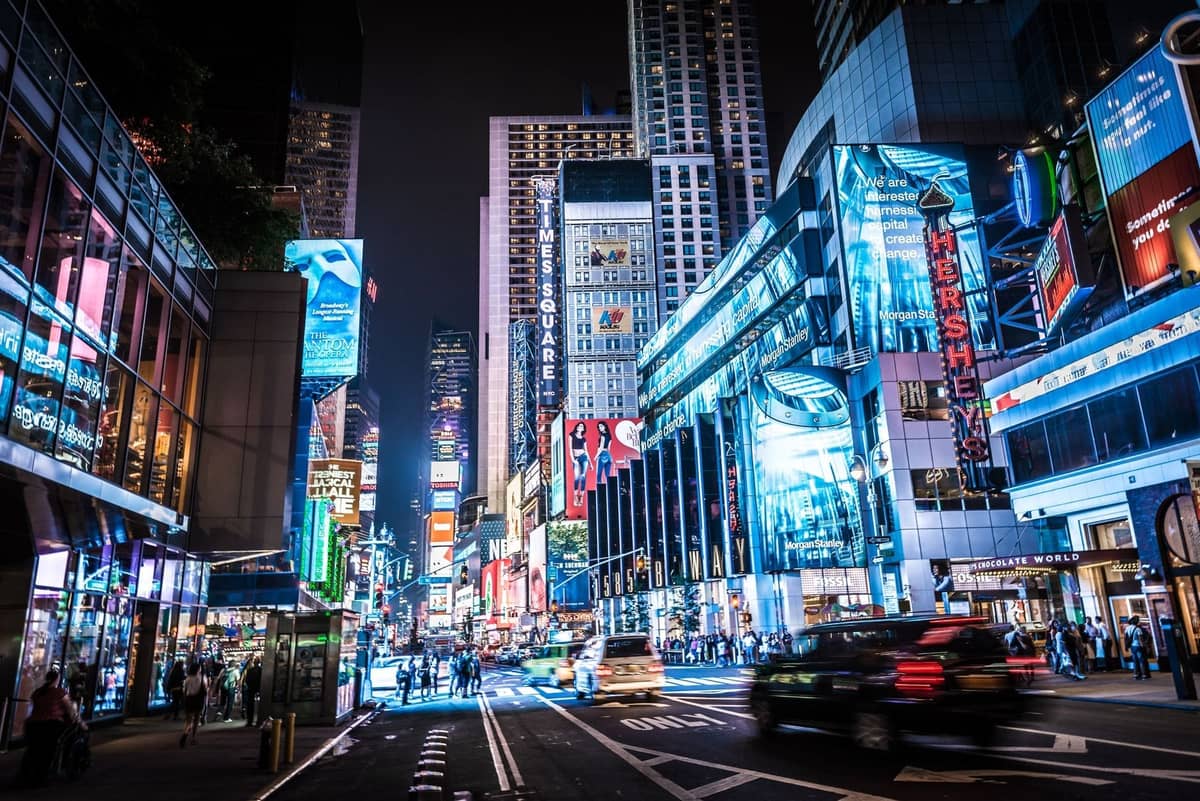
New York City's nightlife economy supported roughly 299,000 jobs and generated $35.1 billion in economic output as of 2016, according to the NYC Mayor's Office of Media and Entertainment. That scale matters because it translates directly into variety: on any given night, you can catch a world-class jazz set, laugh at a Comedy Cellar show that launched careers, sip craft cocktails on a rooftop above Midtown, or dance until sunrise in a warehouse club in Brooklyn. The city does not have one nightlife scene. It has dozens, layered across five boroughs, and knowing which one fits your night makes all the difference.
The 24-hour subway is the structural backbone of all of this. Unlike cities where nightlife winds down when last trains stop running, NYC crowds shift and migrate well past midnight. If you want to understand the full picture before you arrive, the first-time visitor guide gives essential context on how the city's neighborhoods and transport fit together.
The Best Nightlife Neighborhoods, Ranked by Vibe
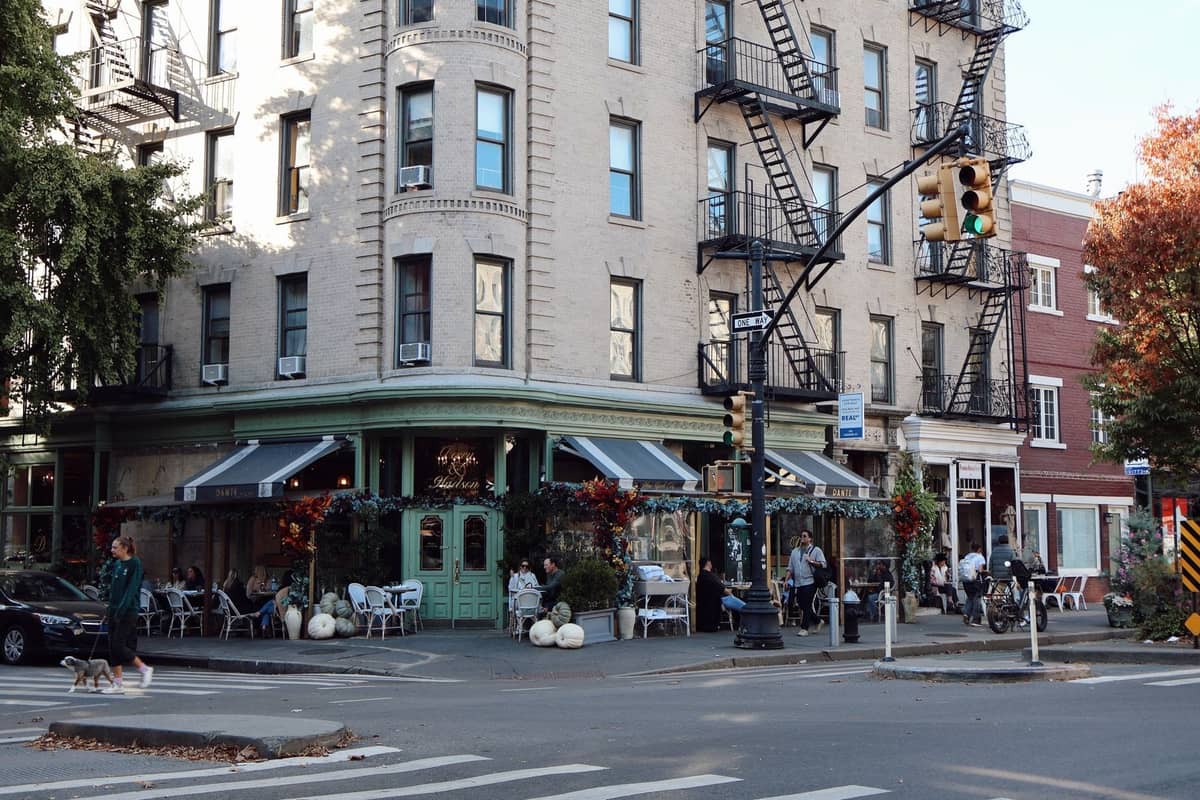
Greenwich Village is the single best neighborhood for a classic New York City night if you care about quality over spectacle. The Village Vanguard on 7th Avenue South has been hosting jazz since 1935 and remains the standard by which other jazz clubs are judged. Two blocks away, the Comedy Cellar routinely features unannounced drop-ins from major names. Drinks here cost around $15-20, and covers at the Vanguard run approximately $30-40. Reserve in advance for both.
The Lower East Side offers the sharpest contrast in the city: cramped, unpretentious bars with $6 beers next door to serious cocktail dens charging $18 a glass. It draws a younger, more local crowd than Midtown and has the highest concentration of live music venues outside of Brooklyn. For a broader look at what this area offers after dark, the Lower East Side neighborhood guide covers the full picture.
- Greenwich Village Jazz clubs, comedy, speakeasy-style cocktail bars. Best for: culture-first evenings. Price range: $$-$$$.
- Chelsea and Meatpacking District Upscale lounges, major dance clubs, rooftop terraces. Best for: late nights and dress-to-impress crowds. Price range: $$$-$$$$.
- Lower East Side Indie bars, dive bars, live music, and serious cocktail spots. Best for: younger crowds, local energy. Price range: $-$$$.
- Midtown and Times Square Hotel rooftop bars with skyline views, theater-district cocktail lounges. Best for: out-of-towners and special occasions. Price range: $$$-$$$$.
- Williamsburg, Brooklyn Craft beer bars, rooftop venues, warehouse clubs, live music. Best for: longer nights and a more neighborhood feel. Price range: $$-$$$.
- Harlem Gospel brunches on Sundays, jazz lounges, neighborhood bars with real local character. Best for: music history and community atmosphere. Price range: $$.
⚠️ What to skip
Times Square and Midtown rooftop bars are not tourist traps exactly, but they price on location. Expect to pay a premium of roughly 30-40% more than comparable venues elsewhere in the city simply for the view. If budget is a concern, the view from a rooftop bar near the High Line or in Williamsburg is nearly as dramatic at a lower cost.
Rooftop Bars: What They Cost and When to Go
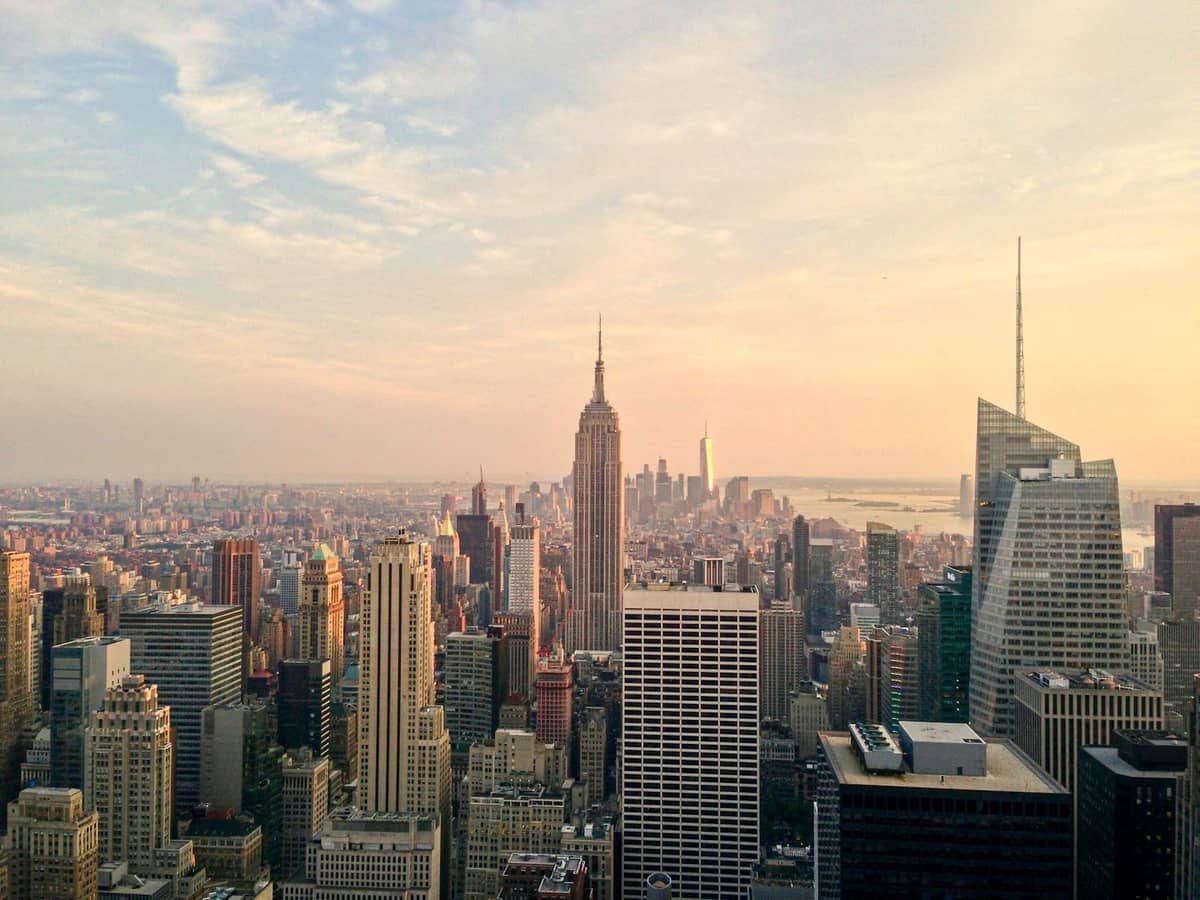
Rooftop bars are one of the defining experiences of a New York City night, but they require a bit of planning. The best-known options sit in Midtown: 230 Fifth Rooftop Bar (open roughly 2 pm to 2 am most days and later on weekends) and Bar 54 at the Hyatt Centric Times Square (typically open in the late afternoon until around midnight or later, with extended hours on weekends) are the two most-referenced. Cocktails at these venues run $20-25 before tip. Neither is the place for a quiet drink; both draw large, tourist-heavy crowds on Friday and Saturday nights.
In summer, rooftop reservations are essential. Most venues now require them through their own websites or via OpenTable. Walk-ins on a Saturday in July are possible but involve long waits. Winter changes the calculation significantly: several Midtown rooftops set up heated enclosures or glass-sided 'igloos' to keep the outdoor terrace viable through December and January, which creates a genuinely different atmosphere compared to the open-air summer version.
✨ Pro tip
For rooftop views without rooftop bar prices, the observation decks at Summit One Vanderbilt and Top of the Rock both allow evening visits. They're ticketed attractions rather than bars, but the skyline perspective is better and you're not paying $22 for a gin and tonic.
Jazz, Comedy, and Live Music: The Cultural Side of the Night
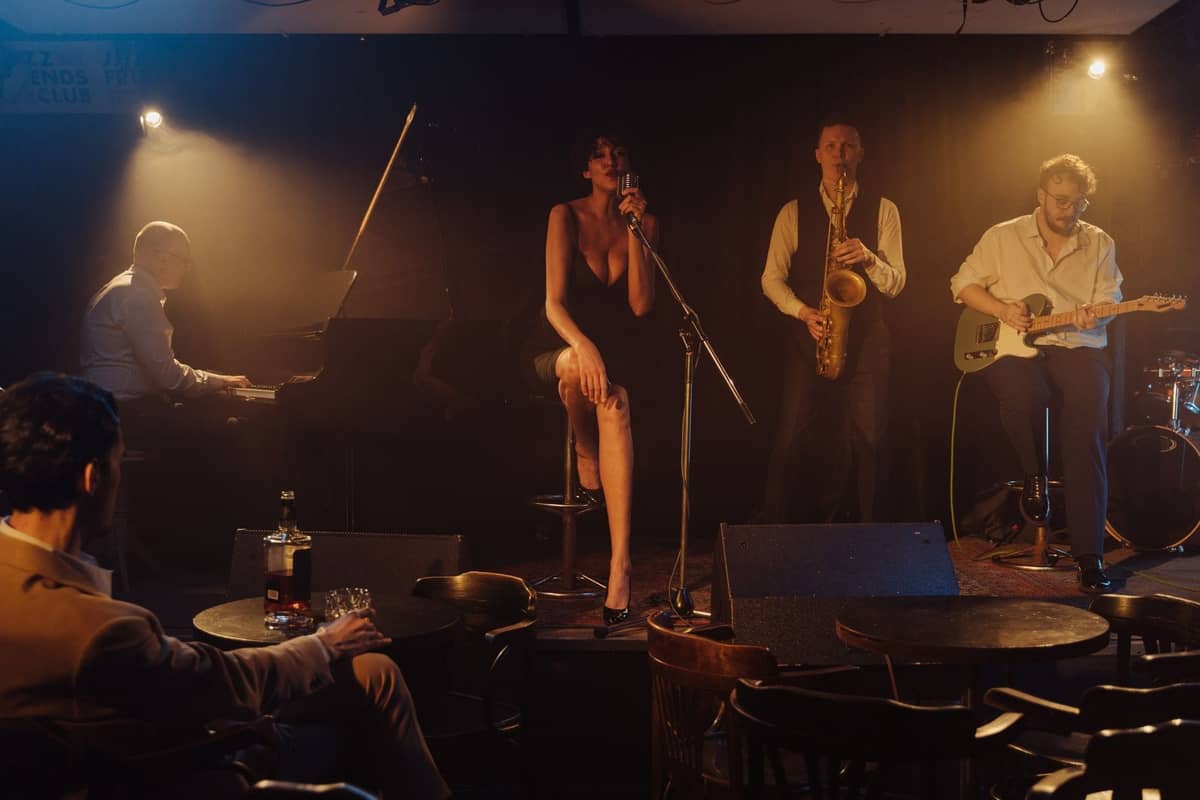
New York City's live music and comedy scene has genuine depth that often gets overlooked in nightlife coverage that focuses on clubs. The NYC jazz guide goes deep on this, but the short version: Village Vanguard, Smalls Jazz Club, and Jazz at Lincoln Center are the three most important venues. Each operates differently. Village Vanguard commonly runs two sets per night (for example, 7 pm and 9 pm on many current schedules), charges a cover, and requires a minimum drink purchase. Smalls is more informal and historically allowed all-night sessions. Jazz at Lincoln Center operates at a different scale entirely, with ticketed concerts in a purpose-built venue above Columbus Circle.
Comedy follows a similar pattern. The Comedy Cellar in Greenwich Village is the most famous, but its success has made getting a table without a reservation genuinely difficult on weekends. Book through their website at least a few days ahead. For a broader look at NYC's comedy scene, the NYC comedy guide covers venues across the city including UCB, Gotham Comedy Club, and the stand-up scene in Brooklyn.
Harlem deserves specific mention for Sunday nights, when several venues and restaurants host gospel brunches that extend well into the afternoon and carry a celebratory energy that is hard to find elsewhere. The Harlem neighborhood guide has specifics on venues and timing.
Practical Logistics: Hours, Prices, IDs, and Getting Home
The legal drinking age in New York is 21, enforced consistently. Every bar, club, and rooftop venue in the city will check ID, and foreign passports are accepted, but must be the actual document, not a photocopy or phone photo. Under-21 visitors face genuine restrictions: many venues become 21-and-over from around 9-10 pm, and some rooftop bars apply age restrictions from their evening opening. A few venues allow under-21 guests earlier in the afternoon for food service, but this changes by venue and season, so always verify before visiting.
- Cocktails at casual bars: $12-15 plus 18-25% tip
- Cocktails at rooftop and upscale venues: $20-25 plus tip
- Beer at a dive bar or neighborhood spot: $6-9
- Cover charges at jazz clubs: $20-40 typically, plus drink minimums
- Club entry (Meatpacking/Chelsea): $20-40 on weekends, sometimes free before midnight with guest list
- Comedy Cellar: two-item minimum per person at the table, covers vary by night
Getting home is straightforward because the NYC Subway runs 24 hours a day, seven days a week. Overnight frequency can drop to every 20 minutes or more on many lines, so check the MTA trip planner before you leave a venue rather than assuming trains are frequent. Uber and Lyft both operate across the city and are reliable for late-night travel, though surge pricing kicks in around closing time (2-4 am). For more detail on transit options, the guide to getting around NYC covers subway, buses, and ride-hailing in depth.
💡 Local tip
Tipping at bars in NYC is standard and expected: $1-2 per drink at a casual bar, or 20% at a cocktail bar or table service venue. Bartenders who see you skip the tip will deprioritize your service for the rest of the night. It is not optional in practice, even though it is technically not required by law.
Seasonal Shifts: How NYC Nightlife Changes Through the Year
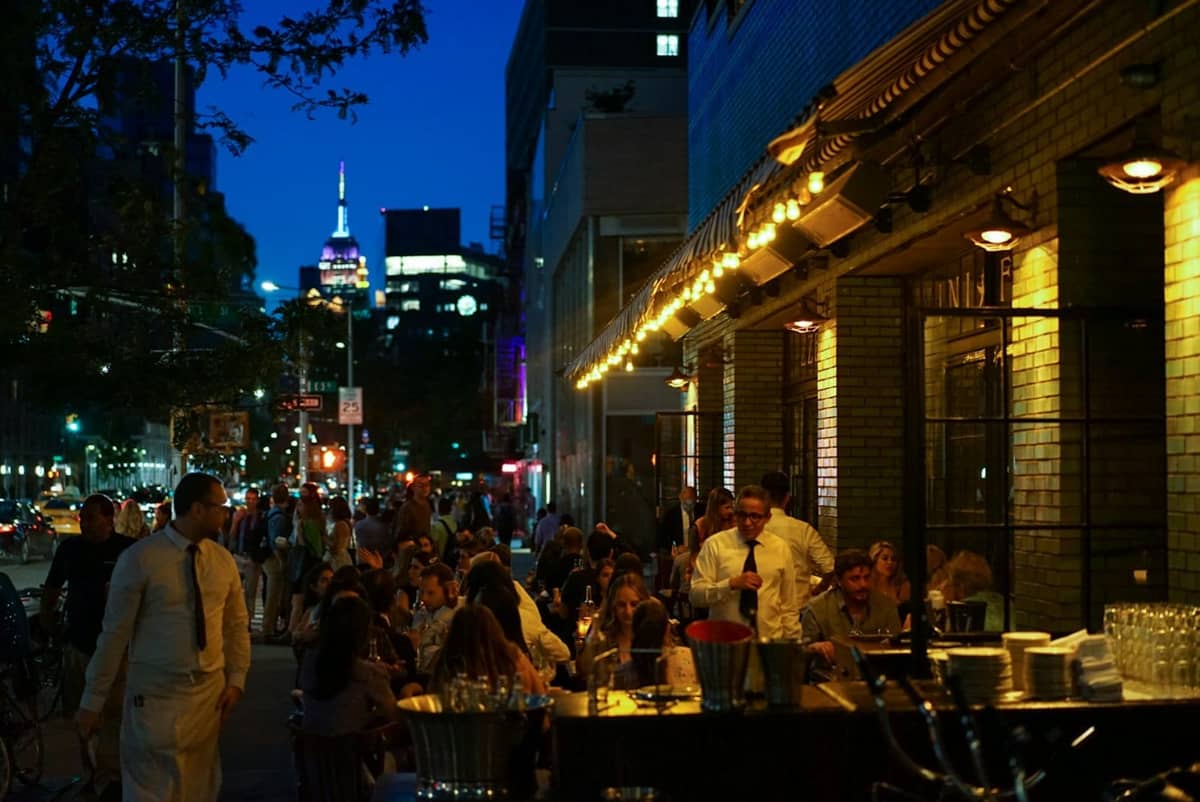
Summer (June through August) is when rooftop culture peaks. Every rooftop bar in the city operates at full capacity, reservations become essential, and outdoor patios across all neighborhoods fill up by 7 pm on weeknights. The heat and humidity can make standing in a line outside a club genuinely unpleasant, so arriving early or having a reservation matters more in summer than any other season. The NYC in summer guide covers the full seasonal picture.
Fall (September through November) is the sweet spot for nightlife in terms of comfort. Temperatures drop to a manageable range, outdoor spaces are still viable through October, and the city's arts calendar is in full swing with new Broadway shows, jazz season at its most active, and festival events drawing strong programming. See the NYC in fall guide for specific event recommendations.
Winter shifts the focus indoors. Rooftop bars with enclosed setups stay open, and a few run seasonal heated structures that are worth the novelty. Jazz clubs, comedy venues, and cocktail bars are busier in winter because the city concentrates itself indoors. New Year's Eve in Times Square is a separate category entirely: the crowds are enormous and the experience is primarily about spectacle rather than quality nightlife. Most locals skip Times Square entirely on December 31 in favor of neighborhood bars and private parties.
FAQ
What time do bars and clubs close in New York City?
New York State law allows bars to serve alcohol until 4 am. Most nightclubs open around 11 pm and operate until 3-4 am. Standard bars typically close between midnight and 2 am on weekdays and stay open until 3-4 am on Friday and Saturday nights. Hours vary by venue, so check the specific bar or club's website before going.
Do you need reservations for NYC nightlife venues?
For rooftop bars in summer, yes, reservations are strongly recommended and sometimes required. For Jazz at Lincoln Center and the Village Vanguard, advance tickets or reservations are advisable on weekends. Comedy Cellar reservations are recommended on Thursday through Saturday. For most bars and casual venues, walk-ins are fine, though popular spots can have waits on weekend nights.
Is the NYC subway safe to take late at night?
The subway runs 24 hours and is widely used at all hours, including after 2 am. Platform and train safety varies by line and location. As a general rule, well-lit stations on major lines (1, 2, 3, A, C, E, and L in nightlife areas) are reliable. Ride-hailing through Uber or Lyft is an equally valid option late at night, though expect surge pricing between 2-4 am.
What is the dress code for NYC clubs and bars?
It depends entirely on the venue. Casual bars and dive bars have no dress code. Upscale clubs in Meatpacking and Chelsea typically require smart casual at minimum: no athletic wear, no flip flops, often no shorts for men. Rooftop bars in Midtown are similar. Jazz clubs are generally smart casual. Always check the specific venue's website; many post their dress code policy on their bookings page.
What neighborhoods have the best nightlife for first-time visitors?
Greenwich Village is the most accessible starting point: it has strong transit connections, a range of price points, and world-class options in jazz (Village Vanguard) and comedy (Comedy Cellar) within a few blocks of each other. The Lower East Side is the next step for a more local feel. Midtown rooftop bars are worth doing once for the views, but are not representative of how New Yorkers actually spend their nights.