Village Vanguard: Inside New York City's Oldest Jazz Club
Open since 1935, the Village Vanguard is a basement jazz club on 7th Avenue South where the music has never stopped. Two shows nightly, first-come seating, and a one-drink minimum make for an intimate, no-frills experience that serious music lovers rank among the best in the world.
Quick Facts
- Location
- 178 7th Avenue South, Greenwich Village, Manhattan
- Getting There
- Christopher St – Sheridan Square (4-min walk); 14th St / 7th Ave (5-min walk)
- Time Needed
- 1.5–2 hours per set
- Cost
- Ticket price varies by performance (check official site); one-drink minimum required
- Best for
- Jazz fans, date nights, serious music listeners
- Official website
- villagevanguard.com
What the Village Vanguard Actually Is
The Village Vanguard is a jazz club, and that description alone undersells it significantly. It opened on February 22, 1935, founded by Max Gordon in the basement of a building at 178 Seventh Avenue South in Greenwich Village. It became primarily a jazz venue in 1957 and has not meaningfully changed since. The room is wedge-shaped, low-ceilinged, and holds around 123 people. The walls are bare red. The stage is barely raised. The sound, because of the room's compact dimensions, is about as close to physically inside a performance as you will get in any legitimate music venue in New York City.
By most accounts, it is the oldest continuously operating jazz club in New York City. That is not a marketing claim. It is a verifiable fact backed by 90 years of uninterrupted programming. Miles Davis, John Coltrane, Bill Evans, Sonny Rollins, Charles Mingus, and the Vanguard Jazz Orchestra have all recorded albums here. The room you sit in tonight is, in all essential architectural terms, the same room those recordings were made in.
ℹ️ Good to know
Shows currently run six nights a week at 8:00 p.m. and 10:00 p.m.; door times vary by night and performance, so check the official schedule when booking. Seating is first-come, first-served. There is one drink minimum per person, which includes non-alcoholic options like juice and bottled water.
The Room Itself: Architecture and Atmosphere
You descend 15 steps to reach the club. That descent matters. The street noise drops off behind you, replaced immediately by the low murmur of conversation and, if a set is in progress, the sound of a piano or bass resonating through brick and concrete. The ceiling is low enough that sound wraps around you rather than rising and dissipating. Whatever the acoustics of the room were by accident or intention in 1935, they work.
The wedge shape means sight lines differ sharply by where you sit. Tables near the stage offer proximity and sometimes a partially obstructed view depending on the ensemble size. Tables toward the back of the narrow end have a clearer full-stage view but slightly more distance from the sound source. Neither position is bad. Both are intimate in a way that larger venues cannot replicate regardless of ticket price.
The room has no screens, no distracting decor, no amplified announcements. A bartender works behind a small bar along one wall. The lighting is dim. It is designed around the sound, not around the aesthetic of looking like a jazz club. There is a difference, and here you feel it immediately.
⚠️ What to skip
The Village Vanguard is not wheelchair accessible. The entrance requires descending 15 steps and no elevator or lift alternative is available. Visitors with mobility limitations should be aware of this before purchasing tickets.
Tickets & tours
Hand-picked options from our booking partner. Prices are indicative; availability and final rates are confirmed when you complete your booking.
Greenwich Village food tour
From 93 €Instant confirmationFree cancellationGreenwhich Village Food and Historic walking tour
From 106 €Instant confirmationFree cancellationNYC Christmas tour with 5th Avenue, Rockefeller Tree and Xmas Village
From 34 €Instant confirmationFree cancellationNew York's East Village doughnut and pastry history tour
From 59 €Instant confirmationFree cancellation
The History You Can Feel in the Room
When Max Gordon founded the club in 1935, it initially hosted poetry readings, folk music, and comedy alongside jazz. The transition to a predominantly jazz venue came in 1957, and from that point forward the club became one of the defining recording and performance spaces in American music. The list of live albums recorded here reads like a syllabus for anyone serious about the genre: John Coltrane's Live at the Village Vanguard, Bill Evans Trio's Waltz for Debby, Sonny Rollins's A Night at the Village Vanguard. These are not nostalgic footnotes. They are canonical recordings that shaped how jazz was understood internationally.
The Vanguard Jazz Orchestra has held a Monday night residency at the club for decades, a tradition that continues today. That level of institutional continuity is unusual anywhere in live music. For context on how Greenwich Village shaped the broader cultural landscape of New York, the New York City jazz guide covers venues, history, and the neighborhood circuits that developed around them.
Lorraine Gordon, who took over managing the club after Max Gordon's death in 1989, ran it until her own death in 2018. Her daughter Deborah Gordon now manages the club. The ownership has remained within one family across nearly its entire history, which partly explains why the room itself has not been renovated into something more commercially polished. The lack of renovation is a feature.
Visiting: What to Expect Hour by Hour
Arrive before doors open if you want a good table. The first show at 8:00 p.m. draws a mix of tourists and serious listeners. By 7:00 p.m., a short queue often forms on the sidewalk outside. The line moves quickly once doors open, but the best tables nearest the stage fill within the first few minutes. If you have a preference for a specific part of the room, arriving at or slightly before the 7:00 p.m. door opening is worth it.
The second show at 10:00 p.m. tends to attract a slightly more local crowd and a somewhat looser atmosphere. The audience at the late show is generally smaller, the room less packed, and the musicians sometimes push the set in more experimental directions once the earlier, more tourist-heavy audience has cleared out. If you have flexibility, the 10:00 p.m. show is frequently the better musical experience.
Sets typically run around 75 to 90 minutes, though this varies with the performer. Between sets, the room clears and resets for the next audience. There is no lingering between shows. Plan your evening accordingly: dinner before the first show (the West Village has no shortage of options within a short walk), or a late meal after the second.
💡 Local tip
Tickets are sold in advance through the official website and are priced per admission, not per drink. The one-drink minimum is ordered and paid separately at the club. Book tickets early for featured artists and Monday night Vanguard Jazz Orchestra sets, which sell out well in advance.
Practical Details for First-Time Visitors
Getting there is straightforward. The Christopher Street – Sheridan Square station on the 1 train puts you about four minutes on foot from the door. The 14th Street / 7th Avenue station, served by the 1, 2, and 3 trains, is around five minutes. Either works. The neighborhood is safe and walkable at night, and 7th Avenue South is well-lit.
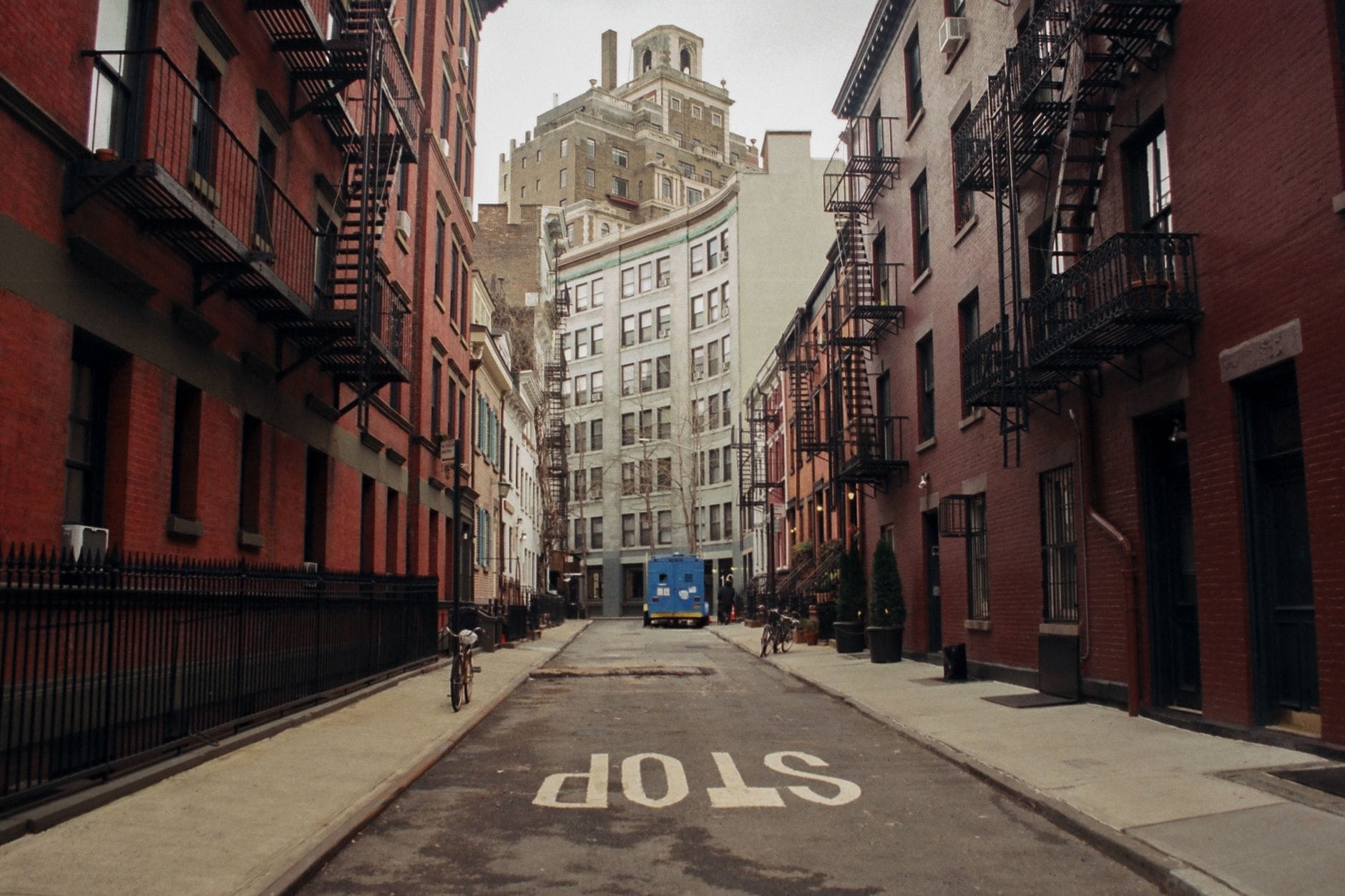
The West Village surroundings reward arriving early. The streets between Christopher Street and Bleecker are some of the most architecturally coherent blocks in Manhattan, with Federal and Greek Revival townhouses largely intact. If you want broader context for exploring the neighborhood before or after a show, the Greenwich Village neighborhood guide covers the surrounding streets in detail.
There is no dress code, but the audience tends to dress neatly rather than casually. Smart casual is a reasonable baseline. The room is air-conditioned in summer and warm in winter. Coats can usually be placed on the back of chairs or draped over laps, as coat check varies by night. Check the official FAQ before your visit.
Photography policy is strict: no photos or video during performances. This is actively enforced and is not a suggestion. It also means the experience is undistracted for everyone in the room, which is part of why the atmosphere is what it is. Leave the phone in your pocket for the duration of the set.
Who This Experience Is and Is Not For
The Village Vanguard is not a place to go for background music with dinner. The room is too small, the performances too close, and the audience too attentive for that dynamic to work. People who are accustomed to jazz as ambient soundtrack in larger venues are sometimes surprised by how intensely focused the listening experience is here. That is not a complaint. It is a description. If you want to talk through most of a performance, this is not the right venue.
Visitors looking for a more social atmosphere around live music, with more space and freedom to move around, may find the broader New York City nightlife scene offers better alternatives. But for anyone who wants to sit close to genuinely skilled musicians in a room where the music has been the point since 1935, there is nothing in the city quite like this.
First-time visitors to New York who include music in their priorities should know that this is one of the few attractions in the city that is not at all overhyped. The reputation is accurate. The room delivers what decades of recordings and word-of-mouth suggest it will.
Insider Tips
- The Monday night Vanguard Jazz Orchestra residency is the most reliable way to hear a world-class big band in an intimate setting. It books out regularly, so check the schedule and ticket availability as soon as your travel dates are confirmed.
- The second show at 10:00 p.m. draws a smaller, more musically engaged crowd. If your priority is the music rather than the social experience of a full room, aim for the late set.
- Seating is first-come, first-served, not assigned. Arriving at door opening time (7:00 p.m. for the first show, 9:30 p.m. for the second) is the only way to control where you sit. The wedge shape means tables along the left side near the stage offer the best combination of proximity and sight line.
- The one-drink minimum includes non-alcoholic beverages. If you are not a drinker, water and juices are available and count toward the minimum. There is no pressure to order alcohol.
- Check the official events page before purchasing, as the club occasionally closes for short maintenance or dark periods that are announced on-site but not always covered elsewhere.
Who Is Village Vanguard For?
- Jazz listeners who want to hear live music in the same room where canonical recordings were made
- Couples looking for an intimate, unhurried evening in one of Manhattan's most atmospheric spaces
- Travelers with a genuine interest in American music history and cultural landmarks
- Late-night visitors who want a focused, phone-free experience after dinner in the West Village
- Repeat New York visitors who have covered the major tourist sites and want something with more substance
Nearby Attractions
Other things to see while in Greenwich Village:
- Comedy Cellar
Tucked beneath MacDougal Street in Greenwich Village, the Comedy Cellar has been the proving ground for American stand-up comedy since 1981. Small, loud, and brilliantly unpredictable, it remains the club where surprise drop-ins from major names still happen on any given night.
- Stonewall Inn & National Monument
The Stonewall Inn and its surrounding Christopher Park form Stonewall National Monument, the first unit of the U.S. National Park System dedicated to LGBTQ history. This Greenwich Village site marks the location of the 1969 uprising that fundamentally reshaped civil rights in America, and it remains a living gathering place as much as a historic landmark.
- Washington Square Park
Washington Square Park is the social and cultural heart of Greenwich Village, a free 9.75-acre public square anchored by Stanford White's marble arch and animated by street performers, chess players, NYU students, and longtime locals. Open daily with a curfew from midnight to 6 a.m., it rewards visitors at every hour.