MoMA PS1: Queens' Free Contemporary Art Powerhouse
MoMA PS1 occupies a converted 19th-century public school in Long Island City, Queens, and has been one of New York City's most adventurous contemporary art institutions since 1971. Admission is currently free, the programming is consistently challenging, and the trip from Midtown takes under 15 minutes by subway.
Quick Facts
- Location
- 22-25 Jackson Avenue, Long Island City, Queens, NY 11101
- Getting There
- E, M, 7 to Court Sq–23rd St; G to Court Sq or 21st St–Van Alst
- Time Needed
- 1.5–3 hours
- Cost
- Free admission (through at least 2028)
- Best for
- Contemporary art, architecture, off-the-beaten-path culture
- Official website
- www.momaps1.org
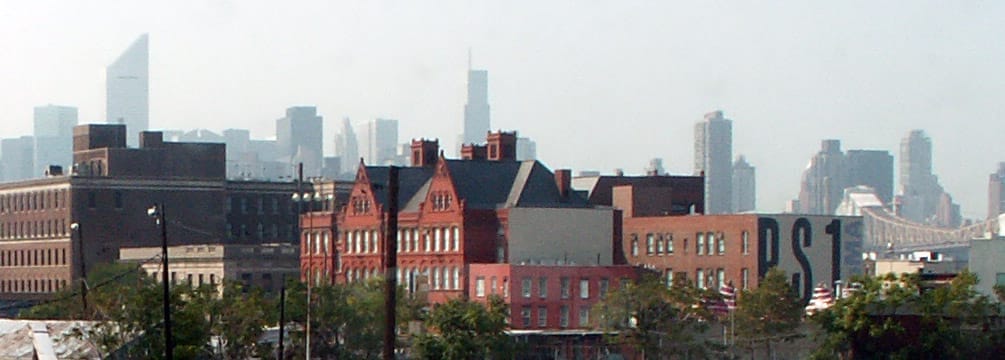
What MoMA PS1 Actually Is
MoMA PS1 is not a satellite gift shop for The Museum of Modern Art. It is a fully independent contemporary art institution that happens to share an affiliation with MoMA, formalized in 2000 and made official under the current name in 2010. Before that merger, it operated for nearly three decades as P.S.1 Contemporary Art Center, itself born from the Institute for Art and Urban Resources Inc., founded by Alanna Heiss in 1971 with a straightforward mission: bring serious art into underused urban spaces.
The building it occupies is a former public school constructed in the 1890s, a Romanesque Revival structure with original wooden floors, exposed brick, and high-ceilinged classrooms that artists have repurposed into exhibition spaces for over 50 years. The architecture itself is worth paying attention to. Former classrooms still bear traces of their past lives, and the tension between the institutional bones of the building and the frequently confrontational art inside is part of what makes PS1 feel different from any white-cube gallery in Manhattan.
ℹ️ Good to know
Admission is free every day PS1 is open through at least 2028. No timed entry tickets are required for the permanent collection or most exhibitions. Check momaps1.org for special event ticketing, particularly for the Warm Up summer concert series.
The Building and the Art: What You Will Find Inside
PS1 does not maintain a permanent collection in the traditional sense. Exhibitions rotate, commissions are site-specific, and programming changes substantially throughout the year. What remains constant is the curatorial appetite for work that larger institutions might hesitate to show: large-scale installations, politically charged pieces, artists earlier in their careers, and international names who have not yet crossed into the mainstream art market.
The galleries spread across multiple floors connected by staircases that creak and narrow in ways that feel nothing like a purpose-built museum. Some rooms are vast and flooded with light from industrial windows. Others are small and dim. Artists respond to these conditions directly, which means installations here often feel genuinely site-responsive rather than transplanted from a neutral space elsewhere. If you find a door that looks like it might not open, try it anyway. Some of the most interesting works at PS1 are installed in corners that visitors overlook.
The outdoor courtyard is a central feature, used throughout the year for sculpture and, for many summers, transformed into an architecturally designed installation as part of MoMA’s Young Architects Program competition. Past installations have included water features, shading structures, and experimental materials, each one commissioned specifically for the courtyard's dimensions.
Tickets & tours
Hand-picked options from our booking partner. Prices are indicative; availability and final rates are confirmed when you complete your booking.
The Edge Observation Deck, St Patrick's Cathedral and MoMA admission tickets
From 88 €Instant confirmationFree cancellationMuseum of Modern Art (MoMA) skip-the-line tickets
From 26 €Instant confirmationFree cancellationStatue of Liberty, Ellis Island, and Brooklyn Bridge Happy Hour Cruise
From 49 €Instant confirmationFree cancellationSpirit of New York Dinner Cruise
From 161 €Instant confirmationFree cancellation
How the Experience Changes by Time of Day
Arriving close to the noon opening on a weekday gives you the building largely to yourself. The light through the tall windows shifts across the old floors slowly, and the quiet is pronounced enough that you can hear the structure settle. This is the best time to spend extended time with individual works, particularly large-scale sound or video installations where crowd noise becomes a significant interference.
Saturday is the busiest day, partly because opening time is earlier at 10:00 and partly because it draws both art-focused visitors and local Queens residents. The courtyard fills by early afternoon. During summer, Warm Up Saturdays bring DJ performances to the courtyard from roughly July through early September, which transforms PS1 into something closer to a cultural event than a museum visit. The art is still accessible, but the atmosphere is social and loud. If you are there for the exhibitions, aim for the first hour of opening before the Warm Up crowd arrives.
💡 Local tip
Thursday and Friday afternoons tend to offer a quieter experience than weekends, with enough visitors that the building feels alive but not crowded. These are ideal for extended looking at time-based works.
Getting There from Manhattan and the Surrounding Area
The subway ride from Midtown Manhattan is genuinely short. The E, M, or 7 train to Court Sq–23rd St puts you about a five-minute walk from the entrance on Jackson Avenue. The G train stops at Court Sq and at 21st St–Van Alst, both walkable. From Midtown, the E or M from any stop on the 8th Avenue or 6th Avenue lines gets you there in under 15 minutes on a normal service day.
If you are arriving by ferry from other parts of the city, the Hunters Point stop on the NYC Ferry is about a 10-minute walk. Citi Bike has a dock at 46th Rd and Jackson Ave, and protected bike lanes on 11th St and 44th Dr make cycling a practical option from nearby neighborhoods. For a broader overview of getting around Queens and the rest of the city, the NYC transit guide covers subway, ferry, and bike-share options in detail.
Street parking on Jackson Avenue is limited and unreliable. The Court Square Municipal Garage at 45-40 Court Square West is the closest structured parking, approximately a six-minute walk. Driving is genuinely not the easiest option here.
Historical Context: From Abandoned School to Art Institution
Long Island City in the early 1970s was not the neighborhood it is today. The area was industrial, underinvested, and largely ignored by the Manhattan art world. Alanna Heiss founded the Institute for Art and Urban Resources in 1971 specifically to bring contemporary art programming into vacant or underused spaces across New York, and the former P.S.1 building in Queens became the most enduring of those projects. The first official exhibition opened in 1976, and the building has operated continuously as an art space since then.
The affiliation with MoMA, which began informally in the late 1990s and was formalized in 2000, brought institutional stability and broader resources. The renaming to MoMA PS1 in 2010 made the relationship explicit. That institutional backing has not smoothed PS1 into a conventional museum experience. The programming remains genuinely experimental by major-institution standards, and the building's physical character resists any impulse toward corporate polish.
For those interested in the broader contemporary and modern art landscape in New York, the NYC art guide covers the full range of institutions across the five boroughs, from MoMA's main Fifth Avenue building to smaller galleries in Brooklyn and the Bronx.
Practical Details: What to Know Before You Go
PS1 is open Monday, Thursday, Friday, and Sunday from noon to 6:00 PM, and Saturday from 10:00 AM to 6:00 PM. It is closed Tuesday and Wednesday, as well as Thanksgiving, Christmas Day, and New Year's Day. Hours can vary around holidays and special events, so checking the official site before visiting is worth the 30 seconds it takes.
The building is wheelchair accessible. Wheelchairs are available at the entrance, and self-service lockers are accessible. Visitors who need additional accommodations can request them in advance by phone or through the accessibility page on the museum website.
Photography policies vary by exhibition. Some installations prohibit photography entirely, particularly those with licensing restrictions on the work. Look for signage at gallery entrances before reaching for your phone. The courtyard is generally photographable, and the building's exterior and architectural details are fair game.
⚠️ What to skip
PS1 has no cafe or restaurant on-site. Plan your food and coffee accordingly. Long Island City has a growing number of restaurants and cafes within a short walk of the building, particularly along Jackson Avenue and toward the Court Square area.
Honest Assessment: Is It Worth the Trip from Manhattan?
For visitors with a genuine interest in contemporary art, yes, without qualification. The programming is consistently more adventurous than anything you will find at the main MoMA building or most uptown institutions, the admission is free, and the building itself is architecturally interesting enough to justify the visit on its own.
For visitors looking for the recognizable icons of modern art, Picasso, Warhol, Matisse, PS1 is not that place. Those works are at the Museum of Modern Art on 53rd Street in Midtown. PS1 complements MoMA rather than replicating it, and treating them as interchangeable will lead to disappointment in both directions.
Visitors who find contemporary art alienating or frustrating rather than stimulating may not enjoy the experience. PS1 does not soften its programming for general audiences, and the lack of interpretive labels on some works can feel intentional rather than accidental. That is part of the institution's character, not an oversight.
Long Island City itself rewards a longer visit. The neighborhood has changed considerably over the past decade, with galleries, restaurants, and the Gantry Plaza State Park waterfront all within walking distance of PS1. Combining a PS1 visit with time along the waterfront makes for a full half-day in Queens.
Insider Tips
- The stairwells and transitional spaces between galleries often contain smaller works that most visitors walk past quickly. Slow down in these areas.
- If you visit during the summer Warm Up season, the courtyard gets crowded by early afternoon on Saturdays. The galleries directly above and around the courtyard become significantly quieter as the crowd concentrates outside, which is paradoxically one of the better times to see the indoor exhibitions without distraction.
- Ask at the front desk for a current floor map. The building's layout is not intuitive, and some gallery wings are easy to miss on a first visit without knowing where to look.
- Gantry Plaza State Park is about a 15-minute walk from PS1 and offers some of the best unobstructed views of the Midtown Manhattan skyline from Queens. Combining both into one afternoon costs nothing.
- Check the PS1 website for upcoming opening receptions for new exhibitions. These are often open to the public and allow access to artists and curators in conversation with the work, which is a different experience from visiting a fully installed show mid-run.
Who Is MoMA PS1 For?
- Contemporary art enthusiasts looking for programming beyond mainstream museum offerings
- Architecture and design-focused travelers interested in adaptive reuse of historic buildings
- Budget travelers: free admission makes this one of the best-value art experiences in New York City
- Visitors combining a Queens itinerary with the Long Island City waterfront
- Anyone curious about where the New York art world is looking right now, rather than where it has been
Nearby Attractions
Other things to see while in Astoria & Long Island City:
- Gantry Plaza State Park
Gantry Plaza State Park sits on the East River waterfront in Long Island City, Queens, offering some of the most dramatic unobstructed views of the Midtown Manhattan skyline in the city. Spread across roughly 12 acres on the site of a former industrial dockyard, the park combines landscaped lawns, jutting piers, and a pair of restored 1920s rail gantries into a space that feels genuinely rewarding at any hour. Admission is free.
- Museum of the Moving Image
The Museum of the Moving Image in Astoria, Queens is the only museum in the United States dedicated to the art, history, technology, and social impact of film, television, and digital media. Housed on the grounds of the historic Kaufman Astoria Studios, it rewards curious visitors with hands-on exhibits, rare artifacts, and serious film screenings — not a theme park experience, but a genuinely substantive cultural institution.