Gantry Plaza State Park: Manhattan Views from Queens Without the Crowds
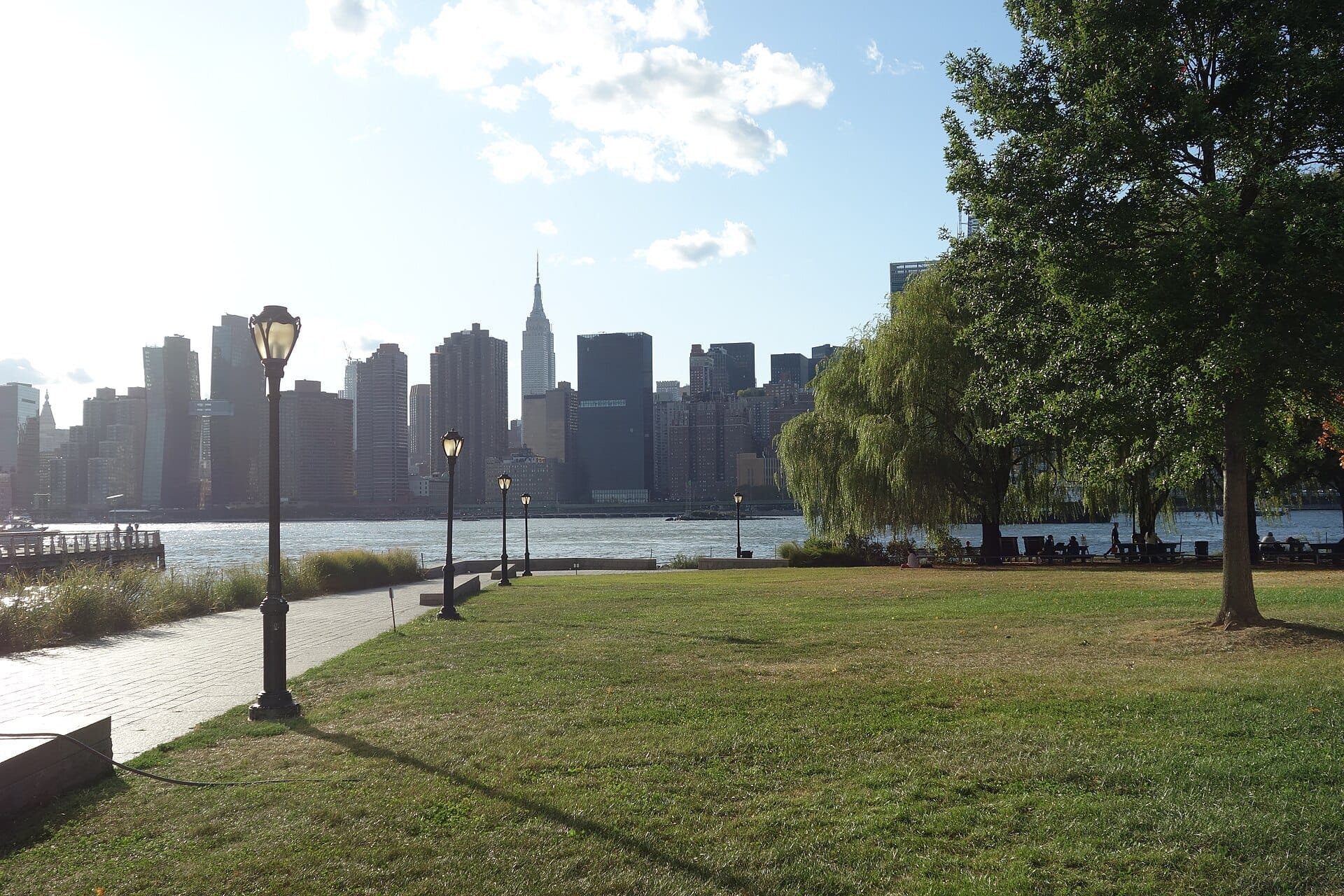
Gantry Plaza State Park sits on the East River waterfront in Long Island City, Queens, offering some of the most dramatic unobstructed views of the Midtown Manhattan skyline in the city. Spread across roughly 12 acres on the site of a former industrial dockyard, the park combines landscaped lawns, jutting piers, and a pair of restored 1920s rail gantries into a space that feels genuinely rewarding at any hour. Admission is free.
Quick Facts
- Location
- 4-09 47th Road, Long Island City (Hunters Point), Queens, NY 11101
- Getting There
- 7 train to Vernon Blvd–Jackson Ave, then ~8-min walk west toward the East River
- Time Needed
- 45 minutes to 2 hours, depending on pace and whether you linger on the piers
- Cost
- Free, no entrance fee
- Best for
- Skyline photography, waterfront walks, picnics, sunset watching, families
- Official website
- www.iloveny.com/listing/gantry-plaza-state-park/27010
What Gantry Plaza State Park Actually Is
Gantry Plaza State Park is a 12-acre New York State Park on the East River waterfront in the Hunters Point section of Long Island City, Queens. It opened in 1998 on land that had been an active industrial dockyard for much of the 20th century, where rail car floats moved freight between Queens and Manhattan. The park's most striking features are two original railroad gantries from the 1920s, enormous steel frames that once lowered freight cars onto barges. They have been preserved in place and now serve as the park's visual anchors and its unofficial logo.
What makes the park genuinely worth crossing the East River for is its relationship with the Manhattan skyline. From the piers and the waterfront promenade, the view takes in the Chrysler Building, the Empire State Building, and the dense cluster of Midtown towers with nothing in the way. This is not a distant, telephoto-lens view. The skyline feels close, maybe half a mile across the water, and it shifts dramatically depending on the light and the time of day.
💡 Local tip
The park is open daily and closes at 10:00 p.m. Admission is free. Hours are set by New York State Parks and may occasionally change, so check the official listing before planning a late evening visit.
How the Park Changes by Time of Day
Early morning, roughly 8 to 10 a.m., is when the park belongs almost entirely to joggers and dog walkers from the surrounding Long Island City apartment buildings. The light comes from the east, behind you as you face Manhattan, so the skyline sits in soft frontlit clarity and the river surface is often calm enough to show clean reflections. The air has a faint mineral quality near the water, and the only sounds are passing tugboats and the occasional rumble of the 7 train a few blocks inland.
Midday in summer brings picnickers to the lawns and families to the piers, but the park rarely feels genuinely packed the way that Central Park or Brooklyn Bridge Park does on a sunny Saturday. The gantry structures cast interesting geometric shadows across the walkways from late morning onward, making this a more compelling time for architectural photography than many visitors expect.
Sunset is the park's signature moment. As the sun drops behind and to the right of the Manhattan skyline, the towers catch the orange and pink light while the East River goes dark below. From around 30 minutes before sunset, photographers with tripods claim positions along the railing of the southernmost pier. The light changes quickly, and within 10 minutes of sunset the scene has shifted from warm gold to blue-hour grey. Staying through that full transition is worth it. On clear evenings in autumn, the colors can be exceptional.
After dark, the park takes on a different quality. The Manhattan skyline glitters across the water, the gantries are subtly lit, and the foot traffic thins to couples and the occasional late jogger. The park closes at 10:00 p.m., so there is a natural end point to evening visits, but the hour or so before closing can be the quietest and most atmospheric of the day.
Tickets & tours
Hand-picked options from our booking partner. Prices are indicative; availability and final rates are confirmed when you complete your booking.
Tickets to the Empire State Building Observatory at Sunrise
From 126 €Instant confirmationFree cancellationEmpire State Building Guided Tour with Observation Deck Access
From 127 €Instant confirmationFree cancellationTickets to the Empire State Building Observatory
From 0 €Instant confirmationFree cancellationNew York CityPASS – five top attractions
From 140 €Instant confirmationFree cancellation
The Industrial History Behind the Space
The Hunters Point waterfront was once one of the busiest freight transfer zones in the New York metropolitan area. Before the tunnel and bridge networks fully matured, rail cars from Long Island and Queens had to cross the East River by barge. The gantries were the mechanical spine of this operation: a loaded freight car would roll onto a platform, the gantry would lower it hydraulically onto a float, and the float would be towed across the river. The Hunters Point terminal handled enormous volumes of goods flowing in and out of Manhattan for decades.
By the second half of the 20th century, the operation had wound down. The site sat largely dormant until New York State began the redevelopment process in the 1990s. The decision to preserve the gantries rather than demolish them was architecturally significant. They are not reconstructed replicas or decorative interpretations. They are the original 1920s steel structures, weathered and repainted, still standing on the original footings. The painted lettering on the horizontal crossbars, reading 'Long Island City' in the style of old railroad signage, is part of what makes the park feel like genuine industrial heritage rather than a themed waterfront development.
The park was developed in phases after its 1998 opening, with the landscaping, lawns, and pier extensions added over time. Today the space integrates seamlessly with the surrounding residential neighborhood, where glass condominium towers have replaced most of the remaining industrial structures on the blocks inland.
Walking the Park: A Practical Orientation
The park stretches along a roughly north-south axis on the East River waterfront. From the subway exit at Vernon Boulevard and Jackson Avenue, you walk west toward the river. The walk takes about 8 minutes on flat streets and deposits you near the park's northern entrance. From there, a paved promenade runs along the water's edge past several lawned areas, seating zones, and the two gantry structures.
There are multiple piers extending into the East River, including several popular viewing platforms. The northernmost pier is generally the quietest and offers a slightly different angle on the skyline. The middle pier, closest to the gantries, is the most photographed position. The southernmost pier tends to attract the most sunset visitors and offers a direct sightline to the Empire State Building and the cluster of buildings around it. Benches line all three piers, and the railings are low enough that nothing obstructs a clear view.
The park's lawns are well-maintained and open for sitting or picnicking. There are public restrooms within the park. The entire promenade is paved and level, which makes it practical for strollers and wheelchairs, though visitors with specific accessibility requirements should confirm current conditions directly with New York State Parks. The park connects informally to the broader Hudson River Park waterfront network and the wider Long Island City neighborhood, which has expanded significantly as a residential and cultural destination over the past decade.
Photography Conditions and What to Expect
The park's orientation means you are facing roughly west-southwest toward Manhattan, which puts the skyline in soft, even light during the morning and places it in dramatic backlit silhouette near sunset. For golden-hour color on the towers themselves, the period from about 45 minutes before sunset is most reliable. The angle between the park and Midtown means that on clear days the Chrysler Building's stainless steel crown catches direct sunlight and flares distinctly.
Wide-angle lenses capture the full sweep of the gantries against the skyline. A 24mm or 28mm equivalent on a full-frame camera will include both gantry frames and a substantial portion of the Manhattan skyline in a single frame from the middle pier. Longer focal lengths (85mm to 200mm) isolate individual towers and compress the apparent distance across the water effectively. The river surface can provide reflections when the wind is low, typically in early morning and on still autumn evenings.
On overcast days, the skyline loses its drama but the park remains a pleasant walk. Fog on the East River in late autumn or winter can occasionally make the Manhattan buildings appear to float, which is its own form of interesting for photographers willing to experiment. Rain, however, offers little unless you are specifically after wet-pavement reflections.
⚠️ What to skip
The piers can be exposed and windy, particularly in winter. Temperatures near the river feel several degrees colder than inland. In summer, there is minimal shade on the piers and lawns; bring water and sun protection if you plan to spend more than an hour in direct sunlight.
Getting There and Combining with Nearby Attractions
The 7 subway line is the primary route from Midtown Manhattan. The train runs frequently and deposits you at Vernon Boulevard-Jackson Avenue, a short, flat walk from the park entrance. From Grand Central Terminal or Times Square, journey time on the 7 is roughly 10 to 15 minutes. This short transit time is part of what makes the park an attractive detour: the Manhattan skyline view from Queens costs you a subway ride and about 30 minutes round-trip in transit.
Long Island City has developed a genuine arts and culture scene in recent years. The MoMA PS1 contemporary art museum is located about 10 minutes' walk from the park, making a combination visit practical, particularly on weekend afternoons when PS1 sometimes hosts outdoor programming. The immediate neighborhood also has a growing number of coffee shops and restaurants on Vernon Boulevard and Jackson Avenue, useful for a meal before or after the park.
For visitors interested in the broader Queens waterfront and neighborhood context, the Astoria and Long Island City area offers a full afternoon's worth of exploration beyond the park itself. Astoria's restaurant strip is particularly strong for Greek food and Middle Eastern cuisine, and the walk between the two neighborhoods is manageable in good weather.
Gantry Plaza is often mentioned alongside other skyline viewpoints in the city. For context, visitors comparing vantage points should know that Brooklyn Heights Promenade offers a similar skyline view but faces Lower Manhattan rather than Midtown. The best views in New York City guide covers the full range of options, including paid observatory decks and free outdoor alternatives.
Honest Assessment: Who Will Love This and Who Might Not
Gantry Plaza State Park consistently delivers on its core promise: a free, accessible, genuinely impressive waterfront experience with an unobstructed Manhattan skyline view. It is not overhyped in the way that some New York City parks can be. The space is well-maintained, the gantries are visually distinctive, and the piers give you a sense of being out on the water rather than just beside it.
That said, the park has real limitations. There is very little to do beyond walking, sitting, and looking. There are no food vendors inside the park, no programming most days, and no exhibits interpreting the industrial history beyond the structures themselves. Visitors expecting the density of activity found in, say, Brooklyn Bridge Park will find this quieter and more passive. It is a place for people who find a well-positioned bench and a good view to be sufficient.
Families with young children will find the lawns useful and the piers safe, though there is no playground equipment. The park is not a destination for nightlife or food. Travelers pressed for time who are choosing between this and a paid observatory deck should understand that the two experiences are very different: the park is at water level, the towers are across the river, and there is nothing curated about the visit. Some people find that preferable.
For first-time visitors to New York City trying to allocate limited days, this park works best as a complement to other Long Island City activities or as a deliberate late-afternoon detour for sunset. It is also a strong recommendation in the free things to do in New York City category, where the combination of quality, accessibility, and zero cost is genuinely hard to match.
Insider Tips
- The southernmost pier offers the most direct sightline to the Empire State Building and fills up first at sunset. Arrive at least 45 minutes before sunset on clear evenings in fall or spring to secure a railing spot without rushing.
- Weekday mornings between 8 and 9 a.m. are the calmest window in the park. You will likely share the piers with only a handful of joggers, and the light on the Manhattan skyline is excellent for photography.
- The lettering on the gantry crossbars reading 'Long Island City' faces Manhattan, not the park side. Walk out onto the middle pier and look back toward Queens for the full graphic impact of the original signage framed against the sky.
- The 7 train runs frequently but can be crowded heading back toward Manhattan on weekend afternoons. If you visit at peak times, waiting one or two trains at Vernon Boulevard-Jackson Avenue is often faster than trying to board an overcrowded car.
- In winter, the park sees very few visitors on weekday afternoons, and the combination of bare riverside air and the lit Midtown skyline visible from the piers at dusk is one of the city's more underappreciated urban experiences.
Who Is Gantry Plaza State Park For?
- Photographers and anyone prioritizing skyline composition without crowds or cost
- Couples looking for a low-key, scenic walk with a genuinely memorable backdrop
- Repeat NYC visitors who have already covered the major tourist circuits and want something different
- Families with children who need outdoor space and a waterfront setting without theme-park infrastructure
- Travelers building a Queens-focused itinerary that combines culture, food, and neighborhood exploration
Nearby Attractions
Other things to see while in Astoria & Long Island City:
- MoMA PS1
MoMA PS1 occupies a converted 19th-century public school in Long Island City, Queens, and has been one of New York City's most adventurous contemporary art institutions since 1971. Admission is currently free, the programming is consistently challenging, and the trip from Midtown takes under 15 minutes by subway.
- Museum of the Moving Image
The Museum of the Moving Image in Astoria, Queens is the only museum in the United States dedicated to the art, history, technology, and social impact of film, television, and digital media. Housed on the grounds of the historic Kaufman Astoria Studios, it rewards curious visitors with hands-on exhibits, rare artifacts, and serious film screenings — not a theme park experience, but a genuinely substantive cultural institution.