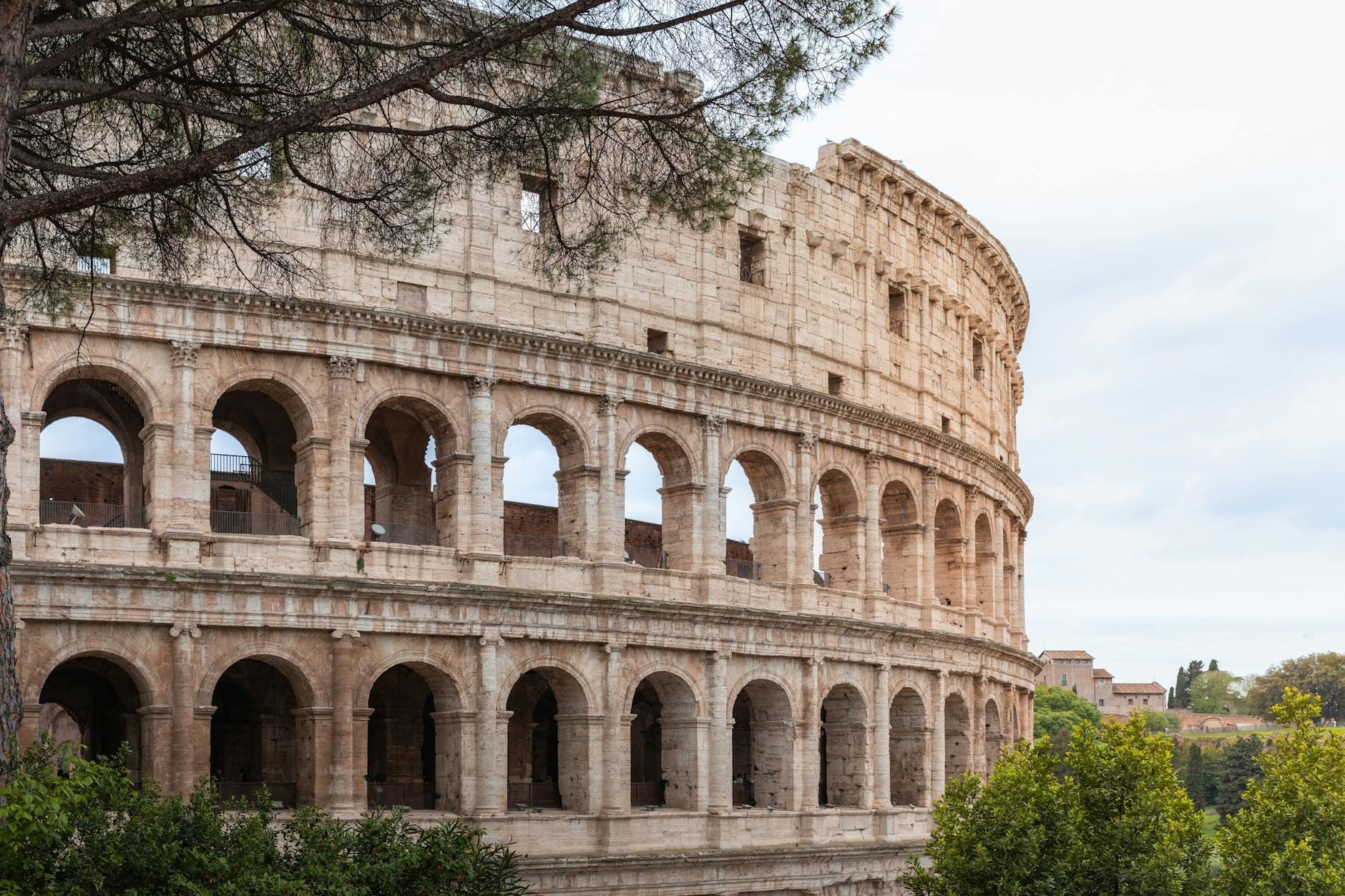
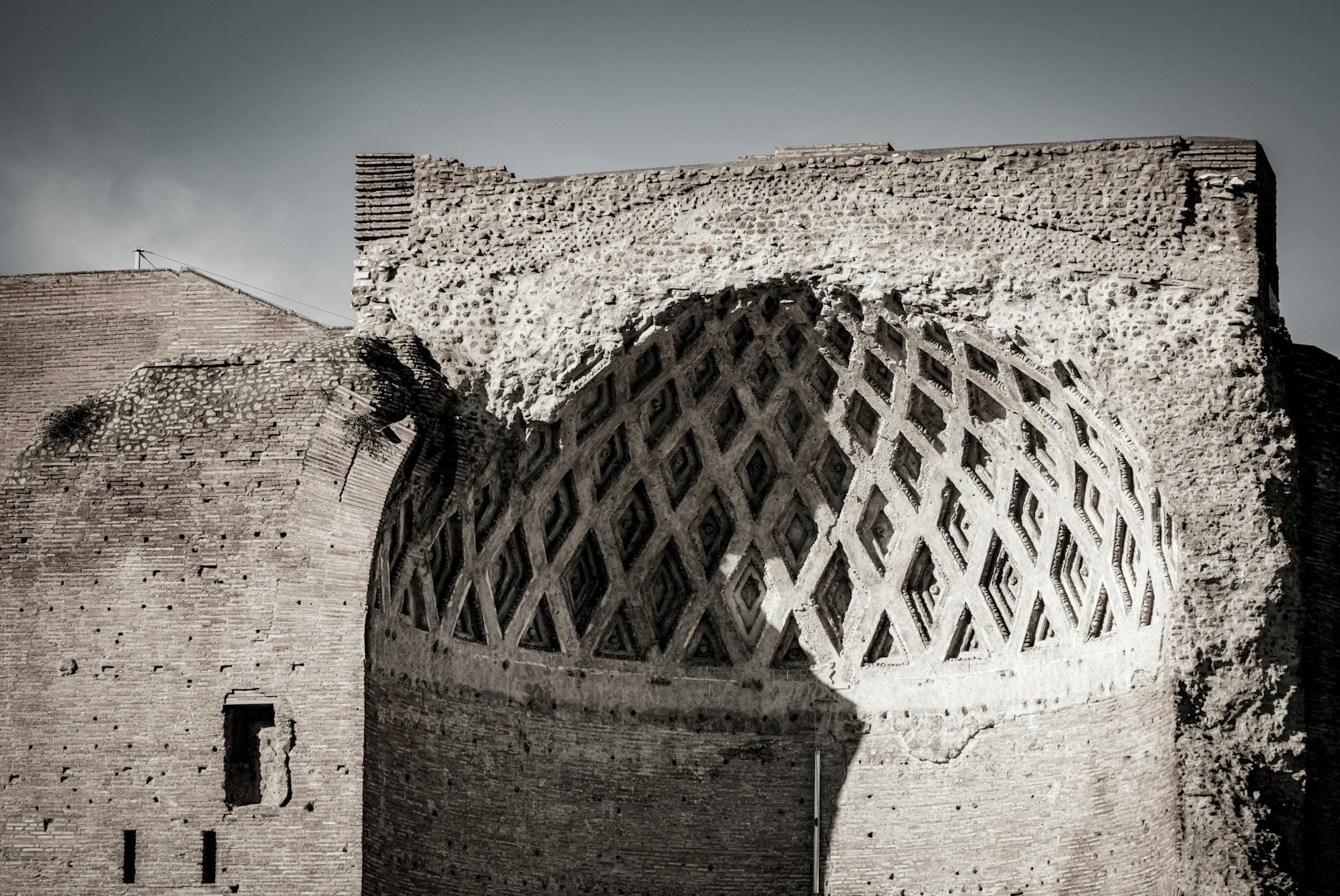
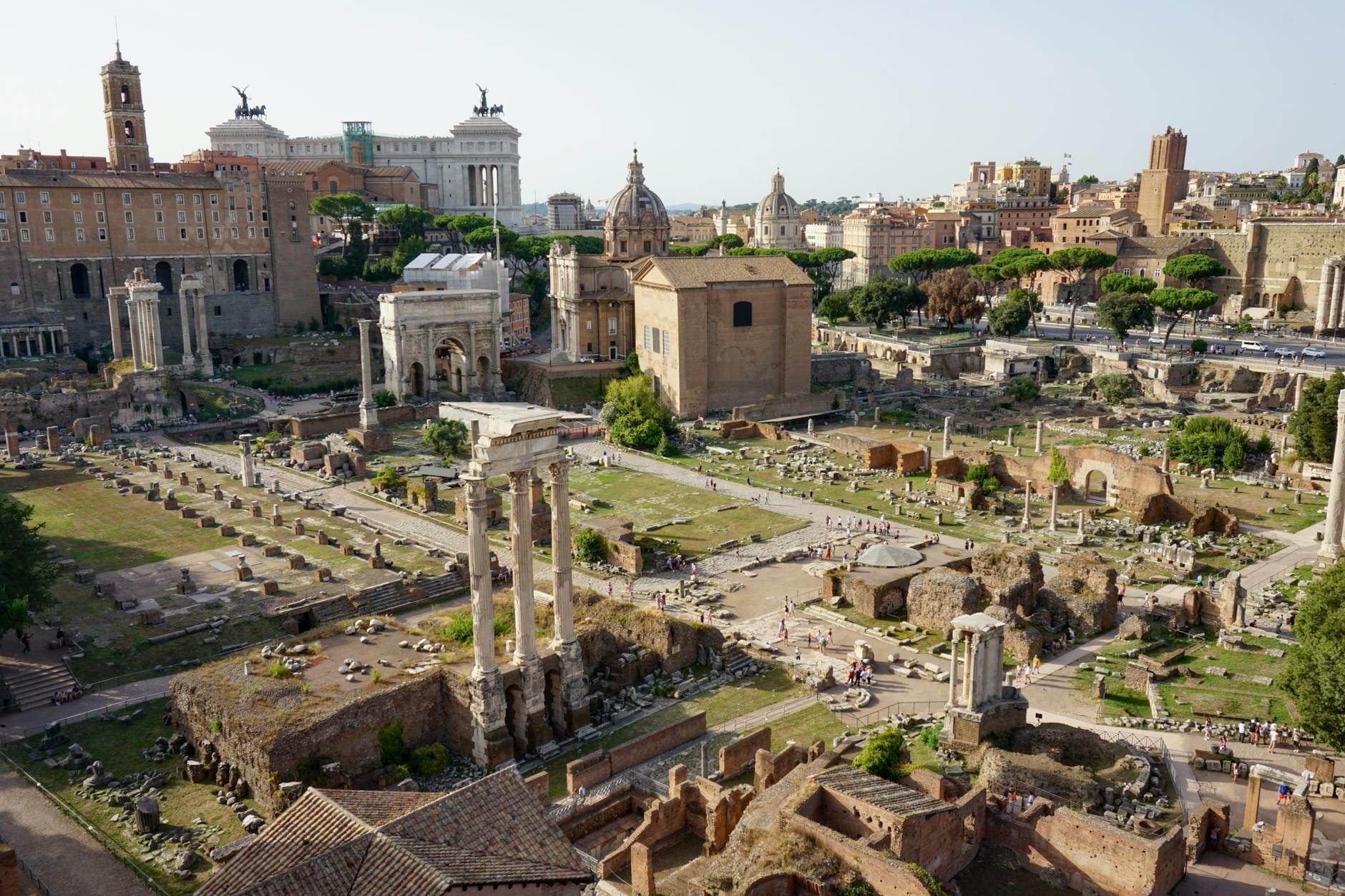
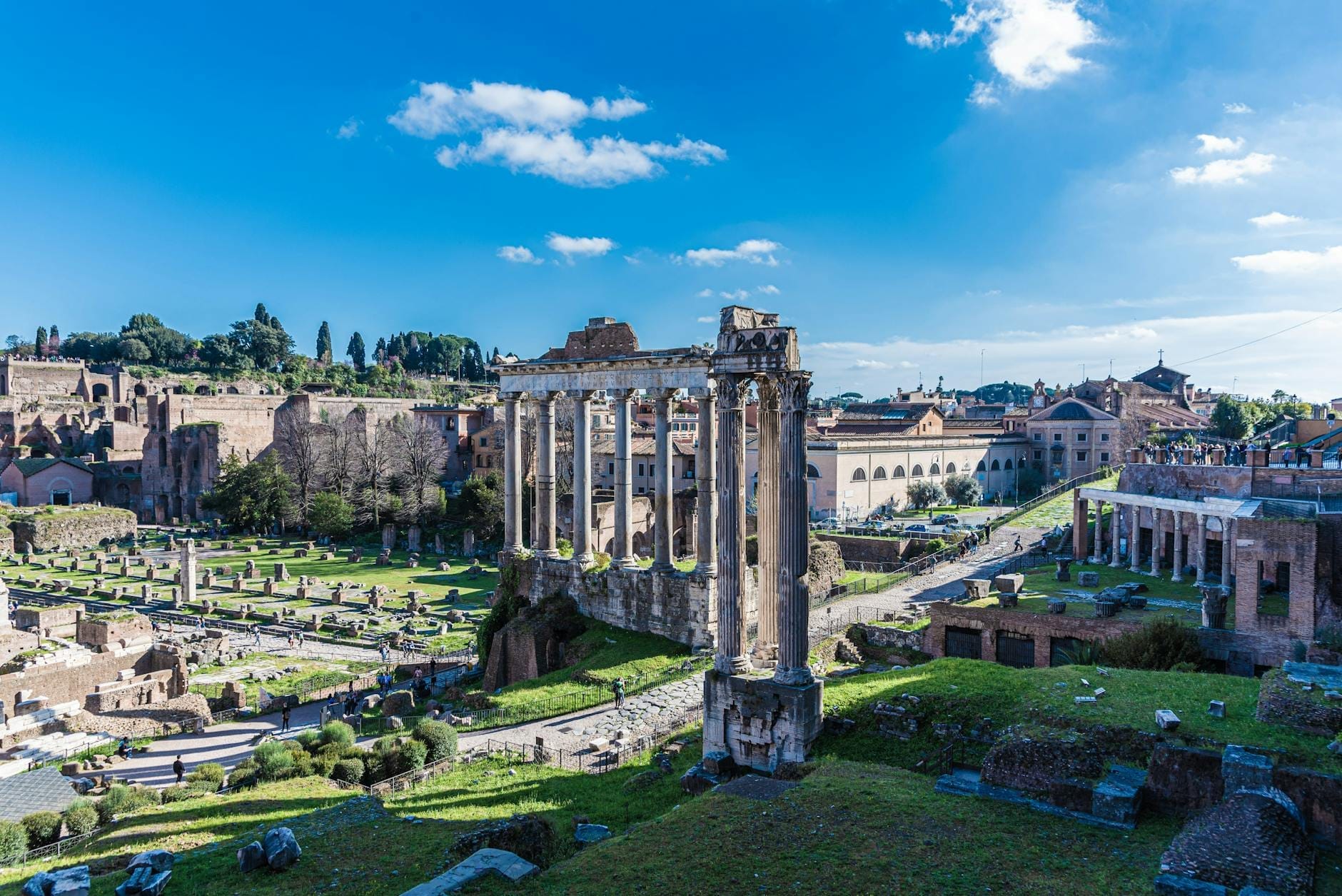
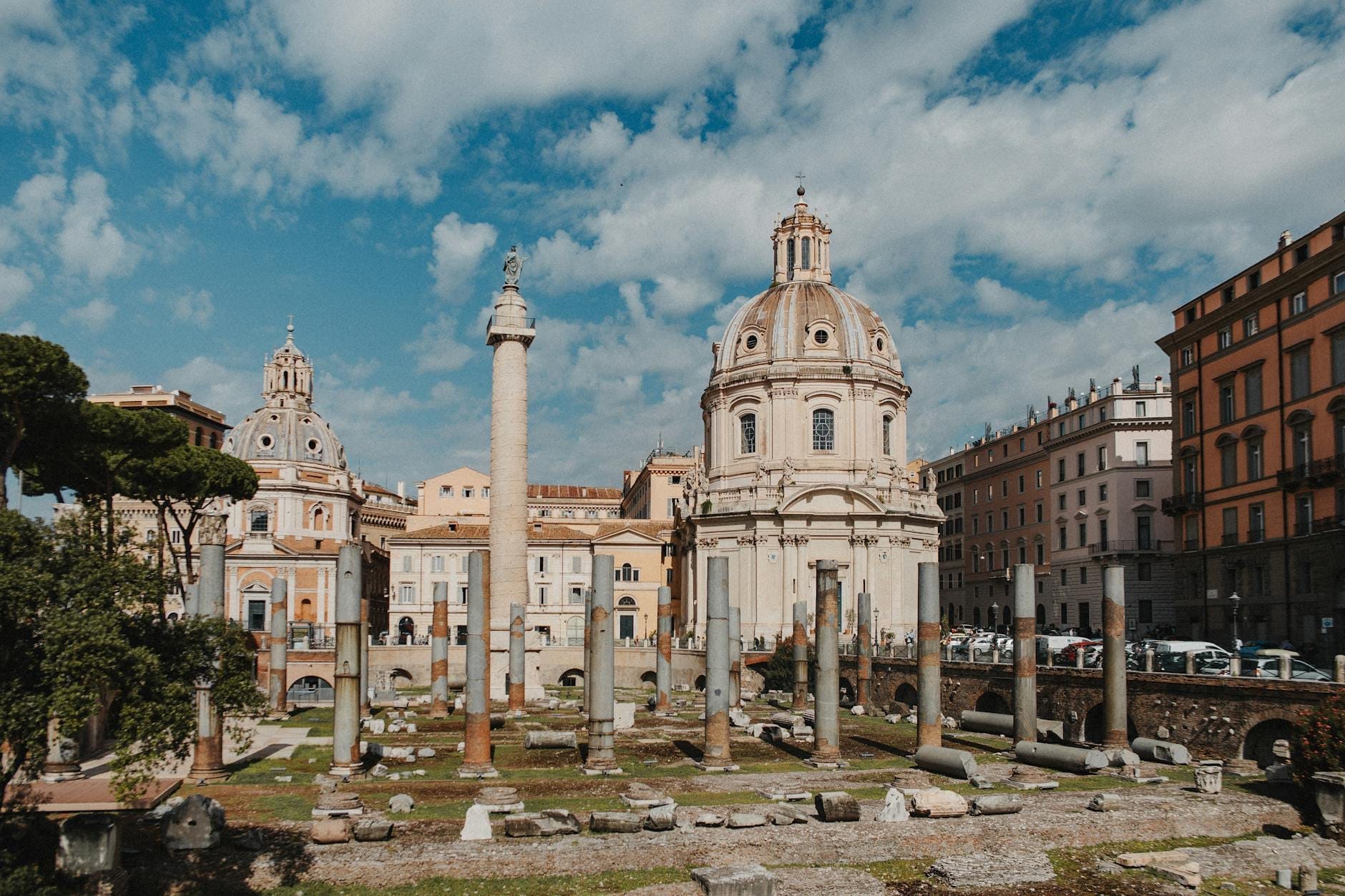
Ancient Rome is the gravitational center of the city, where the Colosseum, Roman Forum, and Capitoline Hill occupy ground that has been continuously significant for nearly three millennia. This neighborhood is less a residential quarter than an open-air archive, layering republic-era temples, imperial triumphal arches, and Renaissance churches into a few dense square kilometers.
Ancient Rome is the part of the city where the ground itself is the attraction. The Roman Forum, Palatine Hill, Colosseum, and Capitoline Hill all cluster within walking distance of each other, forming the most concentrated zone of world-historical significance anywhere in Europe. Staying or spending a full day here means accepting that you are moving through the bones of a civilization, and that the modern city has simply grown up around them.
Orientation
Ancient Rome, as a modern visitor's district, roughly corresponds to the valley and hills that formed the civic core of the classical city. The neighborhood is bounded to the north by Via dei Fori Imperiali, the wide road Mussolini cut through the imperial forums in the 1930s; to the west by the Capitoline and Circus Maximus; to the east by the Caelian Hill and the beginning of the Celio neighborhood; and to the south by the Aventine Hill and the edge of Testaccio.
The ancient city's sacred boundary, the pomerium, once ran along the base of these hills, and the Aurelian Walls, built in the third century AD and still remarkably intact, trace a larger perimeter around the historic city. Today, the physical landmarks that anchor orientation are the Colosseum to the east, the Capitoline Hill to the west, and Via Sacra running between them through the Forum valley. If you stand at the Arch of Titus and look west toward the Capitoline, you are standing on the axis that the ancient Romans considered the center of the known world.
The neighboring districts are equally important for context. To the northwest, the Centro Storico picks up where the imperial forums end. To the north, Monti is the most immediately livable neighborhood, with cafés, trattorias, and wine bars spreading across the slopes between the Colosseum and Termini station. To the south, Testaccio offers a completely different version of Rome, one built around a working-class market culture and some of the city's most honest restaurants.
Character & Atmosphere
This is not a neighborhood in the conventional sense. There are no morning markets, few corner bars where locals linger over espresso, and almost no residential streets in the immediate zone around the Forum and Palatine. What you get instead is a particular kind of atmosphere that shifts dramatically depending on the hour.
In the early morning, before eight, the area around the Colosseum is genuinely quiet. The light comes in low from the east, raking across the travertine and brick of the monument in amber tones, and the ticket lines have not yet formed. Street vendors are setting up along Via Sacra Nuova. The Forum, still locked, is visible through the iron fences that run along Via dei Fori Imperiali, and the silence is enough to let you understand why people have been making pilgrimages here for centuries.
By midday the character changes completely. Tour groups arrive in waves, gelato carts multiply, and the pavements along Via dei Fori Imperiali fill with people consulting maps and guides. The heat, particularly in July and August, intensifies off the stone surfaces. This is the most difficult time to appreciate the sites, not because they are less impressive, but because the crowds interrupt any sense of proportion or scale.
Late afternoon brings a partial recovery. The tour groups thin out, the light shifts to gold and then pink on the Forum columns, and the cafés on the edges of the neighborhood, toward Celio and Monti, fill with a slightly more relaxed crowd. After dark, the Colosseum and the Forum ruins are lit from below, and walking along Via dei Fori Imperiali at night gives a theatrical impression of the ancient city that daytime crowds make impossible.
💡 Local tip
Arriving at the Colosseum entrance before 9am, or booking a late afternoon time slot, significantly reduces waiting and makes the scale of the structure easier to absorb. The same applies to the Forum: the site is largest and least crowded in the first and last hours of opening.
What to See & Do
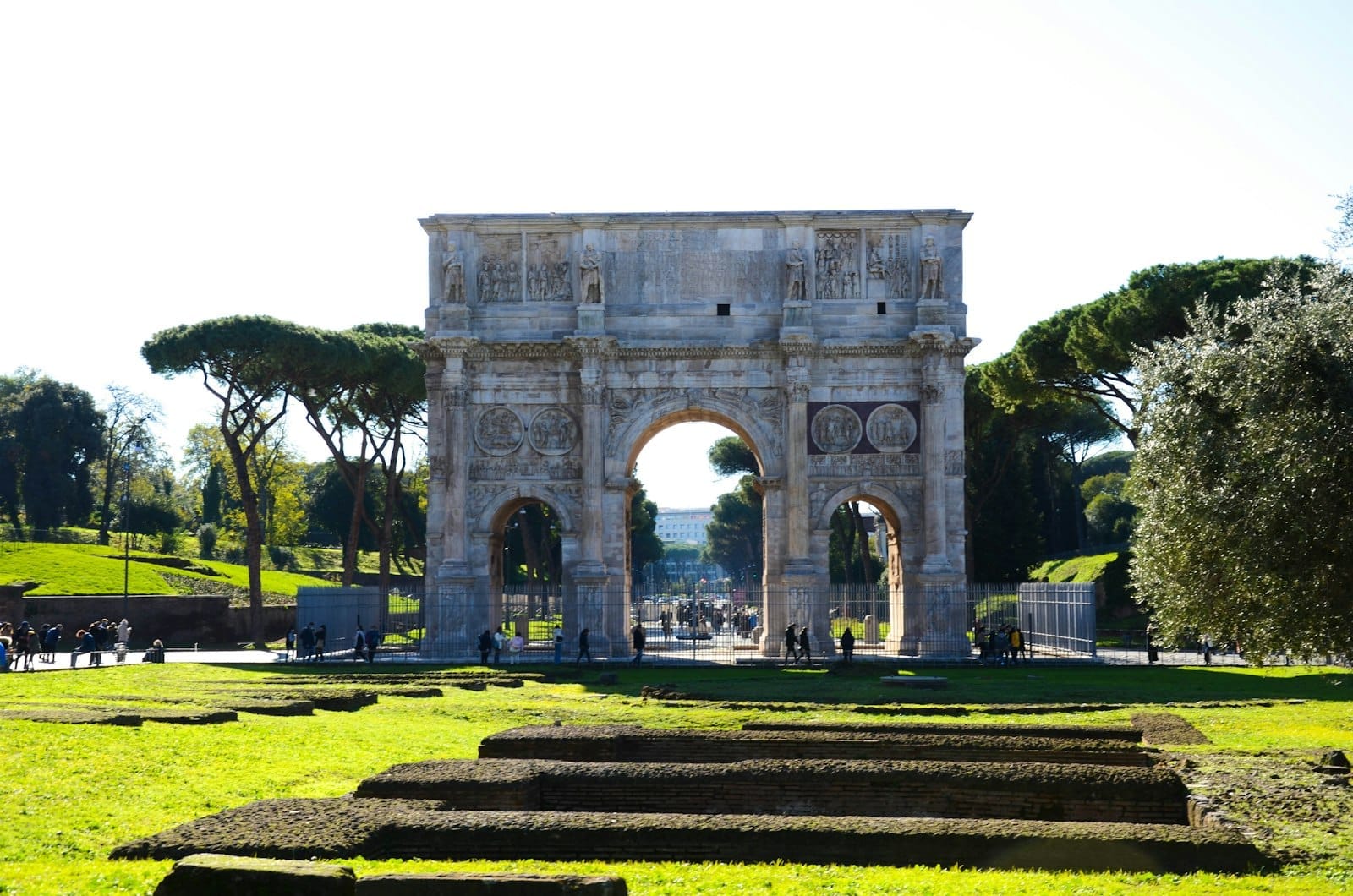
The core circuit of Ancient Rome takes a full day and involves significant walking on uneven ancient stone. The logical route runs from the Colosseum, up to the Arch of Constantine, through the Roman Forum along Via Sacra, up to the Palatine Hill, and then west to Capitoline Hill. This sequence follows the same processional axis used for Roman triumphs, and it remains the best way to understand how the pieces relate to each other spatially.
The Roman Forum is where the republic was debated and the empire administered. The ruins are dense and require some orientation: the Rostra (speaker's platform), the Temple of Saturn, the Basilica of Maxentius, and the Arch of Titus are the anchoring structures. The Palatine Hill above the Forum is included in the same ticket and is worth the climb. The terraces give wide views over the Circus Maximus to the south and the Forum below, and the hill itself is quieter than anywhere at ground level.
The Capitoline Museums, on the hill designed by Michelangelo, are among the most important in Rome. They house the original Marcus Aurelius equestrian statue, the Capitoline Wolf, and rooms of Roman portraiture that are genuinely moving at close range. The outdoor terrace on the back of the complex offers one of the best unobstructed views of the Forum, and admission gives you access to the Tabularium, a first-century BC archive building whose ancient arcade opens directly over the ruins below.
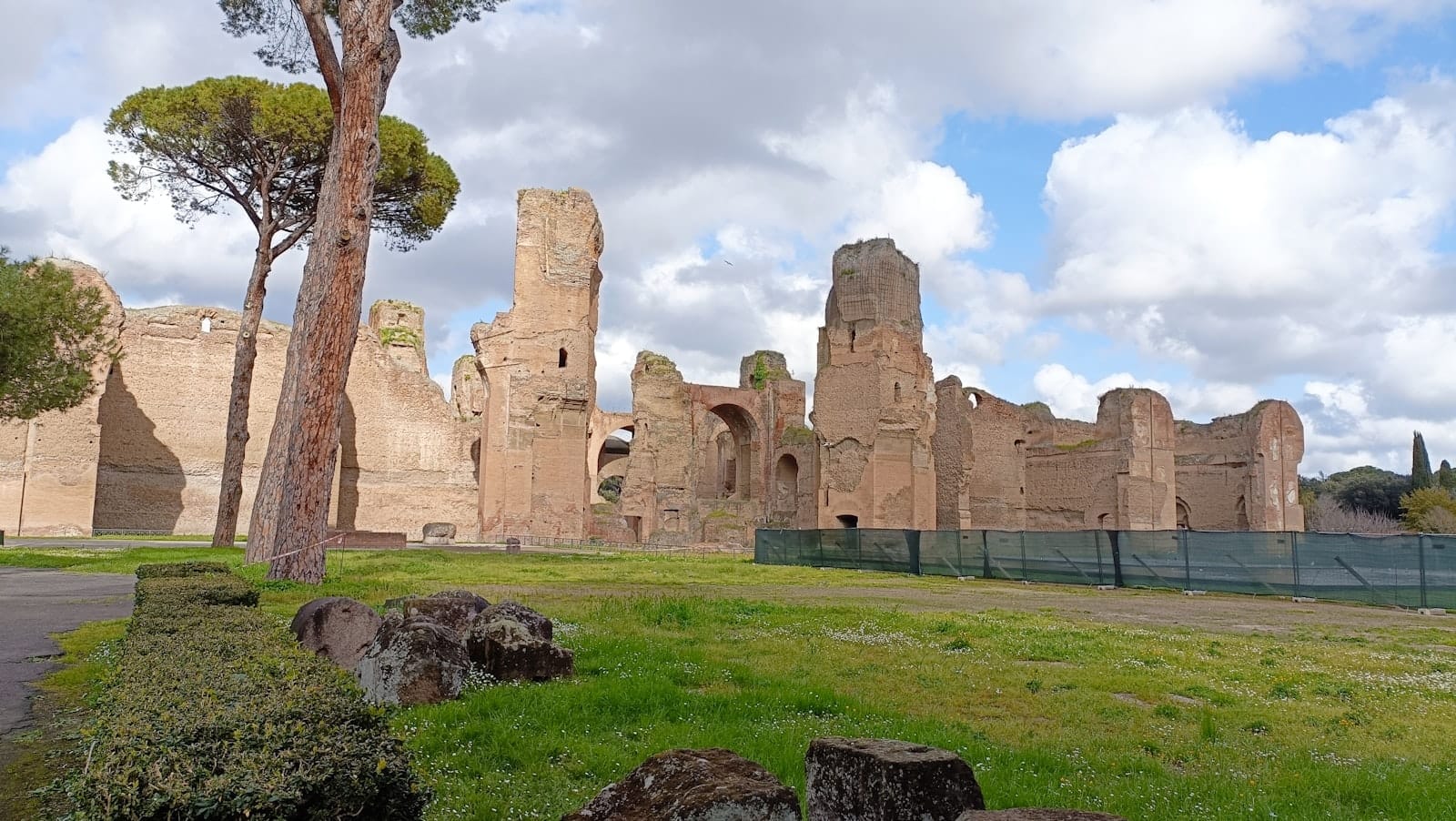
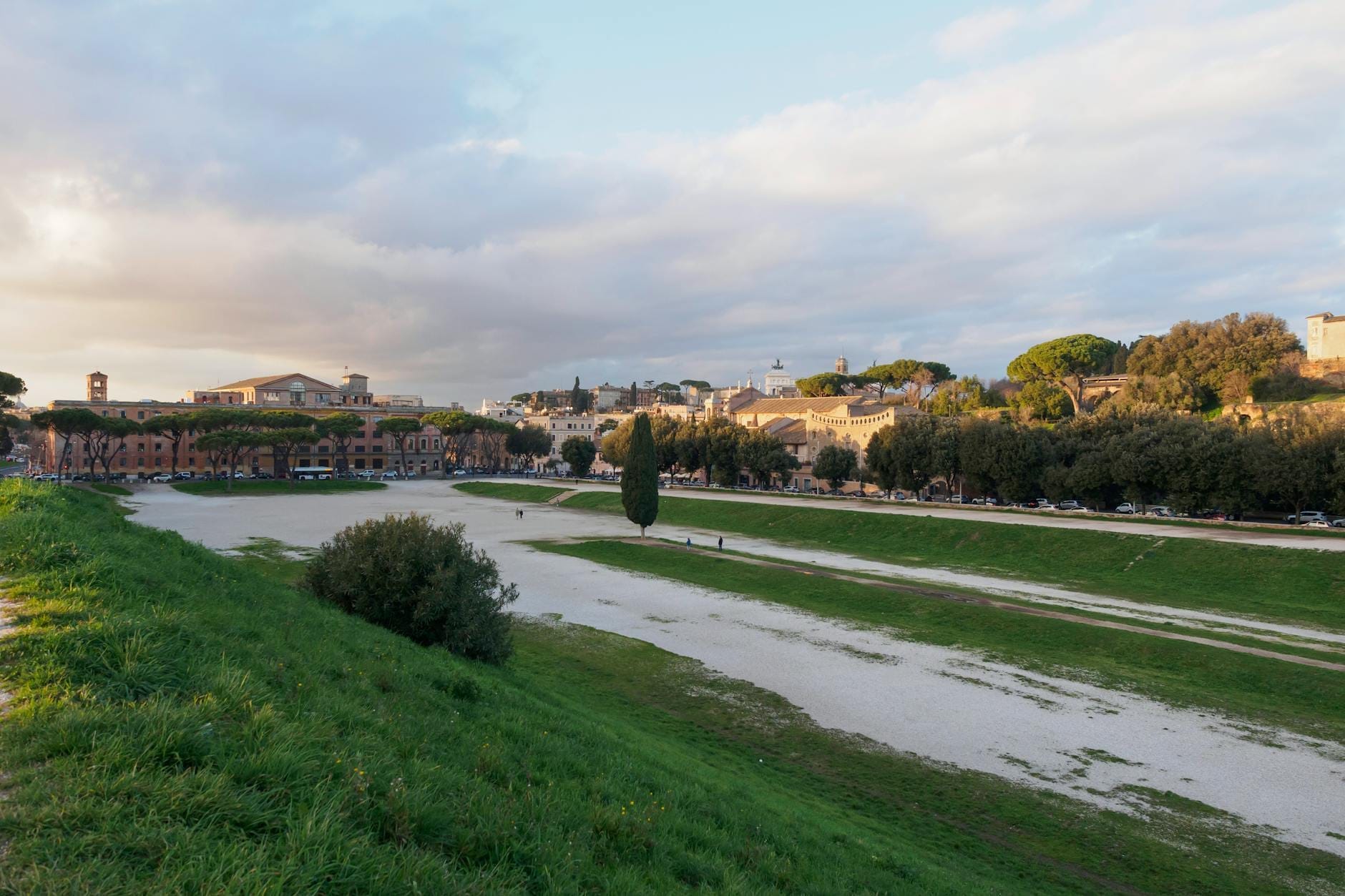
Two short walks from the core extend the experience. The Baths of Caracalla, a short walk south down Via Terme di Caracalla, are among the best-preserved large Roman structures in the city and far less visited than the Forum complex. To the west, the Circus Maximus is now a largely open public space, but the scale of the oval is still legible and worth ten minutes of your time.
Colosseum: plan 1.5-2 hours; book timed entry in advance
Roman Forum and Palatine Hill: same ticket, plan 2-3 hours
Capitoline Museums: plan 2-3 hours; audio guide strongly recommended
Baths of Caracalla: plan 1 hour; significantly quieter than Forum complex
Circus Maximus: 15-minute walk, free to enter the grounds
Arch of Constantine: free, accessible from outside the Forum ticket area
ℹ️ Good to know
A combined ticket covers the Colosseum, Roman Forum, and Palatine Hill. The Capitoline Museums require a separate ticket. Book everything online before your visit, especially between March and October, when same-day availability is unreliable. Check current opening hours directly with the venue, as they change seasonally.
Eating & Drinking
Eating immediately adjacent to the Colosseum or along Via dei Fori Imperiali is, with very few exceptions, a poor value proposition. The restaurants here are positioned for captive tourists, and prices reflect that. The better strategy is to walk ten minutes in either direction to eat well.
The slopes of Monti to the north, accessible via Via Cavour or Via dei Serpenti, have a genuine neighborhood food scene: small wine bars, lunch spots that fill with office workers and museum staff, and trattorias that operate on Roman hours rather than tourist hours. This is the most practical choice for lunch during a day in the ancient zone. For a more serious dinner, the walk to Testaccio takes about twenty minutes and puts you in the city's most respected culinary neighborhood, built around the old slaughterhouse market and Roman offal cooking.
Within the ancient zone itself, the most defensible option is the café inside the Capitoline Museums complex, which has a terrace overlooking the Roman skyline and food that is reasonable by museum standards. There are also a handful of bars and sandwich spots along Via di San Gregorio on the south side of the Palatine where prices are more honest and the clientele is a mix of workers and locals rather than purely tourists.
For street food that is genuinely Roman, the Mercato di Testaccio is the closest serious market to the ancient sites, about a fifteen-minute walk south. Stalls serve supplì (fried rice balls), porchetta sandwiches, and seasonal vegetables at prices that reflect what Romans actually pay. This is worth combining with a visit to the Circus Maximus and the Aventine Hill on the same afternoon.
⚠️ What to skip
Restaurants on the immediate tourist circuit around the Colosseum frequently add undisclosed service charges and charge significantly above average for mediocre food. Always confirm the menu price before ordering and check your bill against the posted menu. The Italian coperto (cover charge) is legal but should be listed in advance.
Getting There & Around
The Colosseo metro stop on Line B is the most direct public transit access point. Line B runs through Termini station, which connects to Line A and regional rail, making this a straightforward journey from virtually anywhere in the city. From Termini, the journey to Colosseo is two stops and takes about five minutes. From Termini you can also walk the whole way in about twenty-five minutes via Via Cavour, passing through the lower edge of Monti.
Several bus lines run along Via dei Fori Imperiali connecting the ancient zone to other parts of the centro storico. Bus routes 51, 75, 85, and 87 all pass through the area, connecting to Piazza Venezia to the northwest. The tram network does not reach this zone directly, but tram 3 runs nearby along the southern edge toward the Baths of Caracalla.
Walking is the most practical way to move between sites within the ancient zone. The Forum, Palatine, and Colosseum are all within the same ticket boundary and easily walkable. The Capitoline is a short uphill walk from the Forum's western end via the steps beside the Vittoriano monument on Piazza del Campidoglio. From the Colosseum to the Circus Maximus is about fifteen minutes on foot heading south. For longer distances, particularly back to the Centro Storico or Trastevere, taxis and ride-hailing apps (Uber Black and Free Now operate in Rome) are reliable and reasonably priced.
One practical note for navigation: Via dei Fori Imperiali, the main road through the area, is a wide arterial with limited pedestrian crossings. The pavements on either side are broad but the road itself can feel like a barrier between the Forum ruins and the surrounding streets. Consulting the Rome transport guide before your visit is worth the time, especially for planning how to combine Ancient Rome with other neighborhoods in a single day.
Where to Stay
There is very little accommodation within the ancient core itself, and what exists is primarily at the hotel end of the spectrum rather than apartment rentals or budget options. The advantage of staying here is obvious: waking up within ten minutes' walk of the Colosseum means you can be at the entrance before the tour groups arrive. The disadvantage is that you are also close to the noise of Via dei Fori Imperiali and somewhat distant from the evening life of the city.
Most travelers who want proximity to the ancient sites choose accommodation in Monti, which offers a good balance: close enough to walk to the Forum in fifteen minutes, but with actual neighborhood life, cafés, bars, and restaurants within steps of any hotel. This is the most practical base for a trip focused on the ancient and medieval center. For a broader overview of accommodation options across the city, the Rome accommodation guide breaks down every major neighborhood by traveler type and budget.
The Celio neighborhood, on the other side of the Colosseum from Monti, is quieter and less touristed. A handful of small hotels and guesthouses sit on streets that feel almost residential, and the Caelian Hill above has gardens and medieval churches that most visitors walking between the Colosseum and the Forum never reach. This is a reasonable alternative for travelers who want proximity to the ancient sites without the concentrated tourist atmosphere of the Colosseum forecourt.
Practical Tips for Visiting Ancient Rome
The single most important logistical decision for this neighborhood is how to structure your day around ticket booking. The Colosseum, Forum, and Palatine combined attract more visitors than almost any site in Europe. Pre-booking timed entry is essential between March and October. The guide to skipping the line at Rome's major attractions covers the current booking system in detail, including which options include a guide and which are entry-only.
Wear comfortable shoes with solid soles. The Forum is paved with ancient stone that is uneven underfoot, and the paths on the Palatine Hill are gravel and stone with significant inclines. The entire combined site involves more climbing and descending than most visitors expect. Bring water: there are nasoni, Rome's free public drinking fountains, scattered through the area, and the tap water throughout Rome is safe to drink.
For travelers with children, the ancient zone is more engaging than it might appear on paper. The Colosseum's combination of scale, gladiatorial history, and visible engineering tends to hold younger visitors better than most museums. The Rome with kids guide has specific suggestions for routing through the ancient sites in a way that keeps the experience manageable for shorter attention spans.
TL;DR
Ancient Rome is the non-negotiable core of any first visit to the city: the Colosseum, Roman Forum, Palatine Hill, and Capitoline Museums are all within a fifteen-minute walk of each other.
Best visited in the early morning or late afternoon; midday in summer is genuinely difficult due to crowds and heat, and the experience is significantly worse without advance ticket booking.
Not a neighborhood for eating or sleeping without walking to Monti, Testaccio, or Celio, which are all within fifteen to twenty minutes on foot and dramatically better for both food and accommodation value.
Ideal for first-time visitors, history travelers, and anyone doing Rome in three days or fewer; less interesting as a daily base for travelers who want active neighborhood life around their accommodation.
Budget a full day for the main circuit, bring water and good walking shoes, and book timed entry tickets in advance for everything.
Rome has more churches per square kilometer than almost any city on earth, and the finest contain some of the greatest art ever made. This guide cuts through the noise to bring you the 15 churches that genuinely deserve your time, from world-famous papal basilicas to overlooked medieval gems.
Rome holds one of the densest concentrations of great museums anywhere on earth, from ancient sculpture collections to Baroque art palaces and cutting-edge contemporary spaces. This guide covers the 18 best, organized by type, with practical advice on what to prioritize and when to book.
Rome rewards visitors year-round, but the experience varies dramatically by season. This guide breaks down crowds, temperatures, costs, and local events to help you pick the right time for your trip.
Rome rewards those who look up, climb higher, and peer through keyholes. This guide covers the city's finest viewpoints, from sweeping 360-degree rooftop panoramas to perfectly framed peepholes, with tips on when to go and what you'll see.
Rome rewards budget travelers more than almost any major European capital. From Baroque piazzas and ancient hilltops to world-class churches and sprawling parks, a huge portion of the city's best experiences cost absolutely nothing. This guide covers the 20 best free things to do in Rome, organized so you can plan a full day without opening your wallet.
Rome's transport network is more complex than most first-time visitors expect. This guide breaks down every option for getting around Rome, from the limited metro to the best bus routes, airport transfers, taxis, and when walking beats everything else.
Rome rewards those who look past the Colosseum queue and the Trevi selfie crowd. These are the churches, viewpoints, markets, and underground worlds that most visitors walk right past, where the real texture of the city lives.
Ostia Antica is Rome's best-kept archaeological secret: a sprawling ancient city just 30 minutes from the capital, better preserved than most sites and far less crowded than the Forum or Colosseum. This guide covers everything from tickets and transport to the top ruins worth your time.
Rome transforms after sunset. Ancient ruins glow under floodlights, piazzas fill with locals rather than tour groups, and the city's food and nightlife scenes come alive. This guide covers the best nocturnal experiences in Rome, from free evening strolls to exclusive night tours of the Colosseum and Vatican.
Rome rewards those who venture beyond the city walls. Within an hour or two of the capital, you can walk through a remarkably intact Roman port city, stroll Renaissance water gardens, sip Frascati wine above a volcanic crater lake, or explore an Etruscan cliff town. These are the day trips that make a Rome visit feel genuinely complete.
Roman cuisine is one of the most specific, opinionated, and deeply satisfying in Italy. This guide covers the essential dishes, the rules locals follow, the best neighborhoods to eat in, and how to avoid the tourist traps that pass for Italian food in Rome.
Three days is enough to see Rome's greatest hits — if you plan smart. This itinerary covers the Colosseum, Vatican, Pantheon, and beyond, with the right order, practical timing tips, and a few stops that most visitors miss.
Rome is one of Europe's most rewarding cities to explore on a tight budget. This guide breaks down real costs, free attractions, transport options, and smart strategies so you can see the best of the city without draining your account.
Rome rewards families who come prepared. From gladiator stories at the Colosseum to gelato breaks in Villa Borghese, this guide covers every practical detail: advance tickets, stroller logistics, the best neighborhoods to base yourself, and how to keep kids engaged without burning everyone out.
Rome's top attractions can swallow hours in queue time alone. This guide breaks down exactly which sites demand advance booking, which platforms to trust, what skip-the-line actually means in practice, and where you can honestly walk straight in.
Rome rewards those who plan smart. This guide covers the essential things to do in Rome, from ancient ruins and world-class museums to neighborhood food markets and rooftop views, with honest advice on what to skip and how to book the rest.
Rome's food scene rewards the curious and punishes the complacent. This guide cuts through the tourist-trap noise to give you honest, neighborhood-by-neighborhood restaurant picks, dish-by-dish ordering advice, and practical tips on reservations, pricing, and when to skip the menu entirely.
Choosing where to stay in Rome shapes your entire trip. This guide breaks down every major neighborhood honestly, covering walkability, noise, price, and who each area suits best, so you can book with confidence.