Where to Eat in Rome: The Complete Dining Guide
Rome's food scene rewards the curious and punishes the complacent. This guide cuts through the tourist-trap noise to give you honest, neighborhood-by-neighborhood restaurant picks, dish-by-dish ordering advice, and practical tips on reservations, pricing, and when to skip the menu entirely.
Tickets & tours
Live prices and dates from our booking partner. If you book, we may earn a commission at no extra cost to you.
TL;DR
- Rome's best eating is concentrated in Trastevere, Testaccio, Monti, and the Jewish Quarter — not near the major monuments.
- The four classic Roman pasta dishes are cacio e pepe, carbonara, amatriciana, and gricia. Judge any trattoria by how well it executes at least one of these.
- Restaurants near the Trevi Fountain and Pantheon are not automatically bad — a handful are genuinely worth the address, but book ahead. Check our full Rome food guide for deeper coverage.
- Cover charges (coperto) of €1.50–€3 per person are standard and legal — not a scam.
- Reservations are essential at smaller, well-regarded spots. Walk-in at a 40-seat trattoria on a Saturday night rarely works.
How Roman Dining Actually Works
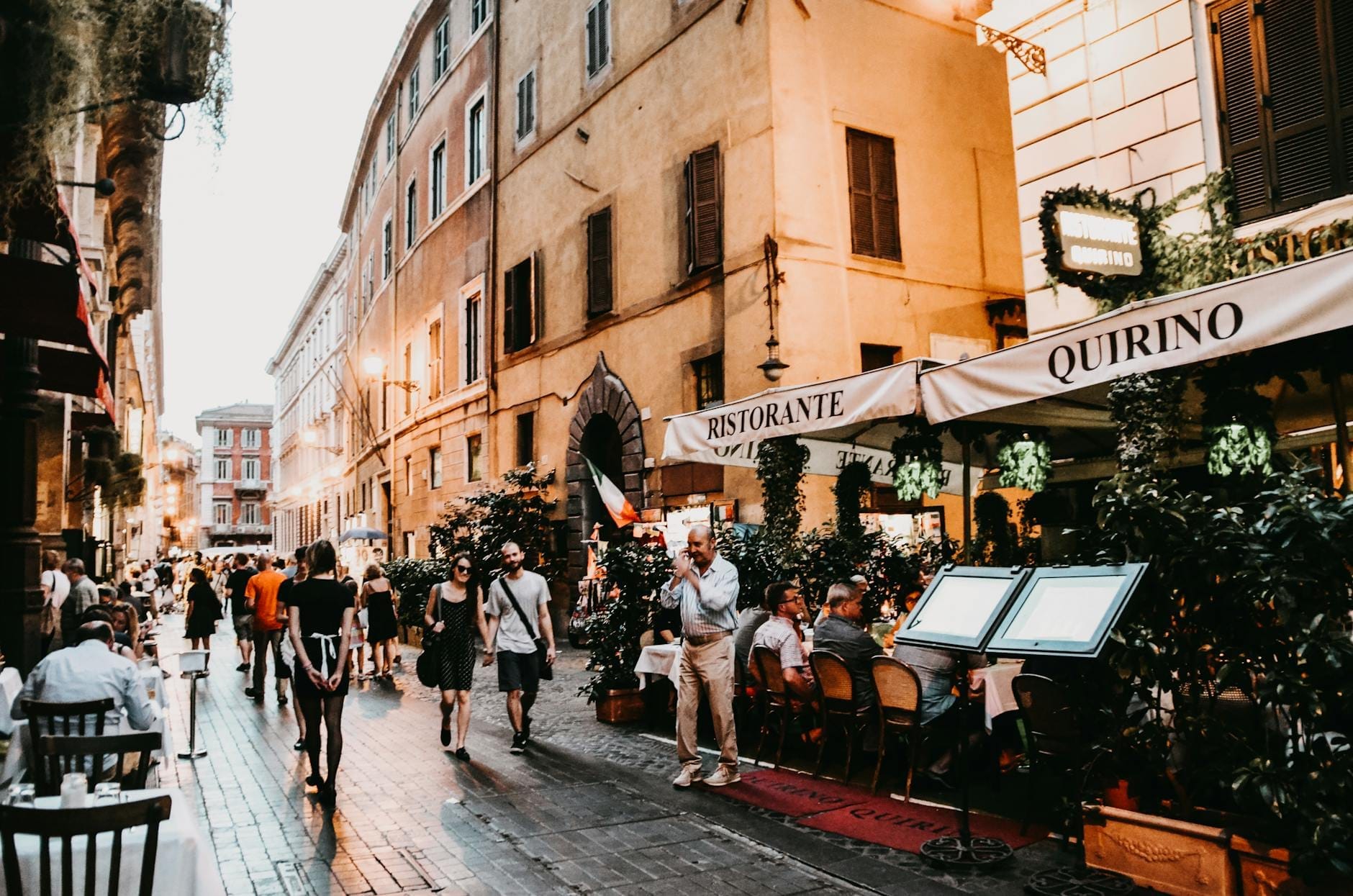
Eating in Rome follows a rhythm that most visitors misread. Lunch runs from roughly 12:30 to 14:30, and dinner rarely kicks off before 20:00 — attempting to eat at 18:30 will leave you sitting in an empty room or turned away entirely. Kitchens close firm, often at 22:30. Sundays and Mondays are common closing days for family-run places, so always check before making a detour.
The menu structure moves from antipasto to primo (pasta or rice), secondo (meat or fish), and contorno (side dish). Most Romans do not order every course at every meal. Ordering just a pasta and a glass of wine at lunch is completely normal. What you should not do is split a single pasta between two people and occupy a table for 90 minutes during peak service — that is the kind of behavior that earns you a cold reception.
ℹ️ Good to know
The coperto (cover charge) appears on almost every bill in Rome. It covers bread and table service and typically runs €1.50–€3 per person. It is not a tip, not a scam, and not negotiable. Tipping is not obligatory — rounding up the bill or leaving €2–€5 for a full dinner is appreciated but entirely optional.
Tap water in Rome is safe to drink and excellent. The city's drinking fountains (nasoni) supply the same water. In a restaurant, ordering a carafe of tap water (acqua del rubinetto) is perfectly acceptable and saves you the €3–€4 per bottle. Some restaurants will push back — your call on how much you want to negotiate it.
What to Order: Roman Dishes Worth Seeking Out
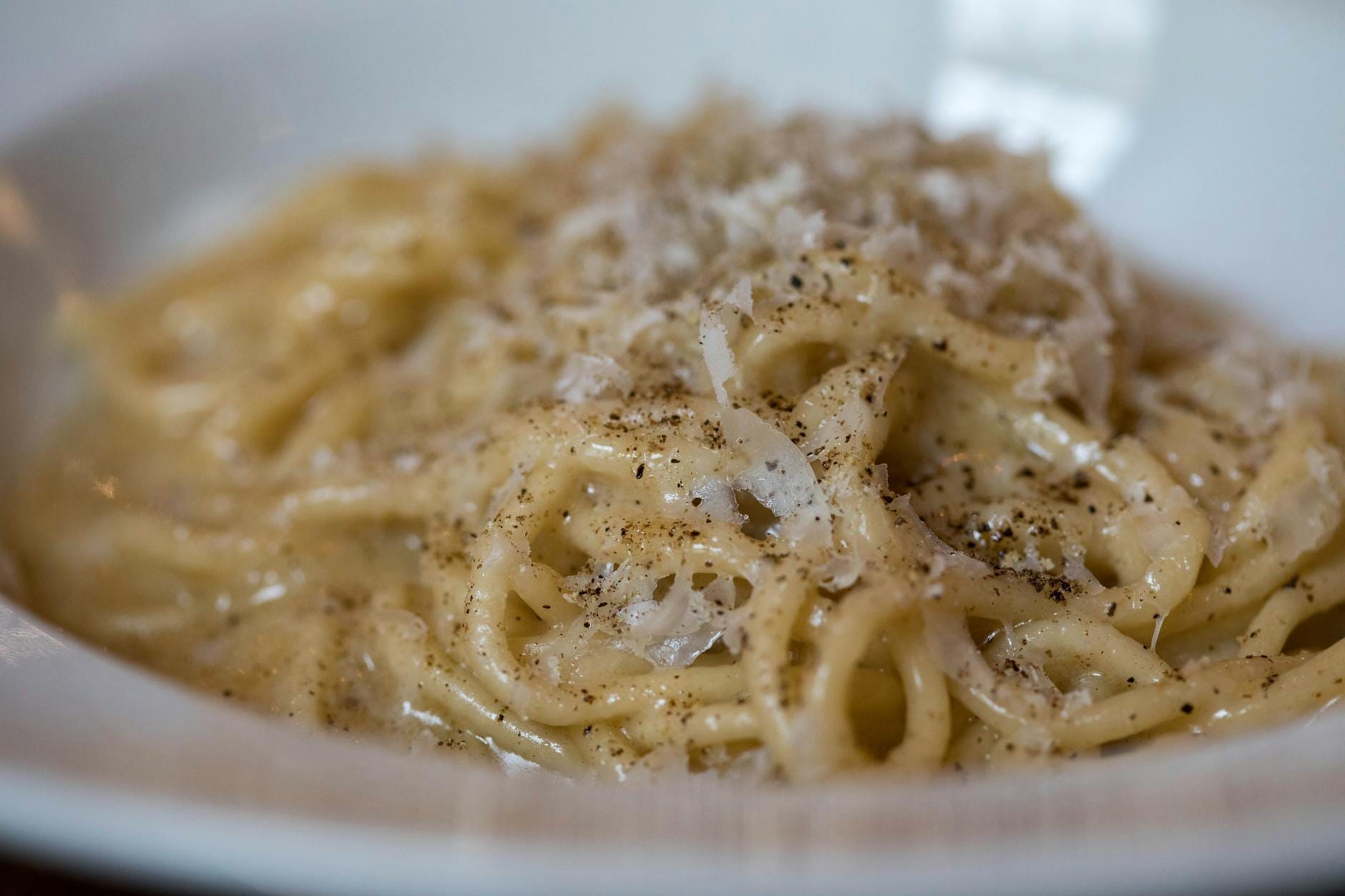
Roman cuisine is built on restraint and precision. The ingredients are few; the technique is everything. The four canonical pasta dishes — cacio e pepe, carbonara, amatriciana, and gricia — are the benchmark by which any trattoria should be judged. Carbonara made with cream is a dealbreaker; gricia (the ancestor of amatriciana, made with guanciale and pecorino, no tomato) is the most underrated of the four.
- Cacio e pepe Just pecorino romano, black pepper, and pasta. Deceptively difficult to execute without the sauce becoming clumpy.
- Carbonara Guanciale (cured pork cheek), egg yolk, pecorino, and black pepper. No cream, ever. No pancetta if they can help it.
- Amatriciana Tomato, guanciale, and pecorino on rigatoni or bucatini. The best version in Rome is a genuine debate; Flavio al Velavevodetto in Testaccio is a serious contender.
- Supplì Fried rice balls with mozzarella, sold at pizzerias and street food stalls. The Roman answer to arancini, and excellent.
- Carciofi alla giudia Deep-fried whole artichokes, crisped to a near-flower shape. A spring seasonal dish, at its peak March through May, best found in the Jewish Quarter.
- Saltimbocca alla romana Veal with prosciutto and sage, pan-fried in white wine. Classic secondo that has mostly vanished from menus but reappears in old-school trattorias.
⚠️ What to skip
Spaghetti carbonara made with cream, penne amatriciana, and 'fettuccine Alfredo' (not a Roman dish at all) are reliable red flags on any menu. They signal a kitchen angled at tourist expectations rather than Roman tradition.
Best Neighborhoods for Eating in Rome
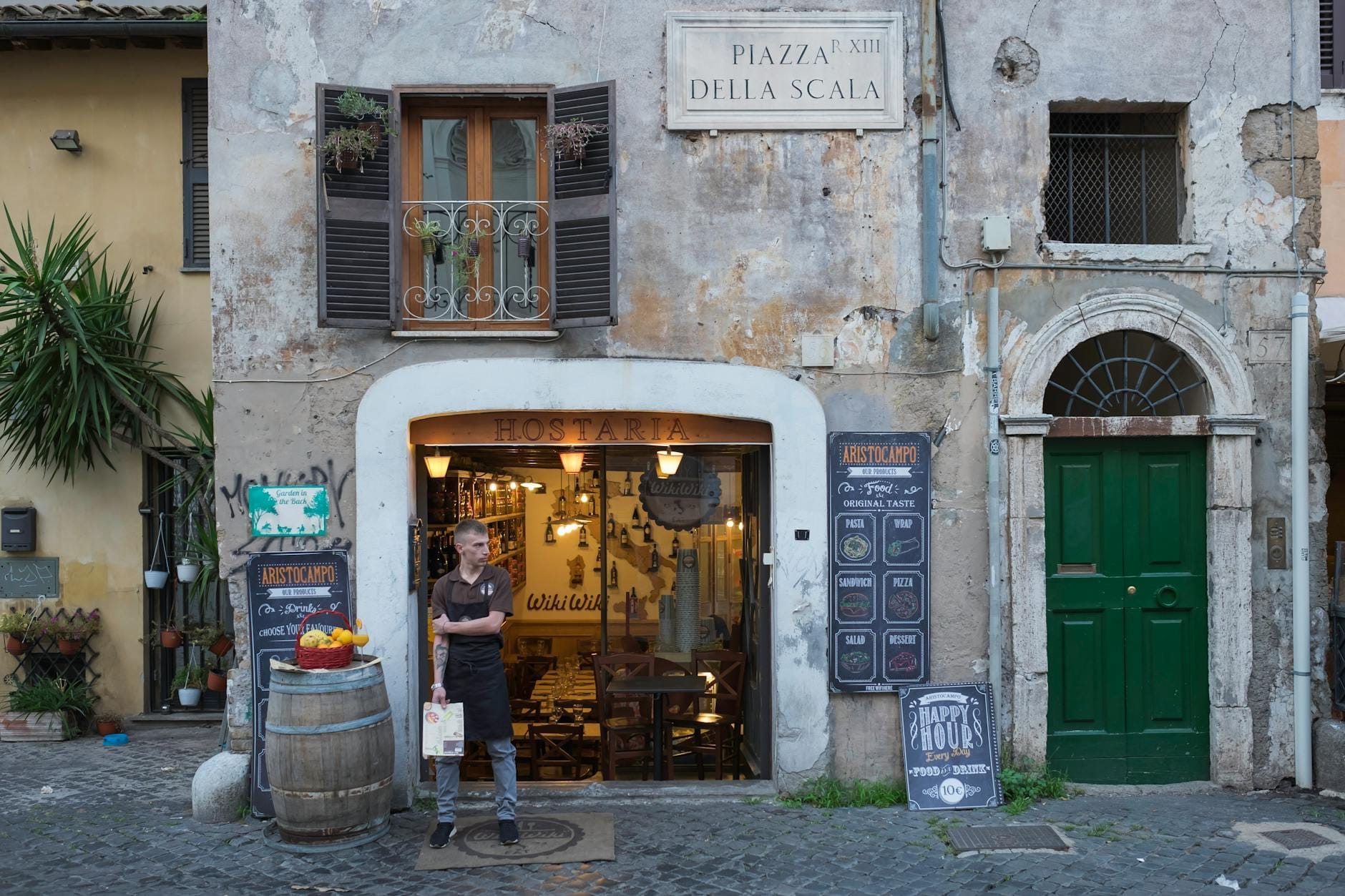
Where you eat in Rome is almost as important as what you eat. The tourist-density zones around the Colosseum, Trevi Fountain, and Pantheon are not uniformly bad, but the good-to-bad ratio drops sharply. The neighborhoods below consistently deliver better value and more honest cooking.
- Testaccio Rome's old slaughterhouse district is the spiritual home of offal and working-class Roman cooking. Flavio al Velavevodetto (via di Monte Testaccio, 97) is the reference point for amatriciana. The Mercato di Testaccio also has excellent street food stalls for a quick, cheap lunch.
- Trastevere Atmospheric and popular, which means prices have drifted up and quality is uneven. The best trattorias are on the smaller side streets, not on the main piazzas. Worth the effort to find them, but do not just walk into the first place with a terrace.
- Monti Compact, walkable neighborhood a few minutes from the Colosseum with a mix of casual and mid-range options. Alle Carrette (via delle Madonna dei Monti, 95) offers affordable pizza with outdoor seating that draws locals as much as tourists — a reliable benchmark for the area.
- Jewish Quarter (Ghetto) The place for carciofi alla giudia. Nonna Betta (via del Portico d'Ottavia) is the standard recommendation for Jewish-Roman cooking, including artichokes and kosher-adjacent dishes. Prices are higher than average, reflecting both the location and the cooking quality.
- Prati (Vatican area) Largely overlooked by guides but full of places feeding the local workforce. Hostaria Dino & Toni (via Leone IV, 60) runs a daily rotating pasta menu that includes gricia — order whatever the chalk board says.
- Centro Storico (Pantheon/Campo de' Fiori) High tourist traffic, but not a total write-off. Ristorante Maccheroni (Piazza delle Coppelle, 44) near the Pantheon does fresh pasta and meat dishes at prices that are fair for the location. Da Baffetto (via del Governo Vecchio, 114) near Campo de' Fiori remains the benchmark for Roman thin-crust pizza.
If you are staying near the Spanish Steps and want somewhere elegant without paying Michelin prices, Matricianella (via del Leone, 4) runs a focused Roman menu with a particularly good amatriciana. It is a step up in price from a basic trattoria but reasonable for the area. For a broader overview of the neighborhoods themselves, the Trastevere district guide and the Testaccio neighborhood page cover the local context in more detail.
Specific Restaurants Worth Booking
The following restaurants consistently earn positive coverage from serious food writers and local diners rather than just high scores on aggregator sites. Aggregator ratings in Rome are heavily gamed near major attractions, so treat them as a starting point rather than a verdict.
Piccolo Arancio (vicolo Scanderberg, 112, near Trevi Fountain) is one of the few places close to a major attraction that genuinely earns its reputation. The menu leans Roman-Italian, the room is small, and reservations are not optional on weekends. Pizza in Trevi (via di San Vincenzo, 30) is another tourist-area exception: no-frills pizza and pasta at fair prices, worth booking to avoid the queue. Alfredo e Ada (via dei Banchi Nuovi, 14) near Campo de' Fiori operates more like a family home than a restaurant: no menu, no choices, and whatever arrives is good. Cash only, no reservations, arrive early.
✨ Pro tip
For the best-value lunch in central Rome, look for restaurants offering a 'pranzo di lavoro' (working lunch menu) on weekdays. These are fixed-price meals aimed at office workers, typically €10–€15 for a primo, secondo, and water or wine — rarely advertised to tourists but visible on a small sign near the door.
If your budget allows for one high-end meal, Rome's Michelin-starred scene is anchored by La Pergola at the Rome Cavalieri hotel, the only three-star restaurant in the city, with a tasting menu that runs well above €200 per person. More accessible starred options include Glass Hostaria in Trastevere, which updates Roman flavors with modern technique. The full Michelin Rome list now covers 83 restaurants across price points. For visitors trying to balance sightseeing with eating, the Rome in 3 days itinerary includes meal stops mapped to each day's route.
Eating by Budget: What to Expect at Each Price Point
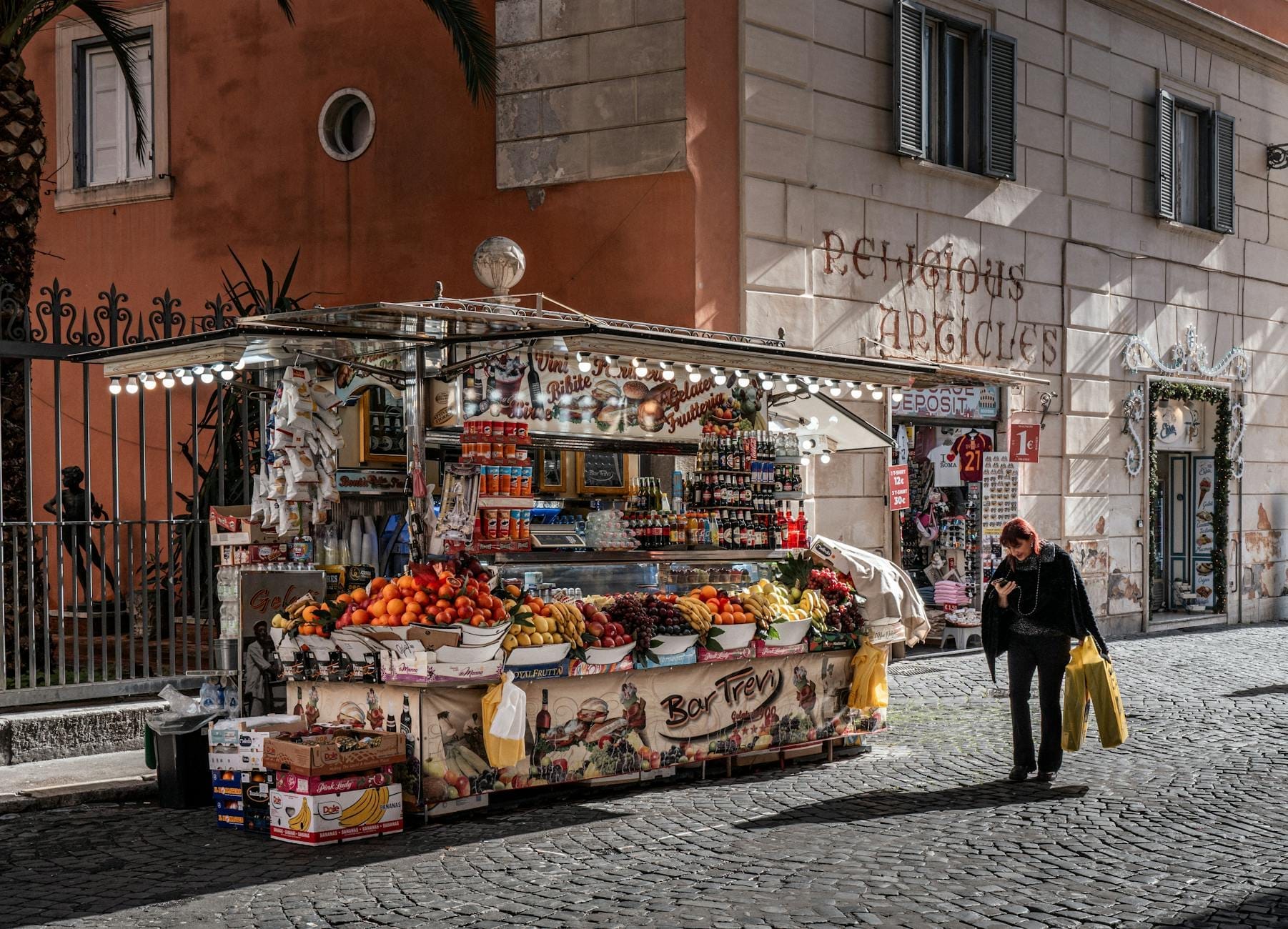
Rome is not the cheap destination it was a decade ago, but it is still possible to eat extremely well without spending much, if you know where to look. Street food and market eating are underutilized by most visitors and deliver some of the best food per euro in the city.
- Under €15 per person Supplì, pizza al taglio (by the slice), and tramezzini (sandwiches) from street vendors or alimentari. The Mercato di Testaccio has multiple stalls at this level. A full lunch at a basic pizzeria including beer falls in this range.
- €15–€35 per person The core of Rome's trattoria scene. A pasta, a secondo, a glass of house wine, water, and coperto typically totals €25–€30 at a solid neighborhood restaurant. This is where most of the recommended spots in this guide sit.
- €35–€70 per person Mid-range restaurants with better wine lists, more refined service, and more complex cooking. Matricianella, Piccolo Arancio, and the better Trastevere restaurants operate here.
- €70 and above Michelin territory. La Pergola is the ceiling; Glass Hostaria and Acquolina are entry points to this tier. Book well in advance for anything starred — several weeks minimum.
Travelers watching costs will also want to read the Rome on a budget guide for a full breakdown of where to save without sacrificing quality, including free drinking water from nasoni fountains and fixed-price lunch options throughout the city.
Seasonal Eating and What Changes Throughout the Year
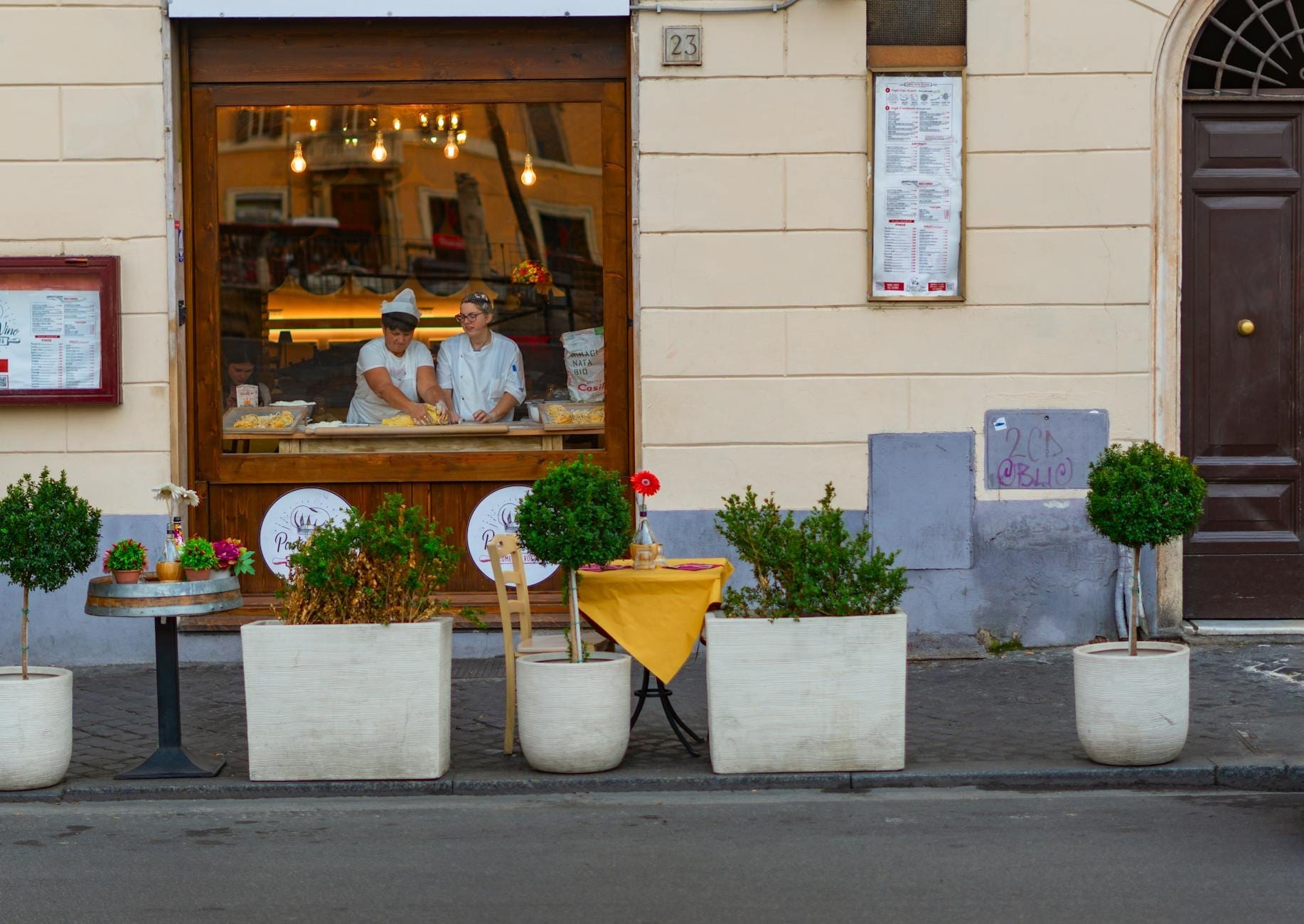
Roman menus do shift with the seasons more than most visitors expect. Spring (March through May) is the most distinctive time: carciofi alla giudia appear everywhere in the Jewish Quarter, fresh fava beans show up in antipasto, and lighter preparations replace the heavier winter dishes. This is arguably the best time of year to eat in Rome, and it overlaps neatly with the best weather window for sightseeing.
Summer brings heat that shifts eating patterns: later dinners, more cold dishes, and outdoor tables that run until midnight. August is when many family-run restaurants close for two to four weeks (look for 'chiuso per ferie' signs). The city empties of locals in August, which means the remaining open restaurants skew more toward tourist traffic. September and October see a return of Romans and a return of better cooking: wild mushrooms, new-season olive oil, and game dishes start appearing. For a full picture of how the city changes across the calendar, the best time to visit Rome guide maps each month against crowds, prices, and conditions.
💡 Local tip
If you are in Rome in spring, the carciofi alla giudia at Nonna Betta in the Jewish Quarter (via del Portico d'Ottavia) are worth planning a lunch around. The artichoke season is short — typically March through May — and the deep-fried whole artichoke prepared in the Jewish Roman style is genuinely unlike anything else in the city.
FAQ
What are the must-try foods when eating in Rome?
The four classic Roman pastas — carbonara, cacio e pepe, amatriciana, and gricia — are non-negotiable. Beyond pasta, try supplì (fried rice balls), pizza al taglio (pizza by the slice), carciofi alla giudia (Jewish-style fried artichokes, best in spring), and saltimbocca alla romana. Each dish has a correct version and a tourist version; the difference is usually guanciale versus pancetta and no cream.
Are restaurants near the Trevi Fountain and Pantheon worth eating at?
Some are. Piccolo Arancio near the Trevi Fountain and Ristorante Maccheroni near the Pantheon are legitimately good. The problem is that proximity to major monuments raises prices and lowers the average quality. You need to be more selective here than in neighborhoods like Testaccio or Monti — read reviews from locals rather than aggregator scores, and always book ahead.
Do I need reservations at restaurants in Rome?
For any restaurant with fewer than 50 seats and a reputation worth having, yes. Saturday dinner without a reservation at a well-regarded trattoria is a gamble. Lunch on a weekday is more forgiving. Places like Alfredo e Ada operate without reservations but reward early arrival. High-end and Michelin-starred restaurants require bookings weeks to months in advance.
What is the coperto charge on my restaurant bill?
The coperto is a cover charge of €1.50–€3 per person that appears on almost every restaurant bill in Rome. It covers bread and table setup. It is legal, standard, and should be listed on the menu. It is not a tip — tipping on top is optional. If you were not told about it and it was not on the menu, you can dispute it, but in practice it is universal.
What time do Romans eat dinner?
Dinner in Rome starts properly at 20:00 and peaks between 20:30 and 21:30. Arriving at 18:30 or 19:00 marks you as a tourist and may result in being seated in an empty restaurant where the kitchen is not yet fully running. If you are eating with children or have an early flight, ask when the kitchen opens rather than assuming it matches Northern European or American timing.
Tickets & tours
Live prices and dates from our booking partner. If you book, we may earn a commission at no extra cost to you.
Planning a trip? Discover personalized activities with the Nomado app.