Testaccio is a compact, grid-planned quarter on the southern bank of the Tiber, built in the late 19th century to house slaughterhouse workers and still carrying that unpolished, everyday-Roman energy. It's where locals eat offal-based dishes that trace directly to the mattatoio, where the market on Via Luigi Galvani draws neighborhood regulars every morning, and where a mountain made entirely of broken ancient amphorae rises improbably from the flat riverbank plain.
Testaccio is the neighborhood that Romans point to when they want to prove Rome is still a real city, not just a museum. Built around a now-closed slaughterhouse and a 50-meter hill constructed from millions of discarded amphora shards, it offers a version of Rome that is genuinely working-class in origin and, to a remarkable degree, still working-class in practice.
Orientation
Testaccio occupies the flat ground between the Tiber River and the Aventine Hill, roughly 2 kilometers south of the Circus Maximus. It is Rome's Rione XX, one of the city's officially designated historic districts, and its boundaries are unusually easy to read on a map: the Tiber traces the western and northwestern edge between Ponte Sublicio and Ponte San Paolo; Via Marmorata forms the northeastern border toward the Aventine; and the Aurelian Walls and Viale del Campo Boario close off the southern side near Piazzale Ostiense.
The neighborhood's internal layout is a late 19th-century grid, which makes it one of the easiest quarters in Rome to navigate on foot. Streets run at right angles, blocks are uniform, and the main square, Piazza Testaccio, sits near the center of the grid. Monte Testaccio, the ancient hill of broken amphorae, rises just south of the main residential zone, close to the former slaughterhouse complex and the Protestant Cemetery.
Testaccio sits within comfortable walking distance of several important sites: the Circus Maximus is about 10 minutes north on foot, the Aventine Keyhole is a short uphill walk to the northeast, and the Baths of Caracalla are roughly 15 minutes east. This position makes Testaccio a practical base for exploring the southern arc of ancient Rome without the higher prices and heavier tourist traffic of the Colosseum area.
Character & Atmosphere
The neighborhood was formally established as a rione in 1921, though its development began in the 1880s when the city expanded south to build the Mattatoio, Rome's central slaughterhouse. The workers who staffed it were housed in the new grid of apartment blocks nearby, and a particular culture grew around that trade: a cuisine built on offal and cheaper cuts, a social fabric of tight-knit rione life, and a collective identity that persists more than a century later.
On weekday mornings, Testaccio feels like a neighborhood that is simply getting on with its day. The market on Via Luigi Galvani opens early, drawing a mix of older residents doing the daily shop, younger Romans stopping for coffee and a trapizzino, and a growing number of visitors who have figured out that this is one of the more honest food experiences left in the city center. The streets smell of roasting vegetables and bread. Delivery vans double-park on the grid streets. Schoolchildren cut through Piazza Santa Maria Liberatrice.
The tempo changes in the afternoon. Between roughly 2pm and 6pm, the neighborhood quiets considerably. Shutters come down on some shops, and the streets have a drowsy, residential quality that is harder to find in the tourist-saturated centro storico. By early evening, the bars around Piazza Testaccio and the surrounding streets begin filling with an aperitivo crowd that is predominantly local. Later at night, the clubs built into the base of Monte Testaccio, carved literally into the ancient hill, draw a younger crowd from across the city.
ℹ️ Good to know
Testaccio is not a nightlife destination in the way Trastevere is. The club scene is more underground and local-facing, mostly concentrated around Monte Testaccio on weekends. If you're looking for a quiet neighborhood that comes alive briefly at aperitivo hour and then settles, this is it.
What to See & Do
Monte Testaccio is the neighborhood's most singular attraction and one of the strangest things you can see in Rome. The hill is not natural: it is composed almost entirely of fragments from the terracotta amphorae used to transport olive oil into Rome during the imperial period. Ancient regulations apparently required the containers to be destroyed after use rather than reused, and over several centuries the shards accumulated into a 50-meter mound covering roughly one hectare. Today it is partly accessible, and the view from the top over the Tiber plain gives a sense of how much the city has built up around this deliberately created landmark.
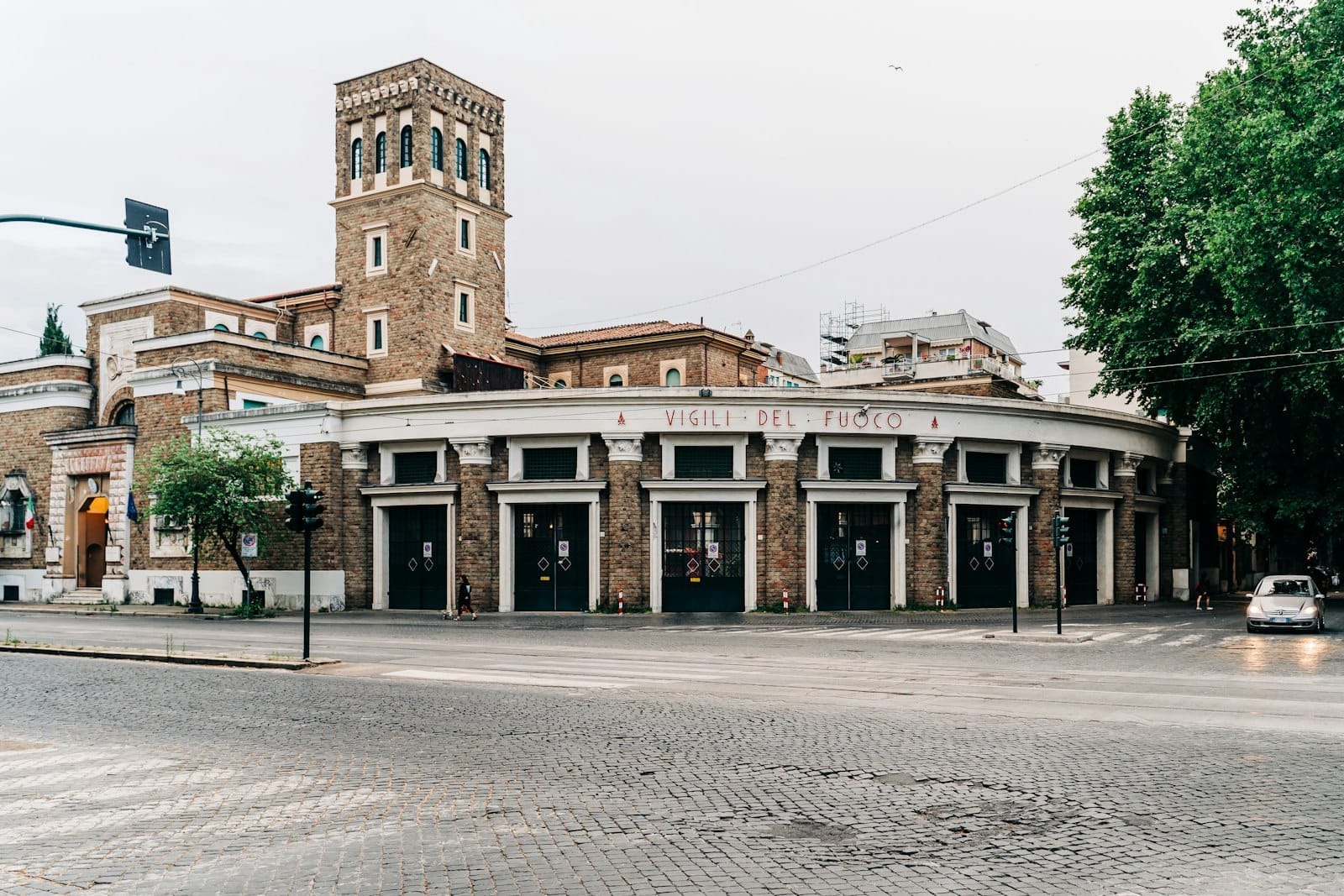
The former Mattatoio complex, the ex-slaughterhouse that defined the neighborhood's origins, has been partially converted into cultural space. MACRO Testaccio, the contemporary art annex of Rome's Museum of Contemporary Art, occupies part of the old slaughterhouse pavilions. The industrial architecture, with its exposed iron and brick, makes the space worth visiting even when the exhibitions are uneven. The complex also hosts the University of Roma Tre architecture faculty, which brings a student presence to this southern corner of the neighborhood.
Just outside Testaccio's southeastern edge, the Non-Catholic Cemetery (often called the Protestant Cemetery) is one of Rome's most affecting sites. Keats and Shelley are buried here, among others, and the grounds are shaded, quiet, and surprisingly green. The Keats-Shelley House near the Spanish Steps maintains a museum dedicated to the Romantic poets, but the cemetery itself is where you feel the weight of the connection. The Pyramid of Cestius, a genuine ancient Egyptian-style pyramid from around 12 BC, stands directly adjacent to the cemetery entrance and is one of Rome's more unexpected street-level encounters.
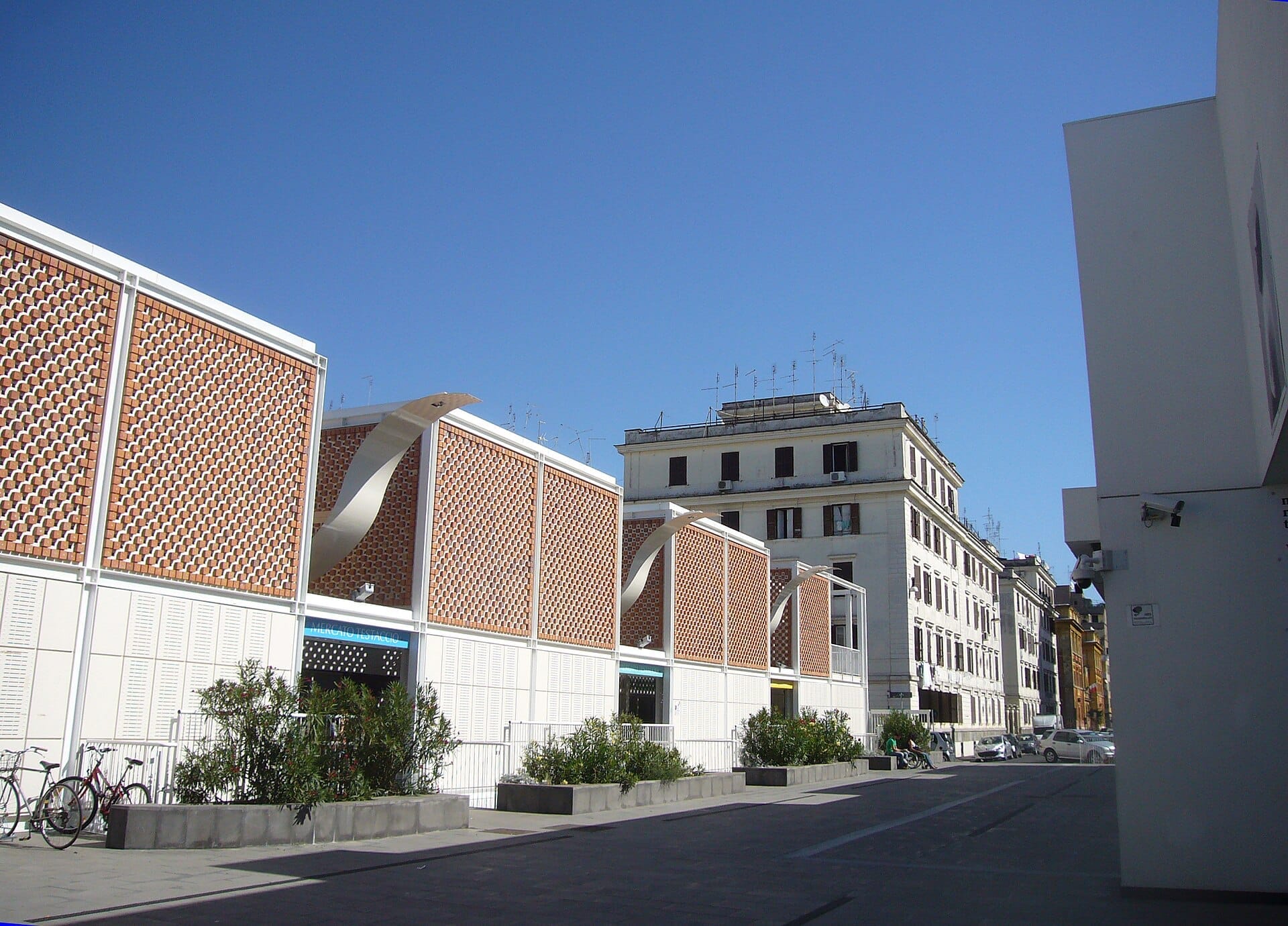
The Mercato di Testaccio on Via Luigi Galvani is the neighborhood's daily anchor. The covered market replaced the older outdoor market on Piazza Testaccio and now houses a mix of produce vendors, cheese and cured meat stalls, a few excellent street food counters, and some craft and clothing stalls toward the outer ring. It is open Monday through Saturday, mornings only, and is most alive between 8am and 1pm.
Monte Testaccio: the ancient amphora-shard hill, visible from street level and occasionally open for guided visits
MACRO Testaccio: contemporary art in converted slaughterhouse pavilions
Non-Catholic Cemetery: burial site of Keats and Shelley, quiet and beautifully maintained
Pyramid of Cestius: a 2,000-year-old Roman-Egyptian pyramid standing at street level near the Ostiense gate
Mercato di Testaccio: the main covered market on Via Luigi Galvani, open weekday and Saturday mornings
Piazza Testaccio and Piazza Santa Maria Liberatrice: the two main squares for understanding neighborhood daily life
Eating & Drinking
The food culture of Testaccio is inseparable from its slaughterhouse history. The workers at the Mattatoio were often paid partly in the cheaper offal cuts that wealthier Romans didn't want, and out of that economic reality grew cucina povera dishes that are now considered the foundation of authentic Roman cooking. Coda alla vaccinara (oxtail braised in tomato and spices), pajata (veal intestines), rigatoni con la pajata, and trippa alla romana are all associated with this neighborhood in a way that is genuinely historical, not just marketing.
The trattorias in and around Testaccio tend to be older establishments with long menus and straightforward service. Prices are notably lower than in Trastevere or the centro storico for comparable food quality. You'll find the full cacio e pepe and coda alla vaccinara experience here without paying a tourist premium, though the neighborhood has become well-known enough that you should make reservations at more popular spots, especially on weekend evenings.
The market is the best place to eat at midday. Several stalls inside specialize in Roman street food, including the trapizzino, a pocket of pizza bianca stuffed with slow-cooked fillings like chicken cacciatore or coda alla vaccinara. For a broader understanding of Rome's food culture, the Rome food guide covers the wider city context, but Testaccio is one of the few neighborhoods where you can eat extremely well without leaving a 10-minute radius.
The bar and café scene is functional rather than fashionable. Neighborhood bars serve espresso at the counter for the standard price, cornetti in the morning, and aperitivo drinks from around 6pm. The area around Monte Testaccio comes alive on weekend nights with a club scene that is more underground and genre-specific than the generic cocktail bars of Trastevere, drawing crowds interested in house, techno, and Latin music.
💡 Local tip
If you want to eat like a Testaccio regular, go to the covered market around 12:30pm on a weekday, find one of the street food stalls inside, and order a trapizzino or a plate of supplì. You'll pay a few euros and eat standing up next to locals doing exactly the same thing.
Getting There & Around
The most direct metro connection is Piramide station on Line B, which sits on the southeastern border of the neighborhood at Piazzale Ostiense. From Termini station, Line B gets you to Piramide in about 10 minutes. The station is named for the Pyramid of Cestius directly above it, which makes it one of the more memorable metro exits in the city: you surface next to a 2,000-year-old pyramid.
Several bus lines run along Via Marmorata, the main street connecting Testaccio to the Aventine Hill and the city center to the north. Tram line 3 stops along Viale Aventino nearby and connects the neighborhood to Trastevere to the north and the San Giovanni area to the east. For most visitors coming from the centro storico or Trastevere, the walk to Testaccio takes about 20-25 minutes and passes through interesting territory: across Ponte Sublicio and south along the Tiber embankment, or up and over the Aventine Hill.
Within the neighborhood itself, everything is walkable. The grid layout means you rarely need to backtrack, and the longest distance from one edge to another is about 15 minutes on foot. For broader context on navigating Rome's transport system, the guide to getting around Rome covers buses, metro, and trams across the city.
⚠️ What to skip
Piazzale Ostiense, the large traffic square at the southern edge of Testaccio near the Piramide metro, can feel confusing and slightly chaotic, especially at night. It is safe but busy, and the fast traffic makes pedestrian navigation less obvious than in the quieter streets of the neighborhood itself. Use the pedestrian crossings and follow the signs toward Via Marmorata to enter Testaccio properly.
Where to Stay
Testaccio is not a major hotel district, which is part of what makes it interesting as a base. Accommodation options lean toward smaller guesthouses, apartments, and B&Bs rather than large international hotels. The central blocks closest to Piazza Testaccio and Via Marmorata are the best positioned: close to the market, within easy reach of the metro at Piramide, and quiet enough at night that you won't be disturbed by street noise past midnight. For a broader overview of where to stay across Rome's neighborhoods, the where to stay in Rome guide offers a useful comparison.
Staying in Testaccio suits a particular type of traveler: someone who prioritizes eating and neighborhood life over proximity to the major monuments, who doesn't mind walking 20-30 minutes to reach the Colosseum or the Pantheon, and who wants to feel part of a functioning Roman quarter rather than a tourist enclave. Families, food-focused travelers, and repeat visitors to Rome who already know the major sights tend to do best here.
The southern blocks near the ex-Mattatoio are slightly less central to daily life and better suited to travelers who want quiet and proximity to the Protestant Cemetery and Piramide metro, but who don't need to be in the heart of the market and restaurant scene. Avoid the area immediately around Piazzale Ostiense for accommodation if noise is a concern, as the traffic square runs busy through much of the day and evening.
Honest Assessment: Who Testaccio Is For
Testaccio is easy to oversell. It is genuinely authentic in ways that other Rome neighborhoods have stopped being, but it is also small, relatively quiet, and light on conventional tourist attractions. You cannot build a Rome itinerary exclusively around Testaccio unless food and neighborhood exploration are your primary reasons for visiting. Most travelers will find it works best as a day or evening destination rather than a base for all their Roman sightseeing.
That said, it pairs extremely well with the southern ancient sites. A day that starts at the Baths of Caracalla, continues through the Testaccio market at midday, visits Monte Testaccio and the Non-Catholic Cemetery in the afternoon, and ends with dinner at one of the neighborhood trattorias is one of the more satisfying Roman days you can plan. It does not feel like a tourist itinerary; it feels like a day in the city. For travelers trying to build that kind of balance, the broader Rome activities guide can help with context.
TL;DR
Testaccio is Rome's most intact working-class neighborhood, built in the 1880s around the city slaughterhouse and still carrying that origin in its food culture and street life.
The food scene, centered on the covered market and surrounding trattorias, is among the most genuinely local and fairly priced in central Rome, with a particular emphasis on traditional offal-based Roman dishes.
Key sites include Monte Testaccio (a hill built from ancient amphora shards), the ex-Mattatoio cultural complex, MACRO Testaccio, and the Non-Catholic Cemetery with the adjacent Pyramid of Cestius.
The Piramide metro station (Line B) connects the neighborhood to Termini in about 10 minutes; the grid layout makes everywhere within Testaccio walkable.
Best suited to food-focused travelers, repeat Rome visitors, and anyone looking for a quieter, residential base away from the main tourist corridors, who doesn't mind a 20-30 minute walk or short metro ride to the major monuments.
Rome has more churches per square kilometer than almost any city on earth, and the finest contain some of the greatest art ever made. This guide cuts through the noise to bring you the 15 churches that genuinely deserve your time, from world-famous papal basilicas to overlooked medieval gems.
Rome holds one of the densest concentrations of great museums anywhere on earth, from ancient sculpture collections to Baroque art palaces and cutting-edge contemporary spaces. This guide covers the 18 best, organized by type, with practical advice on what to prioritize and when to book.
Rome rewards visitors year-round, but the experience varies dramatically by season. This guide breaks down crowds, temperatures, costs, and local events to help you pick the right time for your trip.
Rome rewards those who look up, climb higher, and peer through keyholes. This guide covers the city's finest viewpoints, from sweeping 360-degree rooftop panoramas to perfectly framed peepholes, with tips on when to go and what you'll see.
Rome rewards budget travelers more than almost any major European capital. From Baroque piazzas and ancient hilltops to world-class churches and sprawling parks, a huge portion of the city's best experiences cost absolutely nothing. This guide covers the 20 best free things to do in Rome, organized so you can plan a full day without opening your wallet.
Rome's transport network is more complex than most first-time visitors expect. This guide breaks down every option for getting around Rome, from the limited metro to the best bus routes, airport transfers, taxis, and when walking beats everything else.
Rome rewards those who look past the Colosseum queue and the Trevi selfie crowd. These are the churches, viewpoints, markets, and underground worlds that most visitors walk right past, where the real texture of the city lives.
Ostia Antica is Rome's best-kept archaeological secret: a sprawling ancient city just 30 minutes from the capital, better preserved than most sites and far less crowded than the Forum or Colosseum. This guide covers everything from tickets and transport to the top ruins worth your time.
Rome transforms after sunset. Ancient ruins glow under floodlights, piazzas fill with locals rather than tour groups, and the city's food and nightlife scenes come alive. This guide covers the best nocturnal experiences in Rome, from free evening strolls to exclusive night tours of the Colosseum and Vatican.
Rome rewards those who venture beyond the city walls. Within an hour or two of the capital, you can walk through a remarkably intact Roman port city, stroll Renaissance water gardens, sip Frascati wine above a volcanic crater lake, or explore an Etruscan cliff town. These are the day trips that make a Rome visit feel genuinely complete.
Roman cuisine is one of the most specific, opinionated, and deeply satisfying in Italy. This guide covers the essential dishes, the rules locals follow, the best neighborhoods to eat in, and how to avoid the tourist traps that pass for Italian food in Rome.
Three days is enough to see Rome's greatest hits — if you plan smart. This itinerary covers the Colosseum, Vatican, Pantheon, and beyond, with the right order, practical timing tips, and a few stops that most visitors miss.
Rome is one of Europe's most rewarding cities to explore on a tight budget. This guide breaks down real costs, free attractions, transport options, and smart strategies so you can see the best of the city without draining your account.
Rome rewards families who come prepared. From gladiator stories at the Colosseum to gelato breaks in Villa Borghese, this guide covers every practical detail: advance tickets, stroller logistics, the best neighborhoods to base yourself, and how to keep kids engaged without burning everyone out.
Rome's top attractions can swallow hours in queue time alone. This guide breaks down exactly which sites demand advance booking, which platforms to trust, what skip-the-line actually means in practice, and where you can honestly walk straight in.
Rome rewards those who plan smart. This guide covers the essential things to do in Rome, from ancient ruins and world-class museums to neighborhood food markets and rooftop views, with honest advice on what to skip and how to book the rest.
Rome's food scene rewards the curious and punishes the complacent. This guide cuts through the tourist-trap noise to give you honest, neighborhood-by-neighborhood restaurant picks, dish-by-dish ordering advice, and practical tips on reservations, pricing, and when to skip the menu entirely.
Choosing where to stay in Rome shapes your entire trip. This guide breaks down every major neighborhood honestly, covering walkability, noise, price, and who each area suits best, so you can book with confidence.