Baths of Caracalla: Rome's Most Underrated Imperial Ruins
The Baths of Caracalla are among the best-preserved and most atmospheric ancient ruins in Rome. Inaugurated in 216 AD, this vast complex once welcomed up to 8,000 visitors a day. Today, the ruins reward anyone willing to look beyond the Colosseum.
Quick Facts
- Location
- Viale delle Terme di Caracalla, 00153 Roma — southern Rome, near Piccolo Aventino
- Getting There
- Metro Line B, Circo Massimo station (10-min walk); buses 118, 218, 628
- Time Needed
- 1.5 to 2.5 hours
- Cost
- €12 adult; €2 reduced (EU citizens 18–25); free under 18. Verify current prices before visiting.
- Best for
- History lovers, architecture enthusiasts, photography, and anyone wanting Roman ruins without the crowds
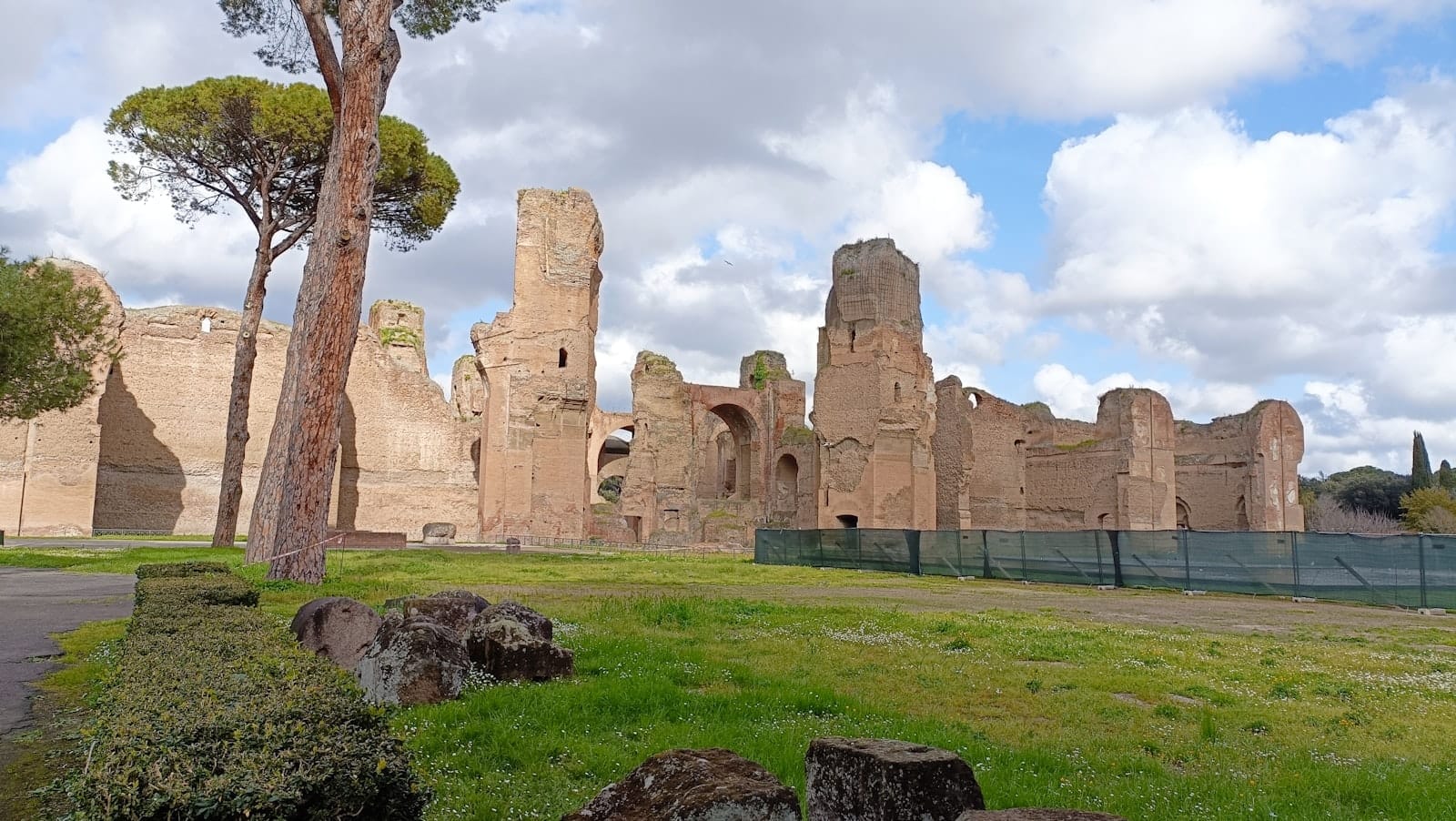
What the Baths of Caracalla Actually Are
The Terme di Caracalla, also historically known as Thermae Antonianae, are not simply ruins of a bathhouse. They are the skeletal remains of a fully self-contained civic complex, built on a scale that still feels disorienting in person. Construction was initiated by Emperor Septimius Severus around 206 AD and completed under his son Caracalla, who inaugurated the complex in 216 AD. The baths remained in operation until 537 AD, when invading Ostrogoths cut the aqueducts that supplied them.
At their peak, the complex covered 27 acres and could accommodate up to 8,000 visitors daily. The central bathing block alone measured roughly 220 by 114 meters. What you're walking through today is the surviving shell of a place that housed not just hot and cold pools, but libraries, gyms, gardens, shops, and spaces for socializing. Roman baths were not spas in the modern sense; they were public infrastructure, part of daily life for citizens of all classes.
The Baths of Caracalla rank as the second-largest Roman thermae ever built, surpassed only by the Baths of Diocletian near Termini. Understanding that context makes the site significantly more impressive.
Arriving and First Impressions
💡 Local tip
The baths are open daily from 9:00 AM until one hour before sunset. They close on December 25, January 1, and May 1. Hours shift significantly between winter and summer — in July, you may have access until 7:30 PM; in January, closing comes closer to 4:00 PM. Check the current schedule before you visit.
Approaching along Viale delle Terme di Caracalla, the outer enclosure walls begin to announce the scale of what's ahead. They're thick, brick, and largely intact, stretching in a way that makes the complex feel more like a fortress than a bathhouse. The entrance is on the north side of the complex, and once through, the open landscape inside takes a moment to read.
The main bathing block sits at the center, and the sheer height of surviving walls, some rising to around 30 meters, creates a quiet gravity. There's grass underfoot in the surrounding areas, well-maintained and pleasant to walk across. In spring, the grounds have the added texture of wildflowers along the edges. In summer, the stone radiates heat in the afternoon, so the morning hours between 9:00 and 11:00 AM are noticeably more comfortable for exploration.
Crowds here are modest compared to the Colosseum or the Forum. On a typical weekday morning, you may find fewer than a hundred other visitors across the entire site. This changes during summer afternoons and on weekends, but even then the scale of the grounds means it rarely feels congested. That relative quiet is one of the most useful things to know about this site before visiting.
Tickets & tours
Live prices and dates from our booking partner. If you book, we may earn a commission at no extra cost to you.
Ticket to Ancient Baths of Caracalla with an audio guide
From 18 €Instant confirmationFree cancellationBaths of Caracalla ticket with round-trip transfer and audioguide app
From 0 €Instant confirmationFree cancellationTerme di Caracalla skip-the-line entrance ticket
From 14 €Instant confirmationFree cancellationTerme di Caracalla skip-the-line entry ticket with audio guide
From 18 €Instant confirmationFree cancellation
Moving Through the Ruins
The main bathing block is entered from the north face. Inside, the sequence of spaces follows the classic thermae layout: the frigidarium (cold room), tepidarium (warm room), and caldarium (hot room), along with flanking natatio pools and palaestrae (exercise yards). The frigidarium at Caracalla was covered by three of the largest concrete vaults ever built in antiquity. Those vaults are now gone, but the walls and floor outlines give a clear picture of the original proportions.
Look down frequently. Many floors retain sections of black-and-white mosaic, some depicting athletes and marine creatures. These are not reproductions. They're original Roman mosaics from the early 3rd century, and you can walk to within a few feet of them. The quality and preservation are better than what many visitors expect.
The caldarium at the southern end was a circular room with a domed ceiling, its form still readable in the curved walls that remain. It once had underfloor heating (hypocaust) driven by furnace rooms in the basement, which are partially accessible and worth descending into if open during your visit. The underground level reveals the actual engineering logic of the baths: channels for water and heat, storage rooms, and passage corridors used by workers and slaves who kept the system running invisibly.
ℹ️ Good to know
The site museum, housed in a room within the complex, displays some of the sculpture fragments and mosaics recovered from the excavations. It's easy to miss if you don't look for it, and it adds real depth to what you're seeing outdoors.
Light, Atmosphere, and the Best Time to Visit
The Baths of Caracalla shift character across the day and across seasons in ways worth considering before you book. Morning visits, particularly on weekdays between late September and early May, offer the closest thing to solitude the site provides. The low-angle morning light is excellent for photography, especially on the east-facing wall sections. The stone takes on a warm amber tone that disappears by midday.
Late afternoon in summer extends visiting hours and brings softer light from the west, but also higher temperatures and more visitors. The grassy areas around the outer walls become pleasant in the hour before closing, when the heat begins to drop and the light is good. Bring water regardless of season; there are no cafes inside the complex.
Winter visits have their own character. Crowds drop substantially from November through February, and the combination of quiet and dramatic scale can feel genuinely affecting. The ruins are exposed to the elements, so cold wind on overcast days can cut through the open spaces. Dress for it.
⚠️ What to skip
The terrain inside the main bathing block includes uneven stone, mosaic fragments at floor level, and occasional steps. Comfortable walking shoes with grip are strongly recommended. The site is partially wheelchair accessible, with ramps at the main entrance, but full access to all areas is limited by the original terrain.
Historical Depth: Why This Site Matters
The Baths of Caracalla were not just impressive in size. They were a deliberate political statement. Emperor Caracalla, who formally shared power with his brother before having him killed, used the construction of the thermae to reinforce his legitimacy and his generosity to Roman citizens. The scale was intended to signal imperial ambition, and it succeeded.
Much of the decorative program has been lost or dispersed. The Farnese Hercules and the Farnese Bull, now in the Naples Archaeological Museum, were excavated from the Baths of Caracalla in the 16th century. The absence of these sculptures today gives the site an austere quality that the original visitor would not have experienced; the baths were richly decorated with marble, stucco, mosaic, and bronze.
The structural ingenuity on display here directly influenced later European architecture. Michelangelo reportedly studied the barrel vaults of the baths before designing the nave of St. Peter's Basilica. Visiting the St. Peter's Basilica after the baths makes that lineage visible in a way that no description quite captures.
Getting There and Practical Details
The most straightforward route is Metro Line B to Circo Massimo, followed by a 10-minute walk south along Viale Aventino and then Viale delle Terme di Caracalla. The walk passes through a quiet residential stretch and is pleasant at most hours. Bus lines 118, 218, and 628 also stop near the entrance.
The baths sit close to the start of the Appian Way, making a combined visit feasible if you have a full day. From the baths, the Via Appia Antica trailhead is roughly 20 minutes on foot, or reachable by bus 118. The area between the two sites, crossing through Parco della Caffarella, is pleasant and unhurried.
If you're building a day around ancient Rome, the Circus Maximus is a 15-minute walk north, close to the Circo Massimo metro stop. Combining these three sites gives a full picture of the scale and variety of Roman public space without the extreme crowds of the Forum-Colosseum corridor.
💡 Local tip
Tickets can be purchased on site. The baths rarely sell out, so advance booking is not usually necessary — but it can save time at the ticket window in peak summer. Check the official site for any special exhibition surcharges that may apply.
Who Might Not Get Much From This Visit
The Baths of Caracalla ask something of their visitors: a willingness to read ruins rather than view reconstructed scenes. There are no actors in costume, no fully preserved rooms, and limited interpretation at the site itself (signage is present but sparse). Travelers who find archaeological sites difficult to engage without strong visual or narrative scaffolding may leave feeling underwhelmed. The audio guide, available for rent, helps considerably.
Young children may enjoy the open space for a short time, but the site offers limited hands-on engagement for under-eights. Families with very young children who want interactive Roman history might find the museum format of the Capitoline Museums more structured and satisfying.
Visitors primarily focused on Rome's more iconic sightseeing circuit, including the Colosseum, the Roman Forum, and the Palatine Hill, can treat the baths as a half-day detour rather than a primary stop, especially if time is limited.
Insider Tips
- Rent the audio guide at the entrance: it is one of the better ones in Rome, with enough architectural detail to make the ruined spaces readable without overwhelming you.
- The underground hypocaust level is not always open to the public and sometimes requires a separate guided tour ticket. Ask at the ticket desk when you arrive, as access can change seasonally.
- Photography works best in the main bathing block about 90 minutes after opening, when the sun has risen enough to illuminate the interior walls without harsh shadows.
- The grassy outer perimeter of the complex makes for a quiet picnic spot mid-morning before the grounds get warm. There are no food vendors inside, so bring provisions from the neighborhood around Circo Massimo.
- If you visit in summer, check whether the Teatro dell'Opera di Roma is staging its annual outdoor opera season at the baths. Attending a performance in this setting is a genuinely different experience from the daytime visit.
Who Is Baths of Caracalla For?
- History enthusiasts who want Roman-scale architecture without the tour-group density of the Colosseum
- Photographers seeking good light on ancient stone in the early morning hours
- Architecture students and professionals interested in Roman engineering and vault construction
- Travelers combining a visit with the Appian Way for a half-day ancient Rome walk
- Anyone on a repeat trip to Rome who has already covered the main circuit and wants more depth
Nearby Attractions
Other things to see while in Ancient Rome:
- Appian Way
The Appian Way, or Via Appia Antica, is one of the ancient world's most consequential roads, stretching from Rome's Aurelian Walls into the open Campagna. Built in 312 BCE, it remains walkable today, lined with tombs, pine trees, and broken basalt stones that once carried Roman legions south. Free to enter and car-free on Sundays, it offers a rare escape from the city's tourist core into a landscape that has changed remarkably little in two millennia.
- Castel Gandolfo
Perched on a volcanic crater rim 25 km southeast of Rome, the Apostolic Palace of Castel Gandolfo served as the papal summer residence for nearly four centuries. Since Pope Francis opened it to the public in 2016, visitors can tour the baroque interiors, formal gardens, and working farm that once fed the pontiff's household.
- Catacombs of San Callisto
Stretching beneath the Appian Way, the Catacombs of San Callisto served as the official cemetery of Rome's early Christian community from the second century AD. With 10 to 20 kilometers of galleries across four to five levels, the complex holds the Crypt of the Popes, the tomb of Saint Cecilia, and the remains of roughly 500,000 Christians. It is one of the most historically substantial underground sites in the ancient world.
- Circus Maximus
Once the largest entertainment venue in the ancient world, the Circus Maximus held 150,000–250,000 spectators watching chariot races on a track stretching 600 meters between the Palatine and Aventine Hills. Today the site is a free public park where ancient Roman history sits just beneath the surface, literally and figuratively.
Planning a trip? Discover personalized activities with the Nomado app.