St. Peter's Basilica: The Complete Visitor Guide
The largest church in the world and the spiritual center of Roman Catholicism, St. Peter's Basilica rewards every visitor who crosses its threshold — whether or not they share the faith. This guide covers what to expect, when to go, and how to make the most of your time inside one of Rome's most extraordinary buildings.
Quick Facts
- Location
- Piazza San Pietro, Vatican City
- Getting There
- Metro Line A: Ottaviano or Cipro stations, then 10-15 min walk
- Time Needed
- 2-4 hours (basilica + dome)
- Cost
- Basilica: free. Dome by stairs: fee applies. Online time-slot reservations carry a booking fee.
- Best for
- Architecture lovers, history seekers, photography, first-time Rome visitors
- Official website
- www.basilicasanpietro.va/en
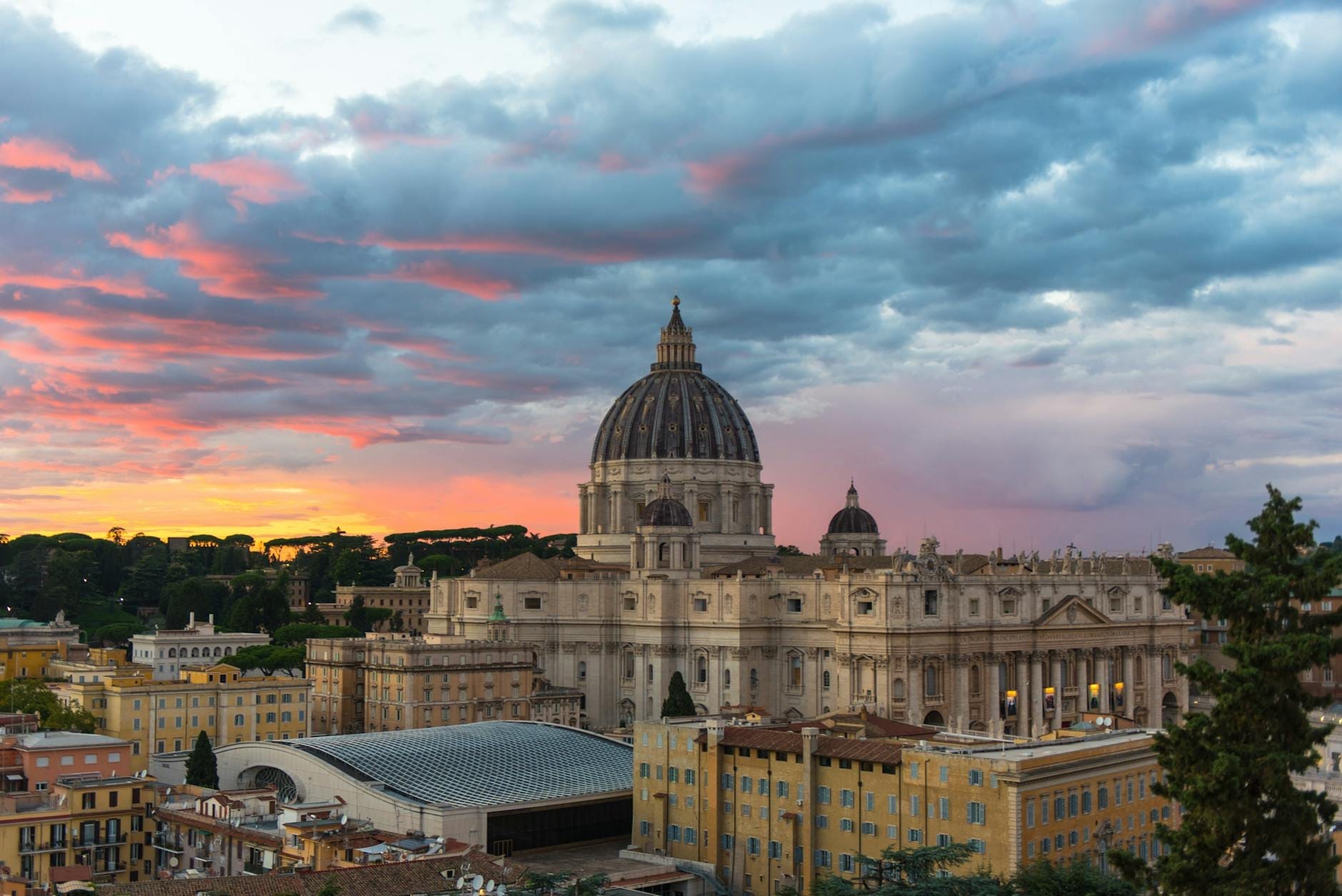
What Is St. Peter's Basilica?
St. Peter's Basilica, officially the Basilica di San Pietro in Vaticano, is the central church of the Roman Catholic faith and one of the largest buildings ever constructed. Stretching 211 meters in length, covering 15,160 square meters of floor space, and rising 136 meters to the top of its dome, it operates on a scale that photographs simply cannot capture. Standing inside, beneath Michelangelo's dome, the proportions feel genuinely disorienting in the best possible way.
The basilica sits within Vatican City, an independent city-state entirely enclosed by Rome. Technically, when you walk through the colonnade into St. Peter's Square, you are no longer in Italy. This is a detail that adds a faint surrealism to an already extraordinary experience.
Entry to the basilica itself is free, which makes it one of the most significant free experiences anywhere in Europe. The sheer quantity of art, architecture, and history concentrated within a single building is unmatched in the Catholic world.
A Building 120 Years in the Making
The present basilica was begun on April 18, 1506, under Pope Julius II, replacing a fourth-century church commissioned by Emperor Constantine around 326-333 AD that had stood on the same site for over a millennium. Construction continued across the reigns of multiple popes and the designs of multiple architects, including Bramante, Raphael, Michelangelo, Giacomo della Porta, and Carlo Maderno. The building was formally consecrated in 1626, meaning it took 109 years from foundation to completion.
Michelangelo took over as chief architect in 1547, at the age of 72, and worked on the project until his death in 1564. His primary contribution was the dome, a feat of engineering so influential that it directly shaped the design of the US Capitol, St. Paul's Cathedral in London, and dozens of other major domes across the world. He did not live to see it completed; Giacomo della Porta completed it in 1590.
The tradition holds that the basilica stands above the tomb of Saint Peter, one of the twelve apostles and the first Bishop of Rome. Archaeological excavations beneath the basilica, conducted from 1939 to 1949, uncovered a necropolis and what the Vatican identifies as Peter's tomb. Whether or not you approach this as a matter of faith, the continuity of sacred significance on this specific patch of ground spanning nearly two thousand years gives the site a weight that most travelers feel immediately.
Tickets & tours
Live prices and dates from our booking partner. If you book, we may earn a commission at no extra cost to you.
The Experience Inside: What You Will Actually See
The moment you step through the central bronze doors (originally from the old basilica, cast in the 1440s) the first instinct is to look up. The central nave rises to 46 meters at its peak, decorated with gilded coffers. The scale recalibrates as you move forward: marble letters inlaid in the floor mark the recorded lengths of other great churches of the world, all of which fall short.
The first thing most visitors seek out is Michelangelo's Pieta, located in the first chapel on the right as you enter. Carved in 1499, when Michelangelo was around 24 years old, it depicts Mary holding the body of Christ with a serenity that unsettles anyone who looks at it carefully. It is now protected behind bulletproof glass following an attack in 1972, which creates a slight distance, but the sculpture's emotional force is undiminished.
Further along the nave, Gian Lorenzo Bernini's bronze baldachin rises 29 meters above the papal altar. It was constructed using bronze stripped from the Pantheon's portico, a decision that earned Pope Urban VIII the famous satirical line 'what the barbarians didn't do, Barberini did.' The baldachin marks the point directly above the tomb of Saint Peter and below the center of Michelangelo's dome.
The basilica also contains the bronze statue of Saint Peter, seated in the apse, with one foot worn smooth by centuries of touch from pilgrims. On feast days, the statue is dressed in papal vestments. Do not overlook the side chapels, several of which contain significant artworks including mosaics that reproduce famous paintings with such precision that many visitors mistake them for the originals.
💡 Local tip
All paintings inside St. Peter's Basilica are actually mosaics. The humid environment made oil paintings difficult to preserve, so every major work was reproduced in mosaic form. Look closely at the detail — the craftsmanship is extraordinary.
Climbing the Dome: What to Expect
Access to the dome requires a separate fee. Visitors can take an elevator to the roof level and then continue by stairs to the drum and lantern, or climb the entire way by stairs from the base. The staircase between the drum and the top passes through the curved walls of the dome itself — the passage narrows and tilts inward noticeably, which is disorienting but manageable for most people.
From the top, the view over St. Peter's Square, the Tiber, and Rome's rooftops is one of the finest panoramas in the city. The perspective directly down into the basilica interior from the drum gallery is equally striking. Early morning gives the clearest light and the shortest queues. On humid summer afternoons, the stairwell becomes genuinely hot and close.
Those with claustrophobia or limited mobility should note that the upper stairwell is narrow, steep, and there is no option to turn back easily once committed. The roof terrace is accessible and offers good views without requiring the full dome climb.
For more of Rome's great panoramic viewpoints, the Pincio Terrace and Gianicolo Hill offer sweeping city views without the crowds or the climb.
When to Visit and How Crowds Work
The basilica is free, which means the crowds are structural. On a typical morning between 9:00 AM and noon, the security line through St. Peter's Square can run 30 to 60 minutes. Arriving before 8:00 AM, when the basilica first opens, reduces wait time significantly. Wednesday mornings are complicated because the papal general audience takes place in the square, delaying entry until after 1:00 PM.
Sundays and Catholic feast days also restrict entry until after midday Mass concludes. The building closes on January 1 and January 6. Always check the official website before visiting, as liturgical events can close portions of the basilica or alter hours without much advance notice.
⚠️ What to skip
Dress code is strictly enforced at the security checkpoint. Shoulders and knees must be covered for both men and women. Disposable cover-ups are sometimes available from vendors outside, but they are expensive and unreliable. Wear or pack appropriate clothing before you arrive.
Late afternoon, from around 4:00 PM to closing, is often the quietest period of the day inside the basilica. The light through the western windows shifts and warms, and the interior becomes noticeably less hectic. If your schedule allows for only one visit, late afternoon on a Tuesday or Thursday is generally the most comfortable experience.
For planning a broader Rome itinerary that includes the Vatican area efficiently, the Rome in 3 Days guide addresses how to sequence your visits across the city.
Getting There and Practical Logistics
The most straightforward route is Metro Line A to Ottaviano or Cipro, followed by a 10 to 15 minute walk along Via della Conciliazione toward the square. Buses including the 23, 34, and 40 stop closer to the entrance. Taxis and ride-hailing services (Uber and Free Now both operate in Rome) can drop you directly at the edge of the square.
All visitors pass through airport-style security before entering the square. Bags are X-rayed and metal items screened. Sharp objects, large bags, and food are prohibited inside the basilica. Water bottles are generally fine. Allow extra time for the security process, especially on busy mornings.
Photography is permitted throughout the basilica without flash. Tripods are not allowed. The interior is dim in many areas, so a phone with good low-light capability works better than a point-and-shoot. For the dome exterior, the best photographic vantage point from outside is the far end of Via della Conciliazione, early morning, before tourist groups assemble in the square.
The adjacent Vatican Museums require a separate ticket and entry — they are not accessible from inside the basilica. Booking those in advance through an official channel is strongly recommended, as walk-up queues regularly exceed two hours. See the skip-the-line guide for Rome for current booking strategies.
Who Should Manage Expectations
St. Peter's Basilica is extraordinary by any standard, but certain visitors leave disappointed. If your primary interest is in early Christian art or Roman antiquities, the Vatican Museums and the church of San Clemente (which reveals three layers of history down to a first-century Mithraic temple) may offer more of what you are looking for. If you dislike large crowds, the sheer volume of visitors on peak summer days can make quiet contemplation nearly impossible before mid-afternoon.
Travelers interested in Rome's deeper layers of religious history might also consider San Clemente Basilica, where you can descend through centuries of construction in a single visit without the crowds of the Vatican.
Insider Tips
- The Holy Door on the far right of the main facade is only opened during Jubilee Years. If you visit during a Jubilee, entering through this door has specific religious significance for Catholic pilgrims — but for general visitors, it also means an alternative queue that is sometimes shorter.
- The Vatican Grottoes beneath the basilica contain the tombs of numerous popes and can be visited free of charge. They are entered from inside the basilica and are consistently overlooked by visitors rushing toward the dome. The atmosphere is remarkable: cool, quiet, and almost entirely unphotographed.
- During papal general audiences on Wednesday mornings, the square fills early and entry to the basilica is restricted until after 1:00 PM. If you want to attend the audience itself, free tickets must be requested in advance through the Prefecture of the Papal Household.
- The necropolis directly beneath the basilica floor — the Scavi (excavations) — is accessible only by guided tour booked well in advance directly through the Vatican Excavations Office. Tours are small, highly detailed, and lead visitors past the site identified as Saint Peter's tomb. This is one of the most remarkable underground experiences in Rome and is frequently missed because booking windows open months ahead.
- There are no cafes or water fountains inside the basilica itself. The nearest easily accessible options are outside the square perimeter. On hot days, carry water and plan accordingly.
Who Is St. Peter's Basilica For?
- First-time visitors to Rome who want to understand the city's relationship to Catholicism and Renaissance art in a single building
- Architecture and art history enthusiasts interested in Michelangelo, Bernini, and Bramante's work at monumental scale
- Pilgrims and Catholic travelers for whom the site carries direct spiritual significance
- Photographers looking for dramatic interior light in the late afternoon
- Travelers who want a genuinely significant free cultural experience in an expensive city
Nearby Attractions
Other things to see while in Vatican & Prati:
- Castel Sant'Angelo
Built as a Roman emperor's mausoleum and transformed over centuries into a fortress, prison, and papal refuge, Castel Sant'Angelo is one of Rome's most historically dense landmarks. This guide covers what to expect inside, when to visit, and how to navigate it without wasting time.
- Ponte Sant'Angelo
Ponte Sant'Angelo is Rome's most photogenic river crossing, a nearly 1,900-year-old imperial bridge leading directly to Castel Sant'Angelo. Built by Emperor Hadrian and later adorned with ten Baroque angel sculptures designed by Bernini, it offers some of the finest views of the Tiber and the city's historic skyline. Entry is free, and the bridge never closes.
- St. Peter's Square
St. Peter's Square, known in Italian as Piazza San Pietro, is the grand elliptical forecourt of St. Peter's Basilica in Vatican City. Designed by Gian Lorenzo Bernini in the 17th century, it is one of the most architecturally ambitious public spaces ever built. Entry is free and the square is open around the clock, though the experience shifts dramatically depending on when you arrive.
- Vatican Museums
The Vatican Museums are one of the largest and most visited art collections on earth, spanning papal apartments, ancient sculptures, Renaissance galleries, and the Sistine Chapel. Understanding the scale before you arrive makes all the difference between a meaningful visit and an exhausting march.
Planning a trip? Discover personalized activities with the Nomado app.