Castel Sant'Angelo: Rome's Most Layered Monument
Built as a Roman emperor's mausoleum and transformed over centuries into a fortress, prison, and papal refuge, Castel Sant'Angelo is one of Rome's most historically dense landmarks. This guide covers what to expect inside, when to visit, and how to navigate it without wasting time.
Quick Facts
- Location
- Lungotevere Castello 50, Prati, Rome
- Getting There
- Metro Lepanto (Line A, 1.2 km), approx. 15-minute walk (1 km)
- Time Needed
- 2 to 3 hours to explore thoroughly
- Cost
- Full ticket €15; free for under 18s; €4 for EU citizens aged 18-25
- Best for
- History enthusiasts, architecture lovers, rooftop views over Rome
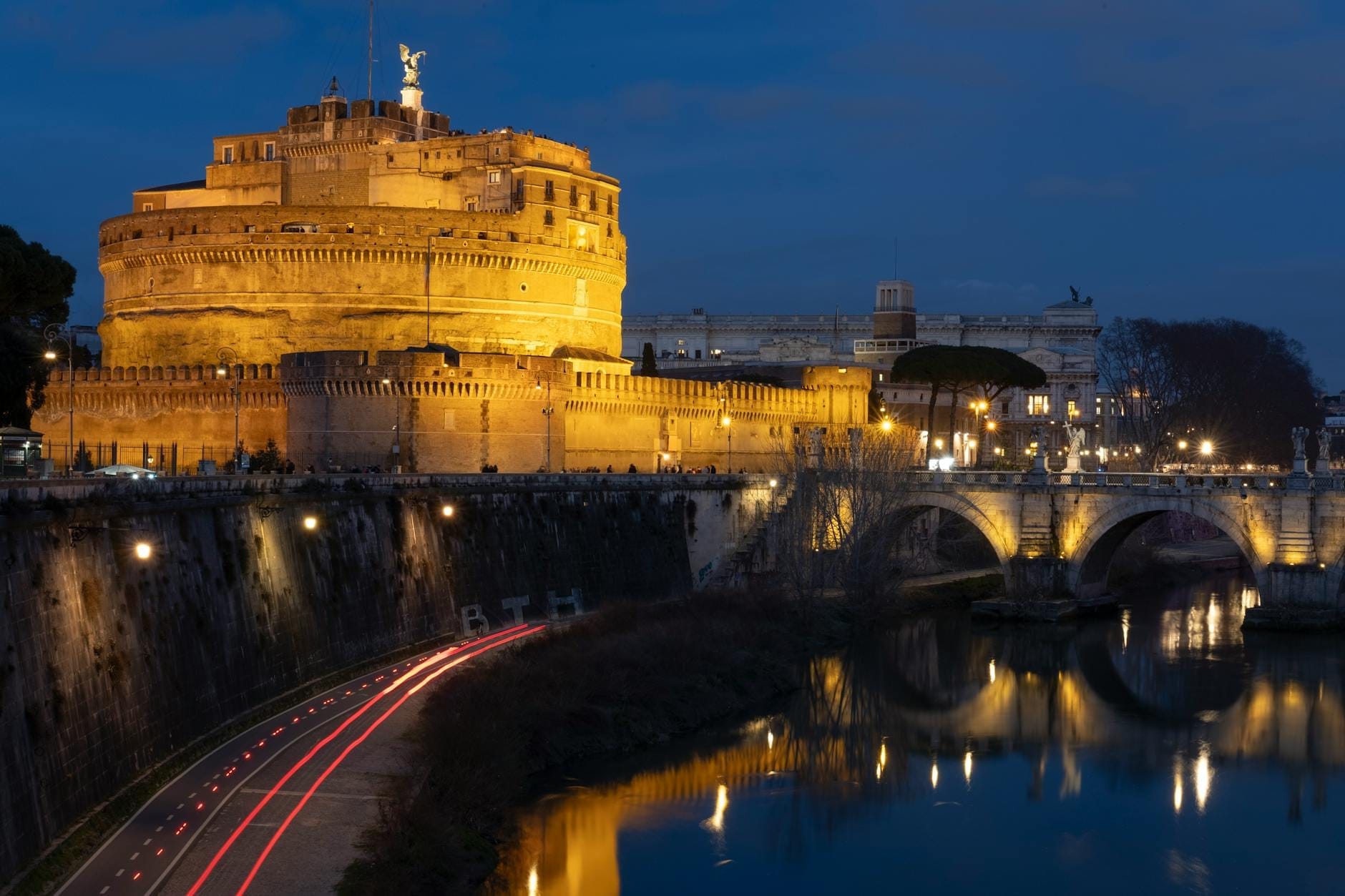
What Is Castel Sant'Angelo?
Castel Sant'Angelo is a cylindrical fortress on the right bank of the Tiber River, a short walk from the Vatican. Its formal museum designation is the Museo Nazionale di Castel Sant'Angelo, though most visitors know it simply as the castle. Few monuments in Rome carry as many lives in a single structure: it began as a mausoleum for Emperor Hadrian, became a military stronghold during the fall of the Western Roman Empire, served as a papal prison and last-resort refuge for centuries, and today functions as one of the city's most visited museums.
What makes it worth your time is not one dramatic exhibit, but the cumulative effect of walking through two thousand years of repurposing. The cells where political prisoners were kept sit a few corridors away from Renaissance papal apartments decorated with frescoes and majolica floors. The contrast is uncomfortable in the best possible way.
💡 Local tip
Tickets sell out during peak season. Book online in advance through CoopCulture or the official museum site to avoid queuing at the entrance on Lungotevere Castello.
History: From Hadrian's Tomb to Fortress and Museum
Construction of the mausoleum began under Emperor Hadrian around 135 AD and was completed in 139 AD, after his death. The structure was designed as a dynastic burial monument: Hadrian himself was the first to be interred here, followed by successive emperors through to Caracalla in the third century. The original form was a large square base topped by a cylindrical drum, covered in earth and planted with cypress trees, and crowned by a bronze quadriga.
By the late Roman period, the building had been incorporated into the Aurelian Wall and transformed into a military strongpoint. Its conversion was so thorough that the original funerary function was largely buried, literally and architecturally. The name change came in 590 AD, when Pope Gregory I reportedly saw a vision of the Archangel Michael atop the castle during a plague procession, sheathing his sword to signal the epidemic's end. The statue of the angel that crowns the building today commemorates that vision.
The structure's most strategically important addition is the Passetto di Borgo, an 800-metre fortified corridor connecting the castle directly to the Vatican Palace. Popes used it as an escape route during sieges, most famously when Clement VII fled to the castle during the Sack of Rome in 1527. For more on the papal neighborhood this corridor connects to, see the guide to the Vatican district.
Tickets & tours
Live prices and dates from our booking partner. If you book, we may earn a commission at no extra cost to you.
What You See Inside: A Floor-by-Floor Walkthrough
Entry is at ground level on the riverside facade. The first thing visitors encounter is the original Roman ramp, a long spiral corridor that wound upward through the mausoleum's core to the burial chamber. Walking it gives an immediate sense of Roman engineering scale: the ramp is wide enough for two people abreast, lined with tufa brick, and lit by narrow shafts of natural light. It smells of old stone and slightly damp plaster.
The burial chamber at the center of the structure is now stripped of almost everything — the ashes of emperors, the marble cladding, the bronze doors — but the dimensions are still impressive. Above it, the medieval and Renaissance additions begin. The courtyard of the Armory contains an open-air collection of cannonballs stacked in pyramids, a genuinely odd visual that dates to the castle's active military period. The papal apartments on the upper floors are the visual highlight for most visitors: small rooms decorated under Pope Paul III in the sixteenth century with detailed mythological frescoes, gilt ceilings, and tiled floors that feel almost absurdly refined given the fortress context.
The prison cells are accessible on an intermediate level. Some are little more than shallow alcoves cut into the walls. Benvenuto Cellini, the Renaissance goldsmith, famously escaped from one of them in 1538, a story he recounts in vivid detail in his autobiography.
ℹ️ Good to know
Accessibility note: The main spiral ramp is gradual and manageable for most visitors, but several upper sections involve narrow stairs. Wheelchair access is limited beyond the lower levels. Confirm current conditions with the museum before visiting.
The Rooftop: Rome's Underrated Viewpoint
The roof terrace at the top of the castle is one of the better elevated viewpoints in the city, though it receives less attention than spots like the Gianicolo Hill or the Pincio terrace. From here, you have an unobstructed view down the Tiber toward the Vatican, with the dome of St. Peter's Basilica framed directly to the southwest. In the other direction, the roofline of central Rome stretches east, with the Vittoriano visible on clear days.
The bronze angel statue stands at the very top, close enough to examine in detail: the current version was cast in the eighteenth century and replaced several earlier ones. Below it, the terrace is open to the wind, which makes it refreshing in summer but cold in winter. The view at golden hour, when the Tiber picks up the late light and Ponte Sant'Angelo's ten angel statues are backlit, is genuinely worth staying for.
Ponte Sant'Angelo itself, the pedestrian bridge leading to the castle entrance, was redesigned by Gian Lorenzo Bernini in the seventeenth century. Its ten angel sculptures, each holding an instrument of the Passion, line the approach and are considered some of the finest Baroque stonework in Rome. The bridge and the Ponte Sant'Angelo make for a natural pairing with a castle visit.
When to Visit and How the Experience Changes by Time of Day
Morning visits, particularly on weekdays, offer the thinnest crowds inside. The ramp and burial chamber feel genuinely atmospheric before tour groups arrive. The interiors are cool even in summer, which is a practical reason to visit in the middle of the day during July and August rather than avoiding the castle entirely.
Afternoon light on the rooftop terrace is harsh in summer, which flattens photographs. Late afternoon, from around 4 PM onward, is better for photography and more comfortable for lingering. If the castle offers evening opening hours (which have varied seasonally in the past, check current schedules on the official site), a night visit changes the character of the building entirely: the fortress is floodlit, the Tiber reflections are sharp, and the interiors feel more theatrical.
⚠️ What to skip
Opening hours and evening schedules change seasonally. Verify current hours directly at direzionemuseiroma.cultura.gov.it before planning your visit. Do not rely on third-party aggregator sites for accurate times.
For broader context on timing a Rome trip, the guide on the best time to visit Rome covers seasonal crowd patterns and temperature ranges in detail.
Getting There and What to Bring
The easiest approach by public transit is Metro Line A to Lepanto, followed by a flat fifteen-minute walk south toward the river. The walk passes through the Prati neighborhood, which has good cafes for a pre-visit coffee. Bus routes along Lungotevere also stop close to the castle entrance. Taxis can drop directly outside on Lungotevere Castello.
Walking from the Vatican Museums takes under ten minutes: cross Piazza Risorgimento and head south along the river. The castle is visible the entire way. This proximity makes a combined Vatican-and-castle day logical, though that is a genuinely full and tiring itinerary.
Wear comfortable shoes: the spiral ramp, stone floors, and rooftop all involve sustained walking on uneven or hard surfaces. The interior is cooler than outside year-round, so a light layer is worth carrying in summer. Audio guides are available at the entrance and add significant context to the papal apartments and Roman-period sections.
If you are planning a fuller itinerary around the Vatican area, the guide to Rome in 3 days includes a logical routing that places Castel Sant'Angelo alongside nearby priorities.
Who Should Consider Skipping It
Visitors with limited time in Rome who prioritize ancient ruins over medieval and Renaissance layers may find the castle less compelling than the Colosseum, Roman Forum, or Palatine Hill combination. The Roman-period content inside is minimal: most of the original mausoleum fabric has been stripped or built over.
Travelers who find museum visits without strong narrative guidance unrewarding should budget for an audio guide or a guided tour, otherwise the papal apartments and military history sections can feel like a sequence of labeled rooms without clear connective tissue. The castle rewards curiosity and willingness to read context; it does not deliver its history immediately.
Insider Tips
- The rooftop terrace is the destination, but most people rush there directly. Slow down on the intermediate floors: the papal bathroom with its fresco-lined walls and the small treasury room are routinely skipped and worth finding.
- Ponte Sant'Angelo is closed to vehicle traffic and best photographed from the riverbank below (Lungotevere), not from the bridge itself. Walk down the steps to the lower embankment path for a straight-on view of both the bridge and the castle.
- The castle's cafe on the upper terrace level has unremarkable food but genuinely good views and is rarely full. It makes a better mid-visit rest stop than trying to find a restaurant nearby during peak lunch hours.
- If you visit the Vatican Museums on the same day, do the Vatican first: it demands more energy and concentration. Save the castle for the afternoon when you can move at a more relaxed pace.
- The exterior of the castle is best photographed from the far bank of the Tiber (Lungotevere Tor di Nona) in morning light, when the sun hits the cylindrical drum directly and the Ponte Sant'Angelo angels are front-lit.
Who Is Castel Sant'Angelo For?
- History and architecture enthusiasts who want to trace two thousand years of Roman history in one building
- Photographers looking for Tiber River views and one of Rome's most recognizable skyline profiles
- Visitors combining a Vatican Museums day with an additional afternoon attraction within easy walking distance
- Travelers interested in papal history and Renaissance interiors outside the standard church circuit
- Anyone who wants an elevated city view without the long queues associated with other Rome viewpoints
Nearby Attractions
Other things to see while in Vatican & Prati:
- Ponte Sant'Angelo
Ponte Sant'Angelo is Rome's most photogenic river crossing, a nearly 1,900-year-old imperial bridge leading directly to Castel Sant'Angelo. Built by Emperor Hadrian and later adorned with ten Baroque angel sculptures designed by Bernini, it offers some of the finest views of the Tiber and the city's historic skyline. Entry is free, and the bridge never closes.
- St. Peter's Basilica
The largest church in the world and the spiritual center of Roman Catholicism, St. Peter's Basilica rewards every visitor who crosses its threshold — whether or not they share the faith. This guide covers what to expect, when to go, and how to make the most of your time inside one of Rome's most extraordinary buildings.
- St. Peter's Square
St. Peter's Square, known in Italian as Piazza San Pietro, is the grand elliptical forecourt of St. Peter's Basilica in Vatican City. Designed by Gian Lorenzo Bernini in the 17th century, it is one of the most architecturally ambitious public spaces ever built. Entry is free and the square is open around the clock, though the experience shifts dramatically depending on when you arrive.
- Vatican Museums
The Vatican Museums are one of the largest and most visited art collections on earth, spanning papal apartments, ancient sculptures, Renaissance galleries, and the Sistine Chapel. Understanding the scale before you arrive makes all the difference between a meaningful visit and an exhausting march.
Planning a trip? Discover personalized activities with the Nomado app.