Gianicolo Hill: Rome's Most Rewarding Panoramic Climb
Rising above Trastevere on the city's western edge, Gianicolo Hill (Colle del Gianicolo) delivers what many argue is the finest 180-degree view of Rome's skyline, entirely free. Beyond the panorama, the hill holds Risorgimento monuments, a 17th-century fountain, and Bramante's celebrated Tempietto, all connected by a shaded promenade that rewards those willing to leave the crowds below.
Quick Facts
- Location
- Via Garibaldi, Colle del Gianicolo, 00165 Rome (above Trastevere)
- Getting There
- Walk uphill from Trastevere via Via Garibaldi (20-25 min), or take bus lines serving the Trastevere area to Piazzale Garibaldi
- Time Needed
- 1 to 2 hours for the panorama, monuments, and a stroll along the promenade
- Cost
- Free. Park open daily 7am–8pm (hours may vary seasonally)
- Best for
- Panoramic views, Risorgimento history, quiet escapes from the centro storico
What Gianicolo Hill Actually Is
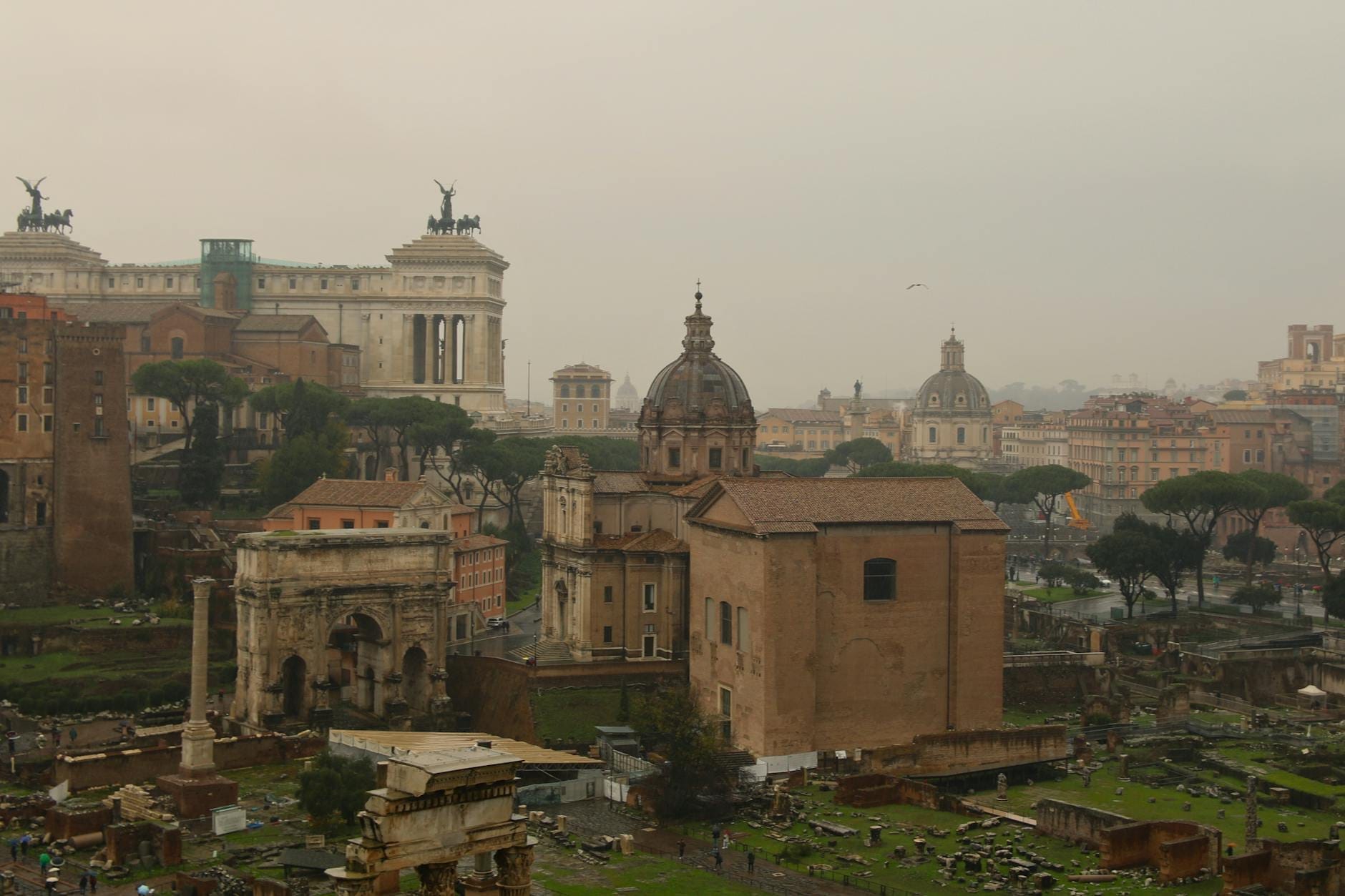
The Colle del Gianicolo, known in English as Janiculum Hill, is a long ridge running north to south along the west bank of the Tiber, just above the Trastevere neighborhood. At roughly 82 meters above sea level, it is not one of Rome's famous seven hills, yet it commands arguably the most complete view of the city's historic core. From Piazzale Garibaldi at the summit, the skyline unspools from the Pantheon's dome to the Vittoriano monument, with St. Peter's Basilica anchoring the far right and the Alban Hills fading into the distance on clear days.
The hill takes its name from Janus, the two-faced Roman god of beginnings, though the mythological connection remains debated among historians. What is not debated is its modern significance: the Gianicolo was the site of one of the defining battles of Italian unification in 1849, when Giuseppe Garibaldi and his volunteers fought French troops sent to restore papal authority. That history saturates every corner of the hill, from the equestrian monument of Garibaldi at the summit to the dozens of marble busts lining the promenade below.
💡 Local tip
Every day at noon, a cannon is fired from Gianicolo Hill as a time signal, a tradition begun in 1904. If you are on the hill around midday, do not be alarmed by the boom, but do position yourself near Piazzale Garibaldi to watch the ceremony up close.
The Panorama: What You See and When to See It
Standing at the terrace of Piazzale Garibaldi on a clear morning, the view is operatic. Rome's terracotta and ochre roofscape stretches east in an almost unbroken plane, punctuated by domes, bell towers, and the faint outline of ancient walls. The Pantheon's low profile, the twin towers of Sant'Agnese in Piazza Navona, and the green swell of the Pincio terrace are all identifiable without a telephoto lens. Bring binoculars if you want to pick out individual landmarks.
Early morning, between 7am and 9am, offers the sharpest light and the fewest people. The air is cooler, the smog has not yet built up, and the city below still feels quiet. By mid-morning, tour groups and Roman families with children in tow begin arriving, and the terrace becomes noticeably livelier. Sunset draws the biggest crowd, and rightly so: the western light catches the domes and rooftops at a low angle that no photograph fully captures. Come 30 minutes before sunset and claim a spot on the low wall near the Garibaldi statue.
Photographers should note that the view faces mostly east, meaning sunrise and morning hours produce front-lit shots, while golden hour is less dramatic for city photography. For a different angle on the city, the Pincio Terrace in Villa Borghese looks west toward the same hill and offers a compelling contrast perspective.
Tickets & tours
Live prices and dates from our booking partner. If you book, we may earn a commission at no extra cost to you.
Gianicolo hill and Trastevere highlights walking tour
From 105 €Instant confirmationFree cancellationKids Pasta with Tiramisu Cooking Class on Gianicolo Hill
From 55 €Instant confirmationFree cancellationSt. Peter's Basilica, Vatican Museums, Sistine Chapel reserved entry
From 81 €Instant confirmationFree cancellationGuided tour of Galleria Borghese and of Villa Borghese gardens
From 69 €Instant confirmationFree cancellation
History on the Hill: Garibaldi, Bramante, and the Acqua Paola
The dominant monument on the hill is the equestrian statue of Giuseppe Garibaldi, inaugurated in 1895, which depicts the general on horseback gazing defiantly toward the Vatican. It is a deliberately provocative placement: Garibaldi's forces clashed here with French troops supporting the Pope in June 1849, during the short-lived Roman Republic. Nearby, a separate monument honors his wife Anita, shown dramatically on horseback with a baby in one arm and a pistol in the other. Both statues are ringed by busts of Garibaldi's volunteer fighters, giving the promenade below the feeling of an open-air gallery of 19th-century Italian heroes.
At the northern end of the hill, the Fontana dell'Acqua Paola stands as one of Rome's grandest baroque fountains. Commissioned by Pope Paul V and completed in 1612, it was built to mark the restoration of the ancient Trajan aqueduct, which now carries water from Lake Bracciano. The fountain's white marble facade, five arching niches, and cascading basin are best seen in the late afternoon when the stone catches a warm glow. The Acqua Paola fountain is also wheelchair accessible, making it one of the more inclusive stops on the hill.
Just below the main ridge, the church of San Pietro in Montorio contains Bramante's Tempietto, a small circular chapel built around 1502 on the site traditionally believed to mark St. Peter's crucifixion. Art historians consider it one of the purest expressions of High Renaissance architecture in existence: a colonnade of 16 Doric columns supporting a drum and dome that proportions everything to the human scale. It is small, easily overlooked, and genuinely extraordinary. Note that the church is not wheelchair accessible.
The Promenade and the Park: Beyond the Terrace
Most visitors arrive at Piazzale Garibaldi, take in the view, and leave. The ones who stay longer discover that the Passeggiata del Gianicolo, the long tree-lined boulevard running south from the piazza, is one of the most genuinely pleasant walks in Rome. Marble busts on stone pedestals line both sides of the road, each commemorating a figure from the Risorgimento, Italy's 19th-century unification movement. The path is shaded by umbrella pines, smells of resin and damp earth on cool mornings, and is almost entirely free of the noise and traffic pressing up from the streets below.
Families with small children often gravitate toward the puppet theater near the park, which operates on weekend afternoons. There are also a few food kiosks and a small bar near the main terrace, useful for a coffee or cold drink without descending the hill entirely. The botanical garden of the Università degli Studi di Roma La Sapienza sits on the lower slopes and is a quieter, less-visited space that rewards those with extra time.
The Gianicolo pairs naturally with an afternoon in Trastevere below. Walk up to the hill for the view, then descend via Via Garibaldi's steep curves and lose yourself in the neighborhood's cobblestone lanes for the evening. Few itineraries in Rome flow as naturally.
Getting There and Practical Notes
The most direct way to reach the hill on foot is from Trastevere: follow Via Garibaldi uphill from near the Piazza di San Francesco d'Assisi intersection. The walk takes roughly 20 to 25 minutes and is consistently uphill, so wear shoes with grip. The road surface is uneven in places and the gradient is sustained, making this a poor option for travelers with mobility limitations. Several city bus lines serve Piazzale Garibaldi directly, which is the better approach if you prefer not to climb.
There is no metro station close to the hill. The nearest metro connections are on Line A, and you would still need a bus or a walk from there. If you are coming from the Vatican or Prati, the hill is accessible on foot in about 20 minutes down Via Aurelia, though this approach is less scenic.
⚠️ What to skip
The park is officially open from 7am to 8pm daily, though these hours may change seasonally. Piazzale Garibaldi and the main terrace are accessible at all times, but the interior paths of the park may be closed after hours. Verify current hours on the Turismo Roma website before planning an evening visit.
There are no ticket barriers, no queues, and no timed entry slots for Gianicolo Hill. It is one of the genuinely free experiences in a city where most major sights now carry entry fees or crowd management systems. This also means there is nothing to book in advance, and no reason to rush.
Honest Assessment: Worth the Climb?
For anyone planning Rome's best viewpoints, Gianicolo consistently ranks near the top because the view is unobstructed, free, and accessible throughout the day. It is not spoiled by scaffolding or ticket lines. The historical monuments are legitimately interesting if you have any background in Italian unification history, and the Tempietto alone justifies the climb for architecture enthusiasts.
That said, the hill has limitations worth naming. The promenade's busts and monuments can feel repetitive without prior knowledge of the Risorgimento figures they commemorate. On summer afternoons, the exposed terrace gets genuinely hot, with little shade near the main viewpoint. And while the walk up Via Garibaldi is manageable for most, the sustained gradient rules the hill out for anyone with serious mobility difficulties, other than reaching the accessible fountain by bus.
Travelers whose itinerary is already packed with the major sights of ancient Rome may find Gianicolo best saved for a second or third day, or for a slow afternoon when the idea of yet another paid museum feels unappealing. It is precisely that kind of place: unhurried, free, and rewarding in proportion to the time you give it.
Insider Tips
- Arrive before 8:30am on weekdays to have the main terrace almost entirely to yourself. By 10am on weekends, tour groups and school parties fill Piazzale Garibaldi.
- The noon cannon is fired daily from just below the main terrace. Walk toward the cannon emplacement a few minutes before 12pm for an up-close view of the ceremony rather than hearing it from a distance.
- The Fontana dell'Acqua Paola looks its best in the late afternoon when the low western light illuminates the white marble from the front. Morning light falls behind it and flattens the detail.
- If you descend via the steep stepped path rather than Via Garibaldi, you emerge directly into the quieter residential end of Trastevere, avoiding the busiest tourist streets and stumbling into a genuinely local part of the neighborhood.
- Bramante's Tempietto inside the courtyard of San Pietro in Montorio is easy to miss because the church does not advertise it prominently. Look for the courtyard entrance to the right of the church facade and step through.
Who Is Gianicolo Hill For?
- Travelers wanting a free, panoramic view of Rome without queues or timed entries
- Architecture enthusiasts seeking out Bramante's Tempietto, a landmark of High Renaissance design
- Visitors spending an afternoon in Trastevere who want to add context and elevation to the neighborhood
- Anyone looking for a quiet, shaded walk away from the centro storico crowds
- History readers with an interest in Italian unification and the 1849 Roman Republic
Nearby Attractions
Other things to see while in Trastevere:
- Porta Portese Flea Market
Every Sunday morning, over a thousand stalls spread across nearly two kilometers of Trastevere streets, selling everything from vintage clothing to old coins, tools, and curiosities. Mercato di Porta Portese is Rome's largest and most storied flea market, and it rewards early risers willing to dig.
- Basilica di Santa Maria in Trastevere
Standing at the heart of Rome's most characterful neighborhood, the Basilica di Santa Maria in Trastevere is widely considered the oldest church in Rome dedicated to the Virgin Mary. Its 12th-century apse mosaics rank among the finest medieval art in the city, and the piazza in front is one of the few public squares in Rome that genuinely rewards sitting still.
- Villa Farnesina
Villa Farnesina is a 16th-century Renaissance villa in Trastevere housing some of the finest frescoes in Rome, including Raphael's celebrated Galatea and the luminous Loggia of Psyche. Smaller and quieter than the Vatican Museums, it offers a rare chance to stand inside rooms that have barely changed since a Sienese banker commissioned the greatest artists of the High Renaissance to decorate them.
Planning a trip? Discover personalized activities with the Nomado app.