San Clemente Basilica: Rome's Most Layered Church
San Clemente Basilica in Rome's Monti district is three buildings stacked on top of each other across 2,000 years of history. The 12th-century upper church is free to enter; the underground excavations reveal a 4th-century basilica, a Roman house, and an ancient Mithraic temple for €10. Few sites in Rome compress so much time into a single visit.
Quick Facts
- Location
- Via di San Giovanni in Laterano, Monti, Rome (00184)
- Getting There
- Metro Line B: Colosseo (5-min walk)
- Time Needed
- 1 to 1.5 hours for both upper church and excavations
- Cost
- Upper basilica free; excavations €12 (free for children under 16)
- Best for
- History lovers, archaeology enthusiasts, curious travelers
- Official website
- www.basilicasanclemente.com/eng
What Is San Clemente Basilica?
The Basilica di San Clemente al Laterano is not simply a church. It is a vertical cross-section of Rome itself: three distinct structures built one on top of another over roughly twenty centuries, each layer inhabited, abandoned, and eventually buried under the next. Most visitors to Rome walk straight past it on their way between the Colosseum and San Giovanni in Laterano, which makes it one of the most underappreciated sites in the city.
At street level, you enter a functioning 12th-century Catholic basilica, still administered by Irish Dominican friars. Beneath it lies a 4th-century church containing some of the oldest fresco cycles in Rome. Go one level lower still and you reach a 1st-century Roman insula, or apartment block, alongside a Mithraeum, a temple dedicated to the Persian mystery cult of Mithras. Few places in the world offer this kind of layered reading of time. If you're building an itinerary around Rome's ancient core, San Clemente pairs naturally with a visit to the Colosseum and the Roman Forum just minutes away.
💡 Local tip
Book excavation tickets in advance via the official website. Entry to the lower levels is timed and capped, and walk-up availability can be limited during peak season (April to June, September to October).
The Upper Basilica: Art from the 12th Century
The current upper basilica was constructed between approximately 1108 and 1123 under Pope Paschal II, after the earlier church below was severely damaged during the Norman sack of Rome in 1084. Step through the atrium and the shift from street noise to interior calm is immediate. The nave is flanked by ancient granite columns salvaged from earlier Roman structures, a common practice in early medieval church construction that gives the space an uneven, almost assembled quality.
The focal point is the apse mosaic, a dazzling 12th-century composition depicting the Triumph of the Cross. Gold tesserae cover the half-dome, surrounding a jewelled cross from which twelve doves emanate and a lush acanthus scroll spreads across the lower register, sheltering figures, animals, and scenes of daily life. The level of detail rewards slow looking. Early morning light entering from the nave windows gives the gold a warm, amber quality that photographs rarely capture accurately.
The Cosmatesque floor, made from fragments of recycled Roman marble arranged in geometric patterns, is one of the finest surviving examples in Rome. The schola cantorum, the enclosed choir area in the center of the nave, was brought up from the lower basilica and reassembled here in the 12th century, making it a 6th-century structure sitting inside a 12th-century building above a 4th-century one. The Chapel of St. Catherine of Alexandria, off the left nave, contains frescoes by Masolino da Panicale from the early 15th century, including an Annunciation that is considered among the finest early Renaissance paintings in Rome.
Tickets & tours
Live prices and dates from our booking partner. If you book, we may earn a commission at no extra cost to you.
The Lower Basilica: Frescoes and Early Christianity
The paid excavation ticket grants access to the lower basilica, reached by a staircase from inside the upper church. The descent is only one floor but the atmosphere changes completely. The ceilings are low, the lighting is amber and directed, and the temperature drops noticeably, regardless of the season outside. This 4th-century basilica, partially buried under rubble and landfill after the Norman destruction, was rediscovered in the 1850s by the Irish Dominican prior Father Joseph Mullooly.
The frescoes here are extraordinary for their age and narrative ambition. The Life of St. Alexius cycle and the Legend of Sisinnius panels, dating from the 9th to 11th centuries, contain some of the earliest examples of written Italian vernacular, appearing as captions beneath the painted scenes. One inscription, spoken by a character ordering slaves to drag a column, reads roughly as: 'Fili de le pute, traite!' which translates loosely as 'Sons of harlots, pull!' It is coarse, human, and utterly unlike anything you'd expect to find in a medieval church. Visitors who read the captions often stop and photograph them, surprised by the directness.
The Mithraeum: Rome's Ancient Underbelly
A further staircase descends to the lowest accessible level: a 1st-century Roman building complex that includes a small but remarkably intact Mithraeum. The cult of Mithras was one of the dominant mystery religions of the Roman world between the 1st and 4th centuries AD, popular particularly among soldiers and merchants. Worship took place in underground or cave-like spaces called mithraea, and the ritual rooms were narrow by design, intended to hold only a small number of initiates.
The San Clemente Mithraeum is one of the best-preserved in Rome. A carved relief of Mithras slaying a bull, the central image of the cult, sits at the far end of the room. Stone benches line the narrow walls where worshippers would have reclined during ritual meals. The air at this level is damp and cool, and you can hear the sound of running water. An underground stream from the Cloaca Maxima system passes beneath the site, and its constant presence, audible as a low, gurgling current, adds an unexpectedly eerie quality to the lowest level.
The combination of Mithraeum, early Christian church, and medieval basilica on a single site makes San Clemente an unusually compact illustration of how Rome's religious landscape shifted over four centuries. For broader context on Rome's ancient religious and civic architecture, the Palatine Hill and its imperial palaces are walkable from here.
How the Experience Changes by Time of Day
Arriving at opening time on a weekday is strongly recommended. Between 9 and 11 AM, the upper basilica is genuinely quiet. The Cosmatesque floor, the apse mosaic, and the Masolino frescoes can all be studied at close range without crowding. Tour groups tend to arrive mid-morning and cluster in the nave for explanations, so if you are self-guiding, entering early gives you the run of the church in near-silence.
The underground levels are cooler year-round, which makes them a relief during Rome's hot summers (June through August), when outdoor sites become draining by midday. The lower basilica and Mithraeum are dimly lit and require some patience with the low light. Photography without a tripod is possible but requires a steady hand. Flash photography is not permitted.
ℹ️ Good to know
Opening hours vary by season. Upper basilica free access from 9:00 AM to 12:30 PM and 3:00 PM to 6:00 PM (varies by season); excavations Monday-Saturday 9:30 AM-12:30 PM and 3:00-6:00 PM, Sunday/holidays 12:00-6:00 PM. Confirm current hours on the official website before visiting.
Practical Walkthrough: What to Expect on Arrival
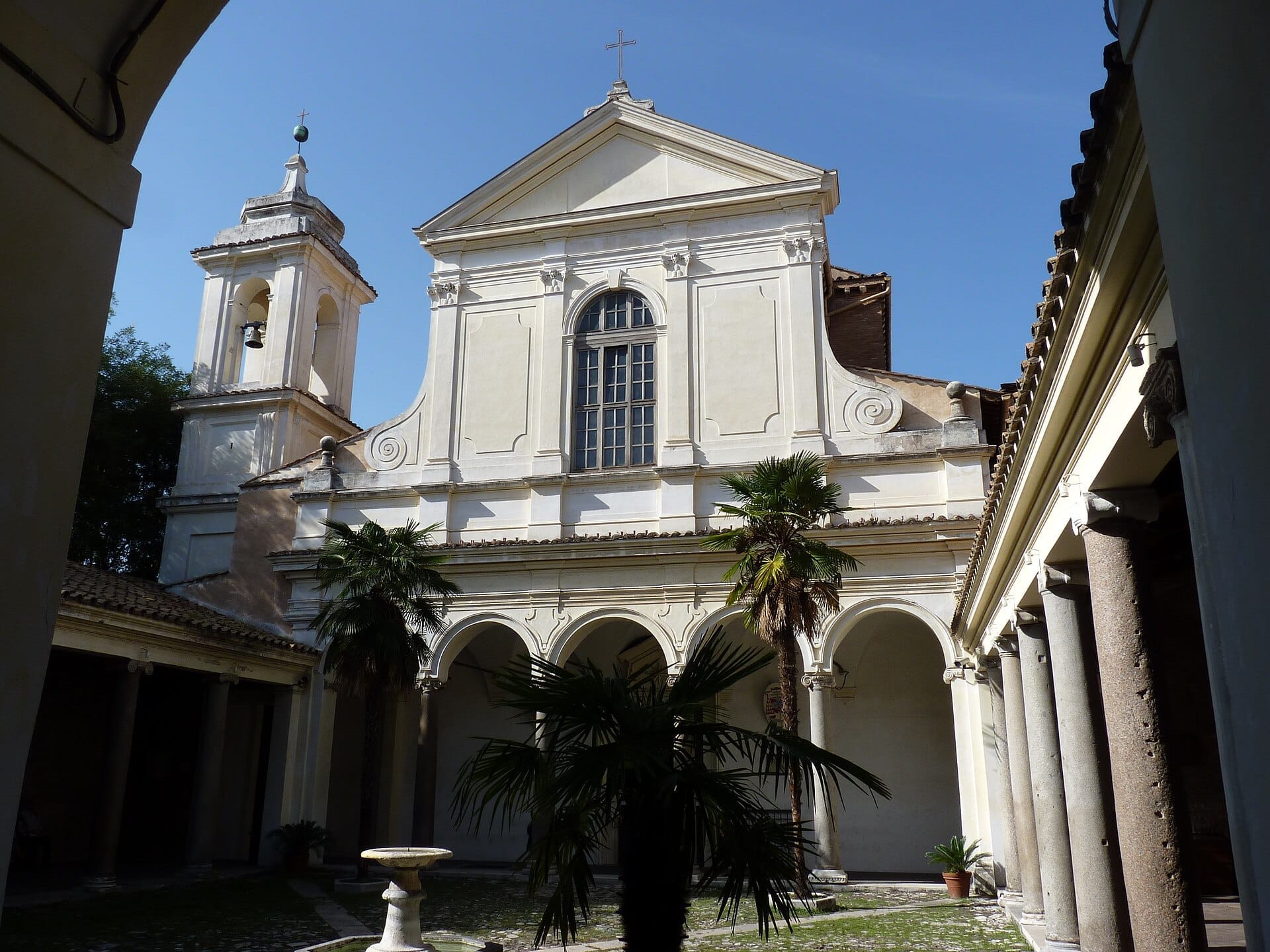
San Clemente sits on Via di San Giovanni in Laterano, between the Colosseum and the Lateran Basilica. The entrance is through a courtyard, set back slightly from the street, with a modest facade that gives no indication of what lies beneath. There is no large ticket queue outside. You enter the upper church freely and purchase excavation tickets from a desk inside, or in advance online.
The visit flows naturally downward: upper basilica first, then the staircase to the lower basilica, then a second staircase to the Roman level and Mithraeum. Plan for 45 to 60 minutes if you read the signage carefully at each level. Allow 90 minutes if you are particularly interested in the frescoes or early Christian archaeology. The site is not large, but it is dense.
Dress code applies as with any active Catholic church: shoulders and knees must be covered. Scarves are available at the entrance for those who need them. The upper basilica is fully accessible; the excavation levels involve narrow staircases with no lift option, making them inaccessible to wheelchair users or those with significant mobility limitations.
⚠️ What to skip
The excavation levels are not suitable for visitors with claustrophobia. Corridors on the lower floors are narrow, ceilings are low in sections, and some passages require single-file movement. This is not a detraction but worth knowing in advance.
Is San Clemente Worth It for Every Visitor?
San Clemente rewards visitors who are genuinely interested in history, archaeology, or early Christian art. It is not a site that delivers immediate spectacle in the way the Pantheon or the Colosseum does. The scale is intimate, the lighting is low, and the pleasure is largely intellectual: the satisfaction of reading three distinct civilizations in sequence, stacked vertically beneath a single city block.
Travelers who prefer open-air sites, sweeping views, or fast-paced itineraries may find the underground experience claustrophobic or slow. Families with young children should be aware that the lower levels require careful supervision on the staircases, and small children may not engage with the fresco content. For those with an active interest in ancient Rome, early Christianity, or the archaeology of layered urban sites, this is one of the most intellectually satisfying 90 minutes available anywhere in the city.
If you're exploring the broader Monti neighborhood, San Clemente fits well into a half-day that also includes the Domus Aurea and the Baths of Diocletian. For a guide to planning the wider area, see our overview of the Monti neighborhood.
Insider Tips
- The Masolino frescoes in the Chapel of St. Catherine (upper basilica, left nave) are often overlooked by visitors rushing to the excavations. Spend five minutes here before descending. The Annunciation panel is exceptional.
- Listen for the underground stream at the lowest level. The sound of running water from the ancient drainage system beneath the Mithraeum is one of the more unusual sensory experiences at any Rome site, and it is easy to miss if you're focused on the carved relief.
- If you are visiting with a limited time budget, the upper basilica is free and takes about 20 minutes at a careful pace. The Cosmatesque floor and apse mosaic alone justify a stop even without paying for the excavations.
- The site is managed by Irish Dominican friars, who are often present and approachable. If you have specific questions about the history or the frescoes, they are generally more knowledgeable and willing to discuss the site than ticket staff at larger attractions.
- Combine this with the Colosseum visit on the same morning but do San Clemente first, before the Colosseum queues build. You'll arrive at the Colosseum refreshed and the contrast between the two sites, one vast and ruined, the other intact and layered, makes each more interesting.
Who Is San Clemente Basilica For?
- History and archaeology travelers who want more than surface-level sightseeing
- Art historians and those interested in early Christian fresco cycles
- Travelers who have already done Rome's headline sites and want something less crowded
- Anyone fascinated by Roman religious history, particularly Mithraism and its relationship to early Christianity
- Visitors looking for a cool, shaded site during Rome's hot summer months
Nearby Attractions
Other things to see while in Monti:
- Baths of Diocletian
The Terme di Diocleziano once covered 13 hectares and welcomed up to 3,000 Romans daily. Today, part of the Museo Nazionale Romano, this monumental complex rewards visitors who come prepared, with vaulted halls, open-air courtyards, and inscriptions that bring Rome's imperial scale into focus.
- National Roman Museum
The Museo Nazionale Romano is one of Rome's most important archaeological collections, spread across four distinct sites. Its crown jewel, Palazzo Massimo alle Terme, holds Roman sculptures, imperial frescoes, and coin collections that rival anything in the city. This guide tells you exactly what to expect, where to focus your time, and how to get the most from each visit.
- Quirinal Palace
Perched on Rome's highest hill and spanning 110,500 square meters, the Quirinal Palace has served popes, kings, and presidents across five centuries. Today it opens its doors to visitors, offering access to state rooms, sweeping art collections, and one of the finest views in the city.
- San Giovanni in Laterano
The Archbasilica of Saint John Lateran holds a title that St. Peter's Basilica does not: it is the cathedral church of Rome and the Pope's official seat as Bishop of Rome. Founded by Emperor Constantine in the early 4th century, it predates the Vatican by over a thousand years and remains one of the most historically significant Christian sites on earth.
Planning a trip? Discover personalized activities with the Nomado app.