San Giovanni in Laterano: Rome's First and Foremost Basilica
The Archbasilica of Saint John Lateran holds a title that St. Peter's Basilica does not: it is the cathedral church of Rome and the Pope's official seat as Bishop of Rome. Founded by Emperor Constantine in the early 4th century, it predates the Vatican by over a thousand years and remains one of the most historically significant Christian sites on earth.
Quick Facts
- Location
- Piazza di San Giovanni in Laterano 4, 00184 Roma — southeast of central Rome's historic center
- Getting There
- Metro A, San Giovanni station (2-minute walk); buses 85, 87, 714 stop at the piazza
- Time Needed
- 1 to 2 hours for the basilica, cloister, and baptistery; half a day if you add the nearby museums
- Cost
- Basilica entry is free; cloister has a small admission fee — verify current prices at the official site before visiting
- Best for
- History lovers, architecture enthusiasts, pilgrims, and anyone curious about early Christianity in Rome
- Official website
- www.basilicasangiovanni.va/en.html
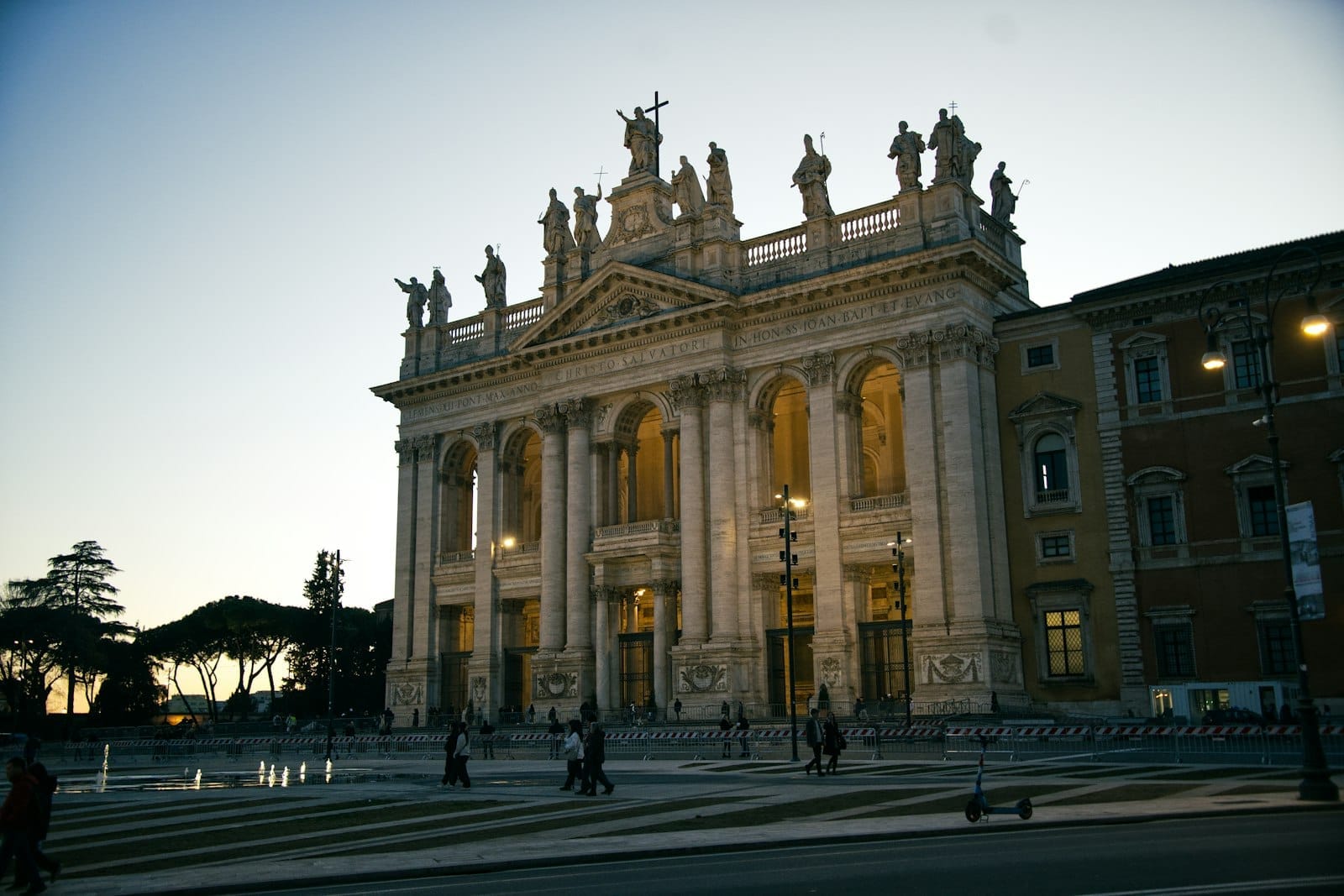
Why San Giovanni in Laterano Matters More Than Most Visitors Realize
The Archbasilica of Saint John Lateran carries an inscription above its central facade that translates roughly as 'mother and head of all churches of the city and the world.' That is not rhetorical flourish. In the hierarchy of Catholic churches, San Giovanni in Laterano outranks St. Peter's Basilica. It is the Pope's cathedral, the seat of the Bishop of Rome, and the oldest public Christian church in the Western world still standing in its original location.
Emperor Constantine founded the complex around 313-314 CE, just after the Edict of Milan granted Christians freedom of worship. Pope Sylvester I consecrated it on November 9, 324 CE. For over a thousand years, before the papacy relocated to the Vatican, the Lateran complex was the center of Western Christianity. That weight of history is palpable the moment you step into the piazza.
ℹ️ Good to know
November 9 is the feast day of the Dedication of the Lateran Basilica, celebrated across the Catholic world. If your visit falls on or near this date, expect special liturgical events and larger-than-usual crowds inside.
Arriving at the Piazza: First Impressions
The piazza itself is one of the largest open spaces in Rome, and it hits you with an unexpected sense of scale after the narrow streets of Monti. The Egyptian obelisk at its center, standing at roughly 45.7 meters with its base, is the tallest ancient obelisk in Rome and the tallest ancient obelisk in Rome. It was brought from Karnak by Constantius II in 357 CE and re-erected here in 1588 by Pope Sixtus V. Most visitors walk past it without realizing what they are looking at.
In the morning, the eastern facade catches the early light well, and the piazza is quieter. Tour groups tend to arrive from mid-morning onward. By early afternoon the space fills with a mix of pilgrims, school groups, and tourists who have walked over from the Colosseum, less than a kilometer to the northwest. If you want the basilica largely to yourself, arrive before 9:00 AM.
Tickets & tours
Live prices and dates from our booking partner. If you book, we may earn a commission at no extra cost to you.
Arch Basilica of St. John Lateran and Holy Stairs Tour in Rome
From 49 €Instant confirmationFree cancellationSt. Peter's Basilica, Vatican Museums, Sistine Chapel reserved entry
From 81 €Instant confirmationFree cancellationGuided tour of Galleria Borghese and of Villa Borghese gardens
From 69 €Instant confirmationFree cancellationVatican: Basilica, Dome and underground early bird tour
From 50 €Instant confirmationFree cancellation
Inside the Basilica: Architecture Across Seventeen Centuries
The interior is vast, cold in the way that only ancient stone buildings are cold, and lit by a combination of natural light filtering through high windows and the glow of candles near the altars. The nave is lined with twelve colossal niches, each containing a dramatic Baroque statue of an apostle, installed between 1703 and 1718 during a major renovation commissioned by Pope Clement XI. These figures, each around four meters tall, dominate the space in a way that photographs rarely convey.
The coffered ceiling above is gilded and dates to the 1560s, a project attributed in part to Giacomo Barozzi da Vignola. Beneath your feet, sections of the ancient Constantinian floor have been preserved or reconstructed, though much of what you see underfoot is the result of successive renovations. Francesco Borromini oversaw a major transformation of the interior in the 1640s and 1650s, unifying what had been a patchwork of medieval additions into the coherent Baroque space visible today.
At the far end, the Gothic baldachin above the papal altar dates to around 1367 and is attributed to Giovanni di Stefano. It reportedly contains relics of Saint Peter and Saint Paul. The apse beyond it was heavily restored in the late 19th century, but the mosaic there incorporates fragments from an original 4th-century composition. For those interested in tracing Rome's layered artistic history, the Basilica of San Clemente nearby offers an even more direct experience of descending through Roman history — literally, floor by floor.
💡 Local tip
Dress code is strictly enforced. Shoulders and knees must be covered. Carry a scarf or light jacket regardless of the season — the interior is also noticeably cooler than outside in summer, which is welcome, but you will need the covering to get through the door.
The Cloister: The Most Underrated Part of the Visit
Most visitors spend their time in the basilica and miss the cloister entirely. That is a significant oversight. The cloister, accessible through a doorway off the left nave, was built between approximately 1215 and 1232 by the Vassalletto family, the same marble workers responsible for the cloister at San Paolo fuori le Mura. The paired columns here are some of the finest examples of Cosmatesque work in Rome: twisted, inlaid with gold mosaic tesserae, and arranged in alternating rhythms that create a sense of constant movement even when you are standing still.
The cloister garden in the center is a square of low-maintained greenery surrounded by shallow arcades. It is quiet in a way that the basilica interior, even on low-traffic days, rarely is. Fragments of ancient stonework, inscriptions, and sarcophagi are arranged along the walls. Some pieces are labeled, others are not. Photography is permitted, and the light in the early afternoon, when it falls directly into the garden, is good for detail shots of the column work.
The Baptistery and the Surrounding Complex
The octagonal baptistery to the north of the main basilica is one of the most historically important buildings in Christian architecture and almost always overlooked. It is one of the oldest surviving baptisteries in the Christian world, dating to the reign of Constantine, though substantially rebuilt by Pope Sixtus III in the 5th century. The octagonal form it established became the template for baptistery design across Europe for centuries. The mosaics in the side chapels, particularly in the Chapel of San Venanzio, are 7th-century originals: rare, fragmented, and worth examining closely.
The broader Lateran complex once included a papal palace that served as the primary residence of the popes from the 4th century until the Avignon period in the 14th century. What remains of that palace now houses the Museo Storico della Liberazione and the Sancta Sanctorum, the private chapel of medieval popes. Entry to these spaces operates separately. If you are building a full day around this area, the Baths of Caracalla and the Circus Maximus are reachable on foot to the southwest.
How the Experience Changes Through the Day
Early morning, before 9:00 AM, is genuinely different from any other time. Local parishioners come for morning Mass, pigeons echo in the vault, and the side altars are lit by candles rather than tourist flashlights. The smell of incense lingers from morning liturgy. The building feels functional rather than monumental, which is arguably what it has always been.
Midday brings the most foot traffic, particularly in summer. Tour groups move in clusters and tend to concentrate near the papal altar and the nave statues. The cloister, requiring a separate entry fee, is noticeably quieter even at peak hours. Late afternoon, from around 4:00 PM onward, sees a second quieter window before closing, and the western light through the facade windows shifts the interior palette toward amber.
The piazza after dark has its own character. The obelisk and the facade are illuminated, and the scale of the square becomes more apparent without the compression of daytime crowds. This is worth five minutes if you are in the area during an evening walk. For more on experiencing Rome after hours, see the guide to Rome at night.
Practical Notes for Your Visit
San Giovanni station on Metro Line A brings you directly to the piazza in two to three minutes from Termini. From the Colosseum, it is a ten-to-fifteen-minute walk along Via di San Giovanni in Laterano, a pleasant route with few crowds. Multiple bus lines serve the piazza directly.
Entry to the basilica itself is free. The cloister charges a small admission fee; verify the current amount at the official site before visiting, as prices are subject to change. Photography without flash is generally permitted in the basilica, though signs in some chapels restrict it. The baptistery has its own hours that may differ from the main basilica, so check both before planning your route.
⚠️ What to skip
Opening hours can change for religious holidays, papal events, and special liturgical occasions. Always confirm current hours at the official website (basilicasangiovanni.va) before building your itinerary around this stop.
Accessibility inside the basilica is reasonably good for a building of this age, with ramp access available to the main nave, though some areas of the complex involve steps or uneven stone surfaces. Visitors who need details on specific access routes should contact the basilica directly. For a broader overview of how to structure your time across Rome's major churches, the guide to the best churches in Rome provides useful context on how San Giovanni compares to Santa Maria Maggiore, the Gesù, and other major basilicas.
Who Might Not Enjoy This
Travelers looking for the postcard version of Rome, the photogenic chaos of the Trevi Fountain or the panoramic sweep of the Colosseum, may find San Giovanni underwhelming. It sits slightly outside the central tourist circuit, the neighborhood around it is more residential than scenic, and the exterior, while impressive, lacks the immediate visual drama of St. Peter's colonnade or the Pantheon's portico. For visitors on a single day in Rome who are prioritizing iconic imagery, this may not make the shortlist. For anyone with two or more days and a genuine interest in how Christianity shaped European architecture and politics, it is essential.
Insider Tips
- The Scala Santa, the staircase believed to have been walked by Christ before his crucifixion, is housed in a building directly across the piazza. Pilgrims ascend it on their knees. Entry is free and the experience, regardless of your beliefs, is striking. It is often missed because nothing in the piazza signposts it clearly.
- Visit the cloister even if you have a tight schedule. At roughly the cost of a coffee, it offers some of the finest medieval decorative stonework in Rome in near-complete silence. Budget an extra twenty minutes.
- If you visit during a period when Jubilee pilgrimage routes are active, the basilica is one of the four major papal basilicas on the traditional itinerary. Crowds will be heavier than usual, but the atmosphere inside during these periods has a distinct intensity.
- The piazza-facing bronze doors of the central portal were moved here from the ancient Roman Curia Julia in the Forum. They are original Roman bronze, dating to around the 1st century BCE, remounted in the 17th century. Most visitors touch them without knowing what they are touching.
- For the best photographs of the facade, position yourself on the north side of the piazza in the morning, when the light falls directly on the statues along the roofline and the inscription is readable without glare.
Who Is San Giovanni in Laterano For?
- Architecture enthusiasts who want to trace Baroque, medieval, and early Christian design in a single building
- Pilgrims and travelers with a particular interest in Catholic history and the development of the papacy
- History-focused visitors who want to understand Rome beyond the Imperial period
- Travelers seeking a significant and free attraction that most day-trippers overlook
- Those building a full day in the southeastern quadrant of central Rome, combining this with the Colosseum, Circus Maximus, or the Baths of Caracalla
Nearby Attractions
Other things to see while in Monti:
- Baths of Diocletian
The Terme di Diocleziano once covered 13 hectares and welcomed up to 3,000 Romans daily. Today, part of the Museo Nazionale Romano, this monumental complex rewards visitors who come prepared, with vaulted halls, open-air courtyards, and inscriptions that bring Rome's imperial scale into focus.
- National Roman Museum
The Museo Nazionale Romano is one of Rome's most important archaeological collections, spread across four distinct sites. Its crown jewel, Palazzo Massimo alle Terme, holds Roman sculptures, imperial frescoes, and coin collections that rival anything in the city. This guide tells you exactly what to expect, where to focus your time, and how to get the most from each visit.
- Quirinal Palace
Perched on Rome's highest hill and spanning 110,500 square meters, the Quirinal Palace has served popes, kings, and presidents across five centuries. Today it opens its doors to visitors, offering access to state rooms, sweeping art collections, and one of the finest views in the city.
- San Clemente Basilica
San Clemente Basilica in Rome's Monti district is three buildings stacked on top of each other across 2,000 years of history. The 12th-century upper church is free to enter; the underground excavations reveal a 4th-century basilica, a Roman house, and an ancient Mithraic temple for €10. Few sites in Rome compress so much time into a single visit.
Planning a trip? Discover personalized activities with the Nomado app.