Best Churches in Rome: 15 Stunning Basilicas and Sacred Spaces
Rome has more churches per square kilometer than almost any city on earth, and the finest contain some of the greatest art ever made. This guide cuts through the noise to bring you the 15 churches that genuinely deserve your time, from world-famous papal basilicas to overlooked medieval gems.
Tickets & tours
Live prices and dates from our booking partner. If you book, we may earn a commission at no extra cost to you.
Rome has over 900 churches, which means the hardest part of visiting them is knowing where to start. The good news: most are free to enter, and even a short visit to the right ones will leave you genuinely floored. This guide focuses on the churches that reward the effort, whether for their architecture, their art, or the sheer weight of history inside their walls. For context on planning your time across the city, see our Rome in 3 days itinerary. One practical note: most Roman churches close between 12:30 and 3 PM, so plan morning or late-afternoon visits. And always cover your shoulders and knees — wardens will turn you away otherwise.
💡 Local tip
Most churches in Rome are free. The main exceptions are the Pantheon (€5.00 entry fee introduced in 2023) and the dome climb at St. Peter's (€10 stairs, €12 elevator). Bring cash for both.
The Papal Basilicas
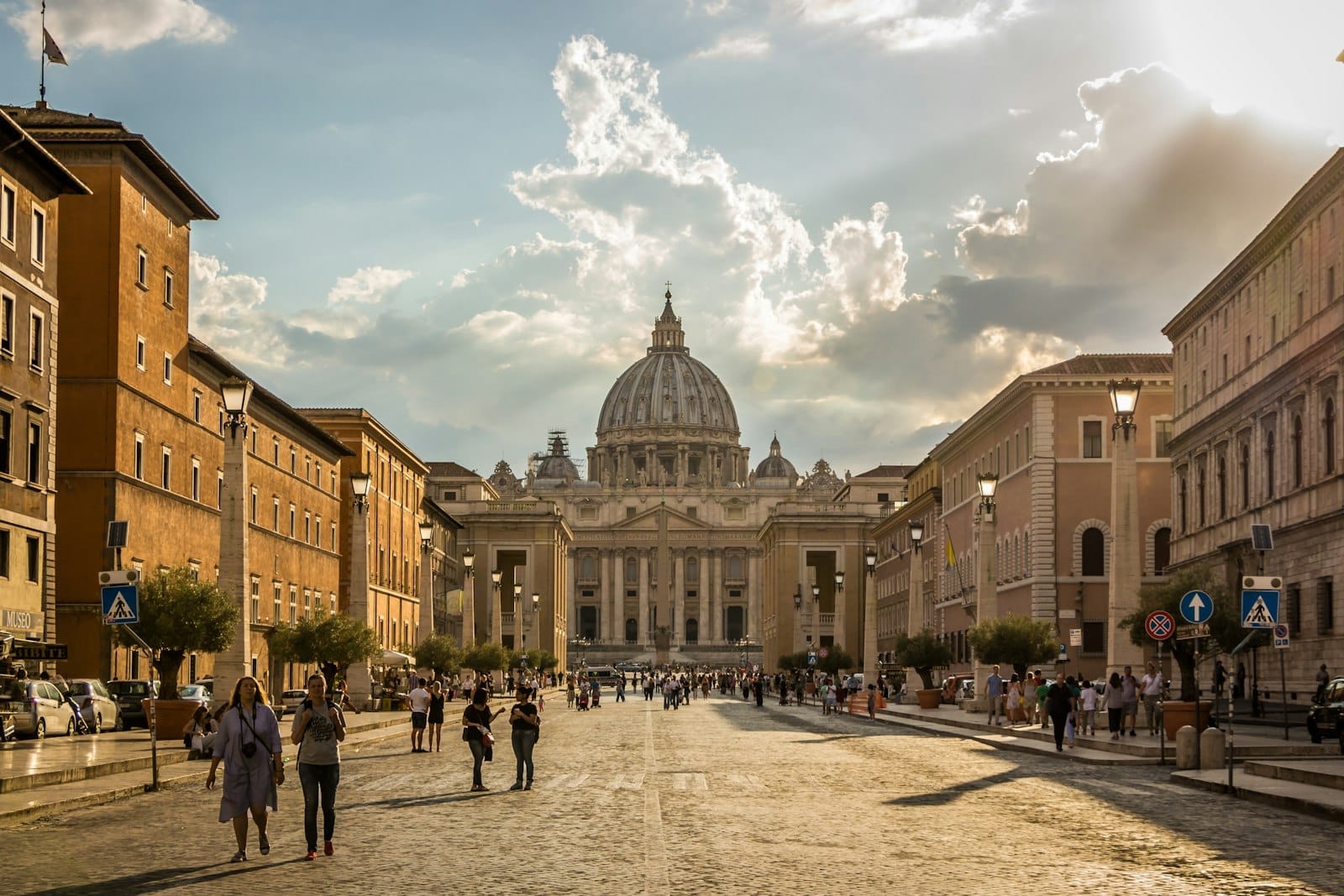
Rome's four major papal basilicas are in a league of their own for scale, significance, and sheer spectacle. St. Peter's sits in Vatican City (technically its own state), while the other three are spread across Rome. Together they form the backbone of any serious church itinerary. For a deeper dive into the Vatican area, see our guide to the Vatican neighborhood.
1. Climb Michelangelo's Dome at St. Peter's Basilica
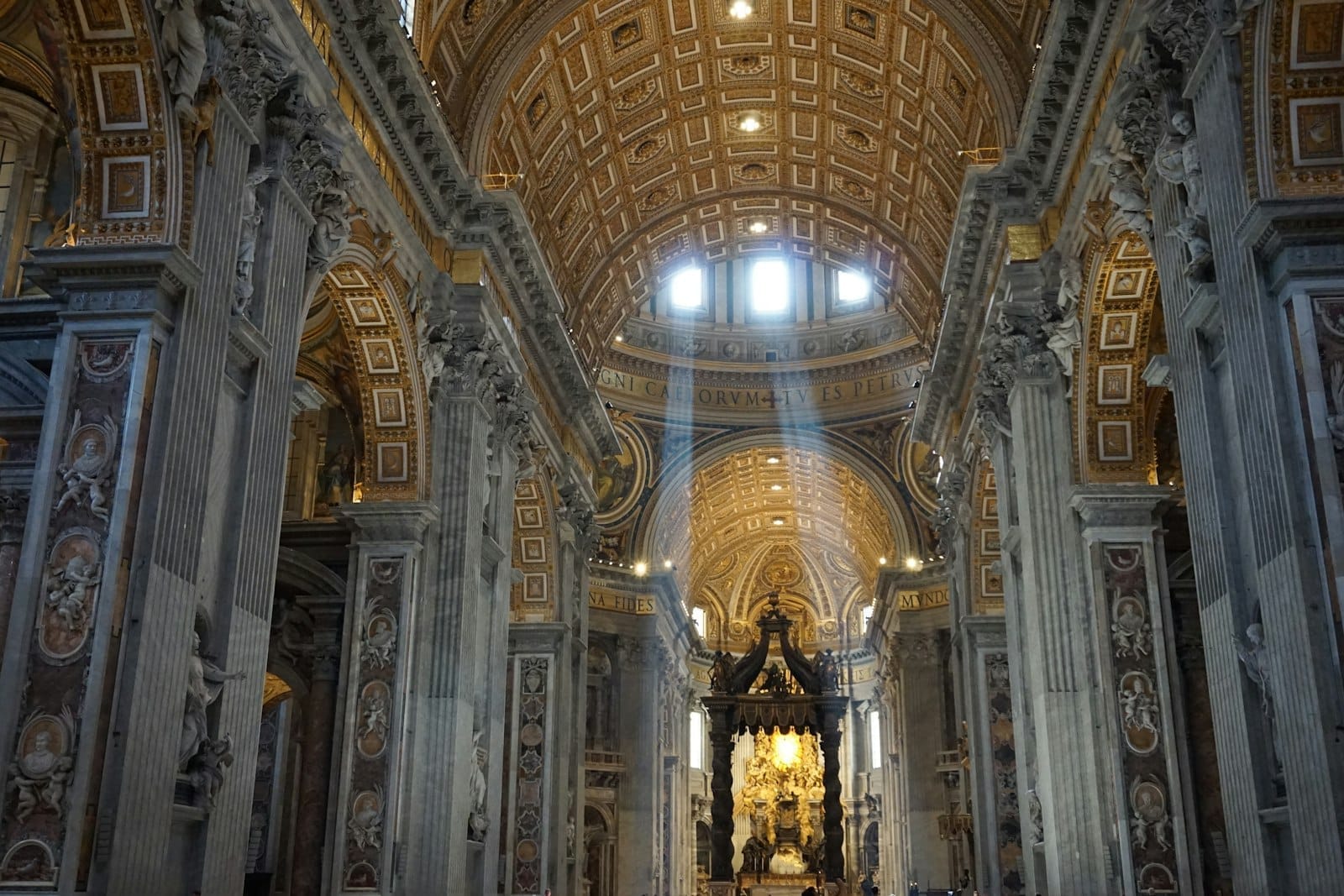
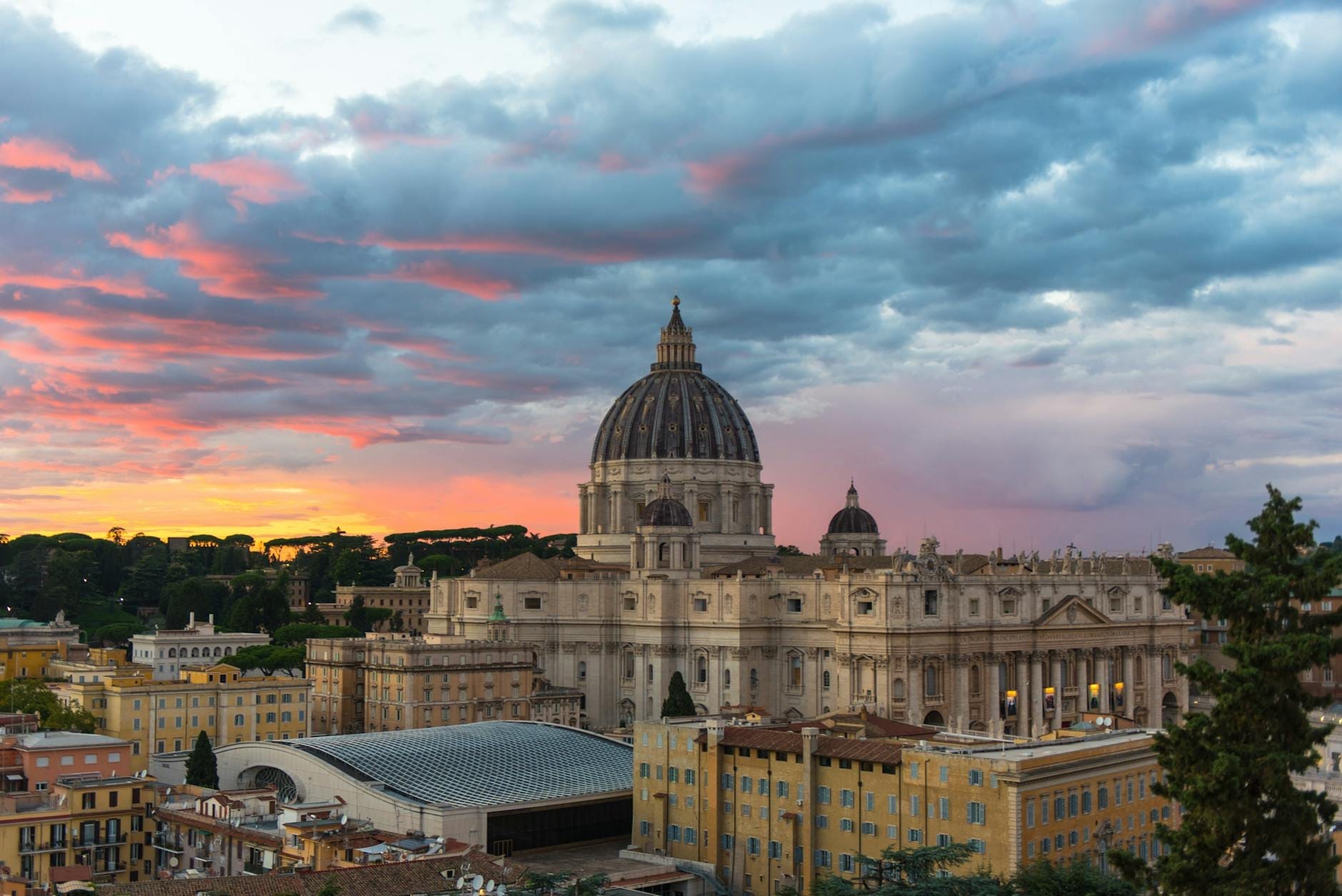
The world's largest church holds Michelangelo's Pietà, Bernini's towering bronze baldachin, and Peter's tomb beneath the altar. The dome climb rewards with Rome's finest elevated view. Go early — lines for security build fast by 9 AM.
Explore1. Climb Michelangelo's Dome at St. Peter's Basilica
The world's largest church holds Michelangelo's Pietà, Bernini's towering bronze baldachin, and Peter's tomb beneath the altar. The dome climb rewards with Rome's finest elevated view. Go early — lines for security build fast by 9 AM.
Explore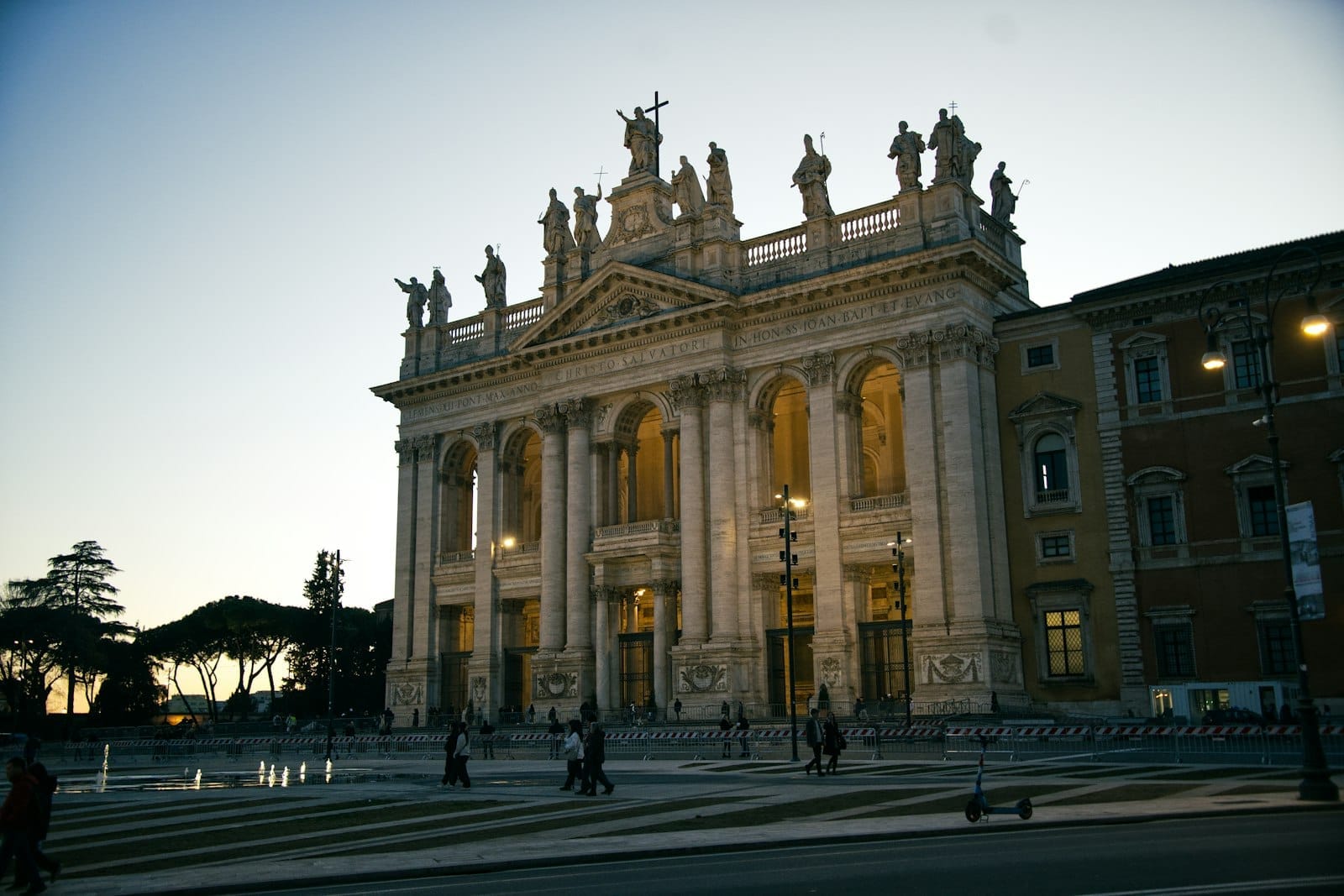
2. Visit Rome's True Cathedral at San Giovanni in Laterano
St. Peter's gets the crowds, but this is Rome's actual cathedral and the Pope's seat as Bishop of Rome. Borromini's soaring Baroque interior is stunning, and the adjacent Lateran Palace adds another layer of history. Far fewer tourists than St. Peter's.
Explore2. Visit Rome's True Cathedral at San Giovanni in Laterano
St. Peter's gets the crowds, but this is Rome's actual cathedral and the Pope's seat as Bishop of Rome. Borromini's soaring Baroque interior is stunning, and the adjacent Lateran Palace adds another layer of history. Far fewer tourists than St. Peter's.
Explore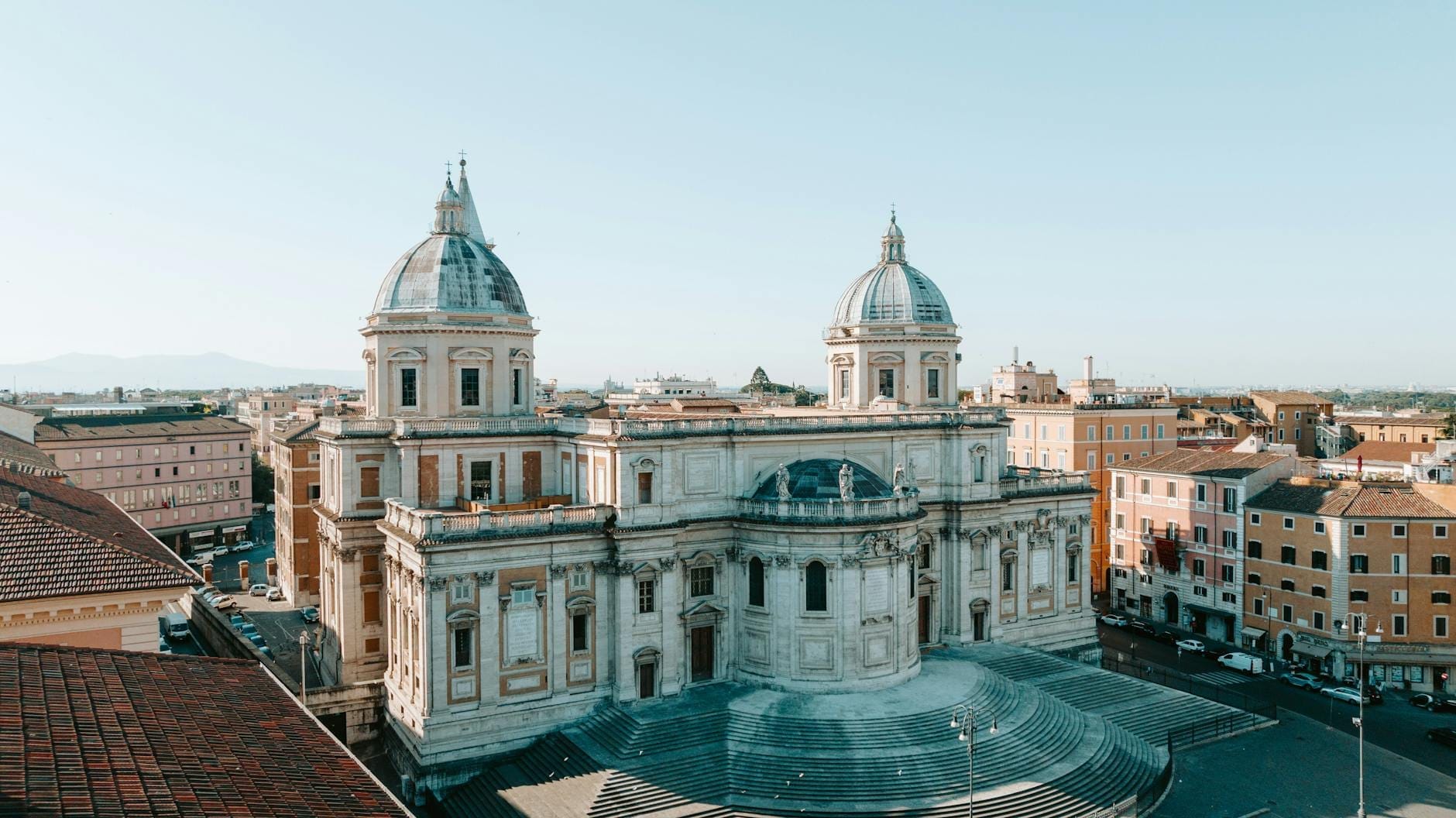
3. See Rome's Finest Early Christian Mosaics at Santa Maria Maggiore
The largest church dedicated to the Virgin Mary contains 5th-century apse mosaics that rank among the most important early Christian art in existence. The gilded ceiling, reputedly covered with the first gold brought from the Americas, is equally spectacular.
Explore3. See Rome's Finest Early Christian Mosaics at Santa Maria Maggiore
The largest church dedicated to the Virgin Mary contains 5th-century apse mosaics that rank among the most important early Christian art in existence. The gilded ceiling, reputedly covered with the first gold brought from the Americas, is equally spectacular.
ExploreAncient Wonders Repurposed as Churches
Some of Rome's most extraordinary sacred spaces began as something else entirely — pagan temples, imperial bath complexes, and ancient stadiums converted over centuries into Christian churches. These layered sites sit at the intersection of ancient and medieval Rome. The ancient Rome district and the Monti neighborhood are where most of these conversions cluster.
4. Stand Beneath the Greatest Dome Ever Built at the Pantheon
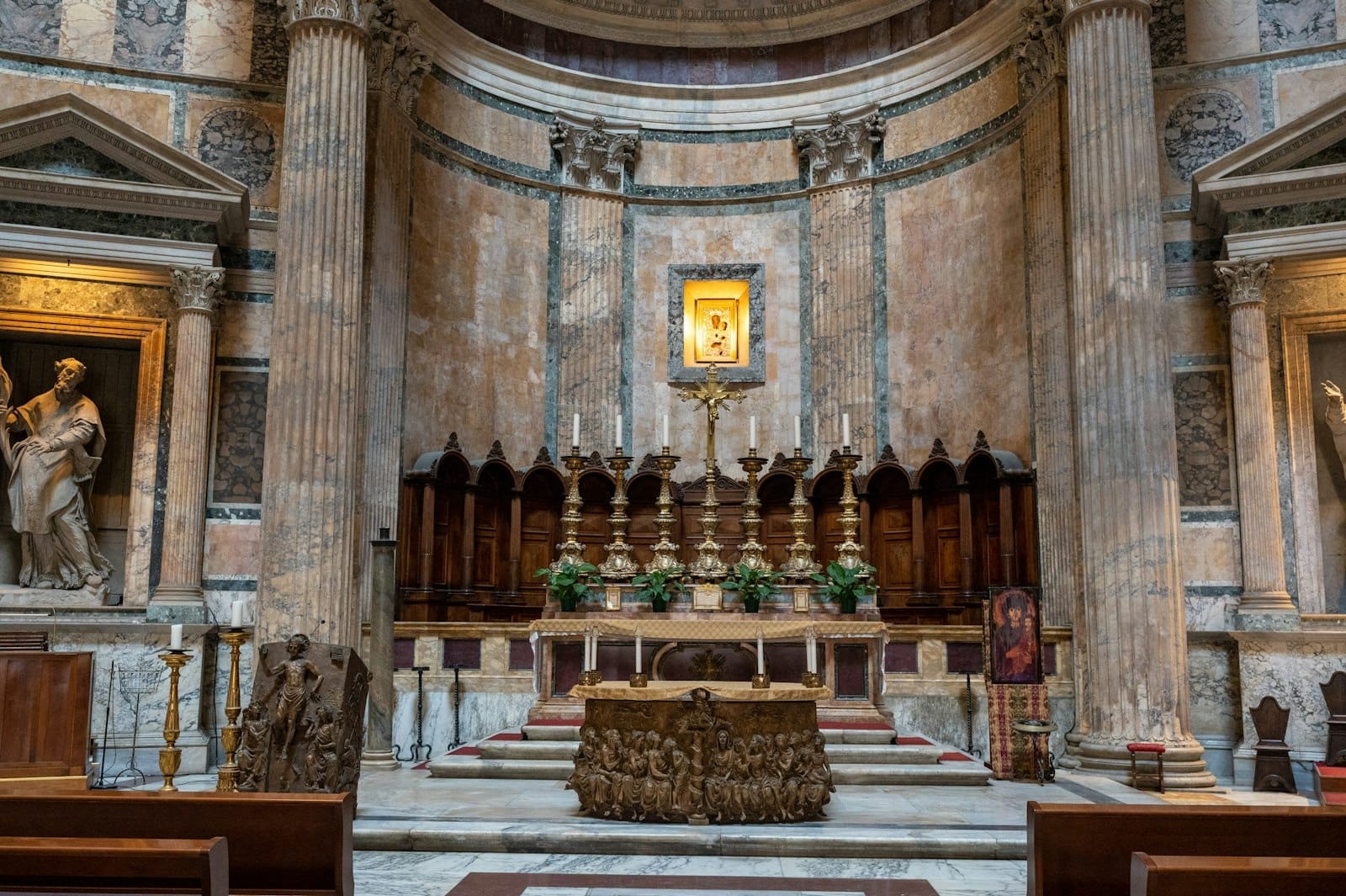
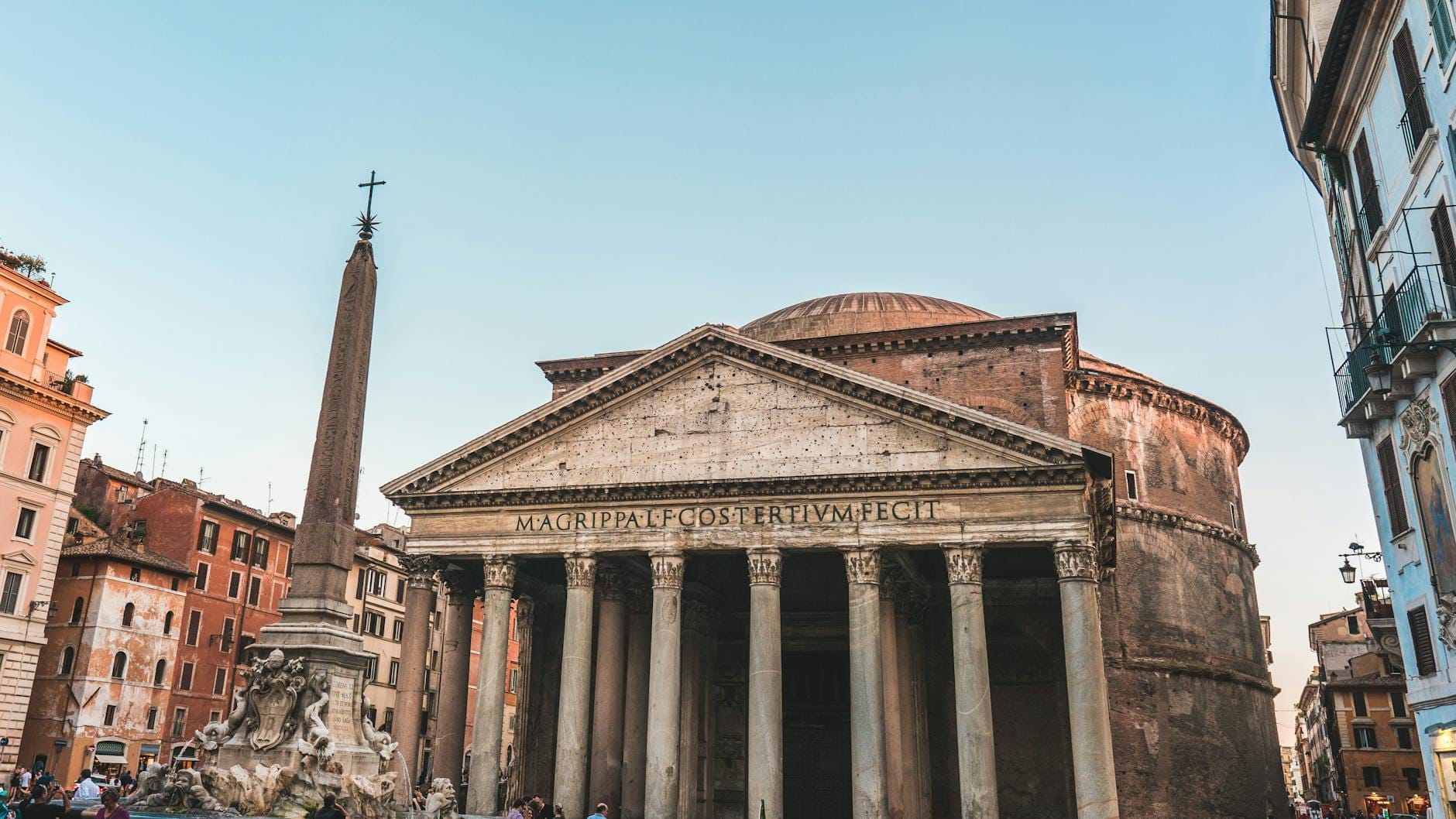
Officially Santa Maria ad Martyres, the Pantheon has been a church since 609 AD, though its unreinforced concrete dome was cast around 125 AD. The oculus — 8.7 metres wide, open to the sky — remains the most perfect architectural element in Rome. Book tickets online to skip the queue.
Explore4. Stand Beneath the Greatest Dome Ever Built at the Pantheon
Officially Santa Maria ad Martyres, the Pantheon has been a church since 609 AD, though its unreinforced concrete dome was cast around 125 AD. The oculus — 8.7 metres wide, open to the sky — remains the most perfect architectural element in Rome. Book tickets online to skip the queue.
Explore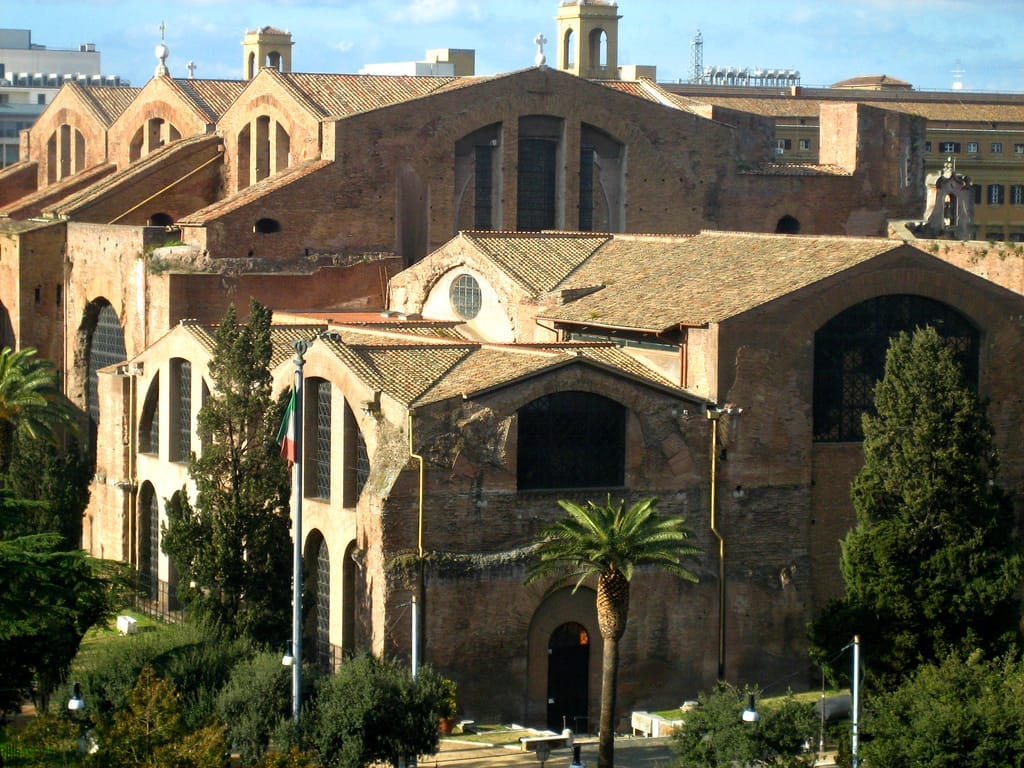
5. Walk Through Michelangelo's Conversion of the Baths of Diocletian
Michelangelo transformed the frigidarium of Rome's largest ancient bath complex into the Basilica of Santa Maria degli Angeli. The scale is breathtaking: massive granite columns still in their original Roman positions, repurposed inside a working church. Admission is free.
Explore5. Walk Through Michelangelo's Conversion of the Baths of Diocletian
Michelangelo transformed the frigidarium of Rome's largest ancient bath complex into the Basilica of Santa Maria degli Angeli. The scale is breathtaking: massive granite columns still in their original Roman positions, repurposed inside a working church. Admission is free.
Explore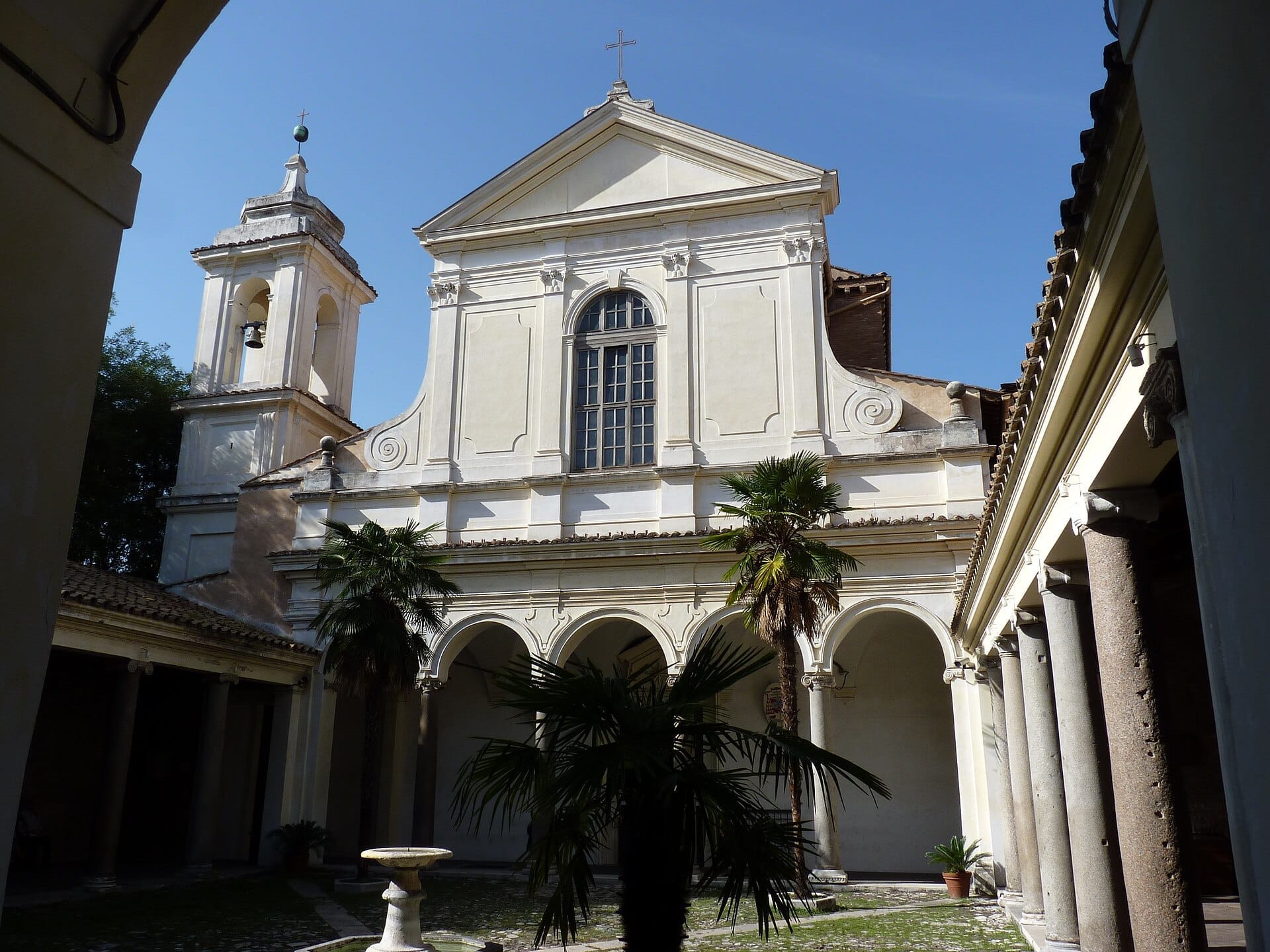
6. Descend Three Layers of History at San Clemente Basilica
A 12th-century basilica sits above a 4th-century church, which sits above a 1st-century Mithraic temple. The descent through 2,000 years of Rome in a single building is genuinely mind-bending. Budget at least 90 minutes and pay the small admission for the lower levels.
Explore6. Descend Three Layers of History at San Clemente Basilica
A 12th-century basilica sits above a 4th-century church, which sits above a 1st-century Mithraic temple. The descent through 2,000 years of Rome in a single building is genuinely mind-bending. Budget at least 90 minutes and pay the small admission for the lower levels.
ExploreRenaissance and Baroque Masterpieces
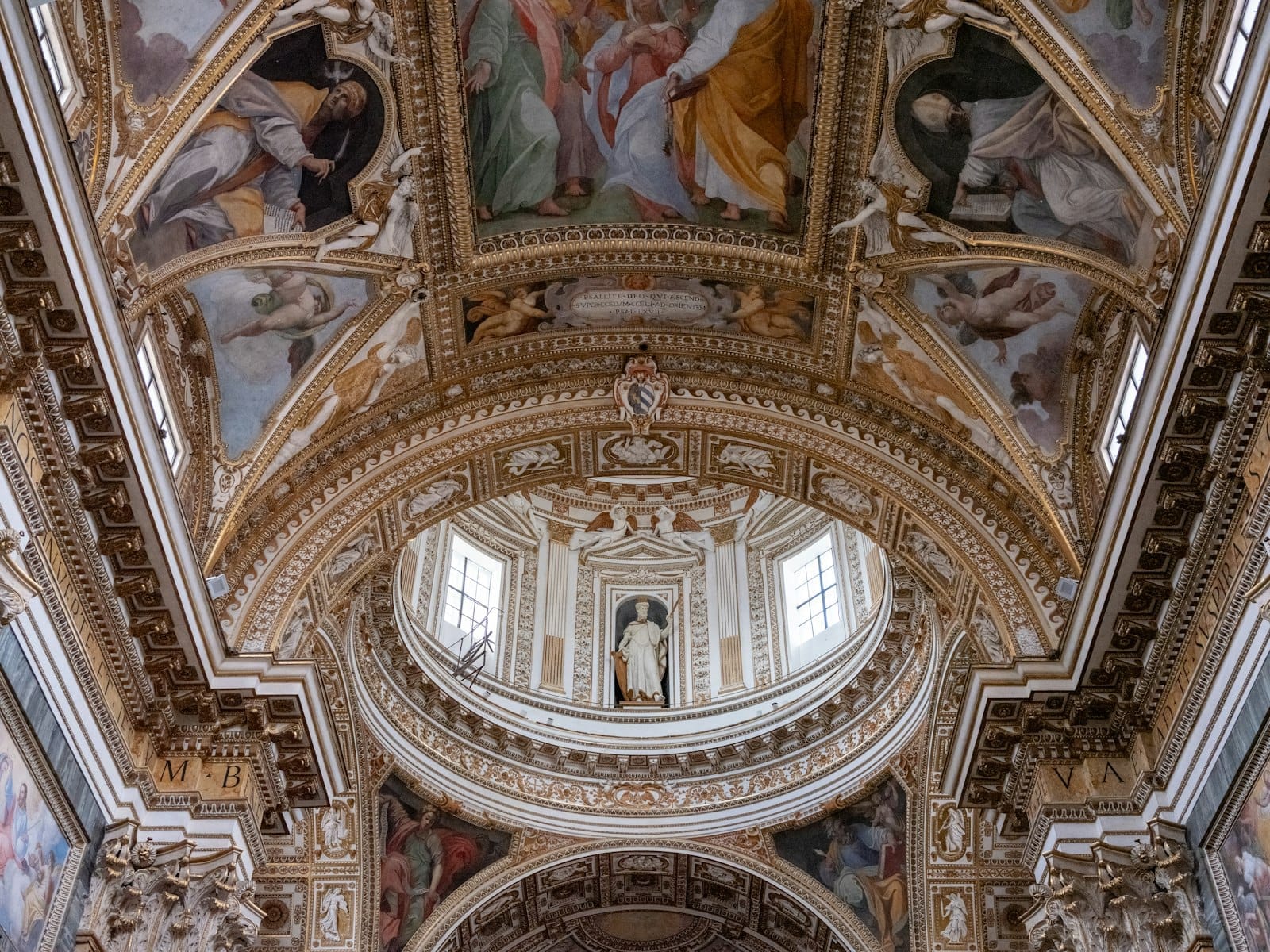
The 16th and 17th centuries produced Rome's most theatrical churches — spaces designed not just for worship but to overwhelm the senses with art, gilding, and architectural illusion. Many of the greatest Caravaggio and Michelangelo works in Rome are not in museums but in churches, free to see. Our guide to the best museums in Rome covers the paid collections, but the churches below are where you'll find equally important works at no cost.
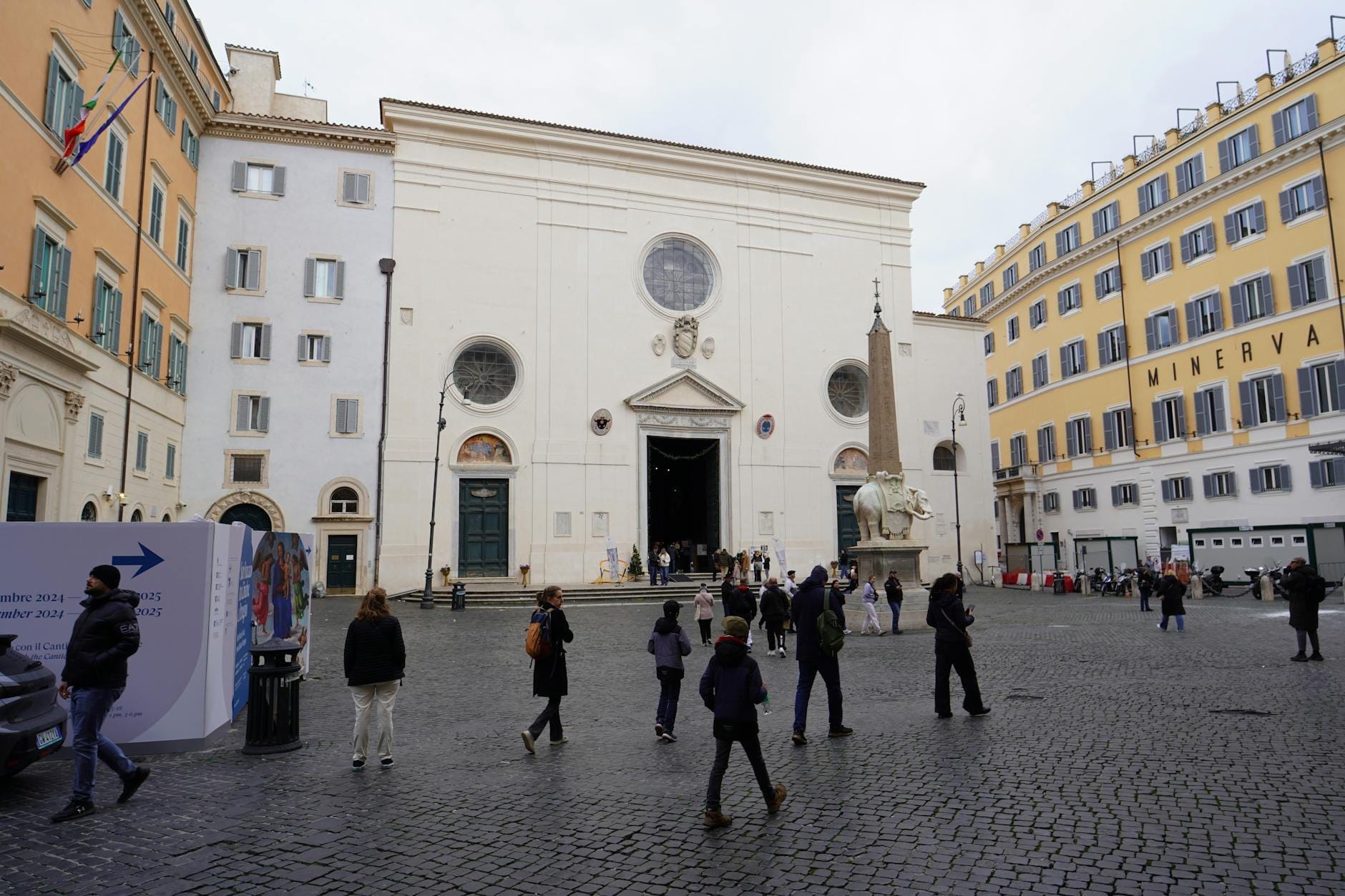
7. Find Michelangelo, Fra Angelico, and Caravaggio in One Gothic Church
Rome's only Gothic church packs an extraordinary density of art: Michelangelo's Cristo della Minerva, Fra Angelico's tomb, Filippino Lippi frescoes, and the burial chapel of St. Catherine of Siena. Bernini's elephant obelisk stands outside. Steps from the Pantheon, yet far less crowded.
Explore7. Find Michelangelo, Fra Angelico, and Caravaggio in One Gothic Church
Rome's only Gothic church packs an extraordinary density of art: Michelangelo's Cristo della Minerva, Fra Angelico's tomb, Filippino Lippi frescoes, and the burial chapel of St. Catherine of Siena. Bernini's elephant obelisk stands outside. Steps from the Pantheon, yet far less crowded.
Explore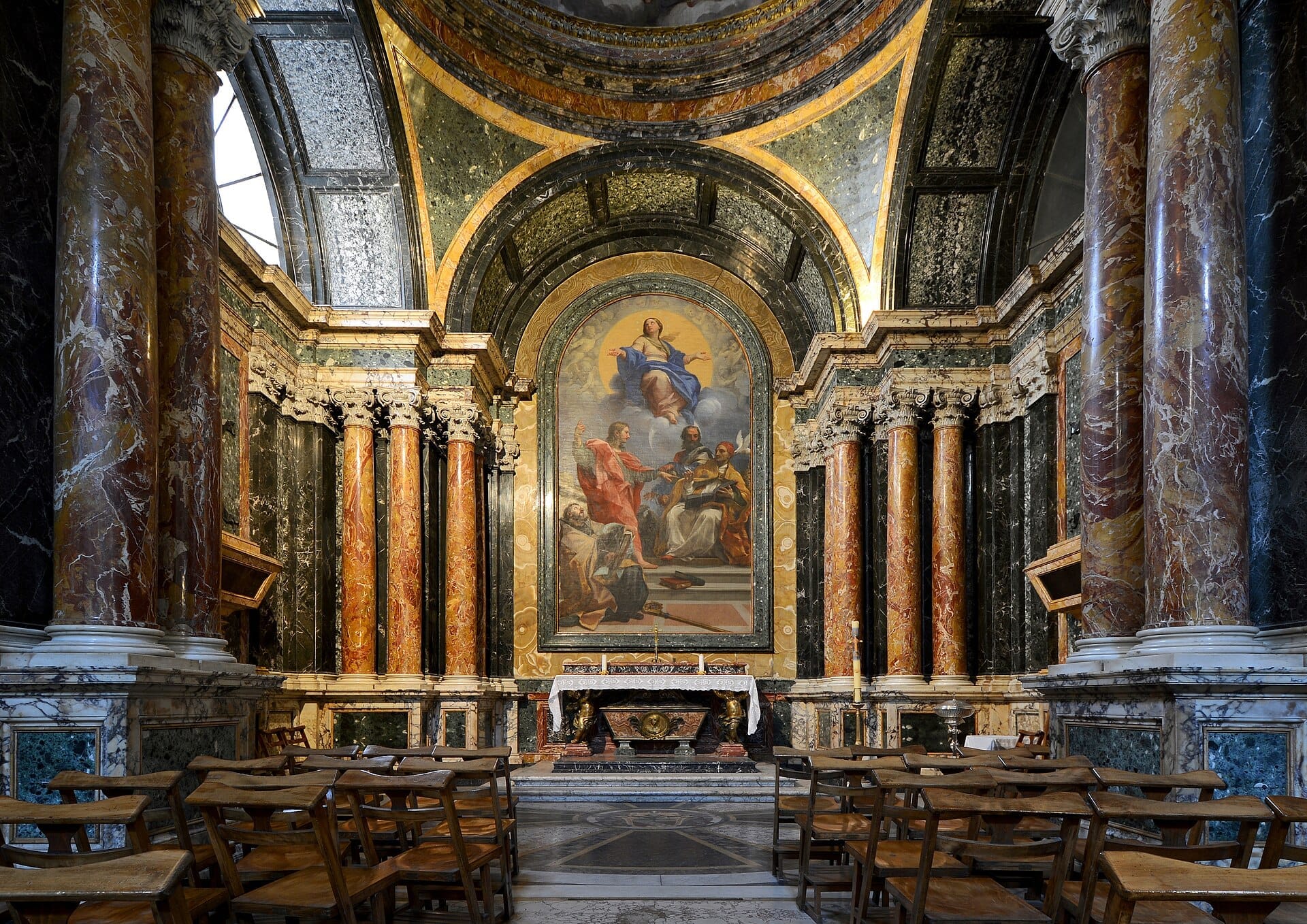
8. See Two Caravaggio Masterpieces at Santa Maria del Popolo
This Renaissance church on Piazza del Popolo contains The Conversion of Saint Paul and The Crucifixion of Saint Peter — two of Caravaggio's most revolutionary works, displayed in a single side chapel. The Chigi Chapel was designed by Raphael. Entry is free.
Explore8. See Two Caravaggio Masterpieces at Santa Maria del Popolo
This Renaissance church on Piazza del Popolo contains The Conversion of Saint Paul and The Crucifixion of Saint Peter — two of Caravaggio's most revolutionary works, displayed in a single side chapel. The Chigi Chapel was designed by Raphael. Entry is free.
Explore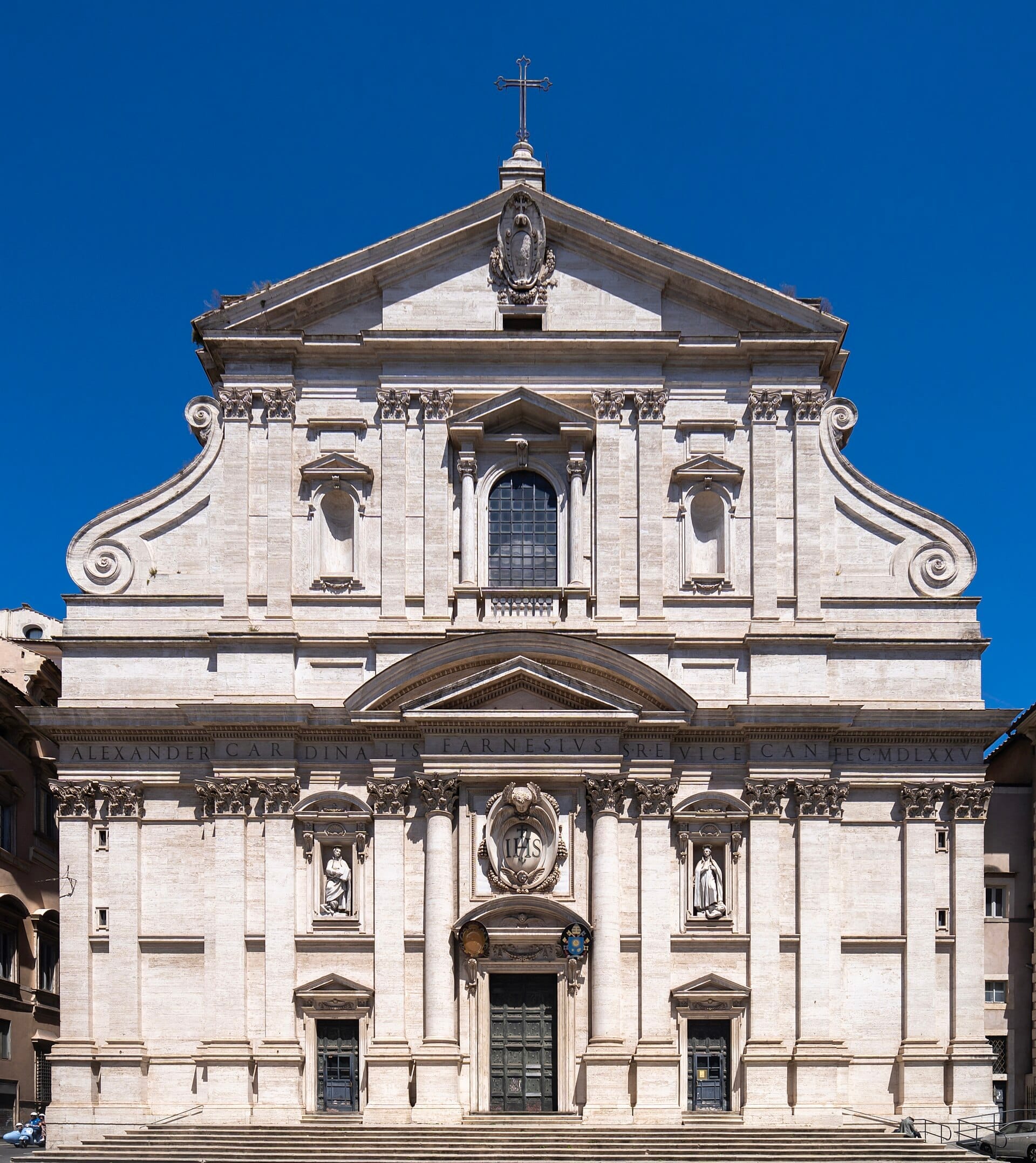
9. Experience the Baroque Illusion of the Gesù Church Ceiling
The mother church of the Jesuits pioneered the Baroque style that would spread across the Catholic world. Giovanni Battista Gaulli's trompe-l'œil ceiling fresco creates a breathtaking illusion of saints and angels bursting through the vault into open sky. Stand in the center of the nave to get the full effect.
Explore9. Experience the Baroque Illusion of the Gesù Church Ceiling
The mother church of the Jesuits pioneered the Baroque style that would spread across the Catholic world. Giovanni Battista Gaulli's trompe-l'œil ceiling fresco creates a breathtaking illusion of saints and angels bursting through the vault into open sky. Stand in the center of the nave to get the full effect.
Explore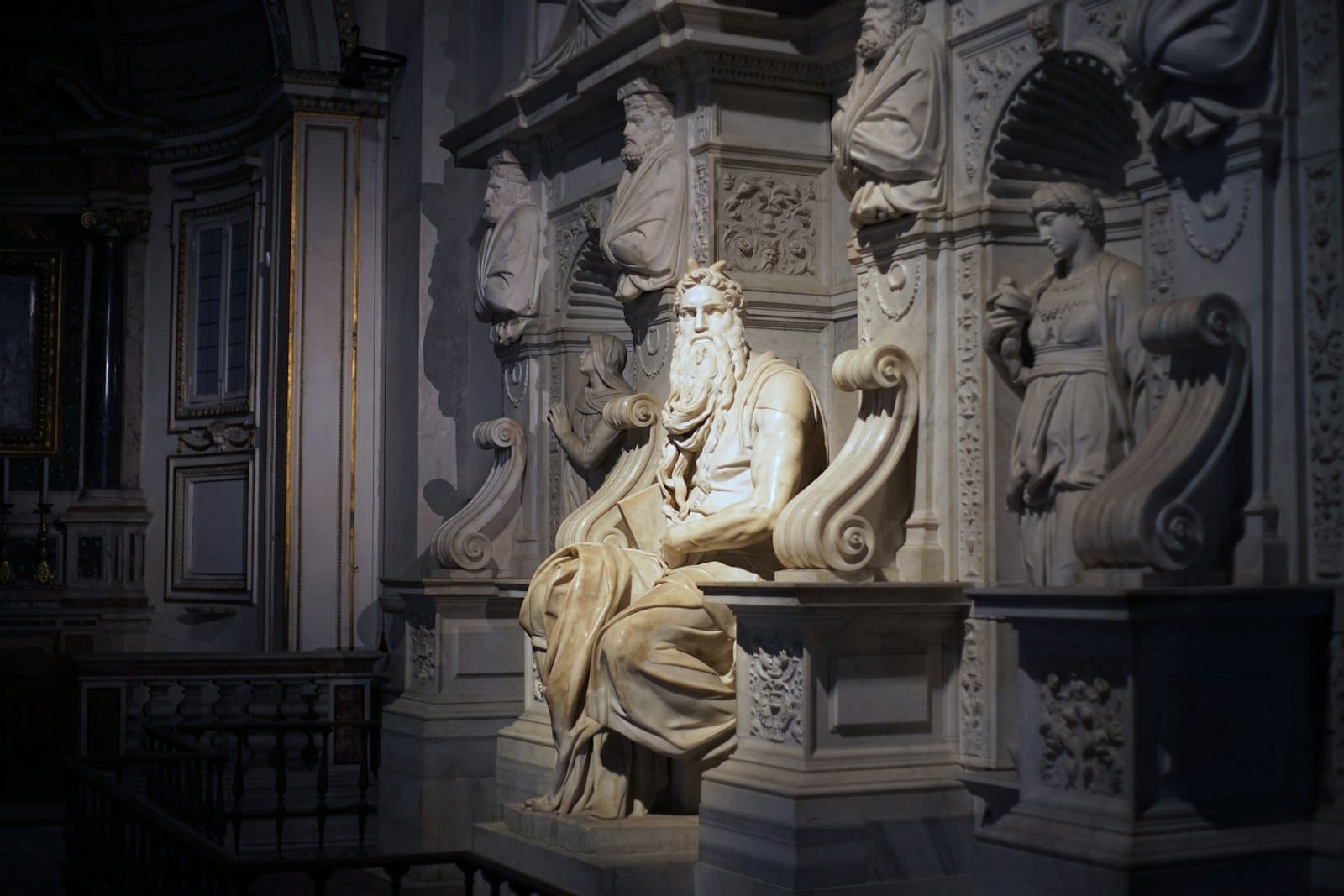
10. Come Face to Face with Michelangelo's Moses at San Pietro in Vincoli
This 5th-century basilica near the Colosseum exists, for most visitors, as the home of one thing: Michelangelo's Moses. The statue's veined marble, furrowed brow, and curling beard are among the most powerful details in all of Renaissance sculpture. The chains of St. Peter are preserved beneath the altar.
Explore10. Come Face to Face with Michelangelo's Moses at San Pietro in Vincoli
This 5th-century basilica near the Colosseum exists, for most visitors, as the home of one thing: Michelangelo's Moses. The statue's veined marble, furrowed brow, and curling beard are among the most powerful details in all of Renaissance sculpture. The chains of St. Peter are preserved beneath the altar.
ExploreMedieval Gems Worth Seeking Out
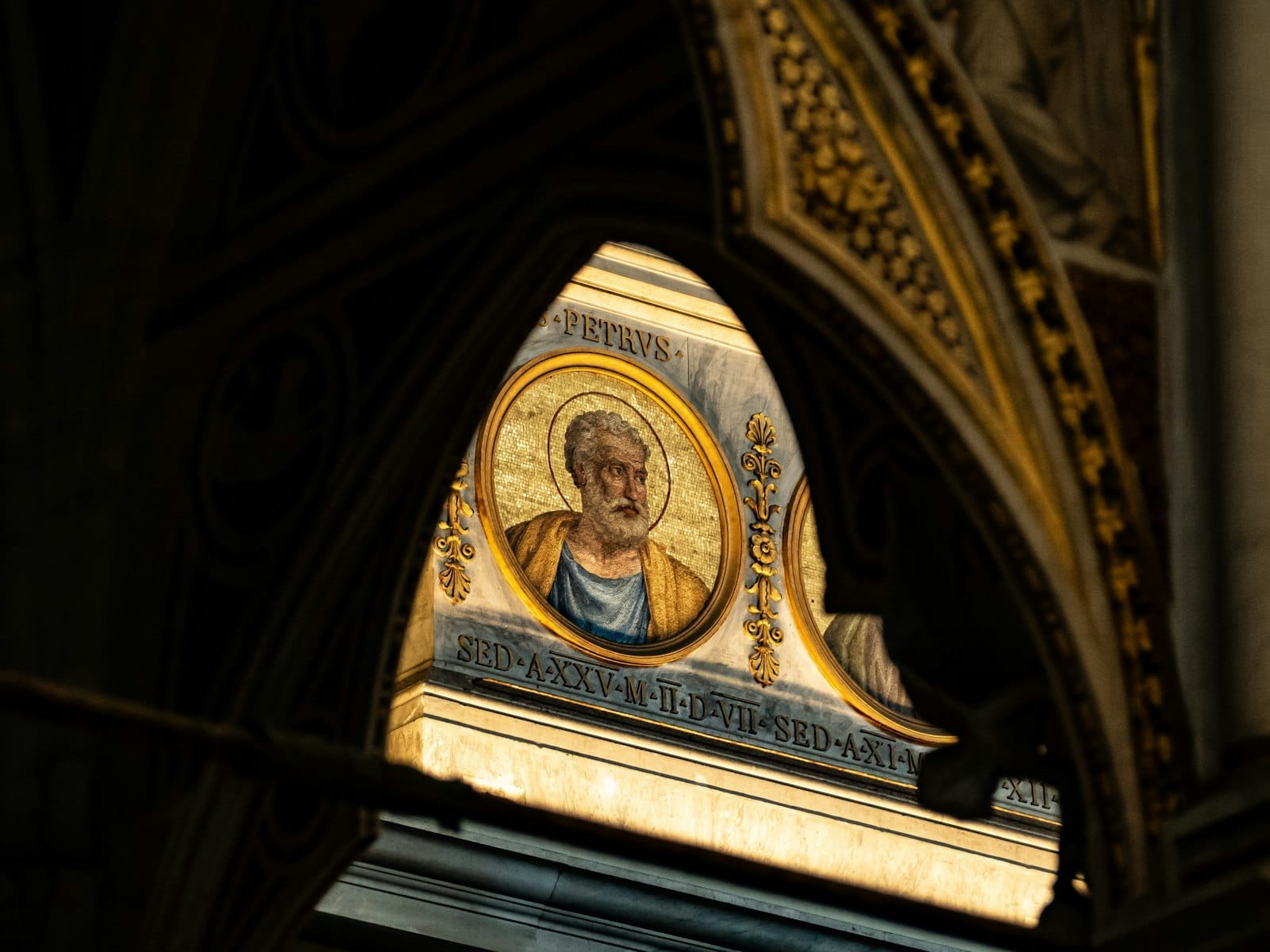
Beyond the famous Baroque interiors, Rome preserves several medieval churches of extraordinary beauty, especially for their mosaics. These are quieter, more contemplative spaces that reward travelers willing to venture slightly off the main circuit. Trastevere is the natural base for this kind of exploration — see our guide to the Trastevere neighborhood for context.
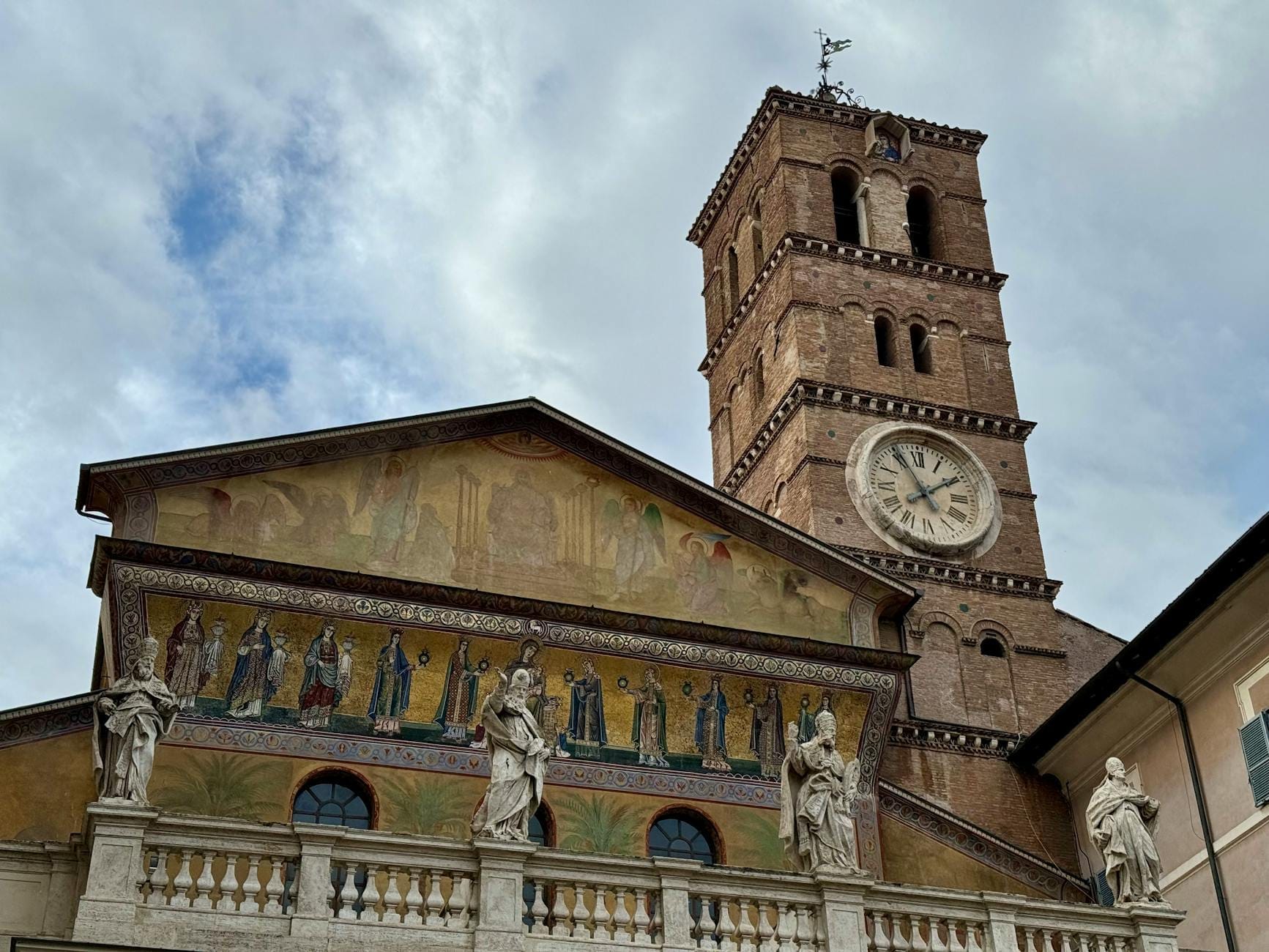
11. Marvel at Golden Mosaics at the Basilica di Santa Maria in Trastevere
One of Rome's oldest churches, this 12th-century basilica is a mosaic lover's pilgrimage. Pietro Cavallini's apse mosaics glow with Byzantine gold, and the medieval facade lights up beautifully at night. The fountain-centered piazza outside is the heart of Trastevere's daily life.
Explore11. Marvel at Golden Mosaics at the Basilica di Santa Maria in Trastevere
One of Rome's oldest churches, this 12th-century basilica is a mosaic lover's pilgrimage. Pietro Cavallini's apse mosaics glow with Byzantine gold, and the medieval facade lights up beautifully at night. The fountain-centered piazza outside is the heart of Trastevere's daily life.
ExploreChurches for Views and Special Experiences
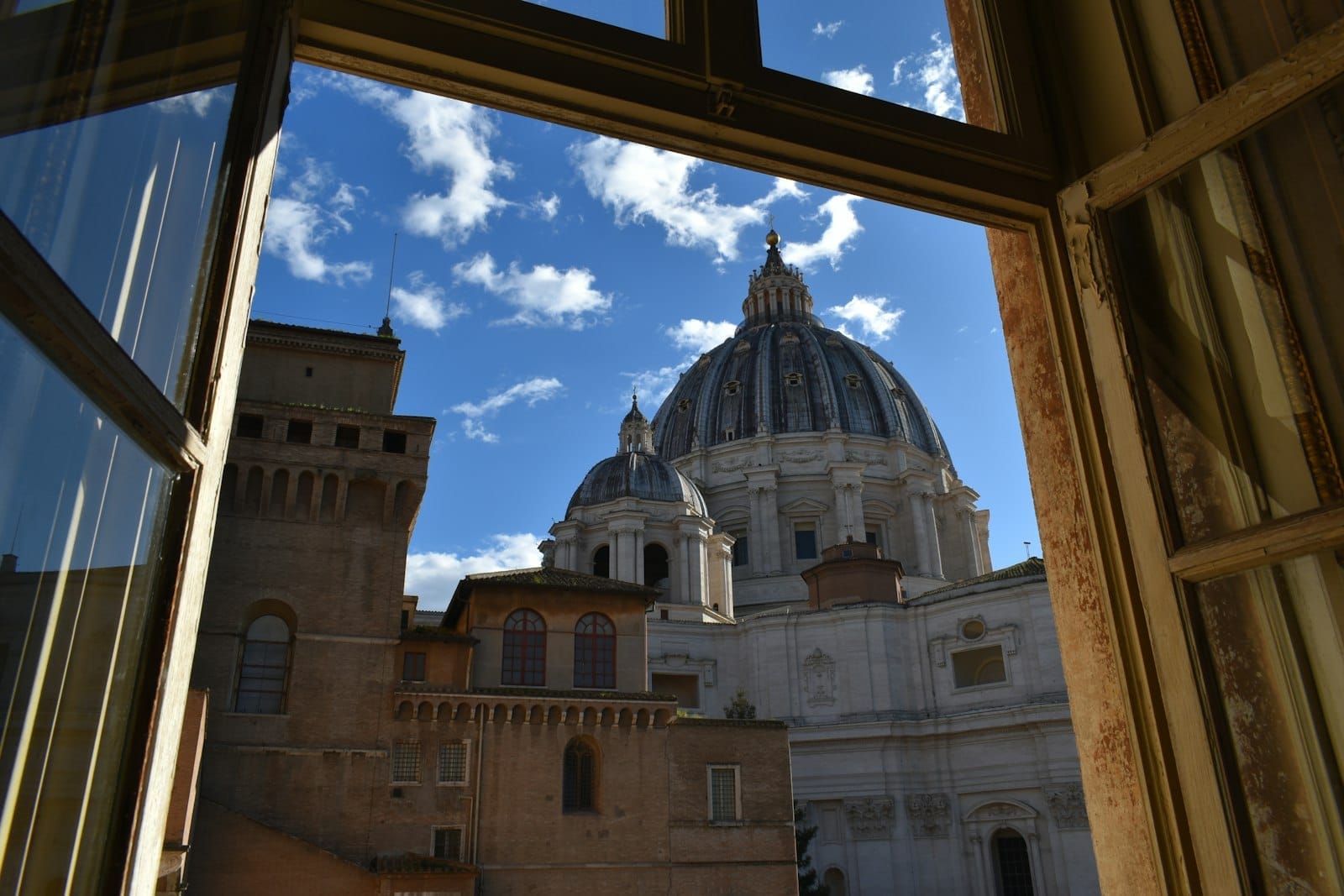
Some of Rome's churches are as much about where they sit as what they contain. These entries reward visitors with dramatic viewpoints, unexpected peepholes, or an atmosphere that goes beyond the art inside. For more elevated perspectives across the city, see our guide to the best views in Rome.
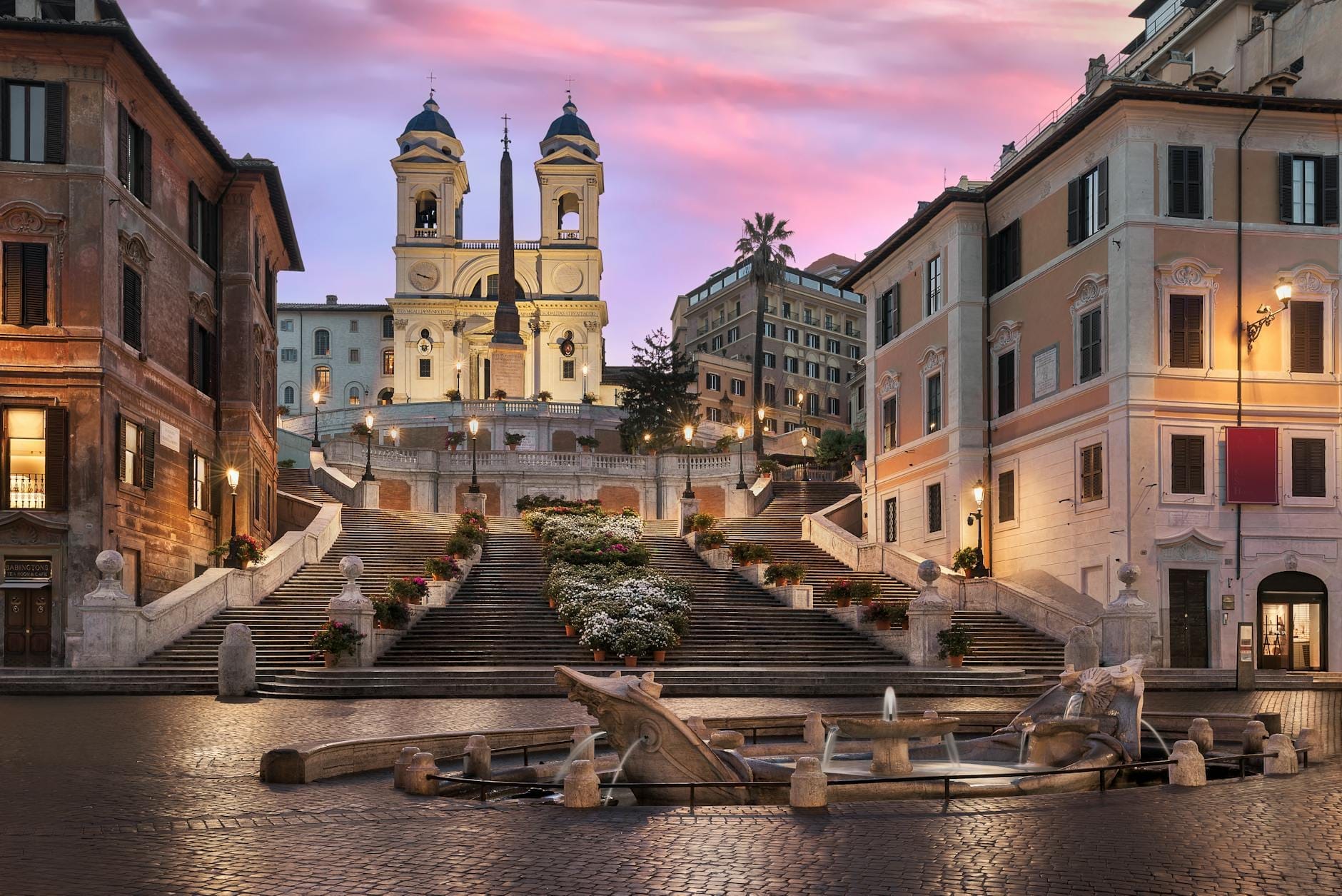
12. Survey the City from Trinità dei Monti Above the Spanish Steps
The twin-towered French church crowning the Spanish Steps contains important Mannerist frescoes that most visitors never see, being too busy photographing the view. The terrace in front gives a classic downward sweep over the Steps to Piazza di Spagna below. Free entry; check opening hours.
Explore12. Survey the City from Trinità dei Monti Above the Spanish Steps
The twin-towered French church crowning the Spanish Steps contains important Mannerist frescoes that most visitors never see, being too busy photographing the view. The terrace in front gives a classic downward sweep over the Steps to Piazza di Spagna below. Free entry; check opening hours.
Explore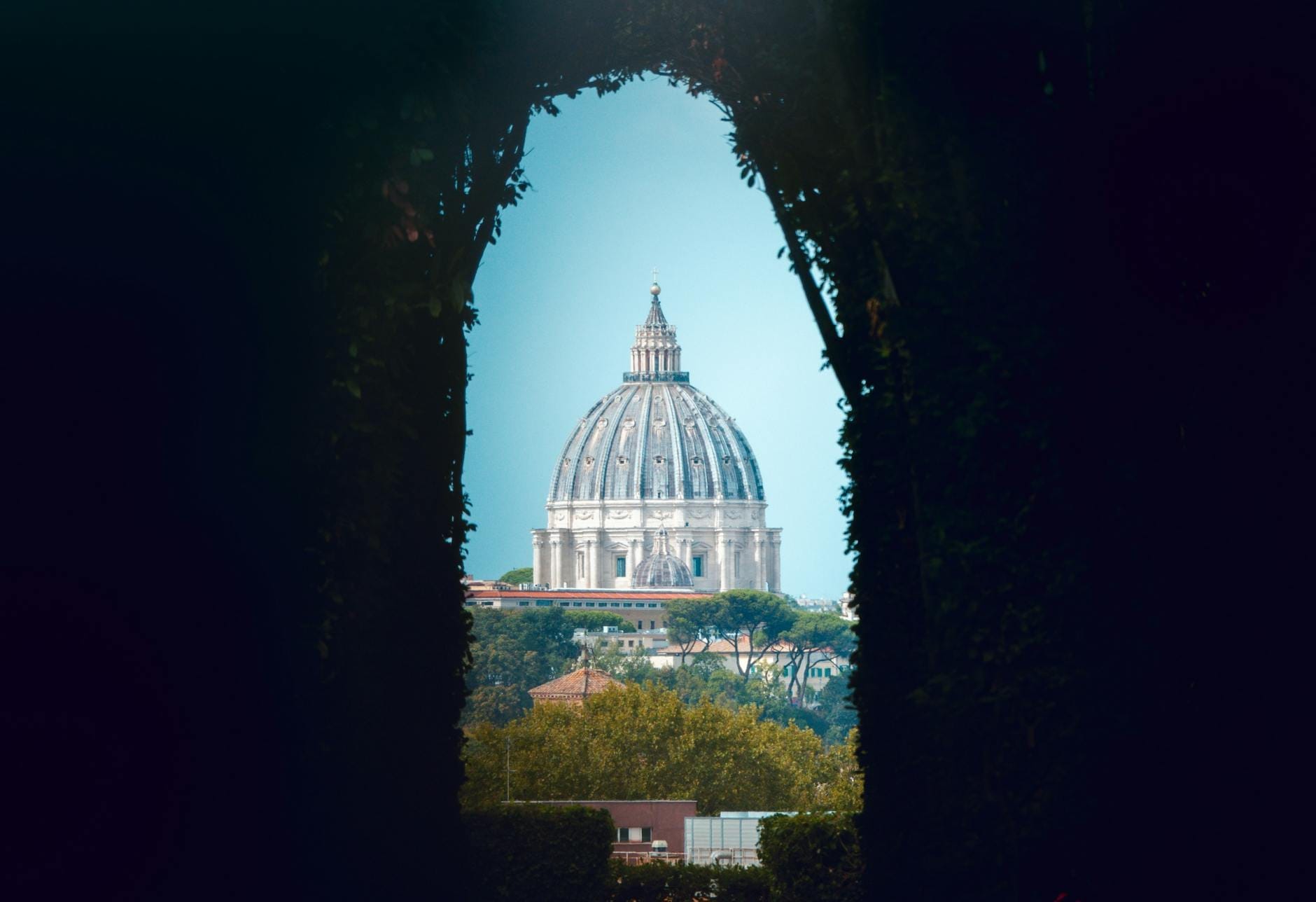
13. Frame St. Peter's Dome Through the Knights of Malta Keyhole
The priory gate of the Knights of Malta on Aventine Hill is not a church, but the view through its keyhole perfectly frames the dome of St. Peter's through three sovereign territories. It sits beside the garden of Sant'Alessio church and takes five minutes to visit. Always free, always magical.
Explore13. Frame St. Peter's Dome Through the Knights of Malta Keyhole
The priory gate of the Knights of Malta on Aventine Hill is not a church, but the view through its keyhole perfectly frames the dome of St. Peter's through three sovereign territories. It sits beside the garden of Sant'Alessio church and takes five minutes to visit. Always free, always magical.
Explore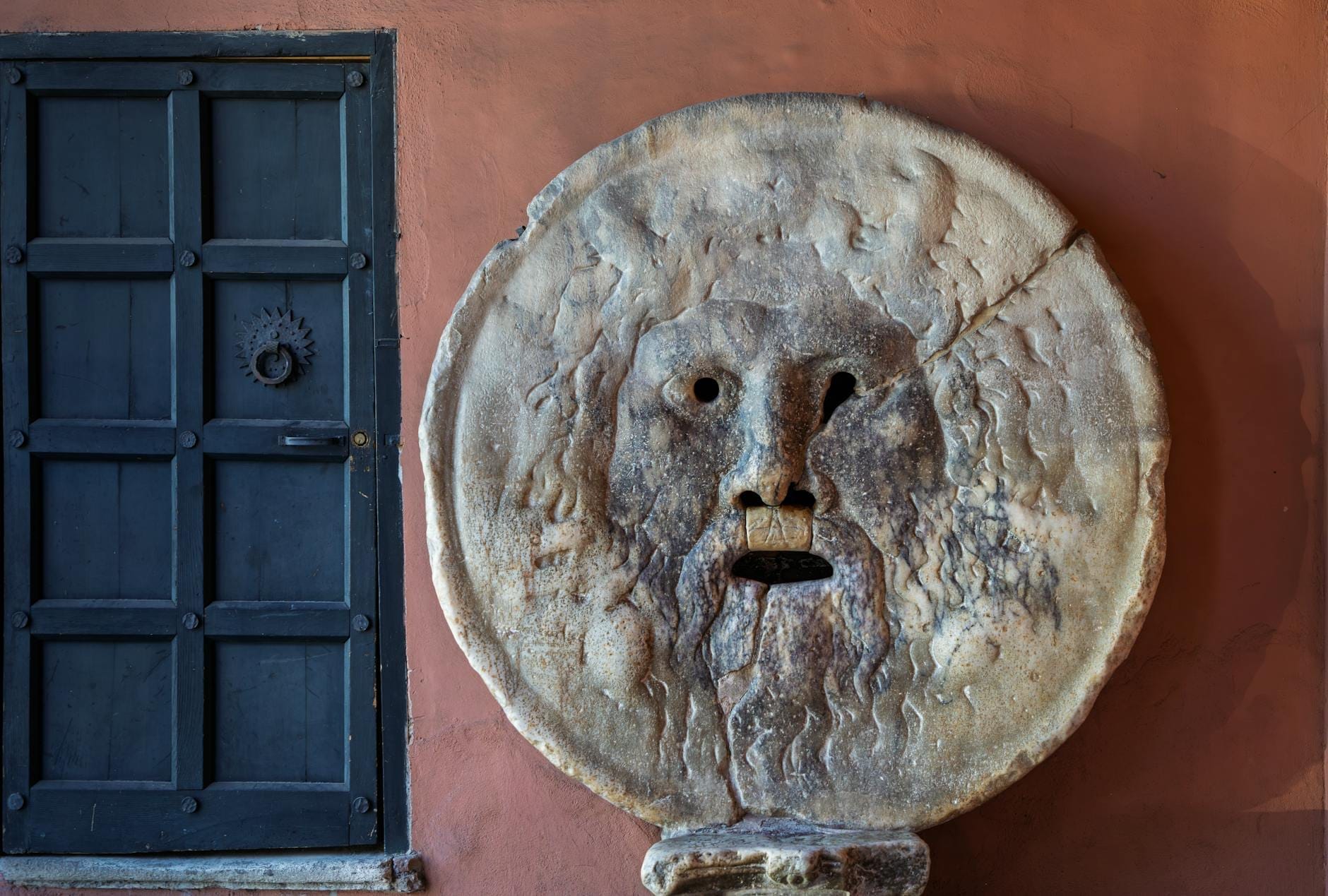
14. Visit the Ancient Marble Mask in the Portico of Santa Maria in Cosmedin
The famous Mouth of Truth marble disc lives in the portico of this 6th-century church — one of Rome's most beautifully preserved medieval interiors, with a striking Cosmatesque floor. Most visitors photograph the mask and leave, missing a quiet and remarkable church just steps away.
Explore14. Visit the Ancient Marble Mask in the Portico of Santa Maria in Cosmedin
The famous Mouth of Truth marble disc lives in the portico of this 6th-century church — one of Rome's most beautifully preserved medieval interiors, with a striking Cosmatesque floor. Most visitors photograph the mask and leave, missing a quiet and remarkable church just steps away.
Explore✨ Pro tip
Visit St. Peter's Square at night, once the crowds have cleared. Bernini's colonnade is lit beautifully, and you'll have the piazza almost to yourself — one of the most atmospheric experiences in Rome.
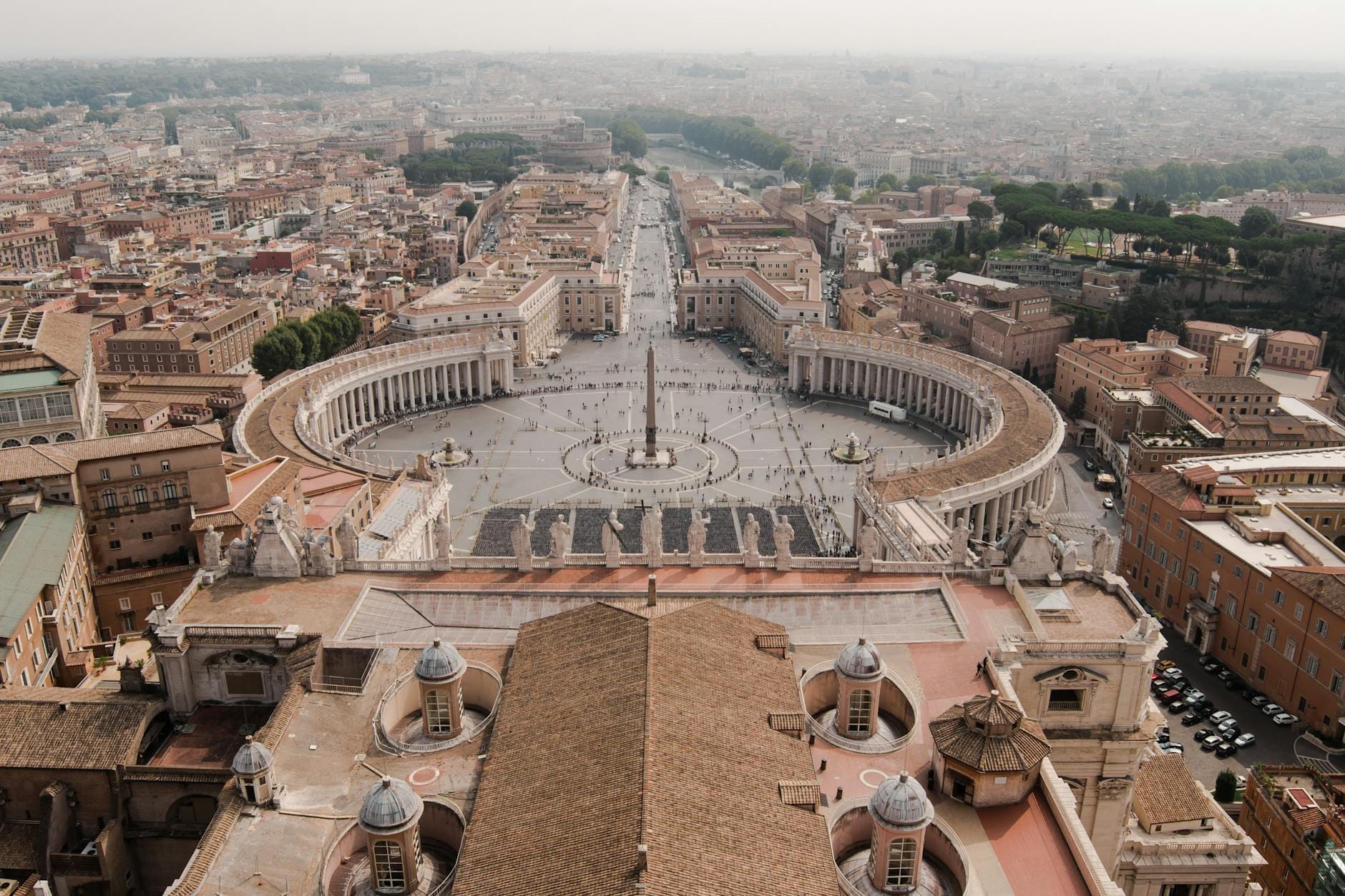
15. Experience the Scale of Bernini's Piazza at St. Peter's Square
Bernini's elliptical colonnade — 284 columns, 140 saints, one Egyptian obelisk — frames the approach to St. Peter's Basilica in one of architecture's great set pieces. It's free to enter at any hour and transforms completely at night when the crowds leave.
Explore15. Experience the Scale of Bernini's Piazza at St. Peter's Square
Bernini's elliptical colonnade — 284 columns, 140 saints, one Egyptian obelisk — frames the approach to St. Peter's Basilica in one of architecture's great set pieces. It's free to enter at any hour and transforms completely at night when the crowds leave.
ExploreFAQ
Which is Rome's most important church?
Technically, San Giovanni in Laterano is Rome's most important church — it is the Pope's cathedral as Bishop of Rome and outranks St. Peter's in ecclesiastical terms. St. Peter's Basilica is far more visited and famous, but it sits in Vatican City, a separate sovereign state, not Rome itself.
Do you need to book tickets to visit churches in Rome?
Most churches are free and require no booking. The Pantheon now charges a €5 entry fee (book online to avoid queues). The Vatican Museums and Sistine Chapel require advance booking. The dome climb at St. Peter's Basilica is ticketed but can be purchased on arrival.
What should I wear to visit churches in Rome?
Cover your shoulders and knees for all church visits in Rome — this is strictly enforced at St. Peter's Basilica and most major churches. Carry a scarf or light cardigan in summer. Sleeveless tops and shorts above the knee will get you turned away.
When is the best time to visit the main churches to avoid crowds?
Arrive before 9 AM for St. Peter's Basilica and the Pantheon, especially in summer. Most churches are significantly quieter in the late afternoon (after 3:30 PM) when tour groups have moved on. Avoid Sunday mornings if you want to browse rather than attend Mass.
Which Roman churches have the best Caravaggio paintings?
Santa Maria del Popolo has two outstanding Caravaggio works in a single chapel: The Conversion of Saint Paul and The Crucifixion of Saint Peter. The church of San Luigi dei Francesi (not in this guide's slug list but near the Pantheon) has three more, including The Calling of Saint Matthew. Both are free to visit.
Tickets & tours
Live prices and dates from our booking partner. If you book, we may earn a commission at no extra cost to you.
Planning a trip? Discover personalized activities with the Nomado app.