Gesù Church (Chiesa del Gesù): Rome's First and Most Theatrical Jesuit Church
The Chiesa del Santissimo Nome di Gesù is the mother church of the Jesuit order and one of the most influential Baroque buildings in the world. Free to enter and often overlooked by tourists racing between Piazza Navona and the Capitoline, it rewards those who slow down with one of Rome's most astonishing painted ceilings.
Quick Facts
- Location
- Piazza del Gesù, 00186 Rome (Centro Storico)
- Getting There
- Metro Line A: Barberini or Spagna; buses 60, 84, 85, 87, 175 to Piazza Venezia (5-10 min walk)
- Time Needed
- 30–60 minutes
- Cost
- Free entry; donations welcomed
- Best for
- Baroque architecture, religious history, Jesuit art, quiet midday escape
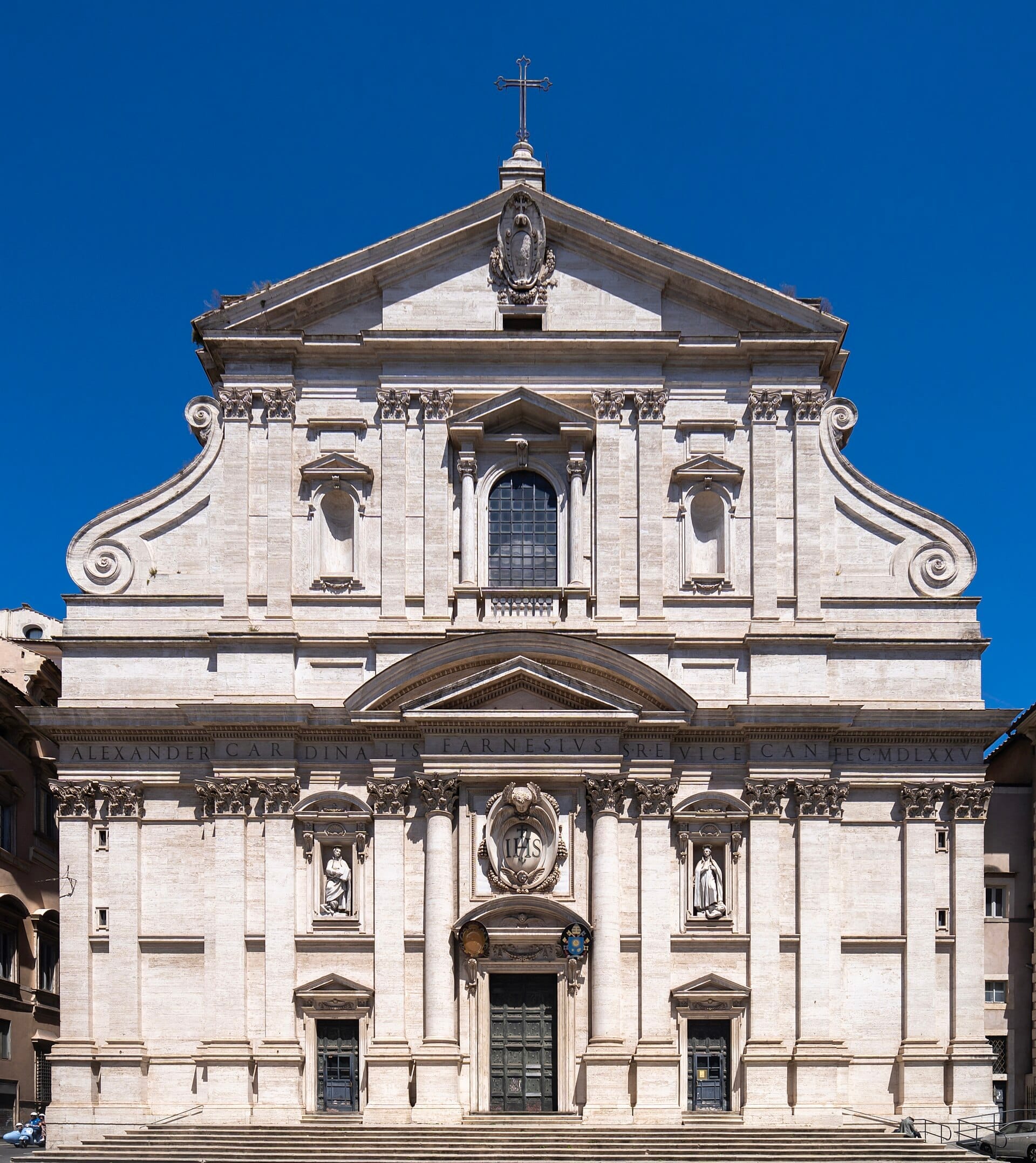
What Is the Gesù Church and Why Does It Matter?
The Chiesa del Santissimo Nome di Gesù (Church of the Most Holy Name of Jesus) is not merely a church. It is an architectural thesis statement. Built between 1568 and 1584, it was the first Jesuit church constructed in Rome and became the direct template for hundreds of Catholic churches built across Europe and Latin America over the following two centuries. If you have ever walked into a grand Baroque nave with a wide central aisle, side chapels instead of an ambulatory, and a ceiling that seems to dissolve into painted sky, you have experienced a layout that originates here.
The Jesuits, formally known as the Society of Jesus and founded by St. Ignatius of Loyola in 1540, needed a church that could function as a preaching hall: large enough for congregations to hear a sermon clearly, dramatic enough to inspire faith, and rich enough to project the authority of the Counter-Reformation. Architect Giacomo Barozzi da Vignola designed the nave and facade concept; Giacomo della Porta completed the facade in 1584. The result redefined European sacred architecture.
Sitting at Piazza del Gesù, the church occupies a position midway between the Capitoline Hill and the Campo de' Fiori area, making it easy to fold into a longer walk through the historic center. Despite its historical importance, it draws a fraction of the queues that form at the Pantheon or Trevi Fountain, which is both a practical advantage and a quiet testament to how thoroughly it has been overlooked by mainstream tourism.
The Ceiling: What You Will Actually See Inside
Enter through the main doors on Piazza del Gesù and stop immediately after stepping inside. Turn your eyes upward. The ceiling fresco, titled 'The Triumph of the Name of Jesus,' was painted by Giovanni Battista Gaulli (known as Baciccia) between 1676 and 1679. It is among the most technically ambitious ceiling paintings of the Baroque era. Gaulli blurred the boundary between painted surface and three-dimensional stucco figures: painted figures appear to spill out of the frame and over the gilded architectural borders, creating an illusion that the boundary between heaven and the physical nave has dissolved.
At the center of the composition, a golden burst of light surrounds the monogram IHS (the Jesuit symbol for the name of Jesus). Around it, figures of the blessed rise toward the light while the damned tumble downward in theatrical foreshortening. Spend a few minutes letting your eyes adjust to the depth of the illusion. Tilting your head back this far for more than a couple of minutes will strain your neck, but it is worth the discomfort.
💡 Local tip
Bring or rent a small mirror (some visitors bring compact mirrors) to view the ceiling without craning your neck for extended periods. There are often benches along the nave walls where you can sit and look up more comfortably.
The side chapels deserve equal attention. The Chapel of St. Ignatius, in the left transept, is one of the most ornate in Rome. It was built between 1696 and 1700 and houses the tomb of Ignatius of Loyola. The altar features a rotating statue: on most days the silver statue of Ignatius is displayed, but on certain feast days it is rotated to reveal a lapis lazuli version behind it. The amount of precious stone, marble, and gilded bronze packed into this chapel is extraordinary even by Roman standards.
Tickets & tours
Live prices and dates from our booking partner. If you book, we may earn a commission at no extra cost to you.
Church of St. Ignatius of Loyola in Rome guided tour
From 30 €Instant confirmationFree cancellationSt. Peter's Basilica reserved entry and audioguide
From 17 €Instant confirmationFree cancellationThe Four Seasons by Vivaldi at the Evangelical Methodist Church Rome
From 25 €Instant confirmationFree cancellationSt. Peter's Basilica, Vatican Museums, Sistine Chapel reserved entry
From 81 €Instant confirmationFree cancellation
How the Experience Changes by Time of Day
Morning visits, particularly between 8:00 and 10:00, offer the most peaceful atmosphere. Natural light from the high windows catches the gold of the altars at an angle that artificial lighting cannot replicate. The church is attended at this hour largely by worshippers, not tourists, and the sound is reduced to footsteps on marble and the occasional whispered prayer. The air carries the faint residue of incense from early Mass, which adds to the sense of a functioning sacred space rather than a museum.
Late afternoon between 16:30 and 18:00 brings a different quality of light through the nave. The western windows illuminate the ceiling fresco from a lower angle, deepening the shadow and intensifying the sense of drama in Gaulli's painted figures. This is also when the church attracts more visitors, and small tour groups can occasionally crowd the area near the Chapel of St. Ignatius. Come at 17:00 on a weekday and you will generally find it manageable.
The midday closure (roughly 12:30 to 16:30 in winter, 12:00 to 17:00 in summer) is strictly observed. Arriving even slightly after the closing time will result in locked doors. Plan accordingly, especially if you are walking over from the nearby Roman Forum or Capitoline.
⚠️ What to skip
Opening hours vary by season. Check official hours as they vary; generally open mornings 7:30–12:30 and afternoons 16:00–19:00 Mon-Sat, with Sunday variations. Summer (July to September): Mon–Fri 7:30–12:00 & 17:00–19:30; Sat/holidays 7:30–12:00 & 17:00–20:00; Sun 8:30–12:30 & 17:00–20:00. Always verify before visiting.
Architecture and Historical Context
The Gesù's floor plan was a deliberate break from Gothic and early Renaissance church design. Vignola eliminated the side aisles and replaced them with interconnected chapels opening off the nave, keeping the congregation focused on the altar and the pulpit. The barrel-vaulted nave is wide and unobstructed, an acoustic space designed for the spoken word rather than for choral resonance. This was theology made architectural: the Jesuit emphasis on preaching and direct engagement with the faithful demanded a different spatial logic.
The facade by Giacomo della Porta introduced a two-story design with scroll buttresses linking the wide lower story to the narrower upper one. This solution, simple as it now seems, became one of the most copied elements in Catholic church architecture worldwide. Walk back to Piazza del Gesù after your interior visit and look at the facade with this in mind: you are looking at a design that was reproduced from Mexico City to Manila.
For broader context on Rome's church architecture across different periods, the best churches in Rome guide covers how the Gesù fits into the wider arc of sacred building in the city, from early Christian basilicas through the full Baroque period.
Practical Walkthrough: How to Visit
Entry is through the main doors facing Piazza del Gesù. There is no ticket desk and no queue. Step in, observe the silence sign near the entrance, and move quietly. Photography is generally permitted without flash, though you should respect any posted restrictions near active worship areas. The church is a working place of worship with daily Masses, and the atmosphere reflects this: visitors who treat it as a gallery rather than a sacred space draw occasional quiet rebukes from staff.
The logical path through the interior takes you up the right side of the nave, examining the side chapels (which include works by several significant painters), across the transept to the Chapel of St. Ignatius, then back along the left side toward the entrance. Allow at least 30 minutes to do this without rushing. The ceiling fresco alone warrants 10 minutes of sustained attention.
Dress code is enforced. Shoulders and knees must be covered. If you arrive in shorts or a sleeveless top, you may be asked to use a paper shawl or refused entry. This is standard for Rome's major churches and the Gesù is no exception. Keep a light scarf or layer in your bag.
On accessibility: the church entrance involves steps, and the interior, while largely flat, does not have dedicated wheelchair access infrastructure at the main entrance. Visitors with mobility limitations or those using strollers should be aware of this before planning their visit.
Positioning the Gesù in a Wider Day
The Gesù sits naturally in the middle of a walk connecting the Roman Forum area to Piazza Navona. From the Capitoline Hill, it is a 10-minute walk north. From Campo de' Fiori, it is a 5-minute walk east. This central position means it fits into almost any itinerary covering the historic center without requiring a detour.
If you are planning a full day in the historic center, consider pairing it with the Pantheon, which is a 10-minute walk to the north, and the Capitoline Museums to the south. Both are much busier, so the Gesù provides a quieter counterpoint and, given that entry is free, an easy addition to a budget-friendly Rome itinerary.
Who should skip this? Travelers with no particular interest in religious art or Baroque architecture may find the Gesù impressive but not deeply engaging. Its emotional impact depends significantly on understanding what you are looking at. If you are short on time and prioritizing ancient Rome, this church may not make the cut. It also offers very little for young children unless they are genuinely curious about the painted ceiling illusion, which can briefly fascinate them.
Insider Tips
- The rotating statue at the Chapel of St. Ignatius altar is displayed in its silver version most days, but on the Feast of St. Ignatius (July 31) and other significant Jesuit feast days, the chapel is especially active with liturgy and visitors. Attending during a feast day gives access to a version of the church as its builders intended it to be experienced.
- Stand directly under the IHS monogram at the center of the nave ceiling and look straight up for the most intense version of the illusionistic effect. From this position Gaulli's perspective tricks are fully resolved.
- The rooms adjacent to the church contain the private apartments of St. Ignatius of Loyola, preserved largely as they were at his death in 1556. These are periodically open for guided visits and represent a genuinely rare glimpse into 16th-century Jesuit daily life. Check locally for current access schedules.
- Bus lines 60, 84, 85, and 87 stop at Piazza Venezia, about a 5-minute walk from the church. If you are arriving from Trastevere or the Vatican side, this cluster of bus routes makes the Gesù one of the easier churches in the historic center to reach without a metro connection.
- The church interior is significantly cooler than the street in summer, making a midday visit (if you time it before the closure) a genuine respite from Rome's July and August heat. Keep this in mind when mapping out a long walking day.
Who Is Gesù Church For?
- Architecture enthusiasts who want to understand the origins of Baroque church design
- Art history travelers interested in illusionistic ceiling painting and the Counter-Reformation aesthetic
- Budget-conscious visitors looking for world-class art with free admission
- Visitors who want a quiet, non-touristy space in the middle of the busiest part of Rome
- Travelers on a historic center walking itinerary connecting the Capitoline area to Piazza Navona
Nearby Attractions
Other things to see while in Centro Storico:
- Ara Pacis
Commissioned in 13 BC to celebrate Augustus's campaigns in Gaul and Spain, the Ara Pacis Augustae is one of the best-preserved monuments of ancient Rome. Today it sits inside a striking modern pavilion on the Tiber's east bank, offering an unusually intimate encounter with imperial-era marble carving at near eye level.
- Campo de' Fiori
Campo de' Fiori is one of Rome's most recognizable piazzas, running a daily produce and flower market Monday through Saturday before reinventing itself as a lively social square after dark. Its paving stones have witnessed public executions, papal power, and centuries of commerce.
- Capitoline Hill
Capitoline Hill sits at the symbolic center of Rome, where Michelangelo's perfectly proportioned piazza crowns a site inhabited since the Bronze Age. Today it holds the world's oldest public museums, Rome's city hall, and some of the most striking views over the Roman Forum in the city.
- Capitoline Museums
Perched atop Capitoline Hill overlooking the Roman Forum, the Musei Capitolini hold some of antiquity's greatest sculptures and paintings across three interconnected palaces. Founded in 1471, they predate the Louvre by more than three centuries and reward visitors with both iconic works and panoramic views that few Rome attractions can match.
Planning a trip? Discover personalized activities with the Nomado app.