Capitoline Museums: The World's Oldest Public Museums, Explained
Perched atop Capitoline Hill overlooking the Roman Forum, the Musei Capitolini hold some of antiquity's greatest sculptures and paintings across three interconnected palaces. Founded in 1471, they predate the Louvre by more than three centuries and reward visitors with both iconic works and panoramic views that few Rome attractions can match.
Quick Facts
- Location
- Piazza del Campidoglio 1, Capitoline Hill, Rome
- Getting There
- Bus to Piazza Venezia (lines 64, 87, H);; Metro Line B to Colosseo, then 15-min walk
- Time Needed
- 2.5 to 4 hours for a thorough visit
- Cost
- Paid entry; free for EU citizens under 18 and reduced for others; check official site. Check official site for current prices.
- Best for
- Ancient Roman sculpture, Renaissance art, panoramic Forum views
- Official website
- www.museicapitolini.org/en
What the Capitoline Museums Actually Are
The Musei Capitolini are not one building but three: the Palazzo dei Conservatori, the Palazzo Nuovo, and the Palazzo Senatorio, arranged around the elegant trapezoid of Piazza del Campidoglio. They are connected underground by a tunnel called the Galleria Lapidaria, which passes directly beneath the square. Most visitors don't realize this until they're already halfway through, which means the museum visit is also a slow loop around one of Rome's most architecturally significant piazzas.
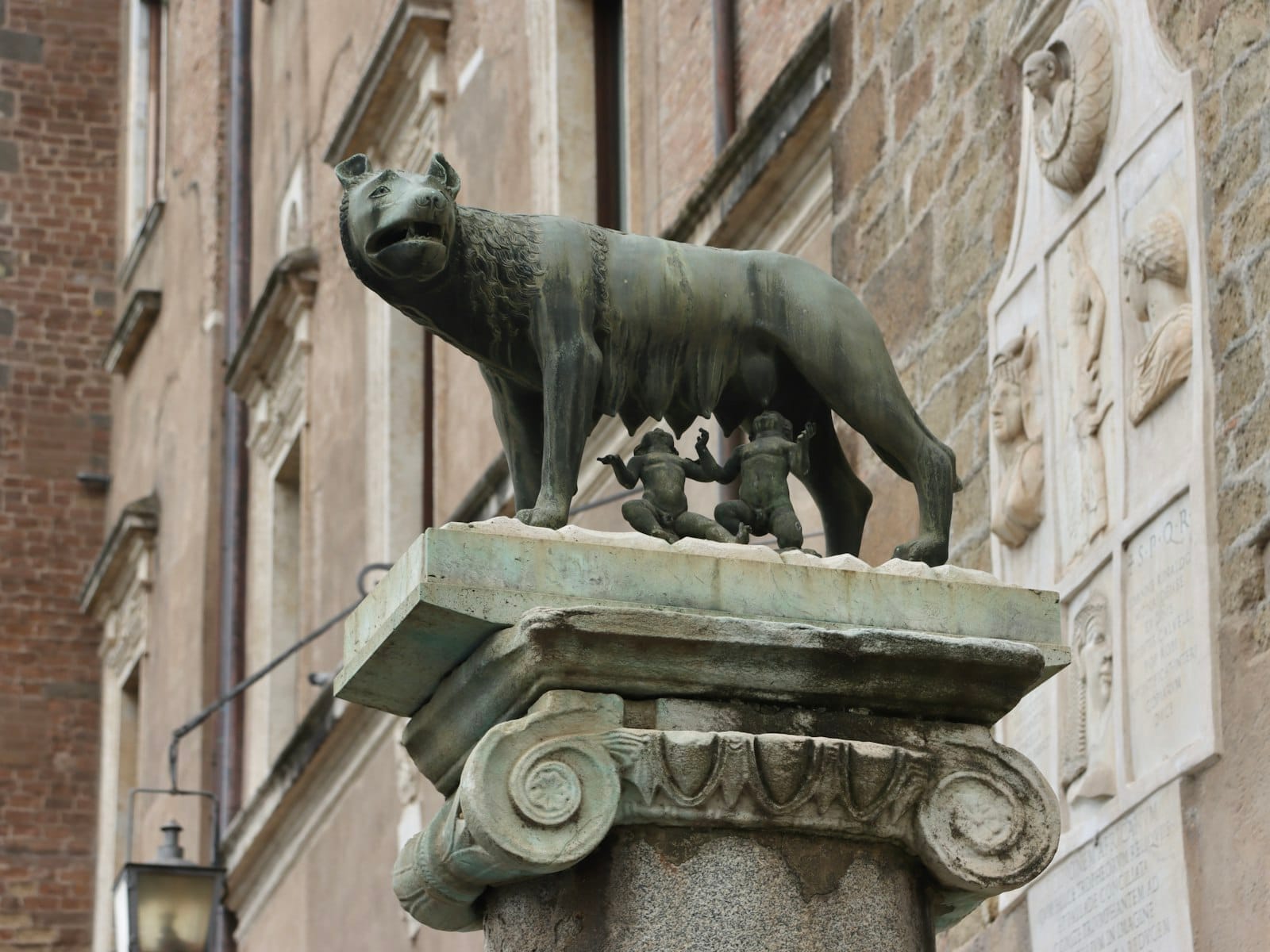
What makes this institution genuinely remarkable is its age and its founding logic. In 1471, Pope Sixtus IV donated a group of bronze sculptures to the Roman people, including the Capitoline Wolf, then believed to be an Etruscan work from the 5th century BC. That act of civic donation established the principle that antiquity belongs to the public, not to private collectors or the Church. When Pope Clement XII opened the museums formally in 1734, it was the first time in history that a major art collection had been systematically organized for public access. The Louvre wouldn't open until 1793.
ℹ️ Good to know
Admission prices and opening hours change periodically. Always verify on the official site (museicapitolini.org/en) before your visit, especially around public holidays.
The Piazza Before You Enter
The experience begins before you cross a threshold. Piazza del Campidoglio was redesigned by Michelangelo in the 16th century, commissioned by Pope Paul III ahead of Holy Roman Emperor Charles V's visit to Rome in 1536. The geometric pavement pattern, the angled ramp (cordonata) rather than stairs, and the careful framing of the three palaces were all Michelangelo's design, though he died before completion. The result is one of the most considered public spaces in Renaissance urbanism.
At the center of the piazza stands a gilded bronze equestrian statue of Marcus Aurelius, though the figure you see today is a high-quality replica. The original, dating to the 2nd century AD, is displayed inside the Palazzo dei Conservatori to protect it from pollution and weather. Its survival through the medieval period is partly attributed to a mistaken belief that it depicted the Christian emperor Constantine. For more on the hill and its civic significance, see our guide to Piazza del Campidoglio.
Tickets & tours
Live prices and dates from our booking partner. If you book, we may earn a commission at no extra cost to you.
What to See Inside: The Essential Works
Palazzo dei Conservatori
This is typically the first building visitors enter and where the most famous objects are concentrated. The Hall of the Horatii and Curiatii contains monumental frescoes depicting Rome's legendary early history, and the room itself functions as both artwork and argument: civic power has always been performed here.
The star of the ground floor is the Capitoline Wolf, a bronze she-wolf nursing the infant twins Romulus and Remus. The wolf itself is now dated by many scholars to the medieval period (around the 11th or 12th century), with the twins added in the 15th century by Antonio Pollaiuolo. The museum presents this scholarly debate openly. Also here: the colossal fragments of the Statue of Constantine, including a massive head, hand, and foot from a 12-meter-tall sculpture that once stood in the Basilica of Maxentius in the Forum.
The upper floors house the Pinacoteca Capitolina, a painting gallery with works by Caravaggio (including John the Baptist and The Fortune Teller), Rubens, Titian, and Tintoretto. The gallery is undervisited relative to the sculpture halls, which means quieter rooms and more space to look.
Palazzo Nuovo
Connected via the underground tunnel, the Palazzo Nuovo contains the Capitoline Gaul, a marble sculpture of a dying warrior that is one of the most emotionally precise objects in ancient art. It was almost certainly a Roman copy of a Hellenistic bronze, made to commemorate the Attalid victories over the Gauls in the 3rd century BC. The face, the posture of collapse, the detail of the torc around the neck: nothing about it is generic. The Sala degli Imperatori on the upper floor lines an entire room with portrait busts of Roman emperors, a strangely intimate experience given that each face belonged to someone who commanded an empire.
How the Visit Changes by Time of Day
Morning arrivals before 10:00 AM will find the rooms genuinely uncrowded. The light in the Palazzo dei Conservatori's upper galleries falls through tall windows and shifts across the marble surfaces in ways that afternoon visitors never see. If you're interested in photography, morning is when color temperature is most even and shadows are least harsh.
Midday brings school groups and tour buses. The tunnel between buildings, always a bottleneck, becomes genuinely congested between 11:30 AM and 2:00 PM. If you arrive during this window, consider starting in the Palazzo Nuovo (the less-visited building) and working backward.
Late afternoon, particularly in the hour before closing, sees a return to calm. The Tabularium, a section of the ancient Roman archive building from the 1st century BC, offers a gallery that opens directly onto a balcony with an unobstructed view over the Roman Forum and the Palatine Hill beyond. At golden hour, this view is genuinely arresting. The Forum stretches out below you with the Arch of Septimius Severus in the foreground and the Colosseum in the distance.
💡 Local tip
Don't skip the Tabularium gallery on the lower level. Most visitors walk through without stopping, but the open archways above the Forum are among the best vantage points in Rome and included in your museum ticket.
Getting There and Practical Logistics
The most direct approach is on foot from Piazza Venezia, a major transit hub served by numerous bus lines including the 40, 64, and 87. From Piazza Venezia, walk to the base of Capitoline Hill and take the cordonata (the gently inclined ramp) up to the piazza. The climb takes about three minutes. If you're coming from the Colosseum side, Metro Line B stops at Colosseo station, from which Capitoline Hill is a 15-minute walk through the Ancient Rome district.
Skip-the-line tickets are strongly recommended for weekends and the summer months. You can pre-book through the official website. Timed entry reduces the worst of the congestion in the main halls, though the Tabularium and painting gallery remain manageable regardless.
The museums are not fully wheelchair accessible due to their historic building fabric, but the main halls of both palaces can be reached. Contact the museum at +39 060608 or info.museicapitolini@comune.roma.it for specific accessibility information before your visit. There is a cloakroom and a cafe inside the complex; bags larger than carry-on size must be checked.
⚠️ What to skip
Photography is permitted in most areas without flash, but some rooms with temporary exhibitions prohibit cameras. The Pinacoteca in particular occasionally restricts photography during special shows.
Cultural Context: Why This Hill Matters
Capitoline Hill (Campidoglio in Italian) is the smallest of Rome's traditional seven hills but historically the most significant. It was the site of the Temple of Jupiter Optimus Maximus, the religious center of the Roman Republic and Empire, where triumphal processions ended. The Forum below it, visible from the Tabularium gallery, was the civic and political heart of ancient Rome. Standing in the museum and looking down, you're not just looking at ruins: you're looking at the physical arrangement of power in a civilization that shaped most of Western law, language, and architecture. For context on the landscape below, our Roman Forum guide covers what each structure once was.
The museums sit at the beginning of what many visitors call the Archaeological Promenade, a loose circuit linking the Forum, Palatine Hill, the Colosseum, and the Circus Maximus. The Capitoline Museums are the natural intellectual starting point for that circuit, because they provide the sculptural and historical framework to understand everything you'll see outside.
Who Should Reconsider This Visit
Travelers with limited time who are primarily interested in Christian art or Baroque churches will find more per square meter at the Vatican Museums or in Rome's individual basilicas. The Capitoline collection is predominantly ancient and Renaissance, and its depth rewards people who want to slow down and look carefully rather than move quickly through highlights.
Families with young children under seven may find the visit tiring before it's rewarding. The collection doesn't have the spectacle-per-minute ratio of the Colosseum or the visual immediacy of the Trevi Fountain. That said, children tend to respond strongly to the colossal Constantine fragments and the Capitoline Wolf, so a selective two-hour visit focusing on the ground floor of the Palazzo dei Conservatori works better than trying to see everything.
Insider Tips
- The underground Galleria Lapidaria, connecting the two palaces, is lined with ancient inscriptions and funerary reliefs that most visitors walk past without looking up. Slow down here: some of the most personal ancient Roman writing in existence is on these walls.
- The rooftop cafe of the Palazzo dei Conservatori has a terrace with direct sightlines to the Victor Emmanuel II Monument and Piazza Venezia. It's open to museum ticket holders and is a better lunch spot than most of the restaurants immediately around Piazza Venezia.
- The Marcus Aurelius original, displayed in a climate-controlled glass hall inside the Palazzo dei Conservatori, is lit in a way that reveals the gilding that once covered the entire surface. Stand close and look at the folds of the cloak.
- If you book the last entry slot of the day, the museums thin out significantly in the final 45 minutes. You may find the Sala degli Imperatori and the Capitoline Gaul almost entirely to yourself.
- The Palazzo Senatorio (the building directly opposite the main entrance) is the actual seat of Rome's city government and is not open to the general public as part of the museum circuit. Don't wait for a door that won't open.
Who Is Capitoline Museums For?
- History and archaeology enthusiasts who want to understand ancient Rome beyond the ruins
- Art historians and anyone with serious interest in Renaissance painting outside the Vatican
- Photographers seeking the best elevated view over the Roman Forum included in a museum ticket
- Travelers doing a multi-day deep dive into ancient Roman civilization
- Anyone who wants to experience the world's oldest public museum as an institution, not just a collection
Nearby Attractions
Other things to see while in Centro Storico:
- Ara Pacis
Commissioned in 13 BC to celebrate Augustus's campaigns in Gaul and Spain, the Ara Pacis Augustae is one of the best-preserved monuments of ancient Rome. Today it sits inside a striking modern pavilion on the Tiber's east bank, offering an unusually intimate encounter with imperial-era marble carving at near eye level.
- Campo de' Fiori
Campo de' Fiori is one of Rome's most recognizable piazzas, running a daily produce and flower market Monday through Saturday before reinventing itself as a lively social square after dark. Its paving stones have witnessed public executions, papal power, and centuries of commerce.
- Capitoline Hill
Capitoline Hill sits at the symbolic center of Rome, where Michelangelo's perfectly proportioned piazza crowns a site inhabited since the Bronze Age. Today it holds the world's oldest public museums, Rome's city hall, and some of the most striking views over the Roman Forum in the city.
- Fontana dei Quattro Fiumi
The Fontana dei Quattro Fiumi stands at the heart of Piazza Navona, a towering Baroque composition of four river gods, cascading water, and an ancient Egyptian obelisk. Commissioned by Pope Innocent X and completed by Gian Lorenzo Bernini in 1651, it remains one of the most theatrical public sculptures in Europe. Entry is free, and the piazza never closes.
Planning a trip? Discover personalized activities with the Nomado app.