The Colosseum: What to Expect Before You Walk Through the Arches
The Colosseum is Rome's most iconic ancient structure, a 2,000-year-old arena that once held 50,000 spectators for gladiatorial combat. This guide covers what you'll actually see inside, the best times to visit, how to get there, and how to avoid the mistakes most first-time visitors make.
Quick Facts
- Location
- Piazza del Colosseo, Ancient Rome (east of the Roman Forum)
- Getting There
- Metro Line B: Colosseo station (1-minute walk); Bus lines 51, 75, 85, 87
- Time Needed
- 1.5 to 3 hours depending on ticket tier and audio guide use
- Cost
- Check colosseo.it for current pricing; combined tickets with Roman Forum and Palatine Hill available
- Best for
- History enthusiasts, architecture lovers, families with older children
- Official website
- colosseo.it/en
What the Colosseum Actually Is
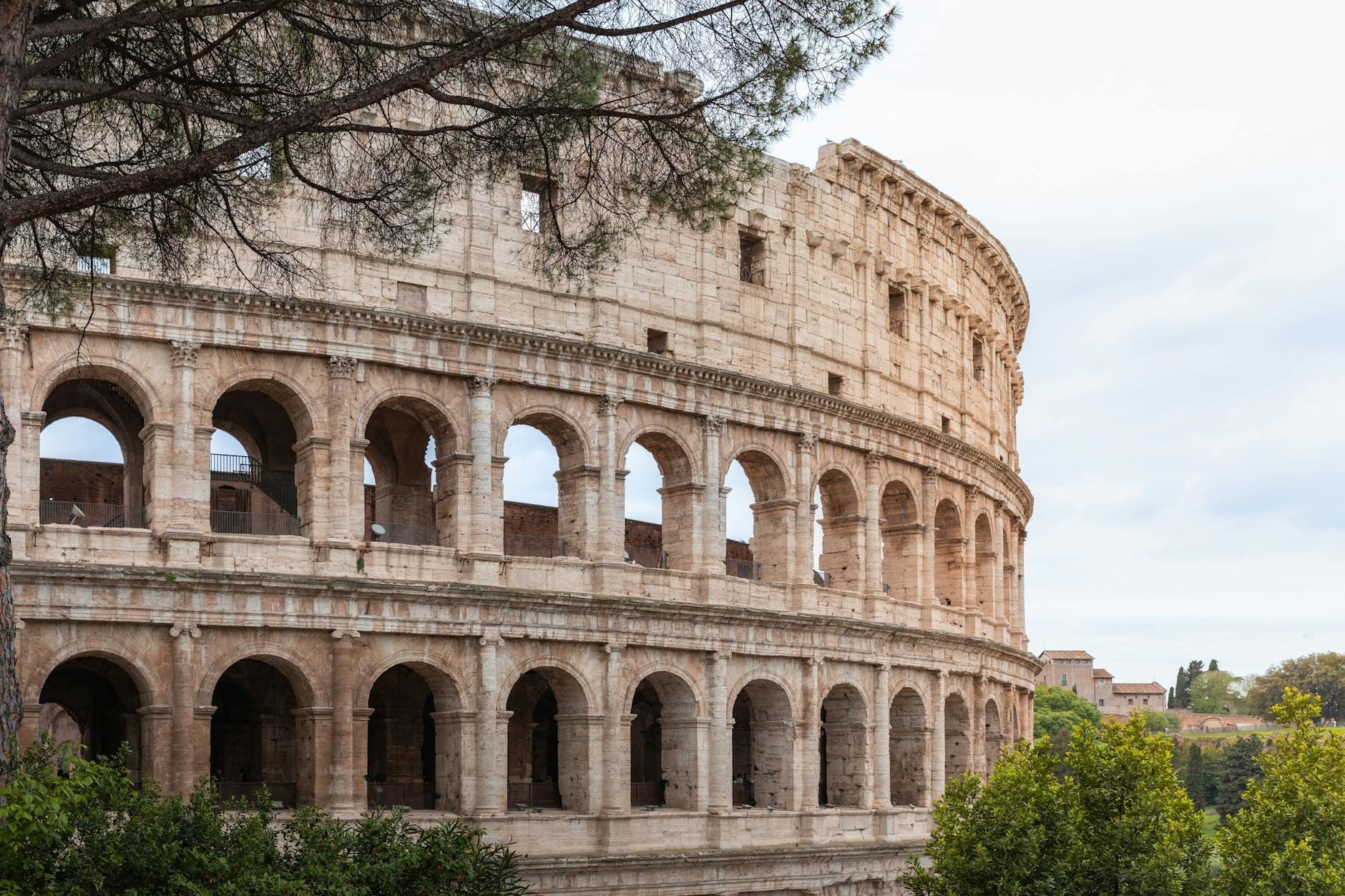
The Colosseum, officially the Anfiteatro Flavio (Flavian Amphitheatre), is a freestanding oval arena measuring 189 by 156 meters and rising four stories at its tallest point. Built between 72 and 80 CE under emperors Vespasian and Titus, with additions by Domitian around 82 CE, it is the largest amphitheatre ever constructed. At full capacity, it held approximately 50,000 spectators, arranged by social class from the imperial box down to the upper tiers.
Its original name references the Flavian dynasty that built it. The name 'Colosseum' came later, most likely derived from the Colossus of Nero, a bronze statue approximately 30-35 meters tall that once stood on the adjacent grounds of Nero's Domus Aurea before the amphitheatre was built on that same land. The statue is long gone, but the name stayed.
The structure was engineered with stone, concrete, and volcanic tuff, using an interconnected system of barrel and groin vaults that remains structurally coherent nearly two millennia later. The exterior arcade features three orders of columns, Doric on the ground floor, Ionic above it, and Corinthian on the third level, a deliberate architectural hierarchy that also influenced Renaissance building design across Europe.
💡 Local tip
Book timed-entry tickets in advance through the official site at colosseo.it. Walk-up queues, especially between 10 AM and 3 PM in summer, can stretch 45 to 90 minutes. Pre-booking saves that time and guarantees your slot.
What You See Inside
Entering through the ground-floor arches, you pass into the inner ring corridor before reaching the arena floor level. What hits first is scale. The interior oval opens up in a way that photographs do not capture, particularly the exposed hypogeum, the labyrinthine network of underground tunnels and chambers where gladiators, animals, and stage machinery were held before being hoisted into the arena above. This subterranean system is now visible from the main floor level and is one of the most compelling parts of the visit.
Much of the seating tiers (the cavea) is reconstructed or partially intact. The marble and wooden seating is long gone, but the concrete and brick skeleton gives a clear sense of the original geometry. The northern end retains the most original structure. Signage throughout explains what each zone functioned as, from the vomitoria (entry/exit passages) to the velarium attachment points at the top of the fourth story, where sailors from the Roman fleet were stationed to operate the retractable awning that shaded the crowd.
Higher-tier ticket options, including access to the arena floor and the upper levels (third and fourth floors), offer a markedly different perspective. From the upper tiers, the spatial logic of the seating bowl, the city roofline beyond, and the Roman Forum stretching to the west all come into view simultaneously. If you have a choice, pay for the upper-level access. It is worth the difference.
Tickets & tours
Live prices and dates from our booking partner. If you book, we may earn a commission at no extra cost to you.
Vatican: Basilica, Dome and underground early bird tour
From 50 €Instant confirmationFree cancellationColosseum Arena, Roman Forum and Palatine Hill Tour
From 95 €Instant confirmationFree cancellationColosseum access and tour with a local guide
From 64 €Instant confirmationFree cancellationColosseum Essential Guided Tour
From 64 €Instant confirmationFree cancellation
How the Experience Changes by Time of Day
Opening time at 8:30 AM is the clearest window for a quality visit. Light enters from the east at a low angle, casting long shadows across the travertine stone and picking out the texture of the arches in a way that flat midday light erases. Crowds at this hour are manageable, voices do not yet echo in every corridor, and the sense of standing inside an ancient structure is easier to hold without tour groups pressing against you.
Midday, roughly 10 AM to 2 PM, is the most crowded window. Summer midday temperatures inside the stone structure can feel noticeably hotter than the surrounding streets, as direct sun reflects off the pale stone. Bring water. There is a café on site, but it is basic.
Late afternoon, from around 4 PM onward in summer, sees crowds thin again and light shift to a warm westerly angle. The Colosseum closes at 7:15 PM (from late March to late September), so a 5 PM entry gives you a quality two-hour window with better light and fewer people. Winter hours are shorter, so check the official site before planning a late-afternoon visit in colder months.
⚠️ What to skip
The Colosseum exterior is impressive at any hour, but much of the interior is exposed to direct sun. In July and August, midday visits without water or sun protection are genuinely uncomfortable. Wear closed-toe shoes with grip, as the stone surfaces are uneven.
Getting There and Getting In
Metro Line B stops at Colosseo, less than a one-minute walk from the main entrance. This is the simplest option from most parts of central Rome. Several bus lines (51, 75, 85, 87) also stop nearby on Via Sacra and Via dei Fori Imperiali. If you are walking from the Monti neighborhood or the Capitoline Hill area, the approach along Via Sacra gives you a progressively unfolding view of the exterior that is one of the better urban arrival sequences in Rome.
Tickets are sold through colosseo.it and at the site. The standard entry ticket covers the main interior. Additional tiers of access (arena floor, underground hypogeum, upper levels) require separate or upgraded tickets that sell out faster. Combined tickets covering the Colosseum, Palatine Hill, and the Roman Forum are common and logical, since those sites are directly adjacent and take roughly a full morning or afternoon together.
Accessibility: The Colosseum has elevator access to some upper levels, and the ground floor is reachable by wheelchair. However, parts of the structure, particularly the upper tiers and certain underground areas, involve stairs and uneven stone. Confirm current accessibility conditions through the official site or by contacting the Parco Archeologico del Colosseo directly before your visit.
Historical and Cultural Weight
The Colosseum hosted gladiatorial contests, animal hunts (venationes), and public executions for roughly four centuries. The scale of spectacle organized here was a deliberate instrument of political power, providing entertainment to the population of Rome while reinforcing the authority of the emperors who funded the games. After the fall of the Western Roman Empire, the structure was repurposed: used as a fortress, mined for its stone and metal fittings, and partially converted for other uses before being recognized and protected as a monument.
The Colosseum sits at the western edge of the ancient-rome archaeological zone, making it a natural starting point for a longer exploration. The Roman Forum and Palatine Hill are directly accessible on a combined ticket and add essential context to what you see in the arena. Without understanding the Forum as the civic and religious heart of Rome, the Colosseum reads as a stadium in isolation rather than one element of a much larger urban landscape.
For a broader perspective on Rome's ancient structures, the Capitoline Museums on the hill above the Forum hold sculptures, inscriptions, and artifacts that fill in the human detail the ruins themselves cannot convey. The museums are within walking distance and pair logically with a Colosseum visit.
Photography and What to Realistically Expect
The Colosseum exterior photographs well from the Via Sacra approach and from the open space of Piazza del Colosseo. Interior shots of the hypogeum require a camera that handles low light reasonably well, as the underground areas are dimly lit. Tripods are not permitted inside.
The interior of the Colosseum is less visually complete than many visitors expect. Roughly two-thirds of the original structure is missing, stripped away over centuries for use as building material elsewhere in Rome. What remains is a skeleton, extraordinarily evocative and technically impressive, but visitors who expect a preserved stadium will find a partial ruin. That is not a criticism, it is what the place is, and understanding this in advance reframes the experience productively.
ℹ️ Good to know
Visitors who find the Colosseum too crowded or are interested in a quieter ancient site might consider the Baths of Caracalla, about 15 minutes south on foot. Less visited but equally substantial in scale, it offers a different chapter of Roman engineering with a fraction of the foot traffic.
If Roman history is a core interest, consider extending your time in the ancient-rome area rather than rushing on. The nearby Circus Maximus and Baths of Caracalla are short walks away and see far fewer visitors while offering comparable historical scale.
Who Should Skip It (and Who Should Not)
Travelers with limited mobility who want to see the upper tiers or underground areas may find portions of the visit inaccessible, and should verify conditions before booking premium ticket tiers. Very young children (under 5) often find the scale overwhelming and the historical narrative difficult to connect with, though older children with an interest in ancient history tend to respond strongly to the hypogeum.
If you are traveling on a strict budget, note that EU residents under 18 typically enter free, but general admission is not free for most visitors. Check the free things to do in Rome guide for alternatives if cost is a constraint.
For first-time visitors to Rome with any interest in history, architecture, or the ancient world, the Colosseum is not negotiable. It is the single best-preserved large-scale ancient structure in the Western world. Even accounting for the crowds, the context it provides for understanding everything else in Rome makes it worth the effort.
Insider Tips
- The 8:30 AM opening slot is the quietest of the day. Book the first available timed entry and you will have stretches of the interior essentially to yourself for the first 20 to 30 minutes.
- Audio guides and guided tours with licensed archaeologists can be booked through the official site. The commentary adds specific detail about the hypogeum's pulley systems and the social stratification of seating that generic signage does not fully explain.
- The view from Colle Oppio, the small park on the hill northeast of the Colosseum, gives an elevated exterior perspective that most visitors miss entirely. It is a two-minute walk from the main entrance.
- If you have a combined Colosseum and Forum ticket, enter the Roman Forum from the Via Sacra entrance rather than the main Colosseum gate to avoid backtracking and to see the Forum's layout from its most logical approach.
- Scalpers and unofficial 'tour guides' operate around the exterior perimeter and are persistent. Tickets purchased through unofficial channels risk being invalid. Use colosseo.it only.
Who Is Colosseum For?
- History and archaeology enthusiasts who want to understand Rome's ancient urban fabric
- Architecture lovers interested in Roman engineering and classical column orders
- Families with children aged 8 and older, particularly those who have some context from school
- Photographers working in the early morning or late afternoon light
- First-time visitors to Rome for whom the Colosseum anchors the broader ancient-rome itinerary
Nearby Attractions
Other things to see while in Ancient Rome:
- Appian Way
The Appian Way, or Via Appia Antica, is one of the ancient world's most consequential roads, stretching from Rome's Aurelian Walls into the open Campagna. Built in 312 BCE, it remains walkable today, lined with tombs, pine trees, and broken basalt stones that once carried Roman legions south. Free to enter and car-free on Sundays, it offers a rare escape from the city's tourist core into a landscape that has changed remarkably little in two millennia.
- Baths of Caracalla
The Baths of Caracalla are among the best-preserved and most atmospheric ancient ruins in Rome. Inaugurated in 216 AD, this vast complex once welcomed up to 8,000 visitors a day. Today, the ruins reward anyone willing to look beyond the Colosseum.
- Castel Gandolfo
Perched on a volcanic crater rim 25 km southeast of Rome, the Apostolic Palace of Castel Gandolfo served as the papal summer residence for nearly four centuries. Since Pope Francis opened it to the public in 2016, visitors can tour the baroque interiors, formal gardens, and working farm that once fed the pontiff's household.
- Catacombs of San Callisto
Stretching beneath the Appian Way, the Catacombs of San Callisto served as the official cemetery of Rome's early Christian community from the second century AD. With 10 to 20 kilometers of galleries across four to five levels, the complex holds the Crypt of the Popes, the tomb of Saint Cecilia, and the remains of roughly 500,000 Christians. It is one of the most historically substantial underground sites in the ancient world.
Planning a trip? Discover personalized activities with the Nomado app.