Castel Gandolfo: Inside the Pope's Summer Palace Above Lake Albano
Perched on a volcanic crater rim 25 km southeast of Rome, the Apostolic Palace of Castel Gandolfo served as the papal summer residence for nearly four centuries. Since Pope Francis opened it to the public in 2016, visitors can tour the baroque interiors, formal gardens, and working farm that once fed the pontiff's household.
Quick Facts
- Location
- Castel Gandolfo, Alban Hills, Lazio — approx. 25 km southeast of central Rome
- Getting There
- FL8 regional train from Roma Termini to Castel Gandolfo station, then a short uphill walk to the palace
- Time Needed
- 2 to 4 hours for palace, gardens, and a lakeside walk; half-day if combining with the town
- Cost
- Standard adult tickets approximately €12–€18 (verify current prices via official site); reduced rates available
- Best for
- History enthusiasts, architecture lovers, day-trippers wanting nature and culture outside Rome
- Official website
- www.villepontificie.va/content/villepontificie/en.html
What Castel Gandolfo Actually Is
The Apostolic Palace of Castel Gandolfo is not a ruin, a museum grafted onto an old building, or a reconstruction. It is the genuine article: a working baroque palace complex built between 1624 and 1626 by Pope Urban VIII to designs by architect Carlo Maderno, on ground that had once formed part of Emperor Domitian's sprawling villa in the 1st century AD. For almost 400 years it functioned as the pope's summer escape from the Roman heat, a place where audiences were given, encyclicals drafted, and the rhythms of Vatican life continued at a cooler elevation.
Pope Francis broke with tradition in 2016, opening the palace and the surrounding Pontifical Villas to the general public. The complex covers roughly 135 acres (54.6 hectares) and includes the palace itself, a formal Italian garden, an observatory, ornamental fountains, and a working farm, the Azienda Agricola Pontificia, whose produce once supplied the papal table. What you get is a combination rarely available anywhere in Europe: access to a building that was a live royal residence within living memory, set inside gardens that were private for centuries.
💡 Local tip
Book tickets in advance through the official Pontifical Villas site. Entry is typically by timed guided visit, and capacity is limited. Walk-up availability exists but is unreliable on weekends and Italian public holidays.
The Setting: A Volcanic Rim Above a Lake
Castel Gandolfo sits on the western rim of a collapsed volcanic crater now filled by Lake Albano, one of several crater lakes in the Castelli Romani hills south of Rome. The town itself occupies a narrow ridge, and the palace complex sits at its highest point. The altitude, roughly 400 metres above sea level, means temperatures here can run 5 to 7 degrees Celsius cooler than central Rome in summer, which explains why popes chose this location in the first place.
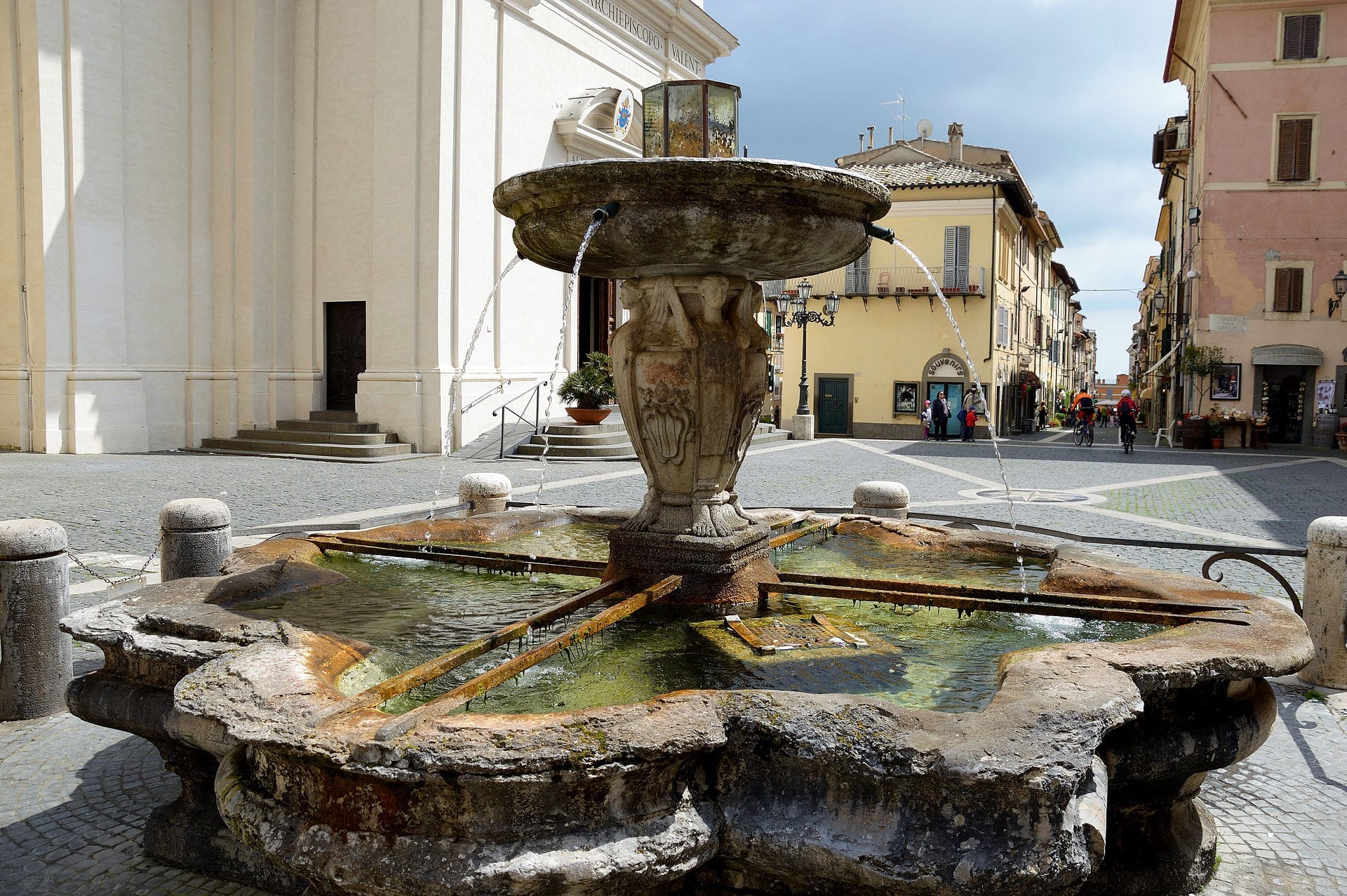
The approach matters. Coming by train from Termini on the FL8 line, the journey takes around 40 minutes and deposits you at a small station below the town. The walk uphill through steep, narrow streets takes 10 to 15 minutes and passes fruit sellers, trattorias advertising lake-caught fish, and the gradually expanding view of Lake Albano below. By the time you reach Piazza della Libertà, the main square in front of the palace, you have already had a compressed version of the landscape that made this place worth building.
Morning visits offer the sharpest light for photography, with the low sun catching the pale travertine facade of the palace and the green geometry of the gardens behind it. By early afternoon the lake below can develop a slight haze, particularly in July and August. If the weather is clear, the view from the garden terraces extends across the crater to the far rim and, on exceptional days, back toward Rome.
Tickets & tours
Live prices and dates from our booking partner. If you book, we may earn a commission at no extra cost to you.
The Palace and Its Rooms
The interior of the Apostolic Palace is toured with a guide and the route varies depending on the type of ticket purchased. The rooms open to the public include papal apartments, audience halls, and spaces decorated with period furnishings, tapestries, and ecclesiastical art. The scale is more intimate than the Vatican palaces: this was designed as a retreat, not a seat of government, and the proportions reflect that.
One detail that surprises most visitors is how recently these rooms were in daily use. Pope John Paul II spent long periods here and Pope Benedict XVI was at Castel Gandolfo when he made his resignation announcement in February 2013. The furnishings are not recreations; they were here when the rooms were active. That proximity to recent history gives the visit a different texture than a conventional museum.
The palace also sits directly above ruins of Domitian's villa, portions of which are visible in the lower levels and gardens. Domitian's complex was a sprawling Roman estate of the hillside. The Vatican's Colosseum and Palatine were being constructed or recently completed during Domitian's reign (81–96 AD), and this estate was effectively his private counterpart to those public monuments. Fragments of Roman masonry are embedded into the later baroque construction in several places, most visibly in the garden substructures.
The Gardens and the Farm
The gardens at Castel Gandolfo are the strongest reason to visit, and they are consistently underrated in travel coverage. The formal Italian sections near the palace feature clipped box hedges, citrus trees in terracotta pots, stone fountains, and long axial allées designed to frame views of the lake. In late spring the roses are in full flower and the combination of volcanic soil, elevated humidity, and careful maintenance produces plants that are noticeably lusher than their equivalents in Rome's summer heat.
Beyond the formal gardens lies the Barberini Villa section and the working farm. The Azienda Agricola Pontificia still produces olive oil, wine, and vegetables on the same terraced slopes it has occupied for centuries. Visitors on the extended garden tour can walk through sections of the productive landscape, past olive groves and kitchen gardens, which gives the visit an earthy, practical quality entirely absent from the Vatican's urban attractions.
ℹ️ Good to know
The gardens cover significantly more ground than most visitors expect. Wear comfortable, flat shoes. Some paths are unpaved and uneven, and the terrain slopes considerably. The palace interiors are largely accessible, but confirm specific accessibility arrangements when booking.
Photography in the gardens is generally permitted. The combination of baroque garden geometry, lake views, and Roman ruins in a single frame makes this one of the more rewarding photography locations near Rome, and far less photographed than the city's headline attractions. For more structured viewing, compare the garden terraces here with those at Villa Borghese in Rome, which offer a different scale and character.
How the Experience Changes Through the Day
The first timed entry slot of the morning is consistently the best. The palace rooms are cool, the guides are fresh, and the gardens are empty enough that you can stop and look without managing around other tour groups. The light in the formal garden is directional and clear, throwing long shadows through the cypress allées.
By midday, particularly on weekends from April through October, the piazza in front of the palace becomes noticeably more crowded. Day-trippers from Rome arrive, gelato stalls do steady business, and the narrow streets of Castel Gandolfo town fill with tourists eating lunch at outdoor tables. This is not unpleasant, but it is a different atmosphere: more social, louder, and less contemplative.
Late afternoon has its own logic. The tour groups thin out, the light on the lake turns gold, and the town returns to something closer to its ordinary self. If you have time, the walk down to the lakeside promenade after your palace visit is worth the descent: the crater lake is used for rowing training (it hosted the 1960 Rome Olympics rowing events) and the waterfront has a quiet, local character that contrasts with the tourist intensity above.
Castel Gandolfo as a Day Trip from Rome
Castel Gandolfo works well as a standalone half-day or full-day excursion from Rome. It fits naturally into a broader exploration of the Castelli Romani, the ring of hill towns surrounding the Alban Hills, which also includes Frascati (known for its white wine), Nemi (famous for wild strawberries in early summer), and Albano Laziale. The FL8 train from Roma Termini runs frequently and the journey is comfortable. For context on planning a wider day trip from Rome, the Rome day trips guide covers the Castelli Romani alongside other regional options.
The town of Castel Gandolfo itself is small, with a population of a few thousand, and the main piazza gives directly onto the palace entrance facade. There are several decent restaurants serving traditional Castelli Romani food: porchetta, cured meats, egg pasta with local mushrooms, and the slightly bitter white wines produced on volcanic soil nearby. Budget around €15–€25 per person for a sit-down lunch. Avoid the tourist traps immediately adjacent to the palace entrance; walk two streets in either direction for better value.
For travelers building a Roman itinerary, Castel Gandolfo pairs logically with a morning visit to the Appian Way or the Catacombs of San Callisto, both of which lie on the southern axis out of Rome and require a similar direction of travel.
Honest Assessment: Is It Worth the Trip?
Castel Gandolfo is not an experience for everyone. The guided visit format means your pace is set for you, the commentary is informative but inevitably general, and the rooms, while authentic, do not carry the same density of art as the Vatican Museums or Rome's major civic collections. If you came expecting a Versailles-style procession through state rooms packed with masterworks, you will be underwhelmed.
What it does offer, and does well, is a combination of genuine historical resonance, exceptional garden design, volcanic landscape, and relief from the sensory overload of central Rome. The fact that it remains less visited than its Vatican counterparts is a straightforward advantage. Visitors who travel specifically to see how power and religion shaped the physical landscape of the Italian peninsula, rather than to tick off famous paintings, will find this one of the more rewarding half-days available within reach of Rome.
Travelers with limited time in Rome and a long list of iconic sites still to see should note that the Rome in 3 days itinerary deliberately leaves Castel Gandolfo as an optional extension rather than a core stop. It earns its place as a day-four option or as a priority for repeat visitors who have already covered the city's central attractions.
⚠️ What to skip
Ticket prices, opening hours, and tour availability at the Pontifical Villas change seasonally and have been subject to adjustment since the site opened to the public. Always verify current details at villepontificie.va before visiting. Do not rely on third-party reseller information for hours.
Insider Tips
- Book the combined palace and garden ticket rather than the palace-only option. The gardens take up most of the time and are the stronger half of the experience. The palace rooms are interesting but brief.
- The FL8 train from Roma Termini is the most reliable way to arrive. The journey is around 40 minutes and trains run regularly. Driving offers flexibility but parking in Castel Gandolfo is limited and the approach road gets congested on summer weekends.
- If you arrive early and have time before your entry slot, walk to the belvedere at the edge of Piazza della Libertà. The view of Lake Albano from the low wall is free, takes five minutes, and gives you the best crater-lake photograph of the day.
- The Castelli Romani area has a distinct food identity from Rome. If you are staying for lunch, ask for porchetta from the local deli counters rather than ordering it in a restaurant: the sliced-to-order version from a rotisserie truck or alimentari is significantly better and costs a fraction of the seated price.
- Late September and early October are arguably the best weeks to visit. Summer heat has broken, the gardens are still in good condition, the tourist traffic drops noticeably compared to August, and the lake light in autumn is warmer and more photogenic than in high summer.
Who Is Castel Gandolfo For?
- Architecture and history enthusiasts who want context beyond Rome's ancient ruins
- Repeat visitors to Rome looking for something outside the standard circuit
- Travelers who want to combine a cultural site with a natural landscape in a single half-day
- Photographers seeking baroque garden geometry and volcanic lake views with manageable crowds
- Families wanting a cooler, less overwhelming alternative to Rome's most crowded attractions in summer
Nearby Attractions
Other things to see while in Ancient Rome:
- Appian Way
The Appian Way, or Via Appia Antica, is one of the ancient world's most consequential roads, stretching from Rome's Aurelian Walls into the open Campagna. Built in 312 BCE, it remains walkable today, lined with tombs, pine trees, and broken basalt stones that once carried Roman legions south. Free to enter and car-free on Sundays, it offers a rare escape from the city's tourist core into a landscape that has changed remarkably little in two millennia.
- Baths of Caracalla
The Baths of Caracalla are among the best-preserved and most atmospheric ancient ruins in Rome. Inaugurated in 216 AD, this vast complex once welcomed up to 8,000 visitors a day. Today, the ruins reward anyone willing to look beyond the Colosseum.
- Catacombs of San Callisto
Stretching beneath the Appian Way, the Catacombs of San Callisto served as the official cemetery of Rome's early Christian community from the second century AD. With 10 to 20 kilometers of galleries across four to five levels, the complex holds the Crypt of the Popes, the tomb of Saint Cecilia, and the remains of roughly 500,000 Christians. It is one of the most historically substantial underground sites in the ancient world.
- Circus Maximus
Once the largest entertainment venue in the ancient world, the Circus Maximus held 150,000–250,000 spectators watching chariot races on a track stretching 600 meters between the Palatine and Aventine Hills. Today the site is a free public park where ancient Roman history sits just beneath the surface, literally and figuratively.
Planning a trip? Discover personalized activities with the Nomado app.