Catacombs of San Callisto: Rome's Most Significant Early Christian Underground
Stretching beneath the Appian Way, the Catacombs of San Callisto served as the official cemetery of Rome's early Christian community from the second century AD. With 10 to 20 kilometers of galleries across four to five levels, the complex holds the Crypt of the Popes, the tomb of Saint Cecilia, and the remains of roughly 500,000 Christians. It is one of the most historically substantial underground sites in the ancient world.
Quick Facts
- Location
- Via Appia Antica / Via Ardeatina, Rome (Ancient Appian Way corridor)
- Getting There
- ATAC bus lines serving Via Appia Antica; no metro stop directly nearby — bus or taxi recommended
- Time Needed
- 1.5 to 2 hours including guided tour
- Cost
- Paid admission; exact prices subject to change — verify at official site before visiting
- Best for
- History enthusiasts, early Christian heritage, archaeology, and travelers seeking something beyond Rome's surface-level sights
- Official website
- www.catacombesancallisto.it/en/
What the Catacombs of San Callisto Actually Are
The Catacombs of San Callisto (Catacombe di San Callisto, also known in English as the Catacombs of St. Callixtus) are not simply an underground cemetery. They were the official burial ground of the Roman Christian community for more than a century, established under Deacon Callixtus during the papacy of Zephyrinus (199 to 217 AD) and expanded significantly when Callixtus himself became pope (217 to 222 AD). This institutional character sets San Callisto apart from the dozens of other catacombs scattered beneath the city. This was the place where the early Church chose to inter its popes, its martyrs, and eventually an estimated 500,000 of its faithful.
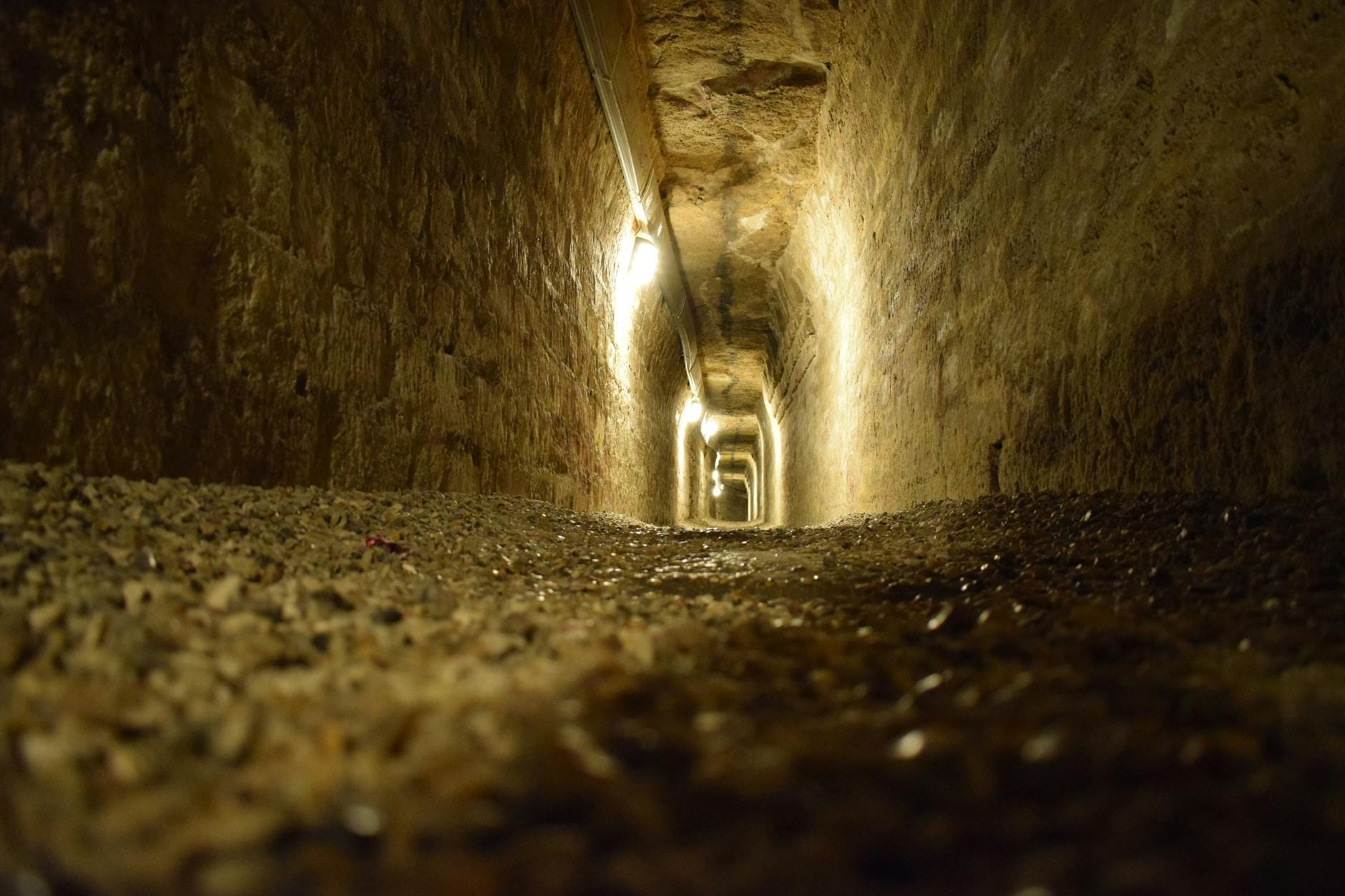
The complex extends across four to five underground levels, descending more than 20 meters below the surface at its deepest point, with a total gallery length estimated between 10 and 20 kilometers. That scale is almost impossible to visualize until you are standing inside, watching your guide's lamp throw light down a corridor that recedes into absolute darkness in both directions. The weight of what the place represents, and how much of it remains unexplored by any single visitor, becomes clear quickly.
ℹ️ Good to know
All visits to the Catacombs of San Callisto are conducted as guided tours. Independent exploration of the galleries is not permitted. Groups move at a fixed pace through designated sections, so arriving early improves your chances of joining a smaller group.
The Historical Context: Why This Site Matters
Early Christians in Rome did not bury their dead in catacombs because they were hiding or persecuted. They chose underground burial because it aligned with their belief in bodily resurrection, and because Roman law actually protected burial sites from desecration regardless of religion. What began as a practical choice became, under Callixtus, a formal institution with the Church holding legal ownership of the land.
The most significant section is the Crypt of the Popes, which ancient sources referred to as the 'little Vatican.' Nine popes from the second to fourth centuries are buried here, their names recorded in Greek inscriptions that were rediscovered and partially reconstructed by archaeologist Giovanni Battista de Rossi during his excavations beginning in 1854. De Rossi's work at San Callisto established the modern discipline of Christian archaeology, and his findings transformed understanding of the early Church's presence in Rome.
Nearby lies the Crypt of Saint Cecilia, patron saint of music. Cecilia was martyred in the third century, and her body is said to have been moved here before being transferred to the Basilica di Santa Cecilia in Trastevere in the ninth century. A copy of Stefano Maderno's famous marble sculpture of the saint marks the spot in the catacomb. The original, carved in 1600, shows Cecilia exactly as her body was reportedly found when her tomb was opened: lying on her side, intact.
For travelers who want to understand the development of early Christianity in Rome alongside their visit, pairing San Callisto with San Clemente Basilica provides a compelling narrative arc: San Clemente offers three layers of Roman history visible above ground, while San Callisto reveals what was happening underground during the same centuries.
Tickets & tours
Live prices and dates from our booking partner. If you book, we may earn a commission at no extra cost to you.
Catacombs and Capuchin Crypt Guided Tour with Transfer
From 79 €Instant confirmationFree cancellation4-hour bike rental with Catacombs guided tour
From 45 €Instant confirmationFree cancellationRome Catacombs self-guided tour with round-trip transfer
From 15 €Instant confirmationFree cancellationAppian Way and Catacombs Golf Cart Shared Tour
From 95 €Instant confirmationFree cancellation
What You Actually See on the Tour
The guided tour covers a curated portion of the catacombs, typically including the Crypt of the Popes, the Crypt of Saint Cecilia, the Sacraments Cubicles (small painted chapels with some of the earliest examples of Christian fresco art, dating to the third century), and sections of the main gallery corridors lined with loculi, the rectangular niches cut into the tufa walls where bodies were placed and sealed with marble or terracotta tiles.
The frescoes in the Sacraments Cubicles are modest by the standards of what came later, but extraordinary given their age. Fish, bread, baptismal scenes, and the raising of Lazarus appear in muted ochres and reds on low ceilings. They are among the earliest surviving visual expressions of Christian symbolism anywhere in the world. Guides explain the iconography carefully, and this section tends to hold groups longest.
The temperature underground holds at a consistent cool even in the height of summer, around 12 to 14 degrees Celsius. In July or August, when Rome above ground reaches 32 to 35 degrees, this is immediately noticeable and welcome. Bring a light layer regardless of the season outside.
💡 Local tip
Wear closed-toe shoes with grip. The tufa floors are uneven and can be slippery in sections. Sandals are a genuine safety risk, not just a fashion note.
Getting There and Navigating the Site
The catacombs sit in the Appian Way corridor between Via Appia Antica and Via Ardeatina, south of the city center. There is no direct metro connection. The most practical public transit approach uses ATAC bus lines that run along Via Appia Antica. Check current ATAC routing before your visit, as lines and schedules change seasonally. A taxi or rideshare from central Rome takes roughly 20 to 30 minutes depending on traffic, and the Appian Way area sees minimal congestion outside of weekend afternoons when Roman families cycle or walk the route.
If you are organizing a full day on the Appian Way, the catacombs pair logically with the Appian Way itself, and the nearby Catacombs of San Sebastiano are a short walk along the same road. The Baths of Caracalla are accessible by the same bus corridor closer to the city, making a coherent half-day or full-day itinerary possible without backtracking.
There are three entrance points: the main entrance at the junction of Via Appia Antica and Via Ardeatina, a second entrance on the right side of Via Appia Antica before reaching the Catacombs of San Sebastiano, and a third along Via delle Sette Chiese. For most visitors arriving by bus or taxi, the main entrance is the default. Signage in the area is adequate but not perfect; allow a few extra minutes if navigating on foot from a bus stop.
Time of Day and Crowd Patterns
Morning visits, particularly on weekdays, produce smaller tour groups, which means more time at each stop and easier access to the frescoes without a crowd pressing forward. Midday arrivals in peak season (April through June and September through October) often join significantly larger groups, which can dilute the experience in the smaller crypts where everyone is trying to photograph the same wall at the same time.
The catacombs are closed on Wednesdays (verify current schedule on the official website). This matters for itinerary planning. Check the official website for current closing days and any seasonal schedule adjustments before finalizing your plans.
⚠️ What to skip
The catacombs are closed on Wednesdays. Always verify current opening days and hours at the official website (catacombesancallisto.it) before your visit, as hours and closures can change seasonally.
Since 1930, the site has been managed by the Salesians of Don Bosco, a Catholic religious order, and the atmosphere reflects that stewardship. Guides tend to be knowledgeable and speak to the spiritual as well as archaeological significance of the site. Tours are offered in multiple languages; confirm availability for your preferred language when booking or arriving.
Photography, Accessibility, and Honest Limitations
Photography is generally permitted in the galleries, though flash use may be restricted in sections with frescoes. The light levels underground are low, and most smartphone cameras struggle in the deeper corridors without flash. A camera with good low-light performance makes a noticeable difference. That said, the experience of the space resists documentation in ways that are worth accepting: the smell of ancient tufa, the drop in temperature as you descend, the spatial disorientation of gallery corridors extending in multiple directions, none of these translate to a photograph.
Accessibility is a genuine limitation here. The multi-level underground complex involves narrow corridors, uneven tufa surfaces, and sections requiring stooping. Visitors with mobility impairments, claustrophobia, or breathing difficulties should carefully consider whether the experience is suitable. There is no elevator access to the underground levels. The site is not wheelchair accessible.
Who should skip this: travelers with no interest in early Christian history or archaeology will find the experience underwhelming. The visual drama is subtle rather than spectacular. There are no grand chambers or theatrical lighting effects. If you are primarily motivated by above-ground Roman spectacle, your time may be better spent elsewhere. For everyone else, particularly those who have already seen the standard itinerary and want to understand Rome at a deeper layer, San Callisto is genuinely worth the trip south.
Travelers building a broader Rome itinerary can find context in our overview of the best time to visit Rome, which covers how crowd levels and weather affect sites across the city throughout the year.
Insider Tips
- Book or arrive early on weekday mornings to join a smaller tour group. In peak months, groups that form at 9am are noticeably smaller than those at 11am or after, giving you more space and more time at the frescoed cubicles.
- Bring a light jacket or layer regardless of the weather outside. The underground maintains a constant temperature of around 12 to 14 degrees Celsius year-round. This is refreshing in summer but surprisingly cold if you are dressed for a July afternoon in Rome.
- If you read Italian, or can manage French, the on-site publications sold at the entrance are more detailed than most English-language guides to the catacombs. De Rossi's legacy is covered in depth and adds context to what you see in the Crypt of the Popes.
- Combine San Callisto with a walk along the Appian Way itself. The stretch of Via Appia Antica near the catacombs is car-free on Sundays and still relatively quiet on weekday mornings. The combination of ancient road, tombs, and countryside offers a very different Rome from the city center.
- Confirm the language of your tour when you arrive or book ahead. Tours run in Italian, English, French, Spanish, and German at various times, but the schedule is not always aligned with demand. If you arrive for an English tour and find only an Italian one departing, ask staff about the next available time rather than joining a tour you cannot follow.
Who Is Catacombs of San Callisto For?
- History and archaeology enthusiasts who want to go beyond the standard Roman itinerary
- Travelers interested in early Christian heritage and the development of the Roman Catholic Church
- Visitors seeking a quiet, contemplative experience away from crowded tourist sites
- Those combining the Appian Way corridor into a half-day or full-day itinerary
- Anyone visiting Rome in summer who wants a genuinely cool break from the heat for an hour or two
Nearby Attractions
Other things to see while in Ancient Rome:
- Appian Way
The Appian Way, or Via Appia Antica, is one of the ancient world's most consequential roads, stretching from Rome's Aurelian Walls into the open Campagna. Built in 312 BCE, it remains walkable today, lined with tombs, pine trees, and broken basalt stones that once carried Roman legions south. Free to enter and car-free on Sundays, it offers a rare escape from the city's tourist core into a landscape that has changed remarkably little in two millennia.
- Baths of Caracalla
The Baths of Caracalla are among the best-preserved and most atmospheric ancient ruins in Rome. Inaugurated in 216 AD, this vast complex once welcomed up to 8,000 visitors a day. Today, the ruins reward anyone willing to look beyond the Colosseum.
- Castel Gandolfo
Perched on a volcanic crater rim 25 km southeast of Rome, the Apostolic Palace of Castel Gandolfo served as the papal summer residence for nearly four centuries. Since Pope Francis opened it to the public in 2016, visitors can tour the baroque interiors, formal gardens, and working farm that once fed the pontiff's household.
- Circus Maximus
Once the largest entertainment venue in the ancient world, the Circus Maximus held 150,000–250,000 spectators watching chariot races on a track stretching 600 meters between the Palatine and Aventine Hills. Today the site is a free public park where ancient Roman history sits just beneath the surface, literally and figuratively.
Planning a trip? Discover personalized activities with the Nomado app.