Santa Maria Maggiore: Rome's Oldest Marian Basilica
Standing on the Esquiline Hill since the 5th century, the Basilica Papale di Santa Maria Maggiore is one of Rome's four papal basilicas and the oldest continuously used Marian church in the Western world. Entry to the basilica is free, yet the mosaics, gilded coffered ceiling, and layers of medieval and Baroque additions make it one of the most rewarding interiors in the city.
Quick Facts
- Location
- Piazza Santa Maria Maggiore 42, Esquiline Hill / Monti, Rome
- Getting There
- Termini (Metro Lines A & B, 5-min walk)
- Time Needed
- 45–90 minutes (add 30 min for dome/loggia visit)
- Cost
- Free entry to basilica; audio guide €9; dome/loggia/Sala dei Papi €11.50
- Best for
- History enthusiasts, art lovers, pilgrims, architecture fans
- Official website
- www.basilicasantamariamaggiore.va/en.html
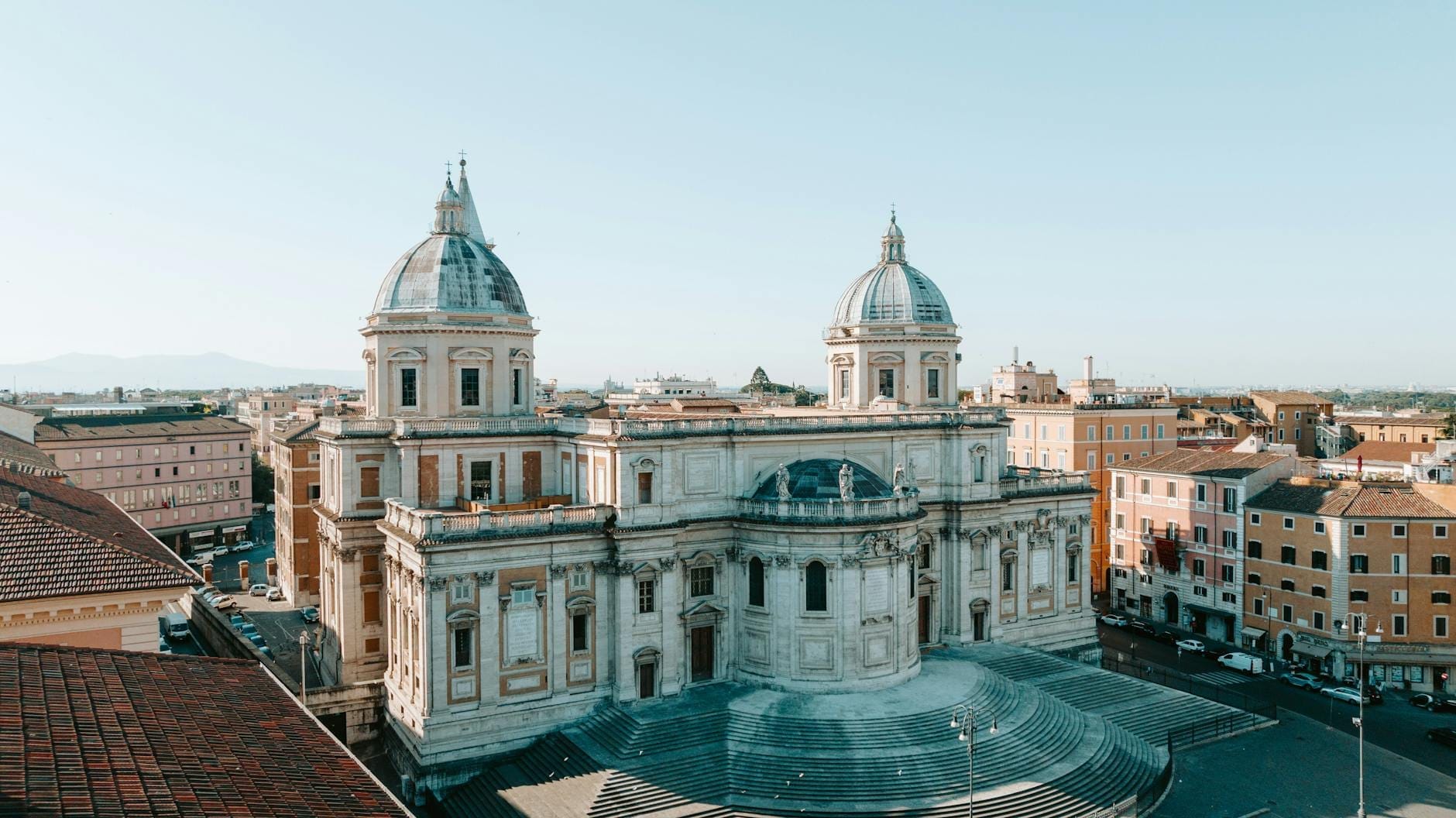
What You Are Actually Visiting
The Basilica Papale di Santa Maria Maggiore — Papal Basilica of Saint Mary Major — is not merely an old church. It is one of Rome's four papal basilicas, alongside St. Peter's, St. John Lateran, and St. Paul Outside the Walls, which means it falls directly under the authority of the Pope rather than the local diocese. That distinction matters architecturally and spiritually: the building has been protected, funded, and enlarged by papal patronage for sixteen centuries, producing a layered interior that reads almost like a compressed history of Christian art.
The basilica was built under Pope Celestine I (422–432) and consecrated under Pope Sixtus III, and consecrated on 5 August 434. The founding legend, still celebrated annually on 5 August in a ritual snowfall of white flower petals from the ceiling, holds that the Virgin Mary appeared to a Roman nobleman and to Pope Liberius in 352 CE, instructing them to build a church on the spot where snow fell on a summer night. Whether or not you are drawn to that story, the site has genuinely been a place of continuous Christian worship since late antiquity, making it the oldest continuously used Marian church in the Western world.
ℹ️ Good to know
Entry to the main basilica is free. The ticket for the dome, loggia, Sala dei Papi, and Bernini stairs costs €11.50 (verify current pricing at the official site before your visit, as fees can change). Audio guides are available for €9 and are worth it for decoding the mosaic cycles.
The Interior: What to Look at and Where
Step through the main doors and the scale stops you. The nave is 86 metres long, flanked by 40 ancient Ionic columns salvaged from earlier Roman structures. These columns are not replicas or Baroque additions — they are original 5th-century elements, and they give the nave a severity and calm that many later Roman churches lose under the weight of gilded decoration. Look up at the coffered ceiling: it is traditionally described as gilded with gold, reportedly a gift from the Spanish Crown to Pope Alexander VI following the age of exploration. The claim is difficult to verify with certainty, but it places the ceiling squarely in the late 15th century.
The apse and nave mosaics are the basilica's most intellectually significant feature. The 5th-century mosaic panels running along the upper nave walls depict Old Testament scenes, rendered in the flat, frontal style of late antiquity before Byzantine influence fully reshaped Christian iconography. These are among the best-preserved Early Christian mosaics in existence, comparable in age and quality to those in Ravenna. The triumphal arch mosaics and the apse mosaic, which date partly from the 13th century under Pope Nicholas IV, show how the visual language shifted toward a more jewelled, Byzantine-influenced register over time. Bring binoculars or use your phone's zoom — the detail at that height is extraordinary and rarely observed properly by visitors who don't look up.
Below the high altar, in the Confessio, rests a relic traditionally identified as wood from the manger of Jesus's birth in Bethlehem. Whether historical or not, this relic has drawn pilgrims to the basilica for centuries and remains an active devotional object. To the right as you face the altar, the Pauline Chapel houses the Salus Populi Romani, a Byzantine-style icon of the Virgin that has been venerated in Rome since at least the 13th century and is associated with several popes, including Francis, who visits before and after major foreign trips.
The Sistine Chapel inside Santa Maria Maggiore is frequently confused with the more famous one in the Vatican. This Sistine Chapel was commissioned by Pope Sixtus V in the 1580s and designed by Domenico Fontana. It contains the papal tomb of Sixtus V himself, as well as that of Pius V, the pope who organized the fleet that defeated the Ottomans at the Battle of Lepanto in 1571. The chapel is opulent even by Roman standards, with inlaid marble floors and painted vaults.
The basilica's bell tower, completed in the 14th century, rises 75 metres and is the tallest in Rome — a fact that surprises many visitors who assume that distinction belongs to St. Peter's. Gian Lorenzo Bernini is buried in the church, his tomb marked by a simple slab near the Pauline Chapel, understated to the point that many visitors walk past without noticing. For more context on Rome's extraordinary collection of sacred architecture, the best churches in Rome guide covers how Santa Maria Maggiore compares to the city's other major basilicas.
Tickets & tours
Live prices and dates from our booking partner. If you book, we may earn a commission at no extra cost to you.
How the Experience Changes Through the Day
Early morning, before 9am, is the most atmospherically rewarding time to visit. The light enters the nave from the south, casting long parallels across the ancient columns. The handful of worshippers at morning Mass, the smell of candle wax and cold stone, and the near-silence create a completely different experience from the midday crowds. If you are sensitive to sensory overload in tourist environments, this is the only time to visit.
By mid-morning the tour groups arrive, typically following visits to the Colosseum or the Roman Forum. Between 10am and 1pm, the nave can feel congested near the Pauline Chapel and the Confessio, and audio tour narration from multiple groups overlaps. The mosaics, however, are better lit at this hour, which makes the nave panels easier to study. Afternoons in summer thin out slightly as visitors return to their hotels for a break, but the heat inside the basilica — which has no air conditioning — can be uncomfortable in July and August.
Evening light before closing gives the gilded ceiling a warmer tone and the crowds have typically thinned. Check current closing times before you go, as these vary by season and during special events, which may extend opening hours.
💡 Local tip
Go before 9am for the best atmosphere and fewest people. The Piazza Santa Maria Maggiore outside is also worth a few minutes: the obelisk at the apse end, erected by Pope Sixtus V in 1587, stands 14.7 metres tall and once topped a column in the Roman Forum.
Getting There and Practical Logistics
The basilica sits on the Esquiline Hill at Piazza Santa Maria Maggiore 42, about a 5-minute walk from Termini station (Metro Lines A and B), which makes it highly accessible. From Termini, walk south along Via Cavour or cut through the side streets — the basilica's apse and bell tower are visible from several angles before you reach the piazza. Buses serving the area include routes that stop at Termini and along Via Merulana.
The surrounding neighborhood is the Monti district, one of Rome's most characterful inner-city areas. After visiting the basilica, it is easy to continue south down Via Cavour toward the Colosseum, or northwest into the Monti lanes for coffee or lunch. The area around Via Leonina and Via del Boschetto has small trattorias and independent shops that reward wandering.
Dress code is enforced: shoulders and knees must be covered to enter. This applies to all genders. Wrap scarves are sometimes available at the entrance for purchase, but it is better to carry your own. Bags are not checked, but photography without flash is generally permitted inside the basilica. Tripods are not allowed.
Wheelchair and reduced-mobility access is limited by the structure's age. The main entrance has steps. Contact the basilica directly via the official website for current accessibility arrangements, as provisions can change for major events.
The Dome Visit: Is It Worth Adding?
The ticketed experience covering the dome, loggia, Sala dei Papi, and the Bernini staircase adds a different dimension to the visit. The loggia above the main facade offers an elevated view across the piazza and toward Termini, and you gain a closer look at the medieval mosaic facade, one of the few surviving examples of this type in Rome. The Sala dei Papi is a richly decorated ceremonial room with papal portraits and frescoed vaults.
Whether this is worth €11.50 depends on your priorities. Visitors with a strong interest in medieval mosaics or Baroque decorative art will find it worthwhile. Those on a tight schedule or primarily interested in the basilica's ancient elements may prefer to spend time in the nave and chapels instead. The climb involves stairs and is not suitable for visitors with mobility difficulties.
⚠️ What to skip
Do not confuse this basilica's Sistine Chapel with the Sistine Chapel in the Vatican Museums. They are separate buildings, in different parts of the city, with entirely different contents. The confusion is common and occasionally leads to disappointed visitors expecting Michelangelo's ceiling.
Who This Attraction Suits — and Who Might Leave Underwhelmed
Visitors with a genuine interest in Early Christian art, Byzantine mosaics, or the architectural evolution of the Catholic Church will find Santa Maria Maggiore deeply rewarding. Pilgrims, particularly those following the traditional Rome pilgrimage circuit, will recognise it as a spiritually significant stop. Architecture students and anyone who has read about the period between the fall of the Western Roman Empire and the rise of the medieval papacy will find the basilica's 5th-century nave columns and mosaic panels genuinely moving. For broader context on the city's artistic depth, the best museums in Rome covers how the city's cultural institutions complement sites like this one.
Visitors looking for a quick, photogenic stop may find the interior more subdued than expected. The famous mosaics are high on the walls and require time and attention — they do not photograph easily with a phone. Families with very young children may find the visit challenging: the space encourages quiet, and there is nothing interactive or hands-on inside. Travelers who are primarily interested in Rome's ancient pre-Christian history will likely prioritise time elsewhere.
If you are planning a broader day in the area, the Colosseum and Roman Forum are within 15 minutes on foot, making a combined morning itinerary very practical.
Insider Tips
- Bernini's tomb is easy to miss: it is a plain marble slab on the floor near the Pauline Chapel, not marked by any monument. Ask staff or check a floor plan before you visit if you want to find it.
- The 5 August Festa della Madonna della Neve ceremony involves white flower petals showered from the ceiling of the basilica to recreate the legendary summer snowfall. If you are in Rome in early August, this is a rare spectacle and attendance is free.
- The obelisk in the piazza behind the apse is one of several ancient obelisks repositioned around Rome by Pope Sixtus V in the 1580s as part of a city-wide urban planning scheme. The same pope is responsible for the obelisks at St. Peter's Square and the Piazza del Popolo.
- Audio guides (€9) make a real difference here because the iconographic program of the nave mosaics follows a specific theological argument that is not self-explanatory. Without interpretation, the panels look like disconnected Old Testament scenes.
- If you visit during a Mass, remain respectful and stay near the entrance or in the side aisles to avoid disrupting worshippers. The basilica is an active church, not a museum, and this distinction is enforced politely but consistently.
Who Is Santa Maria Maggiore For?
- History and early Christian art enthusiasts who want more than surface-level sightseeing
- Pilgrims on the traditional Rome jubilee circuit
- Architecture lovers tracing the evolution from Roman civic building to Christian basilica form
- Budget-conscious travelers: the free interior is among the richest in Rome
- Visitors based near Termini looking for a significant cultural stop within easy walking distance
Nearby Attractions
Other things to see while in Monti:
- Baths of Diocletian
The Terme di Diocleziano once covered 13 hectares and welcomed up to 3,000 Romans daily. Today, part of the Museo Nazionale Romano, this monumental complex rewards visitors who come prepared, with vaulted halls, open-air courtyards, and inscriptions that bring Rome's imperial scale into focus.
- National Roman Museum
The Museo Nazionale Romano is one of Rome's most important archaeological collections, spread across four distinct sites. Its crown jewel, Palazzo Massimo alle Terme, holds Roman sculptures, imperial frescoes, and coin collections that rival anything in the city. This guide tells you exactly what to expect, where to focus your time, and how to get the most from each visit.
- Quirinal Palace
Perched on Rome's highest hill and spanning 110,500 square meters, the Quirinal Palace has served popes, kings, and presidents across five centuries. Today it opens its doors to visitors, offering access to state rooms, sweeping art collections, and one of the finest views in the city.
- San Clemente Basilica
San Clemente Basilica in Rome's Monti district is three buildings stacked on top of each other across 2,000 years of history. The 12th-century upper church is free to enter; the underground excavations reveal a 4th-century basilica, a Roman house, and an ancient Mithraic temple for €10. Few sites in Rome compress so much time into a single visit.
Planning a trip? Discover personalized activities with the Nomado app.