National Roman Museum (Museo Nazionale Romano): What to Know Before You Visit
The Museo Nazionale Romano is one of Rome's most important archaeological collections, spread across four distinct sites. Its crown jewel, Palazzo Massimo alle Terme, holds Roman sculptures, imperial frescoes, and coin collections that rival anything in the city. This guide tells you exactly what to expect, where to focus your time, and how to get the most from each visit.
Quick Facts
- Location
- Largo di Villa Peretti, 1 (Palazzo Massimo alle Terme), Monti, Rome
- Getting There
- Metro A – Repubblica; buses 64, 70, 170
- Time Needed
- 1.5–3 hours per site; allow a full day for all four branches
- Cost
- Ticket prices vary; combined tickets available across sites. Verify current prices at museonazionaleromano.it
- Best for
- Ancient art lovers, archaeology enthusiasts, fresco and mosaic fans
- Official website
- museonazionaleromano.it/en
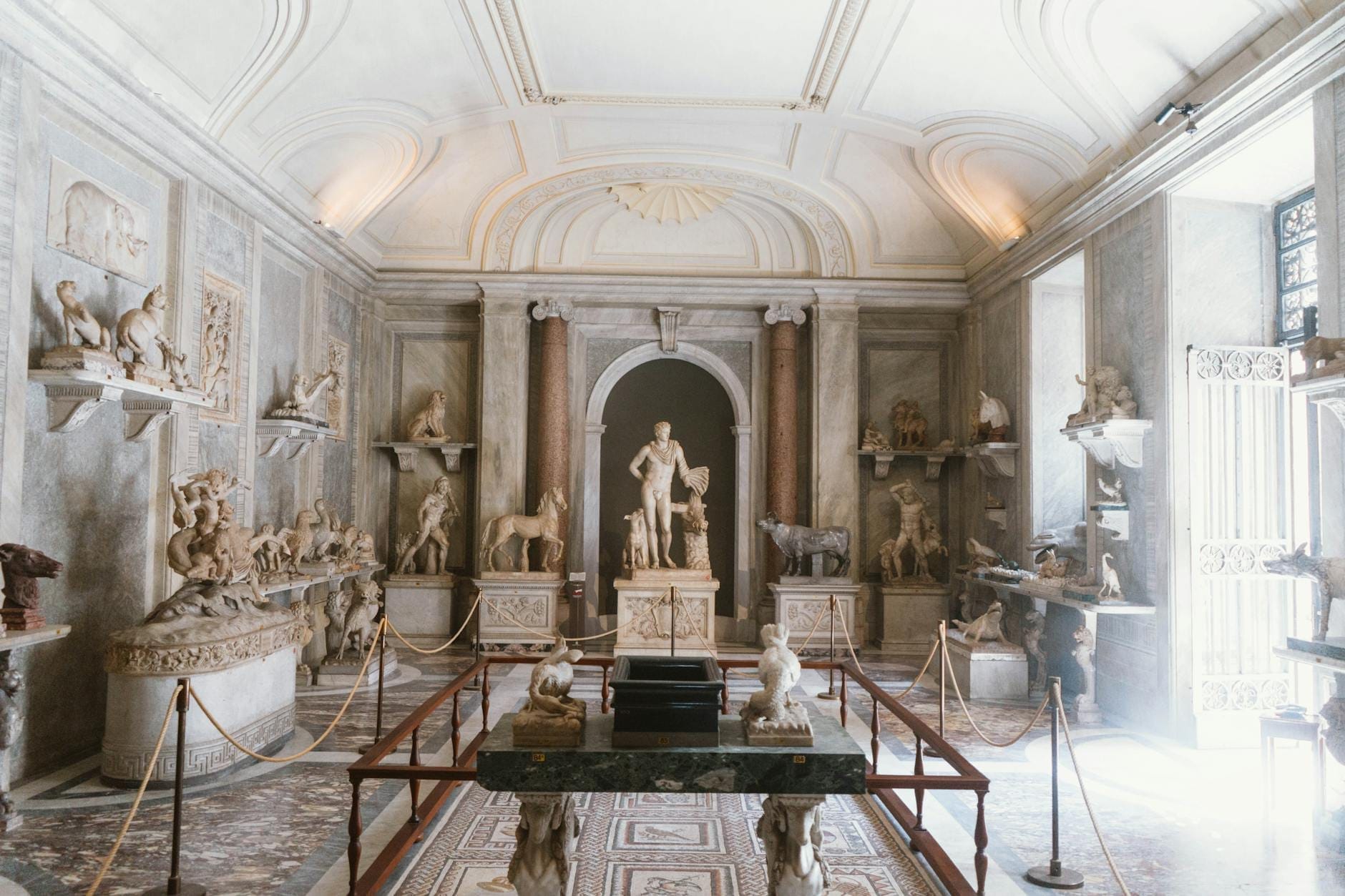
What Is the National Roman Museum, Really?
The Museo Nazionale Romano is not a single building. It is a system of four separate museums, each occupying a historically significant Roman site, and each with a distinct curatorial focus. Many visitors arrive expecting one grand palace and leave confused. Understanding the structure before you go saves real time.
The four branches are: Palazzo Massimo alle Terme (the primary art and sculpture museum), the Baths of Diocletian (epigraphic collections and protohistoric exhibits), Palazzo Altemps (Renaissance-era sculpture and ancient works in a palazzo setting), and Crypta Balbi (early medieval Rome and the archaeology of a single urban block from antiquity through the Middle Ages). Each is worth visiting in its own right, but if your time is limited, Palazzo Massimo is where you start.
The museum system was founded in 1889 and inaugurated in 1890, created specifically to house the enormous volume of archaeological material emerging from Rome's soil during the urban expansion that followed Italian unification. It was a direct institutional response to the risk of Rome's classical heritage being sold off or dispersed. More than a century later, that founding purpose still shapes what you find here: objects pulled from Roman earth, organized and displayed with rigorous scholarly intent.
ℹ️ Good to know
Palazzo Massimo alle Terme opening hours vary and are subject to change; always confirm on the official website. It is closed on Mondays and December 25. Always confirm hours on the official website before visiting, as they are subject to change.
Palazzo Massimo alle Terme: The Main Event
The building itself is a neo-Renaissance palazzo constructed between 1883 and 1887, acquired by the Italian Government in 1981; opened as museum in 1995 (ground floor) and 1998 (full). It sits a short walk from Termini station, which makes it logistically easy to slot into a packed itinerary. The exterior is dignified but not showy, and the interior is organized across multiple floors with a logical progression from republican-era works through to late imperial art.
The ground and first floors house the sculptural collections: portrait busts, full-figure statuary, mythological subjects, and imperial reliefs. These are not reproductions or minor finds. The Boxer at Rest, a Hellenistic bronze of extraordinary psychological depth, sits here. of the lost Greek original by Myron, but a copy executed with enough skill to carry genuine power. Standing close enough to examine the surface texture, you begin to understand why Roman collectors paid premium prices for Greek originals and their best replicas.
The coin collection occupying part of the basement is one of the most complete in Italy, tracing monetary history from the Roman Republic through to the Byzantine period. It is not the most visually dramatic part of the museum, but for anyone interested in economic history or material culture, the density of information is remarkable.
💡 Local tip
Budget extra time for the top floor. The frescoes from the Villa di Livia and the Villa Farnesina are kept in controlled-light rooms up there, and they require advance booking to access. This is the part most casual visitors miss entirely.
Tickets & tours
Live prices and dates from our booking partner. If you book, we may earn a commission at no extra cost to you.
The Frescoes: The Room Most People Miss
The most extraordinary objects in Palazzo Massimo are not sculptures. They are the painted frescoes removed from two Roman villas: the Villa di Livia at Prima Porta and the Villa della Farnesina. Both date from around the turn of the first millennium, and both were detached from their original walls with enormous technical difficulty, then reassembled here.
The Garden Room from the Villa di Livia is housed in a semi-underground space where lighting and humidity are carefully controlled. The entire room is wrapped in a continuous garden scene: fruit trees, flowering shrubs, birds, a fence and low wall in the foreground, and a sky that manages to suggest open air despite being 2,000 years old and underground. Roman illusionistic painting at this scale and quality is extraordinarily rare in preservation. The frescoes from Pompeii and Herculaneum are better known, but this room competes with the finest of them.
Access to these rooms typically requires advance reservation. Check the official museum website before your visit, as same-day entry to this section is not always guaranteed during peak months.
For context on other Roman frescoes and decorative arts visible across the city, the Domus Aurea offers another dimension of imperial interior decoration, though from a later period and a very different context.
The Other Three Branches: A Brief Guide
The Baths of Diocletian, just a few minutes' walk from Palazzo Massimo, occupy part of the largest thermal complex ever built in ancient Rome, completed around 305 CE. The surviving structures are incorporated into the church of Santa Maria degli Angeli e dei Martiri and the museum's exhibition spaces. The epigraphic collection here, thousands of Latin inscriptions catalogued and displayed, is a specialist resource rather than a crowd-pleaser, but walking through the scale of what remains gives you a physical sense of the ambition behind Roman civic infrastructure.
For a deeper understanding of Roman bath culture and its social role, the Baths of Caracalla offer a more spatially dramatic experience, with evening opera performances in summer adding a different kind of value.
Palazzo Altemps, located in the Centro Storico near Piazza Navona, is a 15th-century palazzo housing Greek and Roman sculpture collected by aristocratic Roman families, particularly the Ludovisi and Altemps collections. The building itself is part of the experience: carved ceilings, courtyard gardens, and frescoed galleries give the statuary a very different atmosphere from Palazzo Massimo's museum formality. The Ludovisi Throne, a carved marble relief possibly dating to the 5th century BCE, is housed here.
Crypta Balbi is the least-visited of the four sites and arguably the most intellectually interesting. It excavates the history of a single urban block from the Theatre of Balbus (13 BCE) through late antiquity, medieval occupation, and Renaissance reuse. The layering of time is visible in the physical fabric of the site itself. It is not visually spectacular, but it is genuinely illuminating for anyone trying to understand how Roman urban space was transformed into medieval and modern Rome.
Visiting by Time of Day and Season
Palazzo Massimo opens at 11:00, which means the first hour tends to be quieter than the midday period. Arriving at opening and heading directly to the top-floor fresco rooms is the most practical strategy: fewer people compete for space in the Garden Room, and the lighting conditions are consistent regardless of outdoor weather.
By 13:00–14:00, school groups and tour parties begin to thin out as lunch pulls people away. Afternoons from around 14:30 to 17:00 are generally calm. The museum is fully indoor, which makes it a particularly good choice on hot summer afternoons when outdoor sites become uncomfortable, or on rainy days in autumn and spring when the Colosseum and Forum feel less appealing.
Summer (June through August) brings longer tourist volumes across Rome, and Palazzo Massimo benefits from being slightly off the primary tourist circuit. It is not unknown to walk through the sculpture galleries on a Tuesday afternoon in July and find them nearly empty, which is a stark contrast to the perpetual crowds at the Vatican or the Colosseum.
For broader planning advice on timing your Rome visit around crowds and climate, see the best time to visit Rome guide.
Getting There and Practical Logistics
Palazzo Massimo sits at Largo di Villa Peretti, 1, directly adjacent to Termini station. From the Repubblica Metro A stop, it is a 5-minute walk heading northeast. Buses 64, 70, and 170 stop nearby. This is one of the easiest major museums in Rome to reach on public transport, which partly explains why it draws a slightly more independent-traveler crowd than coach-dependent sites.
The museum is wheelchair accessible, though the age of the building means some internal transitions involve lifts rather than ramps. Visitors with mobility limitations should check current accessibility arrangements directly with the museum before visiting.
Photography without flash is generally permitted in the permanent collection galleries, but the fresco rooms on the top floor may have different restrictions. Confirm on arrival. The museum has a coat and bag check, which is worth using if you are carrying a large rucksack, as space between display cases can be narrow.
⚠️ What to skip
Ticket prices are not listed publicly in a stable format and may change. A combined ticket covering multiple Museo Nazionale Romano sites typically offers better value than single-site entry. Verify current pricing at museonazionaleromano.it before your visit.
For a broader view of how this museum fits into Rome's museum landscape, the best museums in Rome guide provides useful comparisons with the Capitoline Museums and other major collections.
Who Will Love It and Who Might Not
Visitors with a genuine interest in Roman history, classical sculpture, or ancient painting will find Palazzo Massimo deeply rewarding. The collection is dense, well-labeled in Italian and English, and organized in a way that rewards slow, attentive looking. It is not a museum that lends itself to rapid ticking-off.
Families with young children may find the pace challenging. There is relatively little interactive content, and the fresco rooms require quiet and stillness that is hard to sustain with small children. The coin collection in the basement, while impressive in scope, is entirely static display cases.
First-time visitors to Rome who have only two or three days and are prioritizing iconic landmarks may find this museum competes awkwardly with the Colosseum, the Vatican, and the Forum for time. That said, if Roman art is genuinely your priority rather than site-checking, Palazzo Massimo delivers more direct contact with ancient objects than almost anywhere else in the city.
If you are organizing a multi-day itinerary, the Rome in 3 days guide suggests where a museum like this fits most naturally alongside the major outdoor sites.
Insider Tips
- Reserve access to the fresco rooms in advance through the official website. Same-day availability is not guaranteed, especially from April through October. Missing these rooms means missing the best reason to visit Palazzo Massimo.
- The combined ticket covering all four Museo Nazionale Romano branches is almost always better value than single-site entry. Even if you only visit two of the four sites, the saving is usually significant.
- The museum's proximity to Termini makes it an ideal first or last stop on a travel day. If your train or bus departs in the late afternoon, a morning visit here works logistically better than most other major Rome museums.
- The basement coin collection is quieter than the upper floors and frequently has staff available for informal questions. If numismatics or Roman economic history interests you, this is a genuinely rare resource.
- Palazzo Altemps, the branch near Piazza Navona, is often nearly empty on weekday afternoons and pairs well with a walk through the Centro Storico. The building alone justifies the trip.
Who Is National Roman Museum For?
- Classical art and sculpture enthusiasts who want depth over spectacle
- Archaeology students and academic visitors seeking well-documented Roman material culture
- Travelers escaping peak summer heat, since the museum is fully air-conditioned
- Independent travelers who prefer unhurried, crowd-free galleries over landmark queues
- Anyone specifically interested in Roman painting and fresco work beyond Pompeii
Nearby Attractions
Other things to see while in Monti:
- Baths of Diocletian
The Terme di Diocleziano once covered 13 hectares and welcomed up to 3,000 Romans daily. Today, part of the Museo Nazionale Romano, this monumental complex rewards visitors who come prepared, with vaulted halls, open-air courtyards, and inscriptions that bring Rome's imperial scale into focus.
- Quirinal Palace
Perched on Rome's highest hill and spanning 110,500 square meters, the Quirinal Palace has served popes, kings, and presidents across five centuries. Today it opens its doors to visitors, offering access to state rooms, sweeping art collections, and one of the finest views in the city.
- San Clemente Basilica
San Clemente Basilica in Rome's Monti district is three buildings stacked on top of each other across 2,000 years of history. The 12th-century upper church is free to enter; the underground excavations reveal a 4th-century basilica, a Roman house, and an ancient Mithraic temple for €10. Few sites in Rome compress so much time into a single visit.
- San Giovanni in Laterano
The Archbasilica of Saint John Lateran holds a title that St. Peter's Basilica does not: it is the cathedral church of Rome and the Pope's official seat as Bishop of Rome. Founded by Emperor Constantine in the early 4th century, it predates the Vatican by over a thousand years and remains one of the most historically significant Christian sites on earth.
Planning a trip? Discover personalized activities with the Nomado app.