Monti is Rome's oldest historic district, sitting between the Colosseum and Termini station on the city's ancient hills. Once a working-class quarter, it has evolved into the city's most livable central neighborhood, with wine bars and boutiques sharing streets with some of Rome's oldest churches and imperial ruins.
Monti is the neighborhood that Rome grew up in and then quietly reclaimed for itself. It occupies the slopes of the Esquiline, Viminale, and Quirinal hills, just steps from the Imperial Forums, and moves at a pace that feels genuinely Roman rather than tourist-managed. Cobbled alleys, neighborhood enoteche, and Michelangelo's Moses are all within a ten-minute walk of each other here.
Orientation
Monti is Rome's Rione I, which makes it the city's oldest and, perhaps counterintuitively, one of its largest historic districts. It covers far more ground than most visitors realize, stretching from Via dei Fori Imperiali in the south all the way north to Santa Maria Maggiore, east to Santo Stefano Rotondo, and south to San Giovanni in Laterano. The western edge runs roughly along Via Cavour, which forms a natural spine for the neighborhood, while the eastern boundary dissolves into the Esquilino district near Termini station.
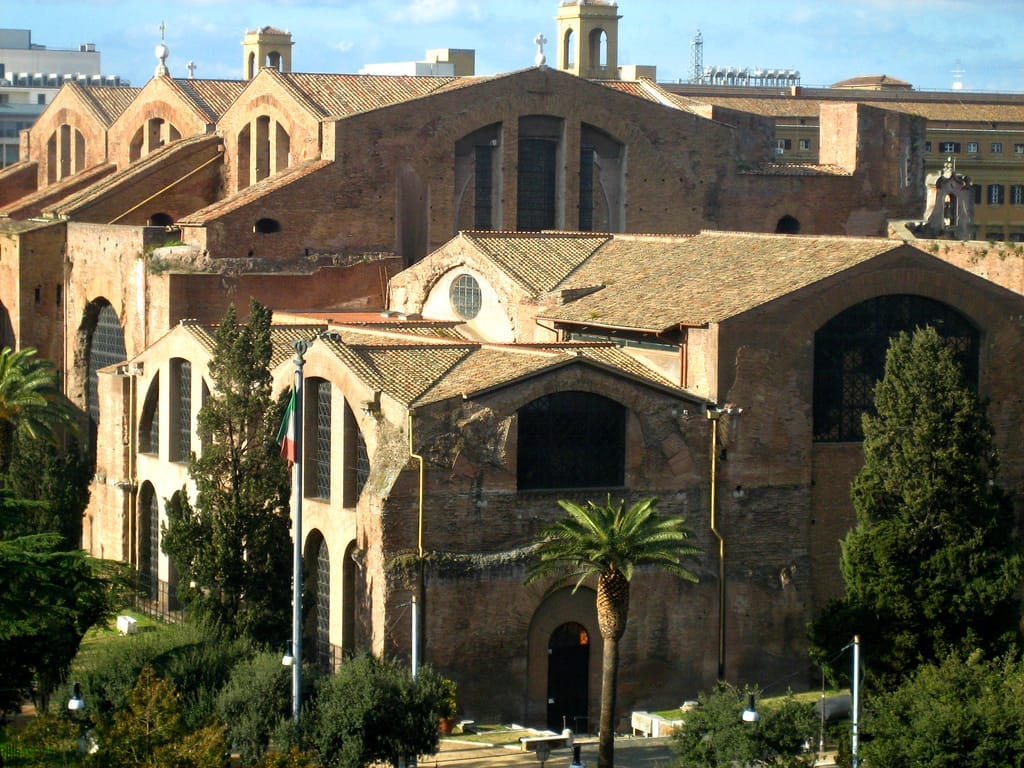
For practical purposes, the heart of Monti is the triangle formed by Via dei Serpenti, Via del Boschetto, and Via Urbana. These three streets and their connecting vicoli are where you will find the wine bars, independent shops, and trattorias that define the neighborhood's current character. Via Panisperna cuts diagonally across the upper part of the rione, connecting the Viminale hill area toward the Baths of Diocletian. Via degli Zingari, narrow and largely traffic-free, is the kind of street that makes Monti feel like a village within a capital city.
Monti sits at an important crossroads in Rome's geography. To the south, the ancient city begins almost immediately: the Roman Forum, Palatine Hill, and the Colosseum are all within a ten-minute walk downhill. To the north, the neighborhood transitions toward the transport hub of Termini. To the west, the Centro Storico is reachable on foot across Via Nazionale in around 20 minutes. This central position is one of Monti's most significant practical advantages as a base.
Character and Atmosphere
The version of Monti that most visitors encounter today is the product of a long transformation. For much of Rome's modern history, this was a dense, poor quarter known as the Suburra, a name the ancient Romans themselves associated with crowded tenements and low-status urban life. By the 20th century, it was still largely working class. The shift toward its current character, with boutiques selling handmade jewelry, natural wine bars, and design studios, accelerated through the 1990s and 2000s without ever fully erasing the neighborhood's residential soul.
Mornings in Monti are quiet by Rome's tourist-district standards. Locals collect espresso at the bar standing up, dogs are walked down Via Urbana before the heat sets in, and the streets smell of baking bread from the forno near Piazza della Madonna dei Monti. That small piazza, anchored by its 16th-century fountain, is the social center of the neighborhood: students sit on the steps in the afternoon, couples eat gelato in the early evening, and by nightfall it fills with a genuine mix of Romans and visitors drinking from bottles of wine bought at nearby shops.
By mid-afternoon, Via dei Serpenti and Via del Boschetto are at their most photogenic: the light falls at an angle across the ochre and terracotta facades, and the streets are narrow enough that you are always in partial shade. The boutiques are open, the wine bars are beginning to set out chairs, and the neighborhood feels entirely at ease with itself. After dark, Monti becomes one of central Rome's more reliable spots for an unhurried evening: the crowds are real but not overwhelming, and the bars tend toward the convivial rather than the loud.
ℹ️ Good to know
Monti is genuinely residential. You will share the streets with people going to the supermarket, children coming home from school, and elderly Romans who have lived here for decades. This is a feature, not a shortcoming, but it does mean that very late-night noise can create friction with neighbors on quieter side streets.
What to See and Do
The density of serious monuments within or immediately adjacent to Monti is remarkable. The neighborhood's southern edge is effectively the northern boundary of Rome's ancient core, which means that some of the world's most significant archaeological sites are a short walk from any apartment or hotel in the rione.
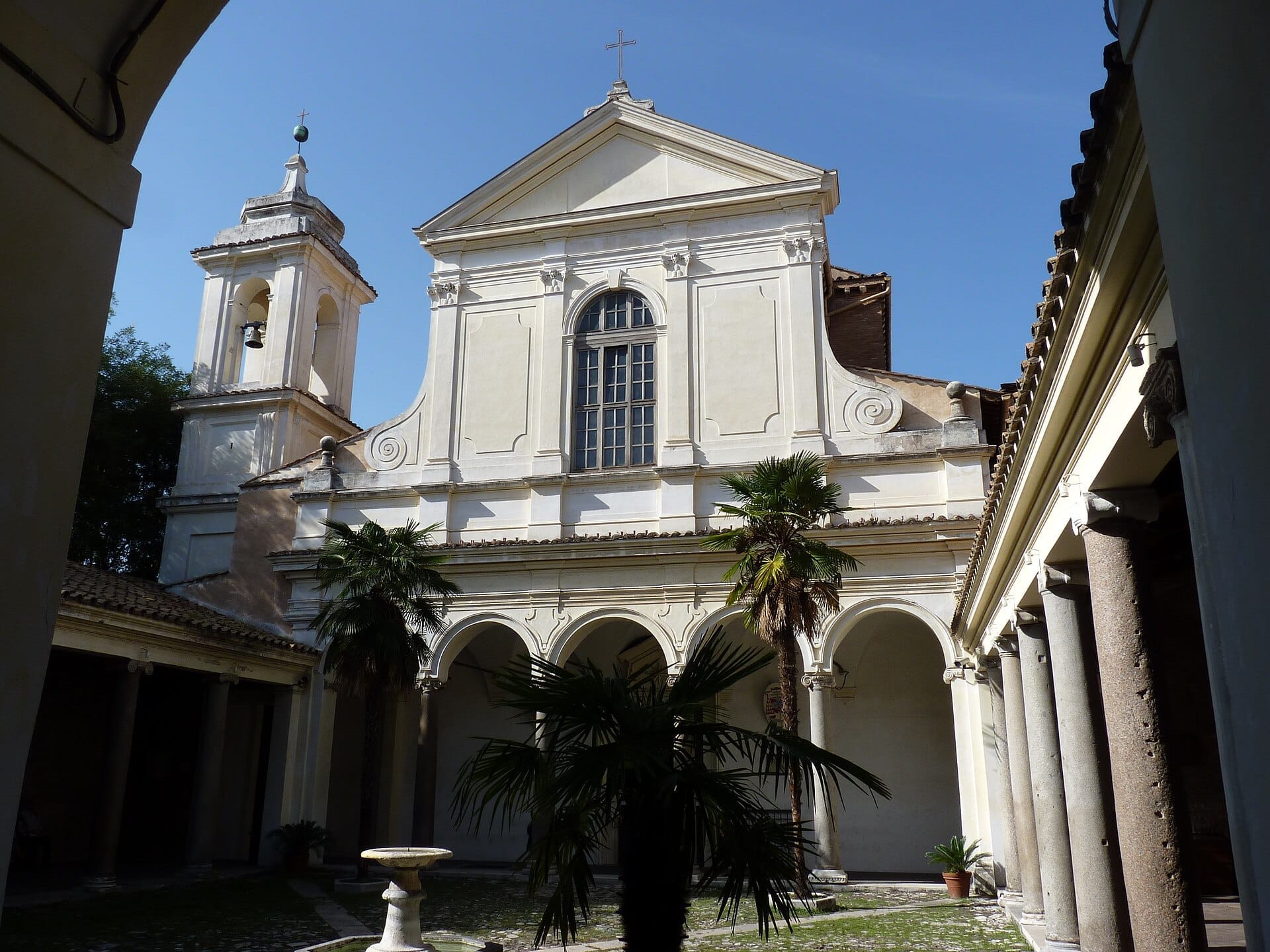
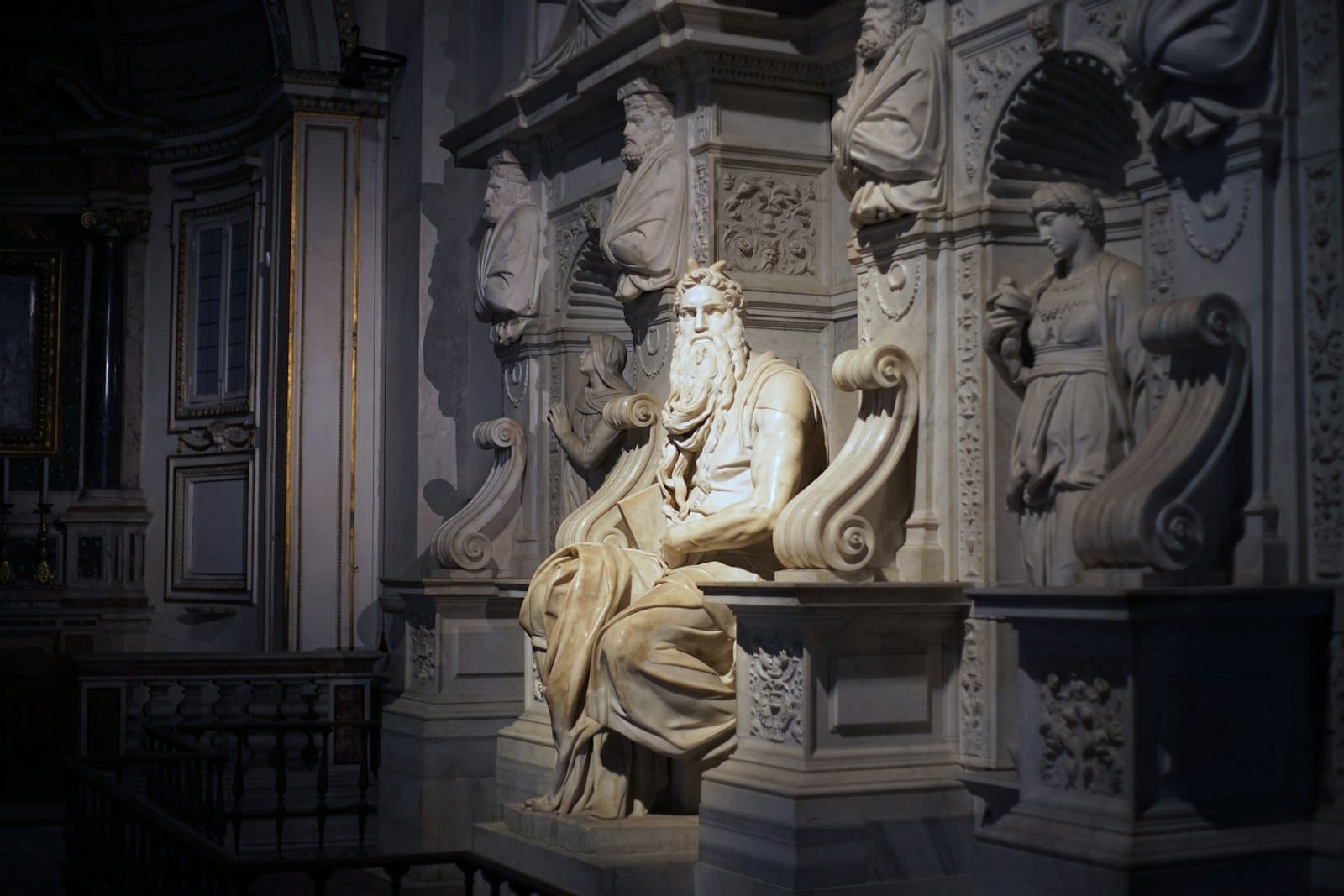
The Basilica of San Clemente on Via Labicana is one of Rome's most layered religious sites: a 12th-century basilica built over a 4th-century church built over a 1st-century Roman street and a Mithraic temple. Entry is inexpensive and the descent through the strata is genuinely disorienting in the best way. Similarly, San Pietro in Vincoli, tucked behind Via Cavour up a steep flight of stairs, holds Michelangelo's Moses as part of Julius II's tomb, one of the great works of Renaissance sculpture, in a church that most visitors walk past without knowing what is inside.
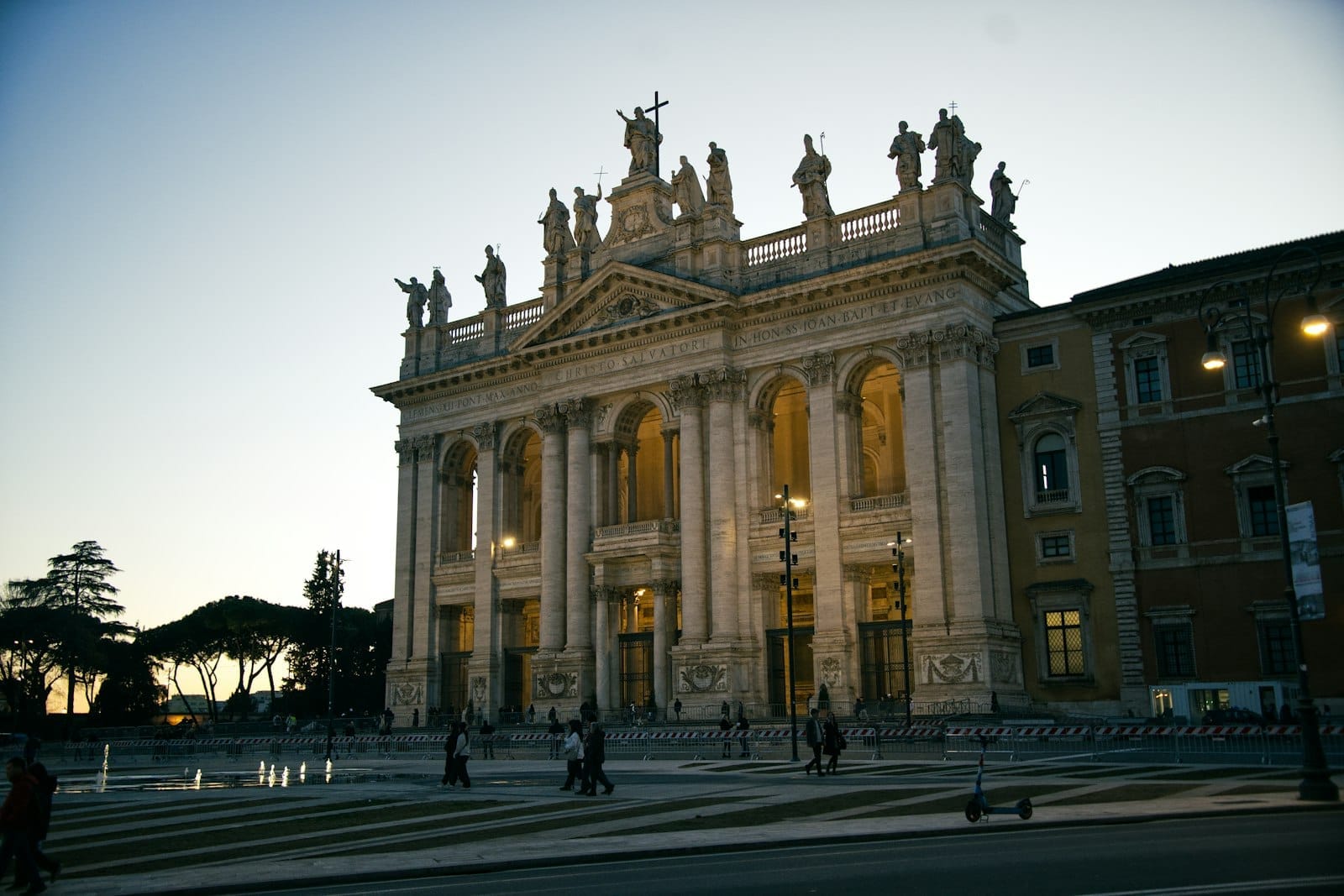
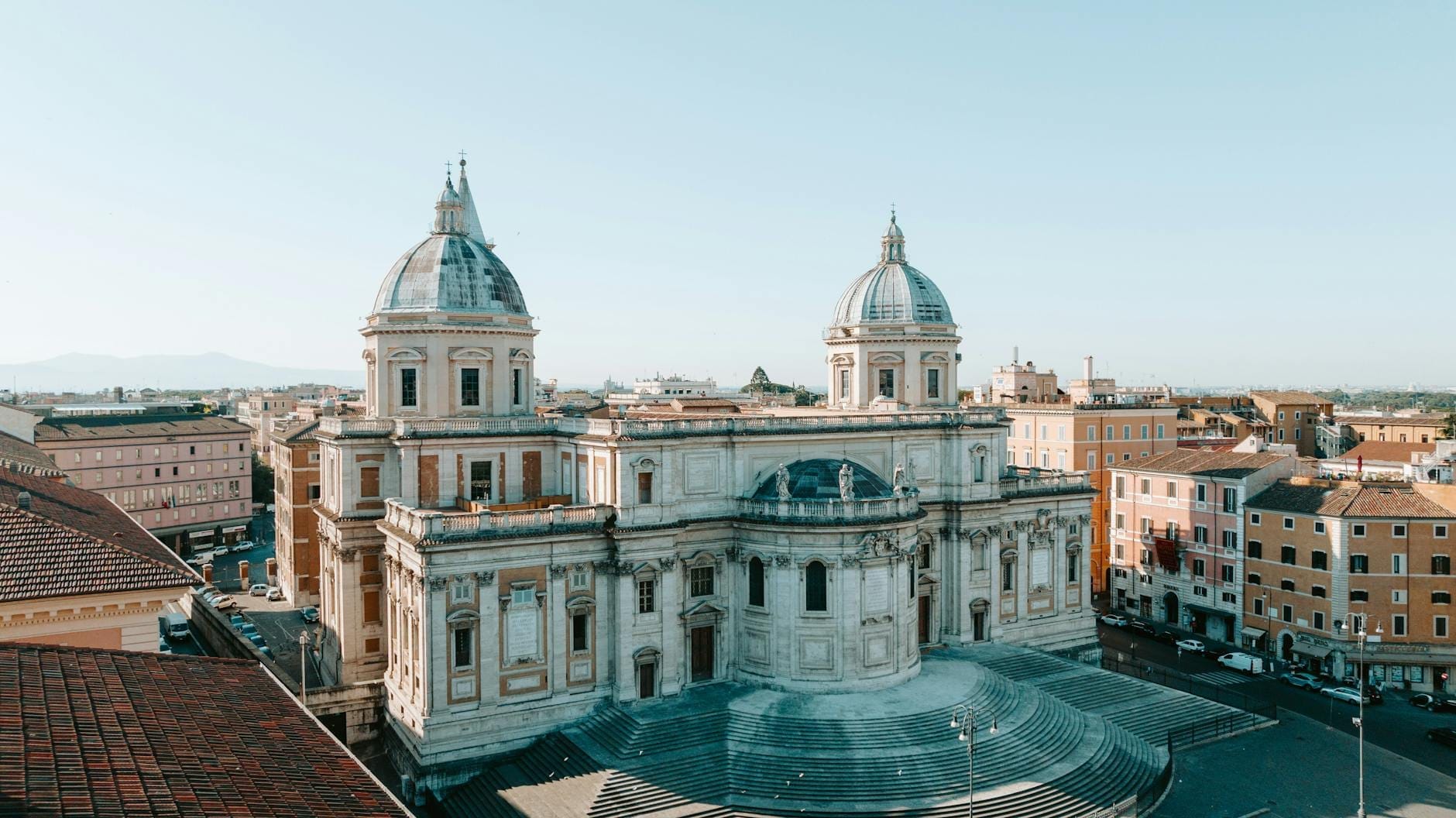
At the northern edge of the rione, the Basilica of Santa Maria Maggiore is one of Rome's four patriarchal basilicas and contains some of the oldest surviving Christian mosaics in the city. Further east, San Giovanni in Laterano and the Lateran Palace mark the outer boundary of Monti's territory. The Imperial Forums, including Trajan's Forum with its famous column, run along Via dei Fori Imperiali and are best seen in the late afternoon when the stone glows warm. The Trajan's Column itself, with its 190-meter spiral narrative carved in relief, stands at the northwest corner of this complex and can be viewed from street level for free.
San Clemente Basilica: three layers of Roman and Christian history, from Mithraic temple to medieval nave
San Pietro in Vincoli: Michelangelo's Moses, uncrowded and free to enter
Santa Maria Maggiore: 5th-century mosaics and one of Rome's grandest interiors
Imperial Forums and Trajan's Column along Via dei Fori Imperiali
Piazza della Madonna dei Monti: the neighborhood's own living room, centered on a Giacomo della Porta fountain
Via del Boschetto and Via dei Serpenti: best streets for independent shops, galleries, and vintage
💡 Local tip
The Colosseum and Roman Forum are technically just outside Monti's southern boundary, but staying in the neighborhood gives you the best possible position to arrive early, before the crowds build. From most streets in the core of Monti, the walk to the Colosseum takes under ten minutes downhill.
Eating and Drinking
Monti's food scene is one of the more honest in central Rome. It has not been completely polished for tourism, and you can still find trattorias where the menu changes with what was available at the market that morning, alongside newer wine bars and cafes that have grown up with the neighborhood's changing demographics. The price range is mid-level: not cheap, but not the inflated tourist pricing you encounter on the streets immediately surrounding the Colosseum or Trevi Fountain.
Wine bars, known in Italian as enoteche, are the social anchor of Monti evenings. Several on and around Via del Boschetto operate on the Italian aperitivo model: a glass of natural or regional wine accompanied by small plates of cheese, cured meat, and seasonal vegetables. This format works well as a bridge between afternoon sightseeing and a proper dinner. The neighborhood also has a handful of spots doing serious Roman cooking, the kind built around cacio e pepe, coda alla vaccinara, and rigatoni all'amatriciana.
For context on eating well in Rome without overpaying, the Rome food guide covers the city's culinary geography in detail. Monti sits comfortably within reach of Testaccio, which is Rome's most serious food neighborhood: the Mercato di Testaccio is about a 20-minute walk or one metro stop away and worth the trip for market food at lunch.
Enoteche on Via del Boschetto: aperitivo hour from around 6pm, natural wines and small plates
Via Urbana: concentration of cafes, small restaurants, and street food options
Piazza della Madonna dei Monti area: gelaterias and bars popular with the evening crowd
Trattorias in the side streets: look for handwritten menus and no photos on the boards outside
⚠️ What to skip
Avoid the restaurants immediately on Via dei Fori Imperiali and those directly facing the Colosseum. These cater almost entirely to tourists and charge significantly more for significantly less. Move two or three streets into Monti and the quality improves immediately.
Getting There and Around
Monti is one of the better-connected central neighborhoods in Rome. The Cavour station on Metro Line B sits at the intersection of Via Cavour and Via dell'Ara Massima di Giove and puts the heart of the neighborhood about a three-minute walk away. Line B connects directly to Termini, where you can transfer to Line A for the Spanish Steps, Trevi Fountain area, and Vatican side of the city, or catch regional trains and the Leonardo Express to Fiumicino Airport.
Termini station itself is walkable from the upper part of Monti in around ten to fifteen minutes on foot, heading north along Via Cavour or Via Nazionale. This matters if you are arriving by train from the airport or from other Italian cities: you can walk to your accommodation without needing a taxi or bus. Several bus lines also pass along Via Nazionale and Via Cavour, connecting Monti to Trastevere, the Vatican, and Piazza Venezia.
For navigating the wider city from Monti, the guide to getting around Rome covers metro, bus, and tram options in detail. Within the neighborhood itself, everything is on foot: the streets are too narrow and hilly for buses, and cycling is possible but requires dealing with cobblestones. The walk south from Piazza della Madonna dei Monti to the entrance of the Colosseum takes under ten minutes and passes through genuinely pleasant streets the whole way.
Metro Line B: Cavour station, central to the neighborhood on Via Cavour
Walking to Termini: 10-15 minutes north along Via Cavour or Via Nazionale
Walking to Colosseum: 8-10 minutes south downhill from the neighborhood core
Bus lines on Via Nazionale: connect to Trastevere, Vatican, and Piazza Venezia
Taxis and ride-hailing (Uber, Free Now): available on wider streets like Via Cavour
Where to Stay
Monti has become one of the most popular accommodation choices for travelers who want to be central without being in the thick of the Centro Storico crowds. The neighborhood offers a range of options, from small boutique hotels and B&Bs in converted palazzo buildings to apartment rentals on the quieter side streets. Prices are generally mid-range to moderately high, reflecting both the location and the demand.
The best part of Monti for staying is the core triangle between Via dei Serpenti, Via del Boschetto, and Via Urbana. Accommodation here puts you within walking distance of both the ancient sites to the south and the transport connections to the north, while keeping you in the most characterful part of the neighborhood. Streets closer to Via Cavour are convenient but noisier due to traffic. Streets nearer to Termini, on the northeastern edge of the rione, are less atmospheric and better suited to transit-focused travelers than those wanting to soak up the neighborhood.
Monti suits a wide range of travelers: solo visitors and couples who want walkability and a local atmosphere, families who need space and appreciate the genuine residential feel, and anyone who plans to spend significant time at the ancient sites. For a broader look at Rome's accommodation options by neighborhood, the where to stay in Rome guide compares Monti against Trastevere, the Centro Storico, and other central options.
Practical Tips for Visiting Monti
Monti is an easy neighborhood to navigate and does not require much in the way of preparation. A few things are worth knowing before you arrive. The streets in the core of the neighborhood are cobbled and uneven, which means that wheeled luggage is a serious nuisance: if you are staying here, pack a bag you can carry rather than drag. The hills are real but not steep enough to be a problem for most people.
If you are visiting the major churches, modest dress is required: shoulders and knees should be covered. This applies particularly to Santa Maria Maggiore, San Giovanni in Laterano, and San Clemente. Most of the churches in Monti are free to enter, which makes the neighborhood one of the more rewarding areas for those following a free things to do in Rome approach. For the ancient sites on the neighborhood's edges, booking tickets in advance is strongly recommended, particularly for the Colosseum and the Roman Forum in summer.
The neighborhood is quieter and more residential on Sunday mornings, when shops are often closed until midday or afternoon. This is actually one of the better times to walk the streets and visit the basilicas without competition. For those interested in the best time to visit Rome more broadly, weather and crowd patterns vary significantly by season: April to June and September to October are the most comfortable months to explore a neighborhood like Monti on foot.
TL;DR
Monti is Rome's oldest rione and one of its most central neighborhoods, sitting between the Colosseum and Termini station with Metro Line B access at Cavour.
The neighborhood suits travelers who want genuine local atmosphere, walkability to the ancient sites, and a food and bar scene that functions for Romans as well as visitors.
Key attractions include San Clemente Basilica, San Pietro in Vincoli with Michelangelo's Moses, Santa Maria Maggiore, and the Imperial Forums along Via dei Fori Imperiali.
The social heart of the neighborhood is Piazza della Madonna dei Monti, with the best independent shops, wine bars, and cafes concentrated on Via del Boschetto, Via dei Serpenti, and Via Urbana.
Not ideal for travelers who want the Baroque piazza experience of the Centro Storico or who need to be near the Vatican: Monti's strength is its balance between ancient Rome, real residential life, and a walkable, low-key evening scene.
Rome has more churches per square kilometer than almost any city on earth, and the finest contain some of the greatest art ever made. This guide cuts through the noise to bring you the 15 churches that genuinely deserve your time, from world-famous papal basilicas to overlooked medieval gems.
Rome holds one of the densest concentrations of great museums anywhere on earth, from ancient sculpture collections to Baroque art palaces and cutting-edge contemporary spaces. This guide covers the 18 best, organized by type, with practical advice on what to prioritize and when to book.
Rome rewards visitors year-round, but the experience varies dramatically by season. This guide breaks down crowds, temperatures, costs, and local events to help you pick the right time for your trip.
Rome rewards those who look up, climb higher, and peer through keyholes. This guide covers the city's finest viewpoints, from sweeping 360-degree rooftop panoramas to perfectly framed peepholes, with tips on when to go and what you'll see.
Rome rewards budget travelers more than almost any major European capital. From Baroque piazzas and ancient hilltops to world-class churches and sprawling parks, a huge portion of the city's best experiences cost absolutely nothing. This guide covers the 20 best free things to do in Rome, organized so you can plan a full day without opening your wallet.
Rome's transport network is more complex than most first-time visitors expect. This guide breaks down every option for getting around Rome, from the limited metro to the best bus routes, airport transfers, taxis, and when walking beats everything else.
Rome rewards those who look past the Colosseum queue and the Trevi selfie crowd. These are the churches, viewpoints, markets, and underground worlds that most visitors walk right past, where the real texture of the city lives.
Ostia Antica is Rome's best-kept archaeological secret: a sprawling ancient city just 30 minutes from the capital, better preserved than most sites and far less crowded than the Forum or Colosseum. This guide covers everything from tickets and transport to the top ruins worth your time.
Rome transforms after sunset. Ancient ruins glow under floodlights, piazzas fill with locals rather than tour groups, and the city's food and nightlife scenes come alive. This guide covers the best nocturnal experiences in Rome, from free evening strolls to exclusive night tours of the Colosseum and Vatican.
Rome rewards those who venture beyond the city walls. Within an hour or two of the capital, you can walk through a remarkably intact Roman port city, stroll Renaissance water gardens, sip Frascati wine above a volcanic crater lake, or explore an Etruscan cliff town. These are the day trips that make a Rome visit feel genuinely complete.
Roman cuisine is one of the most specific, opinionated, and deeply satisfying in Italy. This guide covers the essential dishes, the rules locals follow, the best neighborhoods to eat in, and how to avoid the tourist traps that pass for Italian food in Rome.
Three days is enough to see Rome's greatest hits — if you plan smart. This itinerary covers the Colosseum, Vatican, Pantheon, and beyond, with the right order, practical timing tips, and a few stops that most visitors miss.
Rome is one of Europe's most rewarding cities to explore on a tight budget. This guide breaks down real costs, free attractions, transport options, and smart strategies so you can see the best of the city without draining your account.
Rome rewards families who come prepared. From gladiator stories at the Colosseum to gelato breaks in Villa Borghese, this guide covers every practical detail: advance tickets, stroller logistics, the best neighborhoods to base yourself, and how to keep kids engaged without burning everyone out.
Rome's top attractions can swallow hours in queue time alone. This guide breaks down exactly which sites demand advance booking, which platforms to trust, what skip-the-line actually means in practice, and where you can honestly walk straight in.
Rome rewards those who plan smart. This guide covers the essential things to do in Rome, from ancient ruins and world-class museums to neighborhood food markets and rooftop views, with honest advice on what to skip and how to book the rest.
Rome's food scene rewards the curious and punishes the complacent. This guide cuts through the tourist-trap noise to give you honest, neighborhood-by-neighborhood restaurant picks, dish-by-dish ordering advice, and practical tips on reservations, pricing, and when to skip the menu entirely.
Choosing where to stay in Rome shapes your entire trip. This guide breaks down every major neighborhood honestly, covering walkability, noise, price, and who each area suits best, so you can book with confidence.