Getting Around Rome: Metro, Buses, Taxis, and Walking Explained
Rome's transport network is more complex than most first-time visitors expect. This guide breaks down every option for getting around Rome, from the limited metro to the best bus routes, airport transfers, taxis, and when walking beats everything else.
Tickets & tours
Live prices and dates from our booking partner. If you book, we may earn a commission at no extra cost to you.
TL;DR
- Rome's metro has only 3 lines and misses many major attractions, so buses and walking are essential, not optional.
- A single ATAC ticket costs €1.50 and is valid for 100 minutes across buses and one metro journey.
- Walking is genuinely the best way to explore the historic center, where streets are too narrow and distances too short for transit to save time.
- The fixed taxi fare from Fiumicino Airport to the city center is around €50, making it predictable if not cheap.
- For a deeper look at structuring your time, a 3-day Rome itinerary can help you group attractions by location and minimize unnecessary travel.
Understanding Rome's Layout Before You Plan Any Route
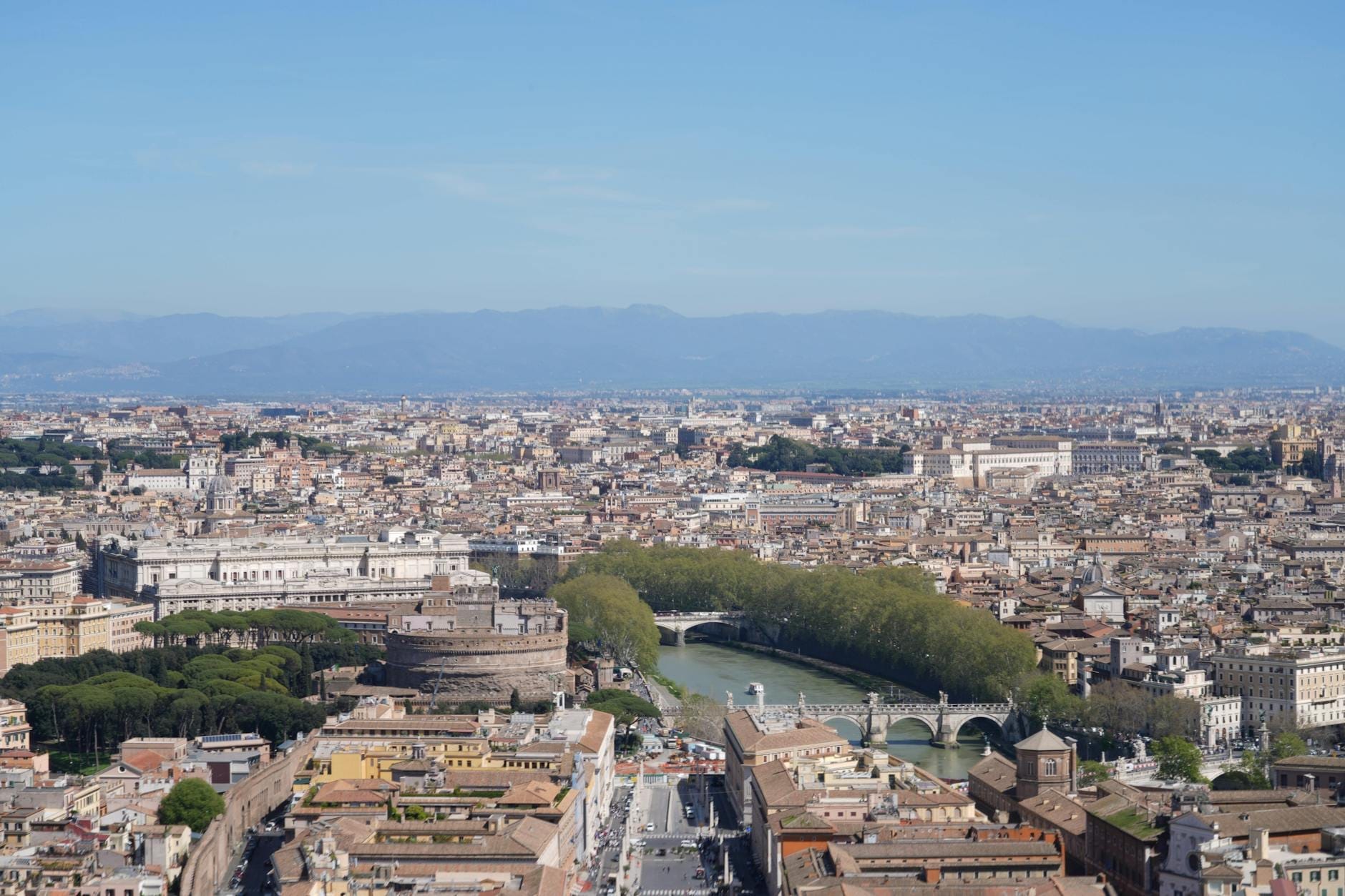
Rome covers 1,287 km², but the vast majority of attractions are concentrated within a roughly 4 km radius of the Colosseum. The city's historic districts, from Trastevere to the Vatican, are separated by the Tiber River, a network of hills (the original seven), and a road system that was not designed for modern vehicles. This matters for transport because no single mode covers everything well. The metro is fast but patchy. Buses go everywhere but run unpredictably. Walking is often the fastest option for distances under 2 km but punishing in July heat.
Knowing which neighborhood you're based in dramatically changes your transport strategy. Staying in Monti puts you within walking distance of the Colosseum, Roman Forum, and Santa Maria Maggiore. Staying near the Vatican means you'll need buses or metro Line A to reach the eastern side of the city. Staying in Trastevere means crossing the river for most major sights, which is fine on foot but slow on transit. Plan your accommodation with this in mind.
Rome's Metro: Fast Where It Works, Useless Where It Doesn't

Rome's metro (Metropolitana) has three lines. Line A runs from Battistini in the west to Anagnina in the southeast, passing through Termini and key stops like Spagna (Spanish Steps) and Ottaviano (Vatican). Line B runs from Jonio in the north to Laurentina in the south, with a branch (B1), stopping at Colosseo for the Colosseum and Roman Forum. Line C runs from San Giovanni to Monte Compatri-Pantano in the eastern suburbs, with extensions toward Piazza Venezia and the Colosseum area still in progress.
The metro's biggest weakness is coverage. The entire southwest of the historic center, including the Pantheon, Piazza Navona, Campo de' Fiori, and Trastevere, has no metro access. You'll need buses or your feet for these areas. Trains run roughly every 5-10 minutes between 5:30 AM and 11:30 PM. During summer and peak tourist periods, carriages on Line A and B can be extremely crowded, particularly between Termini and Spagna.
⚠️ What to skip
Pickpocketing is a genuine problem on the metro, particularly on Line A between Termini and Spagna, and on Line B at Colosseo station. Keep bags in front of you, avoid putting wallets in back pockets, and be alert when the carriage is crowded. This isn't alarmism, it's a consistent pattern reported by visitors and locals alike.
Buses, Trams, and the ATAC Network

ATAC operates over 330 bus lines across Rome, making it theoretically the most comprehensive way to get around. In practice, buses are frequently delayed, especially during morning and evening rush hours and in the congested centro storico. The official app and Moovit both provide real-time tracking, which helps, but you should always build in extra time when relying on a bus for something time-sensitive like a museum booking.
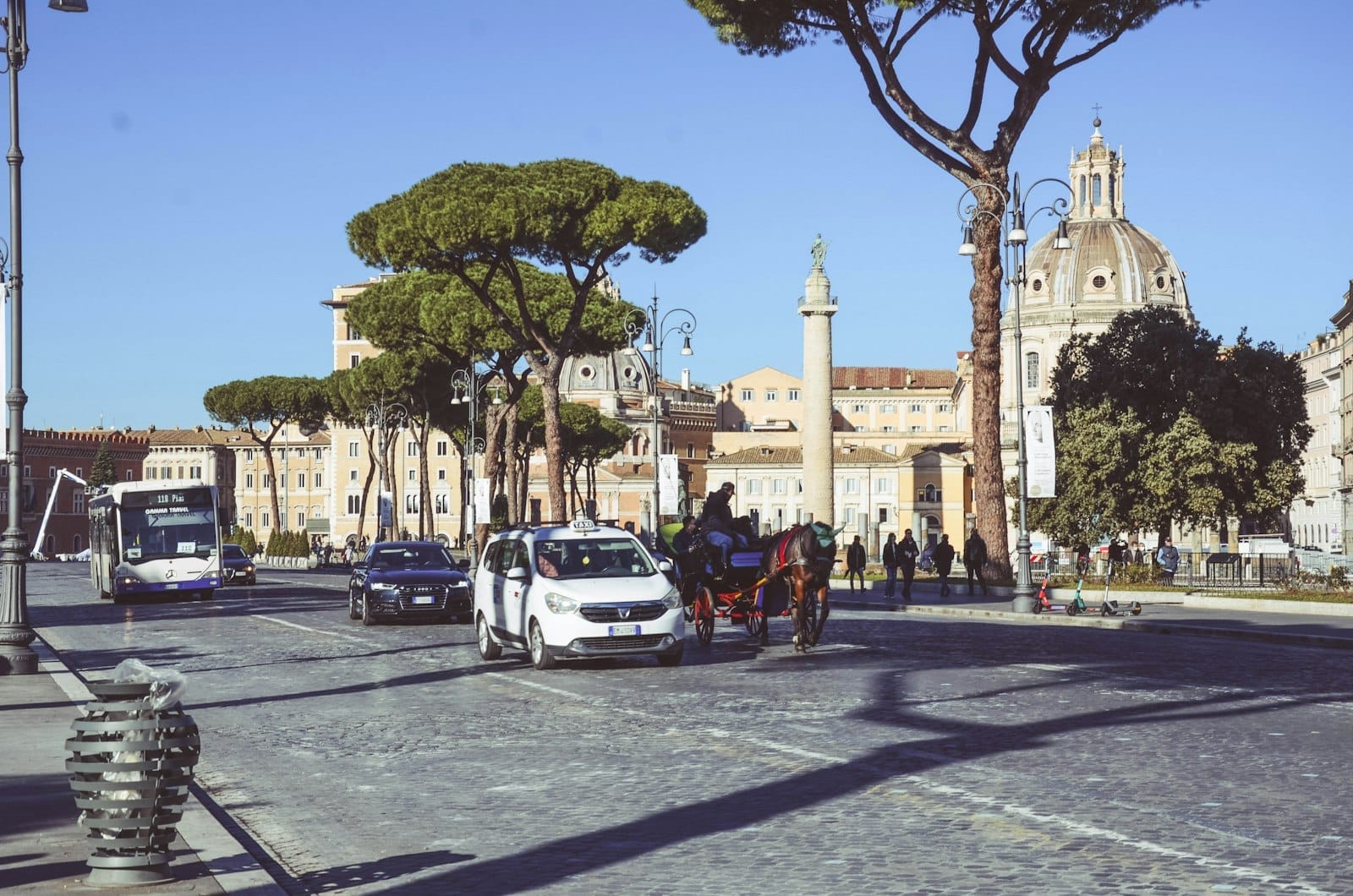
That said, certain routes are genuinely useful for tourists. Bus 40 Express connects Termini with the Vatican, passing near the Pantheon. Bus 64 covers a similar corridor and stops closer to Campo de' Fiori. Tram 8 runs from Largo di Torre Argentina through the Jewish Ghetto to Trastevere, making it one of the more reliable surface links across the river. Night buses (prefixed with 'n') run after midnight on major corridors when the metro closes.
- Bus 40 Express Termini to Vatican (St. Peter's Square area), passing via Largo Argentina and Ponte Vittorio Emanuele II. Faster than Bus 64 with fewer stops.
- Bus 64 Termini to Vatican, more stops including near Campo de' Fiori. Notorious for pickpockets during peak hours — keep valuables secure.
- Tram 8 Largo di Torre Argentina to Trastevere, passing through the Jewish Ghetto. More reliable than buses in terms of schedule adherence.
- Bus 23 Runs along the Tiber River from Piazza Risorgimento (near Vatican) to Piazza Venezia and beyond, useful for reaching Trastevere from the north.
- Bus 87 Passes near Piazza Navona, the Pantheon, and the Colosseum — a useful cross-city route for sight-hopping without the metro.
💡 Local tip
Always validate your ticket when boarding a bus or entering the metro. Inspectors do conduct random checks and the fine for an unvalidated ticket is around €100. Many machines on buses are out of order, so buy tickets in advance from tabacchi (tobacco shops), metro station machines, or via apps like ATAC or Moovit.
Tickets, Passes, and What's Actually Worth Buying
The standard ATAC single ticket costs €1.50 and is valid for 100 minutes from first validation. During that window, you can take unlimited bus and tram rides, plus one metro journey. A 24-hour pass costs €7, a 48-hour pass €12.50, and a 72-hour pass €18. For most short-stay visitors who plan to walk extensively, individual tickets often work out cheaper than day passes unless you're making 5+ journeys per day.
The Roma Pass (available in 48h and 72h versions) bundles unlimited transport with free or reduced entry to selected museums, including the Capitoline Museums. Whether it saves money depends entirely on which sites you visit — do the math before buying. It's sold at major museums, tourist offices, and the official Roma Pass website. Note that it does not cover the Vatican Museums, which require separate booking regardless.
- Single ticket: €1.50, valid 100 minutes (1 metro + unlimited buses/trams)
- 24-hour pass: €7, unlimited rides
- 48-hour pass: €12.50
- 72-hour pass: €18
- Weekly pass: €24 — only worth it for stays of 5+ days with heavy transit use
- Roma Pass (48h): includes transport plus museum discounts — verify current pricing and included sites before purchasing
- Tap & Go: Some metro gates accept contactless bank cards directly, charging the single fare automatically
Taxis, Ride-Hailing, and Getting In from the Airport
Licensed Rome taxis are white and metered. There is a fixed fare of €52 for journeys between Fiumicino Airport (FCO) and destinations within the Aurelian Walls (central Rome). This covers up to 4 passengers and luggage, making it reasonably competitive with other options if you're traveling in a group. For Ciampino Airport (CIA), the fixed fare to central Rome is €32. Always insist on the meter or confirm the fixed fare before getting in, and only use official white taxis from the designated ranks.
Uber operates in Rome but functions differently than in many other cities. Due to local regulations, Uber Black (licensed private drivers) is available but surge pricing applies and it's often more expensive than a metered taxi. Free Now is another app-based option. Neither is dramatically more convenient than taxis in the center, where traffic means journey times are similar regardless of service.
For the airport journey specifically, the Leonardo Express train from Fiumicino to Roma Termini costs around €14 and takes 32 minutes, running every 30 minutes roughly between 6 AM and 11 PM. The FL1 regional train is slower (about 40-50 minutes) but costs around €8 and stops at more stations including Trastevere, which is useful if that's where you're staying. Coach services like Terravision and SIT Bus run to Termini for around €6-8 but take 55 minutes or more depending on traffic.
✨ Pro tip
If arriving at Fiumicino late at night, the Leonardo Express stops running around 11:30 PM. In that case, a taxi (fixed €50) is the most straightforward option. Avoid unofficial taxi touts inside the arrivals hall who will charge double or more. Walk past them to the official taxi rank outside.
Walking and Cycling: The Underrated Options
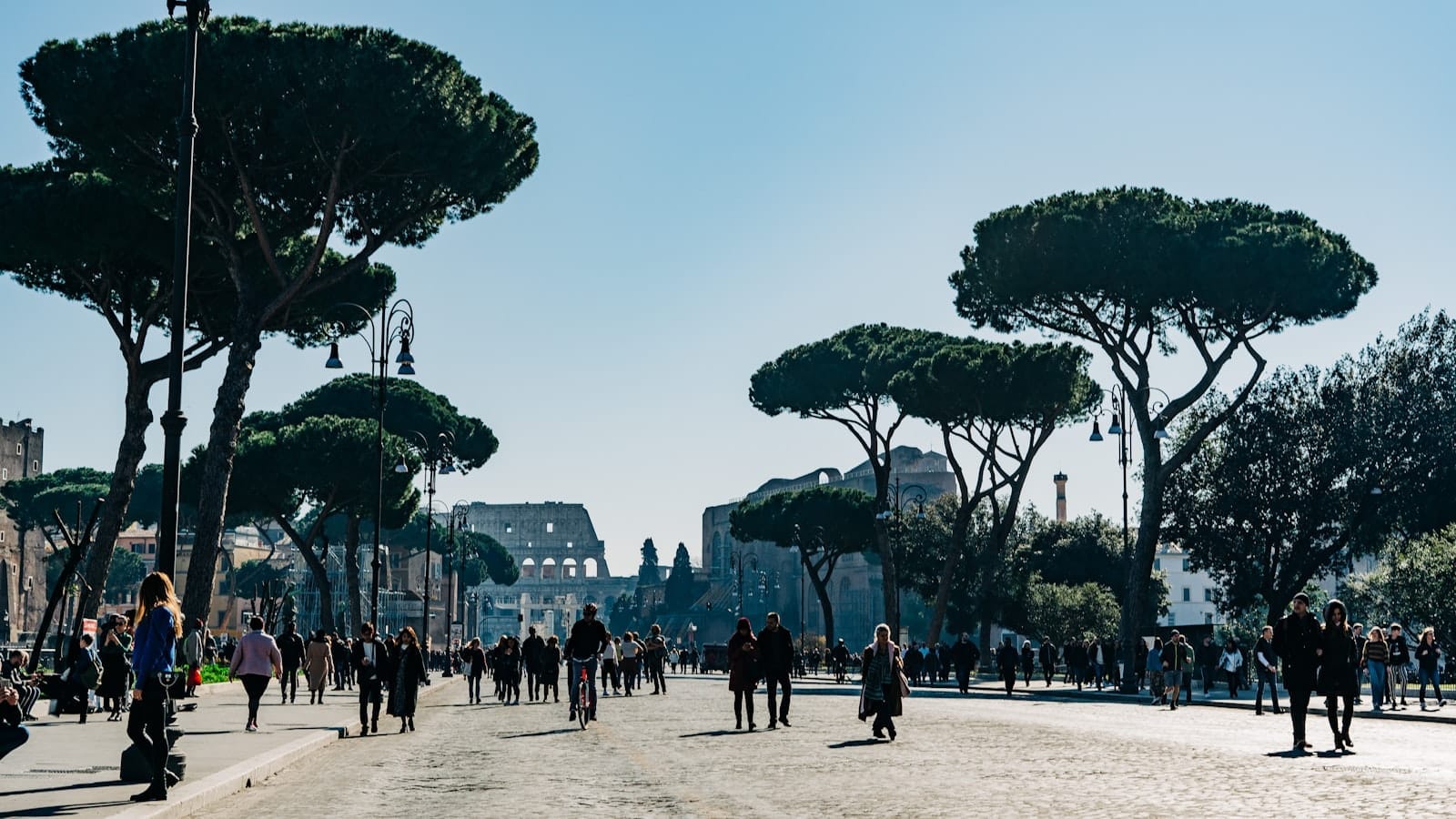
Walking is not just viable in central Rome, it's often the smartest choice. The distance from the Colosseum to the Trevi Fountain is about 2 km on foot, which takes 25-30 minutes. The same journey by bus or metro involves connections, waiting, and often ends up taking longer. Between Piazza Navona and the Pantheon it's a 5-minute walk. Mapping a day's route on foot, grouping nearby sights together, consistently beats transit for the historic core.
The main caveats for walking: Rome's cobblestone streets (sampietrini) are hard on feet and treacherous in rain, so wear proper shoes. In July and August, midday temperatures regularly exceed 30°C, so plan long walks for early morning or late afternoon. Rome also has hills, and while the famous seven are not all within the tourist center, some inclines (particularly around the Palatine and Aventine) are steeper than they look on maps.
Cycling is possible but requires confidence in traffic. The city has expanded its bike-lane network in recent years, and docked bike-sharing services operate across the city. Electric scooters (e-scooters) from services like Lime and Bird are available and popular for short hops between neighborhoods. The Villa Borghese gardens and the Appian Way are particularly good for cycling, being largely car-free and well-suited to leisurely exploration by bike.
ℹ️ Good to know
Rome's historic center (ZTL zone) is restricted to private vehicles during certain hours. If you're renting a car, be aware that driving into the centro storico can result in automatic fines captured by cameras. For most visitors, a car is actively counterproductive in Rome, it's only useful for day trips to the surrounding Lazio region.
Practical Tips for Getting Around Rome Without Frustration
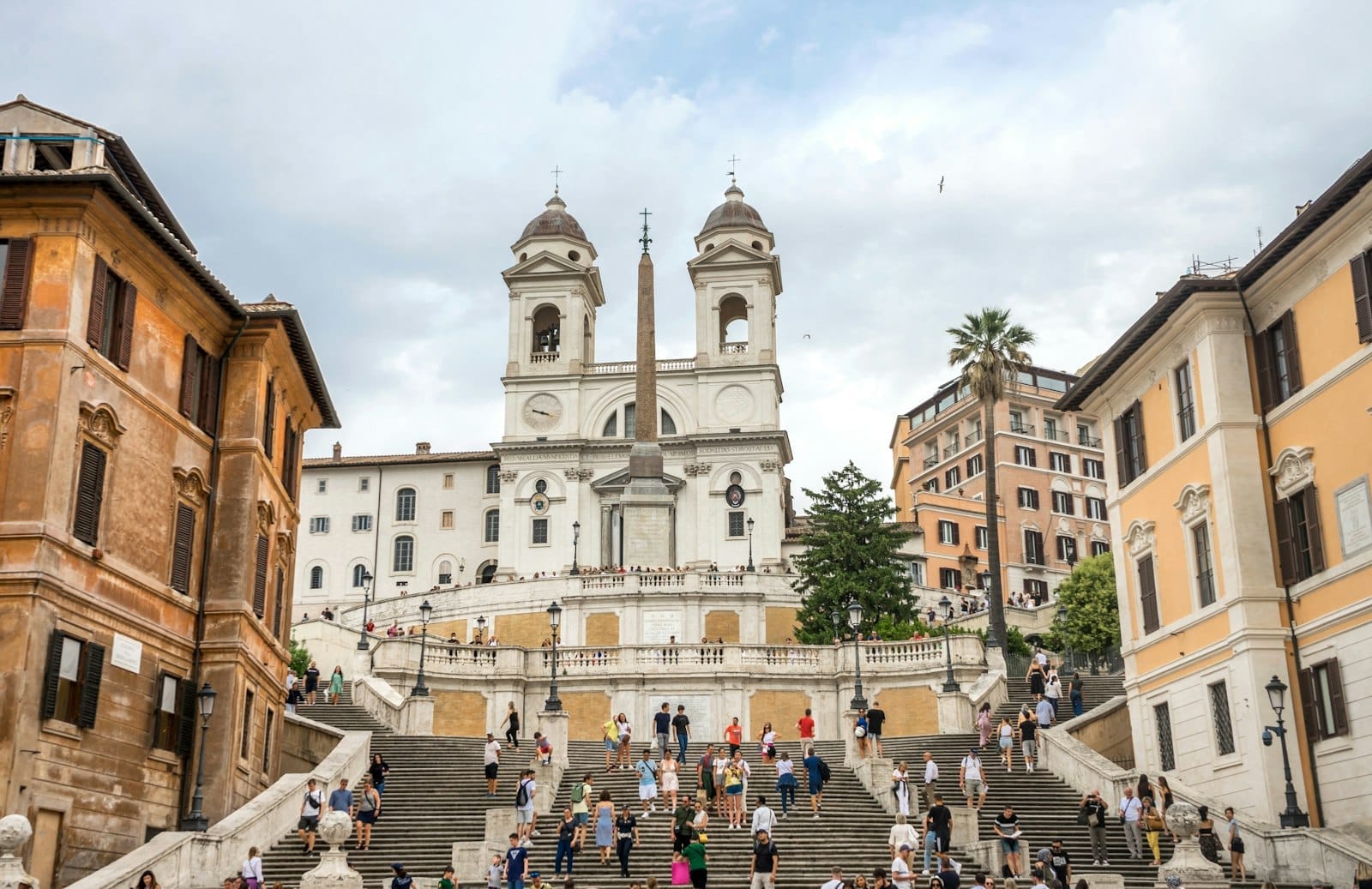
Plan your daily routes around attraction clusters rather than transport connections. The Colosseum, Roman Forum, and Palatine Hill are all on Line B at Colosseo station and walkable from each other. The Spanish Steps, Trevi Fountain, and Via dei Condotti are all within a 10-15 minute walk from Spagna station on Line A. The Vatican and Castel Sant'Angelo are accessible from Ottaviano or Lepanto on Line A. Grouping sights this way dramatically reduces the amount of transit you actually need.
If you're planning a packed itinerary, read up on skip-the-line strategies for Rome's major attractions before you go. Queuing for the Vatican Museums or Colosseum can consume the time you'd otherwise use for traveling between sites. Pre-booking timed entry slots for the Vatican Museums and Galleria Borghese (which requires advance reservations regardless) should be the first thing you sort before worrying about transport.
FAQ
What is the cheapest way to get from Fiumicino Airport to Rome city center?
The FL1 regional train costs around €8 and takes 40-50 minutes to central stations including Trastevere and Tiburtina. The Leonardo Express is faster (32 min to Termini) but costs €14. Coach services like Terravision cost around €6-8 but take over 55 minutes depending on traffic.
Is the Rome metro enough to get around, or do I need buses too?
The metro alone is not enough. Lines A and B cover key points like the Colosseum, Spanish Steps, and Vatican, but the entire area around the Pantheon, Piazza Navona, Trastevere, and Campo de' Fiori has no metro access. You'll need buses or walking for those neighborhoods.
How much does a single ATAC bus or metro ticket cost in Rome?
A single ticket costs €1.50 and is valid for 100 minutes from first validation. During that window you can take unlimited bus and tram rides plus one metro journey. Tickets can be bought at metro stations, tabacchi shops, and via the ATAC app or Moovit.
Is it safe to use taxis in Rome, and how do I avoid being overcharged?
Licensed taxis are white and metered. Fixed fares apply for airport runs: around €50 from Fiumicino and around €31 from Ciampino to the city center. Always confirm the fixed rate or that the meter is running before the journey starts. Only use official taxis from designated ranks or booked via phone/app, and avoid drivers who approach you inside airports or train stations.
Is walking really practical for getting around Rome as a tourist?
For the historic core, absolutely. Most major sights in the center are within 2-3 km of each other and often faster to reach on foot than by transit. Wear comfortable, flat-soled shoes for cobblestones, avoid midday walks in summer heat, and use a clustering approach: group sights by neighborhood rather than zigzagging across the city.
Tickets & tours
Live prices and dates from our booking partner. If you book, we may earn a commission at no extra cost to you.
Planning a trip? Discover personalized activities with the Nomado app.