Ostia Antica: The Complete Visitor Guide to Rome's Ancient Port City
Ostia Antica is Rome's best-kept archaeological secret: a sprawling ancient city just 30 minutes from the capital, better preserved than most sites and far less crowded than the Forum or Colosseum. This guide covers everything from tickets and transport to the top ruins worth your time.
Tickets & tours
Live prices and dates from our booking partner. If you book, we may earn a commission at no extra cost to you.
TL;DR
- Ostia Antica is Rome's ancient port city, legendarily founded in 620 BC and once home to 100,000 people — reachable by train in 30-45 minutes from central Rome.
- Tickets cost €12-16 for adults; under-18 EU citizens enter free. Buy online to avoid queues.
- The site is open Tuesday-Sunday from 8:30 AM; closing times vary by season (4:30 PM in winter, later in summer). Check the best time to visit Rome before planning your trip.
- Unlike Pompeii, Ostia declined gradually — which means you get a more layered picture of everyday Roman urban life: apartments, taverns, baths, and guild halls.
- Plan for at least 3-4 hours on site. Bring water, wear comfortable shoes, and arrive before 10 AM to beat the tour groups.
What Is Ostia Antica and Why It Matters
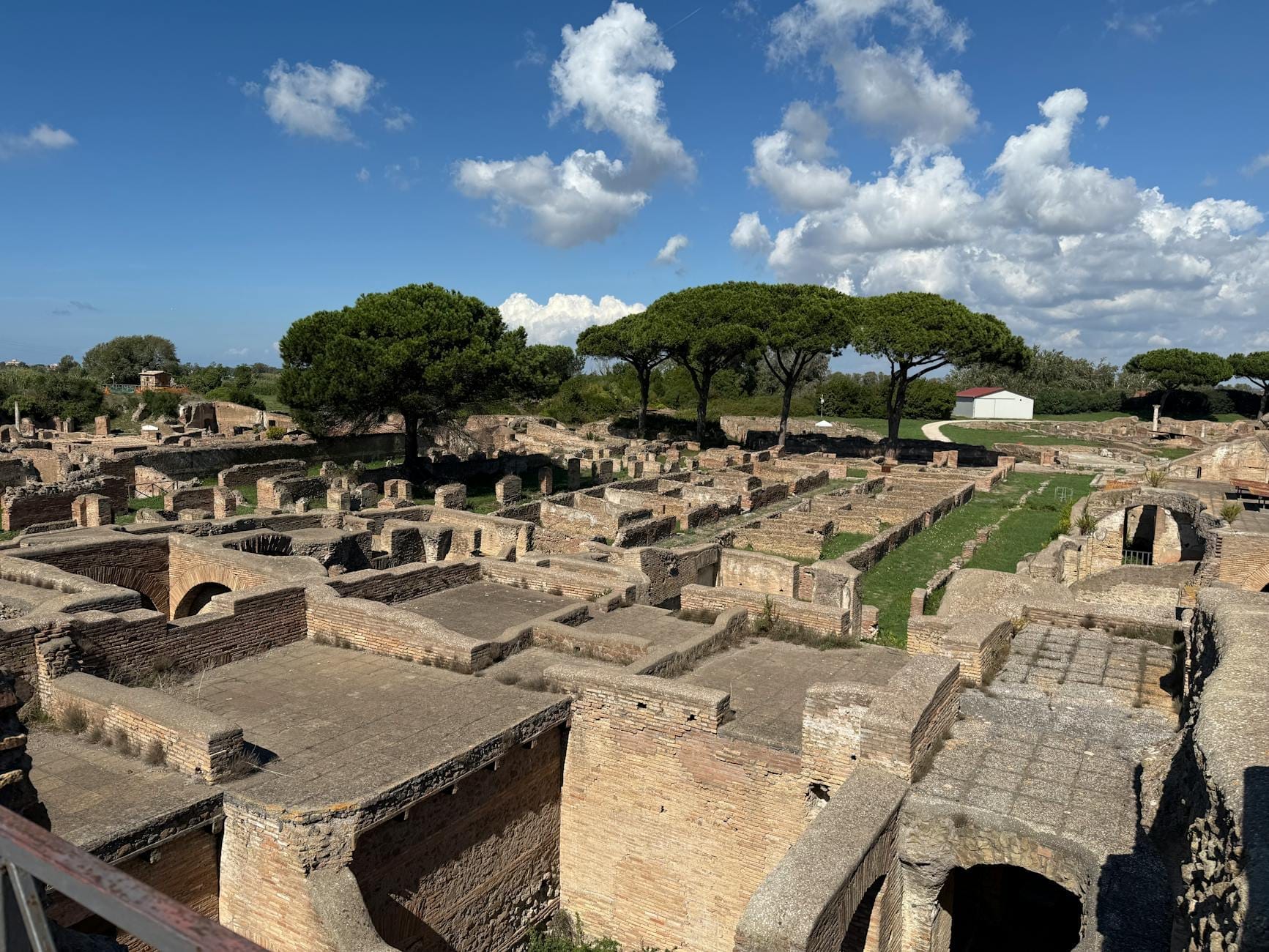
Ostia Antica is the archaeological remains of ancient Rome's primary port city, situated at the mouth of the Tiber River, roughly 25 km southwest of Rome's city centre. Legendarily founded in 620 BC, the city grew into a critical commercial hub that controlled the flow of grain, marble, and goods feeding the Roman Empire. At its peak in the 2nd and 3rd centuries AD, it supported a population of around 100,000 people — merchants, sailors, warehouse workers, guild members, and families living in multi-story apartment buildings that would look recognisable to any urban Roman today.
The city didn't end in catastrophe like Pompeii. Instead, it declined slowly: rival ports were built, the Tiber silted up, malaria became endemic, and by the medieval period the site was largely abandoned. That slow decline is actually what makes Ostia so fascinating. You can trace the evolution of Roman urban planning across centuries — early Republican-era temples beside Imperial-era bathhouses, beside late-antique Christian buildings. It feels like an actual city rather than a snapshot frozen in time.
ℹ️ Good to know
Ostia Antica is often compared to Pompeii, but the comparison undersells it. Pompeii shows you a single moment. Ostia shows you 700 years of continuous Roman city life, including one of the oldest synagogues in Europe and some of the most intact Roman apartment blocks anywhere in the world.
Getting to Ostia Antica from Rome

The easiest way to reach Ostia Antica is by train. Take Metro Line B3 to Piramide station (or walk from Roma Ostiense), then board the Roma-Lido regional train (operated by ATAC) toward Colombo or Cristoforo Colombo. Get off at the Ostia Antica stop, which is a short walk from the archaeological park entrance. The journey takes 30-45 minutes, and a standard ATAC ticket covers the trip — currently €1.70 one-way, though fares are subject to change. You can also pick up the train directly from Testaccio and the Ostiense area, making it convenient if you're staying south of the centre.
Trains run frequently throughout the day, roughly every 15-30 minutes. The station at Ostia Antica is small and straightforward — turn left out of the station, cross the overpass, and follow the signs to the park. The walk from the station to the main entrance takes about 5-10 minutes. Driving is possible if you're hiring a car, but parking near the site is limited and the train genuinely is the more practical option.
💡 Local tip
If you're combining Ostia Antica with a beach day at Lido di Ostia (the seaside resort on the same rail line), note that the two are quite different experiences. The archaeological park and the modern beach town are separate stops. Trying to do both in one day is ambitious — the ruins alone deserve at least half a day.
Tickets, Opening Hours, and Practical Logistics
Ostia Antica is managed by the Italian Ministry of Culture and sits within the Archaeological Park of Ostia Antica. Adult tickets cost around €12-16, with reduced rates for EU citizens aged 18-25 and free entry for EU citizens under 18. A combo ticket that includes the Domus Severiana costs around €18-20. Prices can change, so always verify on the official CoopCulture booking platform or the official park website before your visit.
- Opening days Tuesday through Sunday, including public holidays. Closed Mondays.
- Opening hours (winter) 8:30 AM to 4:30 PM (approximately October 25 to February 28). Last entry 1 hour before closing.
- Opening hours (summer) Extended hours apply from spring through early autumn — typically until 7:00 PM or later. Check the official site for exact seasonal schedules.
- Where to buy tickets On-site at the entrance or online via CoopCulture (the official ticket platform linked from ostiaantica.cultura.gov.it). Booking online in advance is recommended, especially on weekends.
- Facilities on site There is a café, a museum building (Museo Ostiense), toilets, and a bookshop near the entrance. The café is the only food option, so bring your own snacks for a longer visit.
⚠️ What to skip
The site covers roughly 150 hectares. There is almost no shade in many sections, and in summer the exposed ruins can become genuinely uncomfortable by midday. Bring at least 1.5 litres of water per person, sunscreen, and a hat. Sturdy, closed-toe shoes are essential — the cobbled streets are uneven throughout.
The Top Sights Inside the Park
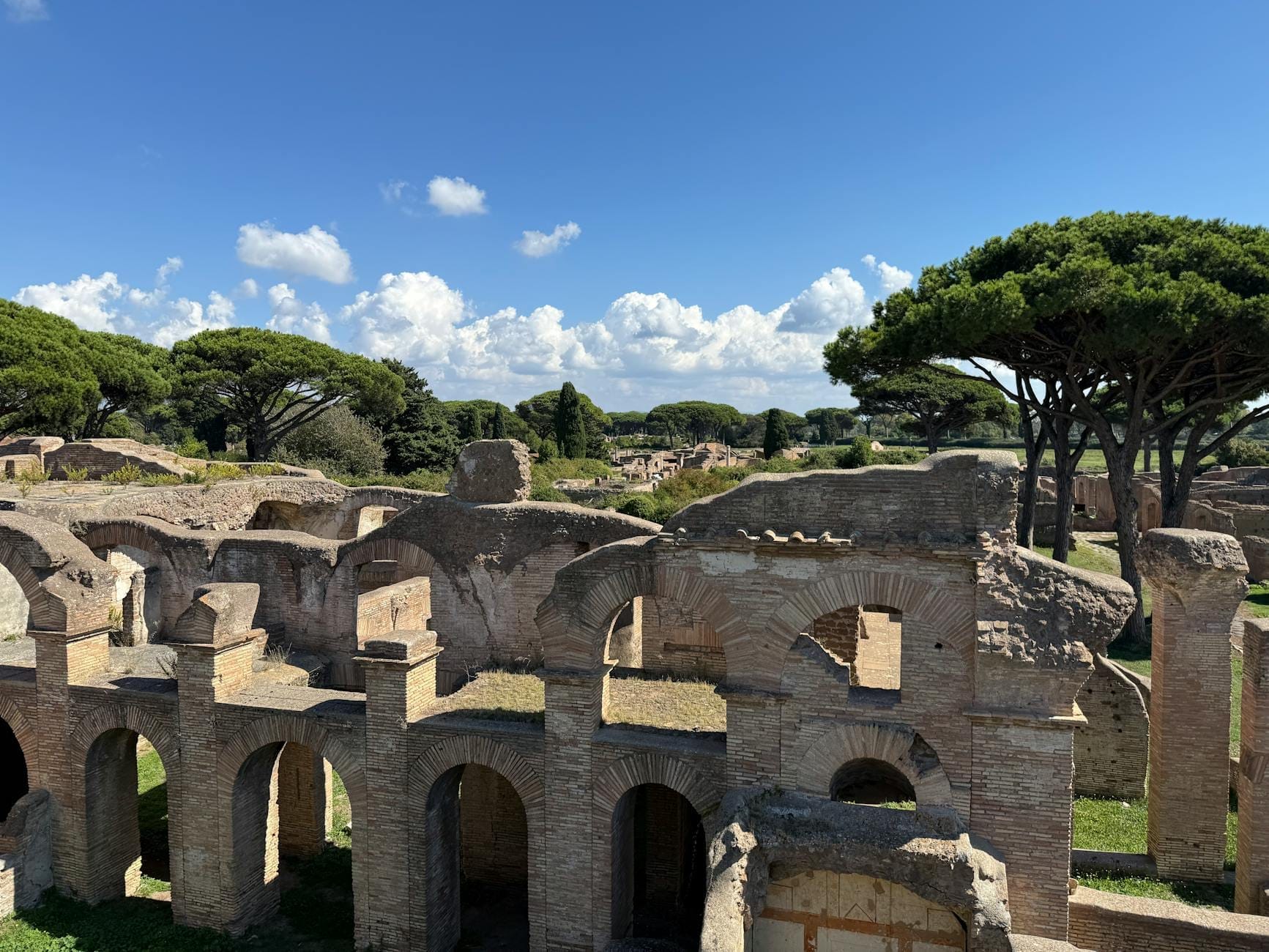
The main axis of the city is the Decumanus Maximus, the broad paved street that runs roughly east-west through the entire site. Walking this road is the best way to orient yourself and encounter the majority of highlights. Most visitors enter from the eastern (Porta Romana) end and work their way toward the western sections, which tend to be quieter and less visited.
- Roman Theatre (Teatro Romano) Built under Augustus and expanded under Septimius Severus, this is one of the best-preserved Roman theatres in Italy, with capacity for around 3,000 spectators. It's still used for performances in summer. The view from the upper tiers over the umbrella pines is worth the climb.
- Piazzale delle Corporazioni (Square of the Guilds) Behind the theatre, this colonnaded square once housed the offices of around 70 merchant guilds from across the Mediterranean. The mosaic floors at the entrance of each office depict the guild's trade — grain merchants, ship builders, elephant traders from Africa. This is one of the most visually striking and intellectually rich spots in the entire park.
- Baths of Neptune (Terme di Nettuno) The most accessible of Ostia's many bathhouses, with a striking mosaic floor depicting Neptune driving a seahorse chariot. Viewable from a raised walkway that gives you the full picture without damaging the mosaic.
- Capitolium The large temple dominating the main forum, dedicated to Jupiter, Juno, and Minerva. Its brick podium survives to impressive height and gives a sense of how the city's religious centre would have looked.
- Insulae (apartment blocks) Ostia has some of the best-surviving examples of Roman insula architecture anywhere. The Casa di Diana is particularly well preserved, with walls standing several stories high — a genuine window into how ordinary Romans lived.
- Ancient Synagogue Near the western end of the site, this is one of the oldest synagogues in Europe, dating to the 1st century AD and expanded over subsequent centuries. It's a remarkable and often overlooked part of the site's history.
- Thermopolium Ostia's best-surviving example of a Roman fast-food counter (thermopolium), complete with painted frescoes advertising the menu. Romans didn't typically cook at home in apartment buildings — these street-food counters were how most people ate.
The Museo Ostiense near the entrance is worth 20-30 minutes if you want context for the statues and objects found across the site. Many of the most important finds were moved to the Vatican Museums and the National Roman Museum in Rome, but the on-site museum still holds significant pieces including portrait busts and architectural fragments.
How to Plan Your Visit: Routes and Timing
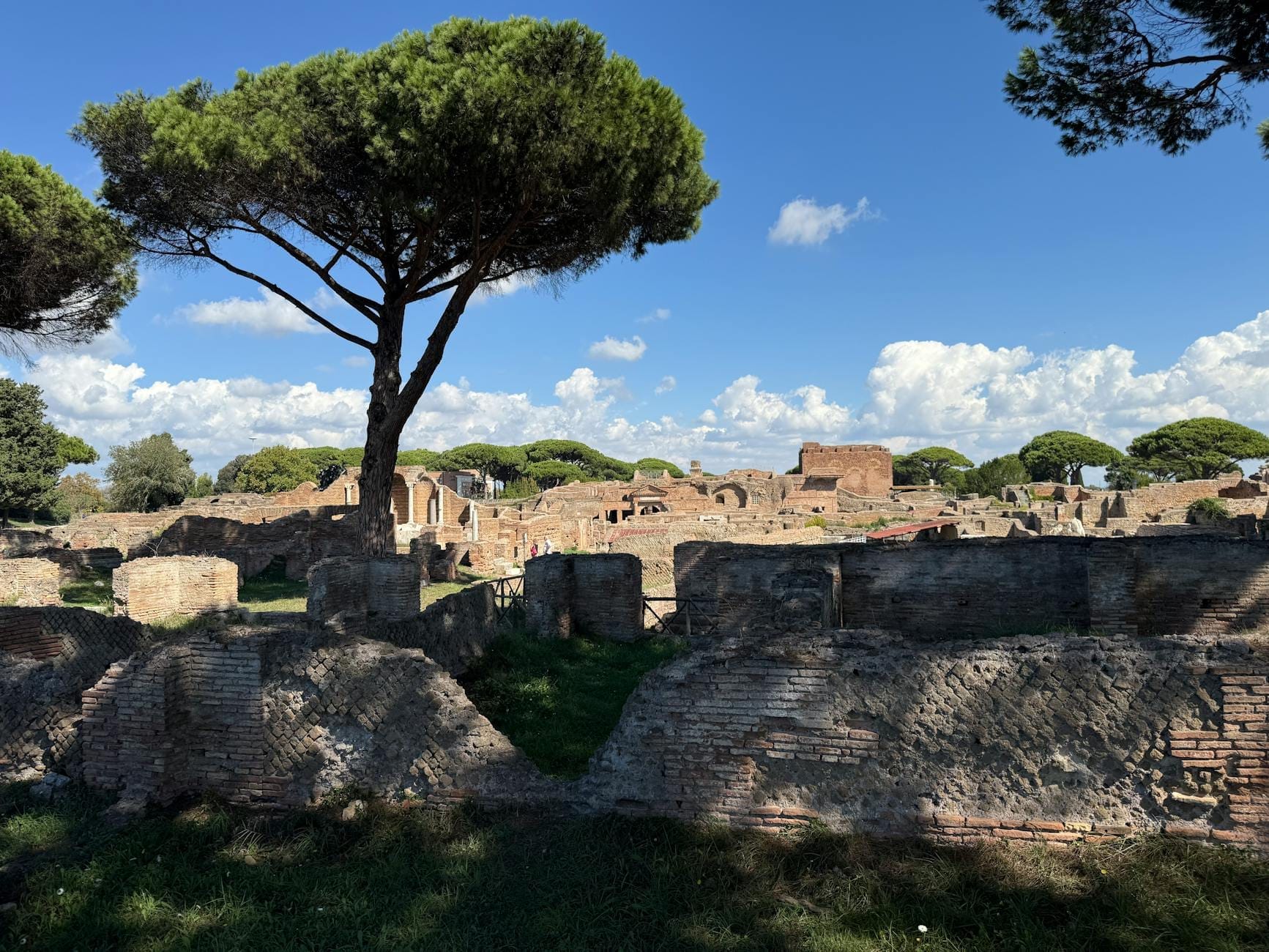
A realistic visit to Ostia Antica takes 3 to 5 hours depending on your pace. Budget 3 hours for a focused highlights tour; 4-5 hours if you want to explore the quieter western sections and the synagogue. The park is large enough that even on busy days you can find empty stretches away from the main axis.
The most efficient approach is to arrive when the gates open at 8:30 AM. You'll have the Decumanus Maximus and the theatre largely to yourself for the first hour. Tour groups typically arrive between 10 AM and 11 AM and cluster around the main sights. By early afternoon, particularly on weekdays, the site quietens considerably again. If you're visiting in summer, an early start is also the only way to avoid the worst of the midday heat.
Ostia Antica works well as a standalone day trip from Rome, but it also pairs naturally with a morning in the Ancient Rome area. If you've already done the Colosseum and Roman Forum, Ostia provides a completely different dimension of Roman archaeology — less monumental, more lived-in.
✨ Pro tip
Download a site map before you go, or pick one up at the entrance. The park is large and signage inside is inconsistent. Without a map, it's easy to miss entire sections, particularly the synagogue and the western insulae. The official park website has a downloadable PDF map.
Seasonal Considerations and When to Go
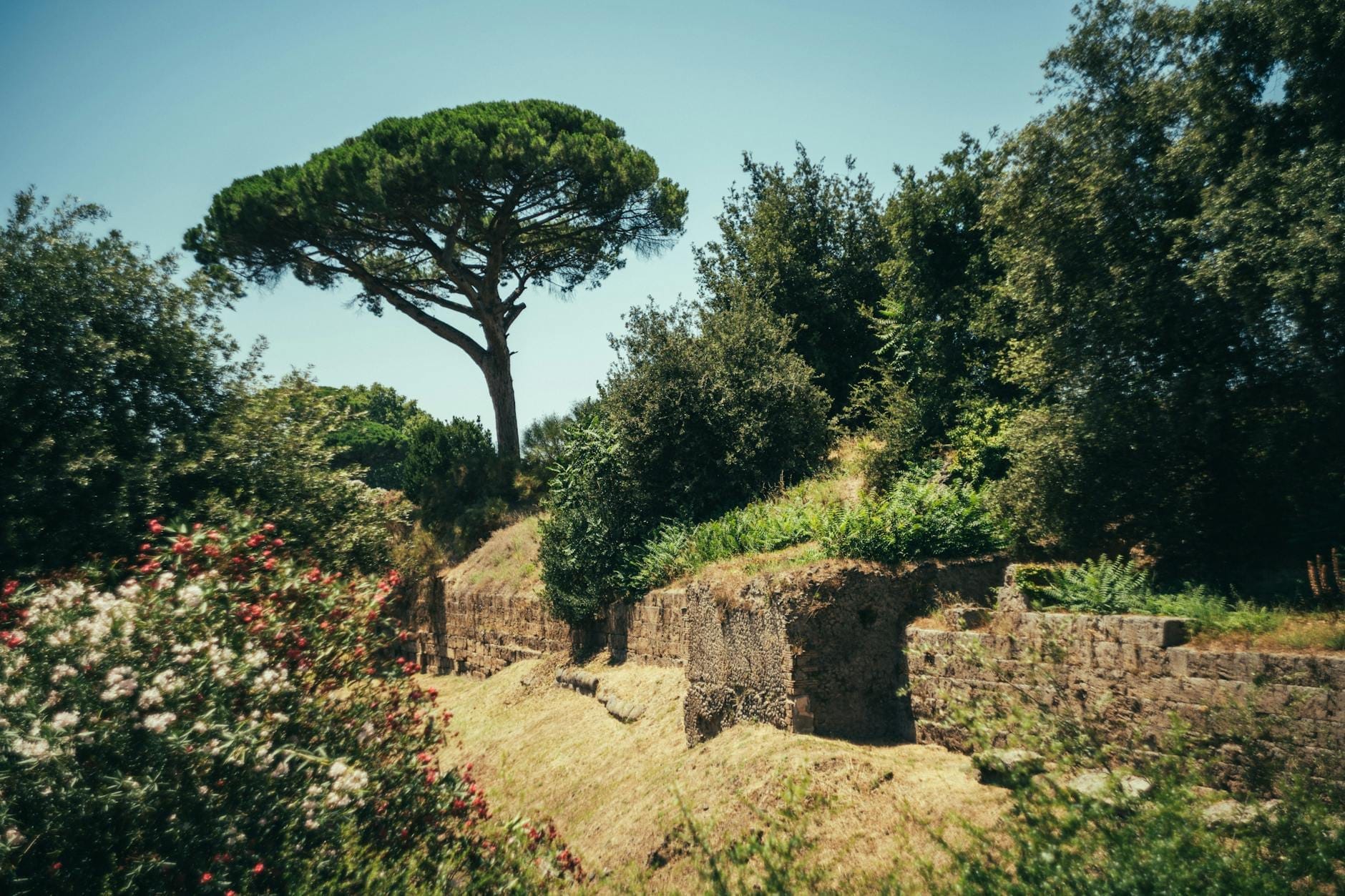
The best months for visiting Rome — April through June and September through October — apply equally to Ostia Antica. Spring visits offer mild temperatures (12-20°C), longer opening hours, and lush greenery between the ruins. Autumn brings similar conditions with slightly shorter days.
Summer (June through August) is the most challenging season: temperatures regularly hit 28-32°C, the exposed ruins offer little shelter, and the Roman Theatre hosts evening events that bring additional visitors. That said, summer evenings at Ostia Antica during a performance are genuinely atmospheric, and the extended opening hours mean you can visit later in the day when the heat has dropped. Check the official park site for summer event schedules.
Winter visits (November through February) have real appeal for those who don't mind cooler temperatures (7-12°C) and shorter days. The site is significantly less crowded, the umbrella pines are at their most dramatic, and the 4:30 PM closing time forces a more focused visit. Rain is possible throughout winter, but the ruins don't require the same kind of pleasant weather that, say, a beach destination does.
FAQ
How long does it take to visit Ostia Antica?
Plan for a minimum of 3 hours to cover the main highlights along the Decumanus Maximus, including the theatre, Piazzale delle Corporazioni, Baths of Neptune, and the forum area. For a more thorough visit including the synagogue and western sections, allow 4-5 hours. The site is large and the terrain is uneven, so don't underestimate the time or the physical effort involved.
Is Ostia Antica better than Pompeii?
They offer different experiences rather than one being objectively better. Pompeii captures a single dramatic moment; Ostia shows centuries of urban evolution, with better-preserved apartment buildings and a clearer picture of everyday Roman commercial life. Ostia is also much easier to reach from Rome and significantly less crowded. If you're interested in how ordinary Romans lived rather than volcanic disaster, Ostia is arguably the more rewarding site.
Can you buy tickets at the gate for Ostia Antica?
Yes, tickets are available at the entrance. However, during peak season (spring and summer weekends) queues can form, and there is a limited daily visitor capacity. Booking online in advance through the official CoopCulture platform is the safer option and costs the same as buying on-site.
Is Ostia Antica accessible for visitors with mobility issues?
The site has significant accessibility challenges. The main Decumanus Maximus street is paved with original Roman cobblestones, which are uneven and difficult for wheelchairs or those with limited mobility. Some sections are smoother than others, and the park does offer some accessible routes. Contact the park administration in advance if this is a concern, as conditions and available assistance can vary.
Are guided tours worth it for Ostia Antica?
A knowledgeable guide adds real value here. Unlike the Colosseum or Roman Forum, which have been so thoroughly documented that self-guided visits are easy, Ostia's complexity rewards expert interpretation. The guild mosaics, the layered religious buildings, and the architectural evolution of the insulae all make more sense with explanation. Half-day guided tours from Rome typically cost €40-70 per person and include return transport.
Tickets & tours
Live prices and dates from our booking partner. If you book, we may earn a commission at no extra cost to you.
Planning a trip? Discover personalized activities with the Nomado app.