Mercato di Testaccio: Rome's Most Authentic Food Market
The Nuovo Mercato Comunale di Testaccio is Rome's most serious neighborhood market, drawing locals for fresh produce, cheese, meat, and some of the best street food in the city. Free to enter, housed in a modern structure since 2012, and open every morning, it rewards visitors who show up before noon with an experience most tourists never find.
Quick Facts
- Location
- Via Beniamino Franklin 12/E, Testaccio, Rome
- Getting There
- Metro Line B – Piramide station (5-10 min walk)
- Time Needed
- 1 to 2 hours (more if eating)
- Cost
- Free entry; food stalls typically €3–€10
- Best for
- Food lovers, curious travelers, slow mornings
- Official website
- www.mercatoditestaccio.it
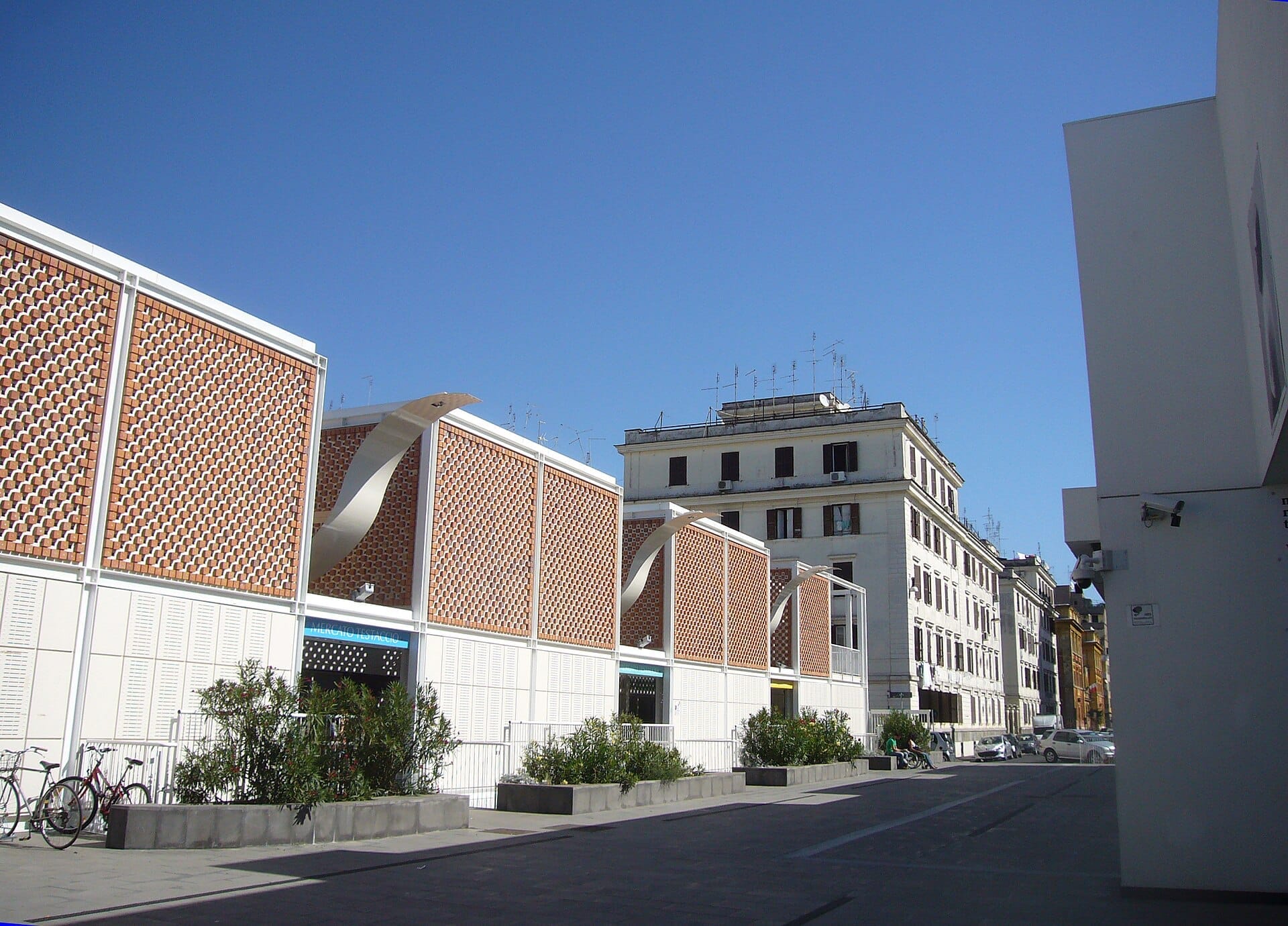
What the Mercato di Testaccio Actually Is
The Nuovo Mercato Comunale di Testaccio, widely known simply as Mercato di Testaccio, is a covered neighborhood market in the Testaccio district of Rome. It operates every day from 7:00 AM to 3:30 PM, entry is free, and it holds around 103 vendors spread across roughly 2,000 square meters of retail space. The market relocated in July 2012 from its original site on Piazza Testaccio to a purpose-built modern structure on Via Beniamino Franklin, about a ten-minute walk from the Piramide metro stop on Line B.
Unlike the tourist-facing markets near Campo de' Fiori, Testaccio's market runs primarily on local patronage. The vendors here deal in serious quantities: whole sides of meat, crates of seasonal vegetables, wheels of aged pecorino, and trays of house-made pasta. Food stalls occupy the outer ring and sell finished dishes to eat on the spot. It is, by most measures, the closest thing Rome has to a functioning daily food culture in one place.
💡 Local tip
Arrive between 8:00 and 10:30 AM for the best selection, freshest produce, and the most active atmosphere. After noon the stalls begin selling down inventory and some vendors start closing early.
The Neighborhood Context: Why Testaccio Matters
Testaccio is one of Rome's most historically working-class neighborhoods, and its food identity runs deep. The district grew around a slaughterhouse, the Mattatoio di Roma, which operated from the late 19th century until the early 20th century on a site just south of the current market. Workers received offal cuts as partial payment, which gave rise to Rome's now-celebrated quinto quarto (fifth quarter) cooking tradition: dishes built from tripe, sweetbreads, oxtail, and other cuts considered lesser elsewhere. That culinary heritage is still alive in Testaccio, and the market reflects it. Butchers here stock offal alongside standard cuts without apology.Testaccio today is a residential neighborhood that has resisted the full tourist transformation of areas like Trastevere, which makes the market feel like an accurate cross-section of how Romans actually eat.
The 2012 relocation from Piazza Testaccio was not without controversy. The original market had occupied its outdoor site for decades, and some long-time vendors and shoppers mourned the informality of the old arrangement. The new building is practical and clean, with covered stalls and decent circulation, but it trades some of the original's rough character for functionality. The archaeological area adjacent to the building adds an unexpected dimension: remnants of an ancient Roman site are visible seasonally beneath glass panels in the floor and in the adjacent 7,000-square-meter excavation zone.
Tickets & tours
Live prices and dates from our booking partner. If you book, we may earn a commission at no extra cost to you.
Rome taste of Testaccio food tour
From 94 €Instant confirmationFree cancellationTestaccio district guided tour with food tasting
From 113 €Instant confirmationFree cancellationSt. Peter's Basilica, Vatican Museums, Sistine Chapel reserved entry
From 81 €Instant confirmationFree cancellationGuided tour of Galleria Borghese and of Villa Borghese gardens
From 69 €Instant confirmationFree cancellation
Walking Through the Market: What You'll Find
The layout follows a roughly grid-like pattern under a low, light-filled roof. Produce vendors cluster near the central aisles: artichokes in winter and spring (the Roman variety, prepared alla giudia or alla romana, is a different vegetable than the globe artichokes sold in northern supermarkets), tomatoes in summer, porcini in autumn. The quality is consistent and the prices are considerably lower than in central Rome's tourist corridors.
Cheese and cured meat stalls warrant specific attention. Several vendors specialize in aged pecorino romano at different stages of maturation, alongside fresh ricotta (made from sheep's milk, not the bland supermarket variety), burrata, and a rotating cast of regional salumi. If you are self-catering or assembling a picnic for the afternoon, this is a more rewarding option than any supermarket in the city center.
The prepared food stalls along the outer edge are where most visitors spend the most time and money. Options typically include supplì (Rome's version of the arancino, a fried rice ball with tomato and mozzarella), pizza bianca sold by weight, fried baccalà, cacio e pepe served in a hollowed-out pecorino wheel, and various daily specials that change with the season. Expect to pay between €3 and €8 for a street food portion, more for a fuller plate. Seating is informal: shared tables, stools, or standing at the counter.
How the Atmosphere Changes Through the Morning
At 7:00 AM the market opens into near-silence. Vendors are arranging stock, the produce is at its freshest, and the only customers are regulars who come the same time every week: older residents with wheeled shopping carts, restaurant buyers selecting that day's ingredients. The light inside is cool and the sounds are low, just crates shifting and vendors calling to each other.
By 9:30 the pace changes noticeably. The food stalls have their fryers running, the cheese counters have queues, and the volume rises with overlapping Italian conversations. This is the prime window, when the market is fully operational but not yet crowded. Photography is easiest at this hour: the light through the roof panels is diffuse, vendors are engaged with customers rather than restocking, and the colors of the produce are at their peak.
After 11:30, particularly on weekends, the food stalls attract longer waits. Some visitors treat the market as a late-morning meal destination rather than a shopping stop, which concentrates foot traffic around the prepared food area. Weekday mornings remain the most relaxed option throughout.
⚠️ What to skip
The market is closed on Sundays. Plan accordingly, especially if Testaccio is the main reason for your visit that day.
Practical Logistics
Getting here from central Rome takes about 20 to 30 minutes on public transit. From Termini, take Metro Line B toward Laurentina and exit at Piramide. The market is a five-to-ten-minute walk from the station exit. Alternatively, tram lines 3 and 8 serve the general Testaccio area, and buses from Trastevere are a reasonable option if you plan to visit both neighborhoods in the same morning.
Parking is available underground at the market itself, with around 270 spaces, which makes this accessible by car from the ring road. That said, driving in Rome's inner neighborhoods is rarely the smoothest experience. For most travelers staying in central Rome, the metro is faster and simpler. If you are combining this with a visit to the Baths of Caracalla, those ruins are about a 15-minute walk to the southeast, making a logical half-day combination.
There are no ticket windows or entry checkpoints. You walk in from Via Beniamino Franklin or via the secondary entrances from Via Galvani, Via Volta, Via Ghiberti, or Via Manuzio. There are no bag checks, no audio guides, and no organized tours within the building itself, though food tour operators do use the market as a stop on Testaccio-focused walking tours.
ℹ️ Good to know
The market has an underground archaeological area adjacent to the building that is visitable seasonally. Ask at the information point near the main entrance, or check the official website at mercatoditestaccio.it for access schedules.
Who This Is Not For
Travelers with very limited time who are prioritizing ancient monuments, major galleries, or landmark sights should weigh whether a market visit fits their itinerary. The Mercato di Testaccio does not offer anything visually dramatic in the way that the Colosseum or the Pantheon do. It is a working market, not a spectacle. If you have only two or three days in Rome and every hour is committed to monuments, this is a lower priority.
Visitors who are uncomfortable with raw meat, offal smells, or the close quarters of a busy market may find the experience less pleasant than expected. The butcher section can be confrontational in a way that sanitized food environments are not. That is partly what makes it authentic, but it is worth knowing in advance. The building is modern and reasonably ventilated, so this is less extreme than older covered markets in other cities, but the sensory reality of a functioning meat and fish market is present.
Combining Testaccio Market With the Rest of the Neighborhood
The market works best as part of a broader Testaccio morning rather than a standalone destination. After browsing the stalls, the surrounding streets hold some of Rome's most respected traditional restaurants and trattorias. The former slaughterhouse (Mattatoio) has been partly converted into a contemporary arts venue and hosts MACRO Testaccio, an exhibition space worth checking for programming. The pyramid-shaped Cestia mausoleum is a five-minute walk toward Piramide station and is one of the more visually striking ancient structures in Rome that sees relatively few visitors. For a fuller picture of the neighborhood and its food culture, browse the Rome food guide before you go.
If you are spending a full day in the area, Circus Maximus is a ten-minute walk north and makes a logical next stop before continuing into the historic center. The walk along the Tiber embankment in either direction also provides a less-trafficked version of Rome that most visitors miss entirely.
Insider Tips
- Ask for ricotta fresca at the cheese stalls rather than picking from what is already on display. Several vendors keep a fresher batch behind the counter and will portion it directly into a container for you.
- The supplì at the food stalls vary considerably between vendors. Look for the ones with the longest local queues rather than the most prominent signage. Locals are not loyal to a stall because of branding.
- If you want to visit the adjacent archaeological area, check the official website in advance. It is not always open and access schedules are not posted at the entrance.
- Bring cash. Most produce and meat vendors accept cards, but smaller stalls may not, and having small bills makes transactions faster during busy hours.
- Weekday mornings between Tuesday and Friday are noticeably quieter than Monday (post-weekend restocking) or Saturday (peak local shopping day). Wednesday and Thursday mornings offer the most relaxed experience.
Who Is Mercato di Testaccio For?
- Food travelers wanting to eat where Romans eat, not where tourists are directed
- Self-caterers or travelers staying in apartments who want fresh, quality ingredients
- Photographers interested in everyday Roman life rather than monuments
- Families with children who can handle a short outing before the midday heat
- Anyone building a full Testaccio morning that combines food, walking, and neighborhood exploration
Planning a trip? Discover personalized activities with the Nomado app.