Rome with Kids: The Complete Family Travel Guide
Rome rewards families who come prepared. From gladiator stories at the Colosseum to gelato breaks in Villa Borghese, this guide covers every practical detail: advance tickets, stroller logistics, the best neighborhoods to base yourself, and how to keep kids engaged without burning everyone out.
Tickets & tours
Live prices and dates from our booking partner. If you book, we may earn a commission at no extra cost to you.
TL;DR
- Book Colosseum and Vatican tickets weeks in advance — walk-up entry is not realistic for families, especially in peak season.
- Spring (April-May) and fall (September-October) are the best times for families: temperatures between 12-20°C and significantly lighter crowds than July-August.
- Cobblestone streets are manageable with all-terrain stroller wheels or a baby carrier — Rome's historic center is more walkable than most cities of its size.
- Short, story-driven guided tours (90 minutes, not 3 hours) are the key to keeping kids engaged at ancient sites without meltdowns.
- Free or low-cost options are plentiful: Villa Borghese Gardens, the Capitoline Hill panoramas, and most church exteriors cost nothing.
When to Visit Rome with Kids
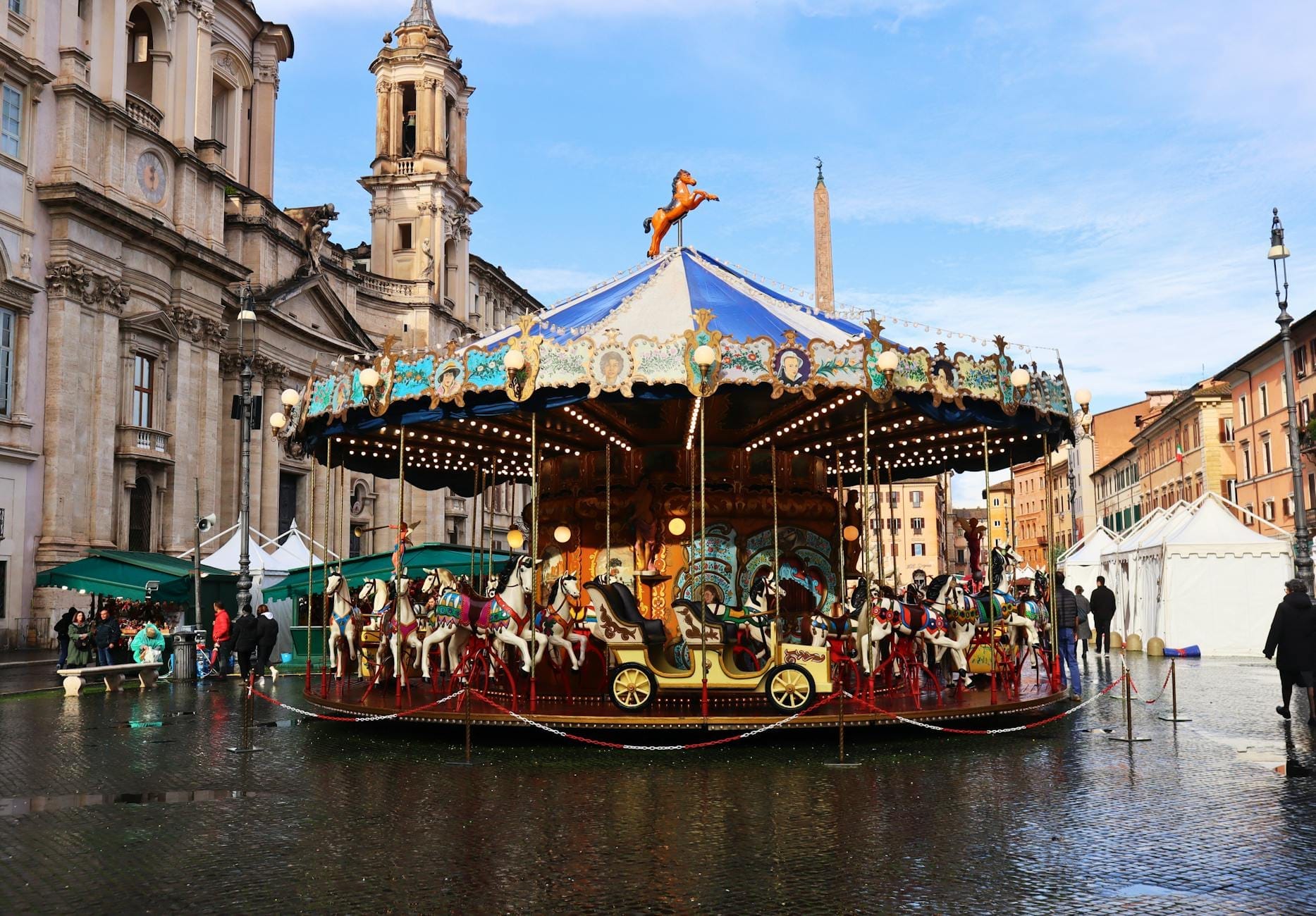
Timing a family trip to Rome makes a bigger difference than almost any other planning decision. July and August are the most popular months, but they are also the hardest for children: temperatures regularly reach 28-32°C, the Colosseum and Roman Forum have almost no shade, and queues stretch well beyond their posted wait times. If you have any flexibility, shift your trip to April-June or September-October.
Spring is the sweet spot. Temperatures range from 12-20°C in April and May, outdoor sites are comfortable from morning to late afternoon, and school groups from Italian schools tend to cluster on weekdays. Arriving on a Thursday or Friday and spending the weekend at major sites can help you avoid the most crowded windows. Easter week is the exception: Rome becomes extremely busy and prices spike across hotels and tours.
Fall is equally good. September still has warm, dry weather (averaging 20-23°C), and the summer crush fades noticeably after the first week. October is ideal for families who cannot travel during the school year — the light is beautiful, entry queues are shorter, and sites like the Pantheon and Roman Forum are genuinely enjoyable to linger in. For a fuller breakdown of seasonal trade-offs, see our guide on the best time to visit Rome.
💡 Local tip
If you visit in summer, structure days around a midday break (12:30-15:30) back at your accommodation. Romans still observe this rhythm, and it protects kids from heat exhaustion. Schedule indoor sites like the Vatican Museums or Capitoline Museums for these hottest hours.
The Best Kid-Friendly Sites in Rome
Rome's ancient history is genuinely gripping for children when it's framed correctly. Gladiators, emperors, secret underground passages, and ancient cannons are far more compelling to an 8-year-old than architectural timelines. The key is choosing sites with narrative punch and keeping visit durations realistic — 90 minutes is usually the ceiling for children under 10 before attention collapses.
- Colosseum, Roman Forum & Palatine Hill The essential Roman experience for families. Gladiator stories land well with kids from around age 6 upward. Combine all three on one ticket, but don't attempt all three in a single morning — the Forum alone can take two hours if you explore properly. Book timed-slot tickets through coopculture.it well in advance. Basic entry starts around €16-18 for adults; under-18s from EU countries enter free.
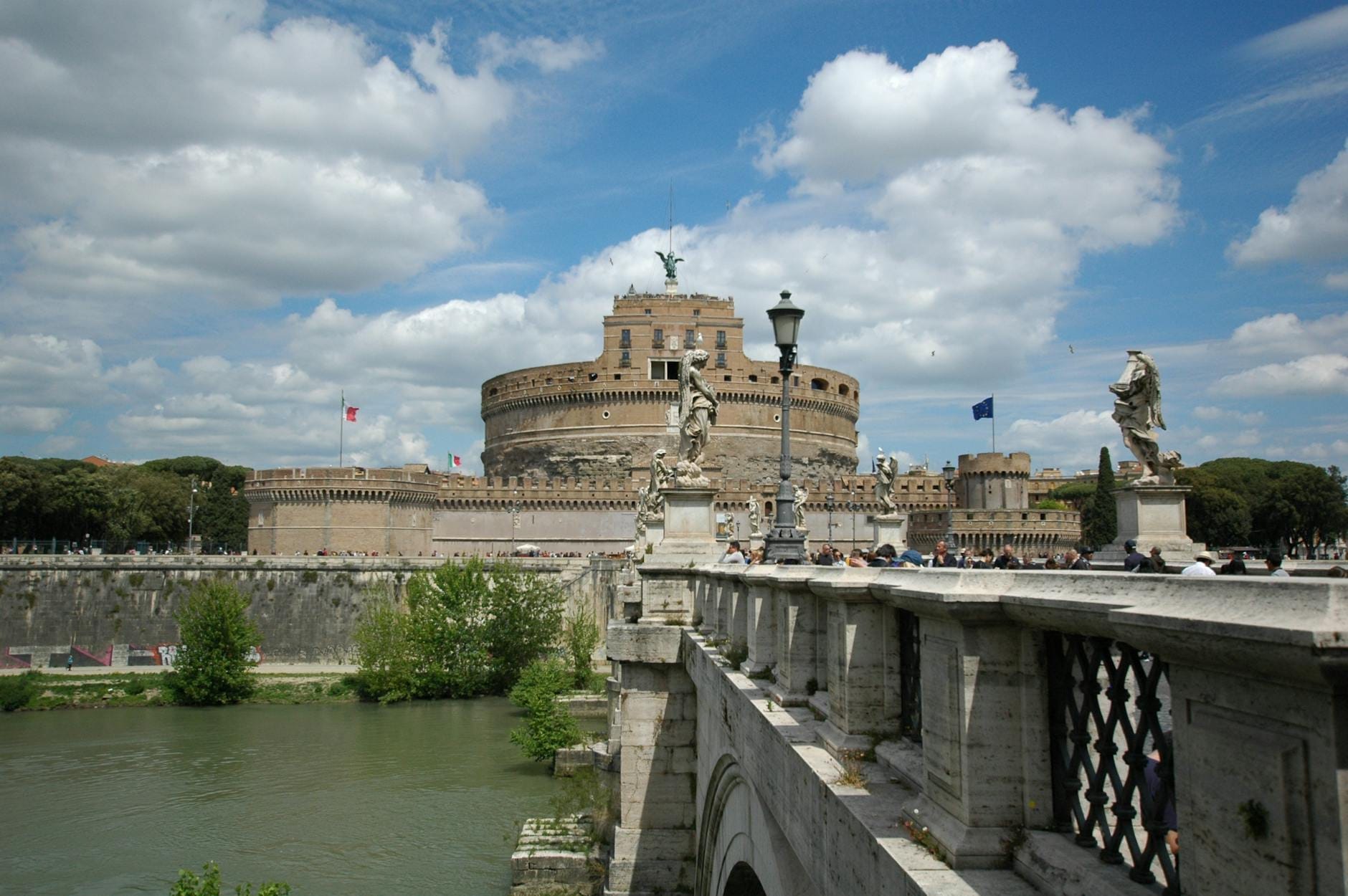
- Castel Sant'Angelo One of the most underrated family sites in Rome. The former mausoleum-turned-fortress has cannon batteries, secret papal escape routes, battlements with city views, and a story involving Hadrian, medieval popes, and Renaissance sieges. Children can physically walk the ramparts and touch the cannons — a sensory experience that the Forum cannot match. Entry is around €15-17 for adults.
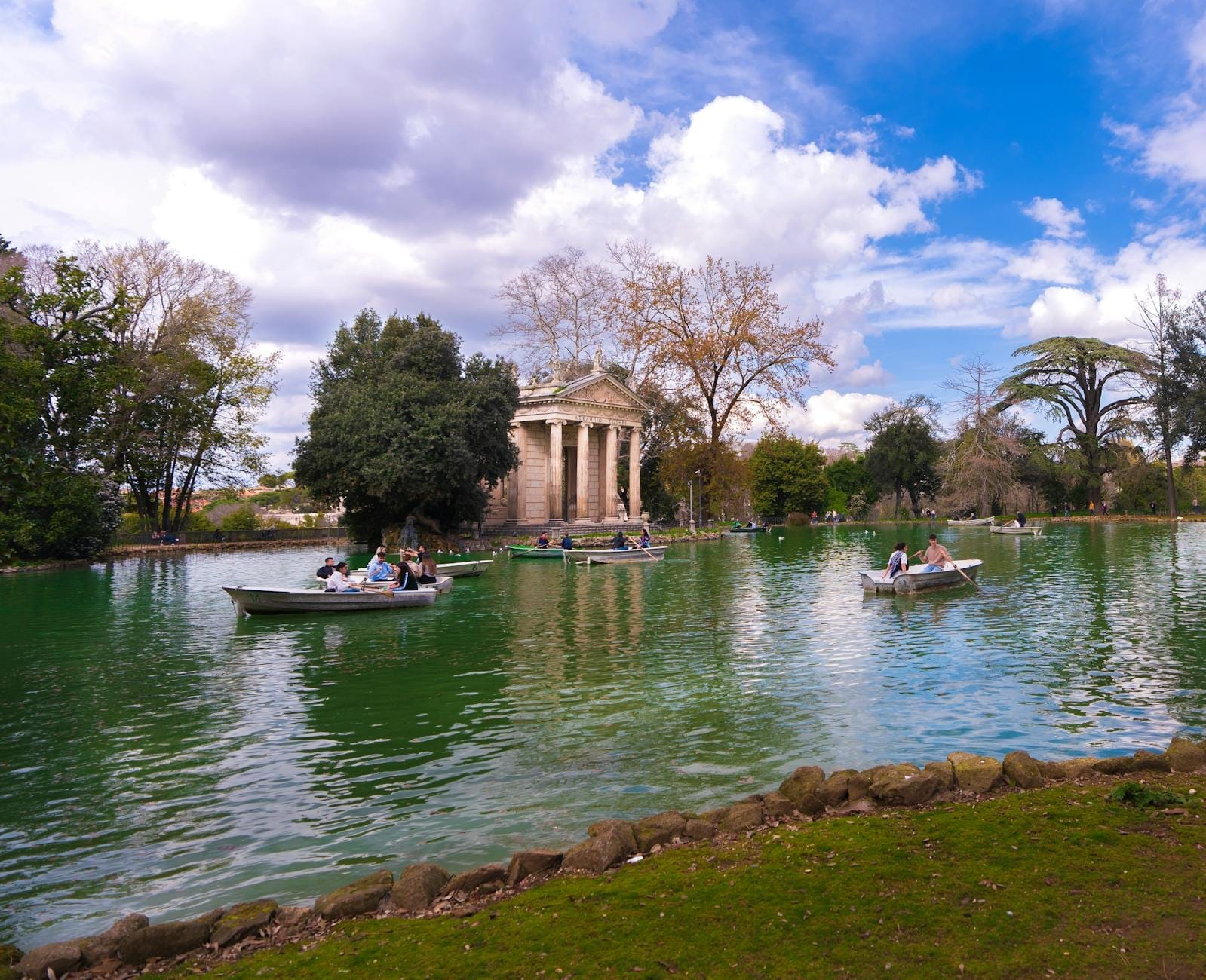
- Villa Borghese Gardens The city's central park is a lifesaver on a multi-day itinerary. Rowboat rentals on the lake, playgrounds, and wide open lawns give kids room to decompress between monument visits. The Galleria Borghese (book far in advance — entry is strictly timed to 2-hour slots) is best for children aged 10 and up who have some appetite for art.
- Pantheon Impressive for all ages because it's a single, overwhelming interior space rather than a field of ruins to interpret. The 43-meter dome with its open oculus — and the fact that it has been in continuous use for nearly 2,000 years — tends to register even with skeptical children. Entry now requires a ticket; check current prices and booking requirements before visiting.
- Mouth of Truth (Bocca della Verità) A short detour that costs nothing and delivers maximum child engagement. The legend — that the mouth bites off the hand of anyone who tells a lie — guarantees audience participation. Located at the church of Santa Maria in Cosmedin near the Circus Maximus.
For families who want to add some physical adventure to the itinerary, an e-bike tour along the Appian Way (Via Appia Antica) is a genuinely different Rome experience. Operators like Roma Starbike run family-appropriate routes past ancient tombs and countryside, and the catacombs along the route add another layer of kid-friendly history. Children under around 10 may be too young for e-bikes, but cargo bikes or tag-alongs are sometimes available — confirm with operators before booking.
Neighborhoods: Where to Base Your Family
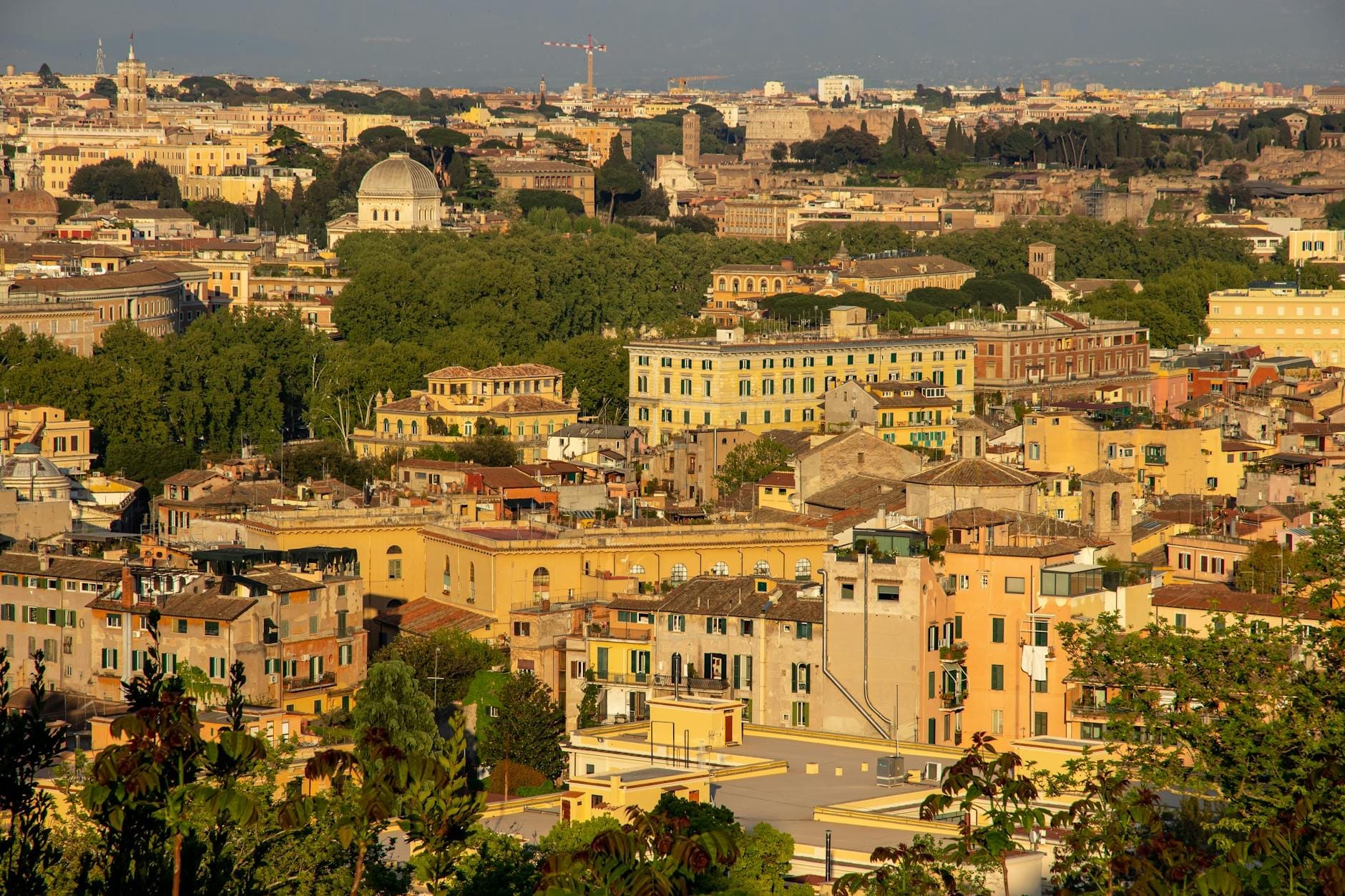
Where you stay shapes every logistical decision on a family trip. Rome's tourist center is compact enough that several neighborhoods work well, but they offer different trade-offs. The Centro Storico puts you within walking distance of the Pantheon, Piazza Navona, and Trevi Fountain, but accommodation is expensive and streets narrow. It's the most convenient base but rarely the best value.
The Trastevere neighborhood is a good family pick: quieter streets, some apartment rentals with kitchen facilities (a practical bonus when traveling with kids), and a neighborhood feel that Centro Storico lacks. The cobblestones are dense here, so bring the right stroller. Prati, just north of the Vatican, is another solid option — wider streets, excellent food shopping, and walking distance to St. Peter's.
Families visiting the Villa Borghese area and the northern part of the city might consider Parioli — upscale, green, and calm, though further from the ancient sites. For detailed accommodation advice by neighborhood and budget, our guide on where to stay in Rome covers the full breakdown.
⚠️ What to skip
Avoid booking accommodation near Termini station if you have young children. The area around Rome's main rail hub is congested, not particularly safe after dark, and lacks the walkability that makes Rome enjoyable for families. The price savings are rarely worth the trade-off.
Getting Around Rome with Children
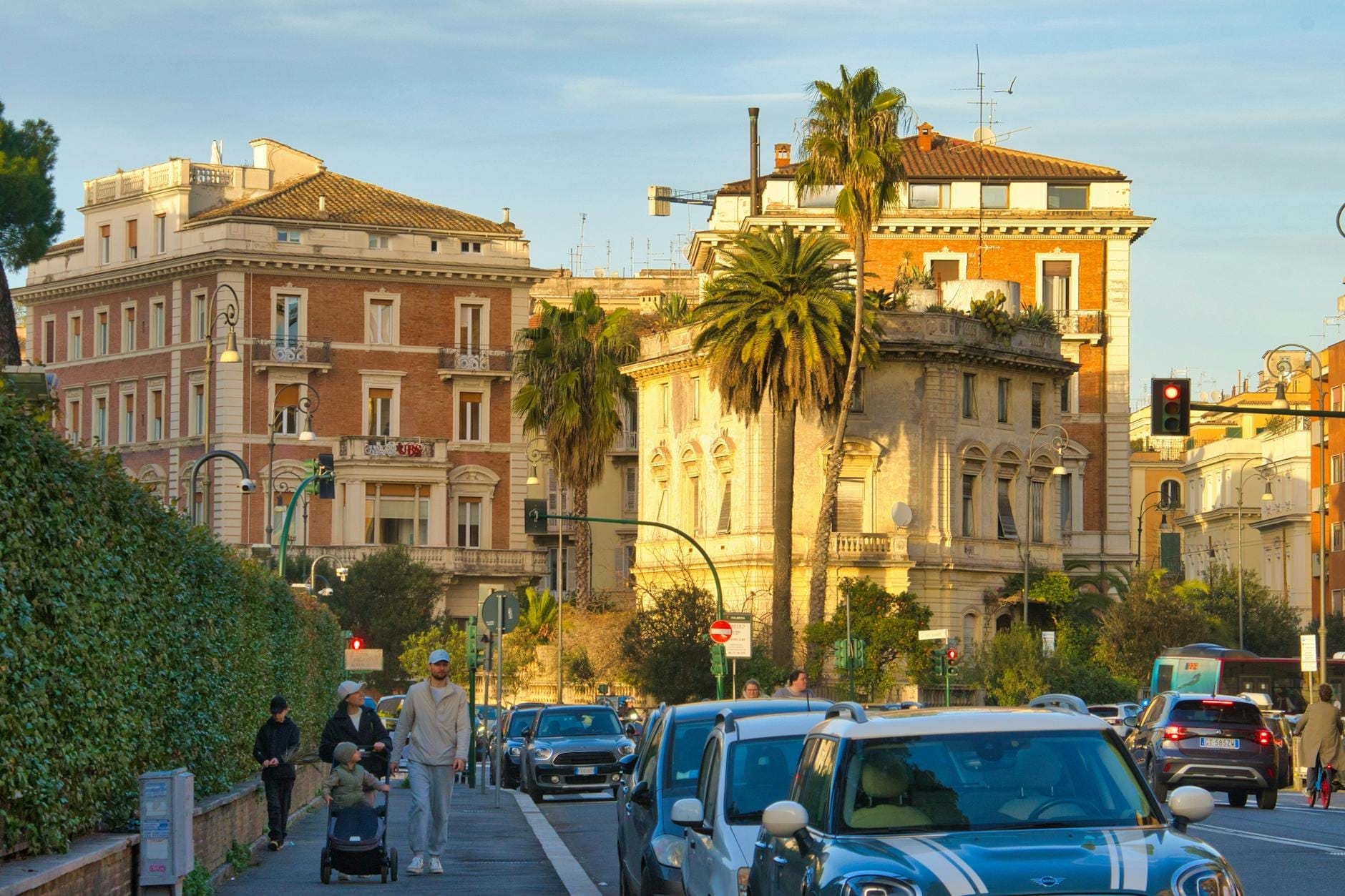
Rome's historic core is genuinely walkable, and for most families, the metro and buses are used far less than you'd expect. The main ancient sites (Colosseum, Roman Forum, Palatine, Capitoline Hill) cluster within a 15-minute walk of each other. The Pantheon, Piazza Navona, and Trevi Fountain are another walkable cluster further north. A family staying in Centro Storico or Trastevere can cover enormous ground on foot across a five-day stay.
When you do need public transport, Rome's metro (Line A and Line B are the most useful tourist lines) is simple to navigate but has no escalators or elevators at many stations, which makes pushchairs a serious practical challenge. Bus and tram routes are more accessible but slower. Single tickets cost €1.70 and are valid for 100 minutes. A 48-hour or 72-hour travel pass makes sense for longer stays.
- All-terrain or three-wheel strollers handle cobblestones significantly better than standard city pushchairs — test your stroller on rough surfaces before the trip.
- Baby carriers (structured carriers or wraps) are often faster than strollers in dense tourist areas, particularly inside museums and churches.
- Taxis and ride-hailing apps (Uber and Free Now both operate in Rome) are available but expensive in heavy traffic. A fixed-rate taxi from Fiumicino Airport to the city center is €52.
- Golf cart tours are worth considering for jet-lagged arrivals or families with toddlers — they cover significant ground in 2-3 hours without requiring anyone to walk. Budget around €350-450 per family.
- Never assume a site has elevator access — check before visiting with a stroller. The Colosseum has limited accessibility, and some areas of the Roman Forum are on unpaved ground.
Guided Tours vs. Self-Guided: What Works for Families
The honest answer is that short, story-led guided tours consistently outperform self-guided visits for families with children under 13. Rome's ancient sites are compelling but contextually dense — without narrative framing, the Roman Forum is a field of broken columns. A good guide turns it into a story about Julius Caesar, chariot races, and gladiatorial law. That transformation makes the difference between a child who is engaged and one who is silently counting down to gelato.
Look specifically for tours described as family-friendly or aimed at children, not standard adult group tours that happen to allow children. Tours designed for families keep explanations short, use props or costumes where possible, build in breaks, and pace themselves around child attention spans. Operators like LivTours and Mariaclaudia Tours market specifically to this audience. Maximum group sizes of 6-8 people are preferable to large groups of 20-25.
For the Vatican, an early-morning access tour (some start before 8:00) is worth the premium with children. The Sistine Chapel and St. Peter's Basilica at standard opening hours involve queuing in crowds that frustrate adults, let alone children. Early access reduces that stress dramatically and gives families a quieter experience of genuinely awe-inspiring spaces.
✨ Pro tip
Book Vatican tickets and Colosseum timed-entry slots at least 3-4 weeks ahead in spring and summer, and 2 weeks ahead in fall. Both sites sell out consistently, and same-day tickets — when available — carry significant premiums through resellers. The official booking platform for the Colosseum is coopculture.it; for the Vatican, it's museivaticani.va.
Food, Gelato, and Eating Well with Kids in Rome
Roman food is some of the most child-friendly in the world, even if the menus look unfamiliar. Pizza al taglio (pizza by the slice) is sold across the city for around €3-5 a portion and is the most reliable quick lunch option. Supplì (fried rice balls with tomato and mozzarella) are ubiquitous in bakeries and are universally accepted by children. Pasta with simple sauces — cacio e pepe, amatriciana, carbonara — are all approachable for most palates.
Gelato quality varies enormously. Avoid places with enormous mounds of fluorescent-colored gelato piled high in the display case — those are made from industrial mixes and rely on visual marketing rather than quality. Genuine artisan gelato (gelato artigianale) is stored in covered metal containers (pozzetti) and tends to sit lower in the case. Expect to pay €2.50-4 for a single scoop. For a full guide to eating in Rome beyond tourist-area traps, see our guide on where to eat in Rome.
One underrated family move: buy a day's worth of snacks and drinks from a supermarket (Conad and Carrefour Express have central locations) rather than from cafes near major monuments, where prices for water and snacks can be three to four times higher. Tap water in Rome is safe to drink and free from the city's hundreds of nasatura drinking fountains (small iron spouts that run continuously across the city). Refilling bottles at these fountains saves meaningful money over a week.
FAQ
What age is appropriate for the Colosseum with kids?
Most children from about age 5-6 can engage with the Colosseum, especially if accompanied by a family-focused guide who frames the history through gladiator stories and daily Roman life rather than architectural analysis. Younger children can still visit, but their experience will be limited by the amount of walking on uneven surfaces and the lack of interactive displays. A tour specifically designed for children makes the biggest difference in keeping younger visitors engaged.
Is Rome suitable for families with a baby or toddler?
Yes, with preparation. Rome's center is walkable, accommodation with family rooms is widely available, and Italians are genuinely welcoming toward young children in restaurants and public spaces. The main practical challenges are cobblestone streets (invest in an all-terrain stroller or use a carrier), limited elevator access at metro stations, and the sheer amount of walking at large sites like the Roman Forum. A baby carrier is often more practical than a pushchair for museum visits.
How many days do you need in Rome with kids?
Four to five full days is the practical minimum for a family wanting to cover the main sites without feeling rushed. Three days is possible but leaves little room for the relaxed pace that works best with children. A five-day itinerary allows for slower mornings, a half-day at Villa Borghese, one dedicated to the Vatican area, one to the ancient sites (Colosseum, Forum, Palatine), and time for neighborhood exploration and genuine downtime.
Are there free things to do in Rome with kids?
Several. Villa Borghese Gardens is free to enter (the Galleria Borghese inside requires a paid ticket). The Capitoline Hill and Piazza del Campidoglio are free to walk and offer excellent panoramic views. The Pantheon exterior, Piazza Navona, and Trevi Fountain are all free to visit (Trevi Fountain now has ticketed windows for entry to the viewing area at certain times — verify current arrangements). EU citizens under 18 enter state museums free. For more free options, see our guide on free things to do in Rome.
Is it safe to drink tap water in Rome, and where can kids refill water bottles?
Rome's tap water is safe and good quality. The city has hundreds of nasatura drinking fountains — small iron spouts mounted on walls throughout the historic center — that run continuously and provide free, cold, potable water. They are easy to spot once you know what to look for. Refilling bottles at these fountains is both economical and environmentally sensible, and it means you never need to pay tourist-area prices for bottled water.
Tickets & tours
Live prices and dates from our booking partner. If you book, we may earn a commission at no extra cost to you.
Planning a trip? Discover personalized activities with the Nomado app.