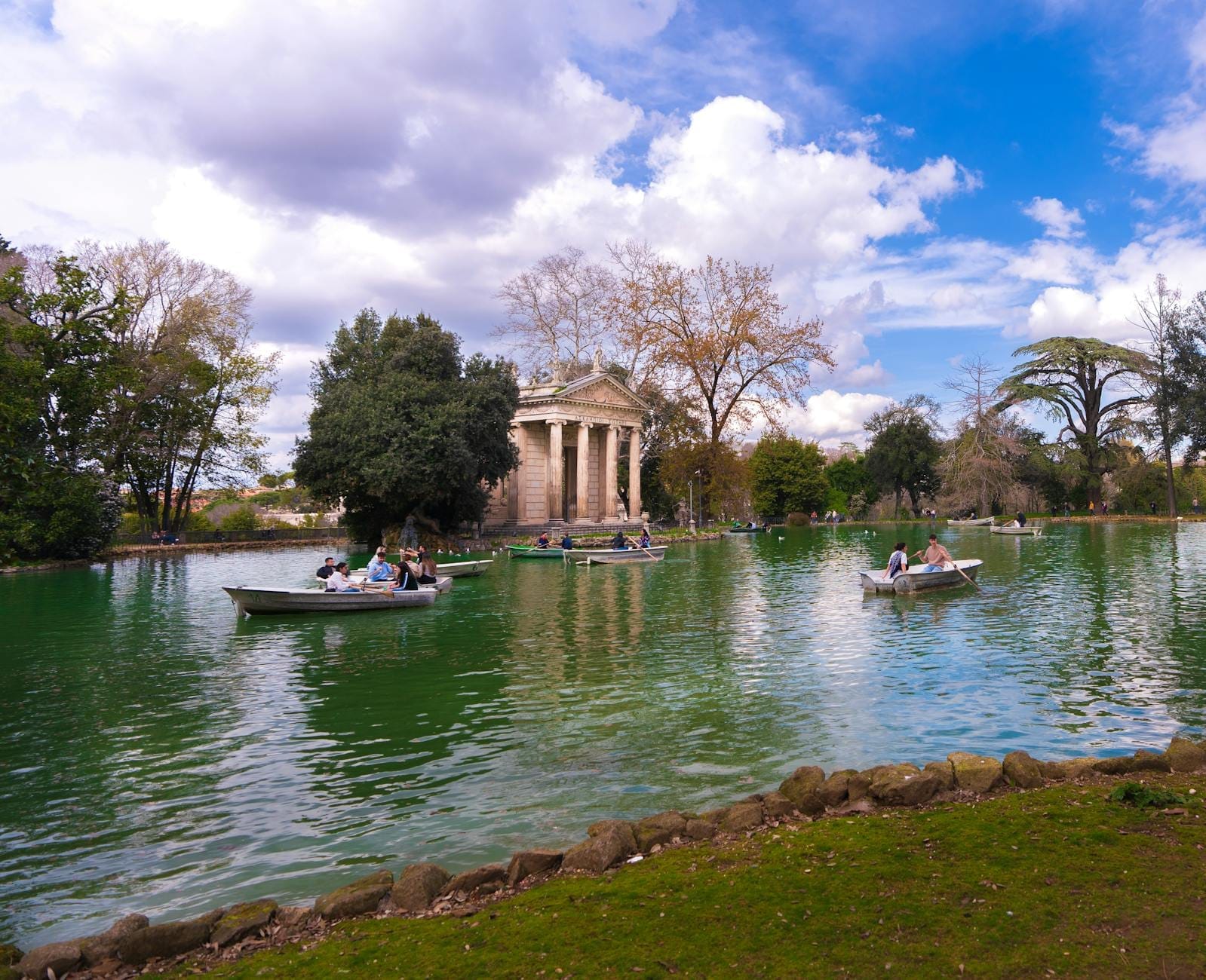
Villa Borghese and Pincio form Rome's most celebrated green expanse, a sweeping 80-hectare landscape that rises above the city's rooftops and holds some of its greatest art. From the panoramic Pincio terrace to the frescoed rooms of the Galleria Borghese, this area rewards those who slow down and look carefully.
Villa Borghese and the Pincio hill are where Romans come to breathe. Stretching across 80 hectares of the city's northern edge, this park-and-garden complex combines world-class museums, neoclassical promenades, and sweeping views over the historic center, all within walking distance of the Spanish Steps and Piazza del Popolo.
Orientation
Villa Borghese sits in Municipio Roma II, occupying a large plateau north of the city's historic core. On a map the park reads almost like a heart shape, with the Pincio (Pincian Hill) forming its southern lobe, technically inside the Aurelian Walls, and the wider villa gardens spreading north and east beyond them. The surrounding neighborhoods give you a sense of the geography: to the south, the Spanish Steps and Trinità dei Monti mark the main pedestrian approach; to the west, Piazza del Popolo and the Flaminio district sit at the foot of the Pincian Hill; to the north and east, the well-heeled residential quarter of Parioli frames the park's outer edge.
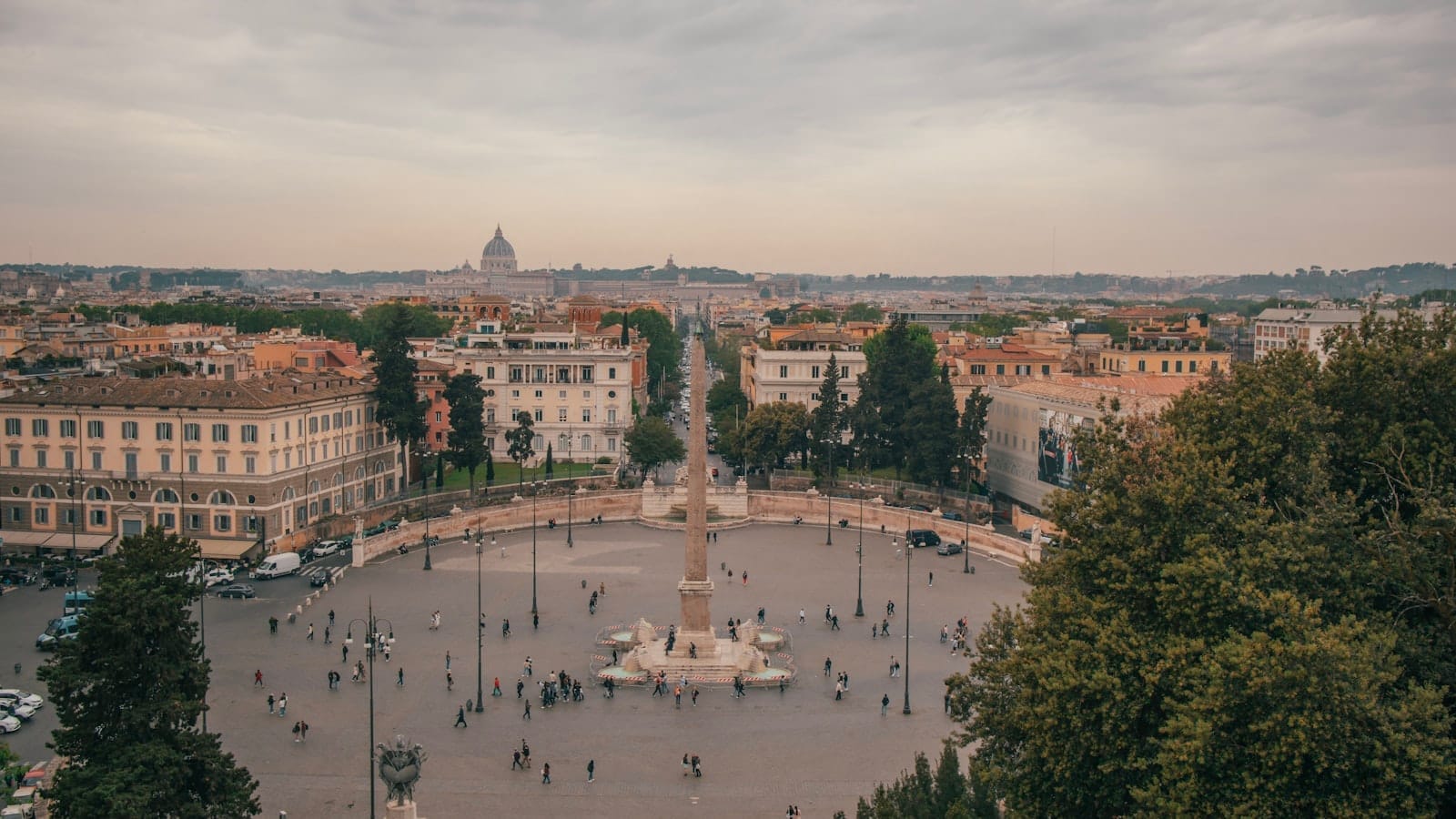
The park has several distinct entry points, each with a different character. The most theatrical approach is from Piazza del Popolo, where the Salita del Pincio ramp winds uphill through umbrella pines to the Pincio terrace. Coming from the Spanish Steps, you walk north along Viale di Villa Medici past the Renaissance walls of Villa Medici before entering the main gardens. A pedestrian flyover bridge above Via del Muro Torto connects Pincio to the wider Borghese estate, and several gates along Viale delle Magnolie allow access from the Flaminio side.
Understanding the park's internal layout matters for planning. The Galleria Borghese sits near the park's geographic center, roughly a 20-minute walk from either the Spanish Steps or Piazza del Popolo entrances. The Bioparco (Rome's zoo) occupies the northeastern section near Viale del Giardino Zoologico. The small artificial lake, rowboats for hire, and a cluster of cafes occupy the middle ground between these anchors. Knowing this prevents the common mistake of wandering into the park without a plan and ending up a long, hot walk from your intended destination.
💡 Local tip
The park covers 80 hectares and distances between key sites are longer than they look on maps. Wear comfortable shoes, and consider renting a bike or electric cart near the main entrances to cover more ground efficiently.
Character & Atmosphere
Early on a weekday morning, Villa Borghese belongs to Romans. Joggers circle the lake path before 8am, dog walkers navigate the pine-shaded allées, and elderly residents occupy the benches along the Pincio promenade with a newspaper and a view. The light at this hour is extraordinary: low and golden through the stone pines, casting long shadows across the gravel paths and illuminating the terracotta and ochre of distant rooftops. It feels nothing like a tourist attraction.
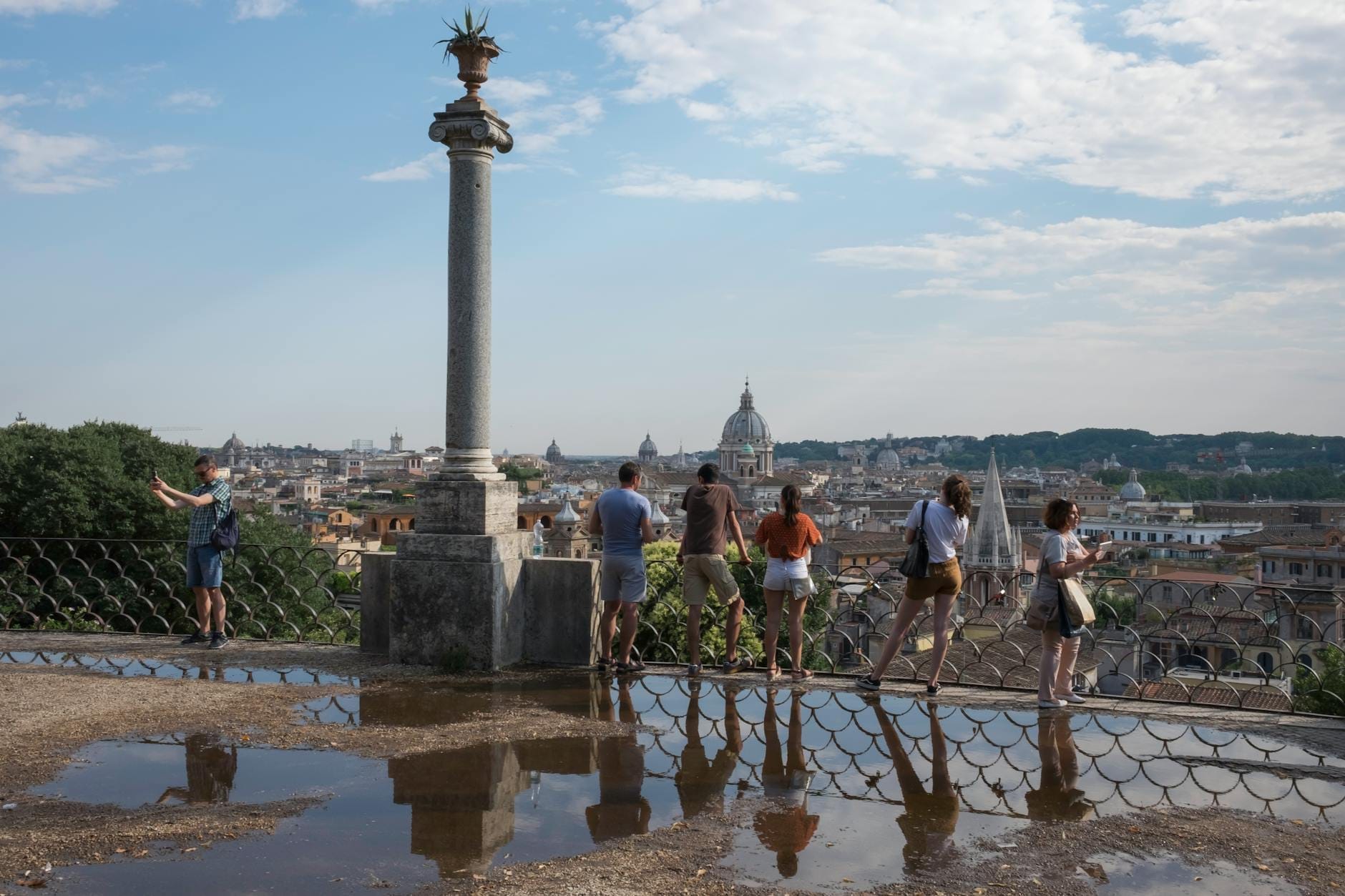
By mid-morning the character shifts. Tour groups file up the Salita del Pincio from Piazza del Popolo. Families arrive at the lake with children to feed the ducks. The Galleria Borghese, which operates strictly timed two-hour entry windows, draws art lovers who queue from its gravel forecourt. The Pincio terrace fills with people photographing the view across the rooftops toward the dome of St. Peter's. This is still pleasant, but it is no longer quiet.
Afternoons in summer bring a slow, drowsy quality. The park's canopy of stone pines and holm oaks provides genuine shade, and the temperature under the trees can feel several degrees cooler than the streets below. Students from the nearby art academies sketch in the formal gardens near Villa Medici. Couples rent rowboats on the lake. The Casina Valadier café near the Pincio terrace does steady trade in cold drinks and gelato. In autumn, the same paths turn amber and copper, and the quality of afternoon light against the park's neoclassical sculpture and balustrades is genuinely memorable.
After dark, the park closes and the action moves to the surrounding streets, the aperitivo bars of Parioli to the north, or the restaurants near Flaminio to the west. The park itself is not a nightlife destination, and entering after closing is not advisable.
What to See & Do
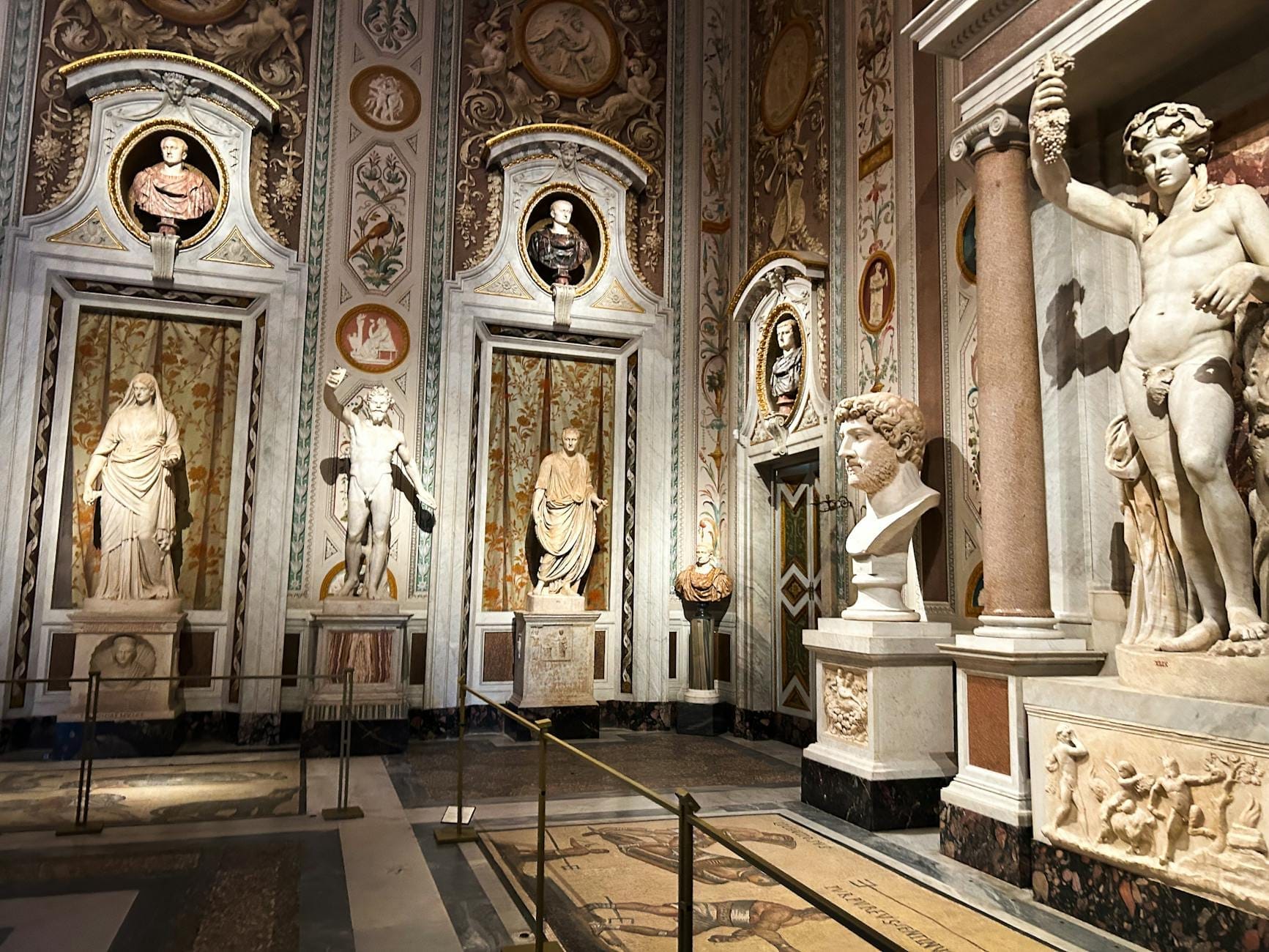
The Galleria Borghese is the neighborhood's undisputed centerpiece and one of Rome's finest museums by any measure. Cardinal Scipione Borghese, the original owner of this estate, assembled a collection in the early 17th century that reads like a greatest hits of Italian baroque: Bernini's Rape of Persephone and Apollo and Daphne, Caravaggio's Boy with a Basket of Fruit and David with the Head of Goliath, and Raphael's Deposition. The building itself, the former Casino Nobile of the Villa Borghese Pinciana, is frescoed from floor to ceiling. Entry is strictly limited to 360 visitors per two-hour session, which means you need to book weeks in advance, especially in peak season. This is not optional. Walk-ups are routinely turned away.
The Pincio Terrace delivers one of Rome's great views without requiring a ticket. Giuseppe Valadier redesigned this hilltop promenade in 1816 as Rome's first true public garden, lining the main avenue with busts of over 200 notable Italians, a neoclassical hall of fame stretching from Dante to Garibaldi. The viewpoint itself faces southwest over Piazza del Popolo and across the entire historic center. On a clear day you can trace the curve of the Tiber, locate the Vittoriano, and see St. Peter's dome above the rooftops. Come at sunset for the best light and the most atmosphere, though the terrace is rarely empty at any hour.
Villa Medici, now the seat of the French Academy in Rome (the Académie de France à Rome), stands at the southern edge of the park near Trinità dei Monti. Its 16th-century Mannerist exterior studded with ancient sculptural reliefs is striking from the outside, and the gardens open for guided tours on select days. If you are exploring the park from the Spanish Steps direction, passing Villa Medici's facade is one of the better introductions to the area.
Bioparco: Rome's main zoo, good for families with children, located in the park's northeastern section
Rowboat hire on the artificial lake: low-key but genuinely pleasant, popular with locals on weekends
Villa Medici: guided garden tours on selected dates, Renaissance architecture with ancient sculptural details
Temple of Diana and other neoclassical follies scattered through the English-style garden sections
⚠️ What to skip
Galleria Borghese tickets sell out weeks ahead in spring and summer. Book through the official reservations system as soon as your travel dates are confirmed. The gallery operates strict two-hour sessions with no re-entry, plan to arrive 10 minutes early.
For travelers combining the park with broader sightseeing, the Villa Borghese Gardens connect naturally to a day that starts at Piazza del Popolo (with a stop at Santa Maria del Popolo, which contains Caravaggio paintings that pair perfectly with what you will see at the Galleria) and finishes with sunset from the Pincio terrace. That circuit covers about 5 kilometers on foot and takes a full day if you include the gallery.
Eating & Drinking
Inside the park itself, dining options are limited and lean toward convenience over quality. The Casina Valadier near the Pincio terrace is the most distinguished option: a restored neoclassical pavilion serving coffee, aperitivi, and light meals with a terrace view toward the city. Prices are high relative to what you get, but the setting justifies a coffee or a spritz at sunset. The various kiosks and cafes near the lake and around the Bioparco are straightforward snack-and-drink operations, fine for a mid-afternoon gelato or a bottle of water, not worth planning a meal around.
The surrounding neighborhoods offer considerably more. The Flaminio area west of the park, particularly around Piazza del Popolo and along Via della Croce on the Spanish Steps side, has a dense concentration of cafes and restaurants ranging from traditional Roman trattorias to more modern options. Parioli, the residential quarter north and east of the park, is one of Rome's more affluent neighborhoods and has good restaurants reflecting that, less touristy than the historic center, with higher average prices but more consistent quality.
If you are visiting the Galleria Borghese, plan lunch before or after your timed entry rather than trying to squeeze it in during. The nearest good options are a 10-15 minute walk away. For a broader guide to eating well across the city, the Rome food guide covers all the key neighborhoods and what to order in each.
Getting There & Around
The easiest transit access to the Villa Borghese area is via Metro Line A to Flaminio station, which deposits you directly at Piazza del Popolo at the foot of the Pincian Hill. From the piazza, the Salita del Pincio ramp rises gently through a series of switchbacks to the terrace, taking about 10 minutes on foot. Alternatively, a steeper staircase leads up from the piazza's northern side. This is the most used approach for visitors and gives you an immediate reward: the view from the Pincio terrace.
From the Spanish Steps (Metro Line A, Spagna station), it is a 10-15 minute walk north along Viale Trinità dei Monti and past Villa Medici to enter the park from its southern edge. This approach is less direct for reaching the Galleria Borghese (add another 15-20 minutes of walking through the park) but passes some of the most scenic parts of the garden. Several bus lines also serve the park perimeter, stopping at Piazza del Popolo and along Viale Trinità dei Monti.
Within the park, a network of paved paths connects the main sites, but the distances are meaningful. From the Pincio terrace to the Galleria Borghese is roughly 1.5 km on foot. Bike rental stands operate near the main entrances and near the lake. Small electric golf-cart style shuttles also operate during peak season. For a wider look at navigating Rome's public transport efficiently, see the getting around Rome guide.
ℹ️ Good to know
Metro Line A stops at both Flaminio (for Piazza del Popolo and the Pincio approach) and Spagna (for the Spanish Steps and Villa Medici approach). Both stations are on the same line, two stops apart, so you can enter the park from one end and exit from the other without backtracking.
Where to Stay
The Villa Borghese area itself has limited accommodation options compared to Rome's historic center, but the surrounding neighborhoods make for excellent bases. The Flaminio district just below the Pincio has a handful of well-located hotels with easy Metro Line A access. Parioli, to the park's north and east, is a quieter, more residential option suited to travelers who prefer to avoid the noise and foot traffic of the centro storico at night. For travelers weighing up neighborhoods across the city, the where to stay in Rome guide gives a clear comparison of all the main areas.
Staying near Villa Borghese suits a specific type of traveler: those who prioritize the Galleria Borghese and want a quieter, more residential atmosphere, and those who want park access early in the morning before the crowds arrive. It is less suited to first-time visitors who want to walk to the Colosseum and major ancient sites, which are a significant distance south and better reached from Monti or the centro storico.
If the Galleria Borghese is your primary reason for visiting, note that the Spanish Steps area (directly accessible via Metro Line A, Spagna) is close enough that you do not need to be in Parioli to reach it conveniently. The Spanish Steps neighborhood has a dense concentration of hotels at various price points and puts you equidistant between the park and the historic center.
Practical Notes
The park is free to enter and open daily, though hours vary slightly by season, it generally closes at sunset. The Galleria Borghese and Bioparco both charge admission and have separate operating hours; verify current times before visiting as these change seasonally. The Casina Valadier and park kiosks keep their own schedules, roughly following the park's opening hours.
The park is well maintained and genuinely safe during daylight hours, popular with local families and regular visitors. Standard urban park precautions apply: keep bags secure in crowded areas near the main entrances and don't leave items unattended at the lake or picnic areas. For those planning a wider itinerary, the park connects well to a Rome panoramic viewpoints circuit that includes the Pincio, the Gianicolo, and the Aventine hill.
Spring (April to June) is widely considered the best season for the park: the gardens are in bloom, temperatures are comfortable for walking, and the quality of light over the city from the Pincio terrace is at its best. September and October are close rivals. In August, the heat is significant and midday in the open sections of the park can be uncomfortable; focus on the shaded paths and time the Pincio for late afternoon. For guidance on the best time to plan your overall Rome trip, the best time to visit Rome guide covers seasonal considerations in detail.
TL;DR
Villa Borghese and Pincio offer Rome's best combination of art, green space, and city views, anchored by the world-class Galleria Borghese and the sweeping Pincio terrace panorama over the historic center.
Book Galleria Borghese tickets weeks in advance: timed two-hour entry slots fill quickly and walk-ups are not accommodated.
The park is free to enter and rewards an early morning visit when Romans have it largely to themselves; the atmosphere shifts noticeably once tour groups arrive mid-morning.
Metro Line A (Flaminio or Spagna stations) provides the most convenient access; the Pincio approach from Piazza del Popolo is the most scenic entry route.
Best suited to travelers who prioritize art and parks over proximity to the ancient sites; less ideal as a base for first-time visitors focused on the Colosseum and Roman Forum area.
Rome has more churches per square kilometer than almost any city on earth, and the finest contain some of the greatest art ever made. This guide cuts through the noise to bring you the 15 churches that genuinely deserve your time, from world-famous papal basilicas to overlooked medieval gems.
Rome holds one of the densest concentrations of great museums anywhere on earth, from ancient sculpture collections to Baroque art palaces and cutting-edge contemporary spaces. This guide covers the 18 best, organized by type, with practical advice on what to prioritize and when to book.
Rome rewards visitors year-round, but the experience varies dramatically by season. This guide breaks down crowds, temperatures, costs, and local events to help you pick the right time for your trip.
Rome rewards those who look up, climb higher, and peer through keyholes. This guide covers the city's finest viewpoints, from sweeping 360-degree rooftop panoramas to perfectly framed peepholes, with tips on when to go and what you'll see.
Rome rewards budget travelers more than almost any major European capital. From Baroque piazzas and ancient hilltops to world-class churches and sprawling parks, a huge portion of the city's best experiences cost absolutely nothing. This guide covers the 20 best free things to do in Rome, organized so you can plan a full day without opening your wallet.
Rome's transport network is more complex than most first-time visitors expect. This guide breaks down every option for getting around Rome, from the limited metro to the best bus routes, airport transfers, taxis, and when walking beats everything else.
Rome rewards those who look past the Colosseum queue and the Trevi selfie crowd. These are the churches, viewpoints, markets, and underground worlds that most visitors walk right past, where the real texture of the city lives.
Ostia Antica is Rome's best-kept archaeological secret: a sprawling ancient city just 30 minutes from the capital, better preserved than most sites and far less crowded than the Forum or Colosseum. This guide covers everything from tickets and transport to the top ruins worth your time.
Rome transforms after sunset. Ancient ruins glow under floodlights, piazzas fill with locals rather than tour groups, and the city's food and nightlife scenes come alive. This guide covers the best nocturnal experiences in Rome, from free evening strolls to exclusive night tours of the Colosseum and Vatican.
Rome rewards those who venture beyond the city walls. Within an hour or two of the capital, you can walk through a remarkably intact Roman port city, stroll Renaissance water gardens, sip Frascati wine above a volcanic crater lake, or explore an Etruscan cliff town. These are the day trips that make a Rome visit feel genuinely complete.
Roman cuisine is one of the most specific, opinionated, and deeply satisfying in Italy. This guide covers the essential dishes, the rules locals follow, the best neighborhoods to eat in, and how to avoid the tourist traps that pass for Italian food in Rome.
Three days is enough to see Rome's greatest hits — if you plan smart. This itinerary covers the Colosseum, Vatican, Pantheon, and beyond, with the right order, practical timing tips, and a few stops that most visitors miss.
Rome is one of Europe's most rewarding cities to explore on a tight budget. This guide breaks down real costs, free attractions, transport options, and smart strategies so you can see the best of the city without draining your account.
Rome rewards families who come prepared. From gladiator stories at the Colosseum to gelato breaks in Villa Borghese, this guide covers every practical detail: advance tickets, stroller logistics, the best neighborhoods to base yourself, and how to keep kids engaged without burning everyone out.
Rome's top attractions can swallow hours in queue time alone. This guide breaks down exactly which sites demand advance booking, which platforms to trust, what skip-the-line actually means in practice, and where you can honestly walk straight in.
Rome rewards those who plan smart. This guide covers the essential things to do in Rome, from ancient ruins and world-class museums to neighborhood food markets and rooftop views, with honest advice on what to skip and how to book the rest.
Rome's food scene rewards the curious and punishes the complacent. This guide cuts through the tourist-trap noise to give you honest, neighborhood-by-neighborhood restaurant picks, dish-by-dish ordering advice, and practical tips on reservations, pricing, and when to skip the menu entirely.
Choosing where to stay in Rome shapes your entire trip. This guide breaks down every major neighborhood honestly, covering walkability, noise, price, and who each area suits best, so you can book with confidence.