MAXXI – National Museum of 21st Century Arts: Rome's Architecture Is the First Exhibit
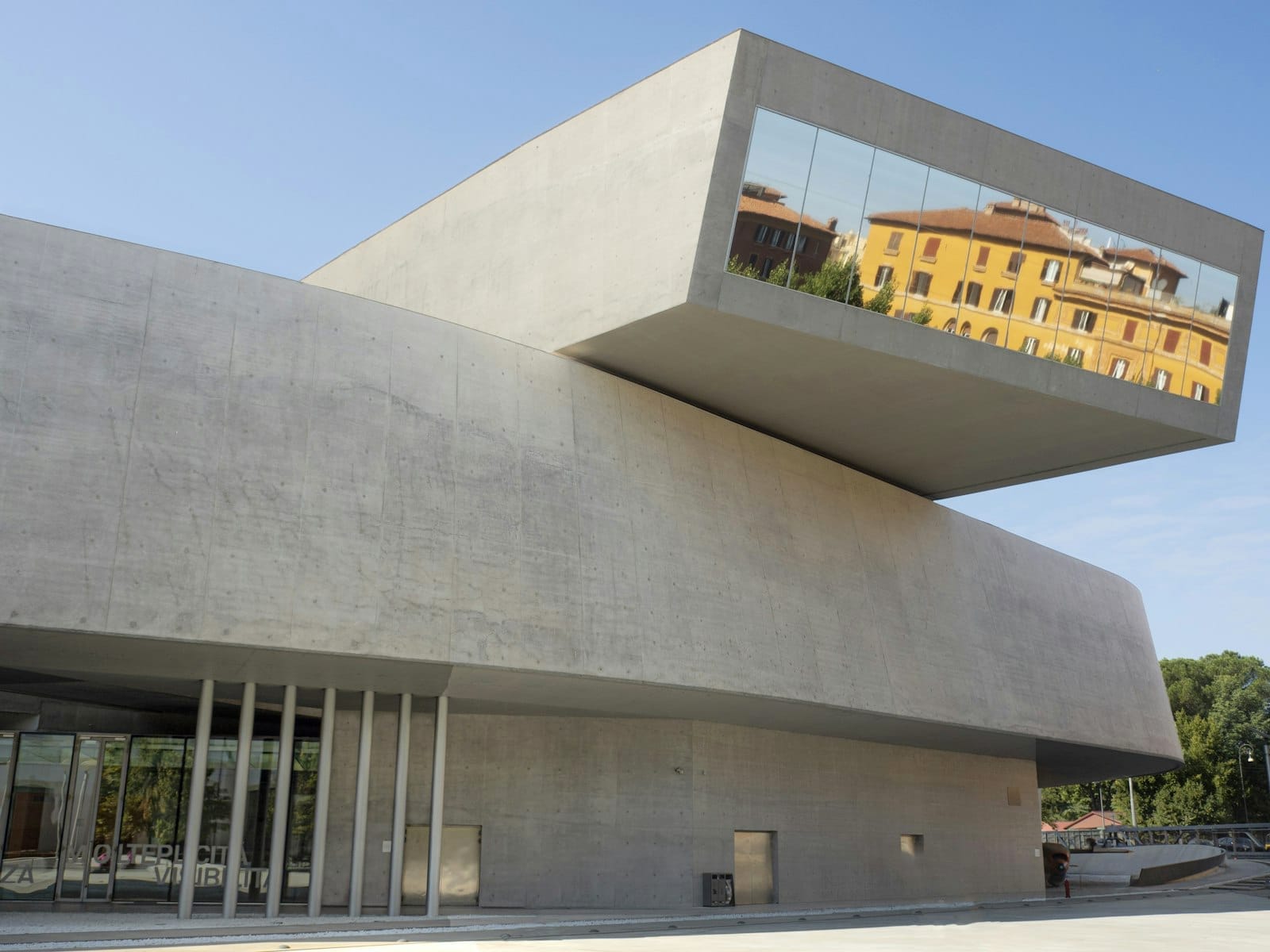
MAXXI is Rome's premier contemporary art institution, housed in a 30,000 m² building designed by Zaha Hadid that won the Stirling Prize in 2010. Expect over 400 works spanning painting, installation, video art, and architecture — alongside a program of temporary exhibitions that keeps even return visitors engaged.
Quick Facts
- Location
- Via Guido Reni 4A, Flaminio neighborhood, Rome
- Getting There
- Tram 2 (Appio Claudio stop); Bus 53, 217, 910 (Museo d'Arte Moderna stop)
- Time Needed
- 2 to 3 hours for the building and permanent collection; add 1 hour for major temporary exhibitions
- Cost
- €12 online / €15 at the box office (full price). Free admission available with online booking. Tickets are REPLAY passes valid for 15 days from first entry.
- Best for
- Architecture enthusiasts, contemporary art fans, travelers who want a break from ancient Rome
- Official website
- www.maxxi.art/en
What MAXXI Actually Is
MAXXI, the Museo nazionale delle arti del XXI secolo, is Italy's national museum dedicated to contemporary art and architecture. It sits in Rome's Flaminio district, a neighborhood that accumulated several bold public buildings in the 2000s, including Renzo Piano's Auditorium Parco della Musica nearby. MAXXI opened to the public in 2010 after years of construction, managed by a foundation established in 2009 by the Italian Ministry of Culture.
The museum functions as more than a gallery. It runs workshops, conferences, educational programs, and design research alongside its permanent collection and rotating exhibitions. On any given weekday, you might pass architecture students sketching the stairwells, a school group studying video installations, and a couple from abroad who came entirely for the Zaha Hadid building and stayed for two hours longer than planned.
💡 Local tip
Book tickets online at maxxi.art before you visit. The online price is €12 versus €15 at the box office, and free admission slots (with booking) are available. The REPLAY pass included with every ticket allows unlimited re-entry for 15 days from your first visit, until the ticket's first use date plus 15 days.
The Building: Zaha Hadid's Urban Graft
Before you look at a single artwork, the building itself demands attention. Zaha Hadid designed the 30,000 m² structure over a site previously occupied by a military barracks, and she conceived the project as an 'urban graft': a new civic organism that grows out of the street grid rather than turning its back on it. The result is a complex of interlocking volumes clad in light gray concrete, with a roof that curves, splits, and cantilevers in ways that feel physically impossible at close range.
The Royal Institute of British Architects awarded MAXXI the Stirling Prize in 2010, its highest honor for architecture. That recognition was not just for spectacle. The interior is genuinely functional in surprising ways: natural light enters through continuous skylights that run along the ceiling like rivers, shifting in intensity as the day progresses. In the late afternoon, when low Roman sun enters at an angle, certain corridors fill with a warm diffuse light that changes how the artworks on the walls read entirely.
Inside, levels intersect without the logic of a conventional floor plan. Staircases overlap. Bridges cross open voids. The ground floor opens into the city through large glazed facades, blurring the boundary between the piazza outside and the lobby within. The architecture is at its most impressive in these transitional spaces, not in any single dramatic room. Budget time to simply move through the building slowly, especially on your first visit.
ℹ️ Good to know
The building is partially wheelchair accessible, with elevators connecting the main levels. Some areas with ramps and curved floors may be challenging for mobility aids. Check the official website or call ahead for specific accessibility details before visiting.
Tickets & tours
Live prices and dates from our booking partner. If you book, we may earn a commission at no extra cost to you.
The Permanent Collection: 400 Works Across Two Floors
The permanent collection holds over 400 works covering painting, sculpture, installation, video art, net-art, and photography, with a separate section devoted to architectural drawings and models. Artists represented include Alighiero Boetti, Francesco Clemente, William Kentridge, Mario Merz, and Gerhard Richter, alongside a substantial body of Italian and international contemporary designers.
The architecture collection is less commonly discussed in travel guides but worth seeking out. Thousands of drawings, sketches, and models document the design process behind significant 20th and 21st century buildings. For anyone interested in how architecture happens, these rooms offer a level of detail that most architectural museums would envy.
Not every gallery is open on every visit. MAXXI rotates parts of its permanent holdings to accommodate temporary exhibitions, so the specific works on display will vary. Checking the website before you visit gives a clearer picture of what is currently shown.
Current Exhibition: The Large Glass
Running from 13 December 2024 through 25 October 2026, 'The Large Glass' is curated by American artist Alex Da Corte and builds a dialogue between artworks, the MAXXI architecture, and photography. Da Corte is known for installations that layer pop culture, art history, and color with precision, and this project takes Duchamp's unfinished masterpiece as a conceptual starting point while moving in its own direction.
Long-running exhibitions like this one reward more than one visit. The REPLAY pass structure, which allows unlimited re-entry for 15 days, clearly reflects the museum's intention that visitors return. Whether you use that privilege depends on how deeply you engage the first time.
When to Visit and What to Expect at Different Hours
MAXXI opens Tuesday through Sunday, 11 am to 7 pm. It is closed on Mondays, 1 May, and 25 December. The ticket office closes one hour before the museum does, so arriving after 5:30 pm means you may not be admitted.
Weekday mornings, particularly Tuesday through Thursday, offer the most comfortable experience. The galleries feel spacious, and the building's acoustics, which amplify footsteps and voices noticeably, are quieter. Weekend afternoons bring a different crowd: locals with children, students, and a heavier flow of international visitors. The piazza in front of the building fills up on pleasant weekend days regardless of what is showing inside.
Photography is generally permitted in the permanent collection without flash. For temporary exhibitions, rules vary by show. Check signage at the entrance to each gallery rather than assuming either way.
⚠️ What to skip
Flaminio is not central. From the Colosseum or Trastevere, plan on at least 25 to 35 minutes by transit. Tram 2 from Piazzale Flaminio (connected to Metro Line A at Flaminio station) is the most direct route and takes roughly 10 minutes to the Appio Claudio stop, a short walk from the entrance.
How MAXXI Fits Into a Rome Itinerary
MAXXI sits in a part of Rome that rewards a half-day rather than a quick stop. The Flaminio district and its northern extension toward the Villa Borghese area contain several institutions within walking or tram distance of each other. If you are combining MAXXI with the Galleria Borghese, note that those two museums represent very different modes of engagement. Borghese rewards slow attention to individual masterworks in small rooms; MAXXI rewards spatial awareness and movement through a large building.
Travelers building a broader Rome museum day might also consider that MAXXI covers ground none of Rome's ancient or Renaissance sites touch. If your itinerary is already dense with forums, basilicas, and baroque churches, MAXXI provides genuine contrast. For a fuller picture of what Rome's museum landscape offers, the best museums in Rome guide covers the full range from ancient to contemporary.
Travelers on a tight budget should note that MAXXI offers free admission with online booking, making it one of the more accessible options among Rome's paid institutions. For more free options across the city, the free things to do in Rome guide is worth checking before you finalize your plans.
Who Should Consider Skipping It
MAXXI is not for every traveler in Rome. Visitors on a first trip with limited time and a checklist focused on ancient history or Renaissance art will find themselves spending an hour in Flaminio that could go toward the Roman Forum, the Pantheon, or the Vatican. The museum does not offer anything that intersects with Rome's historical narrative. It exists in deliberate contrast to that narrative.
Contemporary art skeptics who find installations and video art unrewarding will not have their minds changed here. The permanent collection is serious and occasionally opaque, with the kind of work that benefits from prior familiarity with the artists. That said, the building itself is so unusual that some visitors who care little for contemporary art still find the visit worthwhile purely as an architectural experience.
If you are traveling with young children, MAXXI has educational programs but the interior spaces, with sharp angles, open staircases, and fragile-looking installations, require constant supervision. Families might find the Villa Borghese gardens a more practical nearby option for mixed-age groups.
Insider Tips
- Buy online to save €3 per ticket and skip the box office queue. Free slots also appear online and go quickly on weekends, so check early in the week if you are planning ahead.
- The REPLAY pass structure is genuinely useful if you are in Rome for several days and want to return for a temporary exhibition you did not finish on your first visit. The 15-day window from first entry is generous.
- The museum bookshop near the entrance stocks architecture monographs and design publications that are harder to find elsewhere in Rome. Worth 10 minutes even if you are not buying.
- On bright days, arrive before 2 pm if you want to see the skylight corridors at their most dramatic. The shifting natural light through Hadid's ceiling cuts changes significantly through the afternoon.
- The café in the ground floor piazza area is a reasonable stop for lunch or a coffee and tends to be less crowded than venues near more central tourist sites.
Who Is MAXXI – National Museum of 21st Century Arts For?
- Architecture enthusiasts who want to experience Zaha Hadid's spatial design firsthand
- Contemporary art followers familiar with the artists in the permanent collection
- Repeat visitors to Rome who have already covered the major ancient and Renaissance sites
- Design students and professionals visiting for the architectural drawings and models collection
- Travelers who want a quiet, uncrowded museum experience away from the historic center
Nearby Attractions
Other things to see while in Villa Borghese & Pincio:
- Galleria Borghese
Galleria Borghese holds one of the greatest private art collections ever assembled, featuring Bernini sculptures, Caravaggio paintings, and Raphael masterworks in a Baroque villa inside the Villa Borghese Gardens. Timed entry keeps crowds manageable, but advance booking is essential.
- Pincio Terrace
Perched above Piazza del Popolo on the edge of the Villa Borghese park, the Pincio Terrace is the city's most rewarding free viewpoint. The wide balcony faces west across Rome's rooftops, domes, and river bend, with the view shifting from sharp midday clarity to deep amber at sunset. It was Rome's first public garden, and the promenade that leads to it still carries that unhurried, old-city atmosphere.
- Villa Borghese Gardens
Spanning 80 hectares on the Pincian Hill, Villa Borghese is Rome's third-largest public park and one of the few places in the city where entry costs nothing. Within its grounds you'll find the Galleria Borghese, a neoclassical temple, a boating lake, and some of the best elevated views in the city.
Planning a trip? Discover personalized activities with the Nomado app.