Villa Medici: Rome's Most Overlooked Renaissance Estate
Perched on the Pincian Hill above the Spanish Steps, Villa Medici is a 16th-century Mannerist villa that has served as the home of the French Academy in Rome since 1803. Its seven-hectare Italian garden, ornate facade, and rotating contemporary exhibitions make it one of Rome's most layered cultural destinations, consistently overshadowed by its neighbors yet far more rewarding.
Quick Facts
- Location
- Viale della Trinità dei Monti, 1, 00187 Rome (Pincian Hill, Centro Storico)
- Getting There
- Metro A – Spagna station; walk up the Spanish Steps or take the Trinità dei Monti lift
- Time Needed
- 1.5 to 2.5 hours for gardens and current exhibition; gardens alone take 45–60 minutes
- Cost
- Garden-only and exhibition tickets available; check villamedici.it for current pricing and availability
- Best for
- Architecture lovers, garden walkers, art and culture visitors, anyone wanting calm above the city
- Official website
- villamedici.it/en
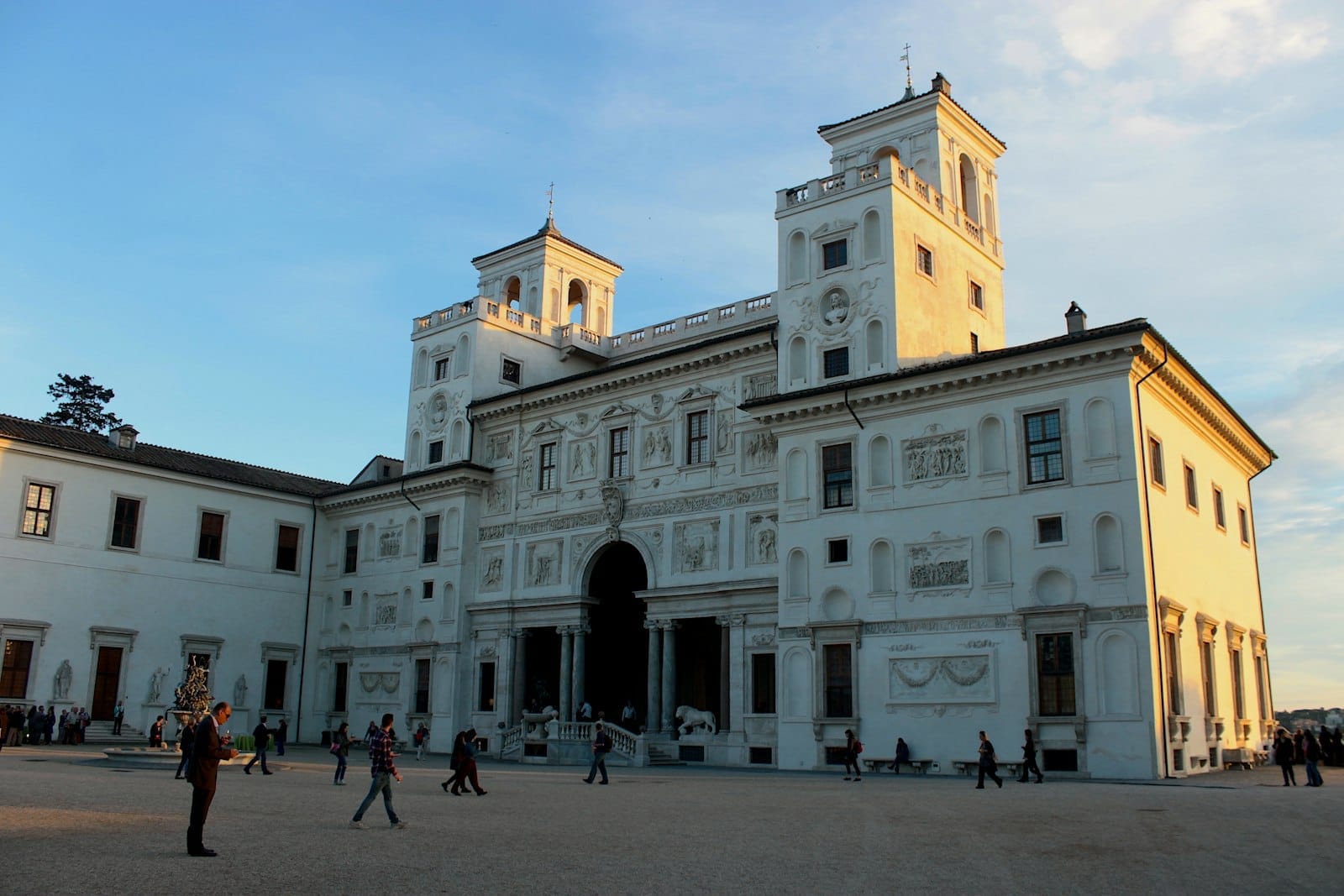
What Villa Medici Actually Is
Villa Medici is a 16th-century Mannerist villa and seven-hectare Italian garden sitting at the top of the Pincian Hill, just steps from the Trinità dei Monti church and directly above the Spanish Steps. It is not a museum in the conventional sense. Since 1803, it has operated as the seat of the French Academy in Rome, a state institution that hosts French artists, architects, and musicians on residency fellowships. That institutional identity shapes the experience: you are entering a working creative compound, not a preserved monument frozen in amber.
The villa was built in the mid-16th century and acquired in 1576 by Cardinal Ferdinando de' Medici, who transformed it into one of Rome's most ambitious private estates. The architect Annibale Lippi designed the structure, while the facade visible from the gardens is decorated with fragments of ancient Roman sculpture and reliefs, a Medici statement of wealth and humanist taste that still reads clearly today. Napoleon later acquired the property and assigned it to the French Academy, which has occupied it ever since.
ℹ️ Good to know
The villa operates on a ticketed access model, with guided garden tours and timed entries for exhibitions. Walk-up access is sometimes possible, but booking in advance through the official website is strongly recommended, particularly on weekends.
The Garden: Seven Hectares Most Visitors Miss
The garden is the central reason to visit. Covering seven hectares of the Pincian Hill, it is one of Rome's finest surviving Italian Renaissance gardens, laid out in the formal tradition with long axial paths, sculpted hedgerows, and stone fountains that have stood for over four centuries. The scale surprises most visitors who arrive expecting a courtyard garden. This is a full landscape, with woodland sections, open terraces, and long perspectives that frame the dome of St. Peter's Basilica on the western horizon.
In the morning, the garden is genuinely quiet. The light comes in low through the pines, the air carries the smell of damp stone and clipped box hedge, and you can walk long stretches of the main allée without encountering another visitor. By late afternoon the atmosphere shifts: the sun hits the western terraces, the city noise fades, and the garden takes on a softer quality. Either window works well; midday, when tour groups tend to cluster, is the one time to avoid.
The garden connects informally to the broader Villa Borghese Gardens to the north, making it possible to treat this whole ridge as a single walking route on a good weather day. That combination gives you the manicured formality of the Medici garden followed by the looser, more parklike Borghese, covering several hours of walking without retracing a single step.
Tickets & tours
Live prices and dates from our booking partner. If you book, we may earn a commission at no extra cost to you.
Guided tour of Galleria Borghese and of Villa Borghese gardens
From 69 €Instant confirmationFree cancellationGalleria Borghese Entrance Ticket with Optional Guided Tour
From 35 €Instant confirmationFree cancellationVilla d'Este and Hadrian's Villa Guided Tour with Transport to Tivoli
From 119 €Instant confirmationFree cancellationBorghese Gallery Skip-The-Line Tickets with Audio Guide
From 39 €Instant confirmationFree cancellation
Architecture and the Famous Facade
The villa has two faces, almost literally. The street-facing facade on Viale della Trinità dei Monti is austere and heavily fortified in appearance, a 16th-century palazzo wall that gives little away. The garden facade is the one to seek out: two symmetrical towers frame a loggia decorated with ancient sculptural fragments, marble reliefs, and carved stone elements that Cardinal Ferdinando de' Medici collected from across Rome. The effect is more collage than classical architecture, and it rewards close inspection.
The Mannerist style of the villa, as opposed to the High Renaissance symmetry of buildings like the Pantheon or the Baroque theatrics of later Roman palaces, is defined by deliberate complexity and tension. Proportions are stretched, surfaces are busy, and spatial surprises are built into the design. If you have been moving through Rome's more famous monuments, the Villa Medici offers a stylistic contrast worth noticing.
The architectural neighborhood here is rich. The Trinità dei Monti church sits immediately adjacent, and the Spanish Steps descend from the same level into Piazza di Spagna below. Walking the perimeter of the villa grounds gives you a compact architectural survey of how Pincian Hill was shaped across two centuries of elite Roman urban development.
Exhibitions and Cultural Programming
Beyond the garden and architecture, Villa Medici maintains an active exhibition program. The shows rotate regularly and tend toward contemporary art, photography, and cross-disciplinary projects that reflect the French Academy's focus on living creative practice. The quality varies, as it does at any institution running a residency program, but the interior spaces themselves, the frescoed rooms, coffered ceilings, and long gallery corridors, are consistently worth seeing regardless of what is installed.
If you visit during an active exhibition, budget extra time. The rooms are not large, but the combination of historic interior and contemporary work creates a contrast that often prompts longer pauses than expected. The villa also hosts concerts and public events, particularly in summer, when the garden terrace becomes a performance venue with unobstructed views toward the city skyline. Check the official program before your visit if cultural programming is part of your interest.
💡 Local tip
If you only have time for one thing, choose the garden tour over the exhibition. The exhibitions change; the garden, with its ancient stone fountains and framed view of St. Peter's dome, does not.
Practical Walkthrough: Arriving and Navigating
The most common approach is from the Spanish Steps. Take Metro Line A to Spagna, exit toward the steps, and climb to the top. The villa entrance is a short walk left along Viale della Trinità dei Monti, with the main gate visible from the church piazza. The route up the steps is steep and involves over 130 steps, but there is a lift accessible from Via Sistina for those who need it. The entrance gate itself is modest and easy to miss if you are walking quickly.
Tickets are purchased through the official website or at the gate, subject to availability. The garden is the core experience and typically requires a guided tour rather than free-roaming access, though this policy has varied. Wear shoes suited to gravel and uneven stone paths. In summer, bring water and a hat; the terraces offer limited shade in the middle of the day. In winter, the garden has a different quality: bare trees, empty fountains, and long sightlines. It is not unwelcoming; it is just more austere.
Photography in the garden is generally permitted. The best shots of the city, including the dome of St. Peter's Basilica aligned along the western terrace, come in the late afternoon when the light is warm and direct. The garden facade of the villa itself photographs well at almost any time of day, but morning is preferable before other visitors cluster around the base of the towers.
How This Fits Into Your Rome Itinerary
Villa Medici pairs naturally with a morning or afternoon on the Pincian Hill. You can begin at the Pincio Terrace for the panoramic city view, move through the Villa Borghese gardens, and arrive at Villa Medici for the late morning slot before crowds from the Spanish Steps climb up. Alternatively, visit the villa first and descend via the steps into the shopping and café district around Via Condotti and Piazza di Spagna.
If your Rome itinerary is focused on the ancient city, this villa sits at a deliberate remove from the Forum and Palatine Hill circuit. It works better paired with the northern and western Centro Storico: Piazza del Popolo is reachable on foot downhill in about 20 minutes, making a logical morning circuit of the Pincian edge of the historic center.
One honest note: Villa Medici is not for visitors who are moving fast through a checklist. The reward here is slow. It asks you to look carefully at a stone relief, sit on a bench in the garden, notice the smell of box hedge in warm sun, and recognize that the building you are in has housed artists continuously for over two centuries. Travelers who prefer dense, high-stimulus attractions will find it underwhelming. Travelers who want a counterweight to the crowds at the Colosseum or the Vatican will find it exactly sufficient.
Insider Tips
- Book your ticket online and select the first morning slot available. The garden is at its quietest before 10:30 AM, before the Spanish Steps crowd has fully climbed and before organized tour groups arrive.
- The western garden terrace offers a clear view of St. Peter's dome framed by umbrella pines. This is one of the lesser-known elevated city views in Rome and works especially well in late afternoon light.
- If there is no current exhibition, check whether garden-only access is available at a reduced rate. The garden is the primary draw and the experience does not require interior access to be complete.
- The villa grounds edge against the Villa Borghese perimeter. Ask at the entrance whether the informal connection path is open; on some days you can walk directly from the Medici garden into the Borghese park without retracing your route.
- Summer evenings occasionally feature open-air concerts on the garden terrace. The French Academy publishes its full program on the official website, and these events tend to sell out quickly with a local rather than tourist crowd.
Who Is Villa Medici For?
- Architecture and design travelers who want Mannerist detail beyond the standard Renaissance circuit
- Garden walkers and anyone needing a calm, unhurried hour away from Rome's highest-traffic zones
- Art and culture visitors interested in the French Academy's exhibition and residency program
- Photographers looking for elevated city views outside the standard Janiculum or Pincio lookout spots
- Visitors pairing a Spanish Steps visit with something substantive at the top of the hill
Nearby Attractions
Other things to see while in Centro Storico:
- Ara Pacis
Commissioned in 13 BC to celebrate Augustus's campaigns in Gaul and Spain, the Ara Pacis Augustae is one of the best-preserved monuments of ancient Rome. Today it sits inside a striking modern pavilion on the Tiber's east bank, offering an unusually intimate encounter with imperial-era marble carving at near eye level.
- Campo de' Fiori
Campo de' Fiori is one of Rome's most recognizable piazzas, running a daily produce and flower market Monday through Saturday before reinventing itself as a lively social square after dark. Its paving stones have witnessed public executions, papal power, and centuries of commerce.
- Capitoline Hill
Capitoline Hill sits at the symbolic center of Rome, where Michelangelo's perfectly proportioned piazza crowns a site inhabited since the Bronze Age. Today it holds the world's oldest public museums, Rome's city hall, and some of the most striking views over the Roman Forum in the city.
- Capitoline Museums
Perched atop Capitoline Hill overlooking the Roman Forum, the Musei Capitolini hold some of antiquity's greatest sculptures and paintings across three interconnected palaces. Founded in 1471, they predate the Louvre by more than three centuries and reward visitors with both iconic works and panoramic views that few Rome attractions can match.
Planning a trip? Discover personalized activities with the Nomado app.