Trinità dei Monti: The Church Above the Spanish Steps Worth Slowing Down For
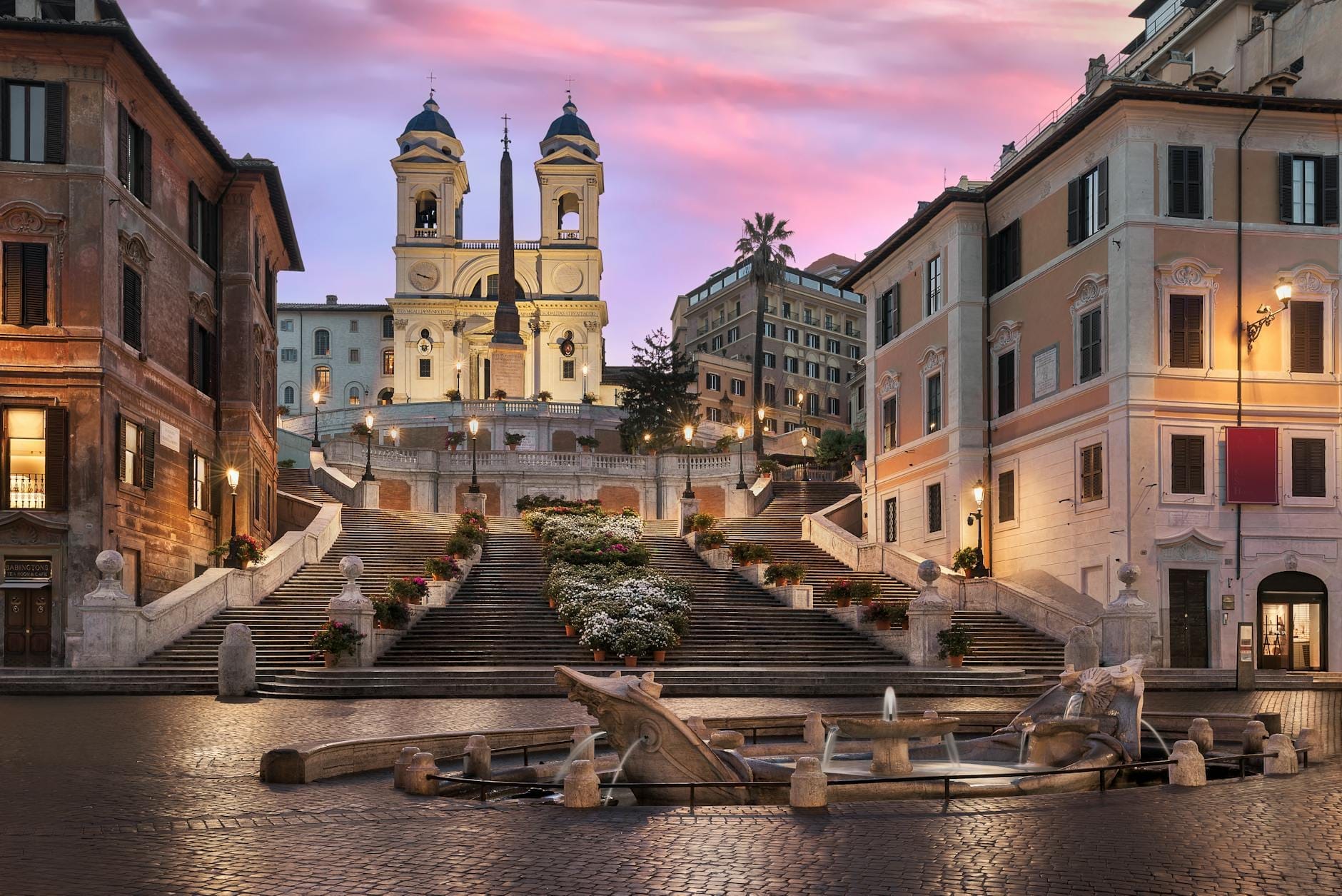
Trinità dei Monti crowns the top of the Spanish Steps with a twin-towered façade that has defined Rome's skyline for five centuries. Most visitors photograph it from below and move on. Those who go inside find Renaissance frescoes, a quietly active French religious community, and a piazza with one of the city's finest panoramas.
Quick Facts
- Location
- Piazza della Trinità dei Monti 3, 00187 Rome (rione Campo Marzio)
- Getting There
- Metro Line A, Spagna station (5-minute walk up the Spanish Steps)
- Time Needed
- 20–40 minutes for the church interior; add 15 minutes for the piazza and view
- Cost
- Free entry
- Best for
- Architecture enthusiasts, art lovers, and anyone seeking a calmer alternative to the crowds below
- Official website
- trinitadeimonti.net/it/la-chiesa
What Trinità dei Monti Actually Is
The Chiesa della Santissima Trinità dei Monti, to use its full official name, is a French Renaissance church sitting at the highest point of the Spanish Steps in Rome. Its twin campanili and double-tiered façade are so embedded in the visual identity of this city that they appear on postcards, fashion campaigns, and film stills almost as often as the Colosseum. The irony is that most of the millions who climb the steps each year never go inside.
The church was founded in 1493 under the patronage of King Charles VIII of France, making it one of Rome's many national churches: a place of worship maintained by a foreign nation within the city. Construction began around 1502, and the building was consecrated in the late 16th century. The façade, designed by Giacomo della Porta with contributions by Carlo Maderno around 1570, is a restrained composition compared to the Baroque excess you find elsewhere in Rome. The obelisk standing in the piazza in front of it is an ancient Egyptian piece that once decorated the Sallustian Gardens and was placed here in 1789.
Since 2016, the church has been entrusted to the Emmanuel Community, an international Catholic movement. Masses are held in both Italian and French, which gives the place an atmosphere noticeably different from the tourist-heavy churches of the historic center. People are here to pray.
💡 Local tip
The church is an active place of worship. Dress appropriately before entering: shoulders and knees covered. Photography during services is not appropriate. If you arrive when a mass is in progress, wait quietly near the entrance or return later.
The Interior: What You Find When You Actually Go In
The nave is relatively narrow and darker than you expect after the brightness of the piazza. Your eyes adjust and the frescoes gradually come into focus. The most significant works inside are by Daniele da Volterra, a Michelangelo student whose artistic reputation suffered historically because he was the one tasked with painting loincloths over the nudes in the Sistine Chapel. Here, working without that unfortunate brief, his fresco of the Deposition of Christ in the Orsini Chapel is considered one of the finest Mannerist paintings in Rome, and it receives a fraction of the attention it deserves.
The church has two naves, an unusual layout that contributes to its slightly maze-like feel as you move through side chapels. The lighting is low and atmospheric throughout the day, with afternoon light entering from the upper windows in a way that catches the gilded surfaces of the altars. Allow your eyes time to adjust rather than using your phone's torch, which is both intrusive and counterproductive: the gradual reveal of the interior's detail is part of the experience.
For context on how Trinità dei Monti fits into Rome's extraordinary concentration of religious architecture, the guide to the best churches in Rome covers the full spectrum from the Pantheon to less-visited basilicas across the city.
Tickets & tours
Live prices and dates from our booking partner. If you book, we may earn a commission at no extra cost to you.
Sunset food tour in the Monti district with pizza tasting
From 80 €Instant confirmationFree cancellationLuggage storage in Rome Monti
From 6 €Instant confirmationFree cancellationTuscany wine tour to Montepulciano and Montalcino from Rome
From 108 €Instant confirmationFree cancellationSt. Peter's Basilica, Vatican Museums, Sistine Chapel reserved entry
From 81 €Instant confirmationFree cancellation
The Piazza and the View: Rome at Eye Level
The Piazza della Trinità dei Monti sits directly in front of the church at the summit of the Spanish Steps. From here, the view runs west and southwest across Rome's roofline: terracotta and ochre, punctuated by domes, umbrella pines, and the occasional antenna. On a clear day in spring or autumn, the quality of light is exceptional, warm without the bleaching glare of July and August.
Early morning is the single best time to be in this piazza. Between 7:00 and 9:00 AM, the Spanish Steps below are nearly empty. The church's twin towers catch the low eastern light, the cats from the surrounding neighborhood occasionally wander through, and the sound of the Barcaccia fountain at the foot of the steps drifts up faintly. By 10:00 AM, tour groups begin arriving and the atmosphere shifts significantly. By midday in summer, the steps below are so crowded that climbing them is a slow shuffle.
The piazza also serves as the starting point for the Villa Medici, the French Academy in Rome, which sits immediately adjacent to the church and offers occasional tours of its gardens and interiors. The two institutions share a French cultural identity at this particular corner of the Pincian Hill.
ℹ️ Good to know
The view from the Trinità dei Monti piazza is genuinely panoramic but differs from the city's other great viewpoints. It looks primarily west over the historic center rather than southeast toward the ancient ruins. For comparison, the Pincio Terrace — a 10-minute walk north — offers a different and equally rewarding angle on the same cityscape.
Getting Here and How It Fits Into a Wider Visit
The most direct route is Metro Line A to Spagna station, followed by the climb up the 135 steps of the Scalinata di Trinità dei Monti, the official name of what everyone calls the Spanish Steps. The steps rise in stages with several natural resting points. If you prefer not to climb, there is a small lift (ascensore) inside the Spagna metro station that connects to street level near the base of the steps, but the steps themselves remain the only way up to the church level.
Alternatively, approaching from above is far less obvious to most visitors and far more pleasant. If you walk south through the Villa Borghese gardens and descend from the Pincio Terrace toward Viale della Trinità dei Monti, you arrive at the piazza from behind the church, having avoided the Spanish Steps entirely. This route is particularly effective if you have already visited the Villa Borghese area earlier in the day.
Trinità dei Monti sits within the broader Centro Storico district. A logical half-day route from here descends the steps to Piazza di Spagna, heads west along Via Condotti toward the Trevi Fountain, and continues to the Pantheon. The distances are short; the crowds vary considerably by time of day.
History in Compressed Form: Why a French Church Sits Atop a Spanish Staircase
The apparent contradiction in the name is one of Rome's more entertaining historical footnotes. The steps and piazza are called Spanish because the Spanish Embassy to the Holy See has been located in the adjacent Palazzo di Spagna since the 17th century. The church, however, is French: founded by Charles VIII of France in 1493 and historically maintained under French royal and later republican patronage. The two nations spent centuries with diplomatic tension over this corner of the hill, and the staircase itself, completed in 1725, was partly a French project funded by French diplomat Étienne Gueffier to create a grand ceremonial approach to the French church. The name simply reflects which nation controlled the surrounding piazza rather than the church.
This history explains why the church feels less Italian than many of its neighbors. The décor, the liturgical calendar, and the community running it all carry a distinctly French Catholic sensibility. Visiting it is, in a minor key, an exercise in understanding how Rome has always operated as a city layered with foreign presences, each leaving a permanent physical mark.
Who This Attraction Suits and Who Will Be Disappointed
Trinità dei Monti rewards travelers who are already interested in Renaissance and Mannerist painting, or who want a moment of quiet in a part of Rome that is otherwise relentlessly busy. The Daniele da Volterra frescoes are significant works; they are also fragile, dimly lit, and require some patience to appreciate. If you are primarily interested in checking famous sights off a list, the church interior may feel unremarkable compared to the drama of St. Peter's or the Sistine Chapel.
The piazza view, by contrast, is immediately satisfying for almost anyone. It is not the highest or most expansive viewpoint in Rome, but the framing created by the church towers and the sense of standing above the city's most photographed staircase gives it a particular quality. For a broader survey of where to find the city's best panoramas, the guide to Rome's best viewpoints covers a range of options across different neighborhoods and elevations.
Travelers with limited mobility should note that the church is accessible via the piazza, which can itself be reached by descending from Villa Borghese rather than climbing the steps. Wheelchair access to the church interior is not confirmed by official sources; contact the Emmanuel Community through the official website before visiting if this is a requirement.
⚠️ What to skip
The Spanish Steps area is one of Rome's most active zones for pickpocketing. Keep bags zipped and in front of you, particularly on the steps themselves and in the crowded piazza below. The piazza at the top, being less visited, is considerably calmer.
Insider Tips
- Come before 9:00 AM on any day of the week. The piazza is largely empty, the light on the façade is at its best, and the descent down the steps afterward gives you the full visual sweep of Piazza di Spagna without navigating crowds.
- The approach from Villa Borghese through the Pincio gardens and down Viale della Trinità dei Monti is one of Rome's most underused walking routes. It delivers you to the church from above and behind, with no steps to climb.
- Ask at the church about the Theatine Monastery attached to it. The Emmanuel Community occasionally opens certain areas of the adjacent convent buildings; what you find depends entirely on timing and who you ask.
- The obelisk in the piazza is the Sallustian Obelisk, carved in ancient Egypt but inscribed in Rome, probably during the Imperial period to imitate older originals. It is a physical object with a stranger history than it appears.
- If you want to see the Daniele da Volterra frescoes properly, bring a small pocket torch or use your phone light carefully and respectfully when the church is not in service. The interior lighting does not do justice to the detail in the Orsini Chapel.
Who Is Trinità dei Monti For?
- Architecture and art history travelers who want to see significant Mannerist frescoes outside the main museum circuit
- Early risers who want to experience the Spanish Steps area before the day crowds arrive
- Visitors building a walking route between the Villa Borghese gardens and the historic center
- Travelers interested in Rome's layers of foreign national influence and the history behind its landmark sites
- Anyone who has climbed the Spanish Steps multiple times and never actually gone inside the church at the top
Nearby Attractions
Other things to see while in Centro Storico:
- Ara Pacis
Commissioned in 13 BC to celebrate Augustus's campaigns in Gaul and Spain, the Ara Pacis Augustae is one of the best-preserved monuments of ancient Rome. Today it sits inside a striking modern pavilion on the Tiber's east bank, offering an unusually intimate encounter with imperial-era marble carving at near eye level.
- Campo de' Fiori
Campo de' Fiori is one of Rome's most recognizable piazzas, running a daily produce and flower market Monday through Saturday before reinventing itself as a lively social square after dark. Its paving stones have witnessed public executions, papal power, and centuries of commerce.
- Capitoline Hill
Capitoline Hill sits at the symbolic center of Rome, where Michelangelo's perfectly proportioned piazza crowns a site inhabited since the Bronze Age. Today it holds the world's oldest public museums, Rome's city hall, and some of the most striking views over the Roman Forum in the city.
- Capitoline Museums
Perched atop Capitoline Hill overlooking the Roman Forum, the Musei Capitolini hold some of antiquity's greatest sculptures and paintings across three interconnected palaces. Founded in 1471, they predate the Louvre by more than three centuries and reward visitors with both iconic works and panoramic views that few Rome attractions can match.
Planning a trip? Discover personalized activities with the Nomado app.