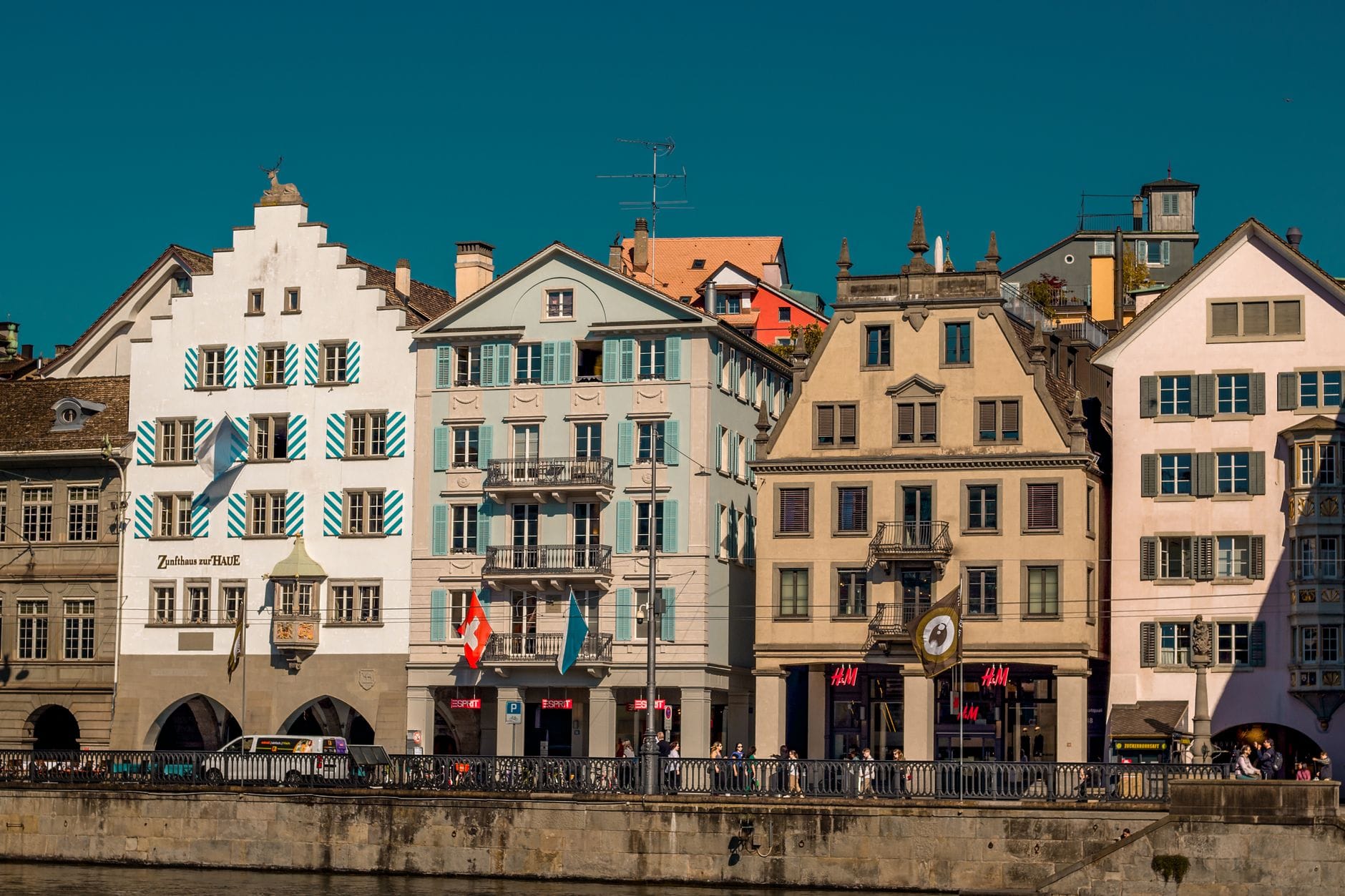
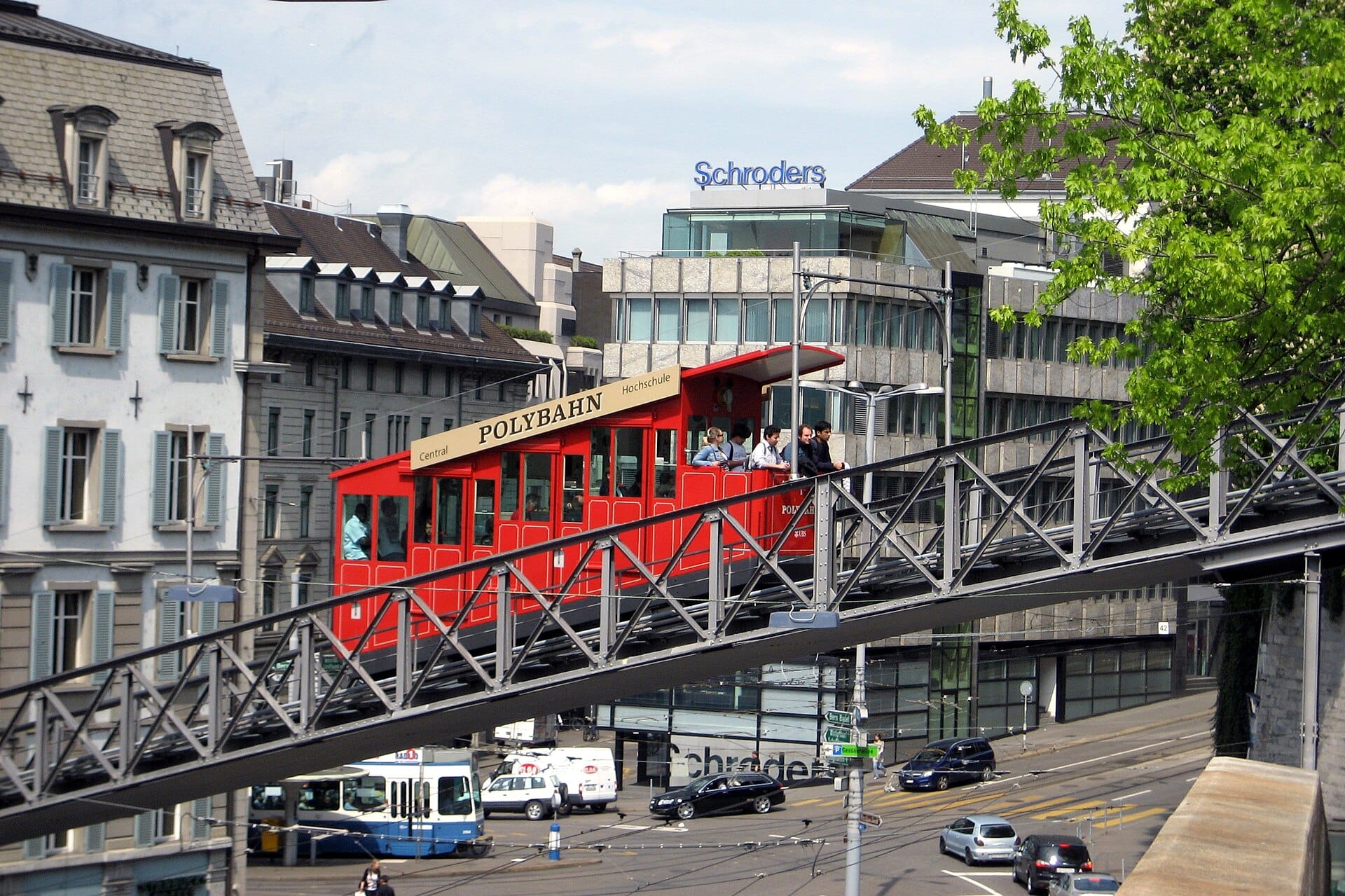
Zurich's Altstadt is the city's historic core, stretching along both banks of the Limmat River from the Main Station down to Lake Zurich. Medieval churches, guild houses, narrow cobblestone lanes, and one of the world's great shopping streets coexist in a compact district that is simultaneously the most touristic and the most historically significant part of the city.
Altstadt is where Zurich began: a compact district of Roman foundations, Reformation churches, and medieval guild houses straddling the Limmat River. It is the city's most visited neighborhood, and for good reason, but it rewards those who go beyond the obvious sights and explore the lanes that run uphill from the riverbanks.
Orientation
Altstadt corresponds roughly to Kreis 1, Zurich's administrative District 1, and represents the city's original urban footprint before the major expansions of 1893. It is a surprisingly small area, no more than a 20-minute walk from its northernmost point near Central just south of Zurich Main Station to its southern edge at Bürkliplatz on the lakeshore, and barely 15 minutes across at its widest east-to-west span.
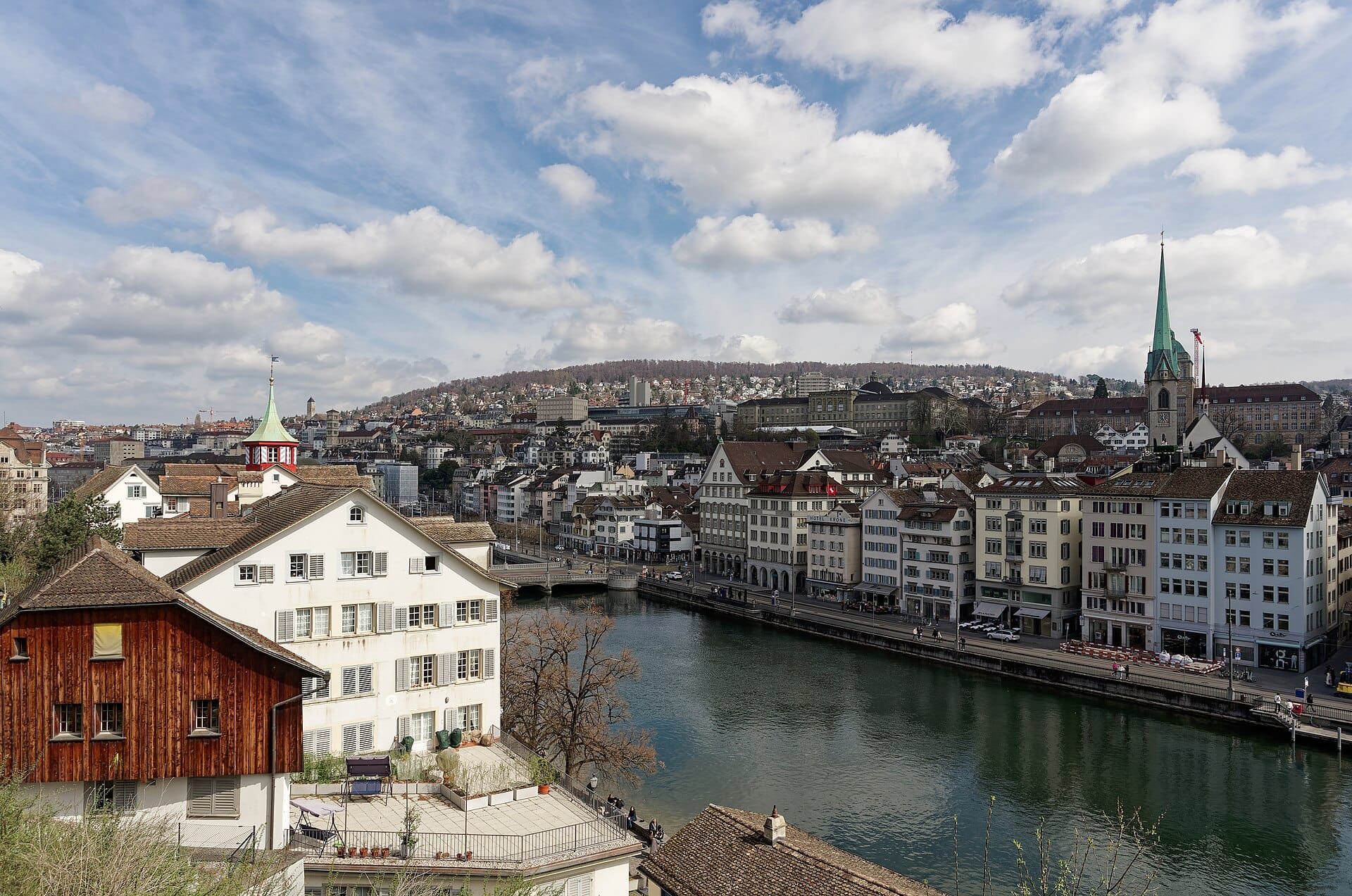
The Limmat River splits Altstadt into two distinct halves. The left bank (west side) is anchored by Lindenhof hill, Bahnhofstrasse, and the quieter residential lanes around Rennweg. The right bank (east side) holds Niederdorf, the university quarter, and the lively restaurant and bar strip that runs along Niederdorfstrasse toward Grossmünster. The two sides are connected by several bridges, most notably Rudolf-Brun-Brücke and Rathausbrücke, which offer some of the best views of the city's roofline.
To the north, Altstadt blends into the Zurich HB district around the Main Station. To the south, it opens onto the Lake Zurich area and the broad lakeside promenade. To the east across the river, the neighborhood of Niederdorf technically forms part of Kreis 1, though locals often treat it as its own entity with its own personality.
ℹ️ Good to know
Altstadt sits at around 408 meters above sea level in the broader Zurich basin. The terrain is not flat: Lindenhof hill rises sharply from the riverbank on the left bank, and the streets on the right bank climb toward the university district and ETH Zurich. Comfortable walking shoes are worth the forethought.
Character & Atmosphere
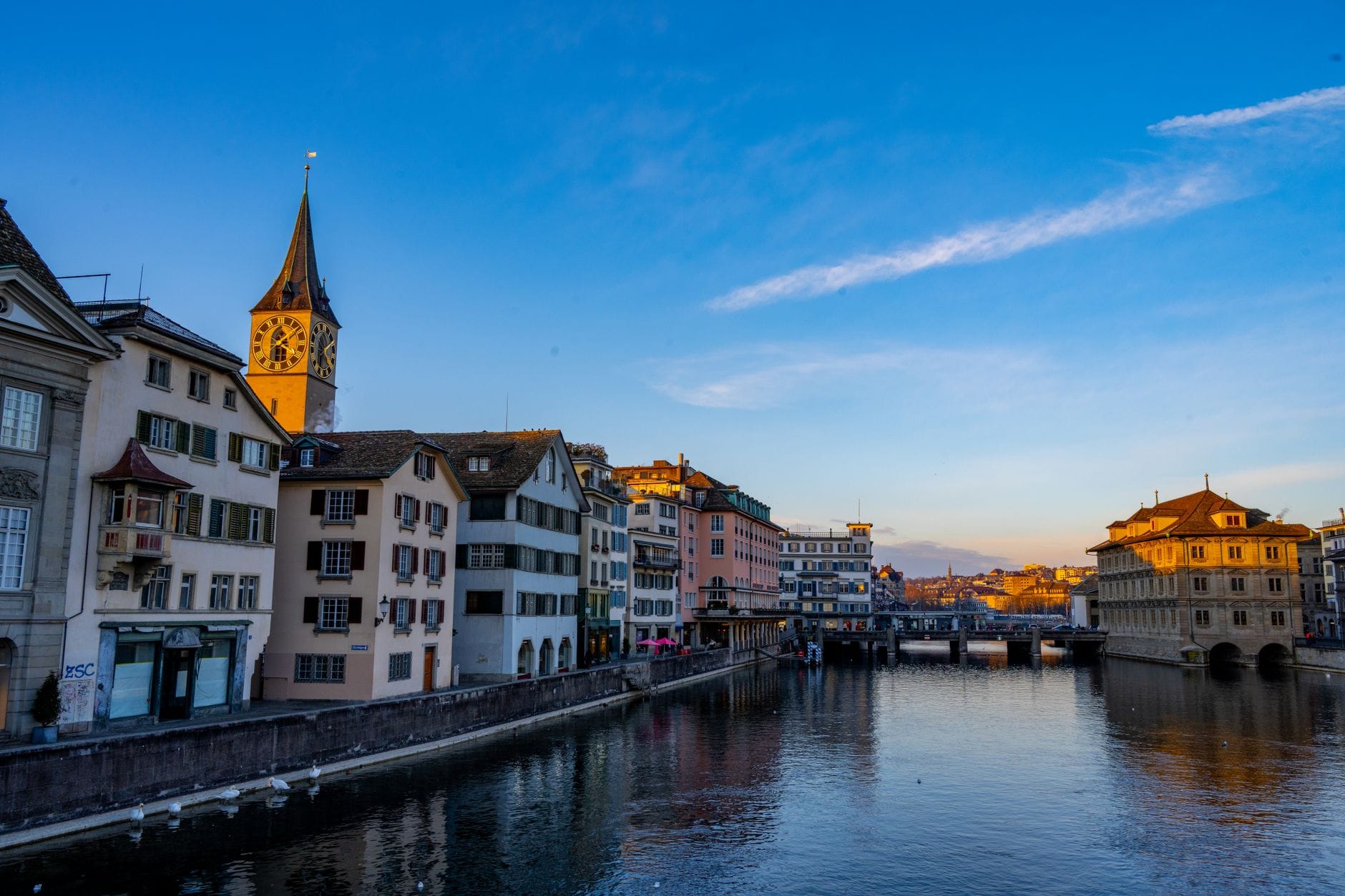
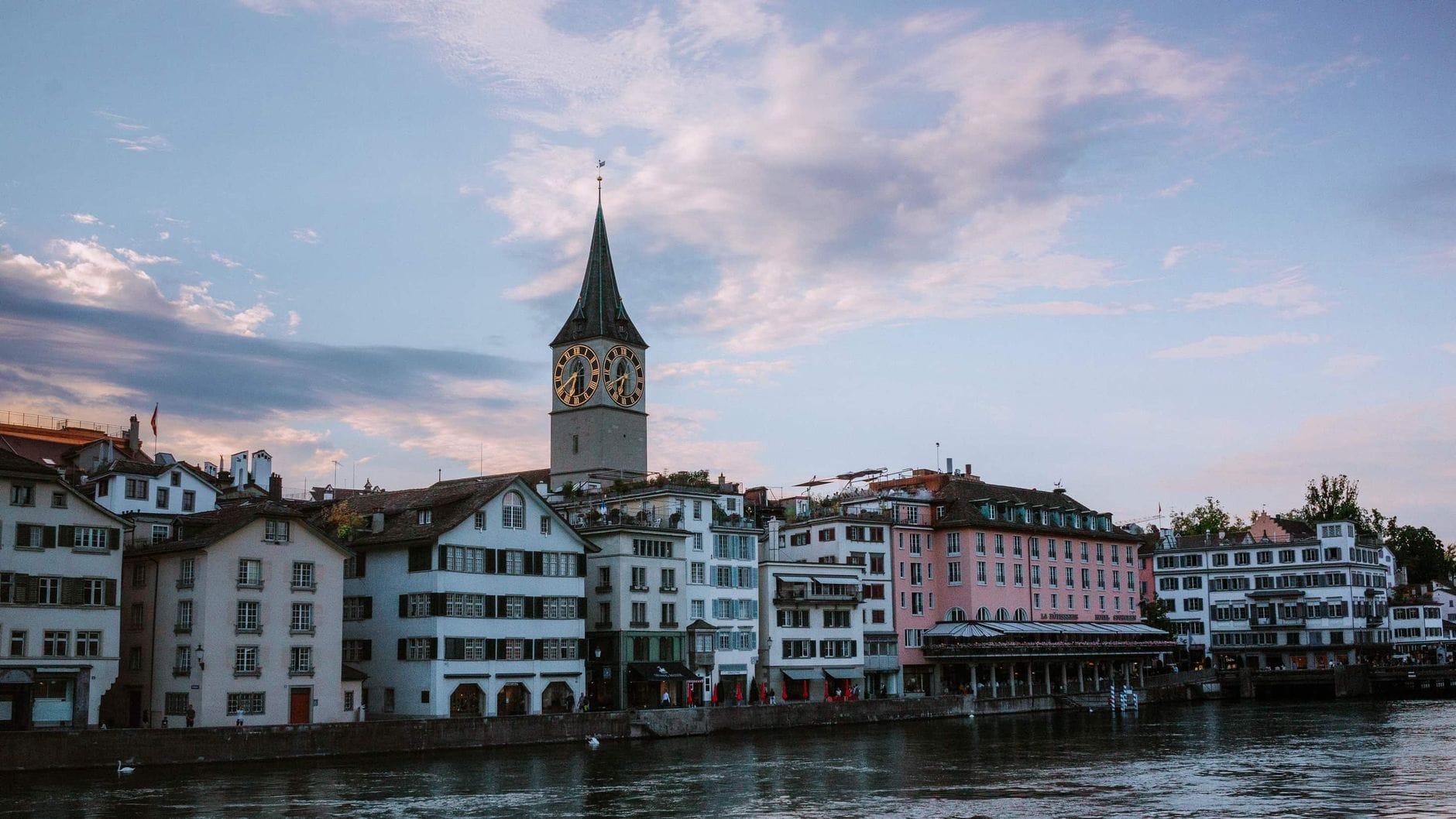
Walking into Altstadt early on a weekday morning, before the tour groups arrive, is one of the more pleasant urban experiences Zurich offers. The stone lanes between Fraumünster and St. Peter's Church are largely empty. You hear fountain water, the occasional tram bell from Bahnhofstrasse, and the bells of St. Peter itself, whose clock face stretches nearly nine meters in diameter, the largest church clock face in Europe. The light on the Limmat at that hour is clean and white, reflecting off the pale facades of the guild houses lining the waterfront.
By mid-morning the character shifts considerably. Tour groups consolidate around Grossmünster and Fraumünster. Bahnhofstrasse fills with a mix of shoppers, office workers, and visitors from the cruise boats docked at Bürkliplatz. The cobblestone lanes around Lindenhof become genuinely crowded in high summer. This is not a neighborhood that disguises its popularity, and travelers expecting to feel as though they've discovered something off the beaten path will be disappointed.
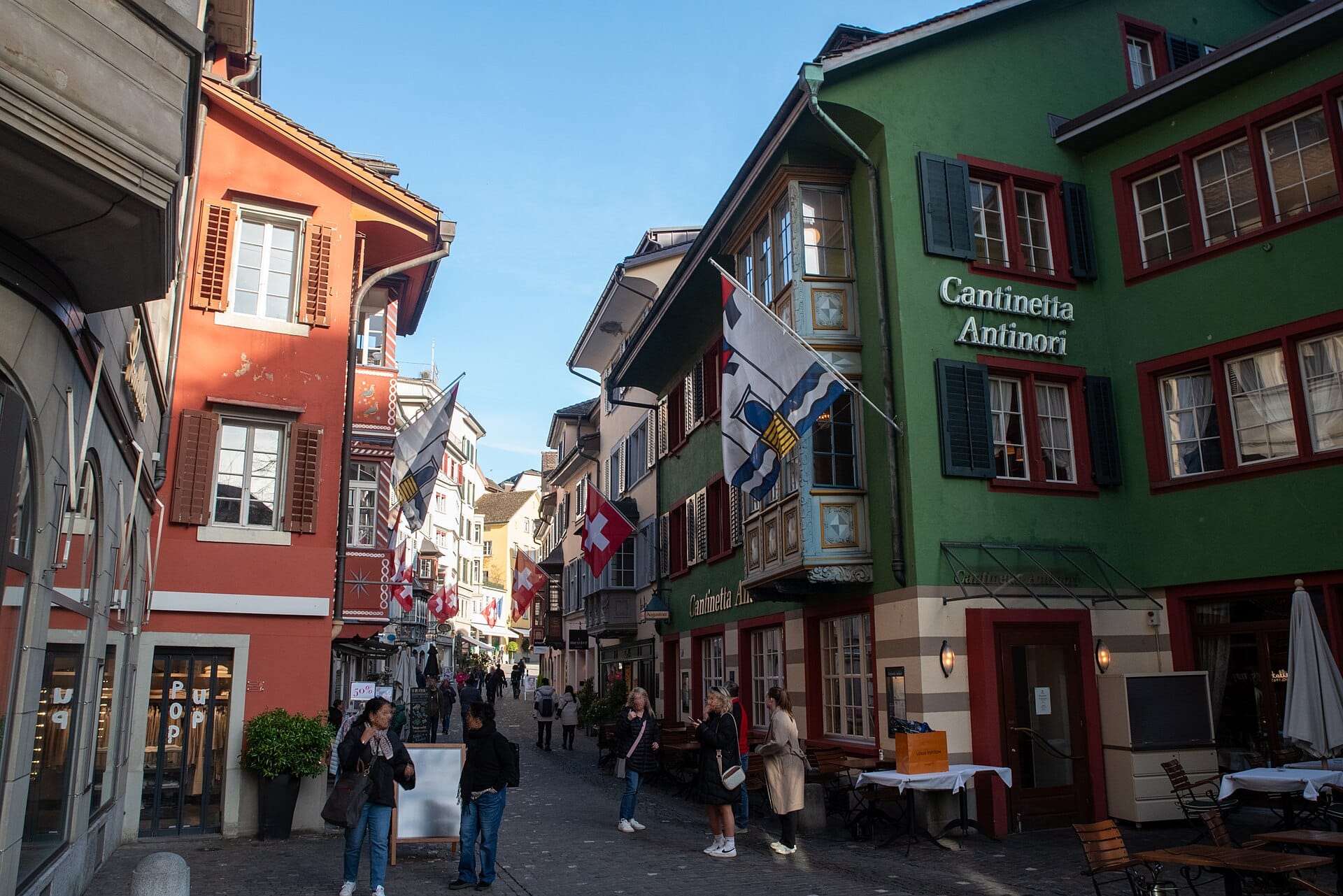
The two banks have genuinely different atmospheres. On the left bank, the streets around Rennweg and Augustinergasse are narrower and more residential. A few specialty shops and local cafés occupy ground floors that have looked largely the same for a century. The lanes have a compressed, almost Italianate quality: tall buildings, little sky visible above, sudden small squares where the geometry opens up. The right bank, by contrast, is younger in energy. Niederdorfstrasse runs north from Grossmünster through a continuous line of restaurants, bars, and casual shops, and it stays lively well into the evening.
After dark, the left bank quiets considerably. Bahnhofstrasse empties of shoppers and the upscale restaurant terraces draw a more local crowd. The right bank remains animated: the Niederdorf strip is one of the more reliably active bar areas in central Zurich, though it does not compete with the nightlife intensity of Zurich-West or Langstrasse. For families or travelers who want a quiet evening, this is entirely manageable.
What to See & Do
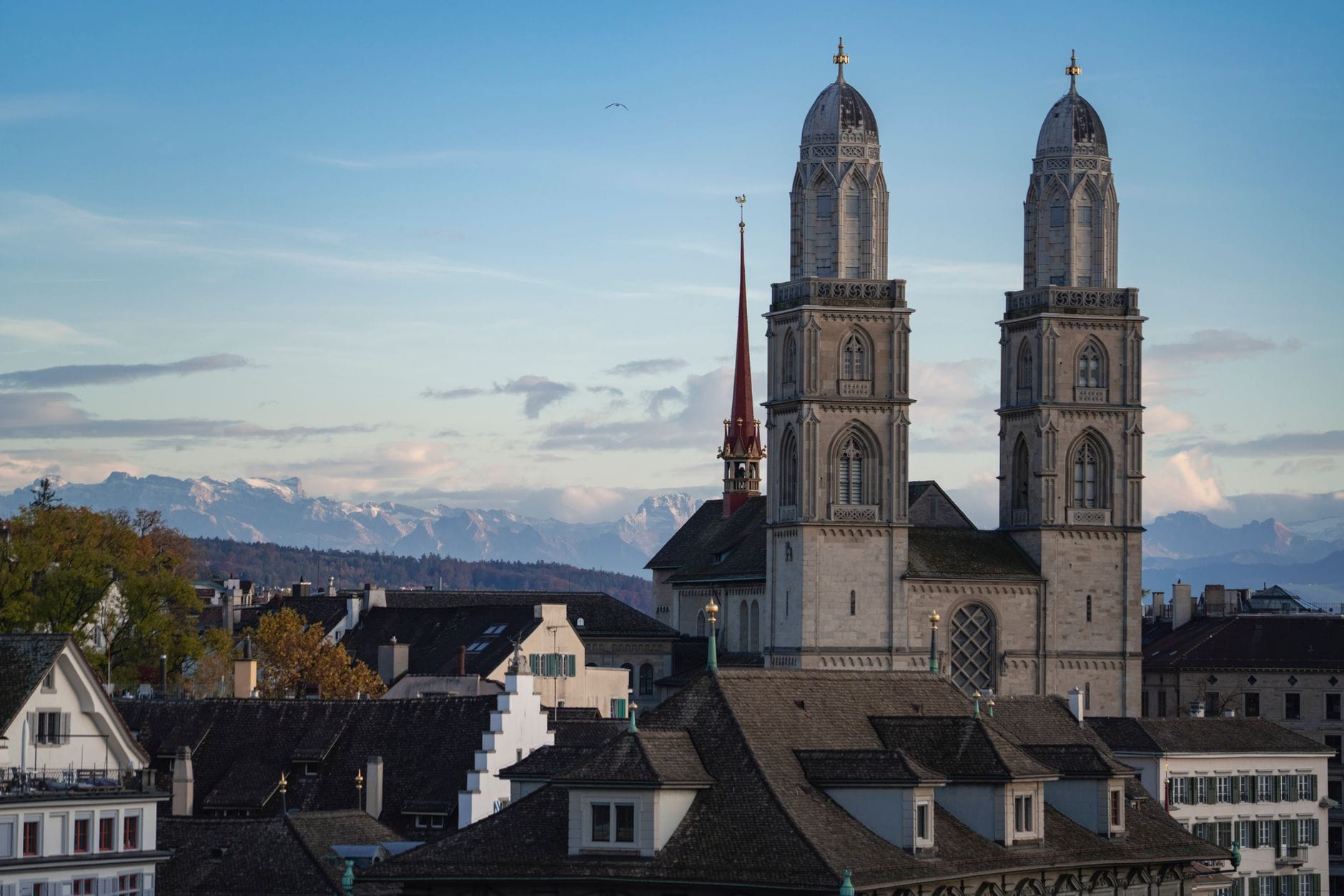
The two towers of the Grossmünster are the defining image of Zurich's skyline. This Romanesque cathedral, built between the 11th and 13th centuries, is where Huldrych Zwingli launched the Swiss Reformation in 1519. You can climb the south tower (Karlsturm) for a view over the Altstadt rooftops and down to the lake. Entry to the tower requires a small fee (verify current pricing before visiting).
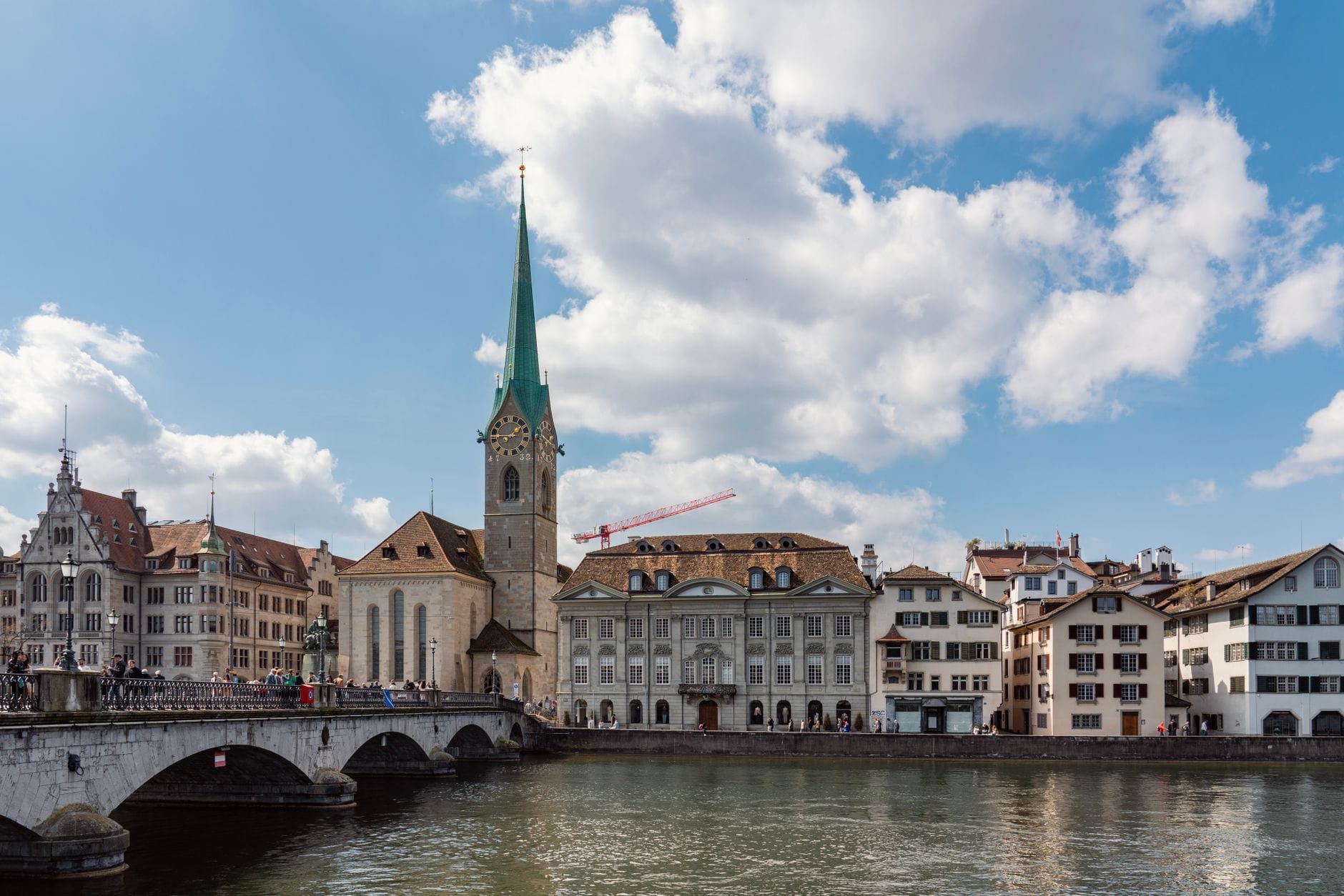
Directly across the river on the left bank stands Fraumünster, a Gothic church best known for its five stained-glass windows designed by Marc Chagall in 1970 and a rose window by Augusto Giacometti. The interior light on a clear afternoon, when sunlight moves through the blue and green glass, is striking. The church is smaller than you might expect, and the windows are the entire reason to visit.
St. Peter's Church on the left bank predates both in its foundations, with records going back to the 9th century. The current building is largely 18th century. Its clock tower, with a face diameter of approximately 8.7 meters, is the largest church clock face in Europe and was for centuries a key reference point for the city, and it still commands the roofscape west of the river.
A few minutes' walk from Fraumünster, Lindenhof hill is a small park on a raised plateau where the Romans built a fort. It offers one of the best low-effort panoramas in the city: you look directly across the river to the right bank and can see Grossmünster's towers, the university hill, and, on clear days, the Alps to the south. It is a genuinely pleasant place to spend 20 minutes away from street-level crowds.
Running parallel to the river on the left bank, Bahnhofstrasse stretches 1.4 kilometers from Zurich HB to Bürkliplatz. It is one of the world's most exclusive retail streets, home to Swiss watchmakers, luxury brands, and department stores. Even if you are not shopping, walking its full length is useful for understanding how Zurich presents its commercial identity. The tram runs down the center of the street, which keeps traffic minimal and the pedestrian experience pleasant.
Augustinergasse: a left-bank lane with window boxes and historic facades, considered one of the most photogenic streets in the Altstadt
Rathausbrücke: the bridge with the closest river-level views of the guild house facades along Limmatquai
Cabaret Voltaire on Spiegelgasse: the birthplace of the Dada art movement in 1916, now a cultural venue
The Swiss National Museum, just north of the Old Town boundary near Zurich HB
Bürkliplatz at the southern tip, where lake cruises depart and the flea market operates on Saturdays alongside a weekday farmers’ market
For a broader orientation to Zurich's historical and cultural monuments, the guild houses along the Limmat are best seen from the opposite bank or from the bridges. These buildings served as the headquarters of Zurich's powerful craft guilds from the medieval period onward and are still used for civic ceremonies today.
💡 Local tip
The Zurich Card, available from the Tourist Information Office at the Main Station, covers unlimited use of public transit and free or reduced entry to many museums. If you plan to visit multiple museums and use trams frequently, it is worth pricing against individual tickets before you buy.
Eating & Drinking
Altstadt's food scene spans a wide range, from tourist-oriented cafés steps from Grossmünster to serious Swiss restaurants serving roasted meats and lake fish. The gap in quality between establishments aimed at visitors and those serving the local office and residential population is real. A few indicators: restaurants with English-only menus and photos of dishes are likely catering primarily to tourists; places with handwritten daily specials in German tend to offer better value and more genuine cooking.
The right bank around Niederdorfstrasse has the densest concentration of eating and drinking options: a continuous strip of Swiss, Italian, Middle Eastern, and Asian restaurants running north from Grossmünster toward Central. Prices here are moderate by Zurich standards. You will find fondue and rösti at several establishments, which may or may not interest you, but they are not tourist-trap versions in the better spots.
On the left bank, the streets around Rennweg and toward Bahnhofstrasse have more upscale options: hotel restaurants, established Swiss dining rooms, and a handful of small wine bars. Lunch here can be expensive, especially if you sit down at a white-tablecloth restaurant. The Swiss convention of a set lunch menu at a fixed price (Tagesmenü) saves significant money if you are eating your main meal at midday.
For coffee, the independent café culture in Altstadt is modest compared to what you find in Zurich-West or Seefeld. Most cafés here lean toward traditional or tourist formats. For a better sense of Zurich's wider food culture, the guide to what to eat in Zurich covers local specialties worth trying across the city, including dishes like Zürcher Geschnetzeltes (sliced veal in cream sauce) that appear on left-bank menus.
Zurich's tap water is excellent and freely available at the city's numerous public drinking fountains, including several decorative ones in the Altstadt
Swiss beer and local white wine (particularly Riesling-Silvaner from the Canton of Zurich) are the standard drinks in traditional restaurants
Service charges are included in Swiss restaurant bills; rounding up or leaving small change is customary but large tips are not expected
Many Altstadt restaurants are fully booked for dinner Friday and Saturday evenings; reservations are advisable at better-known spots
Getting There & Around
Zurich Main Station (Zürich HB) sits immediately north of Altstadt's boundary and is the primary entry point for most visitors. From the station's main exit, you are a five-minute walk from Bahnhofstrasse and ten minutes from Fraumünster or Lindenhof. The entire left-bank Altstadt is walkable from the station without requiring any transit.
Tram lines 2, 4, 6, 8, 9, 10, 11, 13, and 15 serve the Altstadt, with stops along Bahnhofstrasse and at Bürkliplatz at the southern end. The tram network in Zurich is operated under the ZVV (Zürcher Verkehrsverbund) fare system. A single ticket covers transfers between trams, buses, and the S-Bahn within the relevant fare zones for a set time period. Day passes and the Zurich Card offer unlimited travel and are worth considering if you plan to explore neighborhoods beyond Altstadt.
The Altstadt itself is pedestrian-friendly and largely closed to through traffic. However, it is not entirely flat: anyone with significant mobility limitations should be aware that Lindenhof involves a steep climb, and many of the medieval lanes on both banks are cobblestone, which can be difficult with wheeled luggage or strollers.
From Zurich Airport, the S-Bahn connects directly to Zurich HB in roughly 10–12 minutes, making Altstadt one of the most accessible central neighborhoods from the airport. The full guide to getting around Zurich covers transit options, fare zones, and the best ways to move between the city's districts.
⚠️ What to skip
Bahnhofstrasse and the lanes immediately around the major churches are extremely crowded on weekend afternoons in summer, particularly between late June and early September. If you want to photograph the facades or simply walk without interruption, early morning on weekdays is the practical answer.
Where to Stay
Staying in Altstadt puts you within walking distance of Zurich's main historic sights and offers easy access to the rest of the city via the Main Station. The tradeoff is cost: hotels in Kreis 1 are among the most expensive in the city, and even mid-range options come at a premium compared to equivalent rooms in Seefeld or near Zurich West.
The left bank, particularly the streets around Rennweg and toward Bahnhofstrasse, has a cluster of business-oriented and luxury hotels. These suit travelers who want quiet streets at night and a short walk to the station. The right bank around Niederdorf is louder after dark given the bar traffic on Niederdorfstrasse, which may or may not suit you. Rooms facing interior courtyards are noticeably quieter than those facing the main lanes.
Travelers weighing accommodation options across the city can find a structured overview in the guide to where to stay in Zurich, which compares Altstadt, Seefeld, Zurich West, and the HB district by traveler type and budget.
💡 Local tip
If your priority is historic atmosphere and central location, the left-bank Altstadt streets between Lindenhof and Fraumünster are the quietest after 10pm. If you want evening entertainment within walking distance without needing a tram, a Niederdorf-adjacent hotel is the better choice.
Honest Assessment: Is Altstadt Worth Your Time?
Altstadt is not a secret, and it does not pretend to be. It is the most visited neighborhood in Zurich, and the density of churches, historic buildings, and significant streets in a small area justifies that reputation. But it is a neighborhood with clear limitations for certain types of travelers.
The historic fabric is genuinely well-preserved and visually coherent in a way that is unusual even among European old towns. The churches are worth entering, not just photographing from outside. The Limmat riverfront, particularly the view from Rathausbrücke toward the guild houses, is one of those city views that holds up to repeated seeing. These are real draws.
Travelers looking for contemporary culture, independent design, nightlife, or local neighborhood life in a less tourist-saturated setting should balance time in Altstadt with time in other areas. Zurich West offers a completely different register: industrial conversions, food markets, and late-night culture. Riesbach-Seefeld along the eastern lakefront has a quieter, more residential character with excellent lakeside access. Altstadt is best treated as the city's starting point, not its entire story.
For a structured itinerary that balances Altstadt with the rest of the city, the two days in Zurich guide provides a practical framework without over-indexing on any single area.
TL;DR
Altstadt (Kreis 1) is Zurich's historic core on both banks of the Limmat, spanning from Zurich HB south to Lake Zurich at Bürkliplatz.
Key draws include Grossmünster, Fraumünster, St. Peter's Church, Lindenhof hill, Bahnhofstrasse, and the medieval guild house facades along the river.
Best for: first-time visitors to Zurich, history and architecture enthusiasts, travelers who want walkable access to the city's main landmarks.
Not ideal for: budget travelers (hotels and restaurants are expensive), those seeking local neighborhood life away from tourist traffic, or nightlife-focused visitors who should look to Zurich West or the Langstrasse area instead.
Practically central: five minutes from Zurich HB, 10-15 minutes from the airport by direct S-Bahn train, and walkable to most major sights without needing transit.
Two days in Zurich is enough to cover the historic Old Town, the lakefront, a mountain viewpoint, and world-class museums — if you plan it right. This itinerary lays out exactly how to spend 48 hours in Zürich, with practical logistics, honest advice on costs, and clear guidance on what's worth your time.
Zurich has a genuinely impressive museum scene for a city its size. Whether you're after world-class fine art, Swiss cultural history, non-European civilizations, or the roots of the Dada movement, this guide covers the best museums in Zurich and tells you exactly what makes each one worth your time.
Zurich rewards visitors year-round, but the timing of your trip makes a significant difference to your budget, experience, and what you can actually do. This guide breaks down every season honestly, including when to avoid and when the city is at its best.
Zurich has an impressive range of scenic vantage points for a city its size. Whether you want sweeping Alps panoramas, rooftop river views, or lakeside reflections at sunset, this guide covers every worthwhile viewpoint in the city, with practical tips on how to reach each one.
Zurich sits at one of the best-connected points in Europe for short excursions. Within two hours by train, you can reach medieval lakeside towns, one of Europe's most powerful waterfalls, and alpine peaks above 3,000 metres. This guide breaks down the best day trips from Zurich by travel time, effort, and what kind of traveller each suits.
Zurich has a reputation for being expensive, but a surprising amount of the city's best experiences cost nothing at all. From hiking to an Alpine panorama and swimming in the Limmat to exploring medieval lanes and world-class architecture, this guide covers the best free things to do in Zurich.
Zurich's public transport network is one of the most efficient in Europe, but the ticketing zones and the Zurich Card can trip up first-time visitors. This guide covers everything: getting from Zurich Airport (ZRH) to the city center, how the ZVV zone system works, when the Zurich Card is worth buying, and what to know about trams, night buses, and taxis.
Zurich gets dismissed as a banker's city or skipped in favour of Geneva and Lucerne. That's a mistake. This guide breaks down exactly what Zurich offers, what it costs, when to go, and who should actually add it to their itinerary.
Zurich punches well above its size as a luxury destination. This guide covers the finest hotels, high-end dining, world-class shopping, and cultural experiences that make Switzerland's largest city one of Europe's most rewarding upscale escapes.
Zurich packs medieval churches, world-class museums, Alpine viewpoints, and lake swimming into one compact, walkable city. This guide covers the best things to do in Zurich across every budget and season, with real prices, transport details, and the honest advice most guides skip.
Zurich's food scene runs deeper than fondue and chocolate. This guide covers the essential Swiss dishes to try, honest price expectations, seasonal must-orders, and practical tips for eating well without overpaying in one of Europe's most expensive cities.
Choosing where to stay in Zurich shapes your entire trip. This guide breaks down every major neighborhood by character, price, transport links, and who it suits best, so you can book with confidence rather than guesswork.
Zurich Airport (ZRH) is Switzerland's largest and most efficient international hub. This guide covers the terminal layout, transfer connections, train and tram options to the city centre, lounge access, and what to know before you fly.
Zurich's churches are among the most historically significant in Switzerland, shaped by Romanesque foundations, Gothic ambition, and the radical sweep of the Swiss Reformation. This guide covers the four main Old Town churches in depth, plus lesser-known stops worth your time, with practical hours, access tips, and honest assessments of what each is worth.
Zurich is one of Europe's most underrated cities for a romantic trip. This guide covers the best couple-friendly experiences in Zurich, from lakeside evenings and hilltop sunsets to chocolate workshops and candlelit Old Town strolls, with honest advice on what's worth your time and money.
Zurich rewards the curious traveler who looks beyond the obvious. From a Dada birthplace bar to a Le Corbusier pavilion in a lakeside park, these are the experiences that show a different side of Switzerland's largest city.
Zurich sits at the edge of one of Switzerland's most walkable landscapes. With over 3,000 km of signposted trails in the region, serious day hikes are reachable entirely by public transport. This guide covers the best routes, seasonal timing, and everything you need to plan a hike from the city.
December transforms Zurich into one of Europe's finest winter destinations. From the grand indoor market at the Hauptbahnhof to the lakeside Wienachtsdorf, this guide covers every major Christmas market, what things cost, how to get around, and what most visitors get wrong.
Summer transforms Zurich into one of Europe's most enjoyable warm-weather cities. From the Badi culture on Lake Zurich to the Seeüberquerung mass swim and open-air festivals, this guide covers everything you need to plan a great visit from June through September.
Zurich has one of the highest densities of public swimming areas in Europe, with more than 20 official Badis on Lake Zurich and the Limmat River. This guide covers the best spots, what to expect on arrival, what you'll pay, and which ones are completely free.
Zurich nightlife runs deeper than its polished reputation suggests. Three distinct districts, clubs that go until sunrise, and a surprisingly diverse bar scene make this one of Europe's more underrated after-dark cities. Here's how to navigate it properly.
Zurich has a reputation for being one of Europe's priciest cities, and that reputation is not entirely undeserved. But with the right approach to accommodation, food, transport, and timing, a daily budget of CHF 110–145 per person is genuinely achievable. This guide breaks down exactly where to save and where it's worth spending a little more.
Zurich's shopping scene spans 1.4 km of world-class luxury on Bahnhofstrasse, medieval lanes full of Swiss design in the Old Town, and a converted railway viaduct in Zurich West where independent labels thrive. This guide maps out every district, explains the Sunday-closing reality, and tells you where to go based on what you actually want to buy.
The Zurich Street Parade draws close to one million people to the shores of Lake Zurich every August for a free, open-air electronic music parade. This guide covers the route, logistics, crowd realities, after-party scene, and everything else you need to experience it properly.
Zurich is a serious chocolate destination in its own right. From the historic Confiserie Sprüngli on Bahnhofstrasse to the world's largest chocolate museum in nearby Kilchberg, this guide covers every stop worth making, with prices, transport tips, and honest advice on what to skip.
The Zurich to Basel corridor is one of Switzerland's most efficient rail routes, with direct trains running roughly every 15-30 minutes and the fastest services taking under an hour. This guide covers every transport option, how to get the best price, and how to make the most of Basel as a day trip.
The train from Zurich to Geneva is one of Switzerland's most travelled intercity routes, covering 224 km in under 3 hours on the best services. This guide covers exact journey times, current pricing, booking strategies, bus alternatives, and the key differences between the two cities to help you plan smarter.
The Zurich to Interlaken journey by train is one of Switzerland's most rewarding travel corridors, combining Swiss rail efficiency with increasingly dramatic Alpine scenery. This guide covers direct routes, ticket prices, scenic alternatives, and practical tips for making the most of your time in the Bernese Oberland.
The train from Zurich to Lucerne is one of Switzerland's most practical short-haul routes: direct, frequent, and under an hour. This guide covers timetables, ticket prices, booking strategies, and what to expect at both ends of the journey.
The Zurich to Milan train is one of Europe's great cross-border rail journeys: direct EuroCity service through the Gotthard Base Tunnel in around 3 hours 17 minutes, with up to 14 departures daily. This guide covers schedules, pricing, booking strategy, and what to expect at both ends of the route.
Everything you need to know about travelling from Zurich to Paris: direct TGV Lyria trains in just over 4 hours, flights that look fast but rarely are, and budget buses for the patient traveller. Prices, booking tips, and honest comparisons included.
This guide covers the full self-guided walking tour of Zurich's Old Town and Limmat riverside, from Zürich HB to Lake Zurich. Get the route, honest advice on what's worth paying for, crowd patterns by season, and practical details you won't find in a brochure.
Zurich is one of the world's great cities for buying a Swiss watch, with authorized dealers, heritage boutiques, and pre-owned specialists spread across the city. This guide covers where to shop, what to pay, how to claim your VAT refund, and which common assumptions will cost you money.
Zurich is far more family-friendly than its reputation suggests. From a world-class zoo and interactive chocolate museum to free riverside swimming and mountain hikes, this guide covers the best activities for kids of all ages, what to book ahead, and how to keep costs manageable.