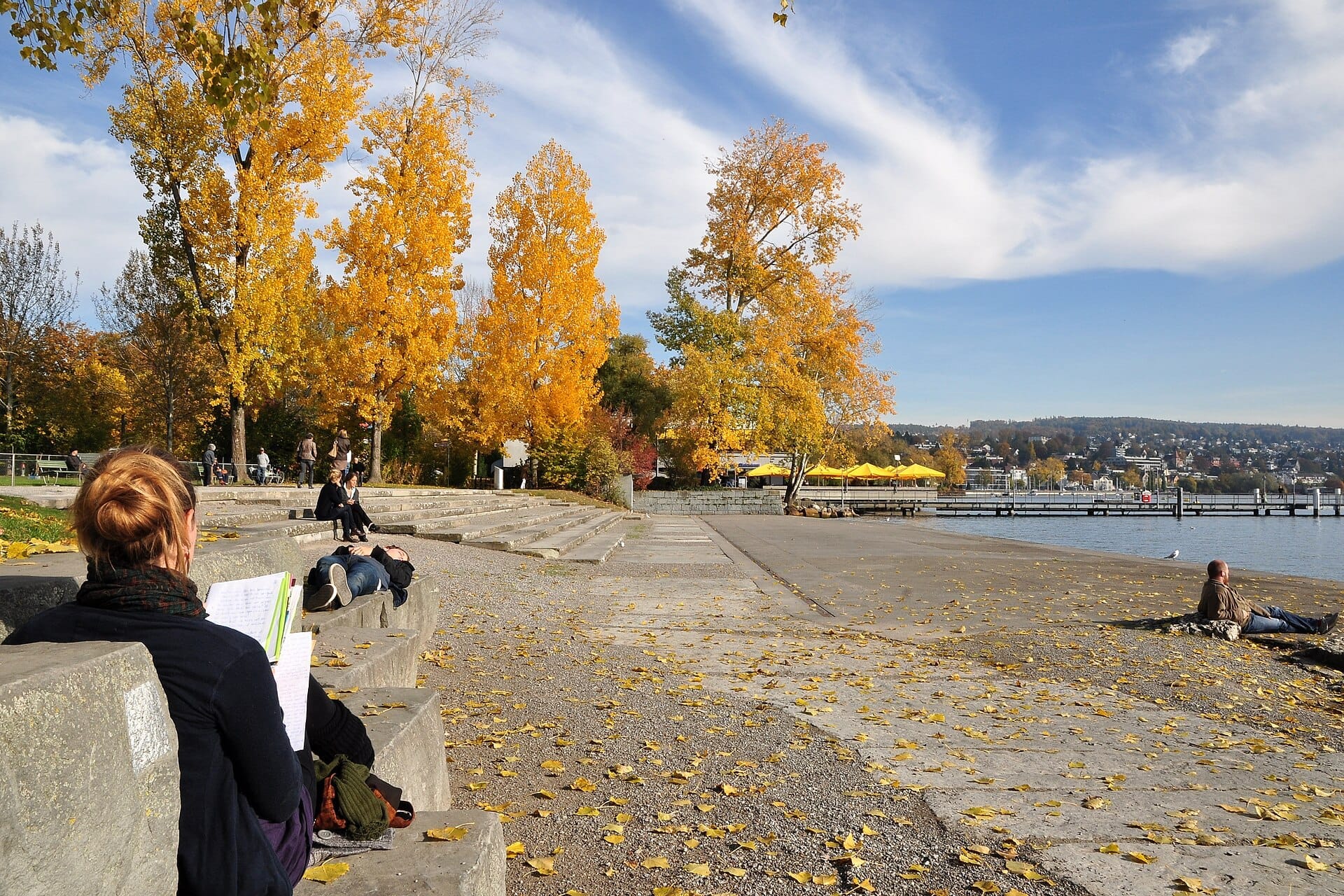
Riesbach (Kreis 8) stretches along Zurich's eastern lakeshore from behind the Opernhaus at Bellevue out to Tiefenbrunnen, encompassing the quarters of Seefeld, Mühlebach, and Weinegg. It combines premium residential streets, lakeside parks, and a refined café and restaurant scene with some of the city's most interesting 20th-century architecture.
Riesbach and Seefeld make up Zurich's District 8, a narrow lakeshore strip east of the city center. The result is a neighborhood that feels less urban than it looks on a map: wide promenades, manicured parks, and a calm, well-heeled character that stands in clear contrast to the medieval density of the Altstadt across the lake. The result is a neighborhood that feels less urban than it looks on a map: wide promenades, manicured parks, and a calm, well-heeled character that stands in clear contrast to the medieval density of the Altstadt across the lake.
Orientation
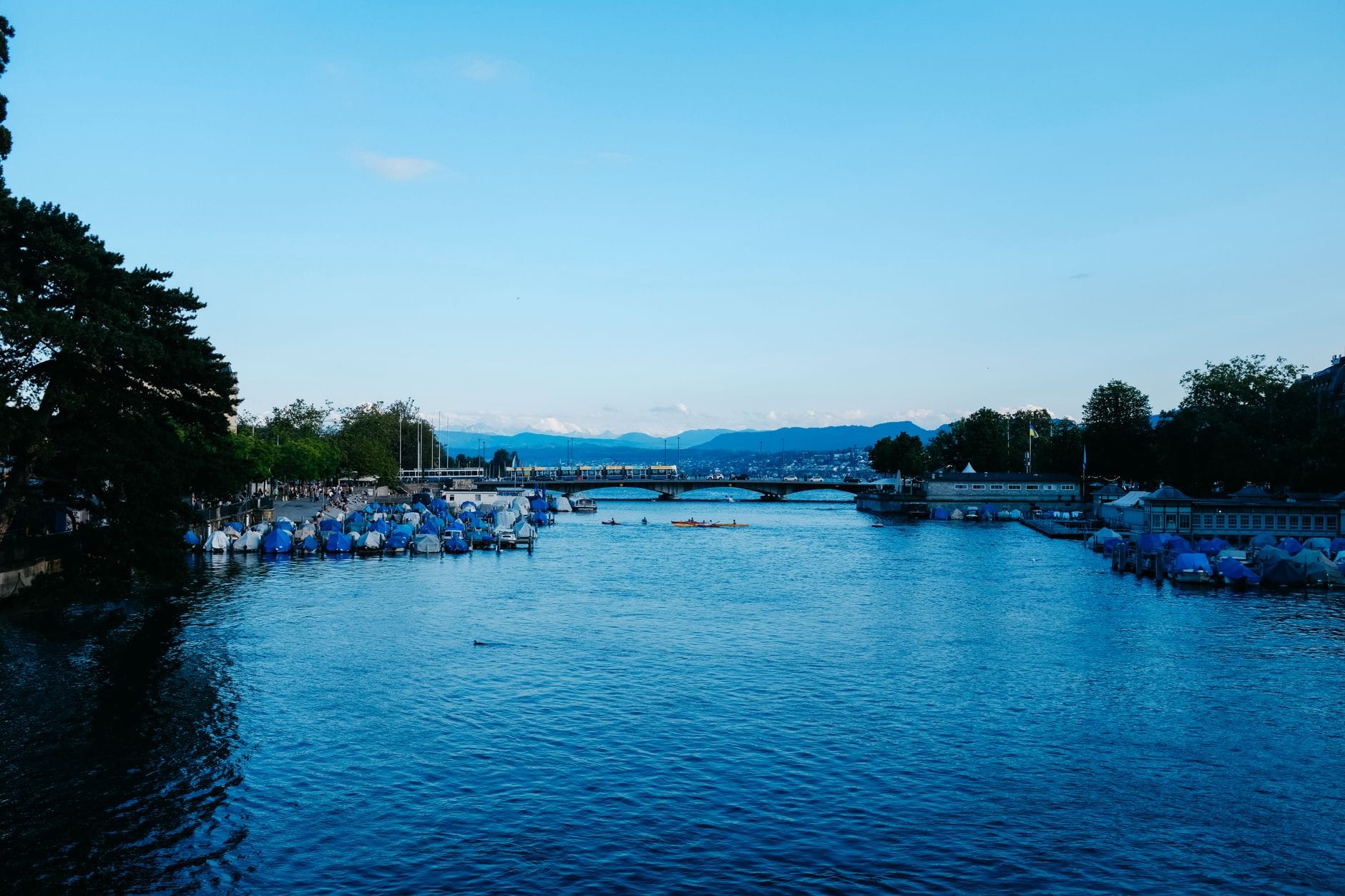
Kreis 8 occupies a slender arc of land on the right (eastern) bank of Lake Zurich, running roughly 4 kilometers from the Stadelhofen and Bellevue area in the northwest down to Tiefenbrunnen at the southeastern city boundary, where Zurich meets the municipality of Zollikon. The district is officially divided into three quarters: Seefeld, the narrow lakefront strip between the water and Seefeldstrasse; Mühlebach, the more residential zone immediately behind it; and Weinegg, the quieter, hillside area furthest from the lake.
Seefeldstrasse is the main commercial artery running through the district, parallel to the lake and served by city trams and buses. The lakeshore itself is accessed via a series of parks and promenades, collectively forming one of Zurich's most popular outdoor corridors. To the north, the district connects seamlessly to the Niederdorf and the Zurich Old Town via the Bellevue square and Quaibrücke bridge. To the south and east, it transitions gradually into quieter residential suburbs.
Understanding Seefeld's shape helps explain its character: because Lake Zurich's promenade effectively forms the neighborhood's entire southern and eastern edge, residents and visitors are never more than a few minutes' walk from open water and greenery. That proximity to the lake defines everything from property prices to the pace of daily life.
Character & Atmosphere
Seefeld has a reputation as one of Zurich's more affluent residential quarters, and that registers immediately at street level. The apartment buildings on streets like Seefeldstrasse and Dufourstrasse are well-maintained and architecturally varied, mixing late 19th-century Wilhelminian facades with mid-century blocks and the occasional modernist intervention. Boutiques and delicatessens occupy the ground floors. The streets are clean and quiet without feeling sterile.
Mornings in Seefeld are genuinely pleasant. Joggers and cyclists move along the lakeshore paths before 8am, and the lakeside bakeries and cafés on Seefeldstrasse start filling with residents picking up coffee and a Gipfeli (the Swiss croissant) on their way to work. The light off the lake in the early morning is particularly good, especially in summer when mist still sits on the water and the Alps begin to emerge on the southern horizon.
By midday, the lakeside parks draw a mixed crowd of office workers on lunch breaks, families with strollers, and tourists who have made their way east from Bellevue. The afternoon is when the promenades feel most active, particularly on warm days when the swimming areas and lawns fill up. As the day cools, the Seefeldstrasse café terraces take over, and the neighborhood shifts into a relaxed dinner-and-drinks mode that stays relatively civilized compared to the louder nightlife further west around Langstrasse.
This is not a neighborhood where you come for edge or grit. Seefeld's identity is comfortable, curated, and oriented toward quality of life rather than cultural transgression. Visitors who want spontaneity, cheap street food, or late-night energy should look to Zurich West or the Niederdorf. Those who want to wake up to lake views, eat well, and walk through a neighborhood that functions at a high level every day of the week will feel at home here immediately.
ℹ️ Good to know
Seefeld is notably quieter than central Zurich on weekday mornings and evenings. If you are used to city center noise levels, the relative calm here can feel almost suburban.
What to See & Do
The centerpiece of the district is the lakeshore itself. From the Zurichhorn Park southward toward Tiefenbrunnen, a continuous belt of lawns, footpaths, and public art installations lines the waterfront. Sculptures by Jean Tinguely and Henry Moore are placed along these paths without fanfare, easy to miss if you are moving quickly but quietly impressive when you stop to look. The setting, with the Alps visible on clear days across the water, gives even fairly ordinary public art a certain grandeur.
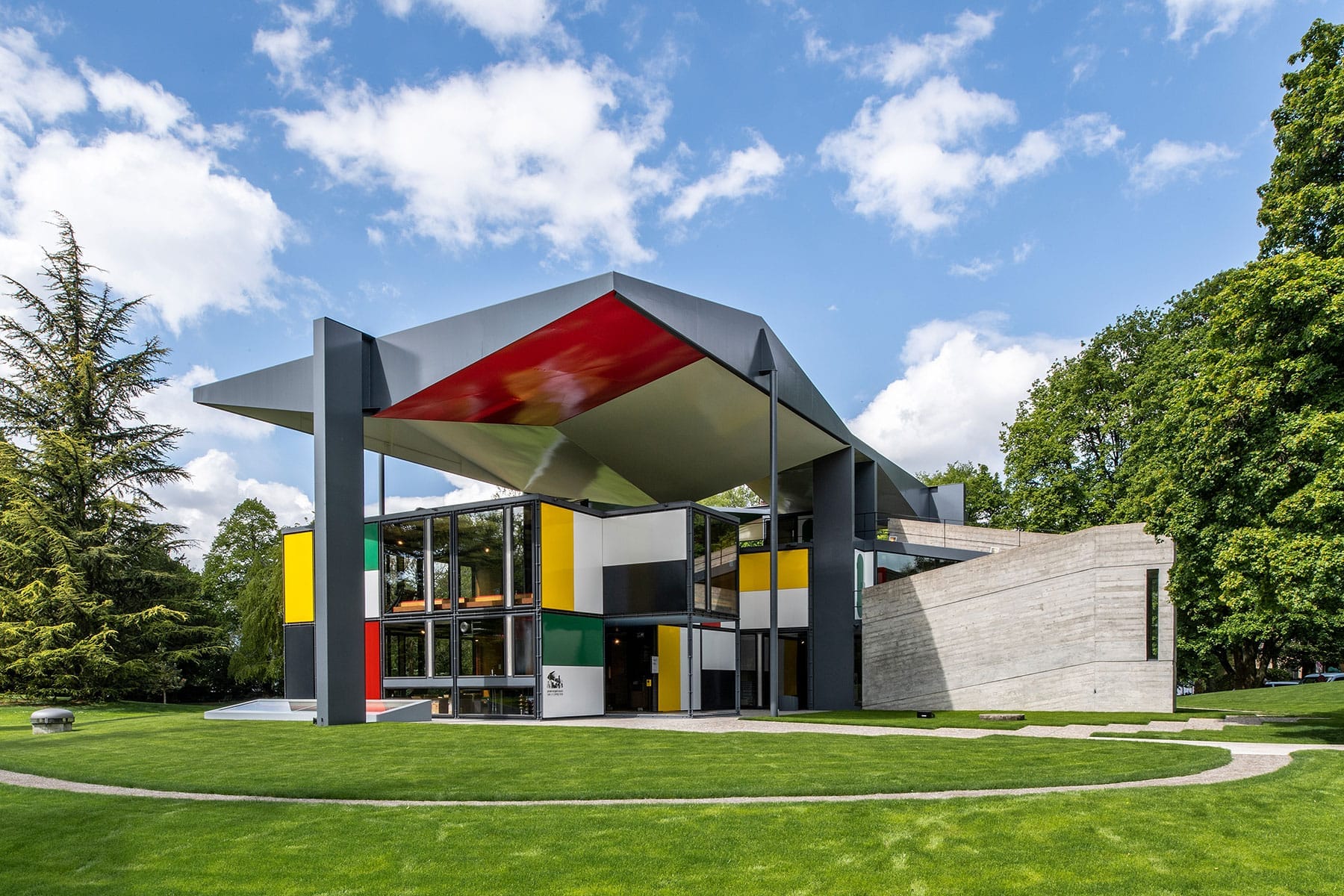
Within Zurichhorn Park, the Chinese Garden (Chinagarten Zürich) is one of the more unexpected attractions in this part of the city. Built in the Suzhou style and gifted to Zurich by its Chinese partner city, it offers a formal counterpoint to the informal parkland around it. Nearby, the Le Corbusier Pavilion (originally built as the Centre Le Corbusier and now housing the Heidi Weber Museum) stands on the lakeshore as the last building designed by the Swiss-French architect before his death in 1965. The structure is worth seeking out even if you have no particular interest in modernist architecture: its use of primary colors on steel panels and its elevated position near the water make it one of the most visually distinctive buildings in the city.
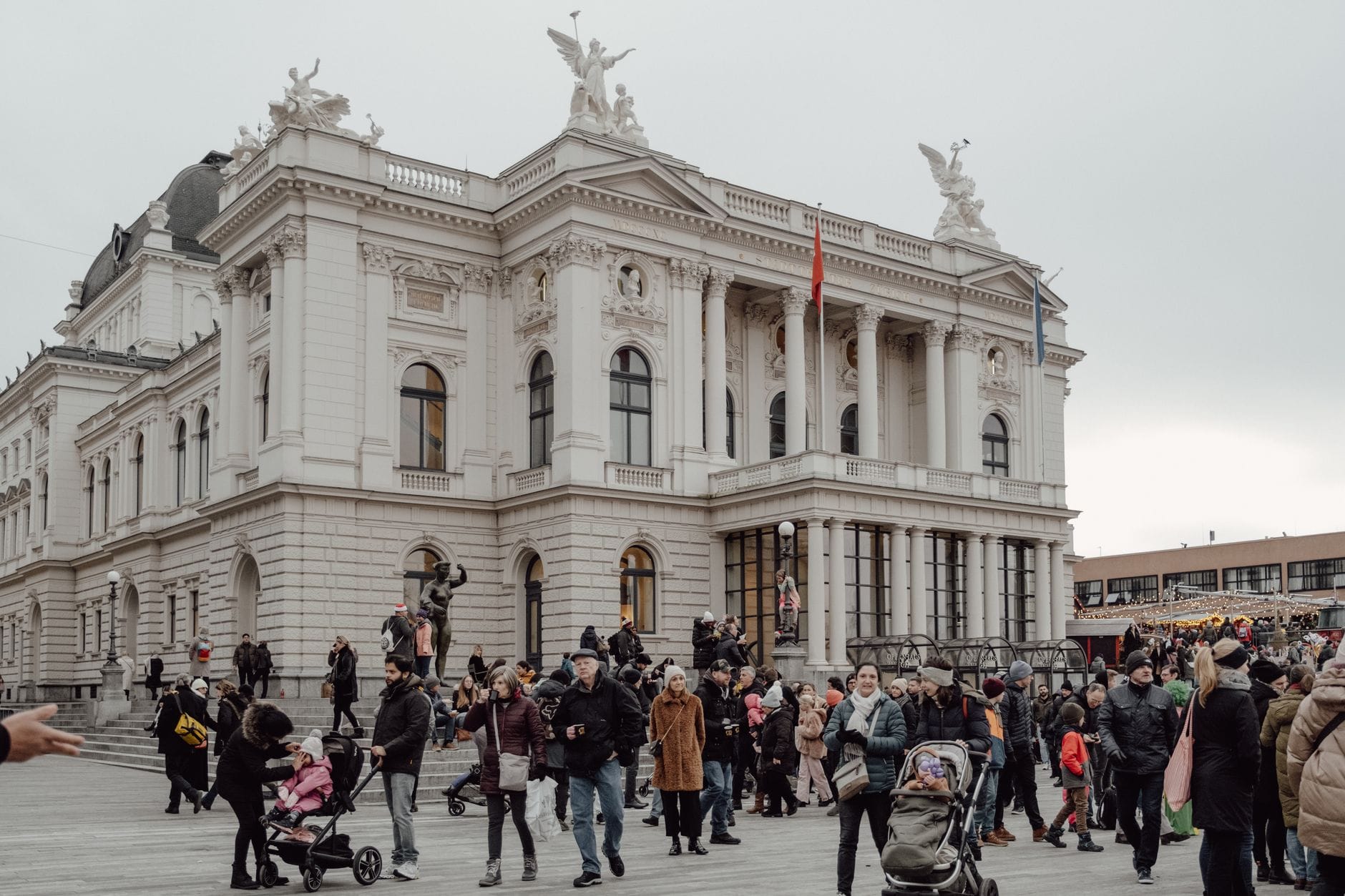
The western end of the district, around Bellevue and Stadelhofen, places you within easy reach of Zurich's Opera House, which faces the lake at the edge of Seefeld and the Altstadt. Performances run throughout the season from September to June, and the building itself, a late 19th-century structure with a neoclassical facade, is worth admiring even if you are not attending a show.
Water access is a practical reality here, not just scenery. Several Badis (traditional Swiss open-air lakeshore bathing stations) operate along this stretch of the lake in summer, and the area around Tiefenbrunnen has long been a local favorite for swimming. For a broader overview of lake swimming culture in Zurich, the Zurich lake swimming guide covers what to expect at different spots.
Zurichhorn Park: sculptures, lawns, and direct lake access
Chinagarten Zürich: formal Chinese garden in Suzhou style
Le Corbusier Pavilion / Heidi Weber Museum: last building by Le Corbusier
Zurich Opera House: world-class program, architecturally significant building
Lakeshore promenade: continuous walking and cycling path to Tiefenbrunnen
Tiefenbrunnen area: local swimming, S-Bahn station, quieter lakeshore atmosphere
Eating & Drinking
Seefeld's food scene matches its residential character: reliable, often excellent, and priced at a level that reflects the neighborhood's demographics. You will not find many budget options here, but you also will not find many places that are coasting on location. The concentration of local residents who eat out regularly creates genuine competition, which tends to raise standards.
Seefeldstrasse and the smaller streets running off it toward the lake, such as Feldeggstrasse, hold the highest density of cafés, restaurants, and bars. The format ranges from Italian trattorias and Japanese ramen spots to upscale Swiss cuisine restaurants and wine bars. Brunch culture is well established here: on weekend mornings, the café terraces fill quickly and queues form outside the better-known spots by 10am.
For food context across the wider city, the Zurich food guide covers Swiss culinary staples worth trying during a stay, from Zürcher Geschnetzeltes (creamy veal and mushrooms, a Zurich signature) to Rösti and the city's distinctive bread culture. Many Seefeld restaurants serve versions of these dishes, often with contemporary updates.
The lakeside position also means that several restaurants and bars have terrace seating directly facing the water, which is among the more desirable outdoor dining real estate in the city. Reservations are advisable in summer for any place with a lake view, particularly on warm Friday and Saturday evenings. The bar scene is lower-key than in the Altstadt or Zurich West, with a preference for wine bars and cocktail spots over clubs or loud bars. Things generally wind down by midnight in this part of the city.
💡 Local tip
If you want a lakeside aperitivo without paying restaurant prices, pick up wine and snacks from one of the delicatessens or wine shops on Seefeldstrasse and take them to the lawns at Zurichhorn Park. This is exactly what many locals do on warm evenings.
Getting There & Around
Riesbach and Seefeld are well connected to the wider city, though transit access is not quite as immediate as in the Altstadt or the areas around the Hauptbahnhof. The two main rail access points are Zürich Stadelhofen, at the northwestern edge of the district near Bellevue, and Zürich Tiefenbrunnen, at the southeastern end near the city boundary. Both are served by S-Bahn suburban rail lines as well as local trams and buses, and both connect quickly to Zurich HB.
From Stadelhofen, the trip to Zurich's main station takes around 5 minutes by S-Bahn. Tram lines run along Seefeldstrasse connecting the district to Bellevue and the city center, making it easy to move between Seefeld and the Niederdorf or the Old Town on foot or by tram in under 15 minutes. The Zürcher Verkehrsverbund (ZVV) integrated fare system covers all trams, buses, and S-Bahn within city limits, so a single ticket works across all modes.
Walking is a practical option for much of the district, particularly along the lakeshore path which runs the entire length of Seefeld without any major interruptions. The walk from Bellevue to Tiefenbrunnen along the lake takes approximately 40 to 50 minutes at an easy pace and is one of the more enjoyable urban walks in the city. Cycling is also popular here, and the lakeside path is wide enough to accommodate both pedestrians and cyclists without significant conflict.
For broader navigation across Zurich, the getting around Zurich guide explains the ZVV fare zones, day pass options, and the general logic of the tram and S-Bahn network. Zurich Airport (ZRH) is approximately 13 kilometers north of the city center; the standard connection is by train to Zurich HB, then S-Bahn or tram to Stadelhofen, giving a total journey of around 25 to 35 minutes to reach Seefeld from the airport.
💡 Local tip
Stadelhofen station is a few hundred meters east of Bellevue square and is not as prominently signposted from the lakeshore as you might expect. If you are heading to the S-Bahn after a lakeside walk, follow signs for Zürich Stadelhofen rather than looking for a tram stop.
Where to Stay
Seefeld and Riesbach are primarily residential districts, so accommodation options are more limited than in the Old Town or around the Hauptbahnhof. The hotels and serviced apartments that do exist here tend to sit at the mid-range to upper end of the market, reflecting the neighborhood's general price level. For travelers who want to stay close to the lake and prefer a quiet base over central convenience, this trade-off is worthwhile.
The western end of the district, within walking distance of Stadelhofen and Bellevue, is the most convenient location within Seefeld if you want easy transit connections to the rest of Zurich. Staying here, you are roughly equidistant between the Old Town's historic core to the west and the quieter lakeshore parks to the east. The area around Utoquai and the northern end of Seefeldstrasse has a small concentration of accommodation options in this zone.
Travelers considering other neighborhoods as a base should consult the broader guide to where to stay in Zurich for a comparative overview. Seefeld suits couples, independent travelers who prioritize green space and lakeside access, and visitors on longer stays who want a neighborhood that functions like a real residential area rather than a tourist district.
⚠️ What to skip
Accommodation in Seefeld and Riesbach can be significantly more expensive than equivalent rooms in other Zurich districts. If budget is a primary concern, the areas around Zurich HB or further west offer more value. Verify current rates before booking, as prices in this district fluctuate considerably by season.
Nearby Neighborhoods & Day Connections
Seefeld's position on the eastern lakeshore puts it within easy reach of several other major destinations in Zurich. Bellevue, at the district's northwestern edge, is the natural gateway to the Altstadt and the Niederdorf, both walkable in under 10 minutes. The lake itself connects southward to the broader Lake Zurich area, which extends well beyond the city boundary and offers boat excursions, lakeside towns, and in summer, long swimming stretches accessible by S-Bahn.
For day trips beyond Zurich, the S-Bahn connection from Stadelhofen or Tiefenbrunnen to Zurich HB makes it straightforward to reach the broader rail network. The day trips from Zurich guide covers the most accessible destinations, from Lucerne and Bern to the Alpine foothills. Seefeld's location is particularly convenient for lake-based day trips, as several boat services depart from the Zurichhorn area and from Bürkliplatz, a short tram ride away.
Quick Verdict
TL;DR
Riesbach and Seefeld are Zurich's most livable lakeside district: calm, well-connected, and genuinely pleasant to walk through at any time of day.
The neighborhood suits travelers who want lake access, good restaurants, and a quieter residential atmosphere rather than central city intensity.
Key draws include the lakeshore promenade, Zurichhorn Park, the Le Corbusier Pavilion, the Chinagarten, and the Opera House at the district's western edge.
Transit is good but not immediate: count on a 5 to 15 minute journey to reach the Old Town or Hauptbahnhof, depending on your starting point within the district.
Not the right choice for budget travelers, late-night seekers, or anyone who wants to be in the thick of Zurich's historic core: for that, the Altstadt or Niederdorf are better positioned.
Two days in Zurich is enough to cover the historic Old Town, the lakefront, a mountain viewpoint, and world-class museums — if you plan it right. This itinerary lays out exactly how to spend 48 hours in Zürich, with practical logistics, honest advice on costs, and clear guidance on what's worth your time.
Zurich has a genuinely impressive museum scene for a city its size. Whether you're after world-class fine art, Swiss cultural history, non-European civilizations, or the roots of the Dada movement, this guide covers the best museums in Zurich and tells you exactly what makes each one worth your time.
Zurich rewards visitors year-round, but the timing of your trip makes a significant difference to your budget, experience, and what you can actually do. This guide breaks down every season honestly, including when to avoid and when the city is at its best.
Zurich has an impressive range of scenic vantage points for a city its size. Whether you want sweeping Alps panoramas, rooftop river views, or lakeside reflections at sunset, this guide covers every worthwhile viewpoint in the city, with practical tips on how to reach each one.
Zurich sits at one of the best-connected points in Europe for short excursions. Within two hours by train, you can reach medieval lakeside towns, one of Europe's most powerful waterfalls, and alpine peaks above 3,000 metres. This guide breaks down the best day trips from Zurich by travel time, effort, and what kind of traveller each suits.
Zurich has a reputation for being expensive, but a surprising amount of the city's best experiences cost nothing at all. From hiking to an Alpine panorama and swimming in the Limmat to exploring medieval lanes and world-class architecture, this guide covers the best free things to do in Zurich.
Zurich's public transport network is one of the most efficient in Europe, but the ticketing zones and the Zurich Card can trip up first-time visitors. This guide covers everything: getting from Zurich Airport (ZRH) to the city center, how the ZVV zone system works, when the Zurich Card is worth buying, and what to know about trams, night buses, and taxis.
Zurich gets dismissed as a banker's city or skipped in favour of Geneva and Lucerne. That's a mistake. This guide breaks down exactly what Zurich offers, what it costs, when to go, and who should actually add it to their itinerary.
Zurich punches well above its size as a luxury destination. This guide covers the finest hotels, high-end dining, world-class shopping, and cultural experiences that make Switzerland's largest city one of Europe's most rewarding upscale escapes.
Zurich packs medieval churches, world-class museums, Alpine viewpoints, and lake swimming into one compact, walkable city. This guide covers the best things to do in Zurich across every budget and season, with real prices, transport details, and the honest advice most guides skip.
Zurich's food scene runs deeper than fondue and chocolate. This guide covers the essential Swiss dishes to try, honest price expectations, seasonal must-orders, and practical tips for eating well without overpaying in one of Europe's most expensive cities.
Choosing where to stay in Zurich shapes your entire trip. This guide breaks down every major neighborhood by character, price, transport links, and who it suits best, so you can book with confidence rather than guesswork.
Zurich Airport (ZRH) is Switzerland's largest and most efficient international hub. This guide covers the terminal layout, transfer connections, train and tram options to the city centre, lounge access, and what to know before you fly.
Zurich's churches are among the most historically significant in Switzerland, shaped by Romanesque foundations, Gothic ambition, and the radical sweep of the Swiss Reformation. This guide covers the four main Old Town churches in depth, plus lesser-known stops worth your time, with practical hours, access tips, and honest assessments of what each is worth.
Zurich is one of Europe's most underrated cities for a romantic trip. This guide covers the best couple-friendly experiences in Zurich, from lakeside evenings and hilltop sunsets to chocolate workshops and candlelit Old Town strolls, with honest advice on what's worth your time and money.
Zurich rewards the curious traveler who looks beyond the obvious. From a Dada birthplace bar to a Le Corbusier pavilion in a lakeside park, these are the experiences that show a different side of Switzerland's largest city.
Zurich sits at the edge of one of Switzerland's most walkable landscapes. With over 3,000 km of signposted trails in the region, serious day hikes are reachable entirely by public transport. This guide covers the best routes, seasonal timing, and everything you need to plan a hike from the city.
December transforms Zurich into one of Europe's finest winter destinations. From the grand indoor market at the Hauptbahnhof to the lakeside Wienachtsdorf, this guide covers every major Christmas market, what things cost, how to get around, and what most visitors get wrong.
Summer transforms Zurich into one of Europe's most enjoyable warm-weather cities. From the Badi culture on Lake Zurich to the Seeüberquerung mass swim and open-air festivals, this guide covers everything you need to plan a great visit from June through September.
Zurich has one of the highest densities of public swimming areas in Europe, with more than 20 official Badis on Lake Zurich and the Limmat River. This guide covers the best spots, what to expect on arrival, what you'll pay, and which ones are completely free.
Zurich nightlife runs deeper than its polished reputation suggests. Three distinct districts, clubs that go until sunrise, and a surprisingly diverse bar scene make this one of Europe's more underrated after-dark cities. Here's how to navigate it properly.
Zurich has a reputation for being one of Europe's priciest cities, and that reputation is not entirely undeserved. But with the right approach to accommodation, food, transport, and timing, a daily budget of CHF 110–145 per person is genuinely achievable. This guide breaks down exactly where to save and where it's worth spending a little more.
Zurich's shopping scene spans 1.4 km of world-class luxury on Bahnhofstrasse, medieval lanes full of Swiss design in the Old Town, and a converted railway viaduct in Zurich West where independent labels thrive. This guide maps out every district, explains the Sunday-closing reality, and tells you where to go based on what you actually want to buy.
The Zurich Street Parade draws close to one million people to the shores of Lake Zurich every August for a free, open-air electronic music parade. This guide covers the route, logistics, crowd realities, after-party scene, and everything else you need to experience it properly.
Zurich is a serious chocolate destination in its own right. From the historic Confiserie Sprüngli on Bahnhofstrasse to the world's largest chocolate museum in nearby Kilchberg, this guide covers every stop worth making, with prices, transport tips, and honest advice on what to skip.
The Zurich to Basel corridor is one of Switzerland's most efficient rail routes, with direct trains running roughly every 15-30 minutes and the fastest services taking under an hour. This guide covers every transport option, how to get the best price, and how to make the most of Basel as a day trip.
The train from Zurich to Geneva is one of Switzerland's most travelled intercity routes, covering 224 km in under 3 hours on the best services. This guide covers exact journey times, current pricing, booking strategies, bus alternatives, and the key differences between the two cities to help you plan smarter.
The Zurich to Interlaken journey by train is one of Switzerland's most rewarding travel corridors, combining Swiss rail efficiency with increasingly dramatic Alpine scenery. This guide covers direct routes, ticket prices, scenic alternatives, and practical tips for making the most of your time in the Bernese Oberland.
The train from Zurich to Lucerne is one of Switzerland's most practical short-haul routes: direct, frequent, and under an hour. This guide covers timetables, ticket prices, booking strategies, and what to expect at both ends of the journey.
The Zurich to Milan train is one of Europe's great cross-border rail journeys: direct EuroCity service through the Gotthard Base Tunnel in around 3 hours 17 minutes, with up to 14 departures daily. This guide covers schedules, pricing, booking strategy, and what to expect at both ends of the route.
Everything you need to know about travelling from Zurich to Paris: direct TGV Lyria trains in just over 4 hours, flights that look fast but rarely are, and budget buses for the patient traveller. Prices, booking tips, and honest comparisons included.
This guide covers the full self-guided walking tour of Zurich's Old Town and Limmat riverside, from Zürich HB to Lake Zurich. Get the route, honest advice on what's worth paying for, crowd patterns by season, and practical details you won't find in a brochure.
Zurich is one of the world's great cities for buying a Swiss watch, with authorized dealers, heritage boutiques, and pre-owned specialists spread across the city. This guide covers where to shop, what to pay, how to claim your VAT refund, and which common assumptions will cost you money.
Zurich is far more family-friendly than its reputation suggests. From a world-class zoo and interactive chocolate museum to free riverside swimming and mountain hikes, this guide covers the best activities for kids of all ages, what to book ahead, and how to keep costs manageable.