Zurich Opera House (Opernhaus Zürich): The Complete Visitor Guide
The Opernhaus Zürich has anchored the city's cultural life since 1891, combining a striking Neo-Renaissance facade with world-class opera and ballet. Whether you're a first-time operagoer or a seasoned aficionado, here's what a visit really involves.
Quick Facts
- Location
- Sechseläutenplatz 1, CH-8008 Zürich (Seefeld/Bellevue area, by the lake)
- Getting There
- Tram 11 or 15 to 'Opernhaus'; S-Bahn to Stadelhofen (5-min walk); Tram 2, 4, 5, 8, or 9 to Bellevue
- Time Needed
- 2.5–4 hours for a full performance; 20–30 min for the exterior and square alone
- Cost
- Ticket prices vary by production and seat category; Zürich Card holders get 10% off tickets up to CHF 250 (excluding Volksvorstellungen and third-party events). Check opernhaus.ch for current pricing.
- Best for
- Opera and ballet lovers, architecture enthusiasts, and anyone looking for a landmark evening out in Zurich
- Official website
- www.opernhaus.ch
What the Opernhaus Zürich Actually Is
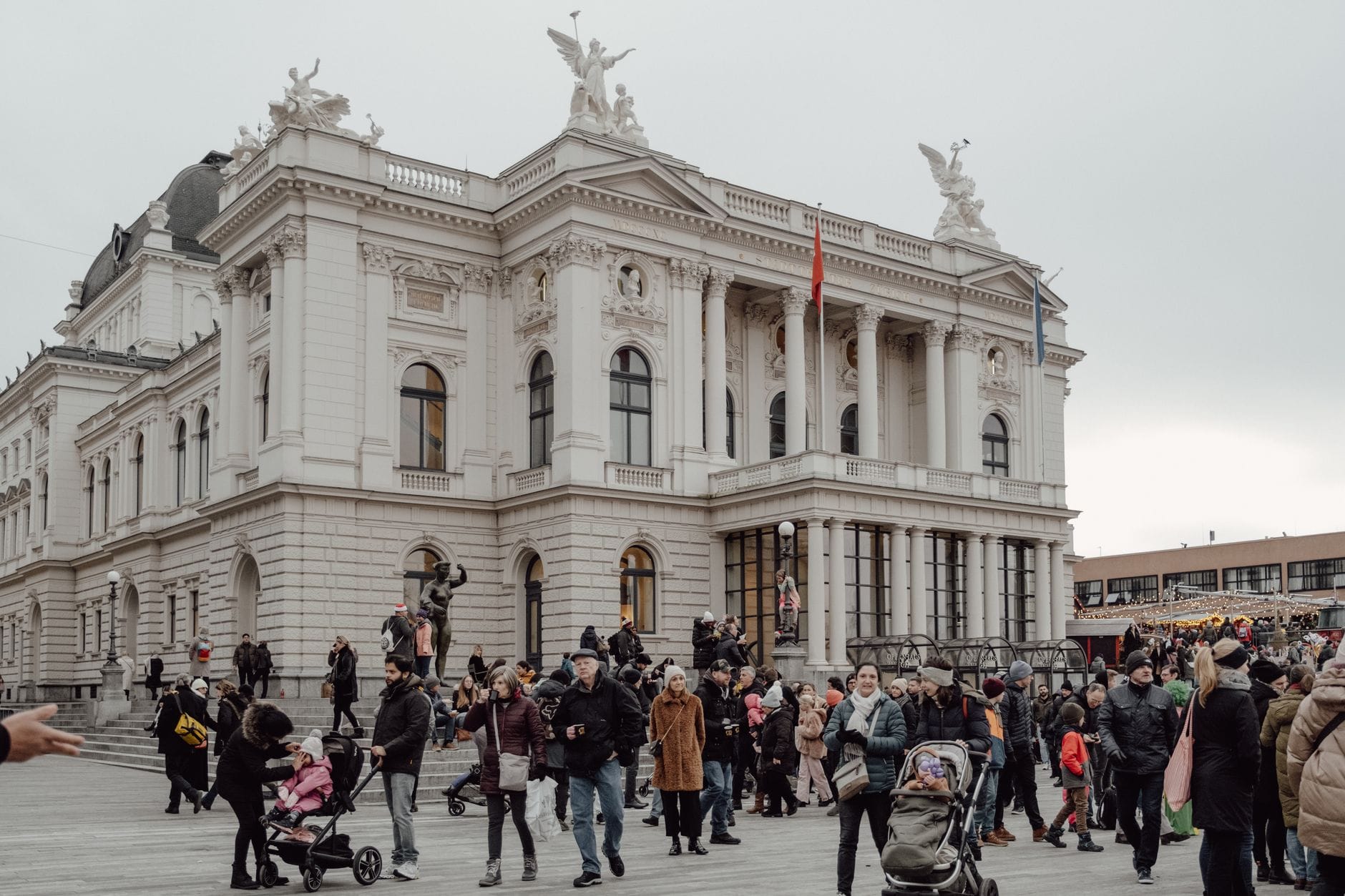
The Opernhaus Zürich is Switzerland's principal opera house and one of the most respected lyric theatres in the German-speaking world. It sits at Sechseläutenplatz, a broad lakeside square that opens toward Lake Zurich, giving the building an unusually generous setting for a city-center venue. You can see the facade from across the square even in winter fog, the cream-colored stone catching whatever light is available.
The building opened on 1 October 1891 under the name Stadttheater, designed by the Viennese architectural firm Fellner and Helmer in the Neo-Renaissance style that was considered appropriately grand for civic cultural institutions of that era. It was renamed Opernhaus in 1964, by which point opera had clearly become its main identity. The auditorium seats around 1,100 spectators (official capacity is 1,100), making it intimate enough that even seats in the upper circles maintain a real sense of connection to the stage.
💡 Local tip
If you hold a Zürich Card, bring it to the box office: it qualifies you for a 10% discount on tickets up to CHF 250, excluding Volksvorstellungen (budget-priced popular performances) and third-party events.
The Building and Its Setting
The facade of the Opernhaus rewards slow attention. The two-story loggia of round arches, the paired columns, the carved figural reliefs above the entrance portals: all of it follows the Fellner-Helmer playbook that also produced theaters in Vienna, Budapest, and Hamburg. What makes Zurich's version distinctive is its position. Rather than being squeezed into a tight urban block, it faces a proper square, and that square faces the lake. On warm evenings, the pre-concert crowd spreads out toward the water, and the building's illuminated facade reflects faintly on the surface of Sechseläutenplatz's paving stones.
Even if you have no ticket for that evening, the exterior is worth a deliberate look during the late afternoon. Between roughly 5 PM and curtain time, the square transitions from daytime foot traffic to pre-show energy: well-dressed couples, groups checking programs, and the particular mix of anticipation and routine that marks a functioning cultural institution. The lobby and foyer are also architecturally significant, though access without a ticket depends on the event.
The opera house sits in the Seefeld neighborhood, Zurich's most consistently elegant residential and lakeside quarter. The Lake Zurich promenade begins just a short walk south, making the area worth exploring well before any performance starts.
Tickets & tours
Live prices and dates from our booking partner. If you book, we may earn a commission at no extra cost to you.
Mount Titlis snow fun for first-time skiers from Zurich
From 212 €Instant confirmationFree cancellationSwiss ski experience from Zurich
From 321 €Instant confirmationFree cancellationBest intro tour of Zurich with a local
From 116 €Instant confirmationFree cancellationZurich Old Town guided walking tour
From 27 €Instant confirmationFree cancellation
Attending a Performance: What to Expect
The Opernhaus Zürich programs opera and ballet across a long season running from roughly September through July, with a summer break in August. The repertoire spans standard canon works (Verdi, Mozart, Puccini, Wagner) alongside contemporary commissions and dance productions by the associated Zurich Ballet. The house has a strong international reputation, and productions regularly attract soloists and conductors from across Europe.
The interior lives up to the exterior. The horseshoe-shaped auditorium is finished in deep red and gilt, with tiered boxes rising on both sides. The acoustic profile is warm rather than hall-bright, which works particularly well for the Italian and German repertoire that dominates the program. Sightlines from the stalls are generally excellent; the upper boxes have some lateral restrictions depending on where you are seated, so checking the seating plan when booking is worthwhile.
Arrive at least 30 minutes before the start time. The foyer bars open early, and there is usually a pre-performance talk (Einführung) for major productions, held in German in a small room off the main foyer. Even if your German is minimal, the atmosphere of that room, program booklets spread open, regulars nodding to each other, gives a real sense of how embedded this institution is in Zurich's civic life.
ℹ️ Good to know
Performance and box office hours vary by program. Ticket sales and current schedules are listed at opernhaus.ch under 'Tickets & Abos'. Booking in advance is strongly recommended for popular productions, which can sell out weeks ahead.
How to Get There
The opera house is straightforward to reach by public transport, which is the recommended approach since parking in this part of the city is limited and expensive. Tram lines 11 and 15 stop directly at 'Opernhaus', the most convenient option if you are coming from the city center or the main station area. Trams 2, 4, 5, 8, and 9 serve the nearby Bellevue stop, a three-minute walk away. If you are arriving from Zurich Airport or the main station, take the S-Bahn to Stadelhofen station, which is roughly a five-minute walk from the opera house.
On foot from the Zurich Main Station, the walk takes about 25 minutes along Bahnhofstrasse and around Bürkliplatz, passing some of the city's most recognizable streets. It is a pleasant evening walk in good weather, especially in summer. For a practical overview of getting around the city, the getting around Zurich guide covers all transit options in detail.
Time of Day and Crowd Patterns
The square in front of the opera house is a public space used throughout the day: dog walkers in the morning, tourists photographing the facade at midday, locals cutting through on the way to the lake. Sechseläutenplatz is also where Zurich's famous Sechseläuten spring festival is centered each April, when a symbolic snowman effigy is burned on the square. Outside of that event, the plaza is calm during daytime hours.
Performance nights transform the atmosphere. The hour before curtain, typically around 6:30–7 PM for evening shows, is the most visually interesting time to be near the building if you are not attending. The foyer lights up behind tall windows, formally dressed concertgoers move across the square, and the surrounding streets take on a specific kind of Thursday-through-Sunday evening energy that is quite distinct from Zurich's daytime character.
After performances end, usually between 10 PM and 11 PM, the square clears quickly. Trams and the S-Bahn to Stadelhofen remain frequent at this hour, so getting home is rarely a problem. The area around Bellevue has several bars and restaurants that stay open late, useful if you want to continue the evening.
Practical Details for Visitors
Dress code is a question that comes up frequently. The Opernhaus Zürich does not enforce a formal dress code, but audiences tend to dress smartly for evening performances. Business casual is the comfortable middle ground; full black tie is not unusual but also not expected. For Sunday matinees and youth-oriented productions, the audience tends to be more casually dressed.
Cloakrooms are available and expected to be used for large coats and bags. Phones must be switched off, not just silenced, before the performance begins. The house takes this seriously and ushers will remind you. Photography inside the auditorium during performances is not permitted.
Visitors planning a broader cultural itinerary in Zurich may want to pair an opera evening with daytime visits to the Kunsthaus Zürich or the Swiss National Museum. For a broader look at what Zurich's cultural scene offers, the best museums in Zurich guide is a practical starting point.
⚠️ What to skip
Volksvorstellungen (Volksvorstellung productions) are specifically priced lower for broader public access and sell out extremely fast. If budget matters, check the opera house calendar well in advance for these dates.
Who Might Want to Skip This
If you have no interest in opera or classical ballet and are visiting Zurich purely for outdoor activities, neighborhoods, or casual dining, an evening at the Opernhaus is probably not the best use of your limited time. The building's exterior can be fully appreciated in 20 minutes at no cost, but the full experience requires a performance ticket and a commitment of three to four hours. Opera productions are sung in their original languages with German surtitles, so visitors with neither German nor the source language may find following the story requires some preparation beforehand.
Children under six are generally not admitted to evening opera performances. Some family-specific programming exists, but this is not a primary family attraction in the way that the Zurich Zoo or the botanical garden are.
Insider Tips
- Check the 'Last Minute' section on opernhaus.ch before a performance: unsold seats are sometimes released at reduced prices on the day of the show, including in premium categories.
- The S-Bahn to Stadelhofen is often faster and less crowded than trams on performance nights, especially if you are coming from the airport or from districts served by the main rail network.
- The pre-show Einführung talk, usually 45 minutes before curtain for major productions, is free with your ticket and worth attending even with limited German: the projected images and musical excerpts are useful context regardless of language.
- For the best sightlines in the upper tier, seats in the center of the first balcony consistently outperform the lateral boxes, which have partial obstructions depending on staging.
- The square outside, Sechseläutenplatz, is directly on the lakeside walk. Arriving 45 minutes early and walking down to the water and back is one of the better ways to spend pre-concert time in Zurich, especially at dusk.
Who Is Zurich Opera House (Opernhaus Zürich) For?
- Opera and classical music lovers looking for a world-class European house in an intimate setting
- Architecture enthusiasts interested in late 19th-century Neo-Renaissance civic design
- Travelers on a longer Zurich stay wanting a genuine cultural evening rather than a tourist activity
- Visitors using a Zürich Card who want to make the most of the included discount on tickets
- Couples looking for a special, genuinely memorable evening in the city
Nearby Attractions
Other things to see while in Riesbach & Seefeld:
- Le Corbusier Pavilion (Heidi Weber Museum)
The Pavillon Le Corbusier in Zurich's Seefeld district is the last building Le Corbusier designed before his death in 1965 — he never saw it completed. Inaugurated on 15 July 1967, this steel and glass structure of just 315 m² stands on the lakeside as both a museum and an architectural argument. Here is exactly what to expect when you visit.
- Zurich Botanical Garden (Botanischer Garten)
The Botanical Garden of the University of Zurich (Botanischer Garten der Universität Zürich) is a freely accessible green space in the Seefeld district, home to tropical greenhouses, medicinal plant collections, and curated outdoor beds. It rewards slow, attentive visitors more than it does those rushing through.
- Zürichhorn Park
Zürichhorn Park is a free, open-access green space on the eastern shore of Lake Zurich in the Seefeld quarter. With Alpine views, public sculptures, and lake access, it draws everyone from early-morning joggers to afternoon picnickers. No ticket required, no agenda needed.
Planning a trip? Discover personalized activities with the Nomado app.