Lake Zurich Promenade (Seepromenade): The Definitive Walking Guide
The Lake Zurich Promenade, locally known as the Seepromenade, is a 3.2 km paved lakeside walkway connecting Bürkliplatz to Zurichhorn Park. Free, open year-round, and a genuine centerpiece of daily Zurich life, it rewards visitors who take time to explore its full length rather than just the popular central stretch.
Quick Facts
- Location
- Lakefront, 8001 Zürich — from Bürkliplatz along Utoquai and Seefeldquai to Zurichhorn
- Getting There
- Tram to Bellevue or S-Bahn to Stadelhofen, then 5 min on foot to the lakefront
- Time Needed
- 45 min for a one-way stroll; 2–3 hours if you stop at parks, cafés, and bathing areas
- Cost
- Free — public space open 24 hours, 365 days a year
- Best for
- Morning joggers, families, couples, photographers, and anyone wanting the city's best unobstructed Alpine views
What the Seepromenade Actually Is
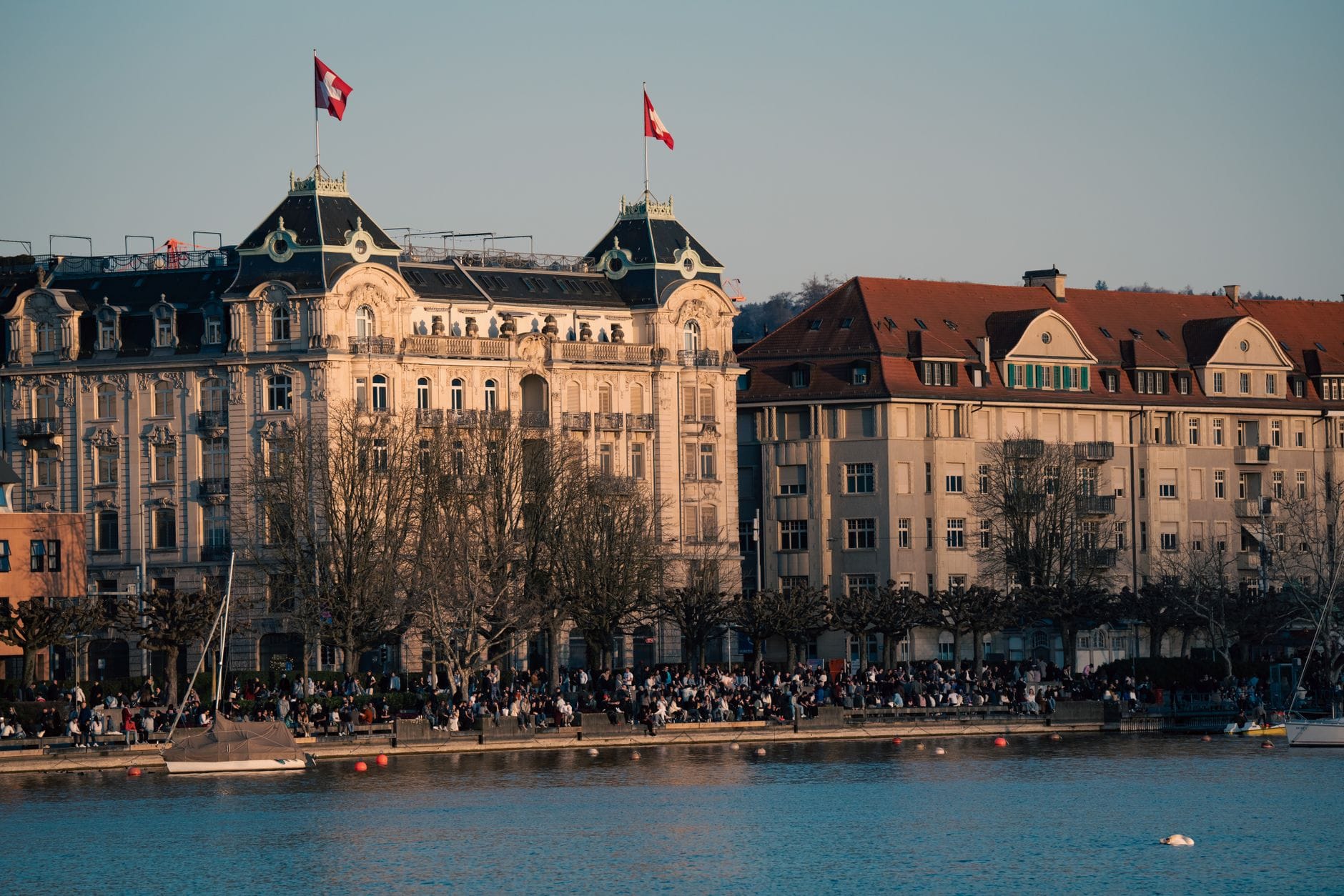
The Lake Zurich Promenade is not a single street or park. It is a continuous sequence of interconnected quays — General-Guisan-Quai and Mythenquai on the western shore, Utoquai and Seefeldquai on the eastern side — that together trace roughly 3.2 km of the lower basin of Lake Zurich. The walk begins at Bürkliplatz, the broad square where the city meets the lake, and extends southward along the eastern quays toward Zurichhorn Park, passing the Zurich Opera House and several outdoor bathing areas known locally as Badis.
Unlike a dedicated pedestrian promenade with barriers and signage, this is a working urban waterfront. Trams run parallel to sections of it. Cyclists and inline skaters share stretches with walkers. Anglers sit on stone ledges. Rowing clubs launch sculls from the water's edge. That layered, unselfconscious quality is what makes it worth more than the sanitized lakefront walks you find in cities built primarily for tourism.
💡 Local tip
The eastern shore (Utoquai and Seefeldquai) is generally more pleasant for walking than the western side, which carries heavier road traffic. For the cleanest waterside experience, start at Bürkliplatz and head east.
A Short History: How Zurich Became a Lakeside City
The promenade as a concept dates to around 1800, when the lower basin of Lake Zurich was deliberately shaped into a public park, giving the city its defining geographical character. Before this transformation, Zurich was primarily a river city, oriented around the Limmat. The decision to formalize the lakefront as public open space rather than industrial or private land proved formative. It is one reason the waterfront still belongs, functionally, to everyone.
The quays were developed and extended across the 19th and early 20th centuries, and the architecture along them reflects that layered investment: grand residential buildings in late historicist style, the ornate facade of the Zurich Opera House at Bellevue, and the classically proportioned boat docks at Bürkliplatz. The Swiss Federal Railways' Stadelhofen station, redesigned by Santiago Calatrava in 1990, sits just a short walk from the promenade and gives the eastern approach an unexpectedly sculptural quality.
The promenade sits within the broader Lake Zurich area, which extends further south into quieter residential shores. But for visitors based in central Zurich, the section between Bürkliplatz and Zurichhorn is the most accessible and diverse stretch.
Tickets & tours
Live prices and dates from our booking partner. If you book, we may earn a commission at no extra cost to you.
Guided e-bike tour in Zurich
From 26 €Instant confirmationFree cancellationIntro tour of Zurich guided by a local with boat and funicular ride
From 105 €Instant confirmationFree cancellationZurich private walking tour
From 317 €Instant confirmationFree cancellationPrivate half-day city tour of Zurich and its surroundings
From 136 €Instant confirmationFree cancellation
The Walk: Section by Section
Bürkliplatz: The Starting Point
Most walkers begin at Bürkliplatz, the lakefront square that anchors the city's relationship with the water. On weekend mornings from May through October, a farmers' and flea market fills the square with food stalls, flower sellers, and antique dealers. The smell of fresh bread and coffee from the market stalls mixes with the faintly mineral scent of the lake. The ferry and lake cruise docks are here too, and watching the white boats maneuver in and out of their berths while the Alps hover in the distance is one of those Zurich moments that costs nothing and lands hard.
Utoquai and the Lido
Moving east along Utoquai, the path becomes more open and the views of the lake broaden. This section draws inline skaters in summer and serious runners year-round, and the path surface is smooth tarmac maintained for exactly that purpose. The Seebad Utoquai, a historic lakeside bathing facility, juts out from the quay on a wooden pontoon structure. It operates seasonally and separates into sections designated for different bathing preferences, including a women-only area. Even if you do not go in, the late 19th-century design of the Utoquai Badi is worth pausing to look at from the walkway.
Seefeldquai and Approach to Zurichhorn
The path transitions into Seefeldquai as it moves deeper into the Seefeld district, which becomes noticeably quieter and more residential than the central lakefront. The road traffic here drops away more completely. On weekday mornings, this section feels almost private: dog walkers, older residents on benches facing the water, a few cyclists. The lake surface changes quality in this light, moving from silver to a deep greenish-blue as the sun climbs.
The promenade terminates near Zurichhorn Park, a formal lakeside garden with open lawns, sculpture, and the glass-and-steel Le Corbusier Pavilion. This is also where you will find the China Garden, a gift from the city's sister city Kunming. It is a natural endpoint for the walk, with benches and shade, and in summer the grass fills with people reading and lying in the sun.
How the Promenade Changes Through the Day
Early morning, before 8am, the Seepromenade belongs almost entirely to runners and cyclists. The light at this hour is exceptional in clear weather: low and golden, the Alps across the water catching the first direct sun while the city is still in shade. Serious photographers set up here in the 30 minutes around sunrise. By mid-morning on a sunny day, the benches start filling, and by noon in summer the quays are busy with workers on lunch breaks, tourists, and families.
Summer evenings bring a different kind of energy. The bathing areas stay open late. Groups sit on the quay walls with feet dangling. There is ambient sound of conversation in several languages, the occasional splash, swans moving through the water. It rarely feels overwhelming because the path is long enough that crowds diffuse. That said, a July or August Saturday afternoon around Bürkliplatz can be genuinely packed and is probably the one time to avoid if you want space.
In winter, the promenade takes on a stripped-down character that some visitors actually prefer. Fog sometimes sits on the water in the mornings, obscuring the far shore entirely and giving the lake an unexpected sense of scale. The benches are mostly empty. You can walk for 20 minutes without passing more than a handful of people. If there is a cold clear day with fresh snow on the Alps, this stretch of waterfront produces some of the most striking scenery in Switzerland.
ℹ️ Good to know
The Alps are visible from the promenade on clear days, most reliably in winter and early spring when atmospheric haze is minimal. In summer, visibility varies and can be limited by heat haze by midday.
Practical Information for Your Visit
The Seepromenade is free to access and open at all hours. There is no ticket, no entrance gate, and no guided tour necessary. You simply arrive and walk. The path is paved throughout and largely flat, making it suitable for pushchairs and wheelchair users, though some sections adjacent to the quay walls are narrow or have kerb drops that are worth checking in advance for those with mobility requirements.
Getting here from central Zurich takes about 10 minutes on foot from Zürich HB, but the most practical transit option is a tram to Bellevue, which drops you directly at the start of the eastern promenade, or the S-Bahn to Stadelhofen, a 5-minute walk from Utoquai. From Zurich Airport, the journey by train to the city centre takes roughly 10 to 15 minutes, after which you connect to tram or S-Bahn.
If you plan to combine the promenade with more of the city, the Zurich walking tour route naturally connects it to the Old Town and Lindenhof through Bürkliplatz. Allow a full half-day if you want to do the lakefront walk justice and still see the historic core.
⚠️ What to skip
Cycling and inline skating on the pedestrian sections of the promenade are common but can create conflict at peak times. Watch for fast-moving cyclists especially on the wider quay sections near Utoquai.
Cafés and kiosks are dotted along the route, more concentrated near Bürkliplatz and Bellevue. For food, the Seefeld district behind the eastern promenade has a good selection of local restaurants and bakeries worth exploring before or after your walk.
Photography on the Promenade
The best photography conditions on the Seepromenade are in the early morning and the hour before sunset. In the morning, the Alps to the south reflect in calm water before wind picks up. At sunset, the western shore and city skyline catch warm light that the eastern quays face directly. For Alpine views, position yourself near the Zurichhorn end of the walk, where the lake is wide enough to frame the mountains fully.
The Bürkliplatz end works best for architectural and urban shots, combining the boat docks, the Opera House facade, and the quayside plane trees. In autumn, those trees turn yellow and orange against the blue water, and the combination is genuinely worth photographing without any particular technical effort.
Is This Walk Overhyped?
Honestly, no. The Seepromenade is one of the few Zurich attractions that tends to be slightly underrated rather than oversold. Most visitors spend 20 minutes at Bürkliplatz and move on, missing the quieter eastern sections that are often more rewarding. The promenade as a whole is one of the best free urban walks in Switzerland: long enough to feel like a proper outing, varied enough to sustain interest, and genuinely used by locals rather than staged for visitors.
That said, if you are visiting Zurich in a single day with a packed itinerary, the promenade can reasonably be compressed into a 45-minute walk between Bürkliplatz and the Opera House area. For anyone with more time, particularly those following the 2-day Zurich itinerary, fitting in the full walk to Zurichhorn is worth the extra hour.
Visitors who dislike walking on flat, urban paths with occasional traffic noise will find other city walks more interesting. The Lindenhof hill and the Limmat riverside offer more topographic variety if the lakefront format does not appeal.
Insider Tips
- The farmers' market at Bürkliplatz runs on Saturday mornings (roughly May to October) and is one of the most reliably local markets in the city. Arrive before 9am for the best selection and before the crowds build.
- The Seebad Utoquai has a rooftop section open in the evenings during summer that functions almost like a bar: you pay entry to the Badi but can sit with a drink above the water while the city lights come on. Very few tourists know about it.
- For the clearest Alpine views, check the weather the evening before. The mountains are most visible after a day of rain, when atmospheric clarity is highest. A clear post-rain morning walk is the promenade at its best.
- If you rent a bicycle (Zurich has various private bike and e-bike rental options and several city bike stations), the western shore via Mythenquai and General-Guisan-Quai is a faster, flatter cycling route and less congested than the pedestrian eastern side.
- The promenade connects directly to Zurichhorn Park, where the Le Corbusier Pavilion sits at the water's edge. Access to the park is free, while entry to the pavilion itself requires a ticket; it is one of the few surviving examples of Corbusier's design in Switzerland, routinely overlooked by visitors who stop their walk before reaching it.
Who Is Lake Zurich Promenade For?
- Morning runners and cyclists looking for a flat, scenic route with no hills and no admission fee
- Couples wanting a relaxed evening walk with lake and mountain views and easy access to Seefeld restaurants
- Families with young children, thanks to the flat path, open green areas, and proximity to Zurichhorn Park
- Architecture and photography enthusiasts interested in the Opera House, Calatrava's Stadelhofen station, and the Le Corbusier Pavilion
- Budget travelers: the entire experience, from walking to bench-sitting to lake views, costs nothing
Nearby Attractions
Other things to see while in Lake Zurich Area:
- Bürkliplatz & Boat Pier
Bürkliplatz sits where Bahnhofstrasse meets Lake Zurich, a broad public square framed by water, mountains, and daily city life. Free to visit at any hour, it serves as a promenade, a cruise departure point, and a quiet front-row seat to the lake.
- Lindt Home of Chocolate
The Lindt Home of Chocolate in Kilchberg is a major Swiss chocolate museum, built beside the brand's original 1899 factory on the shores of Lake Zurich. Expect a 9-metre chocolate fountain, a deep dive into Swiss confectionery history, and more free samples than you bargained for.
- Rote Fabrik
Built as a mechanical silk-weaving mill in 1892, Rote Fabrik has spent decades as one of Zurich's most authentic alternative cultural centers. Set directly on the western shore of Lake Zurich, it hosts concerts, theater, cinema, and art exhibitions in spaces that still carry the weight of their industrial past.
- FIFA World Football Museum
Opened in 2016 on the southwestern shore of Lake Zurich, the FIFA Museum traces the global story of football across three floors and 3,000 square metres of exhibitions. From World Cup trophies to interactive installations, it rewards genuine football fans while offering enough visual spectacle to hold the attention of curious non-fans.
Planning a trip? Discover personalized activities with the Nomado app.