2 Days in Zurich: The Perfect Weekend Itinerary
Two days in Zurich is enough to cover the historic Old Town, the lakefront, a mountain viewpoint, and world-class museums — if you plan it right. This itinerary lays out exactly how to spend 48 hours in Zürich, with practical logistics, honest advice on costs, and clear guidance on what's worth your time.
Tickets & tours
Live prices and dates from our booking partner. If you book, we may earn a commission at no extra cost to you.
TL;DR
- Two days is genuinely enough to see Zurich's highlights: Old Town, the lake, Bahnhofstrasse, major churches, and a panoramic viewpoint.
- Buy a Zurich Card (CHF 29 for 24 hours, CHF 56 for 72 hours) — it covers public transport across ZVV zones and free or discounted entry to major museums including the Swiss National Museum.
- Day 1 focuses on the medieval core: Grossmünster, Fraumünster, Lindenhof, and the lakeside promenade. Day 2 goes wider: Uetliberg mountain, Zurich-West, and Bahnhofstrasse.
- May–June and September offer the best balance of mild weather and manageable crowds. December works well for urban sightseeing if you accept shorter daylight.
- For more context on whether the city suits your travel style, see our guide on whether Zurich is worth visiting.
Before You Arrive: Logistics That Save Time
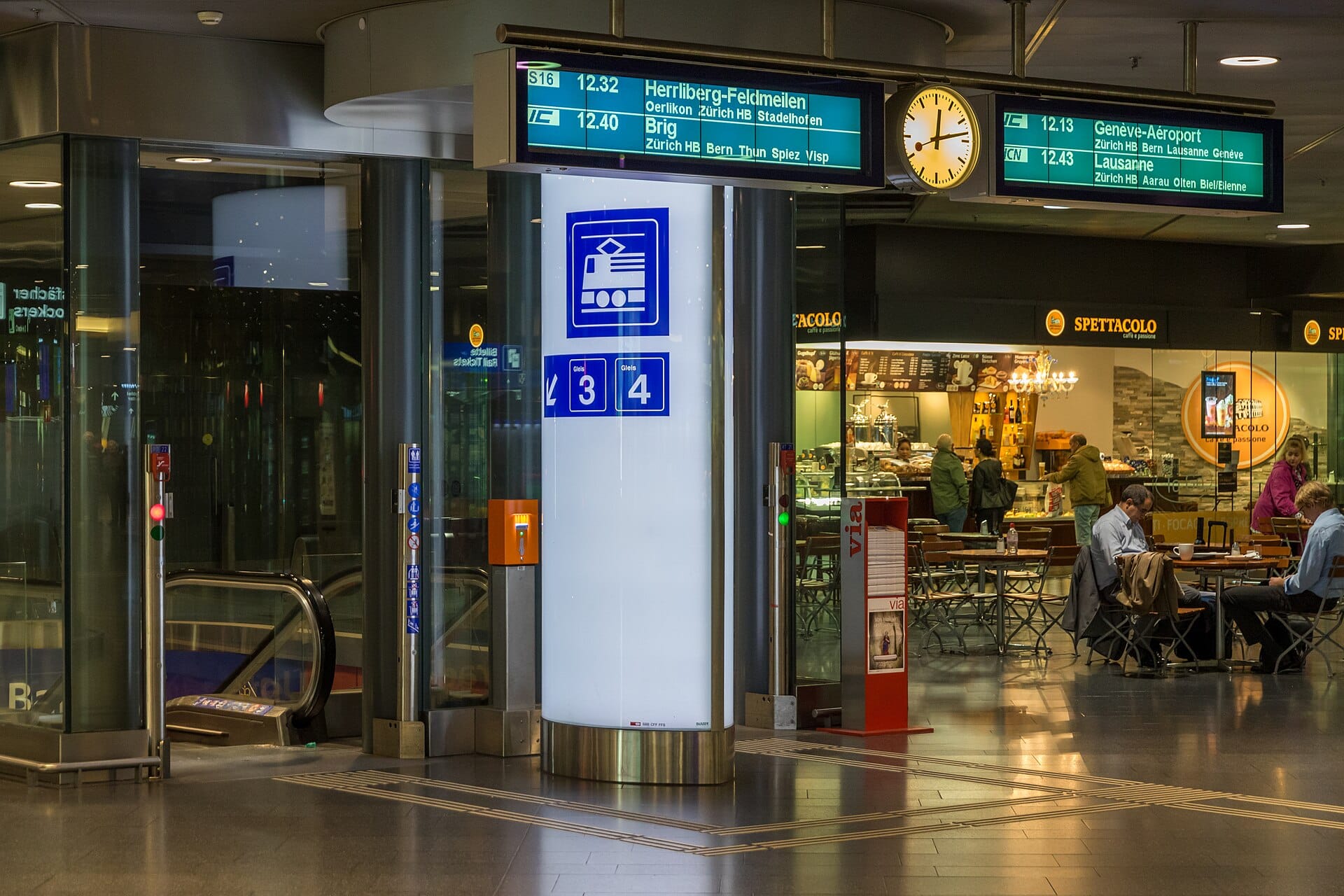
Zurich Airport (ZRH) sits about 13 km north of the city center in Kloten. The fastest way in is the S-Bahn or direct InterCity train from the airport station directly below the terminal to Zürich Hauptbahnhof (HB) — the journey takes roughly 10–15 minutes and runs frequently throughout the day. Taxis are available but considerably more expensive; allow 15–30 minutes depending on traffic.
The city's public transport is run by ZVV and integrates trams, buses, S-Bahn trains, and lake boats into a single fare system. For a weekend visit, the Zurich Card is almost always the right call. At CHF 29 for 24 hours or CHF 56 for 72 hours, it covers unlimited travel across zones 110, 111, and 121, 140, 150, 154–155, plus free admission to over 40 museums and discounts at many others. If you're visiting two or more paid attractions per day, it pays for itself quickly. Pick it up at the airport, at Zurich HB, or through the official Zürich Tourismus website before your trip.
💡 Local tip
If you're arriving on a Saturday morning and leaving Sunday evening, the 72-hour Zurich Card makes more sense than buying two separate 24-hour cards — and it gives you flexibility if you want to extend your lakeside time or catch an early museum opening on Monday.
Zurich is compact and almost entirely walkable in the center. Most of what you'll see on Day 1 sits within a 20-minute walk from the Altstadt. Day 2 ventures further, but trams handle the heavy lifting. One thing to note: Swiss German (Züritüütsch) is the local dialect, but English is widely spoken in hotels, restaurants, and tourist areas.
Day 1: Old Town, Churches, and the Lakefront
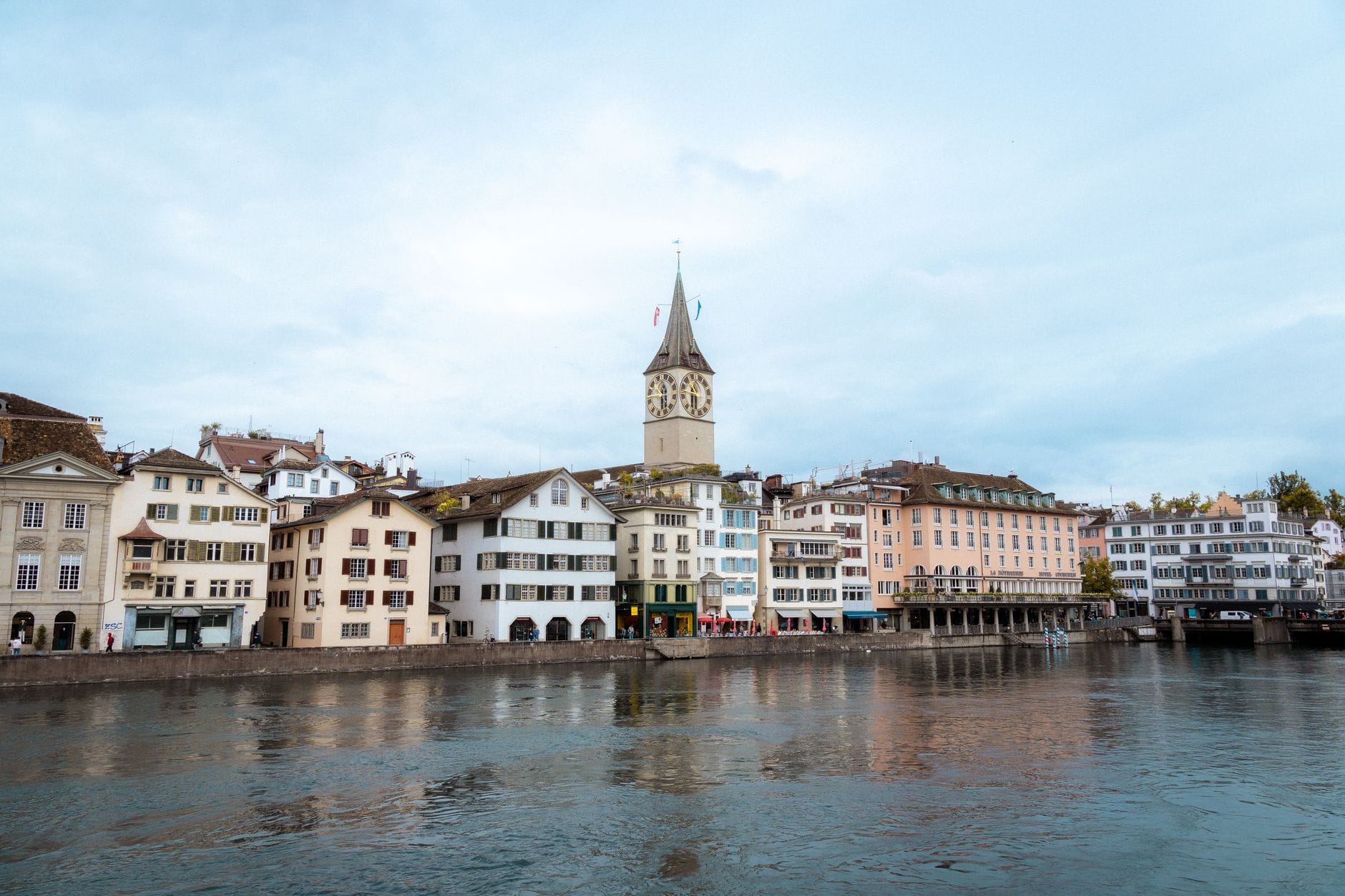
Start at Zurich HB and walk east into Niederdorf, the narrow-laned east bank of the Old Town. This is the city's medieval core: covered passageways, guild houses dating to the 16th and 17th centuries, and small squares that open unexpectedly into wider plazas. Arrive before 10am on a weekend and you'll have the best streets largely to yourself.
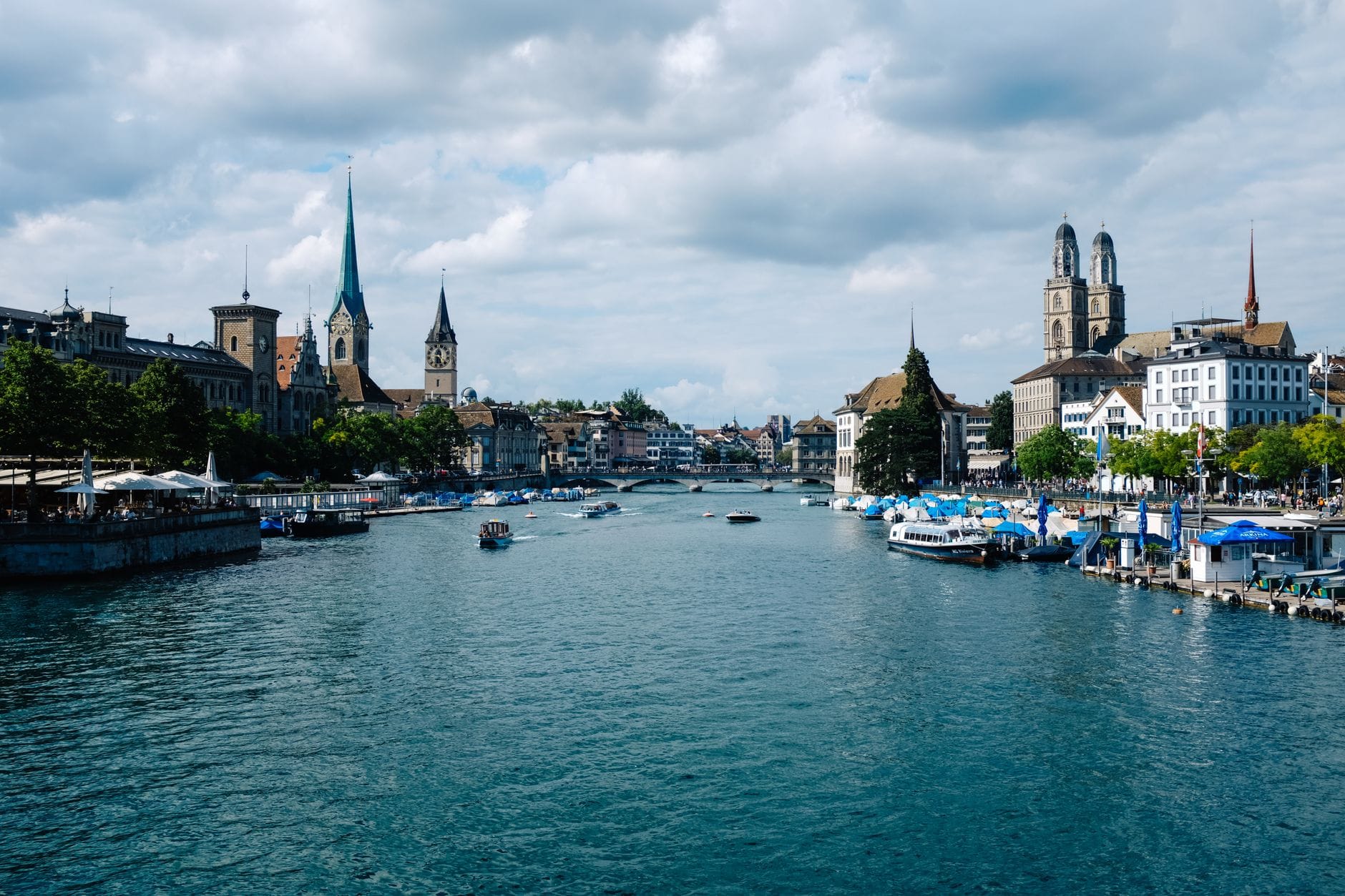
The three churches that define Zurich's skyline are all within walking distance of each other. Grossmünster is the most iconic — its twin Romanesque towers have anchored the east bank since the 12th century. Climbing the tower costs around CHF 4 and earns you a view across the rooftops that no street-level photo can replicate. Across the river, Fraumünster is worth visiting primarily for its five stained-glass choir windows by Marc Chagall, installed in 1970. They are genuinely extraordinary. St. Peter's Church rounds out the trio — it holds the largest church clock face in Europe, at 8.7 meters in diameter.
After the churches, walk up to Lindenhof — a raised Roman-era terrace on the west bank with one of the best free viewpoints in the city. It looks directly across the Limmat to Niederdorf and back toward Grossmünster. Come in the late morning when the light is right and the chessboard players have started setting up their oversized pieces.
⚠️ What to skip
Fraumünster charges a small entrance fee (around CHF 5) for the Chagall windows area. It's well worth paying, but don't expect a large interior — the church is deliberately simple to let the windows dominate. Sunday morning services close the church to tourists for several hours, so plan accordingly.
Spend the afternoon on the western side. Walk the length of Bahnhofstrasse, Zurich's main commercial boulevard running 1.4 km from the main station to Bürkliplatz at the lake. It's one of the most expensive shopping streets in the world, lined with Swiss watchmakers, luxury brands, and department stores. You don't need to buy anything to enjoy it — but if you want to window shop for Swiss watches, this is where to do it. Bürkliplatz itself is the departure point for lake boats and the location of a farmers market on Tuesday and Friday mornings.
End Day 1 with a walk along the Lake Zurich promenade heading south toward Zürichhorn. In summer, this means long evenings with the Alps visible on the horizon and plenty of people swimming from the public Badis (lake swimming spots). In spring or autumn, the light on the water around sunset is worth the walk on its own. For dinner, head back into Niederdorf or across to Seefeld for something less tourist-oriented.
Day 2: Uetliberg, Zurich-West, and Culture
On Day 2, start early and go up. The Uetliberg is Zurich's home mountain at 871 meters, reached in about 20 minutes on the S10 train from Zurich HB. The summit has a viewing tower and panoramic walks along the ridge. On a clear day you see the lake below, the city spread out to the north, and the Alps to the south. Weekday mornings are quieter; on sunny weekends, the trail between Uetliberg and Felsenegg fills with families. The Felsenegg combination is worth it if you have the time: hike the Albis ridge trail (about 45 minutes) to the Felsenegg cable car down to Adliswil, then take the tram or S-Bahn back into the city. It makes a genuine half-day route.
Back in the city by early afternoon, shift toward Zurich-West. This former industrial quarter has been steadily redeveloped over the past two decades into one of Zurich's most interesting areas for food, design, and nightlife. The Im Viadukt market arches under the railway viaduct along Viaduktstrasse host independent food vendors and artisan shops. It's a good spot for lunch that doesn't feel tourist-oriented.
If you want one museum to fit into your two days, the Swiss National Museum adjacent to Zurich HB is the most practical choice. It covers Swiss cultural history from prehistoric times through the modern era, and the building itself — a historicist castle-like complex constructed in 1898 with Neo-Gothic and Neo-Renaissance elements — is worth seeing. It's included with the Zurich Card. For art, Kunsthaus Zürich is Switzerland's largest art museum and holds an exceptional collection of Giacometti works alongside European masters. It's a 20-minute walk from Zurich HB into the Old Town.
✨ Pro tip
Don't try to do both the Swiss National Museum and the Kunsthaus on Day 2 — you'll rush both and appreciate neither. Pick one based on your interest: Swiss history and culture versus fine art. The Zurich Card covers both, so the cost isn't the deciding factor.
Optional Additions: If You Have Extra Hours
The Lindt Home of Chocolate in Kilchberg is about 30 minutes from the city center by boat or S-Bahn. It's a polished, professionally produced chocolate museum with interactive exhibits and tastings, and it works well for a focused half-morning if you have children or a genuine interest in Swiss chocolate. For more on Zurich's chocolate culture, see our Zurich Swiss chocolate guide.
- Zurich Polybahn A short funicular connecting Central square to the ETH Zurich area. Takes about 3 minutes, offers a quick elevated view, and is covered by your ZVV pass. Good if you're already walking through the university quarter.
- Lake Zurich boat cruise Short lake cruises from Bürkliplatz run in roughly 1.5-hour loops. A relaxed way to see the city from the water and worth it in clear weather. Check current schedules at ZSG (Zürichsee-Schifffahrtsgesellschaft) as they vary by season.
- Zurich Cabaret Voltaire The birthplace of the Dada movement in 1916, now a cultural space and small museum in Niederdorf. Worth 30 minutes if you have an interest in early 20th-century art history. Entry is low-cost and not crowded.
- Langstrasse at night Zurich's most diverse and lively nightlife street runs through District 4. Not for everyone, but if you want to see a side of Zurich that isn't chocolate and watches, this is it.
Seasonal Timing: When to Go and What Changes
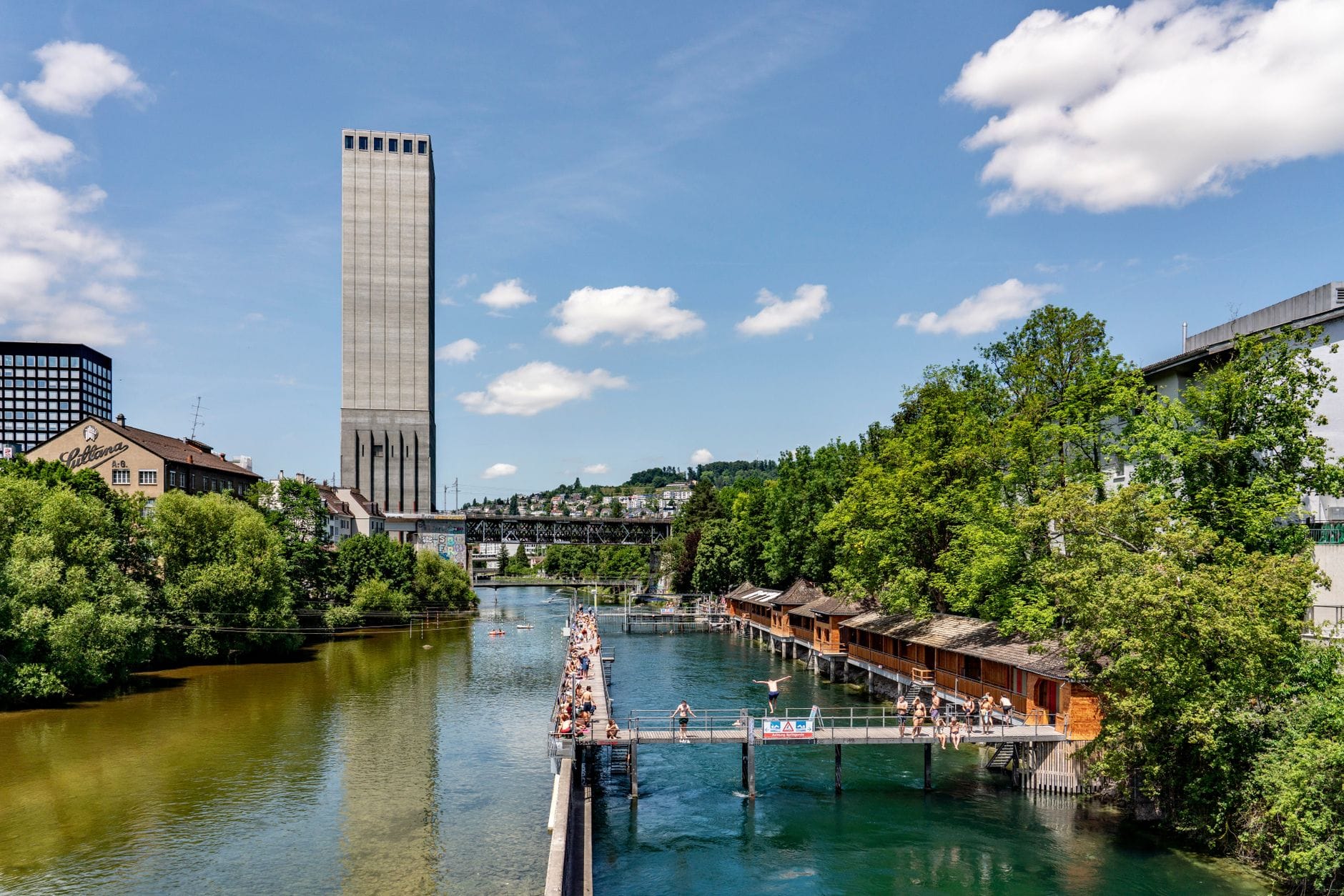
The honest answer on timing is that Zurich works year-round, but with meaningful differences. May, June, and September deliver the best combination of mild temperatures (typically 15–22°C), longer daylight, and manageable visitor numbers. Lake swimming is possible from June through September, with the public Badis and lidos open during warmer months. The lake promenade and Uetliberg trails are at their most enjoyable in this window.
July and August are the peak summer months. Crowds increase substantially on weekends, particularly around the Old Town churches and Bahnhofstrasse. If you're visiting in summer, read our guide to Zurich in summer for timing advice on specific attractions.
December is worth considering if you don't mind cold and shorter days. The Christmas markets around Zurich HB and across the Old Town are genuinely atmospheric, the museums are less crowded, and there's a distinct charm to the city in the low season. See our guide to Zurich in December for what to expect.
- May–June: Ideal. Mild weather, flowers on the lake promenade, outdoor café terraces open, Uetliberg trails in good condition.
- July–August: Hot and busy. Great for lake swimming; expect crowds at popular sights on weekends.
- September: Often the sweet spot. Summer crowds thin, temperatures remain warm, days still long.
- October–November: Cooler and foggier. Good for museums and indoor culture; lake views can be hazy.
- December–February: Cold but functional. Christmas markets in December; ski day trips possible from January onward.
Practical Notes: Costs, Transport, and Common Mistakes
Zurich is expensive by most international standards. Budget around CHF 80–120 per person per day for food, transport, and entry fees if you're being fairly careful, or significantly more if you're eating at mid-range restaurants and buying museum tickets individually. The Zurich Card reduces the latter substantially. Tap water is excellent and free everywhere — Swiss municipal water quality is among the best in Europe, so skip the bottled water.
Tipping in Switzerland is not obligatory. Service charges are included in restaurant bills; rounding up to the nearest franc or leaving a small amount for good service is the norm, not a percentage-based tip. For more on making the most of your budget, our Zurich on a budget guide covers cost-saving strategies in detail, including the best free things to do and where to eat without spending CHF 30 per plate.
- Don't skip the Zurich Card if you plan to visit more than one paid museum — it pays for itself by the second entry and the transport savings compound.
- The Grossmünster tower climb (around CHF 4) is worth it; the interior alone is not the draw.
- Bahnhofstrasse is impressive to walk but genuinely one of the world's most expensive shopping streets — windowshopping is fine, impulse buying is not.
- Zurich-West is often overlooked on short itineraries but offers a completely different side of the city and better lunch options than the tourist-heavy Old Town.
- Don't over-schedule. Two days with five to seven anchors is realistic. Ten anchors with museum queues and tram connections will leave you exhausted and rushed.
FAQ
How many days in Zurich do you actually need to see the highlights?
Two full days is enough to cover the essential highlights: the Old Town churches, Lindenhof, Bahnhofstrasse, the lake promenade, Uetliberg, and one major museum. Three days lets you add a day trip to Lucerne, the Rhine Falls, or more time in Zurich-West without rushing. A single day is feasible but means making hard choices.
Is the Zurich Card worth buying for a 2-day visit?
Almost always yes. At CHF 56 for 72 hours, it covers unlimited ZVV public transport (including trams, buses, S-Bahn, and lake boats) plus free or discounted entry to over 40 museums including the Swiss National Museum. If you ride the S-Bahn to Uetliberg, take a lake boat, and visit one museum, you've already recouped the cost.
What is the best area to stay for a weekend in Zurich?
Staying near Zurich HB or in the Old Town puts you within walking distance of nearly everything on Day 1 and gives easy tram and train access for Day 2. Seefeld is quieter and well-connected but adds a tram ride to the Old Town. Zurich-West is good if you prioritize a more local neighborhood feel over proximity to historic sights.
Can I do a day trip from Zurich on a 2-day weekend itinerary?
A day trip within a 2-day stay means sacrificing most of one day in Zurich. Lucerne (about 50 minutes by train) and the Rhine Falls (around 45 minutes) are the most popular options if you're willing to make that trade. If you want to keep both days in the city, save day trips for a longer visit.
Is Zurich walkable, or do you need public transport constantly?
Day 1 in the Old Town is almost entirely walkable — the area from Zurich HB to the lake and across Niederdorf is compact. Day 2 requires public transport for Uetliberg (S10 train from HB) and Zurich-West (tram). Overall, a mix of walking and occasional tram or train rides covers everything comfortably.
Tickets & tours
Live prices and dates from our booking partner. If you book, we may earn a commission at no extra cost to you.
Planning a trip? Discover personalized activities with the Nomado app.