Zurich in Summer: Lake Swimming, Festivals & Outdoor Life
Summer transforms Zurich into one of Europe's most enjoyable warm-weather cities. From the Badi culture on Lake Zurich to the Seeüberquerung mass swim and open-air festivals, this guide covers everything you need to plan a great visit from June through September.
Tickets & tours
Live prices and dates from our booking partner. If you book, we may earn a commission at no extra cost to you.
TL;DR
- Switzerland in summer peaks between June and early September, with Zurich averaging highs in the low-to-mid 20s°C — warm enough for lake swimming, not oppressively hot.
- Paid outdoor Badis (entry around CHF 8) line Lake Zurich and the Limmat river, but large stretches of the lakefront are completely free to swim — no ticket required.
- The Seeüberquerung mass swim attracts several thousand participants crossing Lake Zurich; registration is required and spots fill fast.
- Street Parade, Zürich Openair, and Sechseläuten all fall within or around the summer window — check the Street Parade guide before booking dates.
- Badi season typically runs mid-May to late September; outside those dates, lake access stays open but lifeguards and facilities close.
Why Summer Is Zurich's Best Season
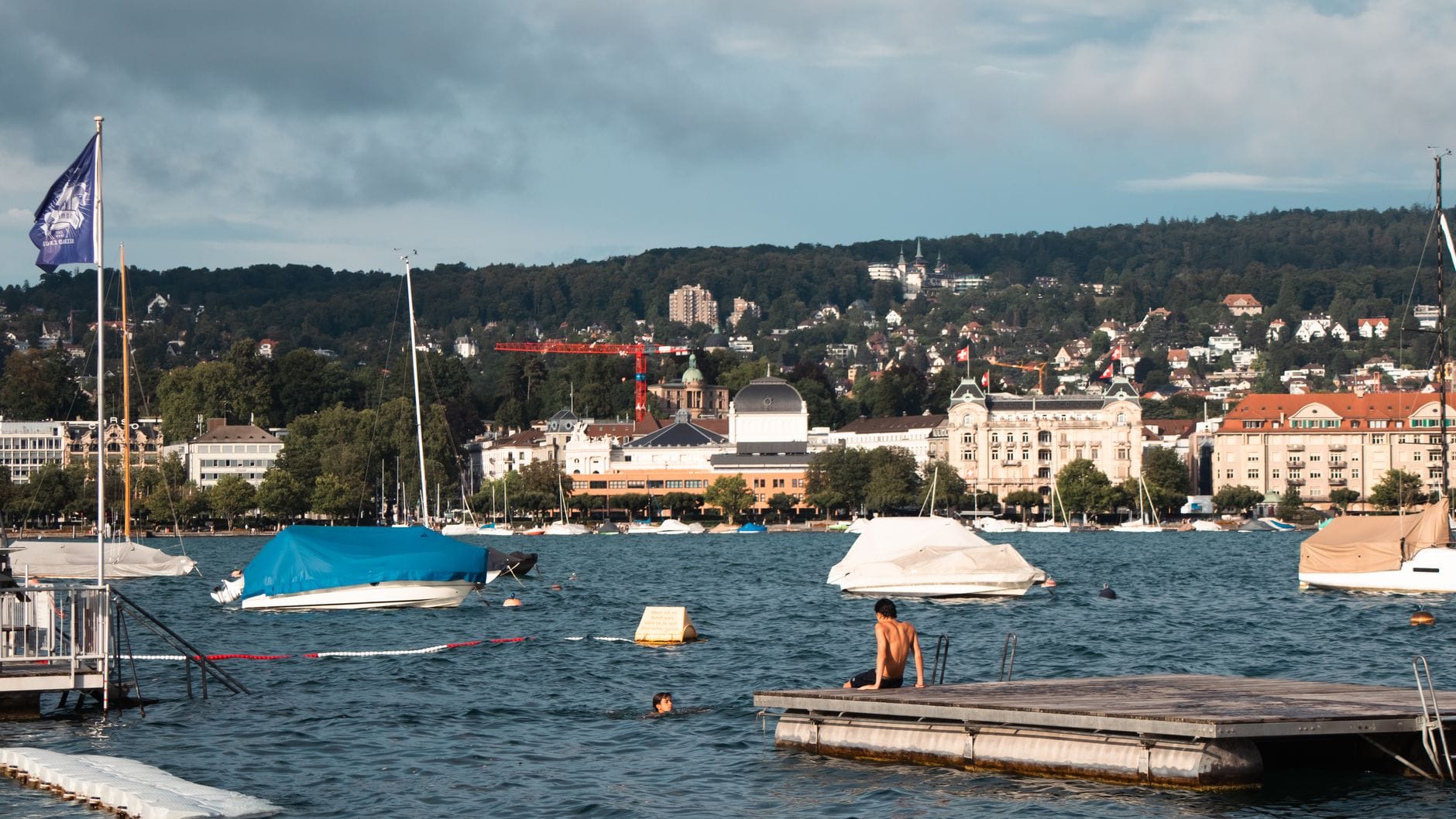
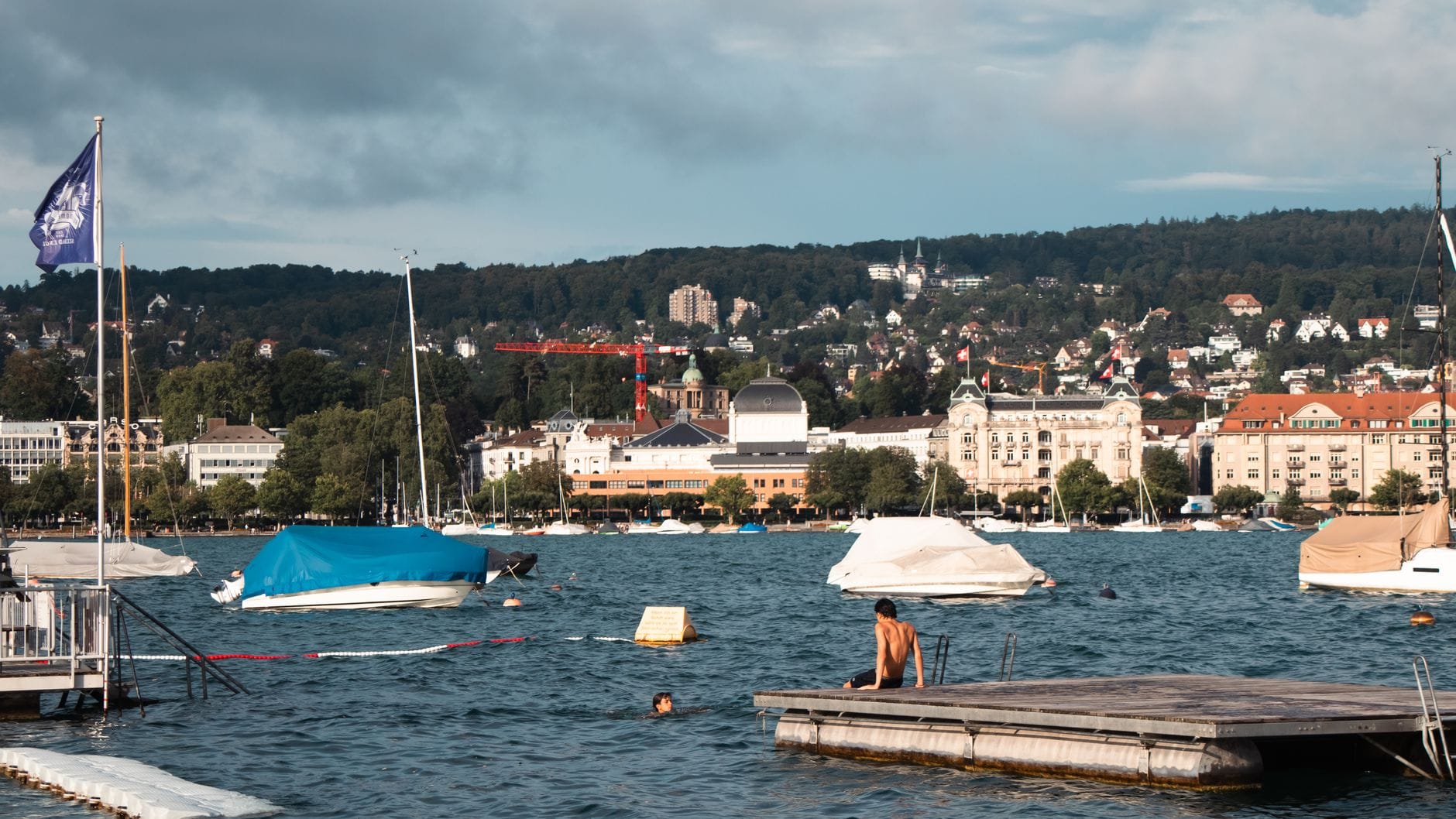
Zurich in summer is a genuinely different city from the one visitors encounter in winter or early spring. From June through August, the entire population seems to migrate to the water. The Limmat riverbanks fill with sunbathers by midday, the Lake Zurich promenade is thick with cyclists and strollers until late evening, and the Badis — Zurich's beloved outdoor public swimming facilities — become the social centers of the city.
Switzerland in summer delivers reliable warmth without the extreme heat of southern European destinations. Zurich sits at around 408 meters above sea level in north-central Switzerland, which keeps average July highs in the low-to-mid 20s°C. Occasional heat waves push temperatures higher, but the lake and the city's extensive green spaces provide natural relief. The long daylight hours — sunset after 9pm at peak summer — make evening swims and outdoor dinners feel unhurried.
Summer does bring some rain. Zurich's humid continental climate means afternoon thunderstorms are common in July and August, typically short and sharp. They rarely derail a full day but are worth factoring into plans. For a broader sense of when to visit, the best time to visit Zurich guide covers the full seasonal breakdown.
The Badi System: Zurich's Outdoor Swimming Culture
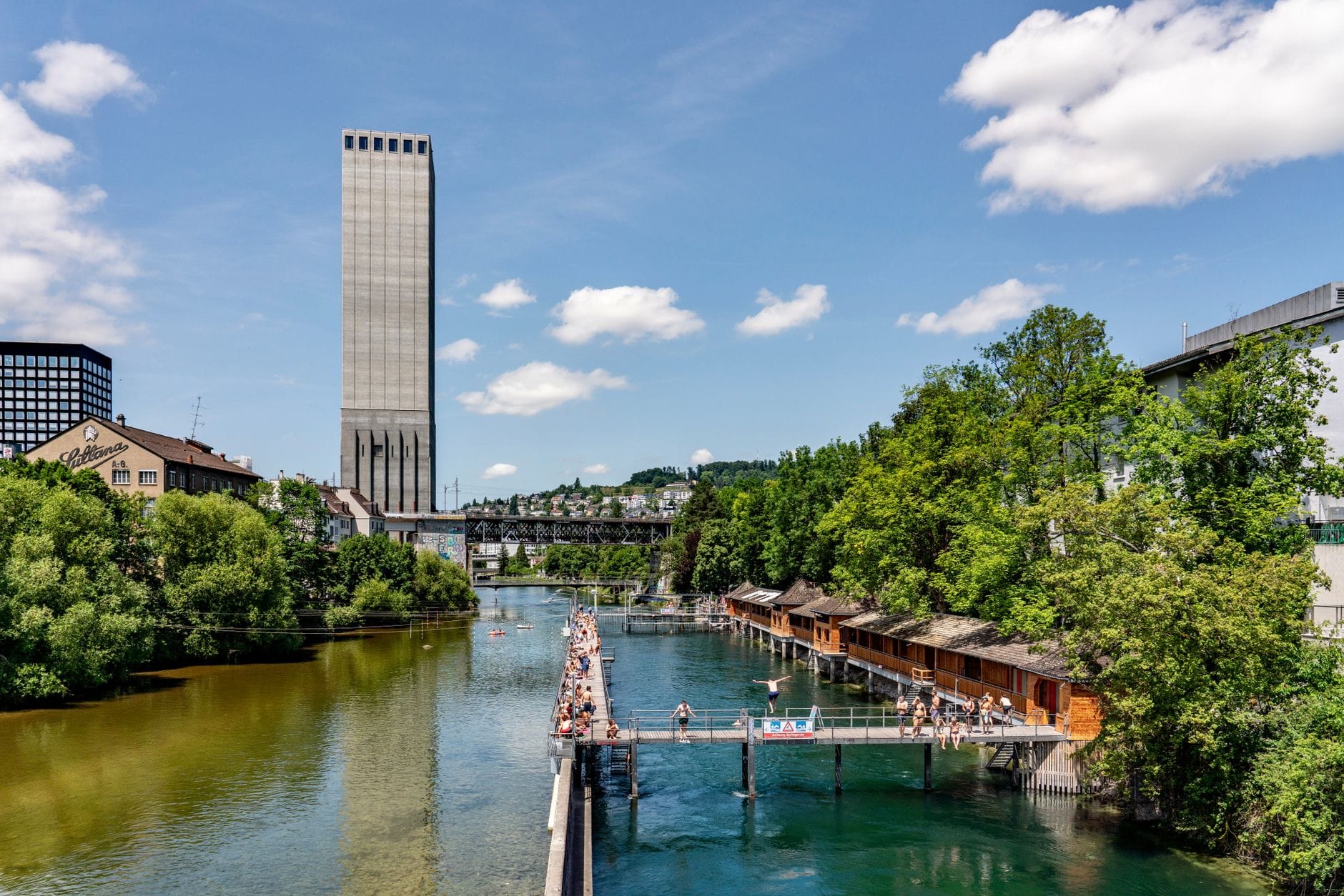
A Badi is a Zurich institution. The word refers to an outdoor public swimming facility — usually a wooden structure over the water with changing rooms, showers, a kiosk or restaurant, and sun decks. Zurich operates several of these along both the lake and the Limmat, and they are genuinely beloved by locals, not just a tourist offering.
- Mythenquai Badi On the western shore of Lake Zurich, popular with families and considered one of the best-equipped. Typical day entry around CHF 8.
- Utoquai Badi On the eastern shore near Seefeld, with separate sections for men and women (a historic feature of several Zurich Badis). Good central location.
- Enge and Wollishofen Badis Further south on the western bank, quieter than Mythenquai, better for avoiding weekend crowds. Wollishofen is also the starting point for the Seeüberquerung swim.
- Tiefenbrunnen Badi Eastern shore, closer to the Seefeld district. Good access from tram lines and tends to be popular with younger crowds.
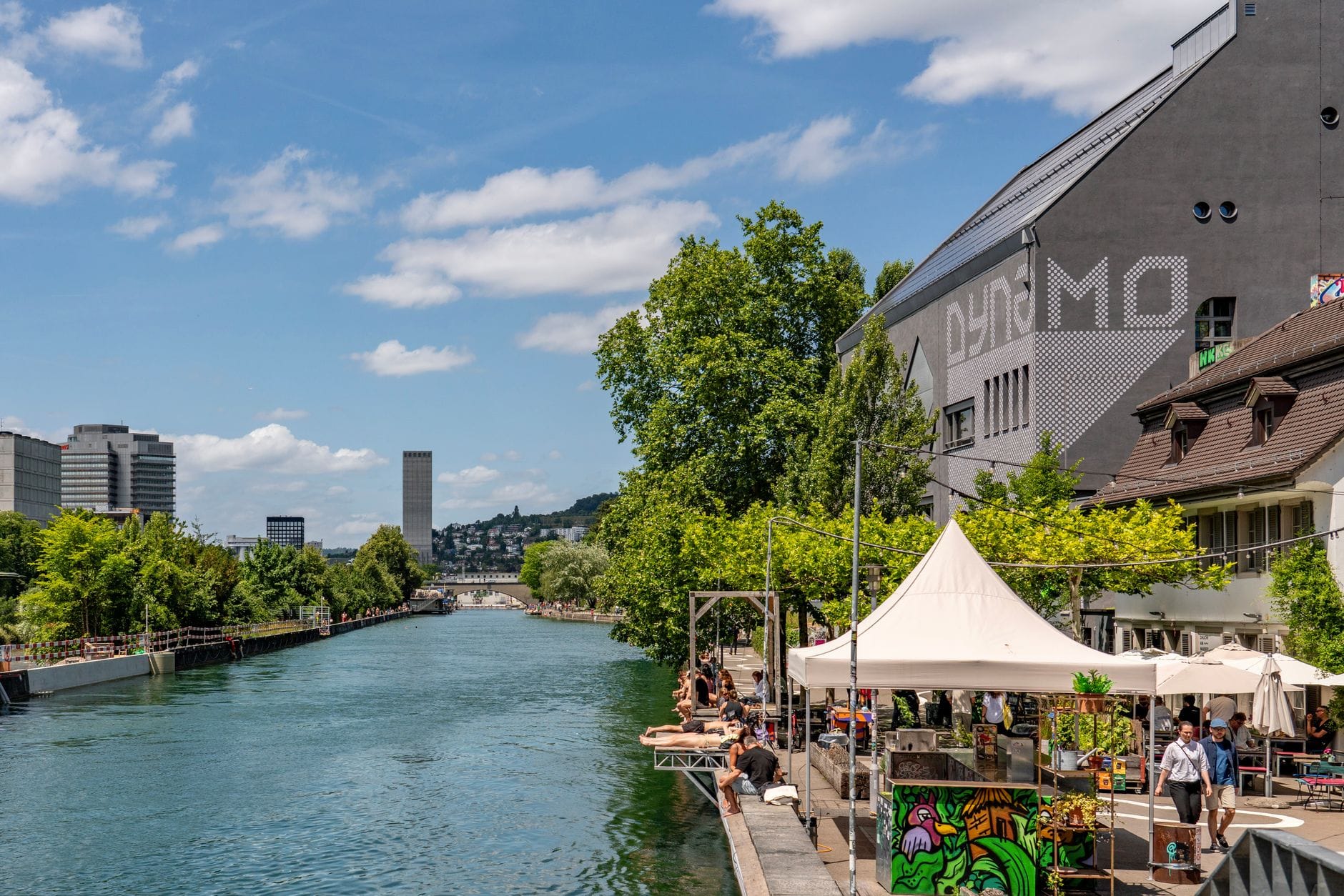
- Letten Badi (Oberer and Unterer Letten) Not on the lake but on the Limmat river in the city center. Free-flowing river current, lively atmosphere, popular with students and locals who want to swim and float downstream.
💡 Local tip
Most Zurich Badis open from mid-April or early May and close in late September or October, depending on weather and the specific facility. Season passes and multi-visit cards are available and save money if you plan to visit more than three or four times. Day entry is typically around CHF 9 per adult — verify current prices with the Stadt Zürich bathing facilities page before visiting.
The Letten deserves special mention. The Letten Badi sits in a former industrial part of the Limmat and has a social energy unlike the lake Badis — more urban, more mixed, with a barbecue culture on the grass banks. On a hot Saturday afternoon in July, thousands of people come here to swim, sunbathe, and stay until the light fades. It is one of the most authentically local summer experiences in the city.
Free Swimming in Zurich: What Nobody Tells You
One of the most common misconceptions about Zurich swimming is that you need to pay. The paid Badis offer real value — lifeguards, showers, lockers, food, and sun decks. But large sections of the Lake Zurich shoreline are publicly accessible at no charge, and a significant number of locals prefer them for exactly that reason.
- Blatterwiese (also called Chinawiese) in Seefeld: a wide lawn directly on the lake with free lake access, very popular with local families.
- Landiwiese and Saffa-Insel on the western shore near Mythenquai: free grassy areas where you can enter the lake without a ticket.
- Rentenwiese: another free-access spot worth knowing, particularly useful if the paid Badis are crowded on weekends.
- Zürichhorn Park: free lakefront access with the added bonus of the nearby Le Corbusier Pavilion and pleasant walking paths.
⚠️ What to skip
Swimming is not permitted everywhere along the lake and river. Near ferry docks, under certain bridges on the Limmat, and around private property, it is prohibited. Always check signage before entering the water. The rules are enforced.
For travelers on a budget, combining free lake access at Blatterwiese with a picnic from a nearby supermarket is one of the genuinely good free afternoons available in this expensive city. The Zurich on a budget guide covers this and other ways to keep costs reasonable during a summer visit.
Summer Events and Festivals Worth Planning Around
Zurich in the summer hosts several events large enough that they should influence when you book accommodation and how you plan your itinerary. Some of these events strain hotel availability across the entire city.
The Street Parade, held annually in August, is one of the largest electronic music events in Europe, drawing over a million people to the lake promenade. The city becomes extremely crowded, hotels charge peak rates, and the atmosphere is either exhilarating or overwhelming depending on your preferences. The Street Parade guide explains what to expect in detail, including which areas to avoid if you're not attending.
- Street Parade (August) Electronic music parade along the lake promenade. One of Europe's biggest, attracting over one million visitors. Book accommodation months in advance if you plan to attend — or avoid those dates entirely if you prefer a quieter visit.
- Seeüberquerung (late August, date varies) Mass swim crossing Lake Zurich from Wollishofen to Tiefenbrunnen — roughly 1.5 km. Up to 10,000 registered swimmers take part. Registration is required and fills well in advance. Spectating from the shore is free and worthwhile.
- Zürich Openair (August) Multi-day outdoor music festival held north of the city center. Mainstream and alternative acts across several stages. Day tickets sell out for headline acts.
- Sechseläuten (April, just before summer) The traditional spring guild festival, ending with the burning of the Böögg snowman effigy to predict the summer's weather. It falls just outside peak summer but sets the tone for the season.
- Knabenschiessen (September) An annual shooting competition and fairground, a traditional Zurich event at the tail end of summer. Small and local, but genuinely representative of the city's civic culture.
✨ Pro tip
If you want lake swimming and city exploration without the crowds, aim for the last two weeks of June or the first week of September. The Badis are open, the weather is warm, and the Street Parade and Zürich Openair haven't yet hit or have just passed. This window is a genuine sweet spot for switzerland in the summer.
Beyond the Water: Outdoor Life in Summer Zurich
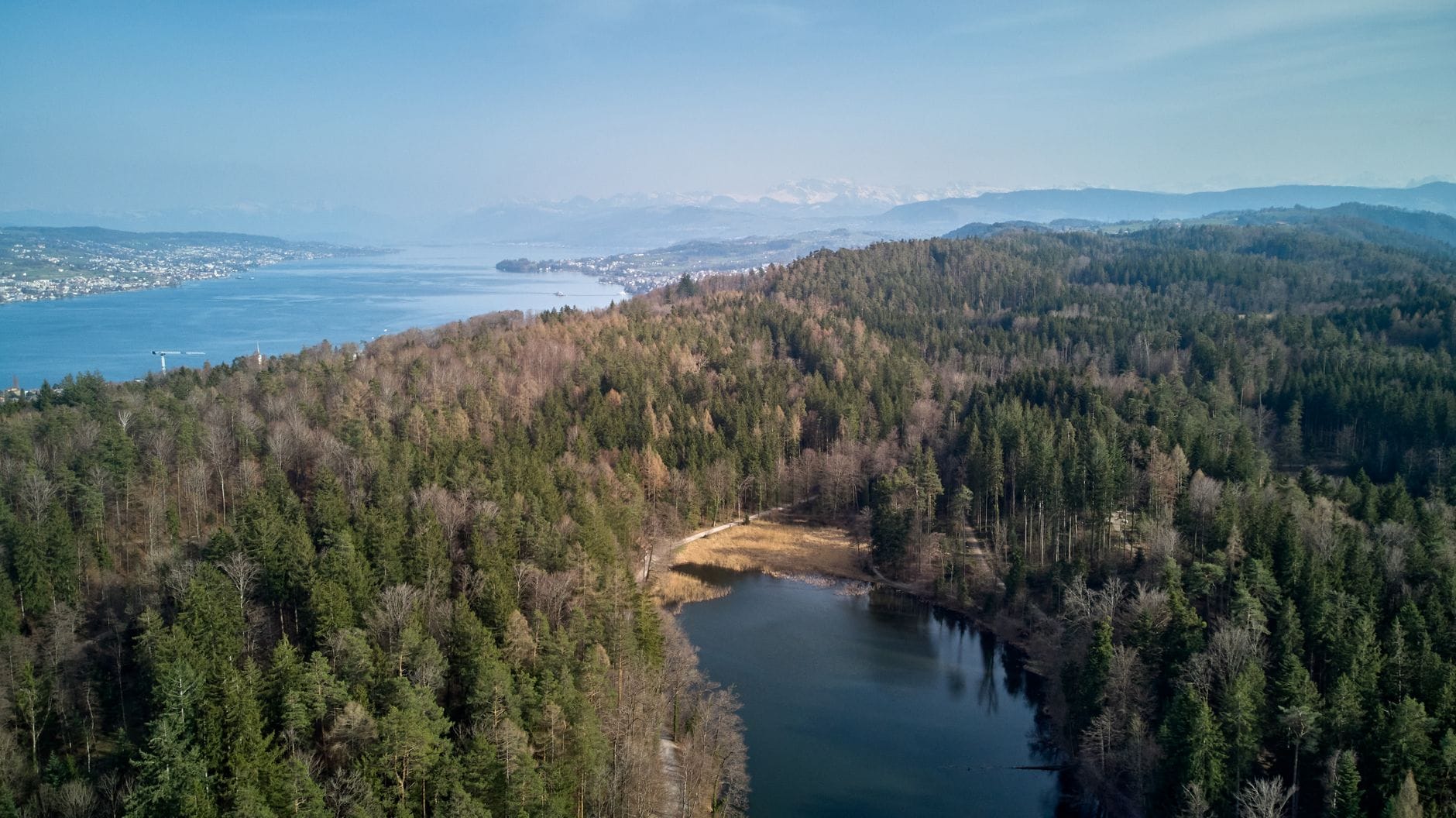
Swimming gets most of the attention, but Zurich summer extends well beyond the lake. The Uetliberg summit at 870 meters is accessible by a direct S-Bahn train from Zurich HB and offers panoramic views over the city, Lake Zurich, and on clear days, the Alps. In summer, the trail network connecting Uetliberg to the wider Albis ridge is a popular half-day or full-day outing for residents.
Lake Zurich boat cruises run by ZSG (the Lake Zurich Navigation Company) operate throughout summer, connecting Bürkliplatz with towns along the lakeshore as far as Rapperswil. The classic Rapperswil return trip takes around 2 hours each way and passes through some of Switzerland's most photogenic lake scenery. The lake cruises page has route and timing details.
Cycling along the lake promenades is another underrated option. The flat path from Bürkliplatz south through Enge and Wollishofen, or east through Seefeld and past Zürichhorn Park, covers several kilometers without a single significant hill. Bike rental is available at multiple points across the city, and the dedicated paths stay separated from traffic.
The Zurich Botanical Garden, a 10-minute walk from the lake in the Seefeld district, is at its best in June when the outdoor sections are in full bloom. Entry is free, which makes it one of the genuinely cost-free summer highlights. The Botanical Garden covers around 2.5 hectares and includes alpine plant collections, a tropical greenhouse, and a Mediterranean section.
ℹ️ Good to know
Zurich's public drinking water fountains, found throughout the city and fed from Alpine springs, are safe to drink and a useful way to stay hydrated on hot days without buying bottled water. The city has hundreds of them, including along most major walking routes and lakefront paths.
Practical Summer Planning: What You Need to Know
Getting around Zurich in summer is straightforward on the ZVV public transport network of trams, buses, and S-Bahn trains. Most lakefront Badis are within 15-20 minutes of the city center by tram. The getting around Zurich guide covers zones, passes, and ticketing in detail. One practical note: the Zurich Card, available for 24 or 72 hours, covers unlimited travel on all ZVV services and may offer small discounts at certain attractions.
Accommodation during peak summer weeks, especially around Street Parade, needs to be booked significantly in advance. The where to stay in Zurich guide breaks down neighborhoods by character and price point. For summer specifically, Seefeld and Riesbach put you closest to the east-shore Badis, while staying near Zurich West gives better access to evening culture and the Letten.
Summer dining in Zurich centers on outdoor seating. Almost every restaurant of note puts tables outside from May onward, and the lakefront restaurants stay open late. Grilling is common at the free lake areas — public grills are available at several spots including parts of the Zürichhorn lakefront, and disposable grills are sold at supermarkets. Zurich's food scene is expensive by most European standards, so self-catering for at least some meals is a sensible approach.
FAQ
Is Zurich worth visiting in summer?
Yes, summer is arguably the best time to visit Zurich. The lake and river swimming culture is unlike anything else in a major European city, the festivals add energy, and the long days allow you to pack a lot in. The main drawbacks are higher hotel prices during peak weeks (especially Street Parade in August) and occasional afternoon thunderstorms. Outside those specific event dates, summer Zurich is extremely rewarding.
When do the Zurich Badis open and close?
Most Badis open from mid-April or early May and remain open until late September or late October, depending on the weather and the specific facility in a given year. Lifeguards, restaurants, and changing facilities are only available during official opening hours within this season. Outside the official season, many lakefront areas remain accessible but without any services.
Can you swim in Lake Zurich for free?
Yes. While the paid Badis (around CHF 9 day entry) offer lifeguards, showers, and facilities, large sections of the Lake Zurich shoreline are freely accessible. Blatterwiese (Chinawiese) in Seefeld and Landiwiese near Mythenquai are popular free alternatives. Always check local signage, as swimming near ferry docks and certain Limmat sections is prohibited.
What is the Seeüberquerung and how do I join?
The Seeüberquerung is an annual mass swim crossing Lake Zurich, typically held in late August. Several thousand swimmers cross from Wollishofen to Tiefenbrunnen (approximately 1.4 km). Registration is required and fills well in advance — check the official Zürich Tourism or event website for the specific date and registration window each year. Spectating from the shore is free.
What should I pack for a summer visit to Zurich?
A swimsuit and quick-dry towel are more useful in Zurich than in almost any other major European city. Light layers are useful for evenings and unexpected rain showers. Comfortable walking shoes are more practical than sandals if you plan to explore the Old Town or hike Uetliberg. Swiss prices are high, so a reusable water bottle is worth packing — the city's public fountains provide free drinking water throughout summer.
Tickets & tours
Live prices and dates from our booking partner. If you book, we may earn a commission at no extra cost to you.
Planning a trip? Discover personalized activities with the Nomado app.