Best Time to Visit Zurich: A Season-by-Season Breakdown
Zurich rewards visitors year-round, but the timing of your trip makes a significant difference to your budget, experience, and what you can actually do. This guide breaks down every season honestly, including when to avoid and when the city is at its best.
Tickets & tours
Live prices and dates from our booking partner. If you book, we may earn a commission at no extra cost to you.
TL;DR
- Late spring (May) and early autumn (September) offer the best balance of good weather, manageable crowds, and lower prices than peak summer.
- June to August is the warmest and most expensive period, with lake swimming and outdoor events at full swing — book accommodation well in advance.
- The Street Parade in August draws around one million visitors — hotel rates spike dramatically that weekend; see our Zurich Street Parade guide if you plan to attend.
- January and February are the cheapest months for flights and hotels, and Zurich still functions fully — museums, restaurants, and public transport run as normal.
- December brings Christmas markets and festive atmosphere but higher prices; nearby Alpine ski resorts are accessible all winter via direct train from Zurich HB.
Zurich's Climate at a Glance
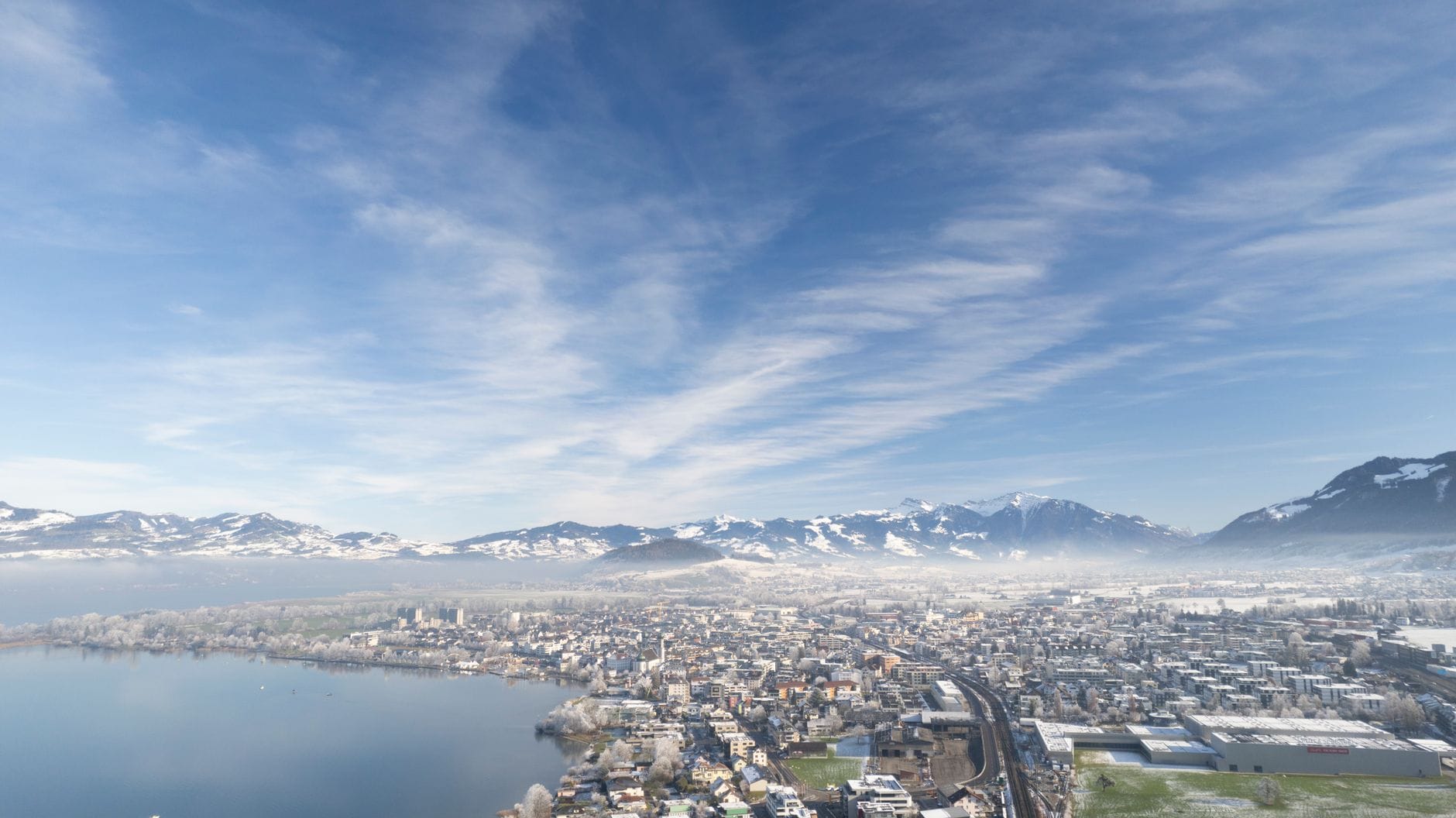
Zurich sits at around 409 metres above sea level at the northwestern tip of Lake Zurich, in north-central Switzerland. The city has a humid continental climate (Köppen Dfb), which means four clearly distinct seasons. Winters are cold but not extreme; summers are warm rather than hot; spring and autumn are transitional, with some dramatic weather swings. Precipitation is fairly evenly spread across the year, with late spring and summer seeing slightly more rainfall. There is no true dry season.
In practical terms: bring layers regardless of when you visit. Summer afternoons can reach 28-30°C during heat waves, but evenings cool quickly. Winter temperatures hover around 0-7°C with occasional frost and snow in the city itself, though significant snowfall at lake level is rare. Fog is a genuine issue in autumn and early winter, particularly in October and November, when low cloud can settle over the city for days at a time.
ℹ️ Good to know
Zurich is not the capital of Switzerland — that is Bern. It is, however, the country's largest city and the capital of the Canton of Zurich. This distinction matters for practical travel: government offices and some embassy services are based in Bern, not Zurich.
Spring (March to May): The Underrated Window
Spring is consistently underestimated by first-time visitors, who often default to summer. Daytime temperatures climb from around 8°C in March to 15-18°C by May. Rain is possible throughout, but so are clear, bright days with long light. Hotel prices in March and April run noticeably lower than summer rates, and the city's main attractions — the Kunsthaus, Swiss National Museum, Grossmünster, Fraumünster — are never crowded the way they get in July.
The cultural highlight of spring is Sechseläuten, Zurich's traditional guild festival held in April. It involves costumed guild parades through the Old Town and culminates in the burning of the Böögg, a snowman effigy stuffed with fireworks, on Sechseläutenplatz. The speed at which the Böögg explodes is said to predict how good the summer will be. It draws large local crowds but remains relatively unknown among international tourists, making it one of the more authentic events on the calendar. Check the Altstadt area for the best vantage points during the parade route.
By May, the Badi season begins to open up. The official public bath season typically runs from mid-May to mid-September, though water temperatures are at their most comfortable in July and August. Still, a warm May day at the lakeside is a genuinely pleasant experience, with far less competition for a good spot.
💡 Local tip
If you visit in late April or May, pack a light rain jacket but don't let forecast showers put you off. Zurich's weather can shift quickly, and a morning of drizzle often clears to a bright afternoon. The city's tram and S-Bahn network means you can duck indoors and reroute with minimal hassle.
Summer (June to August): Peak Season, Peak Costs
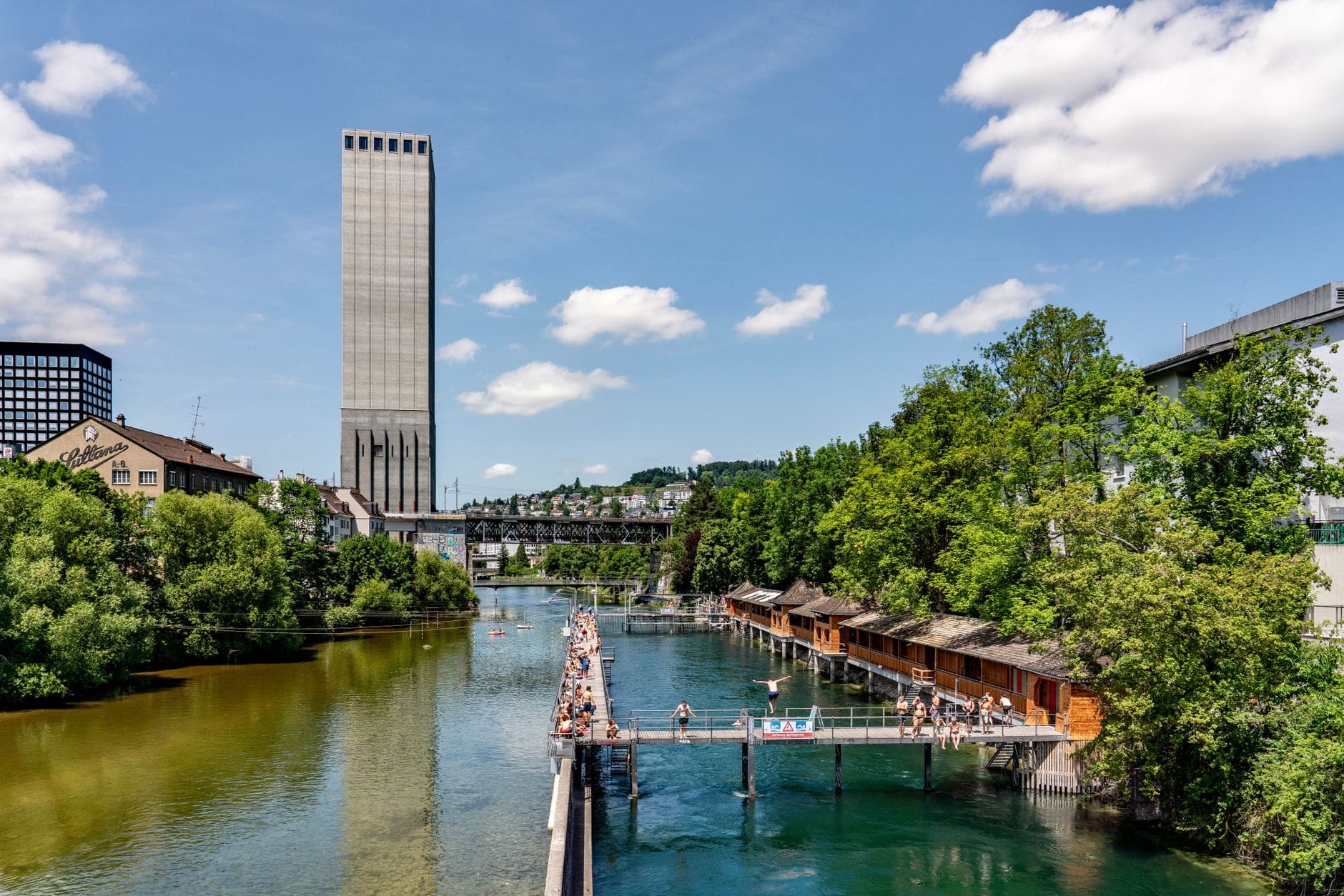
Summer is when Zurich is at its most social and its most expensive. Temperatures range from the mid-teens at night to the upper 20s on hot days. Lake Zurich becomes the focal point of city life: swimming from the lake promenade, sunbathing at the public Badi (open-air baths), taking an evening lake cruise, or simply sitting on the grass at Zurichhorn Park. The Letten river baths on the Limmat are free and enormously popular with locals.
The biggest single event of the summer, and arguably the year, is the Street Parade, held on the second Saturday of August. It is one of Europe's largest electronic music festivals, drawing around 800,000 attendees to the lakeside. If you are not attending, avoid Zurich that weekend entirely: hotels book out months ahead and prices triple or more. If you are going, book accommodation at least three to four months in advance and read our full Street Parade guide before you arrive.
- July and August hotel rates Peak pricing across the board. Expect premium rates even for mid-range properties. Booking 6-8 weeks out minimum is recommended; Street Parade weekend requires months of lead time.
- Daylight hours Zurich sees around 16 hours of daylight at midsummer, making evening walks along the lake or up to Lindenhof genuinely viable until 9pm.
- Outdoor dining Restaurant terraces across Zurich West, Seefeld, and the lakeside fill up quickly on warm evenings. Walk-ins at popular spots become difficult — book ahead.
- Lake swimming comfort Lake Zurich water temperatures peak at around 20-24°C in July and August, making it the most comfortable window for swimming.
Summer is also the best time to explore Zurich on foot. The walking tour circuit through the Old Town, up to Lindenhof, and along the Limmat is at its best in warm weather. If you are planning day trips, summer is the season when Alpine destinations like Interlaken are most accessible and appealing — the train connections from Zurich HB are fast and frequent, though not always direct. See our guide to getting from Zurich to Interlaken for logistics.
⚠️ What to skip
The Street Parade weekend in August is the single most disruptive event in the Zurich calendar for non-attendees. Accommodation is essentially unavailable at normal rates within the city. If your travel dates are flexible, shift them by a week in either direction. If they are fixed, budget for significantly higher hotel costs.
Autumn (September to November): Quiet, Affordable, Undervalued
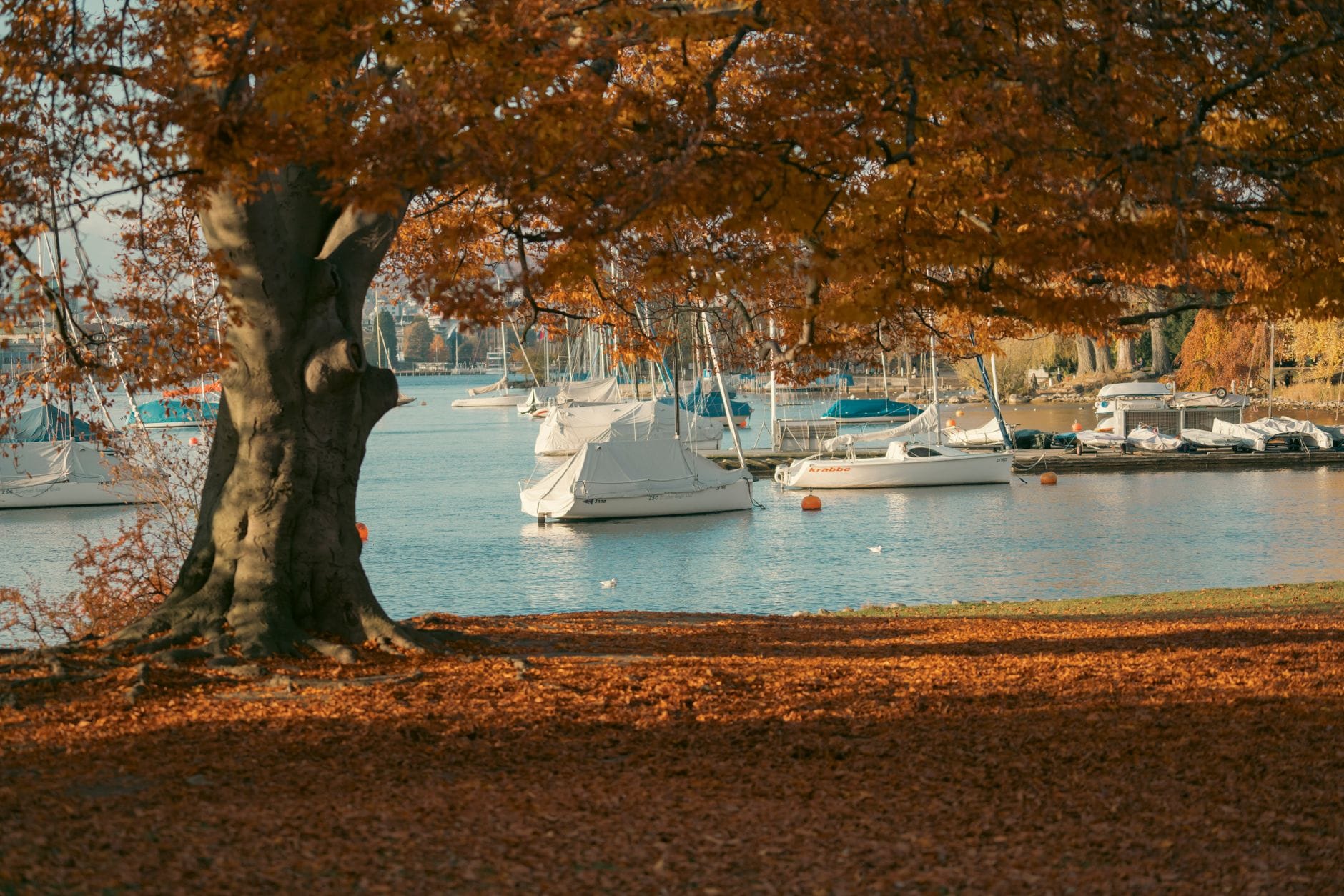
September is one of the best months in the Zurich calendar that most visitors overlook. Temperatures remain pleasant — often 15-20°C in early September — the summer crowds have largely dispersed, and hotel prices drop back from their peak. The lake Badi season extends into mid-September on good years, and the Zurichhorn and lakeside parks are less crowded than in August.
October is when autumn fog starts to become a factor. Low cloud can settle in the Limmat valley and stay for several days, reducing visibility and making the city feel noticeably grey. This is a well-known local phenomenon. One practical workaround: take the Uetliberg summit train and rise above the fog layer — the view from 869 metres with the city below in a white blanket and the Alps clear above is one of the more memorable experiences Zurich offers, and it only happens in autumn and winter.
November is the quietest month of the year for tourism, and the least photogenic. But museums, galleries, and the city's restaurant scene operate at full capacity. If your priority is cultural depth over outdoor activities, November delivers good value: lower prices, no queues at the Kunsthaus or Swiss National Museum, and space to actually think in the galleries.
Winter (December to February): Festive Highs and Budget Lows
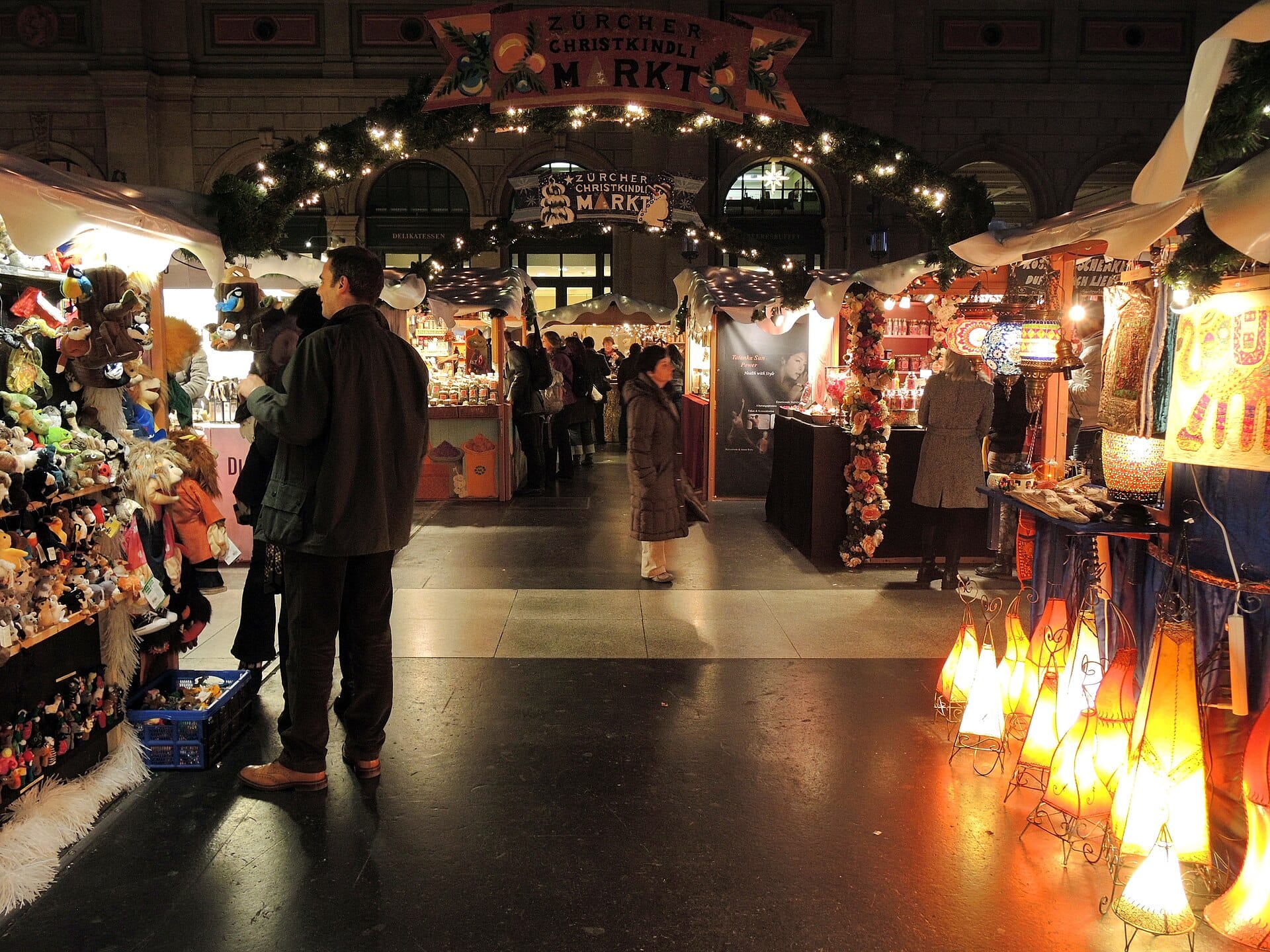
December splits into two very different experiences. The first half of the month brings Zurich's Christmas markets, the most atmospheric of which clusters around the Zurich Main Station — one of the largest indoor Christmas markets in Europe, held inside the station's grand 19th-century hall. It draws significant crowds and hotel prices rise accordingly, though not to summer levels. See our full guide to Zurich in December for what to expect.
Once the markets close and the new year passes, Zurich enters its cheapest and quietest period. January and February see the lowest hotel rates and flight prices of the year. The city does not shut down — public transport, museums, and restaurants all function normally — but the pace slows considerably. This is also when nearby Alpine ski resorts are in full swing. Zurich serves as a practical base for day trips or short stays at ski areas, with direct train connections from Zurich HB.
Snow in the city itself is occasional rather than guaranteed. When it does snow, the lakeside and Old Town look genuinely striking, but it typically clears within a day or two at lake level. If a white-city aesthetic is important to you, the odds are better in January than December.
- January and February: cheapest months for hotels and flights, full city functionality, good ski access
- December: Christmas markets (especially at Zurich HB), higher prices than January-February, atmospheric and worth it for short stays
- Winter fog: common in December and January at lake level; Uetliberg offers the best escape above the cloud layer
- Outdoor swimming: all public baths closed; the lake itself is cold (around 4-6°C in winter) and swimming is not recommended
Quick Comparison: Which Month Is Right for You
The honest answer to 'when is the best time to visit Zurich' depends entirely on what you want from the trip. There is no universally wrong answer, but there are better fits depending on your priorities.
- For lake swimming and outdoor life July and August are the clear choice. Water is warm, days are long, and the city's outdoor culture is fully active. Accept that you will pay more and share the experience with more people.
- For good weather without peak crowds May and September are the practical sweet spots. Temperatures are comfortable, prices are lower than summer, and the main sights are accessible without queuing.
- For budget travel January and February offer the lowest prices of the year. The city is quiet but not dormant. Good for museum-focused trips or using Zurich as a ski resort base.
- For atmosphere and events April (Sechseläuten), August (Street Parade), and December (Christmas markets) each offer distinct festive experiences. Research dates carefully and book accommodation early.
- For cultural depth with no distractions November is underrated for serious museum visits. The Kunsthaus Zurich, Swiss National Museum, and Museum Rietberg are all far more enjoyable when not crowded.
Whatever season you choose, Zurich's public transport network makes the city extremely easy to navigate. The ZVV system covers trams, buses, and S-Bahn suburban trains across the greater Zurich area. For full logistics on getting around, see our guide to getting around Zurich. If you are planning a short trip and want to maximise what you see, the 2-day Zurich itinerary is a practical starting point regardless of the season.
✨ Pro tip
If you are visiting in summer and concerned about costs, consider staying in a neighbourhood slightly removed from the lakefront — Zurich West or the area around Oerlikon — and commuting to the lake by tram. It takes under 15 minutes and can save a meaningful amount on accommodation nightly rates.
FAQ
What is the best time to visit Zurich for good weather?
June to August offers the warmest and sunniest conditions, with temperatures regularly reaching the mid-to-upper 20s°C. However, May and September provide pleasant weather with fewer crowds and lower hotel prices, making them practical alternatives if summer heat and peak costs are not your priority.
Is Zurich worth visiting in winter?
Yes, with realistic expectations. December brings atmospheric Christmas markets, especially inside Zurich Main Station. January and February are the cheapest months of the year and the city remains fully operational. The main trade-off is cold temperatures (around 0-7°C), frequent fog, and no outdoor lake swimming. Nearby Alpine ski resorts are a bonus for winter visitors.
When should I avoid visiting Zurich?
The Street Parade weekend in August (second Saturday of the month) is worth avoiding unless you are attending. Hotel availability collapses and prices spike dramatically. The fog-heavy weeks of late October and November are the least photogenic period, though the city itself functions normally.
How far in advance should I book accommodation in Zurich?
For summer travel (June-August), 6-8 weeks minimum is advisable; for the Street Parade weekend specifically, 3-4 months ahead is safer. For shoulder season and winter travel, 2-3 weeks is generally sufficient outside major local events like Sechseläuten in April or the Christmas market period.
Is Switzerland and Zurich the same trip, or should I plan differently?
Zurich is one city within Switzerland. Many visitors use it as a base for day trips to Lucerne, the Alps, Interlaken, Basel, or Geneva. The best time to visit Switzerland broadly aligns with Zurich's peak season (June-August for Alpine activities, December for winter sports and festive atmosphere), but the Swiss countryside and mountain regions have their own seasonal rhythms that may differ from the city.
Tickets & tours
Live prices and dates from our booking partner. If you book, we may earn a commission at no extra cost to you.
Planning a trip? Discover personalized activities with the Nomado app.